Results by title
18284 books match the query 'United States' and 850 start with p

Pretty People
Movie Stars of the 1990sEverett, Anna
Rutgers University Press, 2012
In the 1990s, American civil society got upended and reordered as many social, cultural, political, and economic institutions were changed forever. Pretty People examines a wide range of Hollywood icons who reflect how stardom in that decade was transformed as the nation itself was signaling significant changes to familiar ideas about gender, race, ethnicity, age, class, sexuality, and nationality.
Such actors as Denzel Washington, Andy Garcia, Halle Berry, Angela Bassett, Will Smith, Jennifer Lopez, and Antonio Banderas became bona fide movie stars who carried major films to amazing box-office success. Five of the decade’s top ten films were opened by three women—Julia Roberts, Jodie Foster, and Whoopi Goldberg. “Chick flick” entered the lexicon as Leonardo DiCaprio became the “King of the World,” ushering in the cult of the mega celebrity. Tom Hanks and Tom Cruise defined screen masculinity as stark contrasts between “the regular guy” and “the intense guy” while the roles of Michael Douglas exemplified the endangered “Average White Male.” A fascinating composite portrait of 1990s Hollywood and its stars, this collection marks the changes to stardom and society at century’s end.

Pretty/Funny
Women Comedians and Body PoliticsBy Linda Mizejewski
University of Texas Press, 2014
Women in comedy have traditionally been pegged as either “pretty” or “funny.” Attractive actresses with good comic timing such as Katherine Hepburn, Lucille Ball, and Julia Roberts have always gotten plum roles as the heroines of romantic comedies and television sitcoms. But fewer women who write and perform their own comedy have become stars, and, most often, they’ve been successful because they were willing to be funny-looking, from Fanny Brice and Phyllis Diller to Lily Tomlin and Carol Burnett. In this pretty-versus-funny history, women writer-comedians—no matter what they look like—have ended up on the other side of “pretty,” enabling them to make it the topic and butt of the joke, the ideal that is exposed as funny.
Pretty/Funny focuses on Kathy Griffin, Tina Fey, Sarah Silverman, Margaret Cho, Wanda Sykes, and Ellen DeGeneres, the groundbreaking women comics who flout the pretty-versus-funny dynamic by targeting glamour, postfeminist girliness, the Hollywood A-list, and feminine whiteness with their wit and biting satire. Linda Mizejewski demonstrates that while these comics don’t all identify as feminists or take politically correct positions, their work on gender, sexuality, and race has a political impact. The first major study of women and humor in twenty years, Pretty/Funny makes a convincing case that women’s comedy has become a prime site for feminism to speak, talk back, and be contested in the twenty-first century.

Preventing Child Maltreatment in the U.S.
American Indian and Alaska Native PerspectivesRoyleen J Ross
Rutgers University Press, 2022
This book is part of a concentrated series of books that examines child maltreatment across minoritized, cultural groups.Specifically, this volume addresses American Indian and Alaska Native populations. However, in an effort to contextualize the experiences of 574 federally recognized tribes and 50+ state recognized tribes, as well as villages, the authors focus on populations within rural and remote regions and discuss the experiences of some tribal communities throughout US history. It should be noted that established research has primarily drawn attention to the pervasive problems impacting Indigenous individuals, families, and communities. Aligned with an attempt to adhere to a decolonizing praxis, the authors share information in a strength-based framework for the Indigenous communities discussed within the text. The authors review federally funded programs (prevention, intervention, and treatment) that have been adapted for tribal communities (e.g., Safecare) and include cultural teachings that address child maltreatment. The intention of this book is to inform researchers, practitioners, policy makers, and advocates about the current state of child maltreatment from an Indigenous perspective.
Preventing Child Maltreatment in the U.S.
Multicultural ConsiderationsMilton A Fuentes
Rutgers University Press, 2022

Preventing Child Maltreatment in the U.S.
The Black Community PerspectiveMelissa Phillips
Rutgers University Press, 2022

Preventing Child Maltreatment in the U.S.
The Latinx Community PerspectiveEsther J. Calzada
Rutgers University Press, 2022

Price's Lost Campaign
The 1864 Invasion of MissouriMark A. Lause
University of Missouri Press, 2013

Primal Screams
How the Sexual Revolution Created Identity PoliticsEberstadt, Mary
Templeton Press, 2021
Who am I? The question today haunts every society in the Western world.
Legions of people—especially the young—have become unmoored from a firm sense of self. To compensate, they join the ranks of ideological tribes spawned by identity politics and react with frenzy against any perceived threat to their group.
As identitarians track and expose the ideologically impure, other citizens face the consequences of their rancor: a litany of “isms” run amok across all levels of cultural life, the free marketplace of ideas muted by agendas shouted through megaphones, and a spirit of general goodwill warped into a state of perpetual outrage.
How did we get here? Why have we divided against one another so bitterly? In Primal Screams, acclaimed cultural critic Mary Eberstadt presents the most provocative and original theory to come along in recent years. The rise of identity politics, she argues, is a direct result of the fallout of the sexual revolution, especially the collapse and shrinkage of the family.
As Eberstadt illustrates, humans have forged their identities within the kinship structure from time immemorial. The extended family, in a real sense, is the first tribe and teacher. But with its unprecedented decline across various measures, generations of people have been set adrift and can no longer answer the question Who am I? concerning primordial ties. Desperate for solidarity and connection, they claim membership in politicized groups whose displays of frantic irrationalism amount to primal screams for familial and communal loss.
Written in her impeccable style and with empathy rarely encountered in today’s divisive discourse, Eberstadt’s theory holds immense explanatory power that no serious citizen can afford to ignore. The book concludes with three incisive essays by Rod Dreher, Mark Lilla, and Peter Thiel, each sharing their perspective on the author’s formidable argument.

Prince, Musical Genre, and the Construction of Racial Identity
Griffin Woodworth
University of Michigan Press, 2025
Each chapter includes detailed musical analyses and transcriptions of Prince’s songs, focusing on his use of rock guitar, new-wave synthesizers, funk drumming, gospel singing, and R&B horns. By tracking Prince’s transformations of instrumental and vocal idioms derived from specific musical genres, and considering the historical and cultural values embedded within those genres, Griffin Woodworth explores the ways that Prince musically broke down stereotypes of Black masculinity. With its intersectional approach to musical analysis, this book captures the sounds of American racial politics in the 1980s, 90s, and 2000s as heard through the music of one of the era’s most popular artists as he worked to transform and transcend those politics.

Print Culture in a Diverse America
Edited by James P. Danky and Wayne A. Wiegand
University of Illinois Press, 1998
In the modern era, there arose a prolific and vibrant print culture—books, newspapers, and magazines issued by and for diverse, often marginalized, groups. This long-overdue collection offers a unique foray into the multicultural world of reading and readers in the United States.
The contributors to this award-winning collection pen interdisciplinary essays that examine the many ways print culture functions within different groups. The essays link gender, class, and ethnicity to the uses and goals of a wide variety of publications and also explore the role print materials play in constructing historical events like the Titanic disaster.
Contributors: Lynne M. Adrian, Steven Biel, James P. Danky, Elizabeth Davey, Michael Fultz, Jacqueline Goldsby, Norma Fay Green, Violet Johnson, Elizabeth McHenry, Christine Pawley, Yumei Sun, and Rudolph J. Vecoli

Priscilla Cooper Tyler and the American Scene, 1816-1889
Elizabeth Tyler Coleman
University of Alabama Press, 2006
A study illuminating the cultural intersections of gender, performance, and national identity in nineteenth-century America.
Priscilla Cooper Tyler and the American Scene, 1816–1889 by Elizabeth T. Coleman is a historical and cultural study that brings renewed attention to a remarkable yet often overlooked figure in nineteenth-century American life. The daughter of renowned actor Thomas Cooper, Priscilla Tyler occupied a unique position at the intersection of theatrical culture, literary expression, and political society during a period of profound national transformation.
Tracing Tyler’s life from her early involvement in the stage to her later roles within influential social and political circles, Coleman situates her subject within the broader cultural landscapes of antebellum America, the Civil War, and Reconstruction. Through letters, performances, and social connections, Tyler emerges as an astute observer and participant in the evolving American scene, offering insight into the roles women played in shaping artistic, intellectual, and public life.
The book explores themes of identity, performance, gender, and cultural change, revealing how Tyler’s experiences illuminate the complex interplay between private life and public history. Coleman’s study not only reconstructs the biography of a significant historical figure but also contributes to a deeper understanding of nineteenth-century American theater, literature, and society.
This volume is an important resource for scholars and readers interested in American studies, women’s history, and the cultural history of the nineteenth century.
Prisms of the People
Power & Organizing in Twenty-First-Century AmericaHahrie Han, Elizabeth McKenna, and Michelle Oyakawa
University of Chicago Press, 2021
Prisms of the People addresses those questions and more. Using data from six movement organizations—including a coalition that organized a 104-day protest in Phoenix in 2010 and another that helped restore voting rights to the formerly incarcerated in Virginia—Hahrie Han, Elizabeth McKenna, and Michelle Oyakawa show that the power of successful movements most often is rooted in their ability to act as “prisms of the people,” turning participation into political power just as prisms transform white light into rainbows. Understanding the organizational design choices that shape the people, their leaders, and their strategies can help us understand how grassroots groups achieve their goals.
Linking strong scholarship to a deep understanding of the needs and outlook of activists, Prisms of the People is the perfect book for our moment—for understanding what’s happening and propelling it forward.

Prison Area, Independence Valley
American Paradoxes in Political Life and Popular CultureRob Kroes
Dartmouth College Press, 2015
Prison Etiquette
The Convict's Compendium of Useful InformationEdited by Holley Cantine and Dachine Rainer. Foreword by Philip Metres.
Southern Illinois University Press, 2001
Of the fifty thousand Americans who declared themselves conscientious objectors during World War II, nearly six thousand went to prison, many serving multiyear sentences in federal lockups. Some conscientious objectors, notably Robert Lowell, William Everson, and William Stafford, went on to become important figures in the literary life of their country, while others were participants and teachers in the civil rights and antiwar movements of the 1950s, 1960s, and 1970s. This long out-of-print book, reprinted from the rare original 1951 edition, collects firsthand accounts by conscientious objectors who were imprisoned for their beliefs.
Prison Etiquette is illustrated with eleven line drawings by Lowell Naeve.
Prison Land
Mapping Carceral Power across Neoliberal AmericaBrett Story
University of Minnesota Press, 2019
From broken-window policing in Detroit to prison-building in Appalachia, exploring the expansion of the carceral state and its oppressive social relations into everyday life
Prison Land offers a geographic excavation of the prison as a set of social relations—including property, work, gender, and race—enacted across various landscapes of American life. Prisons, Brett Story shows, are more than just buildings of incarceration bound to cycles of crime and punishment. Instead, she investigates the production of carceral power at a range of sites, from buses to coalfields and from blighted cities to urban financial hubs, to demonstrate how the organization of carceral space is ideologically and materially grounded in racial capitalism.
Story’s critically acclaimed film The Prison in Twelve Landscapes is based on the same research that informs this book. In both, Story takes an expansive view of what constitutes contemporary carceral space, interrogating the ways in which racial capitalism is reproduced and for which police technologies of containment and control are employed. By framing the prison as a set of social relations, Prison Land forces us to confront the production of new carceral forms that go well beyond the prison system. In doing so, it profoundly undermines both conventional ideas of prisons as logical responses to the problem of crime and attachment to punishment as the relevant measure of a transformed criminal justice system.
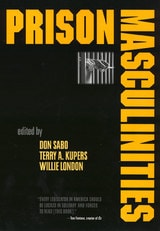
Prison Masculinities
Don Sabo
Temple University Press, 2001
The opening section, which features an essay by Angela Davis, focuses on the historical roots of the prison system, cultural practices surrounding gender and punishment, and the current expansion of corrections into the "prison-industrial complex."
The next section examines the dominant or subservient roles that men play in prison and the connections between this hierarchy and male violence. Another section looks at the spectrum of intimate relations behind bars, from rape to friendship, and another at physical and mental health.
The last section is about efforts to reform prisons and prison masculinities, including support groups for men. It features an essay about prospects for post-release success in the community written by a man who, after doing time in Soledad and San Quentin, went on to get a doctorate in counseling.
The contributions from prisoners include an essay on enforced celibacy by Mumia Abu-Jamal, as well as fiction and poetry on prison health policy, violence, and intimacy. The creative contributions were selected from the more than 200 submissions received from prisoners.

Prison Song
Music and Incarceration in the United StatesDavid Metzer
University of Michigan Press, 2026
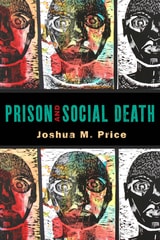
Prison and Social Death
Price, Joshua M
Rutgers University Press, 2015

Prisoner of Wars
A Hmong Fighter Pilot's Story of Escaping Death and Confronting LifeChia Youyee Vang
Temple University Press, 2021
Retired Captain Pao Yang was a Hmong airman trained by the U.S. Air Force and CIA to fly T-28D aircraft for the U.S. Secret War in Laos. However, his plane was shot down during a mission in June 1972. Yang survived, but enemy forces captured him and sent him to a POW camp in northeastern Laos. He remained imprisoned for four years after the United States withdrew from Vietnam because he fought on the American side of the war.
Prisoner of Wars shows the impact the U.S Secret War in Laos had on Hmong combatants and their families. Chia Vang uses oral histories thatpoignantly recount Yang’s story and the deeply personal struggles his loved ones—who feared he had died—experienced in both Southeast Asia and the United States. As Yang eventually rebuilt his life in America, he grappled with issues of freedom and trauma.
Yang’s life provides a unique lens through which to better understand the lasting impact of the wars in Southeast Asia and the diverse journeys that migrants from Asia made over the last two centuries. Prisoner of Wars makes visible an aspect of the collateral damage that has been left out of dominant Vietnam War narratives.
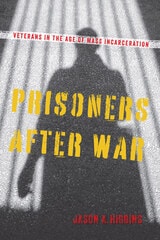
Prisoners after War
Veterans in the Age of Mass IncarcerationJason A. Higgins
University of Massachusetts Press, 2024
Winner of the 2025 Oral History Association Book Award • Winner of Virginia Tech's Albert Lee Sturm Award for Faculty Excellence • Finalist for the 2026 Veterans Studies Association Distinguished Book Award • Honorable Mention, National Council on Public History Book Award
The United States has both the largest, most expensive, and most powerful military and the largest, most expensive, and most punitive carceral system in the history of the world. Since the American War in Vietnam, hundreds of thousands of veterans have been incarcerated after their military service.
Identifying the previously unrecognized connections between American wars and mass incarceration, Prisoners after War reaches across lines of race, class, and gender to record the untold history of incarcerated veterans over the past six decades. Having conducted dozens of oral history interviews, Jason A. Higgins traces the lifelong effects of war, inequality, disability, and mental illness, and explores why hundreds of thousands of veterans, from Vietnam to Afghanistan, were caught up in the carceral system. This original study tells an intergenerational history of state-sanctioned violence, punishment, and inequality, but its pages also resonate with stories of survival and redemption, revealing future possibilities for reform and reparative justice.
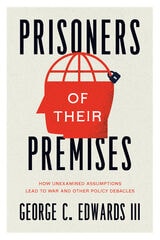
Prisoners of Their Premises
How Unexamined Assumptions Lead to War and Other Policy DebaclesGeorge C. Edwards III
University of Chicago Press, 2022
Why do accomplished and stable leaders frequently make calamitous decisions with devastating consequences for their countries—and other nations? We debate debacles such as the American involvement in Vietnam, seeking to understand why leaders pursued disastrous policies. In Prisoners of Their Premises, George C. Edwards III argues that the failure of leaders to examine their premises—the assumptions they make about the world and situation they are dealing with—cause them to ignore real problems or pursue policies that, in costly ways, deal with problems that are different than they think or simply don’t exist. Edwards looks at the role of premises in identifying (or ignoring) a problem in a series of case studies that range from strategic decisions in World War I and the Korean War to the wars in Vietnam and Iraq. Too often, unexamined premises color initial decisions to pursue a policy and shape the strategies leaders employ to achieve their goals, with grave consequences for their countries, organizations, and potentially the world. Timely and important, Prisoners of Their Premises demonstrates the real costs leaders incur by failing to question their assumptions.

Prisoners of the Bashaw
The Nineteen-Month Captivity of American Sailors in Tripoli, 1803–1805Frederick C. Leiner
Westholme Publishing, 2025
America’s first crisis with the Islamic world: the diplomatic and military mission to free more than three hundred enslaved sailors
On October 31, 1803, the frigate USS Philadelphia ran aground on a reef a few miles outside the harbor of Tripoli. Since April 1801, the United States had been at war with Tripoli, one of the Barbary “pirate” regimes, over the payment of annual tribute—bribes so that American merchant ships would not be seized and their crews held hostage. After hours under fire, the Philadelphia, aground and defenseless, surrendered, and 307 American sailors and marines were captured. Manhandled and stripped of their clothes and personal belongings, the men of the Philadelphia were paraded before the Bashaw of Tripoli, Yusuf Karamanali. The bashaw ordered the crew moved into an old warehouse, and the officers were eventually moved to a dungeon beneath the Bashaw’s castle. While the officers were treated as “gentlemen,” although imprisoned, the sailors worked as enslaved laborers. Regularly beaten and given a meager diet, several died in captivity; escape attempts failed, while a few ended up converting to Islam and joined their captors. President Thomas Jefferson, Congress, U.S. diplomats, and Commodore Edward Preble, commander of the naval squadron off Tripoli, grappled with how to safely free the American captives. The crew of the Philadelphia remained prisoners for nineteen months, until the Tripolitan War ended in June 1805.
The Philadelphia captives became the key to negotiations to end the war; the possibility existed that if threatened too much, the Bashaw would kill the captives. Ultimately, the United States paid $60,000 to get them back—about $200 per man—a sum less than the Bashaw’s initial demands for compensation. In June 1805, the Americans began their journey home. Combining stirring naval warfare, intricate diplomatic negotiations, the saga of surviving imprisonment, and based on extensive primary source research, Prisoners of the Bashaw: The Nineteen-Month Captivity of American Sailors in Tripoli, 1803-1805 by Frederick C. Leiner tells the complete story of America’s first great hostage crisis.
Prisons and Patriots
Japanese American Wartime Citizenship, Civil Disobedience, and Historical MemoryCherstin Lyon
Temple University Press, 2011
Prisons and Patriots provides a detailed account of forty-one Nisei (second-generation Japanese Americans), known as the Tucsonians, who were imprisoned for resisting the draft during WWII. Cherstin Lyon parallels their courage as resisters with that of civil rights hero Gordon Hirabayashi, well known for his legal battle against curfew and internment, who also resisted the draft. These dual stories highlight the intrinsic relationship between the rights and the obligations of citizenship, particularly salient in times of war.
Lyon considers how wartime civil disobedience has been remembered through history—how soldiers have been celebrated for their valor while resisters have been demonized as unpatriotic. Using archival research and interviews, she presents a complex picture of loyalty and conflict among first-generation Issei and Nisei. Lyon contends that the success of the redress movement has made room for a narrative that neither reduces the wartime confinement to a source of shame nor proffers an uncritical account of heroic individuals.

Prisons of Poverty
Loïc Wacquant
University of Minnesota Press, 2009
An international best seller dissects the globalization of penal policies “made in U.S.A.” as part of the spread of neoliberalism
In the early 1990s, Mayor Rudolph Giuliani launched a zero-tolerance campaign aimed at street disorders and petty offenders, incarnated in the infamous “squeegee man.” New York City soon became a planetary showcase for an aggressive approach to law enforcement that, despite its extravagant costs and the absence of connection to the crime drop, came to be admired and imitated by other cities in the United States, Western Europe, and Latin America.
In Prisons of Poverty, Loïc Wacquant tracks the incubation and internationalization of the slogans, theories, and measures composing this new punitive “common sense,” fashioned to curb mounting urban inequality and marginality in the metropolis. He finds that a network of Reagan-era conservative think tanks (led by the Manhattan Institute) forged them as weapons in their crusade to dismantle the welfare state and, in effect, to criminalize poverty. He traces their import and export through the agency of the media and the pro-market policy institutes that have mushroomed across the European Union, particularly in Tony Blair’s Britain. And he shows how academics helped smuggle U.S. techniques of penalization into their countries by dressing them up in scholarly garb.Now available in English for the first time in an expanded edition, Prisons of Poverty reveals how the Washington consensus on economic deregulation and welfare retrenchment was extended to encompass punitive crime control because the invisible hand of the market necessitates and calls forth the iron fist of the penal state.
Prisons, Race, and Masculinity in Twentieth-Century U.S. Literature and Film
Peter Caster
The Ohio State University Press, 2008
In Prisons, Race, and Masculinity, Peter Caster demonstrates the centrality of imprisonment in American culture, illustrating how incarceration, an institution inseparable from race, has shaped and continues to shape U.S. history and literature in the starkest expression of what W. E. B. DuBois famously termed “the problem of the color line.”
A prison official in 1888 declared that it was the freeing of slaves that actually created prisons: “we had to establish means for their control. Hence came the penitentiary.” Such rampant racism co ntributed to the criminalization of black masculinity in the cultural imagination, shaping not only the identity of prisoners (collectively and individually) but also America’s national character. Caster analyzes the representations of imprisonment in books, films, and performances, alternating between history and fiction to describe how racism influenced imprisonment during the decline of lynching in the 1930s, the political radicalism in the late 1960s, and the unprecedented prison expansion through the 1980s and 1990s. Offering new interpretations of familiar works by William Faulkner, Eldridge Cleaver, and Norman Mailer, Caster also engages recent films such as American History X, The Hurricane, and The Farm: Life Inside Angola Prison alongside prison history chronicled in the transcripts of the American Correctional Association. This book offers a compelling account of how imprisonment has functioned as racial containment, a matter critical to U.S. history and literary study.
Privacy and the Past
Research, Law, Archives, EthicsLawrence, Susan C
Rutgers University Press, 2016

Privacy at Risk
The New Government Surveillance and the Fourth AmendmentChristopher Slobogin
University of Chicago Press, 2007
Applying the Fourth Amendment’s prohibition on unreasonable searches and seizures, Slobogin argues that courts should prod legislatures into enacting more meaningful protection against government overreaching. In setting forth a comprehensive framework meant to preserve rights guaranteed by the Constitution without compromising the government’s ability to investigate criminal acts, Slobogin offers a balanced regulatory regime that should intrigue everyone concerned about privacy rights in the digital age.

Private Acts, Social Consequences
Bayer, Ronald
Rutgers University Press, 1991
Bayer, staff member of a policy studies center in New York State, here reviews the record of public agencies in dealing with AIDS-created biological, social and political problems, including resolution of conflicts between privacy and the public good. He notes the contradiction between Centers for Disease Control recommendations of counseling, education and broad-scale voluntary testing of all Americans at risk, and federal policies that favor mandatory testing of the military, marriage applicants, hospital workers, patients and prostitutes, among others, and quarantine of AIDS carriers advocated by some states. Bayer recommends restraint by individuals in sexual matters and drug use, accompanied by an assault on the economic and social problems that underlie the epidemic, especially as regards the newborn and teenagers. In the growing body of AIDS literature, this is a valuable fact-finding study that should interest a lay as well as professional audience.
From Library Journal
Bayer's topic is the politically charged dilemma AIDS presents to public health officials and policymakers. What steps can be taken which will not only protect society at large, but also safeguard the privacy and civil liberties of individuals? The author ably traces the political history of AIDS. He suggests a responsible but nonauthoritarian approach, combining education; health care access for IV users; promotion of anonymous, confidential screening; defense of victims' rights; appropriate contact notification programs; and moderate laws protecting society from malicious individuals. This work is well-documented and cogently argued. Highly recommended for all academic collections and larger public libraries.
Private Bodies, Public Texts
Race, Gender, and a Cultural BioethicsKarla FC Holloway
Duke University Press, 2011

Private Equity at Work
When Wall Street Manages Main StreetEileen Appelbaum
Russell Sage Foundation, 2014
Private Fleming at Chancellorsville
The Red Badge of Courage and the Civil WarPerry Lentz
University of Missouri Press, 2006
Private Guns, Public Health
David Hemenway
University of Michigan Press, 2004
-Richard F. Corlin, Past President, American Medical Association
"This lucid and penetrating study is essential reading for anyone who wishes to understand the tragedy of gun violence in America and-even more important-what we can do to stop it. David Hemenway cuts through the cant and rhetoric in a way that no fair-minded person can dismiss, and no sane society can afford to ignore."
-Richard North Patterson, novelist
"The rate of gun-related homicide, suicide, and accidental injury has reached epidemic proportions in American society. Diagnosing and treating the gun violence epidemic demands the development of public health solutions in conjunction with legislative and law enforcement strategies."
-Kweisi Mfume, President and CEO of NAACP
"In scholarly, sober analytic assessments, including rigorous critiques of NRA-popularized pseudoscience, David Hemenway constructs a convincing case that firearm availability is a critical and proximal cause of unparalleled carnage. By formulating such violence as a public health issue, he proposes workable policies analogous to ones that reduced injuries from tobacco, alcohol, and automobiles."
-Jerome P. Kassirer, Editor-in-Chief Emeritus, New England Journal of Medicine, and Distinguished Professor, Tufts University School of Medicine
"As a former District Attorney and Attorney General, I know the urgency of providing safe homes, schools and neighborhoods for all. This remarkable tour-de-force is a powerful study of one promising solution: a data-rich, eminently readable demonstration of why we should treat gun violence as an American epidemic."
-Scott Harshbarger, Former Attorney General of Massachusetts, President and CEO of Common Cause
On an average day in the United States, guns are used to kill almost eighty people, and to wound nearly three hundred more. If any other consumer product had this sort of disastrous effect, the public outcry would be deafening; yet when it comes to guns such facts are accepted as a natural consequence of supposedly high American rates of violence.
Private Guns, Public Health explodes that myth and many more, revealing the advantages of treating gun violence as a consumer safety and public health problem. David Hemenway fair-mindedly and authoritatively demonstrates how a public-health approach-which emphasizes prevention over punishment, and which has been so successful in reducing the rates of injury and death from infectious disease, car accidents, and tobacco consumption-can be applied to gun violence.
Hemenway uncovers the complex connections between guns and self-defense, gun violence and schools, gun prevalence and homicide, and more. Finally, he outlines a policy course that would significantly reduce gun-related injury and death.
With its bold new public-health approach to guns, Private Guns, Public Health marks a shift in our understanding of guns that will-finally-point us toward a solution.
Private Guns, Public Health, New Ed.
David Hemenway
University of Michigan Press, 2017
Hemenway fair-mindedly and authoritatively outlines a policy course that would significantly reduce gun-related injury and death, pointing us toward a solution.
Private Lives, Proper Relations
Regulating Black IntimacyCandice M. Jenkins
University of Minnesota Press, 2007
Private Lives, Proper Relations begins with the question of why contemporary African American literature—particularly that produced by black women—is continually concerned with issues of respectability and propriety. Candice M. Jenkins argues that this preoccupation has its origins in recurrent ideologies about African American sexuality, and that it expresses a fundamental aspect of the racial self—an often unarticulated link between the intimate and the political in black culture.
In a counterpoint to her paradigmatic reading of Nella Larsen’s Passing, Jenkins’s analysis of black women’s narratives—including Ann Petry’s The Street, Toni Morrison’s Sula and Paradise, Alice Walker’s The Color Purple, and Gayl Jones’s Eva’s Man—offers a theory of black subjectivity. Here Jenkins describes middle-class attempts to rescue the black community from accusations of sexual and domestic deviance by embracing bourgeois respectability, and asserts that behind those efforts there is the “doubled vulnerability” of the black intimate subject. Rather than reflecting a DuBoisian tension between race and nation, to Jenkins this vulnerability signifies for the African American an opposition between two poles of potential exposure: racial scrutiny and the proximity of human intimacy.
Scholars of African American culture acknowledge that intimacy and sexuality are taboo subjects among African Americans precisely because black intimate character has been pathologized. Private Lives, Proper Relations is a powerful contribution to the crucial effort to end the distortion still surrounding black intimacy in the United States.
Candice M. Jenkins is associate professor of English at Hunter College, City University o
Private Metropolis
The Eclipse of Local Democratic GovernanceDennis R. Judd
University of Minnesota Press, 2021
Examines the complex ecology of quasi-public and privatized institutions that mobilize and administer many of the political, administrative, and fiscal resources of today’s metropolitan regions
In recent decades metropolitan regions in the United States have witnessed the rise of multitudes of “shadow governments” that often supersede or replace functions traditionally associated with municipalities and other local governments inherited from the urban past. Shadow governments take many forms, ranging from billion-dollar special authorities that span entire urban regions, to public–private partnerships and special districts created to accomplish particular tasks, to privatized gated communities, to neighborhood organizations empowered to receive private and public funds. They finance and administer public services ranging from the prosaic (garbage collection and water utilities) to the transformative (economic development and infrastructure). Private Metropolis demonstrates that this complex ecosystem of local governance has compromised and even eclipsed democratic processes by moving important policy decisions out of public sight.
The quasi-public institutions of urban governance generally escape the budgetary and statutory restraints imposed on traditional local governments and protect policy decisions from the limitations and vagaries of electoral politics. Moving major policy decisions into a privatized and corporatized realm facilitates efficiency and speed, but at the cost of democratic oversight. Increasingly, the urban electorate is left debating symbolic issues only tangentially connected to the actual distribution of the resources that affect people’s lives.
The essays in Private Metropolis grapple with the difficult and timely questions that arise from this new ecology of governance: What are the consequences of the proliferation of special authorities, privatized governments, and public–private arrangements? Is the trade-off between democratic accountability and efficiency worth it? Has the public sector, with its messiness and inefficiencies—but also its checks and balances—ceded too much power to these new institutions? By examining such questions, this book provokes a long-overdue debate about the future of urban governance.
Contributors: Douglas Cantor, California State U, Long Beach; Ellen Dannin, Pennsylvania State U; Jameson W. Doig, Princeton U; Mary Donoghue; Peter Eisinger, New School; Steven P. Erie, U of California, San Diego; Rebecca Hendrick, U of Illinois at Chicago; Sara Hinkley, U of California, Berkeley; Amanda Kass, U of Illinois at Chicago; Scott A. MacKenzie, U of California, Davis; David C. Perry, U of Illinois at Chicago; James M. Smith, U of Indiana South Bend; Shu Wang, Michigan State U; Rachel Weber, U of Illinois at Chicago.
Private Practices
Harry Stack Sullivan, the Science of Homosexuality, and American LiberalismWake, Naoko
Rutgers University Press, 2011
Private Practices examines the relationship between science, sexuality, gender, race, and culture in the making of modern America between 1920 and 1950, when contradictions among liberal intellectuals affected the rise of U.S. conservatism. Naoko Wake focuses on neo-Freudian, gay psychiatrist Harry Stack Sullivan, founder of the interpersonal theory of mental illness. She explores medical and social scientists' conflicted approach to homosexuality, particularly the views of scientists who themselves lived closeted lives.
Wake discovers that there was a gap--often dramatic, frequently subtle--between these scientists' "public" understanding of homosexuality (as a "disease") and their personal, private perception (which questioned such a stigmatizing view). This breach revealed a modern culture in which self-awareness and open-mindedness became traits of "mature" gender and sexual identities. Scientists considered individuals of society lacking these traits to be "immature," creating an unequal relationship between practitioners and their subjects. In assessing how these dynamics--the disparity between public and private views of homosexuality and the uneven relationship between scientists and their subjects--worked to shape each other, Private Practices highlights the limits of the scientific approach to subjectivity and illuminates its strange career--sexual subjectivity in particular--in modern U.S. culture.
Private Prisons in America
A Critical Race PerspectiveMichael A. Hallett
University of Illinois Press, 2006

Private Property and the Endangered Species Act
Saving Habitats, Protecting HomesEdited by Jason F. Shogren
University of Texas Press, 1998
Our whole nation benefits from the preservation of natural habitats and their diversity of animal and plant species—yet small groups of private landowners often bear most of the costs of setting land aside for conservation purposes. This imbalance has generated many conflicts since the passage of the Endangered Species Act in 1973 and remains one of the most controversial issues to be resolved as the ESA makes its way through Congress for reauthorization.
To provide policy makers, landowners, and other stakeholders in the ESA debates with impartial baseline information, this book offers multidisciplinary perspectives on the role that private property plays in protecting endangered species in the United States. The opening chapter traces the evolution of the ESA and set forth the parameters of the debate over regulation of private property. Four subsequent chapters explore the judicial and economic implications of ESA and suggest how issues of scale and diversity affect the implementation of the ESA on private property. The volume concludes with eight principles to help frame the ongoing ESA reauthorization debate, developed by the University of Wyoming's Institute for Environment and Natural Resources Policy Board, the sponsor of the research presented in this book.

Private Property and the Limits of American Constitutionalism
The Madisonian Framework and Its LegacyJennifer Nedelsky
University of Chicago Press, 1990
Private Screenings
Television and the Female ConsumerLynn Spigel
University of Minnesota Press, 1992

Private Sectors in Higher Education
Structure, Function, and Change in Eight CountriesRoger L. Geiger
University of Michigan Press, 1986
Private Women, Public Lives
Gender and the Missions of the CaliforniasBy Bárbara O. Reyes
University of Texas Press, 2009
Through the lives and works of three women in colonial California, Bárbara O. Reyes examines frontier mission social spaces and their relationship to the creation of gendered colonial relations in the Californias. She explores the function of missions and missionaries in establishing hierarchies of power and in defining gendered spaces and roles, and looks at the ways that women challenged, and attempted to modify, the construction of those hierarchies, roles, and spaces.
Reyes studies the criminal inquiry and depositions of Barbara Gandiaga, an Indian woman charged with conspiracy to murder two priests at her mission; the divorce petition of Eulalia Callis, the first lady of colonial California who petitioned for divorce from her adulterous governor-husband; and the testimonio of Eulalia Pérez, the head housekeeper at Mission San Gabriel who acquired a position of significant authority and responsibility but whose work has not been properly recognized. These three women's voices seem to reach across time and place, calling for additional, more complex analysis and questions: Could women have agency in the colonial Californias? Did the social structures or colonial processes in place in the frontier setting of New Spain confine or limit them in particular gendered ways? And, were gender dynamics in colonial California explicitly rigid as a result of the imperatives of the goals of colonization?
Privatizing Social Security
Edited by Martin Feldstein
University of Chicago Press, 1998
Privilege and Prejudice
The Life of a Black PioneerClifton R. Wharton
Michigan State University Press, 2015
Privileged Spectatorship
Theatrical Interventions in White SupremacyDani Snyder-Young
Northwestern University Press, 2021
Many professional theater artists attempt to use live performances in formal theater spaces to disrupt racism and create a more equitable society. Privileged Spectatorship: Theatrical Interventions in White Supremacy examines the impact of such projects, looking at how and why they do and do not intervene in white supremacy. In this incisive study, Dani Snyder-Young examines audience responses to a range of theatrical events that focus on race‑related conflict or racial identity in the contemporary United States. The audiences for these performances, produced at mainstream not‑for‑profit professional theaters in major American cities in 2013–18, reflect dominant patterns of theater attendance: the majority of spectators are older, affluent, white, and describe themselves as politically progressive. Snyder-Young studies the ways these audience members consume the stories of racialized others and analyzes how different artistic, organizational, and programmatic strategies can (or cannot) mitigate white privilege.
This book is essential reading for scholars and students of theater, performance studies, and critical ethnic studies and for theater practitioners interested in equity and inclusion.

Pro-Life, Pro-Choice
Shared Values in the Abortion DebateBertha Alvarez Manninen
Vanderbilt University Press, 2014
Manninen approaches the abortion controversy through a variety of perspectives and ethical frameworks. She addresses the social circumstances that influence many women's decision to abort and considers whether we believe that there are good and bad reasons to abort. Manninen also looks at the call for post-abortion fetal grieving rituals for women who desire them and the attempt to make room in the pro-choice position for the views of prospective fathers.
The author spells out how the two sides demonize each other and proposes ways to find degrees of convergence between the seemingly intractable positions.

Probable Justice
Risk, Insurance, and the Welfare StateRachel Z. Friedman
University of Chicago Press, 2020
Probable Justice traces a history of social insurance from the eighteenth century to today, from the earliest ideas of social accountability through the advanced welfare state of collective responsibility and risk. At the heart of Rachel Z. Friedman’s investigation is a study of how probability theory allows social insurance systems to flexibly measure risk and distribute coverage. The political genius of social insurance, Friedman shows, is that it allows for various accommodations of needs, risks, financing, and political aims—and thereby promotes security and fairness for citizens of liberal democracies.
Problem of the Century
Racial Stratification in the United StatesElijah Anderson
Russell Sage Foundation, 2001
Problem with Education Technology (Hint
It's Not the Technology)Ben Fink
Utah State University Press, 2016
Education is in crisis—at least, so we hear. And at the center of this crisis is technology. New technologies like computer-based classroom instruction, online K–12 schools, MOOCs (massive open online courses), and automated essay scoring may be our last great hope—or the greatest threat we have ever faced.
In The Problem with Education Technology, Ben Fink and Robin Brown look behind the hype to explain the problems—and potential—of these technologies. Focusing on the case of automated essay scoring, they explain the technology, how it works, and what it does and doesn’t do. They explain its origins, its evolution (both in the classroom and in our culture), and the controversy that surrounds it. Most significantly, they expose the real problem—the complicity of teachers and curriculum-builders in creating an education system so mechanical that machines can in fact often replace humans—and how teachers, students, and other citizens can work together to solve it.
Offering a new perspective on the change that educators can hope, organize, and lobby for, The Problem with Education Technology challenges teachers and activists on “our side,” even as it provides new evidence to counter the profit-making, labor-saving logics that drive the current push for technology in the classroom.
Problematic Paradigms and the Contours of US Latinidad
Essays by Silvio Torres-SaillantEdited by Nancy Kang and Michael Nieto Garcia
University of Texas Press, 2026
Silvio Torres-Saillant’s collected writings examine political contradictions within Latinx identity in the United States.
Since the 1990s Silvio Torres-Saillant’s work has questioned the notion of Latinidad, challenging presumptions of panethnic unity within the US Hispanic population and assessing dominant modes of Latinx representation. The essays in Problematic Paradigms and the Contours of US Latinidad examine the dynamics of a diverse collective of over 65 million people whose cultural heritage, ancestral origins, and belief systems arguably differ as much as they resemble one another. The volume dissects prevailing assumptions, namely the essentializing sense of homogeneity in the Latinx “community,” which mask important nuances and fascinating contradictions. Torres-Saillant also targets the role of marketing and mass communications in shaping popular perceptions of ethnic groups, thereby tracing connections between media rhetoric and the language of scholarship.
Newly revised by editors Nancy Kang and Michael Nieto Garcia, this collection curates Torres-Saillant’s core contributions to Latinx studies over the last two decades and underscores the veteran scholar’s evolving thoughts on key conversations in the field. The epilogue narrates his beginnings in Caribbean studies, acknowledges his ongoing analysis of Dominican blackness, and discourages uncritical views of cultural heritage.