Results by title
8642 books match the query '20th Century' and 449 start with p
Passing Illusions
Jewish Visibility in Weimar GermanyKerry Wallach
University of Michigan Press, 2017

Passing the Baton
Black Women Track Stars and American IdentityCat M. Ariail
University of Illinois Press, 2020
A rare exploration of African American women athletes and national identity, Passing the Baton reveals young Black women as active agents in the remaking of what it means to be American.

Passion and Craft
CONVERSATIONS WITH NOTABLE WRITERSEdited by Bonnie Lyons and Bill Oliver
University of Illinois Press, 1998
Craft go beyond the merely autobiographical, revealing that, despite
their differences, they share passionate devotion and discipline for their
craft.
Included are Richard Ford, winner in 1995 of both the Pulitzer Prize
and the PEN/Faulkner Award; Gina Berriault, 1997 winner of the National
Book Critics Circle Award; Bobbie Ann Mason; T. Coraghessan Boyle; Rick
Bass; Leonard Michaels; Christopher Tilghman; Thom Jones; Julia Alvarez;
Andre Dubus; Jayne Anne Phillips; and Tobias Wolff.
Their comments will interest readers devoted to their novels and stories,
other writers, and aspiring writers.

Passion of Israel
Jacques Maritain, Catholic Conscience, and the HolocaustRichard Francis Crane
University of Scranton Press, 2010
In his lifetime, French philosopher Jacques Maritain (1882–1973) achieved a reputation as both a leading Catholic intellectual and as an outspoken critic of antisemitism. Here historian Richard Francis Crane traces the development of Maritain’s opposition toward antisemitism and analyzes the Catholic appreciation of Judaism that animated his stance. Crane probes the writings and teachings of Maritain—from before, during, and after the Holocaust—and illuminates how his ideas altered Christian perceptions of Jews and Judaism during his lifetime and continue to do so today.
Passionate Doubts
Interpretation In FictionPatrick O'Donnell
University of Iowa Press, 1986
In an introductory dialogue and a closing chapter on the reader in contemporary fiction, O'Donnell shows that the formation of the reader's self, like character, plot, or any other element in fiction, is also part of the experience of the text, requiring a distinctive conception of interpretation. Calling upon a wide assemblage of modern theorists including Foucault, Derrida, Serres, Binswanger, Geertz, and Gadamer, O'Donnell elicits a broad range of interpretive possibilities—philosophical, psychological, archaeological, and linguistic—which speak to each novel's central concern with the act of reading as a form of signification.
While Passionate Doubts is broadly a hermeneutic study of contemporary fiction, the heart of this intriguing work resides in the close scrutiny of six modern novels which so richly evoke the very elements from which theories derive: language, form, and impulse. It is this specific application of theory that sets Passionate Doubts apart from other works in the field, yielding a series of important insights on the subject of language, sign, and the self in modern literature.
Past Disquiet
Artists, International Solidarity and Museums in ExileEdited by Kristine Khouri and Rasha Salti
Museum of Modern Art in Warsaw, 2018
Past Forward
French Cinema and the Post-Colonial HeritageDayna Oscherwitz
Southern Illinois University Press, 2010
In Past Forward: French Cinema and the Post-Colonial Heritage, author Dayna Oscherwitz focuses on the world of French films with a new lens. Drawing upon a wealth of research and the examination of popular French movies, Oscherwitz offers fresh perspectives not only on the unique importance of motion pictures and their indelible influence on French character, but on current debates regarding individual and collective memory.
Past Forward traces the development and ascension of the French heritage film—those historical and costume dramas focusing on prestigious French subjects, events, and settings. These motion pictures, preeminent during a period of globalization and fear over the affects of immigration in 1980s France, quickly came to embody a specific version of French national and collective identity: one that idealized the past, condemned the present, and created an institutional form of memory. Oscherwitz presents the intriguing notion that French heritage films are not exclusively expressions of nationalism and nostalgia as has commonly been asserted. On the contrary, although these movies were born out of a perceived loss of French culture, their ambivalence toward traditional hallmarks of nationalism opens them up to new interpretation. Also in contrast to typical conceptions, the author suggests that these heritage films are far from cinematic bastions of multicultural backlash; instead, she argues, popular culture has in its own fashion reinserted the history of colonialism and immigration into the national past, thus reimagining heritage itself.
Against this backdrop, Oscherwitz goes on to investigate the multicultural worlds of beur and banlieue movies—cinema seemingly in direct contrast with the heritage film—offering the theory that these films serve as a “countermemory” to an institutionalized one and provide alternative models of collective memory and identity. Through careful analysis of several examples, Oscherwitz demonstrates how these two seemingly different realms—heritage and multicultural cinema—are far from mutually exclusive in the construction of French identity.
Throughout the volume, numerous well-known French movies are reexamined, inviting new interpretations of and challenging old views through investigations of familiar cinematic works. Past Forward is arevolutionary volume that boldly reimagines our ideas about French film and its role in communicating history and memory.
Past in the Making
Historical Revisionism in Central Europe After 1989Michal Kopecek
Central European University Press, 2008
Pastimes and Politics
Culture, Community, and Identity in Post-Abolition Urban Zanzibar, 1890–1945Laura Fair
Ohio University Press, 2001
The first decades of the twentieth century were years of dramatic change in Zanzibar, a time when the social, economic, and political lives of island residents were in incredible flux, framed by the abolition of slavery, the introduction of colonialism, and a tide of urban migration. Pastimes and Politics explores the era from the perspective of the urban poor, highlighting the numerous and varied ways that recently freed slaves and other immigrants to town struggled to improve their individual and collective lives and to create a sense of community within this new environment. In this study Laura Fair explores a range of cultural and social practices that gave expression to slaves’ ideas of emancipation, as well as how such ideas and practices were gendered.
Pastimes and Politics examines the ways in which various cultural practices, including taarab music, dress, football, ethnicity, and sexuality, changed during the early twentieth century in relation to islanders’ changing social and political identities. Professor Fair argues that cultural changes were not merely reflections of social and political transformations. Rather, leisure and popular culture were critical practices through which the colonized and former slaves transformed themselves and the society in which they lived.
Methodologically innovative and clearly written, Pastimes and Politics is accessible to specialists and general readers alike. It is a book that should find wide use in courses on African history, urbanization, popular culture, gender studies, or emancipation.
Pastoral’s End
Art, Ecology, and Catastrophe in Renaissance ItalyJames Pilgrim
University of Chicago Press, 2026
In the sixteenth century, Italian artist Jacopo Bassano painted pictures of herdsmen and animals moving through dark and muddy landscapes. But he also participated in the agricultural development of the region in which he lived, producing topographical maps of local mountains and forests, inventing new methods of drainage and irrigation, and studying the latest techniques of crop rotation and fertilization. The relationship between Bassano’s rustic art and his participation in environmental transformation has, however, never been explored.
One of the first studies of Italian Renaissance art to grapple with the connections between visual culture and the environment, Pastoral’s End explores this crucial, formative relationship. James Pilgrim looks at Bassano’s career holistically, demonstrating how his involvement in a world marked by agricultural expansion, industrialization, resource extraction, environmental degradation, social transformation, and radical philosophical development informed his paintings of country life. Introducing new archival and visual evidence of Bassano’s knowledge of hydrology, agronomy, husbandry, and architecture, Pastoral’s End argues that he transformed the more placid rustic imagery of previous Renaissance artists into visions of dangerous ecological instability.
Patent Politics
Life Forms, Markets, and the Public Interest in the United States and EuropeShobita Parthasarathy
University of Chicago Press, 2017
To demonstrate this, Parthasarathy takes readers through a particularly fierce and prolonged set of controversies over patents on life forms linked to important advances in biology and agriculture and potentially life-saving medicines. Comparing battles over patents on animals, human embryonic stem cells, human genes, and plants in the United States and Europe, she shows how political culture, ideology, and history shape patent system politics. Clashes over whose voices and which values matter in the patent system, as well as what counts as knowledge and whose expertise is important, look quite different in these two places. And through these debates, the United States and Europe are developing very different approaches to patent and innovation governance. Not just the first comprehensive look at the controversies swirling around biotechnology patents, Patent Politics is also the first in-depth analysis of the political underpinnings and implications of modern patent systems, and provides a timely analysis of how we can reform these systems around the world to maximize the public interest.
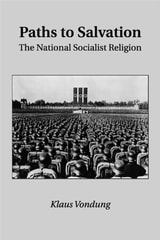
Paths to Salvation
The National Socialist ReligionKlaus Vondung
St. Augustine's Press, 2017
In order to understand National Socialism one must recognize its religious nature. Many Germans were attracted to the party by its pledge to re-establish a true community of the people, a goal that was celebrated as “holy”.
Not only did Hitler promise to solve political, social, and economic problems, he also responded to a widely felt need for salvation. The prospect of salvation elevated politics into the realm of religion and lent meaning to the lives of those who embraced it.
In this work Klaus Vondung explores the various forms in which the elevation of politics into the sphere of religion was expressed in the Third Reich: in the faith of committed National Socialists, in the party’s cult events which celebrated the “community of the people” as a “community of faith” and the Fuhrer as “savior”, and in the persecution of the Jews that was ‘justified’ in religious terms by demonizing Jews as the “evil enemies of humanity” responsible for the world’s ills. This apocalyptic worldview was the extreme manifestation of the religious nature of National Socialism and, in the final analysis, the only plausible explanation for the intention of exterminating the Jews that led to the holocaust.
Paths toward the Nation
Islam, Community, and Early Nationalist Mobilization in Eritrea, 1941–1961Joseph L. Venosa
Ohio University Press, 2014

Patient Zero and the Making of the AIDS Epidemic
Richard A. McKay
University of Chicago Press, 2017
The search for a “patient zero”—popularly understood to be the first person infected in an epidemic—has been key to media coverage of major infectious disease outbreaks for more than three decades. Yet the term itself did not exist before the emergence of the HIV/AIDS epidemic in the 1980s. How did this idea so swiftly come to exert such a strong grip on the scientific, media, and popular consciousness? In Patient Zero, Richard A. McKay interprets a wealth of archival sources and interviews to demonstrate how this seemingly new concept drew upon centuries-old ideas—and fears—about contagion and social disorder.
McKay presents a carefully documented and sensitively written account of the life of Gaétan Dugas, a gay man whose skin cancer diagnosis in 1980 took on very different meanings as the HIV/AIDS epidemic developed—and who received widespread posthumous infamy when he was incorrectly identified as patient zero of the North American outbreak. McKay shows how investigators from the US Centers for Disease Control inadvertently created the term amid their early research into the emerging health crisis; how an ambitious journalist dramatically amplified the idea in his determination to reframe national debates about AIDS; and how many individuals grappled with the notion of patient zero—adopting, challenging and redirecting its powerful meanings—as they tried to make sense of and respond to the first fifteen years of an unfolding epidemic. With important insights for our interconnected age, Patient Zero untangles the complex process by which individuals and groups create meaning and allocate blame when faced with new disease threats. What McKay gives us here is myth-smashing revisionist history at its best.
Patrick Leigh Fermor
Noble Encounters between Budapest and TransylvaniaMichael O'Sullivan
Central European University Press, 2018

Patrick White Letters
Patrick White
University of Chicago Press, 1996
Patrick White spent his whole life writing letters. He wanted them all burnt, but thousands survive to reveal him as one of the greatest letter-writers of his time. Patrick White: Letters is an unexpected and final volume of prose by Australia's most acclaimed novelist. Only a few scraps of White's letters have been published before.
From the aftermath of the First World War until his death in 1990, letters poured from White's pen: they are shrewd, funny, dramatic, pigheaded, camp, and above all, hauntingly beautiful. He wrote novels to sway a hostile world, but letters were for friends.
The culmination of ten years' work and reflection by David Marr, author of the well-received biography Patrick White: A Life, the volume tells the story of White's life in his own words. These are the letters of a great writer, a profound critic, a gossip with the sharpest eyes and tongue, a man who loved and hated ferociously, a keen cook, an angry patriot, and a believer never free of doubt.
"A literary milestone."—Kirkus Reviews
"Mean-spirited and brilliant, the 600 letters collected here offer real insight into the life of the Nobel-Prize winning Australian author. White's venom is matched by his torment, and the whole volume is redeemed by outstanding writing."—Publisher's Weekly ("Best Books 96")
"[T]hose who come to these letters after having read Marr's biography will expect more than shop talk from the master novelist. They will expect the bracing bitchiness of a master curmudgeon. And they will not be disappointed."—Frank Wilson, Philadelphia Inquirer
Patrick White (1912-1990), Australian novelist and playwright, won the Nobel Prize in Literature in 1973. His many novels include Voss, The Twyborn Affair, and Riders in the Chariot.
Patriotism is a Catholic Virtue
Irish-American Catholics, The American Church and the Coming of the Great WarThomas J. Rowland
Catholic University of America Press, 2023
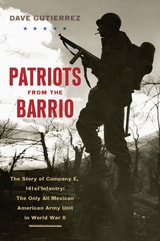
Patriots from the Barrio
The Story of Company E, 141st Infantry: The Only All Mexican American Army Unit in World War IIDave Gutierrez
Westholme Publishing, 2018
The Inspiring True Story of a Segregated Unit Whose Exploits Underscore the Forgotten Latino Contribution to the Allied Victory in World War II
As a child, Dave Gutierrez hung on every word his father recalled about his cousin Ramon, “El Sancudo” (the mosquito), and his service in World War II, where he earned a Silver Star, three Purple Hearts, and escaped from the Germans twice. Later, Dave decided to find out more about his father’s cousin, and in the course of his research he discovered that Ramon Gutierrez was a member of Company E, 141st Infantry, a part of the 36th “Texas” Division that was comprised entirely of Mexican Americans—the only such unit in the entire U.S. Army. The division landed at Salerno, Italy, in 1943, among first American soldiers to set foot in Europe. In the ensuing months, Company E and the rest of the 36th would battle their way up the mountainous Italian peninsula against some of Nazi Germany’s best troops. In addition to the merciless rain, mud, and jagged peaks, swift cold rivers crisscrossed the region, including the Rapido, where Company E would face its greatest challenge. In an infamous episode, the 36th Division was ordered to cross the Rapido despite reports that the opposite bank was heavily defended. In the ensuing debacle, the division was ripped apart, and Company E sustained appalling casualties. The company rebounded and made the storied landings at Anzio and ultimately invaded southern France for a final push into Germany. The men of Company E distinguished themselves as rugged fighters capable of warring amid the rubble of destroyed villages and in the devastated countryside.
Based on extensive archival research and veteran and family accounts, Patriots from the Barrio: The Story of Company E, 141st Infantry: The Only All Mexican American Army Unit in World War II brings to life the soldiers whose service should never have gone unrecognized for so long. With its memorable personalities, stories of hope and immigration, and riveting battle scenes, this beautifully written book is a testament to the shared beliefs of all who have fought for the ideals of the American flag.
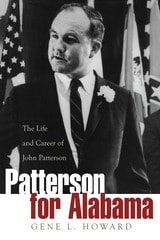
Patterson for Alabama
The Life and Career of John PattersonGene Howard
University of Alabama Press, 2013
The definitive biography of a governor whose career reflected the promises, conflicts, and contradictions of modern Alabama.
John Patterson, Alabama governor from 1959 to 1963, was thrust into the Alabama political arena after the brutal murder of his father, attorney general Albert Patterson in 1954. Allowed by the Democratic Party to take his father’s place and to complete the elder’s goal of cleaning up corruption in his hometown Phenix City, Patterson made a young, attractive, and sympathetic candidate. Patterson for Alabama details his efforts to clean up his hometown, oppose corruption in the administration of Governor Big Jim Folsom, and to resist school desegregation. Popular on all three counts, Patterson went on to defeat rising populist George Wallace for governor.
Patterson’s term as governor was marked by rising violence as segregationists violently resisted integration. His role as a champion of resistance has clouded his reputation to this day. Patterson left office with little to show for f his efforts and opposed for one reason or another by nearly all sectors of Alabama. Stymied in efforts to reclaim the governorship or a seat on the Alabama state Supreme Court, Patterson was appointed by Wallace to the state court of criminal appeals in 1984 and served on that body until retiring in 1997. In 2004, he served as one of the justices who removed the Chief Justice of the Alabama Supreme Court Roy Moore for ignoring a federal court order.
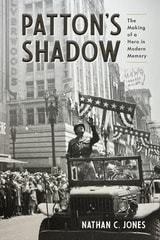
Patton's Shadow
The Making of a Hero in Modern MemoryNathan C. Jones
University of Alabama Press, 2024
An engrossing account of the myth and legend of George S. Patton and what his reputation illuminates about American culture and hero worship
Patton’s Shadow by Nathan C. Jones, a leading authority on George S. Patton, offers a definitive account of the creation of the Patton legend and what it illuminates about American culture and the worship of heroes. Jones traces how the persona of Patton, a brash and brilliant general in the European theater of World War II, transcended the individual man and became a cultural icon and byword for triumphal American might.
Patton was a hero lionized and celebrated in his own time. Patton as well as the US Army cultivated his persona during and after the war. His image was used to promote patriotism, commercial goods, and military recruitment. The 1970 Academy Award–winning film starring George C. Scott cemented his iconic image for millions of Americans, further embellishing Patton’s persona and introducing him to entirely new generations of young Americans.
Patton’s Shadow is an intellectually omnivorous tour de force that draws on ideas about heroes from sources as timeless as ancient mythology and as contemporary as Abraham Maslow, Max Weber, and Carl Jung. Jones artfully locates the honored altar that heroes occupy in the human heart and then answers insightful questions about what America’s embrace of Patton in particular as a military hero illuminates about the United States, about Patton’s generation, and about our own.
Jones’s engrossing work will fascinate readers interested in American history, military history, and the psychology of heroism.
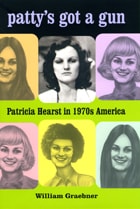
Patty's Got a Gun
Patricia Hearst in 1970s AmericaWilliam Graebner
University of Chicago Press, 2008
Paul Bowles
A LifeVirginia Spencer Carr
Northwestern University Press, 2008
Paul Robeson and the Cold War Performance Complex
Race, Madness, ActivismTony Perucci
University of Michigan Press, 2012
Actor and singer Paul Robeson's performances in Othello, Show Boat, and The Emperor Jones made him famous, but his midcentury appearances in support of causes ranging from labor and civil rights to antilynching and American warmongering made him notorious. When Robeson announced at the 1949 Paris Peace Conference that it was "unthinkable" for blacks to go to war against the Soviet Union, the mainstream American press declared him insane.
Notions of Communism, blackness, and insanity were interchangeably deployed during the Cold War to discount activism such as Robeson's, just a part of an array of social and cultural practices that author Tony Perucci calls the Cold War performance complex. Focusing on two key Robeson performances---the concerts in Peekskill, New York, in 1949 and his appearance before the House Committee on Un-American Activities in 1956---Perucci demonstrates how these performances and the government's response to them are central to understanding the history of Cold War culture in the United States. His book provides a transformative new perspective on how the struggle over the politics of performance in the 1950s was also a domestic struggle over freedom and equality. The book closely examines both of these performance events as well as artifacts from Cold War culture---including congressional documents, FBI files, foreign policy papers, the popular literature on mental illness, and government propaganda films---to study the operation of power and activism in American Cold War culture.
Pay for Your Pleasures
Mike Kelley, Paul McCarthy, Raymond PettibonCary Levine
University of Chicago Press, 2013
Paying Calls in Shangri-La
Scenes from a Woman’s Life in American DiplomacyJudith M. Heimann
Ohio University Press, 2016
Judith M. Heimann entered the diplomatic life in 1958 to join her husband, John, in Jakarta, Indonesia, at his American Embassy post. This, her first time out of the United States, would set her on a path across the continents as she mastered the fine points of diplomatic culture. She did so first as a spouse, then as a diplomat herself, thus becoming part of one of the Foreign Service’s first tandem couples.
Heimann’s lively recollections of her life in Africa, Asia, and Europe show us that when it comes to reconciling our government’s requirements with the other government’s wants, shuttle diplomacy, Skype, and email cannot match on-the-ground interaction. The ability to gauge and finesse gesture, tone of voice, and unspoken assumptions became her stock-in-trade as she navigated, time and again, remarkably delicate situations.
This insightful and witty memoir gives us a behind-the-scenes look at a rarely explored experience: that of one of the very first married female diplomats, who played an unsung but significant role in some of the important international events of the past fifty years. To those who know something of today’s world of diplomacy, Paying Calls in Shangri-La will be an enlightening tour through the way it used to be—and for aspiring Foreign Service officers and students, it will be an inspiration.
Published in association with ADST-DACOR Diplomats and Diplomacy Series

Paying the Price
Ignacio Ellacuría and the Murdered Jesuits of El SalvadorTeresa Whitfield
Temple University Press, 1994
On November 16, 1989, on the campus of El Salvador's University of Central America, six Jesuits and two women were murdered by members of the Salvadoran army, an army funded and trained by the United States. One of the murdered Jesuits was Ignacio Ellacuría, the university's Rector and a key, although controversial, figure in Salvadoran public life. From an opening account of this terrible crime, Paying the Price asks, Why were they killed and what have their deaths meant? Answers come through Teresa Whitfield's detailed examination of Ellacuría's life and work. His story is told in juxtaposition with the crucial role played by the unraveling investigation of the Jesuits' murders within El Salvador's peace process.
A complex and nuanced book, Paying the Price offers a history of the Church in El Salvador in recent decades, an analysis of Ellacuría's philosophy and theology, an introduction to liberation theology, and an account of the critical importance of the University of Central America. In the end, Whitfield's comprehensive picture of conditions in El Salvador suggest that the Jesuits' murders were almost inevitable. A crime that proved a turning point in El Salvador's civil war, the murders expressed the deep tragedy of the Salvadoran people beyond suffering the heartless cruelty, violence, and deceitfulness of a corrupt military and their patrons in the U.S. government.
Whitfield draws on her extensive research of Jesuit archives and private papers, Ellacuría's diaries, documents declassified by the U.S. government, and 200 interviews conducted with sources ranging from Jesuits to Salvadoran military officers, U.S. officials and congressmen to human rights campaigners.
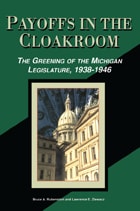
Payoffs in the Cloakroom
The Greening of the Michigan Legislature, 1938-1946Bruce A. Rubenstein
Michigan State University Press, 1995
Payoffs in the Cloakroom is a spellbinding follow-up to Rubenstein and Ziewacz's critically acclaimed Three Bullets Sealed His Lips. Three Bullets brought to life new evidence on the 1945 murder of Michigan Senator Warren Hooper. Payoffs in the Cloakroom takes up where Three Bullets left off, unraveling a complex web of political corruption and dirty state politics. In the process, the authors demonstrate that Senator Hooper was murdered to prevent his grand jury testimony against republican boss Frank McKay, who was facing bribery charges.
Making use of actual court proceeding, personal interviews, and newspaper accounts, and even a re-evaluation of police evidence, Rubenstein and Ziewacz tell a story that contains all the ingredients of first-class detective fiction—only in this instance, the story is based on fact. With chapter titles such as "Charlie and His Little Black Book," "I Never Dreamed Murder," and "Them Bones, Them Bones," the authors have, once again, provided a stimulating and absorbing account of one of the darker chapters of Michigan's political history.
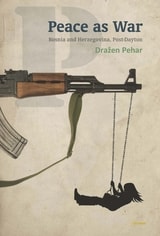
Peace as War
Bosnia-Herzegovina Post-DaytonDrazen Pehar
Central European University Press, 2019
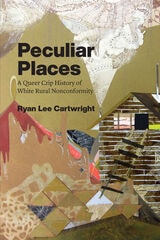
Peculiar Places
A Queer Crip History of White Rural NonconformityRyan Lee Cartwright
University of Chicago Press, 2021
Sensationalized accounts of white rural communities’ aberrant sexualities, racial intermingling, gender transgressions, and anomalous bodies and minds, which proliferated from the turn of the century, created a national view of the perversity of white rural poverty for the American public. Cartwright contends that these accounts, extracted and estranged from their own ambivalent forum of community gossip, must be read in kind: through a racialized, materialist queercrip optic of the deeply familiar and mundane. Taking in popular science, documentary photography, news media, documentaries, and horror films, Peculiar Places orients itself at the intersections of disability studies, queer studies, and gender studies to illuminate a racialized landscape both profoundly ordinary and familiar.
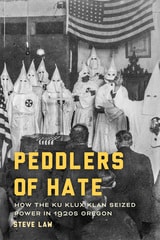
Peddlers of Hate
How the Ku Klux Klan Seized Power in 1920s OregonSteve Law
Oregon State University Press, 2026
The revived Knights of the Ku Klux Klan flourished in Oregon in the early 1920s. With more than sixty chapters established in both large and small communities like Portland, Medford, Astoria, and La Grande, the Klan’s power escalated in the region. Klan salesmen, working on commission, successfully enlisted Oregonians with a message of religious prejudice and racism. At the Klan’s peak, Portland was home to the sixth largest chapter in the country and there were more members per capita in Oregon than in any other state except one.
In Peddlers of Hate, journalist Steve Law draws on published and unpublished sources, new research, and interviews with leading scholars to provide a comprehensive account of how Oregon became one of the Klan’s strongest outposts. Representing the Klan as merely a fraternal lodge, Klan recruiters were trained to vilify Catholics, immigrants, Blacks, and Jews. They gained wide support, toppling an incumbent governor and congressman, persuading voters to ban Catholic schools, and winning control of the legislature and several local governments. From stories of “escaped nuns” to fiery crosses at mass Klan rallies at Salem’s state fairgrounds and Portland’s Mount Tabor Park, Law examines this divisive and forgotten time in Oregon’s history. He shows how it was finally greed, hypocrisy, and corruption that spurred the hate group’s demise—providing historical lessons that will resonate today.
Peltse and Pentameron
Volodymyr Dibrova
Northwestern University Press, 1996
Peltse portrays the formation of an average apparatchik. Both funny and alarming, it provides a psychological portrait of an individual trapped in a system he simultaneously dislikes and depends upon for survival. Pentameron tells the story of one day in the life of five colleagues at a Soviet research institute. Each is dissatisfied, yet all are trapped in and by a system that has taken away their ability to act decisively.
Pen and Sword
American War Correspondents, 1898-1975Mary S. Mander
University of Illinois Press, 2010
Pendergast!
Lawrence H. Larsen and Nancy J. Hulston
University of Missouri Press, 1997
Born in St. Joseph, Missouri, in 1872, Tom Pendergast moved to Kansas City around 1890 to work for his brother James, founder of the Pendergast "Goat" faction in Kansas City Democratic politics. In 1911, Pendergast became head of the Goats, and over the next fifteen years he created a powerful political machine that used illegal voting and criminal enforcers to gain power. Following a change in the city charter in 1925, Pendergast took control of Kansas City and ran it as his own personal business. In the 1930s, he received over $30 million annually from gambling, prostitution, and narcotics, putting him in the big leagues of American civic corruption. He also wielded great power in the National Democratic Party and started Harry S. Truman on the road to the presidency.
In this well-balanced biography, the authors examine Pendergast's rise to power, his successes as a political leader, his compassion for the destitute, and his reputation for keeping his word. They also examine Pendergast's character development and how his methods became more and more ruthless. Pendergast had no use for ideology in his "invisible government"—only votes counted.
In 1937 and 1938 the federal government broke the back of Pendergast's machine, convicting 259 of his campaign aides for vote fraud. In 1939 Pendergast, who was believed to be the largest bettor on horse racing in the United States, was jailed for income tax evasion, and he died in disgrace in 1945.
An insightful and comprehensive biography, Pendergast! will surely serve for years to come as the most thorough investigation of the life and infamous career of Tom Pendergast.

Penny Loafers & Bobby Pins
Tales and Tips from Growing Up in the ’50s and ’60sSusan Sanvidge
Wisconsin Historical Society Press, 2010
“In the fifties, sleek Mixmasters were replacing rusty eggbeaters, and new pressure-cookers blew their tops in kitchens all over town. There were kids everywhere, and new ‘ranch-style’ houses filled vacant lots. . . . Turquoise Studebakers and dusty-rose Chevy BelAirs with flamboyant fins and lots of chrome replaced dark pre-war cars. Cameras took color snapshots instead of black-and-white. We wore red canvas tennis shoes and lemon yellow shorts, and bright blue popsicles melted down our chins.” —from the Introduction
Penumbra
The Premier Stage for African American DramaMacelle Mahala
University of Minnesota Press, 2013
Penumbra Theatre Company was founded in 1976 by Lou Bellamy as a venue for African American voices within the Twin Cities theatre scene and has stood for more than thirty-five years at the intersection of art, culture, politics, and local community engagement. It has helped launch the careers of many internationally respected theatre artists and has been repeatedly recognized for its artistic excellence as the nation’s foremost African American theatre.
Penumbra is the first-ever history of this barrier-breaking institution. Based on extensive interviews with actors, directors, playwrights, producers, funders, and critics, Macelle Mahala’s book offers a multifaceted view of the theatre and its evolution. Penumbra follows the company’s emergence from the influential Black Arts and settlement house movements; the pivotal role Penumbra played in the development of August Wilson’s career and, in turn, how Wilson became an avid supporter and advocate throughout his life; the annual production of Black Nativity as a community-building performance; and the difficult economics of African American theatre production and how Penumbra has faced these challenges for nearly four decades.
Penumbra is a testament to how a theatre can respond to and thrive within changing political and cultural realities while contributing on a national scale to the African American presence on the American stage. It is a celebration of theatre as a means of social and cultural involvement—both local and national—and ultimately, of Penumbra’s continuing legacy of theatre that is vibrant, diverse, and vital.
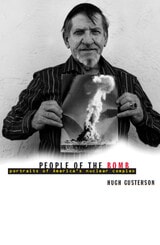
People Of The Bomb
Portraits of America’s Nuclear ComplexHugh Gusterson
University of Minnesota Press, 2004
How the American military-industrial complex has invaded our consciousness to create consent for its programs
“We have had the bomb on our minds since 1945. It was first our weaponry and then our diplomacy, and now it’s our economy. How can we suppose that something so monstrously powerful would not, after forty years, compose our identity?” —E. L. Doctorow
This book tells the story of how—like it or not, know it or not—we have become “the people of the bomb.” Integrating fifteen years of field research at weapons laboratories across the United States with discussion of popular movies, political speeches, media coverage of war, and the arcane literature of defense intellectuals, Hugh Gusterson shows how the military-industrial complex has built consent for its programs and, in the process, taken the public “nuclear.”People of the Bomb mixes empathic and vivid portraits of individual weapons scientists with hard-hitting scrutiny of defense intellectuals’s inability to foresee the end of the Cold War, government rhetoric on missile defense, official double standards about nuclear proliferation, and pork barrel politics in the nuclear weapons complex. Overall, the book assembles a disturbing picture of the ways in which the military-industrial complex has transformed our public culture and personal psychology in the half century since we entered the nuclear age.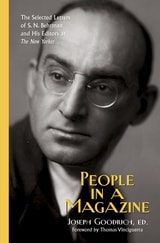
People in a Magazine
The Selected Letters of S. N. Behrman and His Editors at "The New Yorker"Joseph Goodrich
University of Massachusetts Press, 2018
Playwright, biographer, screenwriter, and critic S. N. Behrman (1893–1973) characterized the years he spent writing for The New Yorker as a time defined by “feverish contact with great theatre stars, rich people and social people at posh hotels, at parties, in mansions and great estates.” While he hobnobbed with the likes of Mary McCarthy, Elia Kazan, and Greta Garbo and was one of Broadway's leading luminaries, Behrman would later admit that the friendships he built with the magazine's legendary editors Harold Ross, William Shawn, and Katharine S. White were the “one unalloyed felicity” of his life.
People in a Magazine collects Behrman's correspondence with his editors along with telegrams, interoffice memos, and editorial notes drawn from the magazine's archives—offering an unparalleled view of mid-twentieth-century literary life and the formative years of The New Yorker, from the time of Behrman's first contributions to the magazine in 1929 until his death.
People of Plenty
Economic Abundance and the American CharacterDavid M. Potter
University of Chicago Press, 1954
America has long been famous as a land of plenty, but we seldom realize how much the American people are a people of plenty—a people whose distinctive character has been shaped by economic abundance. In this important book, David M. Potter breaks new ground both in the study of this phenomenon and in his approach to the question of national character. He brings a fresh historical perspective to bear on the vital work done in this field by anthropologists, social psychologists, and psychoanalysts.
People of the Machine
Computers and Human Reason in the Cold WarJoy Rohde
University of Chicago Press, 0
How Cold War computational experts invested in diplomacy, world peace, and human agency created systems that threatened democratic values.
Beginning in the 1950s, international relations experts and United States government officials built novel computer systems designed to make foreign policy knowledge and practice more scientific. Human reason, they feared, might not be enough to guarantee the survival of American democracy in a nuclear-armed world. They didn’t seek to replace humans with machines; they hoped computers would sift information or provide interactive models that analysts could use to make better decisions. But as they struggled to deliver on their ambitious goals, and as the Defense Department became more involved in their projects after the Vietnam War, their commitments to advancing knowledge, policy agency, and peace gave way to very different computing systems, ones in which correlation replaces causality and prediction replaces understanding.
In People of the Machine, Joy Rohde reveals how even the best-intentioned attempts at fostering political engagement and human autonomy evolved into an anti-democratic nightmare. Her political and intellectual history shows how the subtle and corrosive effects of technological change set the template for today’s political and conceptual regimes. Doing so reveals not just the roots of contemporary inequality and disfranchisement but how thoroughly that antihumanism has been baked into our institutions and norms.
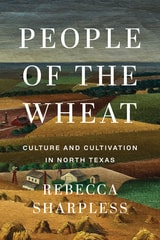
People of the Wheat
Culture and Cultivation in North TexasRebecca Sharpless
University of Texas Press, 2026
How wheat growing, milling, and baking shaped the people and culture of North Texas.
In the national imaginary, America’s amber fields of grain lie in the country’s center, but for more than a century, they also grew across one pocket of the South: North Texas. From the 1840s to the 1970s, the state's agriculture, dominated in lore by cotton in the east and livestock in the open range, was heavily invested in the cultivation, processing, sale, and consumption of wheat. Recalling a forgotten history, Rebecca Sharpless shows how the rhythms of the wheat harvest—and the evolution of the milling, distribution, and baking industries—governed daily life in what is now known as the Dallas–Fort Worth Metroplex.
In the 1840s, Anglo settlers discovered that grain flourished in North Texas and quickly built an economy that included wheat in fields, mills, and kitchens. After the Civil War, hand labor gave way to mechanization, greatly increasing production. Commercial bakeries churned out novel confections, and big cities were built on the bounty of the countryside. In the second half of the twentieth century, as production moved northward, industrial milling and baking declined, but home baking boomed, flour advertising supported regional music, and wheat fortunes financed the region’s cultural life. Sharpless covers 150 years of wheat’s very human history and shows how the labor that cultivated it, the sustenance it provided, and the prosperity it generated left an indelible mark on the people and institutions of Texas.
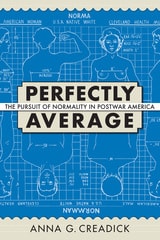
Perfectly Average
The Pursuit of Normality in Postwar AmericaAnna G. Creadick
University of Massachusetts Press, 2010
At the end of World War II, many Americans longed for a return to a more normal way of life after decades of depression and war. In fact, between 1945 and 1963 the idea of “normality” circulated as a keyword in almost every aspect of American culture. But what did this term really mean? What were its parameters? Whom did it propose to include and exclude?
In Perfectly Average, Anna Creadick investigates how and why “normality” reemerged as a potent homogenizing category in postwar America. Working with scientific studies, material culture, literary texts, film, fashion, and the mass media, she charts the pursuit of the “normal” through thematic chapters on the body, character, class, sexuality, and community.
Creadick examines such evidence as the “Norm and Norma” models produced during the war by sexologists and anthropologists—statistical composites of “normal” American bodies. In 1945, as thousands of Ohio women signed up for a Norma Look-Alike contest, a “Harvard Study of Normal Men” sought to define the typical American male according to specific criteria, from body shape to upbringing to blood pressure. By the early 1950s, the “man in the gray flannel suit” had come to symbolize what some regarded as the stultifying sameness of the “normalized” middle class. Meanwhile, novels such as From Here to Eternity and Peyton Place both supported and challenged normative ideas about gender, race, and sexuality, even as they worked to critique the postwar culture of surveillance—watching and being watched—through which normalizing power functioned.
As efforts to define normality became increasingly personal, the tensions em-bedded in its binary logic multiplied: Was normal descriptive of an average or prescriptive of an ideal? In the end, Creadick shows, a variety of statistics, assumptions, and aspirations converged to recast “normality” not as something innate or inborn, but rather as a quality to be actively pursued—a standard at once highly seductive and impossible to achieve because it required becoming perfectly average.
Performance Constellations
Networks of Protest and Activism in Latin AmericaMarcela A. Fuentes
University of Michigan Press, 2019
Performing America
Cultural Nationalism in American TheaterJeffrey D. Mason and J. Ellen Gainor, Editors
University of Michigan Press, 1999
Performing Asian America
Race and Ethnicity on the Contemporary StageJosephine Lee
Temple University Press, 1998
For instance, some Asian American playwrights critique the separation of issues of race and ethnicity from those of economics and class, or they see ethnic identity as a voluntary choice of lifestyle rather than an impetus for concerted political action. Others deal with the problem of cultural stereotypes and how to reappropriate their power. Lee is attuned to the complexities and contradictions of such performances, and her trenchant thinking about the criticisms lobbed at Asian American playwrights -- for their choices in form, perpetuation of stereotype, or apparent sexism or homophobia -- leads her to question how the presentation of Asian American identity in the theater parallels problems and possibilities of identity offstage as well.
Discussed are better-known plays such as Frank Chin's The Chickencoop Chinaman, David Henry Hwang's M. Butterfly, and Velina Hasu Houston's Tea, and new works like Jeannie Barroga's Walls and Wakako Yamauchi's 12-1-a.

Performing Captivity, Performing Escape
Cabarets and Plays from the Terezín/Theresienstadt GhettoEdited by Lisa Peschel
Seagull Books, 2014
The concentration camp and Jewish ghetto at Terezín, or Theresienstadt, in what is now the Czech Republic, was a site of enormous suffering, fear, and death. But amid this horrific period, there was also a thriving and desperately vibrant cultural life. While the children’s drawings and musical pieces created in the ghetto have become justly famous, the prisoners’ theatrical works, though a lesser-known aspect of their artistic endeavors, deserves serious attention as well.
Performing Captivity, Performing Escape collects twelve theatrical texts—cabaret songs and sketches, historical and verse dramas, puppet plays, and a Purim play—written by Czech and Austrian Jews. Together these works reveal the wide range of ways in which the prisoners engaged with and escaped from life in the ghetto through performance. The anthology opens with an insightful prologue by novelist Ivan Klíma, who was interned in the ghetto as a child and contains a detailed introduction by editor Lisa Peschel about the pre-war theatrical influences and wartime conditions that inspired the theater of the ghetto. The array of theatrical forms collected in this anthology speaks of the prisoners’ persistence of hope in a harrowing time and will be a moving read for students and scholars of the Holocaust.
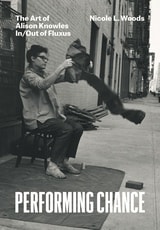
Performing Chance
The Art of Alison Knowles In/Out of FluxusNicole L. Woods
University of Chicago Press, 2026
Alison Knowles stands out as the sole female artist among the founders of Fluxus, yet she has remained an enigmatic, underrecognized figure in the history of art. Performing Chance fills a gap in the record, bringing to light Knowles’s transformative body of work as it evolved from abstract painting in the late 1950s, to silkscreens, print media, and performance in the early 1960s, to groundbreaking works in digital poetry, acoustical art, and large-scale installations in the late 1960s-70s.
Through her access to previously unpublished archival materials and direct interviews with the artist, Nicole L. Woods provides close readings of pivotal works, disclosing the ways Knowles instituted formal tactics that moved beyond modernist painting, championed principles of indeterminacy and chance, and fostered sociopolitical consciousness. Situating Knowles’s innovations in various media within the distinct cultural contexts of Wiesbaden, London, Paris, New York City, and Los Angeles, Performing Chance brings this key artist back to her rightful place as a leader of the postwar avant-garde and provides a nuanced history of the role of women artists in Fluxus and beyond.
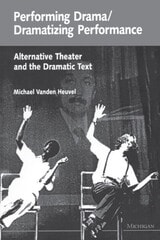
Performing Drama/Dramatizing Performance
Alternative Theater and the Dramatic TextMichael Vanden Heuvel
University of Michigan Press, 1993
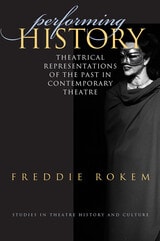
Performing History
Theatrical Representations of the Past in Conetmporary TheatreFreddie Rokem
University of Iowa Press, 2000

Performing Television
Contemporary Drama and the Media CultureElizabeth Klaver
University of Wisconsin Press, 2000
Klaver applies post-structuralist theories of subjectivity to drama while ranging through Beckett’s plays, National Hockey League games, “The Tonight Show,” gay and lesbian drama, minority drama, avant-garde performance, and the topics of theatrical paranoia, the mediatized Imaginary, and the spectatorial gaze.
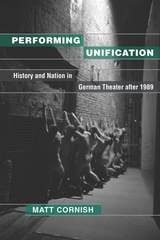
Performing Unification
History and Nation in German Theater after 1989Matt Cornish
University of Michigan Press, 2017