Results by title
57 books match the query 'Hunting' and 11 start with a

A Country So Full of Game
The Story of Wildlife in IowaJames J. Dinsmore
University of Iowa Press, 1994
Based on a thorough search of hundreds of primary sources ranging from chronicles of military expeditions to field reports by early naturalists, first-person accounts by fur traders and hunters to up-to-date county checklists, A Country So Full of Game examines the dramatic encounters of humans with elk, black bears, passenger pigeons, bobcats, prairie-chickens, otters, and many more. Each chapter discusses the animal's status and distribution when explorers first arrived in Iowa, how it was hunted or trapped, how this exploitation affected its population, and what its current status is both in Iowa and nationally. Enhanced by Mark Müller's distinctive drawings, commissioned for this book, the anecdotes evoke a sense of loss and wonder at the magic abundance of Iowa's wildlife.
Iowa has been changed more than, perhaps, any other state. We can mourn the disappearance of the bison and mountain lion while we marvel at the recent success of the wild turkey and white-tailed deer. Listening to James Dinsmore tell the story of wildlife in Iowa can open a window onto the future as other areas of our planet are increasingly altered by humans. A Country So Full of Game will allow all naturalists, both amateur and professional, hunter and biologist, to appreciate and learn from Iowa's diverse wild heritage.
A Grouse Hunter’s Almanac
The Other Kind of HuntingMark Parman
University of Wisconsin Press, 2017
"Notable and quotable. Parman stakes out original territory and provides a vivid snapshot of the Northwoods."—John Motoviloff, author of Wisconsin Wildfoods: 100 Recipes for Badger State Bounties
"Extremely rich and detailed. Parman puts forth original and genuine experiences."—Richard Yatzeck, author of Hunting the Edges
A Matter of Life and Death
Hunting in Contemporary VermontMarc Boglioli
University of Massachusetts Press, 2009
In A Matter of Life and Death, anthropologist Marc Boglioli puts a human face on a group widely regarded as morally suspect, one that currently stands in the crossfire of America's so-called culture wars. Drawing on extensive ethnographic fieldwork in Addison County, Vermont, which took him from hunting camps and sporting goods stores to local bars and kitchen tables, Boglioli focuses on how contemporary hunters, women as well as men, understand their relationship to their prey. He shows how hunters' attitudes toward animals flow directly from the rural lifeways they have continued to maintain in the face of encroaching urban sensibilities. The result is a rare glimpse into a culture that experiences wild animals in a way that is at once violent, consumptive, and respectful, and that regards hunting as an enduring link to a vanishing past. It is a book that will challenge readers—hunters, non-hunters, and anti-hunters alike—to reconsider what constitutes a morally appropriate relationship with the non-human residents of this planet.
A Rough Sort of Beauty
Reflections on the Natural Heritage of ArkansasDana Steward
University of Arkansas Press, 2002
A Thousand Deer
Four Generations of Hunting and the Hill CountryBy Rick Bass
University of Texas Press, 2012
In November, countless families across Texas head out for the annual deer hunt, a ritual that spans generations, ethnicities, socioeconomics, and gender as perhaps no other cultural experience in the state. Rick Bass’s family has returned to the same hardscrabble piece of land in the Hill Country—“the Deer Pasture”—for more than seventy-five years. In A Thousand Deer, Bass walks the Deer Pasture again in memory and stories, tallying up what hunting there has taught him about our need for wildness and wilderness, about cycles in nature and in the life of a family, and particularly about how important it is for children to live in the natural world.
The arc of A Thousand Deer spans from Bass’s boyhood in the suburbs of Houston, where he searched for anything rank or fecund in the little oxbow swamps and pockets of woods along Buffalo Bayou, to his commitment to providing his children in Montana the same opportunity—a life afield—that his parents gave him in Texas. Inevitably this brings him back to the Deer Pasture and the passing of seasons and generations he has experienced there. Bass lyrically describes his own passage from young manhood, when the urge to hunt was something primal, to mature adulthood and the waning of the urge to take an animal, his commitment to the hunt evolving into a commitment to family and to the last wild places.
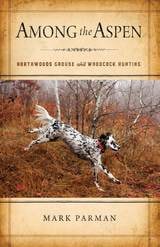
Among the Aspen
Northwoods Grouse and Woodcock HuntingMark Parman
University of Wisconsin Press, 2018
Among the Aspen interweaves tales of companionable dogs, lucky hunts, and favorite coverts where quarry lurks with ruminations on the demise of hunting traditions, the sale of public lands and the privatization of places to hunt, the growing indifference to science, and the loss of wilderness on a planet increasingly transformed by the sprawl of humanity.

An Outdoor Journal
Adventures and ReflectionsJimmy Carter
University of Arkansas Press, 1994
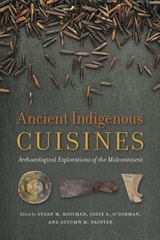
Ancient Indigenous Cuisines
Archaeological Explorations of the MidcontinentEdited by Susan M. Kooiman, Jodie A. O'Gorman, and Autumn M. Painter
University of Alabama Press, 2025
New essays from foodways archaeology related to cuisine in social, cultural, and environmental contexts.
This collection of original essays is the first to cover recent trends in foodways archaeology in the Midwest using the concept of cuisine: the selection of food ingredients and methods of food preparation, cooking, and serving/consumption in relation to their social, cultural, and environmental contexts. This work span the Early Archaic (9000 BC) to Late Precontact (up to around AD 1500) in ecological zones of present-day Michigan, Indiana, Illinois, Wisconsin, Minnesota, North Dakota, and Manitoba. Chapters trace development from hunter-gathering to horticultural practices to the more robust farming/fishing/hunting model centered on maize, squash, and other domesticates.
As Susan M. Kooiman, Jodie A. O’Gorman, and Autumn M. Painter note, identification of past cooking habits and evolving methods for foodstuffs identification can help archaeologists to reconstruct foodways and connect food behaviors with identity and associated fundamental societal beliefs. Contributors to this collection use cutting-edge methods and perspectives and consider a range of questions and outcomes that demonstrate the versatility and strength of culinary studies. To move the field forward, contributors also note areas for further analysis and improvement.
This volume targets archaeologists and students, archaeobotanists and zooarchaeologists, and those curious about Indigenous food culture. Engaging content includes chapters on the construction of earth ovens, the use-alteration of pottery and residue, a discussion of cuisine combining plant and animal data with ceramic trends, and the various contexts of plates to understand cooking methods and the social role of cuisine. Others examine faunal remains, the plant remains of feasting, the introduction of maize, the use of limestone nixtamalization, and archaeobotanical assemblages that reveal shifts in cuisine. A conclusion addresses the question, Why cuisine?
CONTRIBUTORS
Rebecca K. Albert / Alleen Betzenhauser / Jennifer R. Haas / Mary M. King / Susan M. Kooiman / Mary E. Malainey / Terrance J. Martin / Fernanda Neubauer / Kelsey Nordine / Jodie A. O’Gorman / Autumn M. Painter / Jeffrey M. Painter / Kimberly Schaefer / Mary Simon
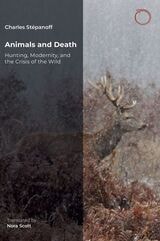
Animals and Death
Hunting, Modernity, and the Crisis of the WildCharles Stépanoff
HAU, 2026
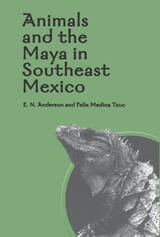
Animals and the Maya in Southeast Mexico
E. N. Anderson and Felix Medina Tzuc
University of Arizona Press, 2005
This book combines the insights of an anthropologist with the hands-on experience of a Maya campesino with the aim of improving the management of Quintana Roo’s wild lands and animal resources. E. N. Anderson and Felix Medina Tzuc pool their knowledge to document Yucatec Maya understanding and use of animals and to address practical matters related to wider conservation issues.
The book reflects a wealth of knowledge gathered from individuals regarded as experts on particular aspects of animal management, whether hunting, herding, or beekeeping. It also offers case studies of conservation successes and failures in various communities, pointing to the need for cooperation by the Mexican government and Maya people to save wildlife. Appendixes provide an extensive animal classification and a complete list of all birds identified in the area.
Even though sustainable forestry has finally come to the Yucatán, sustainable game use is practiced by only a few communities. Animals and the Maya in Southeast Mexico is a complete ethnozoology for the region, offered in the hope that it will encourage the recognition of Quintana Roo’s forests and wildlife as no less deserving of protection than ancient Maya cities.
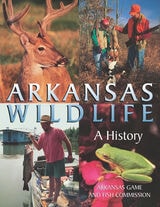
Arkansas Wildlife
A HistoryKeith B. Sutton
University of Arkansas Press, 1998