Results by title
4413 books match the query 'Anthropology' and 232 start with p
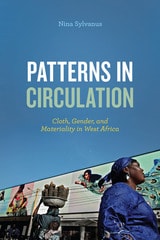
Patterns in Circulation
Cloth, Gender, and Materiality in West AfricaNina Sylvanus
University of Chicago Press, 2016
Sylvanus brings wax cloth’s unique and complex history to light: born as a nineteenth-century Dutch colonial effort to copy Javanese batik cloth for Southeast Asian markets, it was reborn as a status marker that has dominated the visual economy of West African markets. Although most wax cloth is produced in China today, it continues to be central to the expression of West African women’s identity and power. As Sylvanus shows, wax cloth expresses more than this global motion of goods, capital, aesthetics, and labor—it is a form of archive where intimate and national memories are stored, always ready to be reanimated by human touch. By uncovering this crucial aspect of West African material culture, she enriches our understanding of global trade, the mutual negotiations that drive it, and the how these create different forms of agency and subjectivity.

Peace
An Idea Whose Time Has ComeAnatol Rapoport
University of Michigan Press, 1992
Peasant Cooperation and Capitalist Expansion in Central Peru
Edited by Norman Long and Bryan R. Roberts
University of Texas Press, 1978
This book brings together the research into regional development and social change carried out in highland Peru by a team of British and Latin American social anthropologists and sociologists. The area studied—the Mantaro Valley of central Peru—is one of the most densely populated and economically differentiated of highland zones; it is also notable for its community-based forms of cooperation and its high level of peasant political activity.
The book presents a series of case studies that examine cooperative forms of organization in relation to developments in the regional economy and to changes in national policy. The analysis attempts to avoid interpreting local processes merely as responses to externally initiated change. It stresses instead the need to consider the interplay of local and national forces, because local groups and processes themselves affect the pattern of regional and national development. The case studies cover a range of political and economic topics, from peasant movements to the achievements and shortcomings of government-sponsored agricultural and manufacturing cooperatives. The concluding chapter, by the editors, explores the theoretical implications of these studies.
Peasant Intellectuals
Anthropology and History in TanzaniaSteven Feierman
University of Wisconsin Press, 1990
Scholars who study peasant society now realize that peasants are not passive, but quite capable of acting in their own interests. But, do coherent political ideas emerge within peasant society or do peasants act in a world where elites define political issues? Peasant Intellectuals is based on ethnographic research begun in 1966 and includes interviews with hundreds of people from all levels of Tanzanian society. Steven Feierman provides the history of the struggles to define the most basic issues of public political discourse in the Shambaa-speaking region of Tanzania. Feierman also shows that peasant society contains a rich body of alternative sources of political language from which future debates will be shaped.

Peasants Against the State
The Politics of Market Control in Bugisu, Uganda, 1900-1983Stephen G. Bunker
University of Chicago Press, 1991
Focusing on peasant struggles for market control over coffee exports in Bugisu from colonial times through the reign and overthrow of Idi Amin, Bunker shows that these freeholding peasants acted collectively and used the state's dependence on coffee export revenues to effectively influence and veto government programs inimical to their interests.
Bunker's work vividly portrays the small victories and great trials of ordinary people struggling to control their own economic destiny while resisting the power of the world economy.
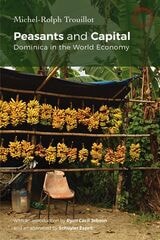
Peasants and Capital
Dominica in the World EconomyMichel-Rolph Trouillot
HAU, 2025
Over thirty-five years ago, Michel-Rolph Trouillot’s debut ethnography, Peasants and Capital: Dominica in the World Economy, dared to regard peasants not as vestiges of premodern economies but as instrumental to, and integrated in, a capitalist world system. Combining historical ethnography with an intimate portrait of a banana-producing eastern Caribbean village, this multi-sited study demonstrates how multinational capital thrives on the surplus production of peasant cultivators. At the same time, it investigates how peasantries generate independent conceptions of value and subsistence in the process of building a new postcolonial state in Dominica. This new edition of Peasants and Capital invites anthropologists to revisit the methodological innovations of this multi-scalar study and readers to meditate on the continued vitality of peasant livelihoods in the Caribbean today.
Ryan Cecil Jobson’s new introduction situates this edition in the context of Trouillot’s remarkable life and career. Jobson reminds us of the book’s enduring theoretical and ethnographic significance and asks us to consider how the entanglement of peasants from Dominica in national and world affairs has been impacted by more recent histories, such as the end of preferential markets for Caribbean bananas, the migration of “banana children” to regional and metropolitan urban centers, and the devastation of Dominica by Hurricane Maria.
Peasants on Plantations
Subaltern Strategies of Labor and Resistance in the Pisco Valley, PeruVincent Peloso
Duke University Press, 1999
Grounded in the theoretical perspectives of subaltern studies and drawing on an extremely complete archive of landed estates that includes detailed regular reports by plantation managers on all aspects of farming life, Peasants on Plantations reveals the intricate ways peasants, managers, and owners manipulated each other to benefit their own interests. As Peloso demonstrates, rather than a simple case of domination of the peasants by the owners, both parties realized that negotiation was the key to successful growth, often with the result that peasants cooperated with plantation growth strategies in order to participate in a market economy. Long-term contracts gave tenants and sharecroppers many opportunities to make farming choices, to assert claims on the land, compete among themselves, and participate in plantation expansion. At the same time, owners strove to keep the peasants in debt and well aware of who maintained ultimate control.
Peasants on Plantations offers a largely untold view of the monumental struggle between planters and peasants that was fundamental in shaping the agrarian history of Peru. It will interest those engaged in Latin American studies, anthropology, and peasant and agrarian studies.
Peasants on the Edge
Crop, Cult, and Crisis in the AndesBy William P. Mitchell
University of Texas Press, 1991
Throughout Latin America and the rest of the Third World, profound social problems are growing in response to burgeoning populations and unstable economic and political systems. In Peru, terrorist acts by the Shining Path guerilla movement are the most visible manifestation of social discontent, but rapid economic and religious changes have touched the lives of almost everyone, radically altering traditional lifeways. In this twenty-year study of the community of Quinua in the Department of Ayacucho, William Mitchell looks at changes provoked by population growth within a severely limited ecological and economic setting, including increasing conversion to a cash economy and out-migration, the decline of the Catholic fiesta system and the rise of Protestantism, and growing poverty and revolution.
When Mitchell first began his field studies in Quinua in 1966, farming was still the Quinueños' principal means of livelihood. But while the population was increasing rapidly, the amount of arable land in the community remained the same, creating increased food shortfalls. At the same time, government controls on food prices and subsidies of cheap food imports drove down the value of rural farm production. These ecological and economic factors forced many people to enter the nonfarm economy to feed themselves.
Using a materialist approach, Mitchell charts the new economic strategies that Quinueños use to confront the harsh pressures of their lives, including ceramic production, wage labor, petty commerce, and migration to cash work on the coat and in the eastern tropical forests. In addition, he shows how the growing conversion from Catholicism to Protestantism is also an economic strategy, since Protestant ideology offers acceptable reasons for redirecting the money that used to be spent on elaborate religious festivals to household needs and education.
The twenty-year span of this study makes it especially valuable for students of social change. Mitchell's unique, interdisciplinary approach, considering ecological, economic, and population factors simultaneously, offers a model that can be widely applied in many Third World areas. Additionally, the inclusion of an entire chapter of family histories reveals how economic and ecological forces are played out at the individual level.

Pentecostalism in Urban Oaxaca
Healing Patriarchy, Marriage, and MexicoMichelle Ramirez
University of Alabama Press, 2024
An ethnography focusing on a Pentecostal church community and their pursuit of healing marriages and prosperity
Pentecostalism in Urban Oaxaca is a timely feminist ethnography set in a Pentecostal church community in Oaxaca de Juarez. Based on extensive fieldwork, Michelle Ramirez skillfully melds medical anthropology with cultural analysis to reveal the Pentecostal movement’s dynamics in the contexts of faith healing, marital relations, and economic prosperity.
Ramirez takes stock of the problematic ways that Pentecostalism has played out for Mexican women today but also reminds readers of some of its successes. Within the context of Mexican patriarchy, some women parishioners in abusive relationships see the church as a way to improve their lot. Pentecostalism seeks to rupture with Mexico’s colonial heritage, and Ramirez provides novel ways for the reader to consider how Pentecostalism can provide healing for even the “endlessness of addiction.” One case study portrays a former abusive alcoholic womanizer who underwent a spiritual transformation as a result of his conversion. Through this example and more, Ramirez examines the complex relationship between gender, modernity, and Indigeneity in the context of marriage. The book also addresses the #MeToo movement as encountered in the Pentecostal church.
Finally, Ramirez investigates how Pentecostalism addresses the “curses” of illness and poverty, highlighting the paradoxical relationship between faith healing and curanderismo. The gospel of economic prosperity holds promise for a better life, breaking free from the “disease” of poverty. To this end, Ramirez profiles some parishioners’ involvement with Omnilife, a multilevel marketing company selling vitamins and natural health products that propounds ideals similar to those of Pentecostal Christianity.
People Of The Bomb
Portraits of America’s Nuclear ComplexHugh Gusterson
University of Minnesota Press, 2004
How the American military-industrial complex has invaded our consciousness to create consent for its programs
“We have had the bomb on our minds since 1945. It was first our weaponry and then our diplomacy, and now it’s our economy. How can we suppose that something so monstrously powerful would not, after forty years, compose our identity?” —E. L. Doctorow
This book tells the story of how—like it or not, know it or not—we have become “the people of the bomb.” Integrating fifteen years of field research at weapons laboratories across the United States with discussion of popular movies, political speeches, media coverage of war, and the arcane literature of defense intellectuals, Hugh Gusterson shows how the military-industrial complex has built consent for its programs and, in the process, taken the public “nuclear.”People of the Bomb mixes empathic and vivid portraits of individual weapons scientists with hard-hitting scrutiny of defense intellectuals’s inability to foresee the end of the Cold War, government rhetoric on missile defense, official double standards about nuclear proliferation, and pork barrel politics in the nuclear weapons complex. Overall, the book assembles a disturbing picture of the ways in which the military-industrial complex has transformed our public culture and personal psychology in the half century since we entered the nuclear age.
People and Places of Nature and Culture
Rod Giblett
Intellect Books, 2011
Using the rich and vital Australian Aboriginal understanding of country as a model, People and Places of Nature and Culture affirms the importance of a sustainable relationship between nature and culture. While current thought includes the mistaken notion—perpetuated by natural history, ecology, and political economy—that humans have a mastery over the Earth, this book demonstrates the problems inherent in this view. In the current age of climate change, this is an important appraisal of the relationship between nature and culture, and a projection of what needs to change if we want to achieve environmental stability.
People in Motion
Flexible States and Porous Boundaries in the History of Coastal West AfricaSandra T. Barnes
University of Wisconsin Press, 2026
Beginning in the late fifteenth century, more than two million people were taken from areas that lay behind the Bight of Benin, enslaved, and forced into the perilous Middle Passage bound for the New World. While a vast swath of scholarly work on this region has explored the relationships among the transatlantic slave trade’s ruling elites and overseas merchants, the practices that shaped the region’s political and cultural dynamics, especially those that dealt with other kinds of trade, have yet to be thoroughly examined.
Sandra T. Barnes offers a history focused on the Benin Region’s patchwork of small states and ports that saw a constant movement of people and goods for centuries. As such, this book widens the lens of scholarship to include people of all social levels behind the political rivalries and dynamic changes that marked the period. Barnes concentrates on protective relationships and the violence people were forced to endure during a fast-moving, tumultuous period of history, examining how they organized their lives and why this mattered. The result is a refreshingly original work that challenges long-held assumptions about West Africa’s past, explaining what life was like for people on the coast during the transatlantic slave trade.
People of Pascua
Edward H. Spicer; Edited by Kathleen M. Sands and Rosamond B. Spicer
University of Arizona Press, 1988
People of the Desert and Sea
Ethnobotany of the Seri IndiansRichard Stephen Felger, Mary Beck Moser
University of Arizona Press, 1985
"To read and gaze through this elegantly illustrated book is to be exposed, as if through a work of science fiction, to an astonishing and unknown cultural world."—North Dakota Quarterly
People of the Water
Change and Continuity among the Uru-Chipayans of BoliviaJoseph Bastien
University of Utah Press, 2012
People of the Water is an ethnographic analysis of the cultural practices of the Uru-Chipayans—how they have maintained their culture and how they have changed. The Chipayans are an Andean people whose culture predates the time of the Incas (c. AD 1400), but they were almost wiped out by 1940, when only around 400 remained. Yet their population has quadrupled in the last 60 years. Joseph Bastien has spent decades living with and studying the Chipayans, and here for the first time he discusses the dynamics between traditional, social, and religious practices and the impending forces of modernity upon them. With the support of more than 100 illustrations he documents how, in spite of challenges, the Chipayans maintain ecological sustainability through an ecosystem approach that is holistic and symbolically embedded in rituals and customs.
Chipayans have a resilient and innovative culture, maintaining dress, language, hairstyle, rituals, and behavior while also re-creating their culture from a dialectic between themselves and the world around them. Bastien provides the reader with a series of experienced observations and intimate details of a group of people who strive to maintain their ancient traditions while adapting to modern society. This ethnographic study offers insightful, surprising, and thoughtful conclusions applicable to interpreting the world around us.
People, Plants, and Landscapes
Studies in PaleoethnobotanyKristen J. Gremillion
University of Alabama Press, 1997
Discover how ancient peoples and plants shaped one another across generations and landscapes.
People, Plants, and Landscapes showcases the potential of modern paleoethnobotany, an interdisciplinary field that explores the interactions between human beings and plants by examining archaeological evidence. Using different methods and theoretical approaches, the essays in this work apply botanical knowledge to studies of archaeological plant remains and apply paleoethnobotany to nonarchaeological sources of evidence. The resulting techniques often lie beyond the traditional boundaries of either archaeology or botany.
With this ground-breaking work, the technically and methodologically enhanced paleoethnobotany of the 1990s has joined forces with ecological and evolutionary theory to forge explanations of changing relationships between human and plant populations.
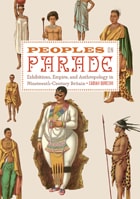
Peoples on Parade
Exhibitions, Empire, and Anthropology in Nineteenth-Century BritainSadiah Qureshi
University of Chicago Press, 2011
Performances of Violence
Austin Sarat
University of Massachusetts Press, 2011
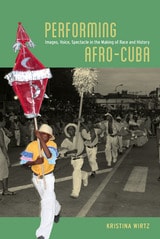
Performing Afro-Cuba
Image, Voice, Spectacle in the Making of Race and HistoryKristina Wirtz
University of Chicago Press, 2014
Wirtz analyzes a variety of performances and the ways they construct Cuban racial and historical imaginations. She offers a sophisticated view of performance as enacting diverse revolutionary ideals, religious notions, and racial identity politics, and she outlines how these concepts play out in the ongoing institutionalization of folklore as an official, even state-sponsored, category. Employing Bakhtin’s concept of “chronotopes”—the semiotic construction of space-time—she examines the roles of voice, temporality, embodiment, imagery, and memory in the racializing process. The result is a deftly balanced study that marries racial studies, performance studies, anthropology, and semiotics to explore the nature of race as a cultural sign, one that is always in process, always shifting.

Performing Hybridity
May Joseph
University of Minnesota Press, 1999
A kaleidoscopic consideration of transnational culture and performance
Amid the modern-day complexities of migration and exile, immigration and repatriation, notions of stable national identity give way to ideas about cultural “hybridity.” The authors represented in this volume use different forms of performative writing to question this process, to ask how the production of new political identities destabilizes ideas about gender, sexuality, and the nation in the public sphere.
Contributors use forms such as the essay, poem, photography, and case study to examine historically specific cases in which the notion of hybridity recasts our ideas of identity and performance: the struggle for Aboriginal land rights in Australia; Bahian carnival; the creolization and pidginization of language in the Caribbean world; queer videos; and others. Contributors: Meena Alexander, CUNY; Awam Amkpa, Mount Holyoke; Tony Birch; Barbara Browning, New York U; Manthia Diawara, New York U; Fiona Foley; Sikivu Hutchinson; Deborah A. Kapchan, U of Texas; Toby Miller, New York U; Shani Mootoo; Fred Moten, U of California, Santa Barbara; José Esteban Muñoz, New York U; Chon A. Noriega, UCLA; Celeste Olalquiaga; Ella Shohat, CUNY; Robert Stam, New York U.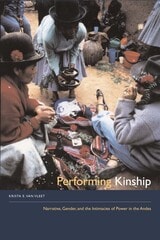
Performing Kinship
Narrative, Gender, and the Intimacies of Power in the AndesBy Krista E. Van Vleet
University of Texas Press, 2008
In the highland region of Sullk'ata, located in the rural Bolivian Andes, habitual activities such as sharing food, work, and stories create a sense of relatedness among people. Through these day-to-day interactions—as well as more unusual events—individuals negotiate the affective bonds and hierarchies of their relationships. In Performing Kinship, Krista E. Van Vleet reveals the ways in which relatedness is evoked, performed, and recast among the women of Sullk'ata.
Portraying relationships of camaraderie and conflict, Van Vleet argues that narrative illuminates power relationships, which structure differences among women as well as between women and men. She also contends that in the Andes gender cannot be understood without attention to kinship.
Stories such as that of the young woman who migrates to the city to do domestic work and later returns to the highlands voicing a deep ambivalence about the traditional authority of her in-laws provide enlightening examples of the ways in which storytelling enables residents of Sullk'ata to make sense of events and link themselves to one another in a variety of relationships. A vibrant ethnography, Performing Kinship offers a rare glimpse into an compelling world.
Performing Maternities
Political, Social and Feminist EnquiryEdited by Kate Aughterson and Jess Moriarty
Intellect Books, 2027
This volume brings together research and artistic practices that challenge dominant narratives around motherhood.
Performing Maternities is a collection of essays, creative work, images, and scripts that emerged out of an online international symposium held at Brighton University in November 2020. Together, the contributors challenge, celebrate, and share the normative, the queer, the transgressive, the joy, and the pain of performing maternity. The book asks key questions about the construction of maternal identities and mythologies in the contemporary world; the ways these affect individuals in different social, economic, and sexual identities; and how—as mothers, writers, artists, parents, and grandparents—we can address and challenge those identities.
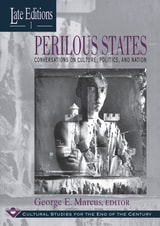
Perilous States
Conversations on Culture, Politics, and NationEdited by George E. Marcus
University of Chicago Press, 1993
politics, history, comparative literature, and
philosophy—the unprecedented annual publication Late
Editions exposes unsettling dilemmas and unprecedented
challenges facing cultural studies on the brink of the
twenty-first century. Successive volumes will appear
annually until the year 2000, each engaging the predicaments
of particular institutions, nations, and persons at this
point of social, cultural, and political change. The
project will test the limits of scholarly conventions by
finding new ways to expose cultural formations emerging from
the maturation or exhaustion of once-powerful ideas whose
validity is now deeply in question.
Perilous States, the first volume of Late
Editions, presents conversations between American
scholars, most of whom are anthropologists, and individuals
situated amidst political and social upheaval. Pimarily but
not exclusively from Eastern Europe, the cast includes
Russian writers, Hungarian scientists and academics, Armenian
politicians, Siberian religious and medical leaders, a Gypsy
leader, a Polish poet, a French politician, and a white South
African musician who is a self-styled Zulu. Their voices
unite around themes of democracy, market economy, individual
rights, and the reawakened force of suppressed ethnic and
racial identities.
To obtain fresh perspectives on these cultural and social
transformations, the volumes will consist of in-depth
conversations, relayed in essay form, between scholars and
individuals in other cultures with whom they share
affinities. This novel approach blends the immediacy of
interviews, the objectivity of journalism, and the
intellectual rigor of scholarship.
Contributors to this volume are Marjorie Balzer, Sam
Beck, David B. Coplan, Michael M. J. Fischer, Nia Georges,
Bruce Grant, Douglas R. Holmes, Stella Gregorian, George E.
Marcus, Kathryn Milun, Eleni Papagaroufali, Paul Rabinow,
Julie Taylor, and Tom White.
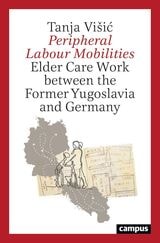
Peripheral Labour Mobilities
Tanja Višic
Campus Verlag, 2022
The precarious situation in the successor states of Yugoslavia created a specific dynamic in the field of labor mobility. Still, little research has been done in this region on how women, who are older care workers from Serbia or Bosnia commute—often via illegal border crossings—to German households to look after the elderly. In Peripheral Labor Mobilities, Tanja Višic explores this gender-specific migration pattern in the first expansive ethnography of contemporary cross-border elder care in this region. She takes up questions about how the mobility and work practices of women are integrated into the socio-economic networks of the informal care work sector while also looking at worker confrontations with labor laws and border regimes. Illustrative case studies clearly detail culturally specific patterns of perception of care work, family relationships, and the mobility demanded by these labor arrangements.
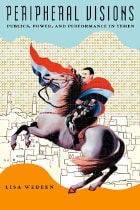
Peripheral Visions
Publics, Power, and Performance in YemenLisa Wedeen
University of Chicago Press, 2008
Lisa Wedeen, who spent a year and a half in Yemen observing and interviewing its residents, argues that national solidarity in such weak states tends to arise not from attachments to institutions but through both extraordinary events and the ordinary activities of everyday life. Yemenis, for example, regularly gather to chew qat, a leafy drug similar to caffeine, as they engage in wide-ranging and sometimes influential public discussions of even the most divisive political and social issues. These lively debates exemplify Wedeen’s contention that democratic, national, and pious solidarities work as ongoing, performative practices that enact and reproduce a citizenry’s shared points of reference. Ultimately, her skillful evocations of such practices shift attention away from a narrow focus on government institutions and electoral competition and toward the substantive experience of participatory politics.
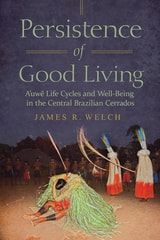
Persistence of Good Living
A’uwe Life Cycles and Well-Being in the Central Brazilian CerradosJames R. Welch
University of Arizona Press, 2023
Anthropologist James R. Welch transparently presents ethnographic insights from his long-term fieldwork in two A’uwẽ communities. He addresses how distinctive constructions of age organization contribute to social well-being in an era of major ecological, economic, and sociocultural change. Welch shows how A’uwẽ perspectives on the human life cycle help define ethnic identity, promote cultural resilience, and encourage the betterment of youth. They provide frameworks that people may creatively mobilize to responsibly and respectfully engage with others at different stages of life. They also motivate people to access and manage landscape resources essential to the social construction of good living. Through careful analysis, Welch shows how contemporary traditional peoples can foster enthusiasm for service to family and community amid dominant cultures that prioritize individual well-being.
This book is an essential resource for students and scholars interested in sociocultural anthropology, Indigenous cultures, health and culture, and human ecology.
Persistent Peoples
Cultural Enclaves in PerspectiveEdited by George Pierre Castile and Gilbert Kushner
University of Arizona Press, 1981
Contributors:
William Y. Adams
George Pierre Castile
N. Ross Crumrine
Timothy Dunnigan
Charles J. Erasmus
Frederick J. E. Gorman
Vera M. Green
William B. Griffen
Robert C. Harman
Mark P. Leone
Janet R. Moone
John van Willigen
Willard Walker

Personalities on the Plate
The Lives and Minds of Animals We EatBarbara J. King
University of Chicago Press, 2017
Yet that realization hasn’t yet made its presence felt to any great degree in our most intimate relationship with animals: at the dinner table. Sure, there are vegetarians and vegans all over, but at the same time, meat consumption is up, and meat remains a central part of the culinary and dining experience for the majority of people in the developed world.
With Personalities on the Plate, Barbara King asks us to think hard about our meat eating--and how we might reduce it. But this isn’t a polemic intended to convert readers to veganism. What she is interested in is why we’ve not drawn food animals into our concern and just what we do know about the minds and lives of chickens, cows, octopuses, fish, and more. Rooted in the latest science, and built on a mix of firsthand experience (including entomophagy, which, yes, is what you think it is) and close engagement with the work of scientists, farmers, vets, and chefs, Personalities on the Plate is an unforgettable journey through the world of animals we eat. Knowing what we know--and what we may yet learn--what is the proper ethical stance toward eating meat? What are the consequences for the planet? How can we life an ethically and ecologically sound life through our food choices?
We could have no better guide to these fascinatingly thorny questions than King, whose deep empathy embraces human and animal alike. Readers will be moved, provoked, and changed by this powerful book.
Personality and the Cultural Construction of Society
Edited by David K. Jordan and Marc J. Swartz
University of Alabama Press, 1990
Pyschological anthropology is a vital area of contemporary social science, and one of the field's most important and innovative thinkers is Melford E. Spiro. This volume brings together sixteen essays that review Spiro's theoretical insights and extend them into new areas. The essays center on several general problems: In what ways is it meaningful to speak of a social act as having "functions"? What elements and processes of human personality are universal, and why? What is the relationship between religion and personality? Why? What are the pyschological underpinnings of social manipulation?
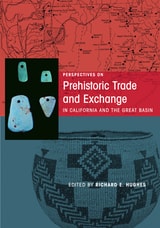
Perspectives on Prehistoric Trade and Exchange in California and the Great Basin
Richard E. Hughes
University of Utah Press, 2011
How does prehistoric material get from its place of origin to its location of archaeological recovery? While this question may seem basic, a moment’s reflection suggests that the answers carry important implications for arc-haeological interpretation about social organization, settlement, and subsistence practices. Archaeologists know much about the temporal and spatial distribution of materials in prehistoric western North America, but comparatively little has emerged regarding the causes of such distributions. Trade and exchange, mobility, and direct access all have been credited with observed distributions, but the reasons for settling on specific behavioral linkages is rarely made clear.
This volume investigates the circumstances and conditions under which trade/exchange, direct access, and/or mobility best account for material conveyance across varying distances at different times in the past. Each chapter contextualizes distributional and chemical data, evaluates competing distribution hypotheses, and addresses the reasoning and inferences employed to arrive at conclusions about the human behaviors responsible for the distributions of materials. Contributors showcase a range of diverse and creative ways of thinking about these issues in the California and Great Basin archaeological record, and why it matters.
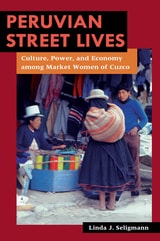
Peruvian Street Lives
Culture, Power, and Economy among Market Women of CuzcoLinda J. Seligmann
University of Illinois Press, 2004
In Peruvian Street Lives, Seligmann argues that the sometimes invisible and informal economic, social, and political networks market women establish may appear disorderly and chaotic, but in fact often keep dysfunctional economies and corrupt bureaucracies from utterly destroying the ability of citizens to survive from day to day. Seligmann asks why the constructive efforts of market women to make a living provoke such negative social perceptions from some members of Peruvian society, who see them as symbols and actual catalysts of social disorder. At the same time, Seligmann shows how market women eke out a living, combat discrimination, and transgress racial and gender ideologies within the rich and expressive cultural traditions they have developed.
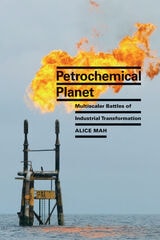
Petrochemical Planet
Multiscalar Battles of Industrial TransformationAlice Mah
Duke University Press, 2023
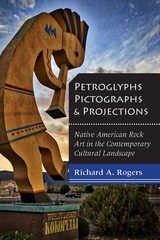
Petroglyphs, Pictographs, and Projections
Native American Rock Art in the Contemporary Cultural LandscapeRichard A. Rogers
University of Utah Press, 2018
Neither archaeological interpretations nor commercial reproductions of rock art operate in a cultural vacuum. Both the motivation to seek out rock art and the specific meanings attached to it are deeply embedded in narratives about Native Americans already created by anthropologists, archaeologists, photographers, novelists, film and television producers, the tourism industry, and New Age discourse. For those interested in rock art as a window into indigenous cultures of the past, our contemporary projections of meanings are of great concern. Applying the tools of critical/cultural studies to both academic and popular discourse, Rogers explores the implications of such projections for rock art studies, contemporary gender dynamics, and the neocolonial relationship between Euro-Americans and Native Americans.
Pharmocracy
Value, Politics, and Knowledge in Global BiomedicineKaushik Sunder Rajan
Duke University Press, 2017
Phenomenal Justice
Violence and Morality in ArgentinaEva van Roekel
Rutgers University Press, 2020
Short-listed for the Juan E. Méndez Book Award for Human Rights in Latin America from Duke University Libraries
How do victims and perpetrators of political violence caught up in a complicated legal battle experience justice on their own terms? Phenomenal Justice is a compelling ethnography about the reopened trials for crimes against humanity committed during the brutal military dictatorship that ruled Argentina between 1976 and 1983. Grounded in phenomenological anthropology and the anthropology of emotion, this book establishes a new theoretical basis that is faithful to the uncertainties of justice and truth in the aftermath of human rights violations. The ethnographic observations and the first-person stories about torture, survival, disappearance, and death reveal the enduring trauma, heartfelt guilt, happiness, battered pride, and scratchy shame that demonstrate the unreserved complexities of truth and justice in post-conflict societies. Phenomenal Justice will be an indispensable contribution to a better understanding of the military dictatorship in Argentina and its aftermath.
Philadelphia and the Development of Americanist Archaeology
Edited by Don Fowler and David R. Wilcox
University of Alabama Press, 2003
For two and a half centuries, Philadelphians have been actively involved in archaeological research. In particular, three vital and venerable cultural institutions—the American Philosophical Society (founded 1743), the Academy of Natural Sciences (founded 1812), and the University Museum of the University of Pennsylvania (founded 1893)—have nurtured the "systematic study of antiquities."
The ten essays in this volume focus on Philadelphians who were concerned with Americanist archaeology, or the "archaeology of the New World." As Europeans, and later, Euroamericans, spread across North, Central, and South America in the 16th through the 19th centuries, they encountered a bewildering variety of native peoples, customs, and languages, as well as tens of thousands of ancient ruins attesting to a long endemic culture history of obvious complexity.
The essays examine most of the key players in the development of the methods to study these phenomena. Enlightenment scholars such as Benjamin Smith Barton, Peter S. Duponceau, Thomas Jefferson, Daniel Garrison Brinton, John Wesley Powell, and Benjamin Rush all contributed to the surge of scientific study of America's prehistoric cultures. So did two pioneering women who have received scant attention to date—Sara Yorke Stevenson and Lucy W. Wilson—but whose work is well treated in this study. Other essays detail the varied contributions of C. C. Abbott, Frank Hamilton Cushing, Clarence B. Moore, Edgar Lee Hewett, and John L. Cotter. This volume should stimulate continued interest in the origins and history of archaeology and the relationship of Philadelphia patrons and institutions to scientific inquiry.
Photographies East
The Camera and Its Histories in East and Southeast AsiaRosalind C. Morris, ed.
Duke University Press, 2009
The contributors analyze how in specific cultural and historical contexts, the camera has affected experiences of time and subjectivity, practices of ritual and tradition, and understandings of death. They highlight the links between photography and power, looking at how the camera has figured in the operations of colonialism, the development of nationalism, the transformation of monarchy, and the militarization of violence. Moving beyond a consideration of historical function or effect, the contributors also explore the forms of illumination and revelation for which the camera has offered itself as instrument and symbol. And they trace the emergent forms of alienation and spectralization, as well as the new kinds of fetishism, that photography has brought in its wake. Taken together, the essays chart a bravely interdisciplinary path to visual studies, one that places the particular knowledge of a historicized anthropology in a comparative frame and in conversation with aesthetics and art history.
Contributors. James L. Hevia, Marilyn Ivy, Thomas LaMarre, Rosalind C. Morris, Nickola Pazderic, John Pemberton, Carlos Rojas, James T. Siegel, Patricia Spyer

Physicians of the Future
Doctor-Influencers, Patient-Consumers, and the Business of Functional MedicineRosalynn A. Vega
University of Texas Press, 2024
The first scholarly exploration of the forums, practice, and economics of functional medicine.
Physicians of the Future interrogates the hidden logics of inclusion and exclusion in functional medicine (FM), a holistic form of personalized medicine that targets chronic disease. Rosalynn Vega uncovers how, as “wounded healers,” some FM practitioners who are former chronic disease sufferers turn their illness narratives into a form of social capital, leveraging social media to relate to patients and build practices as “doctor-influencers.” Arguing that power and authority operate distinctly in FM when compared to conventional medicine, largely because FM services are paid for out of pocket by socioeconomically privileged “clients,” Vega studies how FM practitioners engage in entrepreneurship of their own while critiquing the profit motives of the existing healthcare system, pharmaceutical industry, and insurance industry. Using data culled from online support groups, conferences, docuseries, blogs, podcasts, YouTube, and TED Talks, as well as her own battles with chronic illness, Vega argues that FM practices prioritize the individual while inadvertently reinscribing inequities based on race and class. Ultimately, she opens avenues of possibility for FM interlocutors wrestling with their responsibility for making functional medicine accessible to all.
Picturing Culture
Explorations of Film and AnthropologyJay Ruby
University of Chicago Press, 2000
The book begins with analyses of key filmmakers (Robert Flaherty, Robert Garner, and Tim Asch) who have striven to generate profound statements about human behavior on film. Ruby then discusses the idea of research film, Eric Michaels and indigenous media, the ethics of representation, the nature of ethnography, anthropological knowledge, and film and lays the groundwork for a critical approach to the field that borrows selectively from film, communication, media, and cultural studies. Witty and original, yet intensely theoretical, this collection is a major contribution to the field of visual anthropology.
Picturing a Colonial Past
The African Photographs of Isaac SchaperaEdited by John L. Comaroff, Jean Comaroff, and Deborah James
University of Chicago Press, 2007
Pierre Bourdieu's Political Economy of Being
Ghassan Hage
Duke University Press, 2025
Pigs That Ate the Garden
A Human Ecology from Papua New GuineaPeter D. Dwyer
University of Michigan Press, 1990

Pigs That Ate the Garden
A Human Ecology from Papua New GuineaPeter D. Dwyer
University of Michigan Press, 1990
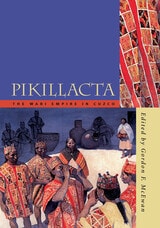
Pikillacta
The Wari Empire in CuzcoMcEwan, Gordon F.
University of Iowa Press, 2005
Pilgrimage and Healing
Edited by Jill Dubisch and Michael Winkelman
University of Arizona Press, 2005
This volume brings together anthropological and interdisciplinary perspectives on these persistent forms of popular religion to expand our understanding of the role of the traditional practice of pilgrimage in what many believe to be an increasingly secular world. Focusing on the healing dimensions of pilgrimage, the authors present case studies grounded in specific cultures and pilgrimage traditions to help readers understand the many therapeutic resources pilgrimage provides for people around the world. The chapters examine a variety of pilgrimage forms, both religious and non-religious, from Nepalese and Huichol shamanism pilgrimage to Catholic journeys to shrines and feast days to Nevada’s Burning Man festival. These diverse cases suggest a range of meanings embodied in the concept of healing itself, from curing physical ailments and redefining the self to redressing social suffering and healing the wounds of the past.
Collectively and individually, the chapters raise important questions about the nature of ritual in general, and healing through pilgrimage in particular, and seek to illuminate why so many participants find pilgrimage a compelling way to address the problem of suffering. They also illustrate how pilgrimage exerts its social and political influence at the personal, local, and national levels, as well as providing symbols and processes that link people across social and spiritual boundaries. By examining the persistence of pilgrimage as a significant source of personal engagement with spirituality, Pilgrimage and Healing shows that the power of pilgrimage lies in its broad transformative powers. As our world increasingly adopts a secular and atheistic perspective in many domains of experience, it reminds us that, for many, spiritual quest remains a potent force.
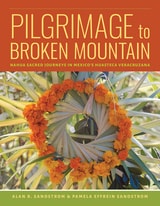
Pilgrimage to Broken Mountain
Nahua Sacred Journeys in Mexico's Huasteca Veracruzanaby Alan R. Sandstrom & Pamela Effrein Sandstrom illustrated by Michael K. Aakhus, Ana Laura Ávila-Myers & Michael A. Sandstrom
University Press of Colorado, 2022
Pilgrimage to Broken Mountain contains richly detailed descriptions and analyses of ritual procedures as well as translations from the Nahuatl of core myths, chants performed before decorated altars, and statements from participants. Particular emphasis is placed on analyzing the role of sacred paper figures that are produced by the thousands for each pilgrimage. The work contains drawings of these cuttings of spirit entities along with hundreds of color photographs illustrating how they are used throughout the pilgrimages. The analysis reveals the monist philosophy that underlies Nahua religious practice in which altars, dancing, chanting, and the paper figures themselves provide direct access to the sacred.
In the context of their pilgrimage traditions, the ritual practices of Nahua religion show one way that people interact effectively with the forces responsible for not only their own prosperity but also the very survival of humanity. A magnum opus with respect to Nahua religion and religious practice, Pilgrimage to Broken Mountain is a significant contribution to several fields, including but not limited to anthropology, Indigenous literatures of Mesoamerica, Nahuatl studies, Latinx and Chicanx studies, and religious studies.
Pillars of the Nation
Child Citizens and Ugandan National DevelopmentKristen E. Cheney
University of Chicago Press, 2007
How can children simultaneously be the most important and least powerful people in a nation? In her innovative ethnography of Ugandan children—the pillars of tomorrow’s Uganda, according to the national youth anthem—Kristen E. Cheney answers this question by exploring the daily contradictions children face as they try to find their places amid the country’s rapidly changing social conditions.
Drawing on the detailed life histories of several children, Cheney shows that children and childhood are being redefined by the desires of a young country struggling to position itself in the international community. She moves between urban schools, music festivals, and war zones to reveal how Ugandans are constructing childhood as an empowering identity for the development of the nation. Moreover, through her analysis of children’s rights ideology, national government strategy, and children’s everyday concerns, Cheney also shows how these young citizens are vitally linked to the global political economy as they navigate the pitfalls and possibilities for a brighter tomorrow.
Piman Shamanism and Staying Sickness (Ká
cim Múmkidag)Donald M. Bahr, Juan Gregorio, David I. Lopez, and Albert Alvarez
University of Arizona Press, 1974
This definitive study of shamanic theory and practice was developed through a four-person collaboration: three Tohono O’odham Indians—a shaman, a translator, and a trained linguist—and a non-Indian explicator. It provides an in-depth examination of the Piman philosophy of sickness as well as an introduction to the world view of an entire people.
Using the most highly developed techniques of modern ethnolinguistics, anthropologist Bahr investigates the culturally based concept of staying sickness. He conducted extensive discussions in the Piman language with shaman Gregorio. The native informant theorized at length about the cause of staying sickness, the dúajida (divination), and ritual prayers. The translator and the linguist analyzed the content and style of Gregorio’s discussions. Texts in the Piman language of Gregorio’s discussions are included, as well as literal and idiomatic English translations.
American Anthropologist cites “the infinite care with which each utterance has been analyzed” and “the richness of cultural expression captured in the texts themselves and in their explanation. To read Piman Shamanism and Staying Sickness is to become familiar with the unique properties of Piman thinking and modes of expression: abstract, elliptical, contracted, and yet filled with a rich and natural imagery.”

Pink Globalization
Hello Kitty's Trek across the PacificChristine R. Yano
Duke University Press, 2013
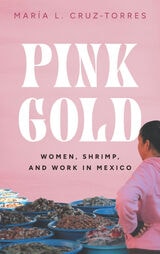
Pink Gold
Women, Shrimp, and Work in MexicoMaria L. Cruz-Torres
University of Texas Press, 2023
A rich, long-term ethnography of women seafood traders in Mexico.
The "shrimp ladies," locally known as changueras in southern Sinaloa, Mexico, sell seafood in open-air markets, forming an extralegal but key part of the economy built around this "pink gold.” Over time, they struggled to evolve from marginalized peddlers to local icons depicted in popular culture, even as they continue to work at an open-air street market.
Pink Gold documents the shrimp traders' resilience and resourcefulness, from their early conflicts with the city, state, and federal authorities and forming a union, to carving out a physical space for a seafood market, and even engaging in conflicts with the Mexican military. Drawing from her two decades of fieldwork, María L. Cruz-Torres explores the inspiring narrative of this overlooked group of women involving grassroots politics, trans-border and familial networking, debt and informal economic practices, personal sacrifices, and simple courage. She argues that, amid intense economic competition, their success relies on group solidarity that creates interlocking networks of mutual trust, or confianza, that in turn enable them to cross social and political boundaries that would typically be closed to them. Ultimately, Pink Gold offers fresh insights into issues of gender and labor, urban public space, the street economy, commodities, and globalization.