3071 books match the query 'Business & Economics' and 143 start with p

cover of Polarizing Development: Alternatives to Neoliberalism and the Crisis

Polarizing Development

Alternatives to Neoliberalism and the Crisis

Edited by Lucia Pradella and Thomas Marois

Pluto Press, 2015

The global economic crisis has exposed the limits of neoliberalism and dramatically deepened social polarization. Yet, despite increasing social resistance and opposition, neoliberalism prevails globally.

Radical alternatives, moreover, are only rarely debated. And if they are, such alternatives are reduced to new Keynesian and new developmental agendas, which fail to address existing class divisions and imperialist relations of domination.

This collection of essays polarizes the debate between radical and reformist alternatives by exploring head-on the antagonistic structure of capitalist development. The contributors ground their proposals in an international, non-Eurocentric and Marxian inspired analysis of capitalism and its crises. From Latin America to Asia, Africa to the Middle East and Europe to the US, social and labour movements have emerged as the protagonists behind creating alternatives.

This book’s new generation of scholars has written accessible yet theoretically informed and empirically rich chapters elaborating radical worldwide strategies for moving beyond neoliberalism, and beyond capitalism. The intent is to provoke critical reflection and positive action towards substantive change.
[more]
cover of Policy Reform in American Agriculture: Analysis and Prognosis

Policy Reform in American Agriculture

Analysis and Prognosis

David Orden, Robert Paarlberg, and Terry Roe

University of Chicago Press, 1999

Despite substantial transformations in American agriculture, farm program spending remains a closely guarded prerogative of United States agricultural policy. Policy Reform in American Agriculture examines both the history of farm subsidies and the contemporary relevance of traditional farm programs to today's agricultural industries.

This work analyzes the mixed performance of past agricultural support programs, reviews the current debate concerning farm policies, and critically assesses the often staunch political resistance to much-needed policy reforms. Casting a keen eye toward the most recent developments on both national and international fronts, the authors consider the ramifications of the 1996 Federal Agriculture Improvement and Reform (FAIR) Act as well as multilateral efforts to gain agricultural reform during the Uruguay Round of GATT. Their prognosis hinges upon both the continued growth and competitiveness of the world market and, perhaps more importantly, the ongoing commitment of congressional reform advocates.

[more]
cover of Policy Responses to Tax Competition

Policy Responses to Tax Competition

Edited by David R. Agrawal, James M. Poterba, and Owen M. Zidar

University of Chicago Press, 2025

A critical examination of the effects of tax competition.

Policy Responses to Tax Competition provides an in-depth exploration of how jurisdictions design taxes on mobile economic factors. Tax competition between jurisdictions that seek to attract businesses and residents presents both opportunities and challenges. It can foster government efficiency and provide a counterweight to lobbying for increased spending, but it can also result in inefficiently low tax rates and revenue shortfalls as jurisdictions vie for tax bases. This volume examines the economic drivers and consequences of tax competition and presents empirical evidence on its effects.

Divided into three parts, the book first reviews existing research on the determinants and consequences of tax competition and related policy initiatives such as development incentives. The second section focuses on specific policies, such as the Kansas-Missouri noncompete pact and international measures like the OECD’s Base Erosion and Profit Shifting initiative, that are designed to limit tax competition. It also considers the economic responses to these policies, the distributional impact of competition-reducing policies, and potential strategic reactions of other governments. The final section presents case studies of the effects of various policies, including inter-municipal cooperation in France and corporate tax equalization in Switzerland.

Altogether, this volume provides new insights into the nature of inter-jurisdictional tax competition and the range of potential responses available to jurisdictions at various levels in federal systems.
[more]
cover of Political Arithmetic: Simon Kuznets and the Empirical Tradition in Economics

Political Arithmetic

Simon Kuznets and the Empirical Tradition in Economics

Robert William Fogel, Enid M. Fogel, Mark Guglielmo, and Nathaniel Grotte

University of Chicago Press, 2013

We take for granted today that the assessments, measurements, and forecasts of economists are crucial to the decision-making of governments and businesses alike. But less than a century ago that wasn’t the case—economists simply didn’t have the necessary information or statistical tools to understand the ever more complicated modern economy.

With Political Arithmetic, Nobel Prize–winning economist Robert Fogel and his collaborators tell the story of economist Simon Kuznets, the founding of the National Bureau of Economic Research, and the creation of the concept of GNP, which for the first time enabled us to measure the performance of entire economies. The book weaves together the many strands of political and economic thought and historical pressures that together created the demand for more detailed economic thinking—Progressive-era hopes for activist government, the production demands of World War I, Herbert Hoover’s interest in business cycles as President Harding’s commerce secretary, and the catastrophic economic failures of the Great Depression—and shows how, through trial and error, measurement and analysis, economists such as Kuznets rose to the occasion and in the process built a discipline whose knowledge could be put to practical use in everyday decision-making.

The product of a lifetime of studying the workings of economies and skillfully employing the tools of economics, Political Arithmetic is simultaneously a history of a key period of economic thought and a testament to the power of applied ideas.

[more]
cover of Political Business Cycles: The Political Economy of Money, Inflation, and Unemployment

Political Business Cycles

The Political Economy of Money, Inflation, and Unemployment

Thomas D. Willett, ed.

Duke University Press, 1988

The "political business cycle", according to economist William Nordhaus, creates a situation in which political and bureaucratic incentives create artificial economic booms just before elections, with consequent and deleterious side effects after the ballots are counted. This work examines the issue of whether federal governmental structure inevitably leaves the U.S. economy exposed to unhealthy political influences.
[more]
cover of Political Economy of Environmental Protection: Analysis and Evidence

Political Economy of Environmental Protection

Analysis and Evidence

Roger D. Congleton, Editor

University of Michigan Press, 1996
Underlying all the contributions to this volume is the understanding that both political and economic considerations affect environmental outcomes. Political decisions largely determine the feasible uses of natural resources by defining and enforcing fundamental property rights and entitlements over matters with environmental consequences. By determining the rules of the game, political decisions determine the extent to which humanity is empowered to transform the world, the processes used, and the waste products remaining. Environmental policies and thereby environmental outcomes emerge from a complex political process that accommodates a variety of conflicting interests. The essays in this volume examine the links between politics and economic interdependencies, using the modern tools of economics and public choice. Each essay develops a balanced and generally positive analysis of a particular environmental policy area ranging from international treaties on global warming to EPA regulations regarding pesticide usage. Contributors use a variety of mathematical and statistical methods to examine policy formation in such policy areas as global warming, wildlife management, undersea oil rights, and the location of NIMBYs. The volume will be of interest to those who study environmental policy from the perspectives of economics, political science, public policy, and environmental studies.
[more]
cover of Political Economy of U.S. - Taiwan Trade

Political Economy of U.S. - Taiwan Trade

Robert Baldwin, Tain-Jy Chen, and Douglas Nelson, Editors

University of Michigan Press, 1995
Two key features of the remarkable economic growth in the newly industrializing countries of East Asia over the last quarter of a century are the role of exports of manufactured goods as the engine of this growth and the importance of the United States as a market for these exports. Political Economy of U.S.-Taiwan Trade analyzes the nature of the political and economic interactions, both domestic and international, which evolved between Taiwan and the United States in a manner that has enabled this growth to occur. In analyzing the various cooperative and conflicting trade policies pursued by the two countries over the last fifty years, the authors utilize a broad political economy framework. They first describe the nature and evolution of trade between Taiwan and the United States and discuss the major economic and political groups and institutions that shape trade policies in the two countries. In doing so, the role that trade has played both in Taiwan's development policies and in the international economic and political policies of the United States in the post-World War II period is analyzed. The various restrictions imposed by each country on the other's exports are examined, and the efforts to reduce these trade barriers are then discussed in detail. Particular attention is given to the series of bilateral negotiations in which the United States has used its dominant economic and political power to force Taiwan to open a number of its internal markets. The book will be of interest to both economists and political scientists specializing in international economics and international political relations. Area specialists focusing on the Far East will also find the book helpful. Robert E. Baldwin is Hilldale Professor of Economics, University of Wisconsin. Tain-Jy Chen is Research Fellow, Chung-Hua Institution for Economic Research. Douglas Nelson is Associate Professor of Economics, Tulane University. This title was formally part of the Studies in International Trade Policy Series, now called Studies in International Economics.
[more]
cover of Political Standards: Corporate Interest, Ideology, and Leadership in the Shaping of Accounting Rules for the Market Economy

Political Standards

Corporate Interest, Ideology, and Leadership in the Shaping of Accounting Rules for the Market Economy

Karthik Ramanna

University of Chicago Press, 2015

Prudent, verifiable, and timely corporate accounting is a bedrock of our modern capitalist system. In recent years, however, the rules that govern corporate accounting have been subtly changed in ways that compromise these core principles, to the detriment of the economy at large. These changes have been driven by the private agendas of certain corporate special interests, aided selectively—and sometimes unwittingly—by arguments from business academia
           
With Political Standards, Karthik Ramanna develops the notion of “thin political markets” to describe a key problem facing technical rule-making in corporate accounting and beyond. When standard-setting boards attempt to regulate the accounting practices of corporations, they must draw on a small pool of qualified experts—but those experts almost always have strong commercial interests in the outcome. Meanwhile, standard setting rarely enjoys much attention from the general public. This absence of accountability, Ramanna argues, allows corporate managers to game the system. In the profit-maximization framework of modern capitalism, the only practicable solution is to reframe managerial norms when participating in thin political markets. Political Standards will be an essential resource for understanding how the rules of the game are set, whom they inevitably favor, and how the process can be changed for a better capitalism.
[more]
cover of Political Theory and Public Policy

Political Theory and Public Policy

Robert E. Goodin

University of Chicago Press, 1983

Some say that public policy can be made without the benefit of theory—that it emerges, instead, through trial-and-error. Others see genuine philosophical issues in public affairs but try to resolve them through fanciful examples. Both, argues Robert E. Goodin, are wrong.

Goodin—a political scientist who is also an associate editor of Ethics—shows that empirical and ethical theory can and should guide policy. To be useful, however, these philosophical discussions of public affairs must draw upon actual policy experiences rather than contrived cases. Further, they must reflect the broader social consequences of policies rather than just the dilemmas of personal conscience.

Effectively integrating the literatures of social science, policy science, and philosophy, Goodin provides a theoretically sophisticated yet empirically well-grounded analysis of public policies, the principles underlying them, the institutions shaping them, and the excuses offered for their failures. This analysis is enhanced by the author's discussion of such specific cases as the disposal of nuclear wastes and the priority accorded national defense—cases that illustrate Goodin's theoretical and methodological framework for approaching policy issues.
[more]
cover of Politics Across the Hudson: The Tappan Zee Megaproject

Politics Across the Hudson

The Tappan Zee Megaproject

Philip Mark Plotch

Rutgers University Press, 2015

Winner of the 2015 American Planning Association New York Metro Chapter Journalism Award

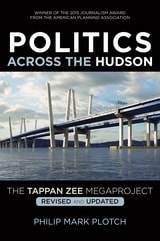
The State of New York built one of the world’s longest, widest, and most expensive bridges—the new Tappan Zee Bridge—stretching more than three miles across the Hudson River, approximately thirteen miles north of New York City. In Politics Across the Hudson, urban planner Philip Plotch offers a behind-the-scenes look at three decades of contentious planning and politics centered around this bridge, recently renamed for Governor Mario M. Cuomo, the state's governor from 1983 to 1994. He reveals valuable lessons for those trying to tackle complex public policies while also confirming our worst fears about government dysfunction.
 
Drawing on his extensive experience planning megaprojects, interviews with more than a hundred key figures—including governors, agency heads, engineers, civic advocates, and business leaders—and extraordinary access to internal government records, Plotch tells a compelling story of high-stakes battles between powerful players in the public, private, and civic sectors. He reveals how state officials abandoned viable options, squandered hundreds of millions of dollars, forfeited more than three billion dollars in federal funds, and missed out on important opportunities. Faced with the public’s unrealistic expectations, no one could identify a practical solution to a vexing problem, a dilemma that led three governors to study various alternatives rather than disappoint key constituencies. 
 
This revised and updated edition includes a new epilogue and more photographs, and continues where Robert Caro’s The Power Broker left off and illuminates the power struggles involved in building New York’s first major new bridge since the Robert Moses era. Plotch describes how one governor, Andrew Cuomo, shrewdly overcame the seemingly insurmountable obstacles of onerous environmental regulations, vehement community opposition, insufficient funding, interagency battles, and overly optimistic expectations...
 
 
[more]
cover of Politics and Economics in the Eighties

Politics and Economics in the Eighties

Edited by Alberto Alesina and Geoffrey Carliner

University of Chicago Press, 1991

Is the federal budget deficit a result of congressional deadlocks, gross miscalculation of economic trends, or a Republican strategy to tie the budgetary hands of future Democratic leadership? To what extend does the partisan split between Congress and the executive branch constrain the president's agenda? In this volume, political scientists and economists tackle these and many other contentious issues, offering a variety of analytical perspectives.
Certain to provoke controversy, this interdisciplinary volume brings together policy experts to provide a coherent analysis of the most important economic policy changes of the 1980s. Through a detailed examination of voting patterns, monetary and fiscal policies, welfare spending, tax reform, minimum wage legislation, the savings and loan collapse, and international trade policy, the authors explore how politics can influence the direction of economic policymaking.
[more]
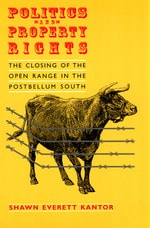
cover of Politics and Property Rights: The Closing of the Open Range in the Postbellum South

Politics and Property Rights

The Closing of the Open Range in the Postbellum South

Shawn Everett Kantor

University of Chicago Press, 1998

After the American Civil War, agricultural reformers in the South called for an end to unrestricted grazing of livestock on unfenced land. They advocated the stock law, which required livestock owners to fence in their animals, arguing that the existing system (in which farmers built protective fences around crops) was outdated and inhibited economic growth. The reformers steadily won their battles, and by the end of the century the range was on the way to being closed.

In this original study, Kantor uses economic analysis to show that, contrary to traditional historical interpretation, this conflict was centered on anticipated benefits from fencing livestock rather than on class, cultural, or ideological differences. Kantor proves that the stock law brought economic benefits; at the same time, he analyzes why the law's adoption was hindered in many areas where it would have increased wealth. This argument illuminates the dynamics of real-world institutional change, where transactions are often costly and where some inefficient institutions persist while others give way to economic growth.
[more]
cover of Politics on the Endless Frontier: Postwar Research Policy in the United States

Politics on the Endless Frontier

Postwar Research Policy in the United States

Daniel Lee Kleinman

Duke University Press, 1995

Toward what end does the U.S. government support science and technology? How do the legacies and institutions of the past constrain current efforts to restructure federal research policy? Not since the end of World War II have these questions been so pressing, as scientists and policymakers debate anew the desirability and purpose of a federal agenda for funding research. Probing the values that have become embodied in the postwar federal research establishment, Politics on the Endless Frontier clarifies the terms of these debates and reveals what is at stake in attempts to reorganize that establishment.
Although it ended up as only one among a host of federal research policymaking agencies, the National Science Foundation was originally conceived as central to the federal research policymaking system. Kleinman’s historical examination of the National Science Foundation exposes the sociological and political workings of the system, particularly the way in which a small group of elite scientists shaped the policymaking process and defined the foundation’s structure and future. Beginning with Vannevar Bush’s 1945 manifesto The Endless Frontier, Kleinman explores elite and populist visions for a postwar research policy agency and shows how the structure of the American state led to the establishment of a fragmented and uncoordinated system for federal research policymaking. His book concludes with an analysis of recent efforts to reorient research policy and to remake federal policymaking institutions in light of the current "crisis" of economic competitiveness.
A particularly timely study, Politics on the Endless Frontier will be of interest to historians and sociologists of science and technology and to science policy analysts.
[more]
cover of Politics, Process, and American Trade Policy

Politics, Process, and American Trade Policy

Sharyn O'Halloran

University of Michigan Press, 1994
Relying on the New Economics of Organizations (NEO), or New Institutionalism, Politics, Process, and American Trade Policy shows why conventional models do not adequately describe the formation of American trade policy. Rejecting both the pressure group model and the presidential-ascendancy model, this study's institution-based approach emphasizes the influence Congress has in setting trade policy, connecting theories of institutional design with the procedural details of regulating trade policy.To reach her conclusions, Sharyn O'Halloran uses time series data and econometric analysis to test a set of propositions concerning trade policy. She examines detailed case studies and provides a comprehensive history of the institutions that govern trade policy making. Unlike most scholars who see trade policy as disparate and ad hoc, O'Halloran is able to explain both early and contemporary American trade policy in a consistent and integrated fashion. She argues that a single set of procedures may lead to apparently different outcomes under differing initial conditions; therefore, the key is to identify the common logic, derived from constitutional imperatives, that underlies all policy outcomes.
[more]
cover of Polycentric Games and Institutions: Readings from the Workshop in Political Theory and Policy Analysis

Polycentric Games and Institutions

Readings from the Workshop in Political Theory and Policy Analysis

Michael D. McGinnis, Editor

University of Michigan Press, 2000

Polycentric Games and Institutions summarizes contributions to the analysis of institutions made by scholars associated with the Workshop in Political Theory and Policy Analysis at Indiana University.
The readings in this volume illustrate several varieties of institutional analysis. Each reading builds upon the foundation of game theory to address similar sets of questions concerning institutions and self-governance. The chapters in the first section lay out interrelated frameworks for analysis. Section two illustrates the normative component of institutions and their effects on human behavior. Readings in the following two sections detail how these frameworks have been applied to models of specific situations. Section five presents a modeling exercise exploring the functions of monitoring and enforcement, and the sixth section discusses approaches to the problems of complexity that confront individuals playing polycentric games. The final readings provide overviews of experimental research on the behavior of rational individuals.
Contributors include Arun Agrawal, Sue E. S. Crawford, Clark C. Gibson, Roberta Herzberg, Larry L. Kiser, Michael McGinnis, Stuart A. Marks, Elinor Ostrom, Vincent Ostrom, James Walker, Franz J. Weissing, John T. Williams, and Rick Wilson.
Michael McGinnis is Associate Professor, Department of Political Science and Co-Associate Director, Workshop in Political Theory and Policy Analysis, Indiana University.
[more]
cover of Polycentric Governance and Development: Readings from the Workshop in Political Theory and Policy Analysis

Polycentric Governance and Development

Readings from the Workshop in Political Theory and Policy Analysis

Michael D. McGinnis, Editor

University of Michigan Press, 1999

How do local communities collectively manage those resources that are most important to their own survival or prosperity? Wherever they are located, all communities face similar dilemmas of collective action: how can common goals be realized despite the presence of individual incentives to over-exploit common resources for private gain? The readings collected in Polycentric Governance and Development show the achievements of scholars associated with the Workshop in Political Theory and Policy Analysis at Indiana University in understanding how communities have dealt with dilemmas of collective action. Their analyses also have profound implications for broader issues of development.
The central insight of the research collected in the volume is this: much can be learned by a careful examination of the ways in which local communities have organized themselves to solve collective problems, achieve common aspirations, and resolve conflicts. The first two sections deal with efforts to manage water and other common-pool resources on a relatively small scale. Section three moves to the macro-level of analysis, with particular attention given to examples of constitutional order from Africa, while section four demonstrates that local organizations and informal networks can play essential roles in furthering democratization and development. The concluding section addresses issues at the national level, by linking the practical world of resource management and development policy to the abstract world of the policy analyst. This collection of essays is designed to illustrate how all the pieces fit together and to suggest connections among multiple levels and modes of analysis.
Contributors include Paula C. Baker, William Blomquist, Larry L. Kiser, Ronald J. Oakerson, Elinor Ostrom, Vincent Ostrom, Roger B. Parks, Stephen L. Percy, Charles M. Tiebout, Martha Vandivort, Robert Warren, Gordon P. Whitaker, and Rick Wilson.
Michael McGinnis is Associate Professor, Department of Political Science and Co-Associate Director, Workshop in Political Theory and Policy Analysis, Indiana University.
[more]
cover of Polycentricity and Local Public Economies: Readings from the Workshop in Political Theory and Policy Analysis

Polycentricity and Local Public Economies

Readings from the Workshop in Political Theory and Policy Analysis

Michael D. McGinnis, Editor

University of Michigan Press, 1999

The study of metropolitan political economies in the United States has provided much of the intellectual inspiration for the research of the Workshop in Political Theory and Policy Analysis at Indiana University. The readings collected in Polycentricity and Local Public Economies present an overview of the results of this research program on police services and metropolitan governance as well as enduring lessons for institutional analysis and public policy. Polycentricity and Local Public Economies presents both explorations of broad general concepts and specific empirical analyses. The many interactions between the two modes of analysis provide valuable insights for the reader. Readings in the first section cover basic theoretical concepts and analytical distinctions that apply to the study of institutions generally. The second section includes conceptual pieces specifically addressed to the nature of governance in metropolitan areas, while section three reports on a series of empirical studies of police performance. Section four again broadens the focus to highlight the overall organization of local public economies. The final section discusses conceptual advances that have continuing relevance for research and policy debates.Contributors include William Blomquist, Kathryn Firmin-Sellers, Roy Gardner, Dele Olowu, Elinor Ostrom, Vincent Ostrom, Amos Sawyer, Edella Schlager, Shui Yan Tang, Wai Fung Lam, and James S. Wunsch.
[more]
cover of Population Trends in New Jersey

Population Trends in New Jersey

James W. Hughes

Rutgers University Press, 2022

To fully understand New Jersey in the 2020s and beyond, it is crucial to understand its ever-changing population. This book examines the twenty-first century demographic trends that are reshaping the state now and will continue to do so in the future. But trend analysis requires a deep historical context. Present-day New Jersey is the result of a long demographic and economic journey that has taken place over centuries, constantly influenced by national and global forces. This book provides a detailed examination of this journey.  The result is present-day New Jersey.
 
The authors also highlight key trends that will continue to transform the state: domestic migration out of the state and immigration into it; increasing diversity; slower overall population growth; contracting fertility; the household revolution and changing living arrangements; generational disruptions; and suburbanization versus re-urbanization. All of these factors help place in context the result of the 2020 decennial U.S. Census.

While the book focuses on New Jersey, the Garden State is a template of demographic, economic, social, and other forces characterizing the United States in the twenty-first century.
[more]
cover of Population and Economic Change in Developing Countries

Population and Economic Change in Developing Countries

Edited by Richard A. Easterlin

University of Chicago Press, 1987

"An extremely important book which contains a number of uniformly excellent papers on a variety of topics relating, to various degrees, to the nexus of demographic-economic interrelationships for presently developing countries."—William J. Serow, Southern Economic Journal

"An important landmark in the growing field of economic demography."—Dudley Kirk, Journal of Developing Areas

[more]
cover of Population: The First Essay

Population

The First Essay

Thomas R. Malthus

University of Michigan Press, 1959

Population: The First Essay by Thomas Robert Malthus examines the relationship between population growth and resources, outlining the principle that population must be kept in check by the means of subsistence. In this seminal work, Malthus contends that while food supply can only increase arithmetically, human population tends to grow geometrically, inevitably leading to a point where resources cannot support the burgeoning population. This imbalance, he argues, results in misery, famine, and mortality unless equilibrated by preventive or positive checks. The essay, originally sparked by a discussion on the future improvement of society, is presented with a foreword by Kenneth E. Boulding, who highlights the historical impact and enduring relevance of Malthus's ideas. The essay critically challenges overly optimistic views on human perfectibility and societal progress, standing as a crucial text in the fields of moral philosophy and the theory of history. It remains a pivotal work, fostering ongoing debates on population dynamics, resource limitations, and their implications for human society.
[more]
cover of Port Newark and the Origins of Container Shipping

Port Newark and the Origins of Container Shipping

Angus Kress Gillespie

Rutgers University Press, 2023

Container shipping is a vital part of the global economy. Goods from all around the world, from vegetables to automobiles, are placed in large metal containers which are transported across the ocean in ships, then loaded onto tractor-trailers and railroad flatbeds. But when and where did this world-changing invention get started?
 
This fascinating study traces the birth of containerization to Port Newark, New Jersey, in 1956 when trucker Malcom McLean thought of a brilliant new way to transport cargo. It tells the story of how Port Newark grew rapidly as McLean’s idea was backed by both New York banks and the US military, who used containerization to ship supplies to troops in Vietnam. Angus Gillespie takes us behind the scenes of today’s active container shipping operations in Port Newark, talking to the pilots who guide the ships into port, the Coast Guard personnel who help manage the massive shipping traffic, the crews who unload the containers, and even the chaplains who counsel and support the mariners. Port Newark shines a spotlight on the unsung men and women who help this complex global shipping operation run smoothly.


Since McLean's innovation, Port Newark has expanded with the addition of the nearby Elizabeth Marine Terminal. This New Jersey complex now makes up the busiest seaport on the East Coast of the United States.  Some have even called it “America’s Front Door.”  The book tells the story of the rapid growth of worldwide containerization, and how Port Newark has adapted to bigger ships with deeper channels and a raised bridge. In the end, there is speculation of the future of this port with ever-increasing automation, artificial intelligence, and automation.

[more]
cover of Portals: A Treatise on Internet-Distributed Television

Portals

A Treatise on Internet-Distributed Television

Amanda D. Lotz

Michigan Publishing Services, 2017

Television audiences and its industry alike have been confused by the emergence of new ways to watch television. On one hand, the programs seem every bit like the television we’ve long known, while the way we can watch, what we can watch, and the business models supporting them differ significantly.

Portals: A Treatise on Internet-Distributed Television pushes understandings of the business of television to keep pace with the considerable technological change of the last decade. It explains why shows such as Orange is the New Black or Transparent are indeed television despite coming to screens over internet connection and in exchange for a monthly fee. It explores how internet-distributed television is able to do new things – particularly, allow different people to watch different shows chosen from a library of possibilities. This technological ability allows new audience behaviors and new norms in making television.
Portals are the “channels” of internet-distributed television, and Portals identifies how the task of curating a library of shows differs from channels’ task of building a schedule. It explores the business model—subscriber funding—that supports many portals, and identifies the key differences from advertiser or direct purchase. Portals considers what we know about the future of television, even though we remain early in a process of transformative change.
[more]
cover of Positive Political Theory I: Collective Preference

Positive Political Theory I

Collective Preference

David Austen-Smith and Jeffrey S. Banks

University of Michigan Press, 2000
Positive Political Theory I is concerned with the formal theory of preference aggregation for collective choice. The theory is developed as generally as possible, covering classes of aggregation methods that include such well-known examples as majority and unanimity rule and focusing in particular on the extent to which any aggregation method is assured to yield a set of "best" alternatives. The book is intended both as a contribution to the theory of collective choice and a pedagogic tool.
Austen-Smith and Banks have made the exposition both rigorous and accessible to people with some technical background (e.g., a course in multivariate calculus). The intended readership ranges from more technically-oriented graduate students and specialists to those students in economics and political science interested less in the technical aspects of the results than in the depth, scope, and importance of the theoretical advances in positive political theory.
"This is a stunning book. Austen-Smith and Banks have a deep understanding of the material, and their text gives a powerfully unified and coherent perspective on a vast literature. The exposition is clear-eyed and efficient but never humdrum. Even those familiar with the subject will find trenchant remarks and fresh insights every few pages. Anyone with an interest in contemporary liberal democratic theory will want this book on the shelf." --Christopher Achen, University of Michigan
David Austen-Smith is Professor of Political Science, Professor of Economics, and Professor of Management and Strategy, Northwestern University. Jeffrey S. Banks is Professor of Political Science, California Institute of Technology.
[more]
cover of Positive Political Theory II: Strategy and Structure

Positive Political Theory II

Strategy and Structure

David Austen-Smith and Jeffrey S. Banks

University of Michigan Press, 2005

“A major piece of work . . . a classic. There is no
other book like it.”
—Norman Schofield, Washington University

“The authors succeed brilliantly in tackling a large
number of important questions concerning the
interaction among voters and elected representatives
in the political arena, using a common, rigorous
language.”
—Antonio Merlo, University of Pennsylvania

Positive Political Theory II: Strategy and Structure
is the second volume in Jeffrey Banks and David
Austen-Smith’s monumental study of the links
between individual preferences and collective choice.
The book focuses on representative systems, including
both elections and legislative decision-making
processes, clearly connecting individual preferences to
collective outcomes. This book is not a survey. Rather,
it is the coherent, cumulative result of the authors’
brilliant efforts to indirectly connect preferences to
collective choice through strategic behaviors such as
agenda-selection and voting.

The book will be an invaluable reference and teaching
tool for economists and political scientists, and an
essential companion to any scholar interested in the
latest theoretical advances in positive political theory.

[more]
cover of Post-Crisis Leadership: Resilience, Renewal, and Reinvention in the Aftermath of Disruption

Post-Crisis Leadership

Resilience, Renewal, and Reinvention in the Aftermath of Disruption

Ralph A. Gigliotti

Rutgers University Press, 2025

Given the many pressures facing leaders across higher education, the work of crisis leadership remains an imperative for leaders at all levels. Attention tends to center on strategies for engaging in leadership both prior to and during crisis, often leaving the post-crisis period as an afterthought. This book introduces a research-informed framework for this critical, and often neglected, phase of crisis leadership. With an underlying commitment to values-based, principle-oriented, and people-centered practices, this framework consists of five leadership practices that are recognized as especially critical in the aftermath of crisis: (a) encourage learning, (b) inspire growth, (c) stimulate meaning-making, (d) pursue reinvention, and (e) advance renewal. Communication serves a critical role in each of the various dimensions of post-crisis leadership, and it is a communication orientation that can help to inform the paradoxes, processes, and patterns that arise during these periods of immense tension and, at times, transcendence.
 
[more]
cover of Postcapitalist Countrysides: From Commoning to Community Wealth Building

Postcapitalist Countrysides

From Commoning to Community Wealth Building

Edited by Nick Gallent, Menelaos Gkartzios, Mark Scott, and Andrew Purves

University College London, 2025

Reimagining rural life beyond capitalism, this volume reviews alternative economic structures that center on sustainability and community wealth-building.

Postcapitalist Countrysides exposes the entrenched inequalities that capitalism has imposed on rural communities and charts a path toward more just and sustainable futures. Built upon case studies from around the world, the book critiques the failures of privatization and market-driven development while showcasing alternative economic models that reclaim land and wealth for the many, not the few.

Through analyses of land reform and community wealth building, contributors depict how local initiatives can reshape rural economies and empower communities when reinforced by structural change. From challenging exploitative land ownership to confronting the encroachment of platform capitalism, this volume engages with urgent global crises while offering tangible strategies for transformation. Postcapitalist Countrysides presents a bold vision for rural life beyond capitalism—one rooted in collective prosperity and resilience.

[more]
cover of Posterity Is Now: Practicing Museum Anthropology, Collections Care, and Collaborative Research with Indigenous Peoples

Posterity Is Now

Practicing Museum Anthropology, Collections Care, and Collaborative Research with Indigenous Peoples

Jennifer A. Shannon

University of Wyoming Press, 2025

Posterity Is Now is about doing—about how to do—museum anthropology, collections stewardship, and collaborative research based on working in collaboration with Indigenous communities. Guided by values-centered practice, this book shows how following Indigenous communities’ lead, being flexible, and creating a welcoming environment to build essential relationships can reorient museums to support cultural continuity instead of merely preserving objects.
 
In this handbook based on over twenty years of teaching and practice at the intersection of museums, anthropology, and Indigenous peoples, Jennifer A. Shannon covers both the theoretical (i.e., exploring the idea of objects as kin) and the pragmatic (i.e., guidelines for how to design and budget collaborative projects). She advocates for fundamental change in how anthropological research design and practice are done within and beyond the museum and how leadership and staff view the very purpose of the museum. She also demonstrates how collaborative museum anthropology can be a model for the fields of anthropology, public scholarship, and social science research more broadly.
 
Posterity Is Now is a starting point, a “companion to practice,” written in accessible language and equally relevant for use in university classrooms, by qualitative researchers, and by practitioners in museums and cultural centers.

 
[more]
cover of Power Despite Precarity: Strategies for the Contingent Faculty Movement in Higher Education

Power Despite Precarity

Strategies for the Contingent Faculty Movement in Higher Education

Joe Berry

Pluto Press, 2021

Higher education is the site of an ongoing conflict. At the heart of this struggle are the precariously employed faculty 'contingents' who work without basic job security, living wages or benefits. Yet they have the incentive and, if organized, the power to shape the future of higher education.

Power Despite Precarity is part history, part handbook and a wholly indispensable resource in this fight. Joe Berry and Helena Worthen outline the four historical periods that led to major transitions in the worklives of faculty of this sector. They then take a deep dive into the 30-year-long struggle by California State University lecturers to negotiate what is recognized as the best contract for contingents in the US.

The authors ask: what is the role of universities in society? Whose interests should they serve? What are the necessary conditions for the exercise of academic freedom? Providing strategic insight for activists at every organizing level, they also tackle 'troublesome questions' around legality, union politics, academic freedom and how to recognize friends (and foes) in the struggle.

[more]
cover of Power Despite Precarity: Strategies for the Contingent Faculty Movement in Higher Education

Power Despite Precarity

Strategies for the Contingent Faculty Movement in Higher Education

Joe Berry

Pluto Press, 2021

Higher education is the site of an ongoing conflict. At the heart of this struggle are the precariously employed faculty 'contingents' who work without basic job security, living wages or benefits. Yet they have the incentive and, if organized, the power to shape the future of higher education.

Power Despite Precarity is part history, part handbook and a wholly indispensable resource in this fight. Joe Berry and Helena Worthen outline the four historical periods that led to major transitions in the worklives of faculty of this sector. They then take a deep dive into the 30-year-long struggle by California State University lecturers to negotiate what is recognized as the best contract for contingents in the US.

The authors ask: what is the role of universities in society? Whose interests should they serve? What are the necessary conditions for the exercise of academic freedom? Providing strategic insight for activists at every organizing level, they also tackle 'troublesome questions' around legality, union politics, academic freedom and how to recognize friends (and foes) in the struggle.
[more]
cover of Power Lines: The Human Costs of American Energy in Transition

Power Lines

The Human Costs of American Energy in Transition

Sanya Carley and David Konisky

University of Chicago Press, 2025

On American energy and its persisting power to destroy.

In the United States, the promise of a green-energy future is complicated by its realities. The country’s legacy energy systems are decrepit; the rollout of new technologies is unequal and piecemeal; households find themselves increasingly without reliable or affordable access; and Americans are excluded from the decisions that shape their energy futures. Having power in America has become an exercise in race, class, and wealth—in more ways than one.

Power Lines is a sweeping portrait of American energy in the twenty-first century, rendered in terms of its increasing—and inevitable—human costs. Coal miners in West Virginia lose their livelihoods as energy markets change; historically marginalized households cannot easily access new technologies; children in “sacrifice zones” adjacent to mineral-mining sites suffer health problems and limited resources; and cities and towns are burdened from the production of alternative energies.

Sanya Carley and David Konisky show current challenges and an uncertain future of America’s greatest policy imperative. The result is not only sobering but also essential for planning and pursuing a clean-energy transition that improves on the errors of the past.

[more]
cover of Power Struggles: Hydro Development and First Nations in Manitoba and Quebec

Power Struggles

Hydro Development and First Nations in Manitoba and Quebec

Thibault Martin

University of Manitoba Press, 2008

Power Struggles: Hydro Development and First Nations in Manitoba and Quebec examines the evolution of new agreements between First Nations and Inuit and the hydro corporations in Quebec and Manitoba, including the Wuskwatim Dam Project, Paix des Braves, and the Great Whale Project. In the 1970s, both provinces signed so-called “modern treaties” with First Nations for the development of large hydro projects in Aboriginal territories. In recent times, however, the two provinces have diverged in their implementation, and public opinion of these agreements has ranged from celebratory to outrage.Power Struggles brings together perspectives on these issues from both scholars and activists. In debating the relative merits and limits of these agreements, they raise a crucial question: Is Canada on the eve of a new relationship with First Nations, or do the same colonial attitudes that have long characterized Canadian-Aboriginal relations still prevail?
[more]
cover of Power, Patronage, and the Local State in Ghana

Power, Patronage, and the Local State in Ghana

Barry Driscoll

Ohio University Press, 2023
How have the waves of democracy and decentralization that swept the developing world in recent decades affected states—among the most important drivers of poverty and prosperity—at national and local levels in Ghana and beyond? State actors beneath the national level—what Barry Driscoll calls the local state—have considerable responsibility for carrying out state functions, but they are also forced to compete for these local state offices. How does a local state actually work in poor twentieth-century countries? This book offers a descriptive account, as well as a causal explanation, of how political competition affects the local state in Ghana. Driscoll shows how closely fought elections drive local state institutions to provide patronage. The source of these demands for patronage comes not from rent-seeking bureaucrats or landed elites but from the government’s own party volunteers. Driscoll explains how electoral competition affects how local state actors are insulated from such patronage demands. Moreover, these highly competitive, patronage-providing local governments actually have relatively better-qualified senior civil servants at their disposal. Driscoll makes sense of this paradox by introducing the logic of building administrative capacity in order to provide patronage. He then abstracts from the case of Ghana to generalize about how the effect of political competition is shaped by the locally salient variety of clientelism, which in turn is conditioned by the strength of the party system. The book draws on fourteen months of fieldwork in six of Ghana’s districts, far from the nation’s capital city. Ethnographic and interview data come from time spent with market traders, tax collectors, politicians, and other figures in local state offices. Quantitative data come from a survey covering almost all local governments. The result is a detailed account of Ghana’s local state power dynamics that has relevant implications for states across the developing world.
[more]
cover of Precarity and Belonging: Labor, Migration, and Noncitizenship

Precarity and Belonging

Labor, Migration, and Noncitizenship

Catherine S. Ramírez

Rutgers University Press, 2021

Precarity and Belonging examines how the movement of people and their incorporation, marginalization, and exclusion, under epochal conditions of labor and social precarity affecting both citizens and noncitizens, have challenged older notions of citizenship and alienage. This collection brings mobility, precarity, and citizenship together in order to explore the points of contact and friction, and, thus, the spaces for a possible politics of commonality between citizens and noncitizens.The editors ask: What does modern citizenship mean in a world of citizens, denizens, and noncitizens, such as undocumented migrants, guest workers, permanent residents, refugees, detainees, and stateless people? How is the concept of citizenship, based on assumptions of deservingness, legality, and productivity, challenged when people of various and competing statuses and differential citizenship practices interact with each other, revealing their co-constitutive connections? How is citizenship valued or revalued when labor and social precarity impact those who seemingly have formal rights and those who seemingly or effectively do not? This book interrogates such binaries as citizen/noncitizen, insider/outsider, entitled/unentitled, “legal”/“illegal,” and deserving/undeserving in order to explore the fluidity--that is, the dynamism and malleability--of the spectra of belonging.
 
 
[more]
cover of Preference Pollution: How Markets Create the Desires We Dislike

Preference Pollution

How Markets Create the Desires We Dislike

David George

University of Michigan Press, 2004


Seldom considered is whether markets do an adequate job of shaping our tastes. David George argues that they do not, and that the standard economic definition of efficiency can be used to demonstrate that the market ignores people's desires about their desires. He concludes that markets perform poorly with respect to second-order preferences, thus worsening the problem of undesired desires. The book further investigates changes in perceptions and public policy toward such activities as gambling, credit, entertainment, and sexual behavior.
David George is Chair and Professor Economics, LaSalle University.
[more]
cover of Premier Issue: Studies in Working-Class History of the Americas, Volume 1

Premier Issue

Studies in Working-Class History of the Americas, Volume 1

Leon Fink

Duke University Press, 0

The inaugural issue of Labor offers an example of what readers can expect to find on a regular basis—full coverage of new trends in labor history. It features an extensive interview with retired Yale University professor David Montgomery, the acclaimed “dean” of the new labor history since the 1970s. One article plumbs management and labor archives as well as oral histories to reconstruct the patterns of abuse encountered by women on automobile shop floors from 1930 to 1970. Drawing on fieldwork in a southern California domestic service placement agency, a contributor documents the commodification of gender and ethnic stereotypes in the international maid trade. Another essay begins a two-part series on the history of U.S. labor and international solidarity; still another explores the recent desecration of the memorial to victims of the Ludlow Massacre.

Contributors. James R. Barrett, Joshua Brown, Leon Fink, Dana Frank, John French, James Green, Julie Greene, Gregory Kealey, Kristen Hill Maher, Steve Meyer
[more]
cover of Presence and Social Obligation: An Essay on the Share

Presence and Social Obligation

An Essay on the Share

James Ferguson

Prickly Paradigm Press, 2021
In precarious and tumultuous times, schemes of social support, including cash transfers, are increasingly indispensable. Yet the inadequacy of the nation-state frame of membership that such schemes depend on is becoming evermore evident, as non-citizens form a growing proportion of the populations that welfare states attempt to govern. In Presence and Social Obligation, James Ferguson argues that conceptual resources for solving this problem are closer to hand than we might think. Drawing on a rich anthropology of sharing, he argues that the obligation to share never depends only on membership, but also on presence: on being “here.” Presence and Social Obligation strives to demonstrate that such obligatory sharing based on presence can be observed in the way that marginalized urban populations access state services, however unequally, across the global South. Examples show that such sharing with non-nationals is not some sort of utopian proposal but part of the everyday life of the modern service-delivering state. Presence and Social Obligation is a critical yet refreshing approach to an ever-growing way of being together.
 
[more]
cover of President Johnson's War On Poverty: Rhetoric and History

President Johnson's War On Poverty

Rhetoric and History

David Zarefsky

University of Alabama Press, 1986

How words waged war—and shaped the fate of a nation’s boldest social crusade.

In January 1964, in his first State of the Union address, President Lyndon Johnson announced a declaration of “unconditional war” on poverty. By the end of the year the Economic Opportunity Act became law.

War on Poverty illustrates the interweaving of rhetorical and historical forces in shaping public policy. Zarefsky suggests that an important problem lay in its discourse. He assumes that language plays a central role in the formulation of social policy by shaping the context within which people view the social world. By terming the anti-poverty effort a war, President Johnson imparted significant symbolism to the effort: it called for total victory and gave confidence that the “war” was winnable. It influenced the definition of the enemy as an intergenerational cycle of poverty, rather than the shortcomings of the individual; and it led to the choice of community action, manpower programs, and prudent management as weapons and tactics. Each of these implications involves a choice of language and symbols, a decision about how to characterize and discuss the world. Zarefsky contends that each of these rhetorical choices was helpful to the Johnson administration in obtaining passage of the Economic Opportunity Ac of 1964, but that each choice invited redefinition or reinterpretation of a symbol in a way that threatened the program.

[more]
cover of Pretend We're Dead: Capitalist Monsters in American Pop Culture

Pretend We're Dead

Capitalist Monsters in American Pop Culture

Annalee Newitz

Duke University Press, 2006

In Pretend We’re Dead, Annalee Newitz argues that the slimy zombies and gore-soaked murderers who have stormed through American film and literature over the past century embody the violent contradictions of capitalism. Ravaged by overwork, alienated by corporate conformity, and mutilated by the unfettered lust for profit, fictional monsters act out the problems with an economic system that seems designed to eat people whole.

Newitz looks at representations of serial killers, mad doctors, the undead, cyborgs, and unfortunates mutated by their involvement with the mass media industry. Whether considering the serial killer who turns murder into a kind of labor by mass producing dead bodies, or the hack writers and bloodthirsty actresses trapped inside Hollywood’s profit-mad storytelling machine, she reveals that each creature has its own tale to tell about how a freewheeling market economy turns human beings into monstrosities.

Newitz tracks the monsters spawned by capitalism through b movies, Hollywood blockbusters, pulp fiction, and American literary classics, looking at their manifestations in works such as Norman Mailer’s “true life novel” The Executioner’s Song; the short stories of Isaac Asimov and H. P. Lovecraft; the cyberpunk novels of William Gibson and Marge Piercy; true-crime books about the serial killers Ted Bundy and Jeffrey Dahmer; and movies including Modern Times (1936), Donovan’s Brain (1953), Night of the Living Dead (1968), RoboCop (1987), The Silence of the Lambs (1991), and Artificial Intelligence: AI (2001). Newitz shows that as literature and film tell it, the story of American capitalism since the late nineteenth century is a tale of body-mangling, soul-crushing horror.
[more]
cover of Preventing Currency Crises in Emerging Markets

Preventing Currency Crises in Emerging Markets

Edited by Sebastian Edwards and Jeffrey A. Frankel

University of Chicago Press, 2002

Economists and policymakers are still trying to understand the lessons recent financial crises in Asia and other emerging market countries hold for the future of the global financial system. In this timely and important volume, distinguished academics, officials in multilateral organizations, and public and private sector economists explore the causes of and effective policy responses to international currency crises.

Topics covered include exchange rate regimes, contagion (transmission of currency crises across countries), the current account of the balance of payments, the role of private sector investors and of speculators, the reaction of the official sector (including the multilaterals), capital controls, bank supervision and weaknesses, and the roles of cronyism, corruption, and large players (including hedge funds).

Ably balancing detailed case studies, cross-country comparisons, and theoretical concerns, this book will make a major contribution to ongoing efforts to understand and prevent international currency crises.
[more]
cover of Price Index Concepts and Measurement

Price Index Concepts and Measurement

Edited by W. Erwin Diewert, John Greenlees, and Charles R. Hulten

University of Chicago Press, 2009

Although inflation is much feared for its negative effects on the economy, how to measure it is a matter of considerable debate that has important implications for interest rates, monetary supply, and investment and spending decisions. Underlying many of these issues is the concept of the Cost-of-Living Index (COLI) and its controversial role as the methodological foundation for the Consumer Price Index (CPI).

Price Index Concepts and Measurements brings together leading experts to address the many questions involved in conceptualizing and measuring inflation. They evaluate the accuracy of COLI, a Cost-of-Goods Index, and a variety of other methodological frameworks as the bases for consumer price construction.
[more]
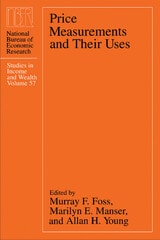
cover of Price Measurements and Their Uses

Price Measurements and Their Uses

Edited by Murray F. Foss, Marilyn E. Manser, and Allan H. Young

University of Chicago Press, 1993

In an economy characterized by frequent change in technology, in the types of goods and services purchased, and in the forms of business organization, keeping track of price change continues to pose many difficulties. Price change affects the way we perceive changes in such basic measures as real output, productivity, and living standards. This volume, which brings together academic economists with those responsible for official price indexes, presents outstanding new research on price measurement.

Half of the papers focus on prices for mainframe and personal computers, semiconductors, and other high-tech products, using mainly hedonic techniques. The volume includes a panel discussion by distinguished economists about the theoretical and practical considerations of how best to measure price change of capital goods whose quality is changing rapidly. The authors also present new research on more conventional but still unsettled problems in the price field affecting both the consumer and producer price indexes of the Bureau of Labor Statistics.
[more]
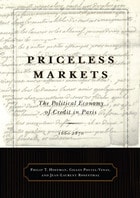
cover of Priceless Markets: The Political Economy of Credit in Paris, 1660-1870

Priceless Markets

The Political Economy of Credit in Paris, 1660-1870

Philip T. Hoffman, Gilles Postel-Vinay, and Jean-Laurent Rosenthal

University of Chicago Press, 2000

This pathbreaking book shows how credit markets functioned in Paris, through the agency of notaries, during a critical period of French history. Its authors challenge the usual assumption that organized financial markets—and hence the opportunity for economic growth—did not emerge outside of England and the Netherlands until the nineteenth century. Drawing on innovative research, the authors show that as early as the Old Regime, financial intermediaries in France were mobilizing a great tide of capital and arranging thousands of loans between borrowers and lenders.

The implications for historians and economists are substantial. The role of notaries operating in Paris that Priceless Markets uncovers has never before been recognized. In the wake of this pathbreaking new study, historians will also have to rethink the origins of the French Revolution. As the authors show, the crisis of 1787-88 did not simply ignite revolt; it was intimately bound up in an economic struggle that reached far back into the eighteenth century, and continued well into the 1800s.
[more]
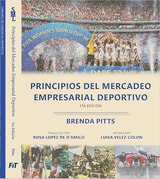
cover of Principios del Mercadeo Empresarial Deportivo: First Edition Spanish

Principios del Mercadeo Empresarial Deportivo

First Edition Spanish

Brenda G. Pitts

FiT Publishing, 2023

La industria del negocio del deporte es vasta y diversa. Los estudiantes de hoy son los profesionales del mañana, y es inmensamente importante que estos estudiantes obtengan el conocimiento contemporáneo necesario para operar con éxito en una industria en constante crecimiento. Como ningún otro libro de texto en el campo, la 5ta edición (en inglés) y 1era edición en español de Principios del Mercadeo Empresarial Deportivo cubre los aspectos prácticos y marco teórico necesario para que los estudiantes comprendan y los profesionales comercialicen cualquier negocio relacionado con el deporte en una economía global. Las actualizaciones de esta nueva edición comienzan con un título que reconoce la contribución de billones de dólares del negocio del deporte a la economía global. Como el libro de texto de mercadeo empresarial deportivo más completo hasta la fecha, esta edición abarca la diversidad de espectadores y participantes, deportes y negocios deportivos que comprende la industria, mucho más allá del alcance de los deportes profesionales y universitarios para incluir la investigación de mercadeo deportivo, venta al por menor y fabricación de artículos deportivos, retransmisiones deportivas, negocios de deportes por Internet, turismo deportivo y paradeportes; en resumen, el espectro completo de empresas en las que los estudiantes de programas deportivos de todo el mundo buscarán carreras.
[more]
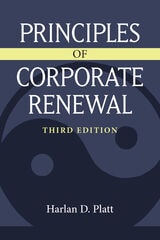
cover of Principles of Corporate Renewal

Principles of Corporate Renewal

Harlan D. Platt

University of Michigan Press, 2023

Since its publication in 1998, this indispensable text has been the only systematic examination of corporate renewal, offering a rational approach for dealing with financially distressed companies. It contains the first logical and orderly discussion of a number of modern business issues including outsourcing, turnaround management, layoffs, quality management, and reengineering.
 
Now in its third edition, Harlan D. Platt has revised, updated, and expanded the text. As the first edition did, this new Principles of Corporate Renewal cuts to the heart of the patterns, procedures, and pitfalls of bringing a corporation back to life and health.
[more]
cover of Principles of Corporate Renewal, Second Edition

Principles of Corporate Renewal, Second Edition

Harlan D. Platt

University of Michigan Press, 2004

Since its publication in 1998, this indispensable text has been the only systematic examination of corporate renewal, offering a rational approach for dealing with financially distressed companies. It contains the first logical and orderly discussion of a number of modern business issues including outsourcing, turnaround management, layoffs, quality management, and reengineering.
 
Now in its second edition, Harlan D. Platt has revised, updated, and expanded the text to include a new chapter on bankruptcy law, a profile of the turnaround manager, and an overview of the typical turnaround engagement. As the first edition did, this new Principles of Corporate Renewal cuts to the heart of the patterns, procedures, and pitfalls of bringing a corporation back to life and health.

[more]
cover of Prisoner's Dilemma

Prisoner's Dilemma

Anatol Rapoport and Albert M. Chammah

University of Michigan Press, 1965

The term "Prisoner's Dilemma" comes from the original anecdote used to illustrate this game of strategy. Two prisoners, held incommunicado, are charged with the same crime. They can be convicted only if either confesses. If both prisoners confess, their payoff is minus one. If neither confesses, it is plus one. If only one confesses, he is set free for having turned state's evidence and is given a reward of plus two to boot. The prisoner who holds out is convicted on the strength of the other's testimony and is given a more severe sentence than if he had confessed. His payoff is minus two. It is in the interest of each to confess no matter what the other does, but it is in their collective interest to hold out. There is no satisfactory solution to the paradox of this game. Its simplicity is misleading. What seems rational from your own point of view, turns out to be detrimental in the end. This book is an account of many experiments in which Prisoner's Dilemma was played. Analyzing the results, one can learn how people are motivated to trust or distrust their partners, to keep faith or to betray, to be guided by joint or selfish interest. The method represents an important step toward building a bridge between psychology which is based on hard data and reproducible experiments and psychology which is concerned with internal conflict.
[more]
cover of Private Equity at Work: When Wall Street Manages Main Street

Private Equity at Work

When Wall Street Manages Main Street

Eileen Appelbaum

Russell Sage Foundation, 2014

Private equity firms have long been at the center of public debates on the impact of the financial sector on Main Street companies. Are these firms financial innovators that save failing businesses or financial predators that bankrupt otherwise healthy companies and destroy jobs? The first comprehensive examination of this topic, Private Equity at Work provides a detailed yet accessible guide to this controversial business model. Economist Eileen Appelbaum and Professor Rosemary Batt carefully evaluate the evidence—including original case studies and interviews, legal documents, bankruptcy proceedings, media coverage, and existing academic scholarship—to demonstrate the effects of private equity on American businesses and workers. They document that while private equity firms have had positive effects on the operations and growth of small and mid-sized companies and in turning around failing companies, the interventions of private equity more often than not lead to significant negative consequences for many businesses and workers. Prior research on private equity has focused almost exclusively on the financial performance of private equity funds and the returns to their investors. Private Equity at Work provides a new roadmap to the largely hidden internal operations of these firms, showing how their business strategies disproportionately benefit the partners in private equity firms at the expense of other stakeholders and taxpayers. In the 1980s, leveraged buyouts by private equity firms saw high returns and were widely considered the solution to corporate wastefulness and mismanagement. And since 2000, nearly 11,500 companies—representing almost 8 million employees—have been purchased by private equity firms. As their role in the economy has increased, they have come under fire from labor unions and community advocates who argue that the proliferation of leveraged buyouts destroys jobs, causes wages to stagnate, saddles otherwise healthy companies with debt, and leads to subsidies from taxpayers. Appelbaum and Batt show that private equity firms’ financial strategies are designed to extract maximum value from the companies they buy and sell, often to the detriment of those companies and their employees and suppliers. Their risky decisions include buying companies and extracting dividends by loading them with high levels of debt and selling assets. These actions often lead to financial distress and a disproportionate focus on cost-cutting, outsourcing, and wage and benefit losses for workers, especially if they are unionized. Because the law views private equity firms as investors rather than employers, private equity owners are not held accountable for their actions in ways that public corporations are. And their actions are not transparent because private equity owned companies are not regulated by the Securities and Exchange Commission. Thus, any debts or costs of bankruptcy incurred fall on businesses owned by private equity and their workers, not the private equity firms that govern them. For employees this often means loss of jobs, health and pension benefits, and retirement income. Appelbaum and Batt conclude with a set of policy recommendations intended to curb the negative effects of private equity while preserving its constructive role in the economy. These include policies to improve transparency and accountability, as well as changes that would reduce the excessive use of financial engineering strategies by firms. A groundbreaking analysis of a hotly contested business model, Private Equity at Work provides an unprecedented analysis of the little-understood inner workings of private equity and of the effects of leveraged buyouts on American companies and workers. This important new work will be a valuable resource for scholars, policymakers, and the informed public alike.
[more]
cover of Privatization in Eastern Europe: Is the State Withering Away?

Privatization in Eastern Europe

Is the State Withering Away?

Roman Frydman

Central European University Press, 1994
In Eastern Europe privatization is now a mass phenomenon. The authors propose a model of it by means of an illustration from the example of Poland, which envisages the free provision of shares in formerly public undertakings to employees and consumers, and the provision of corporate finance from foreign intermediaries. One danger that emerges is that of bureaucratization. On the broader canvas, mass privatization implies the reform of the whole system, the creation of a suitable economic infrastructure for a market economy and the institutions of corporate governance. The authors point out the need for a delicate balance between evolution - which may be too slow - and design - which brings the risk of more government involvement than it is able to manage. A chapter originating as a European Bank working paper explores the banking implications of setting up a totally new financial sector with interlocking classes of assets. The economic effects merge into politics as the role of the state is investigated. Teachers and graduate students of public/private sector economies, East European affairs; advisers to bankers or commercial companies with Eastern European interests.
[more]
cover of Privatizing Social Security

Privatizing Social Security

Edited by Martin Feldstein

University of Chicago Press, 1998
This volume represents the most important work to date on one of the pressing policy issues of the moment: the privatization of social security. Although social security is facing enormous fiscal pressure in the face of an aging population, there has been relatively little published on the fundamentals of essential reform through privatization. Privatizing Social Security fills this void by studying the methods and problems involved in shifting from the current system to one based on mandatory saving in individual accounts.
[more]
cover of Privatizing the Economy: Telecommunications Policy in Comparative Perspective

Privatizing the Economy

Telecommunications Policy in Comparative Perspective

Raymond M. Duch

University of Michigan Press, 1991

During the 1980s government economic policies in the United States and many Western countries promoted the privatization of state-owned activities and the liberalization of competition. This has been the Reagan-Thatcher legacy to contemporary political economy. Privatizing the Economy takes a careful second look at the economic arguments that link government ownership with poor economic performance. Through a rigorous comparative analysis of telecommunications policies in France, Germany, and the United Kingdom, Raymond Duch shows that it is political control rather than economic ownership that accounts for variations in economic performance. He also provides a political explanation of why privatization has progressed further in some countries than others. Privatizing the Economy strikes a unique balance between economic and political theory, empirical and theoretical analysis, and cross-national and case-study research design. Having identified the weaknesses of economic arguments regarding public versus private ownership, the author proposes an alternative political explanation for the variations in the performance of public and private firms. The author seeks to explain why some governments have adopted liberal economic policies while others have not. The discussion draws upon an extensive political economy literature, pointing out weaknesses of existing theories and suggesting a novel way of looking at policy change. Evidence supporting the author's theoretical propositions comes from two distinct comparative research traditions: cross-national and case-study analyses. This novel way of looking at policy change and the author's broad use of political economy literature offers readers an understanding of what benefits liberal economic policies might deliver and of the likelihood that such policy initiatives might succeed.
[more]