Results by title
1882 books match the query 'Criticism and interpretation' and 73 start with p
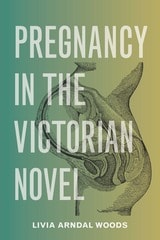
Pregnancy in the Victorian Novel
Livia Arndal Woods
The Ohio State University Press, 2023
In Pregnancy in the Victorian Novel—the first book-length study of the topic—Livia Arndal Woods traces the connections between literary treatments of pregnancy and the medicalization of pregnancy and childbirth occurring over the long nineteenth century. Woods uses the problem of pregnancy in the Victorian novel (in which pregnancy is treated modestly as a rule and only rarely as an embodied experience) to advocate for “somatic reading,” a practice attuned to impressions of the body on the page and in our own messy lived experiences.
Examining works by Emily Brontë, Charlotte Mary Yonge, Anthony Trollope, George Eliot, Thomas Hardy and others, Woods considers instances of pregnancy that are tied to representations of immodesty, poverty, and medical diagnosis. These representations, Woods argues, should be understood in the arc of Anglo-American modernity and its aftershocks, connecting backward to early modern witch trials and forward to the criminalization of women for pregnancy outcomes in twenty-first-century America. Ultimately, she makes the case that by clearing space for the personal and anecdotal in scholarship, somatic reading helps us analyze with uncertainty rather than against it and allows for richer and more relevant textual interpretation.
Prehistoric Future
Max Ernst and the Return of Painting between the WarsRalph Ubl
University of Chicago Press, 2013
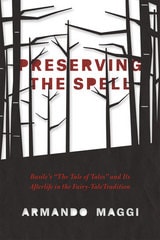
Preserving the Spell
Basile's "The Tale of Tales" and Its Afterlife in the Fairy-Tale TraditionArmando Maggi
University of Chicago Press, 2015
If we want to rediscover the power of fairy tales—as Armando Maggi thinks we should—we need to discover a new mythic lens, a new way of approaching and understanding, and thus re-creating, the transformative potential of these stories. In Preserving the Spell, Maggi argues that the first step is to understand the history of the various traditions of oral and written narrative that together created the fairy tales we know today. He begins his exploration with the ur-text of European fairy tales, Giambattista Basile’s The Tale of Tales, then traces its path through later Italian, French, English, and German traditions, with particular emphasis on the Grimm Brothers’ adaptations of the tales, which are included in the first-ever English translation in an appendix. Carrying his story into the twentieth century, Maggi mounts a powerful argument for freeing fairy tales from their bland contemporary forms, and reinvigorating our belief that we still can find new, powerfully transformative ways of telling these stories.
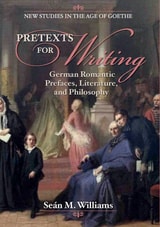
Pretexts for Writing
German Romantic Prefaces, Literature, and PhilosophyWilliams, Seán M
Bucknell University Press, 2019
Published by Bucknell University Press. Distributed worldwide by Rutgers University Press.
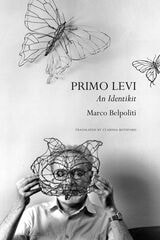
Primo Levi
An IdentikitMarco Belpoliti
Seagull Books, 2022
Over the last seventy years, Primo Levi (1919–87) has been recognized as the foremost literary witness of the extermination of the European Jews. In Primo Levi: An Identikit, a product of twenty years of research, Marco Belpoliti explores Levi’s tormented life, his trajectory as a writer and intellectual, and, above all, his multifaceted and complex oeuvre.
Organized in a mosaic format, this volume devotes a different chapter to each of Levi’s books. In addition to tracing the history of each book’s composition, publication, and literary influences, Belpoliti explores their contents across the many worlds of Primo Levi: from chemistry to anthropology, biology to ethology, space flights to linguistics. If This Is a Man, his initially rejected masterpiece, is also reread with a fresh perspective. We learn of dreams, animals, and travel; of literary writing, comedy, and tragedy; of shame, memory, and the relationship with other writers such as Franz Kafka and Georges Perec, Jean Améry and Varlam Shalamov. Fundamental themes such as Judaism, the camp, and testimony innervate the book, which is complemented by photographs and letters found by the author in hitherto unexplored archives.
This will be the definitive book on Primo Levi, a treasure trove of stories and reflections that paint a rich, nuanced composite portrait of one of the twentieth century’s most unique and urgent voices.
Prince, Musical Genre, and the Construction of Racial Identity
Griffin Woodworth
University of Michigan Press, 2025
Each chapter includes detailed musical analyses and transcriptions of Prince’s songs, focusing on his use of rock guitar, new-wave synthesizers, funk drumming, gospel singing, and R&B horns. By tracking Prince’s transformations of instrumental and vocal idioms derived from specific musical genres, and considering the historical and cultural values embedded within those genres, Griffin Woodworth explores the ways that Prince musically broke down stereotypes of Black masculinity. With its intersectional approach to musical analysis, this book captures the sounds of American racial politics in the 1980s, 90s, and 2000s as heard through the music of one of the era’s most popular artists as he worked to transform and transcend those politics.
Private Anarchy
Impossible Community and the Outsider’s Monologue in German Experimental FictionPaul Buchholz
Northwestern University Press, 2018
Buchholz suggests that in their experimental prose Gustav Landauer, Franz Kafka, Thomas Bernhard, and Wolfgang Hilbig each considered how the "void" of mass society could be the precondition for a new, anarchic form of community that would rest not on any assumptions of shared origins or organic unity but on an experience of extreme emptiness that blurs the boundaries of the self and enables intimacy between total strangers. This community, Buchholz argues, is created through the verbal form most closely associated with alienation and isolation: the monologue.
By showing how these authors engaged with the idea of community and by relating these contributions to an extended intellectual genealogy of nihilism, Private Anarchy illustrates the distinct philosophical and sociopolitical stakes of German experimental writing in the twentieth century.
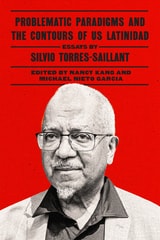
Problematic Paradigms and the Contours of US Latinidad
Essays by Silvio Torres-SaillantEdited by Nancy Kang and Michael Nieto Garcia
University of Texas Press, 2026
Silvio Torres-Saillant’s collected writings examine political contradictions within Latinx identity in the United States.
Since the 1990s Silvio Torres-Saillant’s work has questioned the notion of Latinidad, challenging presumptions of panethnic unity within the US Hispanic population and assessing dominant modes of Latinx representation. The essays in Problematic Paradigms and the Contours of US Latinidad examine the dynamics of a diverse collective of over 65 million people whose cultural heritage, ancestral origins, and belief systems arguably differ as much as they resemble one another. The volume dissects prevailing assumptions, namely the essentializing sense of homogeneity in the Latinx “community,” which mask important nuances and fascinating contradictions. Torres-Saillant also targets the role of marketing and mass communications in shaping popular perceptions of ethnic groups, thereby tracing connections between media rhetoric and the language of scholarship.
Newly revised by editors Nancy Kang and Michael Nieto Garcia, this collection curates Torres-Saillant’s core contributions to Latinx studies over the last two decades and underscores the veteran scholar’s evolving thoughts on key conversations in the field. The epilogue narrates his beginnings in Caribbean studies, acknowledges his ongoing analysis of Dominican blackness, and discourages uncritical views of cultural heritage.
Problems of Dostoevsky’s Poetics
Mikhail Bakhtin
University of Minnesota Press, 1984
Prodigal Son
Vasilii Shuksin in Soviet Russian CultureJohn Givens
Northwestern University Press, 2000

Producing American Races
Henry James, William Faulkner, Toni MorrisonPatricia McKee
Duke University Press, 1999
McKee provides close readings of six novels—James’s The Wings of the Dove and The Golden Bowl, Faulkner’s The Sound and the Fury and Light in August, and Morrison’s Sula and Jazz—interspersed with excursions into Lacanian and Freudian theory, critical race theory, epistemology, and theories of visuality. In James and Faulkner, she finds, race is represented visually through media that highlight ways of seeing and being seen. Written in the early twentieth century, the novels of James and Faulkner reveal how whiteness depended on visual culture even before film and television became its predominant media. In Morrison, the culture is aural and oral—and often about the absence of the visual. Because Morrison’s African American communities produce identity in nonvisual, even anti-visual terms, McKee argues, they refute not just white representations of black persons as objects but also visual orders of representation that have constructed whites as subjects and blacks as objects.
With a theoretical approach that both complements and transcends current scholarship about race—and especially whiteness—Producing American Races will engage scholars in American literature, critical race theory, African American studies, and cultural studies. It will also be of value to those interested in the novel as a political and aesthetic form.
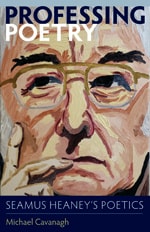
Professing Poetry
Seamus Heaney’s PoeticsMichael Cavanagh
Catholic University of America Press, 2009
Properties of Modernity
Romantic Spain, Modern Europe, and the Legacies of EmpireMichael Iarocci
Vanderbilt University Press, 2006
Through a close study of Cadalso, Saavedra, and Larra, Iarocci argues that Spanish writers were intensely concerned with the same issues taken up by more famous Romantics and that the ways in which they address these issues provides us with a richer notion, not only of Spain, but of all of Europe.
Prosaic Conditions
Heinrich Heine and the Spaces of Zionist LiteratureNa'ama Rokem
Northwestern University Press, 2013
Protecting the Spanish Woman
Gender Identity and Empowerment in María de Zayas's WorksXabier Granja Ibarreche
University of Nevada Press, 2023
María de Zayas is unique in the seventeenth century as the only Spanish woman to write a collection of exemplary novels whose quality is often compared to Miguel de Cervantes’ masterful works. Her two main collections of short stories, Novelas amorosas y ejemplares and Desengaños amorosos, encompass a social critique based on literary fiction that exposes flaws in the idealized archetypes of masculine identity in early modern Spain. Zayas’s stories redefine women’s patriarchal disadvantage as a tool to expose the ways in which early modern Spanish women could be empowered to counteract men’s discursive and political authority, which they use to unfairly maintain their own social privilege.
Xabier Granja Ibarreche explores how Zayas defies Spanish hegemony by manipulating and transforming the ideals of courtly masculinity that had been popularized by conduct manuals and the traits they specified for appropriate noble comportment. In doing so, Zayas elaborates a nonofficial discourse throughout plots that subvert patriarchal hierarchies: she rearticulates the existing ideological order to empower women who are no longer willing to remain silent and oppressed by masculine domination after centuries of failing to attain a sufficiently self-sufficient political position to ascend in the social hierarchy. By inverting the male gaze that assumes masculinity as a preeminent identity, Zayas subverts the patriarchal subject/masculine, object/feminine order and destabilizes manly superiority as a basic universal reality, thereby empowering and unshackling Spanish women to liberate Iberian culture from the repressive and pernicious future she forebodes.
Proust among the Nations
From Dreyfus to the Middle EastJacqueline Rose
University of Chicago Press, 2011
Known for her far-reaching examinations of psychoanalysis, literature, and politics, Jacqueline Rose has in recent years turned her attention to the Israel-Palestine conflict, one of the most enduring and apparently intractable conflicts of our time. In Proust among the Nations, she takes the development of her thought on this crisis a stage further, revealing it as a distinctly Western problem.
Proust in Perspective
VISIONS AND REVISIONSEdited by Armine Kotin Mortimer and Katherine Kolb
University of Illinois Press, 2002
In nineteen original essays, a foreword by Jean–Yves Tadié, and an introduction by editors Armine Kotin Mortimer and Katherine Kolb, this volume guides readers through the dense weave of Proust's fiction and correspondence. The essays take us into the realm of Proustian language–-as quotation, metaphor, and memory–-and into art history and musical ideology, connecting the art of words with the words of art. They explore the interface of history and fiction, the mysteries of the text's evolution, and the dilemmas of its publication. They present the revelations of genetic criticism and the surprises of gender analysis.
Taken together, these essays conjure a multifaceted profile of Proust–-his work, life, character, and influence–-and of new directions in Proust scholarship today. With compelling rigor and infectious enthusiasm, Proust in Perspective conveys the magnitude of Proust's continuing appeal.
Proust, Mann, Joyce in the Modernist Context, Second Edition
Gerald Gillespie
Catholic University of America Press, 2010
Psycho-Sexual
Male Desire in Hitchcock, De Palma, Scorsese, and FriedkinBy David Greven
University of Texas Press, 2013
Bridging landmark territory in film studies, Psycho-Sexual is the first book to apply Alfred Hitchcock’s legacy to three key directors of 1970s Hollywood—Brian De Palma, Martin Scorsese, and William Friedkin—whose work suggests the pornographic male gaze that emerged in Hitchcock’s depiction of the voyeuristic, homoerotically inclined American man. Combining queer theory with a psychoanalytic perspective, David Greven begins with a reconsideration of Psycho and the 1956 remake of The Man Who Knew Too Much to introduce the filmmaker’s evolutionary development of American masculinity.
Psycho-Sexual probes De Palma’s early Vietnam War draft-dodger comedies as well as his film Dressed to Kill, along with Scorsese’s Taxi Driver and Friedkin’s Cruising as reactions to and inventive elaborations upon Hitchcock’s gendered themes and aesthetic approaches. Greven demonstrates how the significant political achievement of these films arises from a deeply disturbing, violent, even sorrowful psychological and social context. Engaging with contemporary theories of pornography while establishing pornography’s emergence during the classical Hollywood era, Greven argues that New Hollywood filmmakers seized upon Hitchcock’s radical decentering of heterosexual male dominance. The resulting images of heterosexual male ambivalence allowed for an investment in same-sex desire; an aura of homophobia became informed by a fascination with the homoerotic. Psycho-Sexual also explores the broader gender crisis and disorganization that permeated the Cold War and New Hollywood eras, reimagining the defining premises of Hitchcock criticism.
Publishing the Family
June Howard
Duke University Press, 2001
Publishing the Family describes the sources and controversial outcome of a fascinating literary experiment. Howard embeds the story of The Whole Family in the story of Harper & Brothers’ powerful and pervasive presence in American cultural life, treating the publisher, in effect, as an author.
Each chapter of Publishing the Family casts light on some aspect of life in the United States at a moment that arguably marked the beginning of our own era. Howard revises common views of the turn-of-the-century literary marketplace and discusses the perceived crisis in the family as well as the popular and expert discourses that emerged to remedy it. She also demonstrates how creative women like Bazar editor Elizabeth Jordan blended their own ideas about the “New Woman” with traditional values. Howard places these analyses in the framework of far-reaching historical changes, such as the transformation of the public meaning of emotion and “sentimentality.” Taken together, the chapters in Publishing the Family show how profoundly the modern mapping of social life relies on boundaries between family and business, culture and commerce, which The Whole Family and Publishing the Family constantly unsettle.
Publishing the Family will interest students and scholars of American history, literature, and culture, as well as those studying gender, sexuality, and the family.
Puccini
His International ArtMichele Girardi
University of Chicago Press, 2000
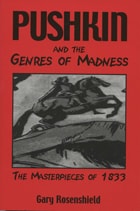
Pushkin and the Genres of Madness
The Masterpieces of 1833Gary Rosenshield
University of Wisconsin Press, 2003
In 1833 Alexander Pushkin began to explore the topic of madness, a subject little explored in Russian literature before his time. The works he produced on the theme are three of his greatest masterpieces: the prose novella The Queen of Spades, the narrative poem The Bronze Horseman, and the lyric "God Grant That I Not Lose My Mind." Gary Rosenshield presents a new interpretation of Pushkin’s genius through an examination of his various representations of madness.
Pushkin brilliantly explored both the destructive and creative sides of madness, a strange fusion of violence and insight. In this study, Rosenshield illustrates the surprising valorization of madness in The Queen of Spades and "God Grant That I Not Lose My Mind" and analyzes The Bronze Horseman’s confrontation with the legacy of Peter the Great, a cornerstone figure of Russian history. Drawing on themes of madness in western literature, Rosenshield situates Pushkin in a greater framework with such luminaries as Shakespeare, Sophocles, Cervantes, and Dostoevsky providing an insightful and absorbing study of Russia’s greatest writer.
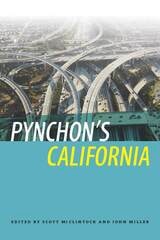
Pynchon's California
Scott McClintock and John Miller
University of Iowa Press, 2014
Contributors explore such topics as the relationship of the “California novels” to Pynchon’s more historical and encyclopedic works; the significance of California's beaches, deserts, forests, freeways, and “hieroglyphic” suburban sprawl; the California-inspired noir tradition; and the surprising connections to be uncovered between drug use and realism, melodrama and real estate, private detection and the sacred. The authors bring insights to bear from an array of critical, social, and historical discourses, offering new ways of looking not only at Pynchon’s California novels, but at his entire oeuvre. They explore both how the history, geography, and culture of California have informed Pynchon’s work and how Pynchon’s ever-skeptical critical eye has been turned on the state that has been, in many ways, the flagship for postmodern American culture.
CONTRIBUTORS: Hanjo Berressem, Christopher Coffman, Stephen Hock, Margaret Lynd, Scott MacLeod, Scott McClintock, Bill Millard, John Miller, Henry Veggian