Results by title
2646 books match the query 'History & Criticism' and 117 start with p
Pictures in the Air
The Story of the National Theatre of the DeafStephen C. Baldwin
Gallaudet University Press, 1994
Picturing American Modernity
Traffic, Technology, and the Silent CinemaKristen Whissel
Duke University Press, 2008
Whissel shows that by portraying key events, achievements, and anxieties, the cinema invited American audiences to participate in the rapidly changing world around them. Moving pictures provided astonishing visual dispatches from military camps prior to the outbreak of fighting in the Spanish-American War. They allowed audiences to delight in images of the Pan-American Exposition, and also to mourn the assassination of President McKinley there. One early film genre, the reenactment, presented spectators with renditions of bloody battles fought overseas during the Philippine-American War. Early features offered sensational dramatizations of the scandalous “white slave trade,” which was often linked to immigration and new forms of urban work and leisure. By bringing these frequently distant events and anxieties “near” to audiences in cities and towns across the country, the cinema helped construct an American national identity for the machine age.
Picturing Culture
Explorations of Film and AnthropologyJay Ruby
University of Chicago Press, 2000
The book begins with analyses of key filmmakers (Robert Flaherty, Robert Garner, and Tim Asch) who have striven to generate profound statements about human behavior on film. Ruby then discusses the idea of research film, Eric Michaels and indigenous media, the ethics of representation, the nature of ethnography, anthropological knowledge, and film and lays the groundwork for a critical approach to the field that borrows selectively from film, communication, media, and cultural studies. Witty and original, yet intensely theoretical, this collection is a major contribution to the field of visual anthropology.

Pieces of Sound
German Experimental RadioDaniel Gilfillan
University of Minnesota Press, 2009
A cultural history of German radio broadcasting from the 1920s to today
Since the rise of film and television, radio has continued to evolve, with satellite radio and podcasts as its latest incarnations. Any understanding of the development of radio, like its visual counterparts, depends on closely examining the artistic ventures that preceded commercial acceptance.
In Pieces of Sound, Daniel Gilfillan offers a cultural history that explores these major aspects of the medium by focusing on German radio broadcasting, providing a context that sees beyond programming to consider regulations, cultural politics, and social standardization. Gilfillan showcases the work of radio pioneers and artists over the past century, including Brecht’s work with the form, and how radio was employed before and after World War II. He traces how German radio broadcasters experimented with networked media not only to expand the artistic and communicative possibilities of radio, but also to inform perceptions about the advantages and direction of newer telecommunications media like Internet broadcasting and pirate radio, which artists are using today to engage with a medium that is increasingly under corporate control. Gilfillan astutely observes how claims made for the Internet today echo those made for radio in its infancy and puts forth a broad and incisive historical analysis of German cultural broadcasting.
Pink-Slipped
What Happened to Women in the Silent Film Industries?Jane M Gaines
University of Illinois Press, 2018
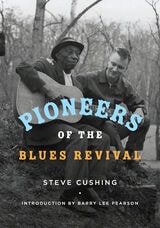
Pioneers of the Blues Revival
Steve Cushing
University of Illinois Press, 2014
Opinionated and territorial, the American, British, and French interviewees provide fascinating first-hand accounts of the era and movement. Experts including Paul Oliver, Gayle Dean Wardlow, Sam Charters, Ray Flerledge, Paul Oliver, Richard K. Spottswood, and Pete Whelan chronicle in their own words their obsessive early efforts at cataloging blues recordings and retrace lifetimes spent loving, finding, collecting, reissuing, and producing records. They and nearly a dozen others recount relationships with blues musicians, including the discoveries of prewar bluesmen Mississippi John Hurt, Son House, Skip James, and Bukka White, and the reintroduction of these musicians and many others to new generations of listeners. The accounts describe fieldwork in the South, renew lively debates, and tell of rehearsals in Muddy Waters's basement and randomly finding Lightning Hopkins's guitar in a pawn shop.
Blues scholar Barry Lee Pearson provides a critical and historical framework for the interviews in an introduction.
Pipeline Noir
Seeing Oil through ChinatownMichael Rubenstein
University of Minnesota Press, 2025
Watching Chinatown fifty years after its release reveals hidden connections to today’s energy and climate crises
Pipeline Noir offers a fascinating interpretation of Chinatown, a classic of New Hollywood cinema, through the lens of petromodernity. Michael Rubenstein reimagines the film as an allegory for the 1970s energy crises, revealing how its focus on water infrastructure in early-twentieth-century California serves as a surrogate for the oil pipelines shaping the postwar global order. Introducing the concept of the “petroscope,” Rubenstein demonstrates how the film’s cinematic style mirrors the worldview shaped by petroleum’s dominance in modern life.
Blending appreciation and analysis, this book uncovers layers of Chinatown’s narrative that resonate urgently today, and Rubenstein’s meticulous examinations of the screenplay’s draft history and of key scenes in the finished film shed new light on the film’s cultural and environmental significance. By aligning Chinatown with the emerging field of petrocriticism, Pipeline Noir offers a compelling contribution to film theory and the energy humanities.
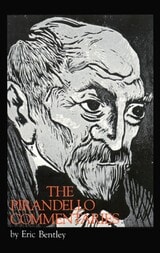
Pirandello Commentaries
Eric Bentley
Northwestern University Press, 1986
"Everybody" is still caught in the mazes of Pirandellism. But since the 1940s Eric Bentley has threaded his way through those mazes. The Pirandello Commentaries is the result.
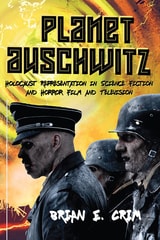
Planet Auschwitz
Holocaust Representation in Science Fiction and Horror Film and TelevisionBrian E. Crim
Rutgers University Press, 2020
Planet Auschwitz website (https://planetauschwitz.com)
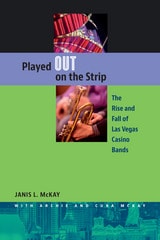
Played Out on the Strip
The Rise and Fall of Las Vegas Casino BandsJanis L. McKay
University of Nevada Press, 2016
From 1940 to 1989, nearly every hotel on the Las Vegas Strip employed a full-time band or orchestra. After the late 1980s, when control of the casinos changed hands from independent owners to corporations, almost all of these musicians found themselves unemployed. Played Out on the Strip traces this major shift in the music industry through extensive interviews with former musicians.
In 1989, these soon-to-be unemployed musicians went on strike. Janis McKay charts the factors behind this strike, which was precipitated by several corporate hotel owners moving to replace live musicians with synthesizers and taped music, a strategic decision made in order to save money. The results of this transitional period in Las Vegas history were both long-lasting and far-reaching for the entertainment industry. With its numerous oral history interviews and personal perspectives from the era, this book will appeal to readers interested in Las Vegas history, music history, and labor issues.
Playful Frames
Styles of Widescreen CinemaSteven Rybin
Rutgers University Press, 2024
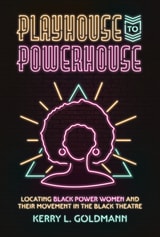
Playhouse to Powerhouse
Locating Black Power Women and their Movement in the Black TheatreKerry Goldmann
University of Arkansas Press, 2025
In Playhouse to Powerhouse, Kerry L. Goldmann explores the Black theatre movement through the lens of three significant women-led theatres that are still in operation today: Nora Vaughn’s Black Repertory Group in Berkeley, Barbara Ann Teer’s National Black Theatre in Harlem, and George Hawkins and Eileen Morris’s Ensemble Theatre in Houston. Goldmann concludes with a discussion of the current moment, examining contemporary obstacles such as gentrification, the co-opting of Black theatres, and the impact of COVID-19.
This remarkable work sheds light on the foundational role that Vaughn, Teer, and Morris played in the Black cultural revolution of the mid- to late twentieth century, securing theatre houses that thrived in multiple capacities as sites for revolution organizing, revenue generation for communal uplift, and unapologetic Black cultural representation.

Playing Doctor
Television, Storytelling, and Medical PowerJoseph Turow
University of Michigan Press, 2010
Playing God
The Bible on the Broadway StageHenry Bial
University of Michigan Press, 2015
Playing Real
Mimesis, Media, and MischiefLindsay Brandon Hunter
Northwestern University Press, 2021
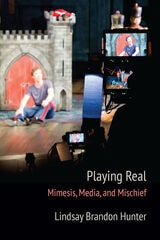
Playing Real: Mimesis, Media, and Mischief explores the integration and interaction of mimetic theatricality and representational media in twentieth- and twenty‑first-century performance. It brings together carefully chosen sites of performance—including live broadcasts of theatrical productions, reality television, and alternate-reality gaming—in which mediatization and mimesis compete and collude to represent the real to audiences. Lindsay Brandon Hunter reads such performances as forcing confrontation between notions of authenticity, sincerity, and spontaneity and their various others: the fake, the feigned, the staged, or the rehearsed.
Each site examined in Playing Real purports to show audiences something real—real theater, real housewives, real alternative scenarios—which is simultaneously visible as overtly constructed, adulterated by artifice and artificiality. The integration of mediatization and theatricality in these performances, Hunter argues, exploits the proclivities of both to conjure the real even as they risk corrupting the perception of authenticity by imbricating it with artifice and overt manipulation.
Although the performances analyzed obscure boundaries separating actual from virtual, genuine from artificial, and truth from fiction, Hunter rejects the notion that these productions imperil the “real.” She insists on uncertainty as a fertile site for productive and pleasurable mischief—including relationships to realness and authenticity among both audience and participants.
Playing Underground
A Critical History of the 1960s Off-Off-Broadway MovementStephen J. Bottoms
University of Michigan Press, 2004
-William Coco
"At last---a book documenting the beginnings of Off-Off Broadway theater. Playing Underground is an insightful, illuminating, and honest appraisal of this important period in American theater."
-Rosalyn Drexler, author of Art Does (Not!) Exist and Occupational Hazard
"An epic movie of an epic movement, Playing Underground is a book the world has waited for without knowing it. How precisely it captures the evolution of our revolution! I am amazed by the book's scope and scale, and I bless its author especially for giving two greats, Paul Foster and H. M. Koutoukas, their proper, polar places, and for memorializing such unjustly forgotten masterpieces as Irene Fornes's Molly's Dream and Jeff Weiss's A Funny Walk Home. Stephen Bottoms's vivid evocation of the grand adventure of Off-Off Broadway has woken and broken my heart. It is difficult to believe that he was not there alongside me to breathe the caffeine-nicotine-alkaloid-steeped air."
-Robert Patrick, author of Kennedy's Children and Temple Slave
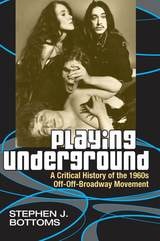
Few books address the legendary age of 1960s off-off Broadway theater. Fortunately, Stephen Bottoms fills that gap with Playing Underground---the first comprehensive history of the roots of off-off Broadway.
This is a theater whose legacy is still felt today: it was the launching pad for many leading contemporary theater artists, including Sam Shepard, Maria Irene Fornes, and others, and it was a pivotal influence on improv comedy and shows like Saturday Night Live.
Off-off Broadway groups such as the Living Theatre, La Mama, and Caffe Cino captured the spirit of nontraditional theater with their edgy, unscripted, boundary-crossing subjects. Yet, as Bottoms discovers, there is no one set of truths about off-off Broadway to uncover; the entire scene was always more a matter of competing perceptions than a singular, concrete reality.
No other author has managed to illuminate this shifting tableau as Bottoms does. Through interviews with dozens of the era's leading playwrights, performers, directors, and critics, he unearths a countercultural theater movement that was both influential and transforming-yet ephemeral and quintessentially of its moment.
Playing Underground will be a definitive work on the subject, offering a complete picture of an important but little-studied period in American theater.
Playing for Keeps
Improvisation in the AftermathDaniel Fischlin and Eric Porter
Duke University Press, 2020
Contributors. Randy DuBurke, Rana El Kadi, Kevin Fellezs, Daniel Fischlin, Kate Galloway, Reem Abdul Hadi, Vijay Iyer, Mark Lomanno, Moshe Morad, Eric Porter, Sara Ramshaw, Matana Roberts, Darci Sprengel, Paul Stapleton, Odeh Turjman, Stephanie Vos
Playing the Percentages
How Film Distribution Made the Hollywood Studio SystemDerek Long
University of Texas Press, 2024
A history of film distribution in the United States from the 1910s to the 1930s, concentrating on booking, circuiting, and packaging marketing practices.
Told not as a “golden age” narrative of films, stars, or individual studios but as an economic history of the industry’s film distribution practices, Playing the Percentages is the story of how Hollywood’s vertically integrated studio system came to be. Studying the history of distribution during the growth of Hollywood, Derek Long makes a case for the domination of the studio system as the result of struggles over distribution practices.
Through a combination of archival research, critical surveys of the film industry trade press, and economic analysis, Long uncovers a complex and ever-shifting system of wrangling between distributors and exhibitors. Challenging the overemphasis within scholarship on “block booking” as a monolithic distribution mode, and attending to distribution practices beyond simple circulation, Long highlights the crucial changes in film distribution brought about by live theater, the rise of features, and the transition to sound. Playing the Percentages is a comprehensive history of film distribution in the United States during the silent era that illustrates the importance of power struggles between distributors and exhibitors over booking, pricing, and playing time.
Playing with Memories
Essays on Guy MaddinDavid Church
University of Manitoba Press, 2009
Poetry FM
American Poetry and Radio CountercultureLisa Hollenbach
University of Iowa Press, 2023
Lisa Hollenbach traces the history of Pacifica Radio—founded in 1946, the nation’s first listener-supported public radio network—through the 1970s: from the radical pacifists and poets who founded Pacifica after the war; to the San Francisco Renaissance, Beat, and New York poets who helped define the countercultural sound of Pacifica stations KPFA and WBAI in the 1950s and 1960s; to the feminist poets and activists who seized Pacifica’s frequencies in the 1970s. In the poems and recorded broadcasts of writers like Kenneth Rexroth, Jack Spicer, Allen Ginsberg, Amiri Baraka, Audre Lorde, Pat Parker, Bernadette Mayer, and Susan Howe, one finds a recurring ambivalence about the technics and poetics of reception. Through tropes of static noise, censorship, and inaudibility as well as voice, sound, and signal, these radiopoetic works suggest new ways of listening to the sounds and silences of Cold War American culture.
Points on the Dial
Golden Age Radio beyond the NetworksAlexander Russo
Duke University Press, 2010

Polish Theatre Revisited
Theatre Fans in the Nineteenth CenturyAgata Luksza
University of Iowa Press, 2023
ASTR Barnard Hewitt Award, Finalist
Polish Theatre Revisited explores nineteenth-century Polish theatre through the lens of theatre audiences. Agata Łuksza places special emphasis on the most engaged spectators, known as “theatremaniacs”—from what they wore, to what they bought, to what they ate. Her source material is elusive ephemera from fans’ lives, such as notes scribbled on a weekly list of shows in the Warsaw theatres, collections of theatre postcards, and recipes for sweets named after famous actors.
The fannish behavior of theatremaniacs was usually deemed excessive or in poor taste by people in positions of power, as it clashed with the ongoing embourgeoisement of the theatre and the disciplining of audiences. Nevertheless, the theatre was one of the key areas where early fan cultures emerged, and theatremaniacs indulged in diverse fan practices in opposition to the forces reforming the theatre and its spectatorship.
Politics as Sound
The Washington, DC, Hardcore Scene, 1978-1983Shayna L. Maskell
University of Illinois Press, 2021
A fascinating analysis of a punk rock hotbed, Politics as Sound tells the story of how a generation created music that produced--and resisted--politics and power.
Politics of Legitimacy
State-Society Relations and Patterns of Chinese PoliticsDingxin Zhao
University of Chicago Press, 2026
The Chinese communist state has survived massive social changes, including the introduction of capitalist markets, an ongoing explosion of technological innovation, and an unprecedented jump in wealth and education, accompanied by a major cultural transformation. How has China managed to maintain its power even as the ground has so profoundly shifted? In Politics of Legitimacy, Dingxin Zhao argues that state power can be legitimized in three ideal-typical ways: a set of values upheld by the state (ideological legitimacy), recognized political processes such as regular competitive elections (procedural legitimacy), and the state’s capacity to provide public goods (performance legitimacy).
Building on this theoretical framework, Zhao analyzes different aspects of Chinese politics, including the tragic ending of the 1989 pro-democracy movement, the weak development of mass-based nationalism in post-Mao China, the reasons behind China’s economic success, the anti-establishment tendency of the Chinese mass media and social media, and the sources of political tension in China, despite a superb economy. Moreover, Zhao’s innovative framework is widely applicable beyond China, shifting our attention from regime-type categories to the tools and relationships that determine their survival or collapse, and illuminating the current global emergence of conservatism and religious nationalism.
Pop Modernism
Noise and the Reinvention of the EverydayJuan A. Suarez
University of Illinois Press, 2007
Pop When the World Falls Apart
Music in the Shadow of DoubtEric Weisbard, ed.
Duke University Press, 2012
Drawn from presentations at the annual Experience Music Project Pop Conference—hailed by Robert Christgau as “the best thing that’s ever happened to serious consideration of pop music”—the essays in this book include inquiries into the sonic dimension of war in Iraq; the cultural life of jazz in post-Katrina New Orleans; Isaac Hayes’s reappropriation of a country song, “By the Time I Get to Phoenix,” as a symbol of black nationalism; and punk rock pranks played on record execs looking for the next big thing in central Virginia. Offering a diverse range of voices, perspectives, and approaches, this volume mirrors the eclecticism of pop itself.
Contributors: Larry Blumenfeld , Austin Bunn, Nate Chinen, J. Martin Daughtry, Brian Goedde, Michelle Habell-Pallán, Jonathan Lethem, Eric Lott, Kembrew McLeod, Elena Passarello, Diane Pecknold, David Ritz, Carlo Rotella, Scott Seward, Tom Smucker, Greg Tate, Karen Tongson, Alexandra T. Vazquez, Oliver Wang, Eric Weisbard, Carl Wilson

Popular Theatre in Political Culture
Britain and Canada in focusEdited by Tim Prentki and Jan Selman
Intellect Books, 1995
Attention is drawn to several key issues including: distinctions between popular and mainstream theatre; the Theatre in Education movement; influence of Theatre for Development from Africa and Asia; popular theatre as an art form, a process of self-empowerment and an instrument of cultural intervention. The book follows an innovative structure, integrating a comparative history of popular theatre with the contributions of current, active popular theatre makers. The co-authors, one British, one Canadian, shape their discourses around these contributions so that the the authentic voices are neither mediated nor distorted. The book is thus designed to appeal both to the theatrical practitioner and to the academic.
Populism and Performance in the Bolivarian Revolution of Venezuela
Angela Marino
Northwestern University Press, 2018
Based on ethnographic and archival research, Marino focuses on performances of the devil figure, tracing this beloved trickster through religious fiestas, mid-century theater and film, and other media as it both antagonizes and unifies a movement against dictatorship and neoliberalism. She then demonstrates that performance became a vehicle through which cultural producers negotiated boundaries of inclusion and exclusion in ways that overcame the simplistic logic of good versus evil, us versus them. The result is a nuanced insight into the process of building political mobilization out of crisis and through monumental times of change.
The book will interest readers of Latin American politics, cultural studies, political science, and performance studies by providing a vital record of the revolution, with valuable insights into its internal dynamics and lessons towards building a populist movement of the left in contentious times.
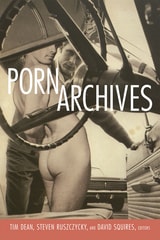
Porn Archives
Tim Dean, Steven Ruszczycky and David Squires, eds.
Duke University Press, 2014
The essays in this collection address the historically and culturally varied interactions between porn and the archive. Topics range from library policies governing access to sexually explicit material to the growing digital archive of "war porn," or eroticized combat imagery; and from same-sex amputee porn to gay black comic book superhero porn. Together the pieces trace pornography as it crosses borders, transforms technologies, consolidates sexual identities, and challenges notions of what counts as legitimate forms of knowledge. The collection concludes with a valuable resource for scholars: a list of pornography archives held by institutions around the world.
Contributors. Jennifer Burns Bright, Eugenie Brinkema, Joseph Bristow, Robert Caserio, Ronan Crowley, Tim Dean, Robert Dewhurst, Lisa Downing, Frances Ferguson, Loren Glass, Harri Kahla, Marcia Klotz, Prabha Manuratne, Mireille Miller-Young, Nguyen Tan Hoang, John Paul Ricco, Steven Ruszczycky, Melissa Schindler, Darieck Scott, Caitlin Shanley, Ramon Soto-Crespo, David Squires, Linda Williams
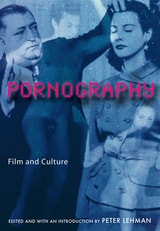
Pornography
Film and CultureLehman, Peter
Rutgers University Press, 2006
In this collection of path-breaking essays, thirteen respected scholars bring critical insights to the reality of porn and what it can tell us about ourselves sexually, culturally, and economically. Moving beyond simplistic feminist and religious positions that cast these films as categorical evils-a collective preserve of sexual perversion, misogyny, pedophilia, and racism-the contributors to this volume raise the bar of the debate and push porn studies into intriguing new territory.
The essays are divided into two sections. The first reprints important debates on the topic and traces the evolution of pornographic film, including comparing its development to that of Hollywood cinema. The second part presents new essays that consider current trends in the field, including pornography's expansion into new technologies.
This book separates this compelling genre from the sensation and shame that have long surrounded and obscured it. It will be of interest to general readers and film scholars alike.
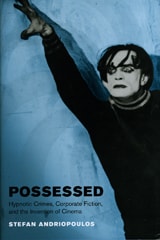
Possessed
Hypnotic Crimes, Corporate Fiction, and the Invention of CinemaStefan Andriopoulos
University of Chicago Press, 2008
Tracing this preoccupation through the period’s films—as well as its legal, medical, and literary texts—Andriopoulos pays particular attention to the terrifying notion of murder committed against one’s will. He returns us to a time when medical researchers described the hypnotized subject as a medium who could be compelled to carry out violent crimes, and when films like The Cabinet of Dr. Caligari and Dr. Mabuse, the Gambler famously portrayed the hypnotist’s seemingly unlimited power on the movie screen. Juxtaposing these medicolegal and cinematic scenarios with modernist fiction, Andriopoulos also develops an innovative reading of Kafka’s novels, which center on the merging of human and corporate bodies.
Blending theoretical sophistication with scrupulous archival research and insightful film analysis, Possessed adds a new dimension to our understanding of today’s anxieties about the onslaught of visual media and the expanding reach of vast corporations that seem to absorb our own identities.
Post-Catastrophe Film
Cinematic Visions in the Aftermath of DisasterStephen Lee Naish
Intellect Books, 2026
Focusing on the fragile, immediate aftermath of global events, before any new social order or rules for living have formed, Stephen Lee Naish’s latest book introduces an emerging subgenre: post-catastrophe film. Positioned between disaster movies, which depict humanity facing large-scale collapse, and post-apocalyptic films, where new societies and rules have already taken hold, this subgenre captures a unique threshold of survival amid change. Through lively case studies of selected popular films, Naish not only offers close readings of cinematic narratives but also explores deeper themes that emerge in the aftermath of disaster, including the role of artificial intelligence and cyborgs, cosmic survival and colonization, and the tensions between individual isolation and life with others. Ultimately, Naish shows how post-catastrophe films speak to our present reality.
In an age shaped by pandemics, climate crisis, and the uncertainties of postmodernity, cinema persists as a resilient mythmaking machine—mapping scenarios of global destruction while offering anxious viewers ways to envision alternative modes of being before a true “post-catastrophe era” arrives. Written in an engaging style and grounded in accessible examples from popular films, this book appeals to scholars, film enthusiasts, and anyone seeking to better understand our uncertain times.
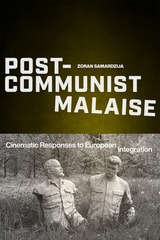
Post-Communist Malaise
Cinematic Responses to European IntegrationZoran Samardzija
Rutgers University Press, 2020
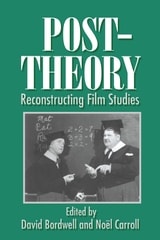
Post-Theory
Reconstructing Film StudiesEdited by David Bordwell and Noël Carroll
University of Wisconsin Press, 1996
Post-Theory offers fresh directions for understanding film, presenting new essays by twenty-seven scholars on topics as diverse as film scores, audience response, and the national film industries of Russia, Scandinavia, the U.S., and Japan. They use historical, philosophical, psychological, and feminist methods to tackle such basic issues as: What goes on when viewers perceive a film? How do filmmakers exploit conventions? How do movies create illusions? How does a film arouse emotion? Bordwell and Carroll have given space not only to distinguished film scholars but to non-film specialists as well, ensuring a wide variety of opinions and ideas on virtually every topic on the current agenda of film studies. Full of stimulating essays published here for the first time, Post-Theory promises to redefine the study of cinema.
Postcinematic Vision
The Coevolution of Moving-Image Media and the SpectatorRoger F. Cook
University of Minnesota Press, 2020
A study of how film has continually intervened in our sense of perception, with far-ranging insights into the current state of lived experience
How has cinema transformed our senses, and how does it continue to do so? Positing film as a stage in the long coevolution of human consciousness and visual technology, Postcinematic Vision offer a fresh perspective on the history of film while providing startling new insights into the so-called divide between cinematic and digital media.
Starting with the argument that film viewing has long altered neural circuitry in our brains, Roger F. Cook proceeds to reevaluate film’s origins, as well as its merger with digital imaging in the 1990s. His animating argument is that film has continually altered the relation between media and human perception, challenging the visual nature of modern culture in favor of a more unified, pan-sensual way of perceiving. Through this approach, he makes original contributions to our understanding of how mediation is altering lived experience.
Along the way, Cook provides important reevaluations of well-known figures such as Franz Kafka, closely reading cinematic passages in the great author’s work; he reassesses the conventional wisdom that Marshall McLuhan was a technological determinist; and he lodges an original new reading of The Matrix. Full of provocative and far-reaching ideas, Postcinematic Vision is a powerful work that helps us see old concepts anew while providing new ideas for future investigation.

Postfeminist War
Women in the Media-Military-Industrial ComplexMary Douglas Vavrus
Rutgers University Press, 2019
Postmodernism, or, The Cultural Logic of Late Capitalism
Fredric Jameson
Duke University Press, 1992
Poverty and Antitheatricality
Form and Formlessness in Latin American Literature, Art, and TheoryStephen Buttes
Rutgers University Press, 2025
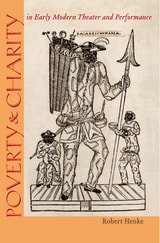
Poverty and Charity in Early Modern Theater and Performance
Robert Henke
University of Iowa Press, 2015
The actor-based theatre and performance traditions examined in this study, which persistently explore felt connections between the itinerant actor and the vagabond beggar, evoke the poor through complex and variegated forms of imagination, thought, and feeling. Early modern theatre does not simply reflect the social ills of hunger, poverty, and degradation, but works them through the forms of poverty, involving displacement, condensation, exaggeration, projection, fictionalization, and marginalization. As the critical mass of medieval charity was put into question, the beggar-almsgiver encounter became more like a performance. But it was not a performance whose script was prewritten as the inevitable exposure of the dissembling beggar. Just as people’s attitudes toward the poor could rapidly change from skepticism to sympathy during famines and times of acute need, fictions of performance such as Edgar’s dazzling impersonation of a mad beggar in Shakespeare’s King Lear could prompt responses of sympathy and even radical calls for economic redistribution.
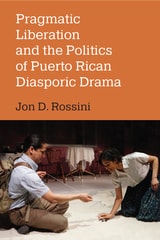
Pragmatic Liberation and the Politics of Puerto Rican Diasporic Drama
Jon D. Rossini
University of Michigan Press, 2024
2025 ATHE Outstanding Book Award Finalist
- 2025 ATDS John W. Frick Book Award Finalist
- 2025 MLA Prize in U.S. Latina and Latino and Chicana and Chicano Literary and Cultural Studies Honorable Mention
Pragmatic Liberation and the Politics of Puerto Rican Diasporic Drama explores the work of a unique group of playwrights—Puerto Rican dramatists writing in the United States—who offer a model of political engagement. As members of the Puerto Rican diaspora, they have a heightened awareness of the systematic discrimination and the colonial citizenship created by Puerto Rico’s territorial status. Pragmatic Liberation analyzes the work of established playwrights as well as work that has previously received little attention in the world of theater studies, including René Marqués’s Palm Sunday. The book demonstrates the strategies these playwrights use to model a nuanced way of moving toward liberation while being sensitive to the potential impact these actions might have on those closest to us. This is a crucially important model that needs more attention in our currently polarized political moment.
Preaching to Convert
Evangelical Outreach and Performance Activism in a Secular AgeJohn Fletcher
University of Michigan Press, 2015
The book positions evangelicals as a diverse, complicated group confronting the loss of conservative Christianity’s default status in 21st-century U.S. culture. In the face of an increasingly secular age, evangelicals have been reassessing models of outreach. In acts like handing out Bible tracts to strangers on the street or going door-to-door with a Bible in hand, in elaborately staged horror-themed morality plays or multimillion-dollar creationist discovery centers, in megachurch services beamed to dozens of satellite campuses, and in controversial “ex-gay” ministries striving to return gays and lesbians to the straight and narrow, evangelicals are redefining what it means to be deeply committed in a pluralist world. The book’s engaging style and careful argumentation make it accessible and appealing to scholars and students across a range of fields.
Precarious Forms
Performing Utopia in the Neoliberal AmericasCandice Amich
Northwestern University Press, 2020
The poets and artists surveyed in Precarious Forms enact gestures of solidarity and mutual care at sites of neoliberal dispossession. In her analysis of poems, body art, and multimedia installations that illuminate the persistence of a radical utopian imaginary in the Americas, Amich engages critical debates in performance studies, Latin American cultural studies, literature, and art history.
Precarious Intimacies
The Politics of Touch in Contemporary Western European CinemaMaria Stehle and Beverly Weber
Northwestern University Press, 2020
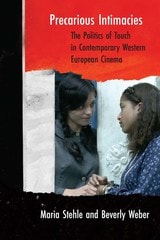
Twenty-first-century Europe is undergoing dramatic political and economic transformations that produce new forms of transnational contact as well as new regimes of exclusion and economic precarity. These political and economic shifts both circumscribe and enable new possibilities for intimacy. Many European films of the last two decades depict experiences of political and economic vulnerability in narratives of precarious intimacies. In these films, stories of intimacy, sex, love, and friendship are embedded in violence and exclusion, but, as Maria Stehle and Beverly Weber show, the politics of touch and connection also offers avenues to theorize forms of attention and affection that challenge exclusive notions of race, citizenship, and belonging.
Precarious Intimacies examines the aesthetic strategies that respond to this tension and proposes a politics of interpretation that identifies the potential and possibility of intimacy.

Prescription TV
Therapeutic Discourse in the Hospital and at HomeJoy V. Fuqua
Duke University Press, 2012
Presidential Libraries as Performance
Curating American Character from Herbert Hoover to George W. BushJodi Kanter
Southern Illinois University Press, 2016
Kanter considers the moments in the presidents’ lives the museums choose to interpret, and not to interpret, and how the libraries approach common subjects in the presidential museum narrative—the presidents’ early years in relation to cultural ideals, the libraries’ representations of presidential failures, personal and political, and the question of presidential legacy. Identifying the limited number of strategies the libraries currently use to represent the diversity of the American experience and American character, Kanter offers concrete suggestions for reinventing and reshaping the practices of museum professionals and visitors within the walls of these institutions.
Presidential museums can tell us important things about the relationships between performance and politics, entertainment and history, and leaders and the people they lead. Kanter demonstrates how the presidential libraries generate normative narratives about individual presidents, historical events, and what it means to be an American.
Prestige Television
Cultural and Artistic Value in Twenty-First-Century AmericaSeth Friedman
Rutgers University Press, 2023
Prismatic Performances
Queer South Africa and the Fragmentation of the Rainbow NationApril Sizemore-Barber
University of Michigan Press, 2021
Listed as one of Lambda Literary's Most Anticipated LGBTQ Books for September 2020
At his 1994 inauguration, South African president Nelson Mandela announced the “Rainbow Nation, at peace with itself and the world.” This national rainbow notably extended beyond the bounds of racial coexistence and reconciliation to include “sexual orientation” as a protected category in the Bill of Rights. Yet despite the promise of equality and dignity, the new government’s alliance with neoliberal interests and the devastation of the AIDS epidemic left South Africa an increasingly unequal society.
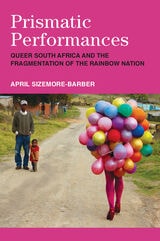
Prismatic Performances focuses on the queer embodiments that both reveal and animate the gaps between South Africa’s self-image and its lived realities. It argues that performance has become a key location where contradictions inherent to South Africa’s post-apartheid identity are negotiated. The book spans 30 years of cultural production and numerous social locations and includes: a team of black lesbian soccer players who reveal and redefine the gendered and sexed limitations of racialized “Africanness;” white gay performers who use drag and gender subversion to work through questions of racial and societal transformation; black artists across the arts who have developed aesthetics that place on display their audiences’ complicity in the problem of sexual violence; and a primarily heterosexual panAfrican online soap opera fandom community who, by combining new virtual spaces with old melodramatic tropes allow for extended deliberation and new paradigms through which African same-sex relationships are acceptable.
Prismatic Performances contends that when explicitly queer bodies emerge onto public stages, audiences are made intimately aware of their own bodies’ identifications and desires. As the sheen of the New South Africa began to fade, these performances revealed the inadequacy and, indeed, the violence, of the Rainbow Nation as an aspirational metaphor. Simultaneously they created space for imagining new radical configurations of belonging.
Prison Song
Music and Incarceration in the United StatesDavid Metzer
University of Michigan Press, 2026
Privileged Spectatorship
Theatrical Interventions in White SupremacyDani Snyder-Young
Northwestern University Press, 2021
Many professional theater artists attempt to use live performances in formal theater spaces to disrupt racism and create a more equitable society. Privileged Spectatorship: Theatrical Interventions in White Supremacy examines the impact of such projects, looking at how and why they do and do not intervene in white supremacy. In this incisive study, Dani Snyder-Young examines audience responses to a range of theatrical events that focus on race‑related conflict or racial identity in the contemporary United States. The audiences for these performances, produced at mainstream not‑for‑profit professional theaters in major American cities in 2013–18, reflect dominant patterns of theater attendance: the majority of spectators are older, affluent, white, and describe themselves as politically progressive. Snyder-Young studies the ways these audience members consume the stories of racialized others and analyzes how different artistic, organizational, and programmatic strategies can (or cannot) mitigate white privilege.
This book is essential reading for scholars and students of theater, performance studies, and critical ethnic studies and for theater practitioners interested in equity and inclusion.

Problem Solved!
The Music and Theater of The Negro ProblemStew Stewart and Heidi Rodewald, Edited and with an Introduction by Brandon Woolf
University of Michigan Press, 2027
Problem Solved! invites readers into the exhilarating, unpredictable artistic world of The Negro Problem, the genre-defying music and theater collective behind the Tony and Obie Award–winning Passing Strange. Blending previously unpublished song lyrics, playscripts, critical essays, intimate interviews, and performance texts, the collection charts more than three decades of daring experimentation across rock music, musical theater, avant-garde performance, and other interdisciplinary forms of social and artistic critique.
Equal parts archive, mixtape, and critical meditation, the book captures The Negro Problem’s unique ability to move between seriousness and satire, activism and irony, intellectual rigor and irresistible melody. In addition to theatrical texts written and composed by Stew Stewart and Heidi Rodewald, the volume features a contextual essay by historian Scott Kurashige, close readings of The Total Bent by performance studies scholar Tavia Nyong’o, dramaturgical analyses of Passing Strange by volume editor Brandon Woolf, and a long-form interview about the band’s origins from co-leader Heidi Rodewald. The volume explores how the band challenges conventional ideas about race, identity, authenticity, activism, and musical theater through humor, contradiction, experimentation, and joyful disruption. Problem Solved! invites general readers, music enthusiasts, scholars, and theater lovers alike to explore how song can boldly and beautifully rise to meet our fractious cultural moment.