Results by title
2018 books match the query 'Political aspects' and 156 start with p

Playing the Fool
Subversive Laughter in Troubled TimesRalph Lerner
University of Chicago Press, 2009
The role of the fool is to provoke the powerful to question their convictions, preferably while avoiding a beating. Fools accomplish this not by hectoring their audience, but by broaching sensitive topics indirectly, often disguising their message in a joke or a tale. Writers and thinkers throughout history have adopted the fool’s approach, and here Ralph Lerner turns to six of them—Thomas More, Francis Bacon, Robert Burton, Pierre Bayle, Benjamin Franklin, and Edward Gibbon—to elucidate the strategies these men employed to persuade the heedless, the zealous, and the overly confident to pause and reconsider.
As Playing the Fool makes plain, all these men lived through periods marked by fanaticism, particularly with regard to religion and its relation to the state. In such a troubled context, advocating on behalf of skepticism and against tyranny could easily lead to censure, or even, as in More’s case, execution. And so, Lerner reveals, these serious thinkers relied on humor to move their readers toward a more reasoned understanding of the world and our place in it. At once erudite and entertaining, Playing the Fool is an eloquently thought-provoking look at the lives and writings of these masterly authors.
Pluralism
William E. Connolly
Duke University Press, 2005
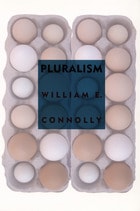
Connolly looks at pluralism not only in light of faith but also in relation to evil, ethics, relativism, globalization, and sovereignty. In the process, he engages many writers and theorists—among them, Spinoza, William James, Henri Bergson, Marcel Proust, Gilles Deleuze, Giorgio Agamben, Talal Asad, Michael Hardt, and Antonio Negri. Pluralism is the first book in which Connolly explains the relationship between pluralism and the experience of time, and he offers readings of several films that address how time is understood, including Time Code, Far from Heaven, Waking Life, and The Maltese Falcon. In this necessary book Connolly brings a compelling, accessible philosophical critique together with his personal commitment to an inclusive political agenda to suggest how we might—and why we must—cultivate pluralism within both society and ourselves.
Poetics of Repair
Contemporary Arts and Afterlives of Colonial-Era Mass Housing in the MaghrebKatarzyna Pieprzak
Duke University Press, 2025
Poisonous Skies
Acid Rain and the Globalization of PollutionRachel Emma Rothschild
University of Chicago Press, 2019
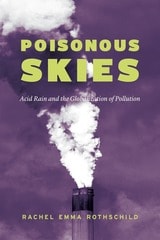
The identification of acid rain in the 1960s changed scientific and popular understanding of fossil fuel pollution’s potential to cause regional—and even global—environmental harms. It showed scientists that the problem of fossil fuel pollution was one that crossed borders—it could travel across vast stretches of the earth’s atmosphere to impact ecosystems around the world. This unprecedented transnational reach prompted governments, for the first time, to confront the need to cooperate on pollution policies, transforming environmental science and diplomacy. Studies of acid rain and other pollutants brought about a reimagining of how to investigate the natural world as a complete entity, and the responses of policy makers, scientists, and the public set the stage for how societies have approached other prominent environmental dangers on a global scale, most notably climate change.
Grounded in archival research spanning eight countries and five languages, as well as interviews with leading scientists from both government and industry, Poisonous Skies is the first book to examine the history of acid rain in an international context. By delving deep into our environmental past, Rothschild hopes to inform its future, showing us how much is at stake for the natural world as well as what we risk—and have already risked—by not acting.
Poland's Memory Wars
Essays on IlliberalismJo Harper
Central European University Press, 2018
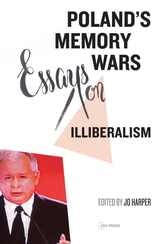
This volume of essays and interviews by Polish, British, and American academics and journalists provides an overview of current Polish politics for both informed and non-specialist readers. The essays consider why and how PiS, Law and Justice, the party of Jarosław Kaczynski, returned to power, and the why and how of its policies while in power. They help to make sense of how “history” plays a key role in Polish public life and politics.
The descriptions of PiS in Western media tend to rework old stereotypes about Eastern Europe that had lain dormant for some time. The book addresses the underlying question whether PiS was simply successful in understanding its electorate, and just helped Poland to revert to its normal state. This new Normal seems quite similar to the old one: insular, conservative, xenophobic, and statist.
The book looks at the current struggle between one ‘Poland’ and another; between a Western-looking Poland and an inward-looking Poland, the former more interested in opening to the world, competing in open markets, and working within the EU, and the latter more concerned with holding onto tradition.
The question of illiberalism has gone from an ‘Eastern’ problem (Russia, Turkey, Hungary, etc.) to a global one (Brexit and the U.S. elections). This makes the very specific analysis of Poland’s illiberalism applicable on a broader scale.
Policing Pop
edited by Martin Cloonan and Reebee Garofalo
Temple University Press, 2002
Political Aesthetics in the Era of Shakespeare
Edited by Christopher Pye
Northwestern University Press, 2020
Taking up this expansive conception of aesthetics, Political Aesthetics in the Era of Shakespeare suggests that the political stakes of the literary work—and Shakespeare’s work in particular—extend from the most intimate dimensions of affective response to the problem of the grounds of political society. The approaches to aesthetic thought included in this volume explore the intersections between the literary work and the full range of concerns animating the field today: political philosophy, affect theory, and ecocritical analysis of environs and habitus.
Political Aspects of Social Indicators
Implications for ResearchPeter J. Henriot
Russell Sage Foundation, 1972

Political Business Cycles
The Political Economy of Money, Inflation, and UnemploymentThomas D. Willett, ed.
Duke University Press, 1988
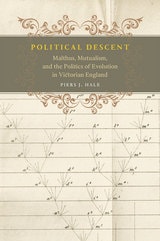
Political Descent
Malthus, Mutualism, and the Politics of Evolution in Victorian EnglandPiers J. Hale
University of Chicago Press, 2014
These two traditions, Hale shows, developed in a context of mutual hostility, debate, and refutation. Participants disagreed not only about evolutionary processes but also on broader questions regarding the kind of creature our evolution had made us and in what kind of society we ought therefore to live. Significantly, and in spite of Darwin’s acknowledgement that natural selection was “the doctrine of Malthus, applied to the whole animal and vegetable kingdoms,” both sides of the debate claimed to be the more correctly “Darwinian.” By exploring the full spectrum of scientific and political issues at stake, Political Descent offers a novel approach to the relationship between evolution and political thought in the Victorian and Edwardian eras.

Political Film
The Dialectics of Third CinemaMike Wayne
Pluto Press, 2001
Political Landscapes of Capital Cities
Jessica Joyce Christie
University Press of Colorado, 2016
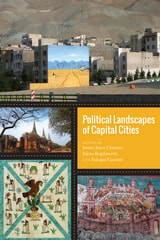
Political Landscapes of Capital Cities blends the historical, political, and cultural narratives of capital cities such as Bangkok, Cusco, Rome, and Tehran with a careful visual analysis, hinging on the methodological tools of not only architectural and urban design but also cultural, historiographical, and anthropological studies. The collection provides further ways to conceive of how processes of urbanization, monumentalization, ritualization, naturalization, and unification affected capitals differently without losing grasp of local distinctive architectural and spatial features. The essays also articulate the many complex political and ideological agendas of a diverse set of sovereign entities that planned, constructed, displayed, and performed their societal ideals in the spaces of their capitals, ultimately confirming that political authority is profoundly spatial.
Contributors: Jelena Bogdanović, Jessica Joyce Christie, Talinn Grigor, Eulogio Guzmán, Gregor Kalas, Stephanie Pilat, Melody Rod-ari, Anne Toxey, Alexei Vranich
Political Literacy in Composition and Rhetoric
Defending Academic Discourse against Postmodern PluralismDonald Lazere
Southern Illinois University Press, 2015
Political Matter
Technoscience, Democracy, and Public LifeBruce Braun
University of Minnesota Press, 2010
Exploring the frictions that come from linking the work of scholars in science and technology studies and political theory, these essays spark new ways of understanding the matter of politics.
Contributors: Andrew Barry, U of Oxford; Jane Bennett, Johns Hopkins U; Stephen J. Collier, New School; William E. Connolly, Johns Hopkins U; Rosalyn Diprose, U of New South Wales; Lisa Disch, U of Michigan; Gay Hawkins, U of New South Wales; Andrew Lakoff, UC San Diego; Noortje Marres, U of London; Isabelle Stengers, U Libre de Bruxelles; Nigel Thrift, U of Warwick.
Political Mourning
Identity and Responsibility in the Wake of TragedyHeather Pool
Temple University Press, 2021
What leads us to respond politically to the deaths of some citizens and not others? This is one of the critical questions Heather Pool asks in Political Mourning. Born out of her personal experiences with the trauma of 9/11, Pool’s astute book looks at how death becomes political, and how it can mobilize everyday citizens to argue for political change.
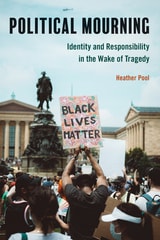
Pool examines four tragedies in American history—the Triangle Shirtwaist Factory Fire, the lynching of Emmett Till, the September 11 attacks, and the Black Lives Matter movement—that offered opportunities to tilt toward justice and democratic inclusion. Some of these opportunities were taken, some were not. However, these watershed moments show, historically, how political identity and political responsibility intersect and how racial identity shapes who is mourned. Political Mourning helps explain why Americans recognize the names of Trayvon Martin and Sandra Bland; activists took those cases public while many similar victims have been ignored by the news media.
Concluding with an afterword on the coronavirus, Pool emphasizes the importance of collective responsibility for justice and why we ought to respond to tragedy in ways that are more politically inclusive.
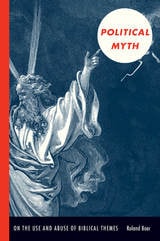
Political Myth
On the Use and Abuse of Biblical ThemesRoland Boer
Duke University Press, 2009
Boer elaborates a theory of political myth in dialogue with Ernst Bloch, Theodor Adorno, Alain Badiou, Jacques Lacan, and Slavoj Žižek. Through close readings of well-known biblical stories he then scrutinizes the nature of political myth in light of feminism, psychoanalysis, and Marxism. Turning to contemporary politics, he examines the statements of prominent American and Australian politicians to show how the stories of Creation, conquest, Paradise, and the Promised Land have been distorted into a fantasy of Israel as a perpetual state in the making and a land in need of protection. Boer explains how this fantasy of Israel shapes U.S. and Australian foreign and domestic policies, and he highlights the links between it and the fantasy of unfettered global capitalism. Contending that political myths have repressed dimensions which if exposed undermine the myths’ authority, Boer urges the Left to expose the weakness in the Right’s mythos. He suggests that the Left make clear what the world would look like were the dream of unconstrained capitalism to be realized.
Political Persuasion and Attitude Change
Diana C. Mutz, Richard A. Brody, and Paul M. Sniderman, Editors
University of Michigan Press, 1996
Each chapter synopsizes a major area of political persuasion and provides an update on the latest findings as well as overviews of past research in each area. Whole sections of the book center on the three major agents involved in the political persuasion process: the mass media, political elites, and individual citizens themselves.
Political Persuasion and Attitude Change boldly contradicts the received wisdom on the extent of mass media's influence on political attitudes and argues that the media's effects are indeed massive, rather than limited. It explores the impact of political elites on the persuasion process, and focuses on individual control over the persuasion process.
This volume is unique in that chapters address theoretical as well as methodological issues, simultaneously combining reviews of literature with the latest research findings. It will appeal to scholars and students interested in the study of political persuasion in contemporary politics across the disciplines of political science, psychology, sociology, and communications.
Part I. Mass Media and Political Persuasion. Contributors are Steven Ansolabehere and Shanto Iyengar; Joanne M. Miller and Jon A. Krosnick; and John Zaller.
Part II. Persuasion by Political Elites. Contributors are James H. Kuklinski and Norman L. Hurley; Kathleen M. McGraw and Clark Hubbard; Lee Sigelman and Alan Rosenblatt.
Part III. Individual Control of the Political Persuasion Process. Contributors are Steven H. Chaffee and Rajiv Rimal; Dennis Chong; Gregory Andrade Diamond and Michael D. Cobb; Jeffrey Mondak, Diana C. Mutz, and Robert Huckfeldt.
Diana C. Mutz is Associate Professor of Political Science and Mass Communications, University of Wisconsin, Madison. Paul M. Sniderman is Professor of Political Science, Stanford University. Richard A. Brody is Professor Emeritus of Political Science and Communications, Stanford University.
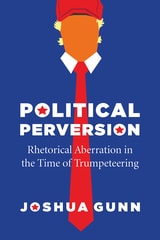
Political Perversion
Rhetorical Aberration in the Time of TrumpeteeringJoshua Gunn
University of Chicago Press, 2020
Drawing on insights from critical theory, media ecology, and psychoanalysis, Gunn argues that perverse rhetorics dominate not only the political sphere but also our daily interactions with others, in person and online. From sexting to campaign rhetoric, Gunn advances a new way to interpret our contemporary political context that explains why so many of us have difficulty deciphering the appeal of aberrant public figures. In this book, Trump is only the tip of a sinister, rapidly growing iceberg, one to which we ourselves unwittingly contribute on a daily basis.
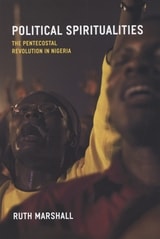
Political Spiritualities
The Pentecostal Revolution in NigeriaRuth Marshall
University of Chicago Press, 2009
After an explosion of conversions to Pentecostalism over the past three decades, tens of millions of Nigerians now claim that “Jesus is the answer.” But if Jesus is the answer, what is the question? What led to the movement’s dramatic rise and how can we make sense of its social and political significance? In this ambitiously interdisciplinary study, Ruth Marshall draws on years of fieldwork and grapples with a host of important thinkers—including Foucault, Agamben, Arendt, and Benjamin—to answer these questions.
To account for the movement’s success, Marshall explores how Pentecostalism presents the experience of being born again as a chance for Nigerians to realize the promises of political and religious salvation made during the colonial and postcolonial eras. Her astute analysis of this religious trend sheds light on Nigeria’s contemporary politics, postcolonial statecraft, and the everyday struggles of ordinary citizens coping with poverty, corruption, and inequality.
Pentecostalism’s rise is truly global, and Political Spiritualities persuasively argues that Nigeria is a key case in this phenomenon while calling for new ways of thinking about the place of religion in contemporary politics.
Political Strategies in Pre-Columbian Mesoamerica
Sarah Kurnick
University Press of Colorado, 2020
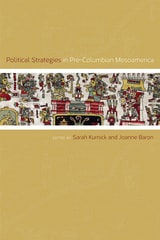
Political authority contains an inherent contradiction. Rulers must reinforce social inequality and bolster their own unique position at the top of the sociopolitical hierarchy, yet simultaneously emphasize social similarities and the commonalities shared by all. Political Strategies in Pre-Columbian Mesoamerica explores the different and complex ways that those who exercised authority in the region confronted this contradiction.
New data from a variety of well-known scholars in Mesoamerican archaeology reveal the creation, perpetuation, and contestation of politically authoritative relationships between rulers and subjects and between nobles and commoners. The contributions span the geographic breadth and temporal extent of pre-Columbian Mesoamerica—from Preclassic Oaxaca to the Classic Petén region of Guatemala to the Postclassic Michoacán—and the contributors weave together archaeological, epigraphic, and ethnohistoric data.
Grappling with the questions of how those exercising authority convince others to follow and why individuals often choose to recognize and comply with authority, Political Strategies in Pre-Columbian Mesoamerica discusses why the study of political authority is both timely and significant, reviews how scholars have historically understood the operation of political authority, and proposes a new analytical framework to understand how rulers rule.
Contributors include Sarah B. Barber, Joanne Baron, Christopher S. Beekman, Jeffrey Brzezinski, Bryce Davenport, Charles Golden, Takeshi Inomata, Arthur A. Joyce, Sarah Kurnick, Carlo J. Lucido, Simon Martin, Tatsuya Murakami, Helen Perlstein Pollard, and Víctor Salazar Chávez.
Political Style
The Artistry of PowerRobert Hariman
University of Chicago Press, 1995
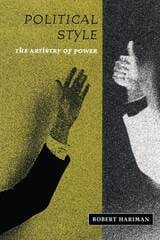
In critical studies of classic texts, Hariman identifies four dominant political styles. The realist style, as found in Machiavelli's The Prince, creates a world of sheer power, constant calculation, and emotional control; this style is the common sense of modern political science. The courtly style, depicted in Kapuscinski's The Emperor, is characterized by high decorousness, hierarchies, and fixation on the body of the sovereign; this style infuses mass media coverage of the American presidency. The republican style, reflected in Cicero's letters to Atticus, promotes the art of oratory, consensus, and civility; it informs our ideal of democratic conversation. The bureaucratic style, as captured in Kafka's The Castle, emphasizes institutional procedures, official character, and the priority of writing; this style structures everday life.
Hariman looks at effective political artistry in figures from antiquity to modern politicians such as Vaclav Havel, Ronald Reagan, and Bill Clinton. He discusses the crises to which each style is susceptible, as well as the social and moral consequences of each style's success.
Political Tone
How Leaders Talk and WhyRoderick P. Hart, Jay P. Childers, and Colene J. Lind
University of Chicago Press, 2013
Political Trust in China
Lianjiang Li
University of Michigan Press, 2025
Political Vocabularies
FDR, the Clergy Letters, and the Elements of Political ArgumentMary E. Stuckey
Michigan State University Press, 2018
Politicians, Judges, and City Schools
Reforming School Finance in New YorkJoel S. Berke
Russell Sage Foundation, 1984
Politicizing Creative Economy
Activism and a Hunger Called TheaterDia Da Costa
University of Illinois Press, 2016
As Da Costa shows, commodification, heritage, and management discussions inevitably creep into performance. Yet the ability of performance to undermine such subtle invasions make activist theater a crucial site for considering what counts as creativity in the cultural politics of creative economy. Da Costa explores the precarious lives, livelihoods, and ideologies at the intersection of heritage projects, planning discourse, and activist performance. By analyzing the creators, performers, and activists involved--individuals at the margins of creative economy as well as society--Da Costa builds a provocative argument. Their creative economy practices may survive, challenge, and even reinforce the economies of death, displacement, and divisiveness used by the urban poor to survive.
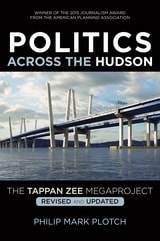
Politics Across the Hudson
The Tappan Zee MegaprojectPhilip Mark Plotch
Rutgers University Press, 2015
The State of New York built one of the world’s longest, widest, and most expensive bridges—the new Tappan Zee Bridge—stretching more than three miles across the Hudson River, approximately thirteen miles north of New York City. In Politics Across the Hudson, urban planner Philip Plotch offers a behind-the-scenes look at three decades of contentious planning and politics centered around this bridge, recently renamed for Governor Mario M. Cuomo, the state's governor from 1983 to 1994. He reveals valuable lessons for those trying to tackle complex public policies while also confirming our worst fears about government dysfunction.
Politics Across the Hudson
The Tappan Zee MegaprojectPhilip Mark Plotch
Rutgers University Press, 2015
Politics Of Women's Health
Susan Sherwin
Temple University Press, 1998
Rather than focusing on types of medical interventions, The Politics of Women's Health asks what feminist health care ethics looks like if we start with women's experiences and concerns. It begins to unravel two key concepts of women's empowerment -- agency and autonomy -- that apply to all areas of concern to women.
Politics after Violence
Legacies of the Shining Path Conflict in PeruEdited by Hillel David Soifer and Alberto Vergara
University of Texas Press, 2019
Between 1980 and 1994, Peru endured a bloody internal armed conflict, with some 69,000 people killed in clashes involving two insurgent movements, state forces, and local armed groups. In 2003, a government-sponsored “Truth and Reconciliation Committee” reported that the conflict lasted longer, affected broader swaths of the national territory, and inflicted higher costs in both human and economic terms than any other conflict in Peru’s history. Of those killed, 75 percent were speakers of an indigenous language, and almost 40 percent were among the poorest and most rural members of Peruvian society. These unequal impacts of the violence on the Peruvian people revealed deep and historical disparities within the country.
This collection of original essays by leading international experts on Peruvian politics, society, and institutions explores the political and institutional consequences of Peru’s internal armed conflict in the long 1980s. The essays are grouped into sections that cover the conflict itself in historical, comparative, and theoretical perspectives; its consequences for Peru’s political institutions; its effects on political parties across the ideological spectrum; and its impact on public opinion and civil society. This research provides the first systematic and nuanced investigation of the extent to which recent and contemporary Peruvian politics, civil society, and institutions have been shaped by the country’s 1980s violence.
Politics and Economics in the Eighties
Edited by Alberto Alesina and Geoffrey Carliner
University of Chicago Press, 1991
Certain to provoke controversy, this interdisciplinary volume brings together policy experts to provide a coherent analysis of the most important economic policy changes of the 1980s. Through a detailed examination of voting patterns, monetary and fiscal policies, welfare spending, tax reform, minimum wage legislation, the savings and loan collapse, and international trade policy, the authors explore how politics can influence the direction of economic policymaking.
Politics and Foreign Direct Investment
Nathan M. Jensen, Glen Biglaiser, Quan Li, Edmund Malesky, Pablo M. Pinto, Santiago M. Pinto, and Joseph L. Staats
University of Michigan Press, 2012
Politics and Partnerships
The Role of Voluntary Associations in America's Political Past and PresentEdited by Elisabeth S. Clemens and Doug Guthrie
University of Chicago Press, 2011
But despite the ubiquity of the idea of volunteerism in public policy debates, analysis of its role in American governance has been fragmented. Bringing together a diverse set of disciplinary approaches, Politics and Partnerships is a thorough examination of the place of voluntary associations in political history and an astute investigation into contemporary experiments in reshaping that role. The essays here reveal the key role nonprofits have played in the evolution of both the workplace and welfare and illuminate the way that government’s retreat from welfare has radically altered the relationship between nonprofits and corporations.
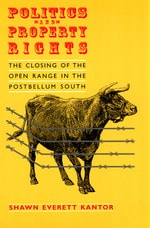
Politics and Property Rights
The Closing of the Open Range in the Postbellum SouthShawn Everett Kantor
University of Chicago Press, 1998
In this original study, Kantor uses economic analysis to show that, contrary to traditional historical interpretation, this conflict was centered on anticipated benefits from fencing livestock rather than on class, cultural, or ideological differences. Kantor proves that the stock law brought economic benefits; at the same time, he analyzes why the law's adoption was hindered in many areas where it would have increased wealth. This argument illuminates the dynamics of real-world institutional change, where transactions are often costly and where some inefficient institutions persist while others give way to economic growth.
Politics and Scholarship
Feminist Academic Journals and the Production of KnowledgePatrice McDermott
University of Illinois Press, 1994
-- J'nana Morse Sellery, coauthor of Elizabeth Bowen: A Bibliography
Politics and the Human Body
Assault on DignityJean Bethke Elshtain
Vanderbilt University Press, 1995
In this challenging new book, Jean Bethke Elshtain, a nationally recognized scholar in political science and philosophy, and J. Timothy Cloyd, a strong new voice in social and political science, have assembled a collection of thought-provoking essays on these issues written by some of the finest minds of our day.
Politics by Formula
How Congressional Policymaking Creates DisparitiesLeah Rosenstiel
University of Chicago Press, 2026
A clear-eyed study that reveals how politics shapes and often distorts important federal programs, driving inequalities across states.
From Medicaid to Section 8 Housing Choice Vouchers, a large percentage of the annual US federal budget (approximately $1 trillion) is distributed through grants-in-aid, a policy tool that allocates aid to state and local governments rather than to individual Americans. When members of Congress use grants-in-aid to fund healthcare, housing, and other forms of support, they are not solely determining how much assistance one person receives. Instead, they can allot certain localities larger grants, which carry big implications for the quality of public services available to citizens living in different states.
Many reasonably assume that these assistance programs distribute funding to states impartially because they use statistical formulas based on population levels, poverty, and other characteristics that, ostensibly, measure need. However, in Politics by Formula, Leah Rosenstiel shows how this seemingly technocratic aspect of federal policymaking is deeply affected by both the structure of political institutions and the motivations of elected officials. Key congressional committees—and especially their leaders—design formulas to benefit their constituencies. Superficially neutral formulas can shield these political decisions from scrutiny, but formulas also constrain congressmembers. Drawing on formal modeling and quantitative and qualitative evidence, Rosenstiel elucidates how these dynamics shape whose and what needs are met and where.
Politics of Rightful Killing
Civil Society, Gender, and Sexuality in WeblogistanSima Shakhsari
Duke University Press, 2020
Politics of Touch
Sense, Movement, SovereigntyErin Manning
University of Minnesota Press, 2006
In Politics of Touch, Manning develops a new way to conceive the role of the senses, and of touch in particular. Exploring concepts of violence, gender, sexuality, security, democracy, and identity, she traces the ways in which touch informs and reforms the body. Specifically considering tango-a tactile, rhythmic, and improvisational dance- she foregrounds movement as the sensing body's intervention into the political. With a fresh vision and an original theoretical basis, Manning shows the ontogenetic potential of the body, and in doing so, redefines our understanding of the sense of touch in philosophical and political terms.
Erin Manning is assistant professor of fine arts at Concordia University and the author of Ephemeral Territories (Minnesota, 2003).
Politics of Wilderness Preservation
Craig W. Allin
University of Alaska Press, 2008
Politics of the Sword
Dueling, Honor, and Masculinity in Modern ItalySteven C. Hughes
The Ohio State University Press, 2007
Politics with Beauvoir
Freedom in the EncounterLori Jo Marso
Duke University Press, 2017
Politics, Language, and Thought
The Somali ExperienceDavid D. Laitin
University of Chicago Press, 1977
Twelve years after independence, a military government was able to settle the acrimonious controversy by announcing that Somali would be the official language and Latin the basic script. It was hoped that this choice would foster political equality and strengthen the national culture. Politics, Language, and Thought is an exploration of how language and politics interrelate in the Somali Republic. Using both historical and experimental evidence, David D. Laitin demonstrates that the choice of an official language may significantly affect the course of a country's political development.
Part I of Laitin's study is an attempt to explain why the parliamentary government was incapable of reaching agreement on a national script and to assess the social and political consequences of the years of nondecision. Laitin shows how the imposition of nonindigenous languages produced inequalities which eroded the country's natural social basis of democracy.
Part 2 attempts to relate language to political thought and political culture. Analyzing interviews and role-playing sessions among Somali bilingual students, Laitin demonstrates that the impact of certain political concepts is quite different when expressed in different languages. He concludes that the implications of choosing a language are far more complex than previously thought, because to change the language of a people is to change the ways they think and act politically.
Pollution Is Colonialism
Max Liboiron
Duke University Press, 2021

Polpop 2
Politics and Popular Culture in America TodayJames Combs
University of Wisconsin Press, 1991
This book takes another look at politics and popular culture. The author has tried to explain the politics of popular culture as part of historical and cultural processes, helping the reader understand not only how popular culture has affected our politics, but also where it is taking us.
Popular Organization and Democracy in Rio De Janeiro
A Tale of Two FavelasRobert Gay
Temple University Press, 1993
Populism and Performance in the Bolivarian Revolution of Venezuela
Angela Marino
Northwestern University Press, 2018
Based on ethnographic and archival research, Marino focuses on performances of the devil figure, tracing this beloved trickster through religious fiestas, mid-century theater and film, and other media as it both antagonizes and unifies a movement against dictatorship and neoliberalism. She then demonstrates that performance became a vehicle through which cultural producers negotiated boundaries of inclusion and exclusion in ways that overcame the simplistic logic of good versus evil, us versus them. The result is a nuanced insight into the process of building political mobilization out of crisis and through monumental times of change.
The book will interest readers of Latin American politics, cultural studies, political science, and performance studies by providing a vital record of the revolution, with valuable insights into its internal dynamics and lessons towards building a populist movement of the left in contentious times.

Portable Borders
Performance Art and Politics on the U.S. Frontera since 1984By Ila Nicole Sheren
University of Texas Press, 2015
After World War II, the concept of borders became unsettled, especially after the rise of subaltern and multicultural studies in the 1980s. Art at the U.S.-Mexico border came to a turning point at the beginning of that decade with the election of U.S. President Ronald Reagan. Beginning with a political history of the border, with an emphasis on the Chicano movement and its art production, Ila Sheren explores the forces behind the shift in thinking about the border in the late twentieth century.
Particularly in the world of visual art, borders have come to represent a space of performance rather than a geographical boundary, a cultural terrain meant to be negotiated rather than a physical line. From 1980 forward, Sheren argues, the border became portable through performance and conceptual work. This dematerialization of the physical border after the 1980s worked in two opposite directions—the movement of border thinking to the rest of the world, as well as the importation of ideas to the border itself. Beginning with site-specific conceptual artwork of the 1980s, particularly the performances of the Border Art Workshop/Taller de Arte Fronterizo, Sheren shows how these works reconfigured the border as an active site. Sheren moves on to examine artists such as Guillermo Gómez-Peña, Coco Fusco, and Marcos Ramirez “ERRE.” Although Sheren places emphasis on the Chicano movement and its art production, this groundbreaking book suggests possibilities for the expansion of the concept of portability to contemporary art projects beyond the region.
Portable Postsocialisms
New Cuban Mediascapes after the End of HistoryPaloma Duong
University of Texas Press, 2024
2025 Honorable Mention, Bryce Wood Book Award, Latin American Studies Association
A study of Cuban culture and media in the twenty-first century as both a global phenomenon and a local reality, at a time when the declared death of socialism coexists in tension with emerging anticapitalist movements worldwide.
Why does Cuban socialism endure as an object of international political desire, while images of capitalist markets consume Cuba’s national imagination? This bold new study argues that Cuba’s changing media cultures are key to our understanding of the global postsocialist condition and its competing political imaginaries.
Portable Postsocialisms calls on a vast multimedia archive to offer a groundbreaking cultural interpretation of Cuban postsocialism. Paloma Duong examines songs, artworks, advertisements, memes, literature, jokes, and networks that refuse exceptionalist and exoticizing visions of Cuba. Expanding postsocialist critical theory to read this complex mediascape, Duong argues that a materialist critique of Cuba’s revolutionary legacy must account for Cubans’ everyday demands for agency and self-representation. This long overdue reassessment of Cuba’s place in Latin American and post-Marxist studies shows Cuban postsocialism to be an urgent and indispensable referent for core debates on the politics of participatory cultures in new media studies. Portable Postsocialisms performs the crucial task of redefining how we envision imaginaries of social change in Latin America and the Caribbean.
Portrait of a Young Painter
Pepe Zuniga and Mexico City's Rebel GenerationMary Kay Vaughan
Duke University Press, 2015