Results by title
22279 books match the query 'Social Science' and 1104 start with p
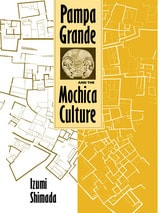
Pampa Grande and the Mochica Culture
By Izumi Shimada
University of Texas Press, 1994
Pampa Grande, the largest and most powerful city of the Mochica (Moche) culture on the north coast of Peru, was built, inhabited, and abandoned during the period A.D. 550-700. It is extremely important archaeologically as one of the few pre-Hispanic cities in South America for which there are enough reliable data to reconstruct a model of pre-Hispanic urbanism.
This book presents a "biography" of Pampa Grande that offers a reconstruction not only of the site itself but also of the sociocultural and economic environment in which it was built and abandoned. Izumi Shimada argues that Pampa Grande was established rapidly and without outside influence at a strategic position at the neck of the Lambayeque Valley that gave it control over intervalley canals and their agricultural potential and allowed it to gain political dominance over local populations. Study of the site itself leads him to posit a large resident population made up of transplanted Mochica and local non-Mochica groups with a social hierarchy of at least three tiers.
Pan Chao
Foremost Woman Scholar of ChinaNancy Lee Swann
University of Michigan Press, 2001
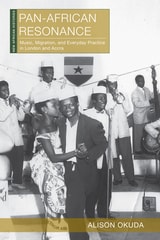
Pan-African Resonance
Music, Migration, and Everyday Practice in London and AccraAlison Okuda
Ohio University Press, 2026
As African and Caribbean nations gained independence from Britain in the 1950s and 1960s, many young musicians, students, and professionals crossed the Atlantic in search of new opportunities and built vibrant communities. Pan-African Resonance: Music, Migration, and Everyday Practice in London and Accra traces these journeys from Ghana, Trinidad and Tobago, Jamaica, Saint Lucia, Barbados, and Guyana, exploring how migrants practiced pan-Africanism through music across continents and generations. Drawing on musical recordings, newspapers, oral histories, and government documents from six countries, Alison Okuda demonstrates that pan-African solidarity thrived through the everyday creation and enjoyment of popular music. The book unfolds in two parts. Starting in the 1950s, it examines how Ghanaian highlife and Trinidadian calypso brought together musicians and young members of the independence generation, first in London and later in Accra. Even amid cultural tensions, Ghanaian and Caribbean communities expressed aspirations for freedom and unity in nightclubs, recording studios, private homes, and public streets. Before Ghana’s 1966 coup d’état, Ghanaians and diasporic Africans collaborated to shape an independent African-Atlantic world. Although the coup disrupted formal Pan-Africanist organizing, in the second part of the book Okuda shows that in the 1970s a new generation sustained dynamic networks of solidarity through highlife, reggae, and other popular styles—heard in recordings, radio broadcasts, live performances, and community events. Influenced by generational change and musical fluidity, African diasporic unity has remained central to popular music, migration, and politics in Ghana and the wider African-Atlantic world into the twenty-first century. Offering a rich interdisciplinary approach, Pan-African Resonance will appeal to readers interested in popular culture, transnational history, diaspora studies, and modern African history.
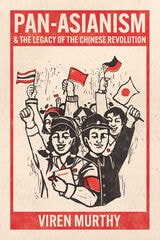
Pan-Asianism and the Legacy of the Chinese Revolution
Viren Murthy
University of Chicago Press, 2023
Recent proposals to revive the ancient Silk Road for the contemporary era and ongoing Western interest in China’s growth and development have led to increased attention to the concept of pan-Asianism. Most of that discussion, however, lacks any historical grounding in the thought of influential twentieth-century pan-Asianists. In this book, Viren Murthy offers an intellectual history of the writings of theorists, intellectuals, and activists—spanning leftist, conservative, and right-wing thinkers—who proposed new ways of thinking about Asia in their own historical and political contexts. Tracing pan-Asianist discourse across the twentieth century, Murthy reveals a stronger tradition of resistance and alternative visions than the contemporary discourse on pan-Asianism would suggest. At the heart of pan-Asianist thinking, Murthy shows, were the notions of a unity of Asian nations, of weak nations becoming powerful, and of the Third World confronting the “advanced world” on equal terms—an idea that grew to include non-Asian countries into the global community of Asian nations. But pan-Asianists also had larger aims, imagining a future beyond both imperialism and capitalism. The fact that the resurgence of pan-Asianist discourse has emerged alongside the dominance of capitalism, Murthy argues, signals a profound misunderstanding of its roots, history, and potential.
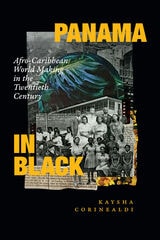
Panama in Black
Afro-Caribbean World Making in the Twentieth CenturyKaysha Corinealdi
Duke University Press, 2022
Pandemic Crossings
Digital Technology, Everyday Experience, and Governance in the COVID-19 CrisisGuobin Yang
Michigan State University Press, 2024
Pandemic Exposures
Economy and Society in the Time of CoronavirusEdited by Didier Fassin and Marion Fourcade
HAU, 2021
Didier Fassin and Marion Fourcade have assembled an eminent team of scholars from across the social sciences, conducting research on six continents, to reflect on the multiple ways the coronavirus has entered, reshaped, or exacerbated existing trends and structures in every part of the globe. The contributors show how the disruptions caused by the pandemic have both hastened the rise of new social divisions and hardened old inequalities and dilemmas. An indispensable volume, Pandemic Exposures provides an illuminating analysis of this watershed moment and its possible aftermath.
Pandemic Power
The Covid Response and the Erosion of Democracy - A Liberal CritiqueMuriel Blaive
Central European University Press, 2025

Pandemic Solidarity
Mutual Aid during the Coronavirus CrisisMarina Sitrin
Pluto Press, 2020
“Helps us to rethink and re-imagine an egalitarian society where no one is left behind”—London School of Economics Review of Books
In times of crisis, when institutions of power are laid bare, people turn to one another. Pandemic Solidarity collects firsthand experiences from around the world of people creating their own narratives of solidarity and mutual aid in the time of the global crisis of COVID-19.
The world's media was quick to weave a narrative of selfish individualism, full of empty supermarket shelves and con-men. However, if you scratch the surface, you find a different story of community and self-sacrifice.
Looking at thirteen countries and regions, including India, Rojava, China and the US, the personal accounts in the book weave together to create a larger picture, revealing a universality of experience - a housewife in Istanbul supports her neighbor in the same way as a punk in Portland, and a grandmother in Italy does. Moving beyond the present, these stories reveal what an alternative society could look like, and reflect the skills and relationships we already have to create that society, challenging institutions of power that have already shown their fragility. Chapters include:
*Capitalism Kills, Solidarity Gives Life": A Glimpse of Solidarity Networks from Turkey
*Solidarity Network in Iraq During Covid-19: This Time the Enemy is Invisible
*Sharing Spaces and Crossing Borders: Voices from Taiwan
*Rethinking Minority and Mainstream in India
*Confronting State Authoritarianism: Civil Society and Community-Based Solidarity in Southern Africa
*On Intersectional Solidarity in Portugal
*Solidarity Networks in Greece
*Argentina: Injustices Magnified; Memories of Resistance Reactivated
*On Grassroots Organizing: Excerpts from Brazil
What happens to society when we are not held back by the neoliberal narrative? What can we do, to protect ourselves and one another, when we organize and act collectively? From the stories told here, maybe more than we expect.
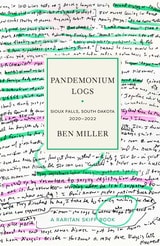
Pandemonium Logs
Sioux Falls, South Dakota, 2020–2022Ben Miller
Rutgers University Press, 2025
Balcones Prize Winner in Nonfiction
In 2015, Ben Miller and the poet Anne Pierson Wiese moved from New York City to Sioux Falls, South Dakota, to explore their midwestern roots and to focus on their writing careers. Working a day job in a hospital, Miller had a front-row seat to the COVID-19 pandemic as it moved from the coasts to the urban Midwest. Pandemonium Logs casts an unflinching eye on the state of the worker in the US health-care system during a global pandemic, giving voice to the doctors, nurses, support staff, patients, and families caught in the complex swirl of daily dilemmas and crucial choices.
In unsparing yet sympathetic prose, Ben Miller creates an intimate portrait of the impact of COVID on the diverse people of South Dakota. Through a wide range of characters—from understandably confused patients to quietly competent nurses—he explores the human complexities of the crisis: a doctor based in Mumbai who treats critically ill patients in the Dakotas via a tenuous hodgepodge of telehealth apparatus, a Hydra of six workplace trainers who together cannot train one employee to do one job, a vice president of corporate hospitality who lives to rip down safety signs as fast as nurses post them, a ninety-year-old hospital volunteer who pushes wheelchairs containing patients half his age.
In Pandemonium Logs, Miller provides precise and moving observations of ordinary people doing extraordinary things.

Pandora's Box
Ethnography and the Comparison of Medical Beliefs: The 1979 Lewis Henry Morgan LecturesGilbert Lewis
HAU, 2021
Lewis compares Indigenous medical beliefs in New Guinea in 1968, when villagers were largely self-reliant, and in 1983, after they became dependent on Western medicine. He then widens his comparative scope by turning to West Africa and discussing a therapeutic community run by a prophet who heals the ill through confession and long-term residential care.
Pandora's Box began life with the prestigious Lewis Henry Morgan Lectures that Gilbert Lewis delivered in 1979 at the University of Rochester. He expanded them with materials gathered over the next forty years, completing the manuscript a few weeks before his death. Engagingly written, this book will inspire anthropologists, medical professionals, students, and curious readers to look with new eyes at current crises in world health.
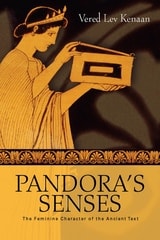
Pandora's Senses
The Feminine Character of the Ancient TextVered Lev Kenaan
University of Wisconsin Press, 2010
In this compelling study, Vered Lev Kenaan offers a radical revision of the Greek myth of the first woman. She argues that Pandora leaves a decisive mark on ancient poetics and shows that we can unravel the profound impact of Pandora’s image once we recognize that Pandora embodies the very idea of the ancient literary text. Locating the myth of the first woman right at the heart of feminist interrogation of gender and textuality, Pandora’s Senses moves beyond a feminist critique of masculine hegemony by challenging the reading of Pandora as a one-dimensional embodiment of the misogynist vision of the feminine. Uncovering Pandora as a textual principle operating outside of the feminine, Lev Kenaan shows the centrality of this iconic figure among the poetics of such central genres as the cosmological and didactic epic, the Platonic dialogue, the love elegy, and the ancient novel. Pandora’s Senses innovates our understanding of gender as a critical lens through which to view ancient literature.
Paninian Studies
Professor S. D. Joshi Felicitation VolumeMadhav Deshpande and Saroja Bhate, Editors
University of Michigan Press, 1991

Panthers, Hulks and Ironhearts
Marvel, Diversity and the 21st Century SuperheroJeffrey A. Brown
Rutgers University Press, 2021
Panthers, Hulks, and Ironhearts offers the first comprehensive study of how Marvel has reimagined what a superhero might look like in the twenty-first century. It examines how they have revitalized older characters like Black Panther and Luke Cage, while creating new ones like Latina superhero Miss America. Furthermore, it considers the mixed fan responses to Marvel’s recasting of certain “legacy heroes,” including a Pakistani-American Ms. Marvel, a Korean-American Hulk, and a whole rainbow of multiverse Spidermen.
If the superhero comic is a quintessentially American creation, then how might the increasing diversification of Marvel’s superhero lineup reveal a fundamental shift in our understanding of American identity? This timely study answers those questions and considers what Marvel’s comics, TV series, and films might teach us about stereotyping, Orientalism, repatriation, whitewashing, and identification.
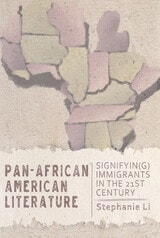
Pan–African American Literature
Signifyin(g) Immigrants in the Twenty-First CenturyLi, Stephanie
Rutgers University Press, 2018
The twenty-first century is witnessing a dynamic broadening of how blackness signifies both in the U.S. and abroad. Literary writers of the new African diaspora are at the forefront of exploring these exciting approaches to what black subjectivity means. Pan-African American Literature is dedicated to charting the contours of literature by African born or identified authors centered around life in the United States. The texts examined here deliberately signify on the African American literary canon to encompass new experiences of immigration, assimilation and identification that challenge how blackness has been previously conceived. Though race often alienates and frustrates immigrants who are accustomed to living in all-black environments, Stephanie Li holds that it can also be a powerful form of community and political mobilization.
Papa, PhD
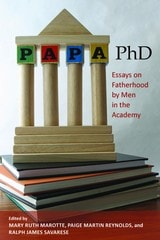
Essays on Fatherhood by Men in the AcademyMarotte, Mary Ruth
Rutgers University Press, 2010
In Papa, PhD, Mary Ruth Marotte, Paige Martin Reynolds, and Ralph James Savarese bring together a group contributors from a variety of backgrounds and disciplines. They are white, black, South Asian, Asian, and Arab. They are gay and straight, married and divorced. They are tenured and untenured, at research-one universities and at community colleges. Some write at the beginning of their careers, others at the end. But, perhaps most important they do not look back-they look forward to new parental and professional synergies as they reflect on what it means to be a father in the academy.
The fathers writing in Papa, PhD seek to expand their children's horizons, giving them the gifts of better topic sentences and a cosmopolitan sensibility. They seriously consider the implications of gender theory and queer theory-even Marxist theory-and make relevant theoretical connections between their work and the less abstract, more pragmatic, world of fathering. What resonates is the astonishing range of forms that fatherhood can take as these dads challenge traditional norms by actively questioning the status quo.
Papago Indians at Work
Jack O. Waddell
University of Arizona Press, 1969
Paper Cadavers
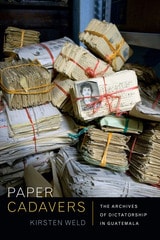
The Archives of Dictatorship in GuatemalaKirsten Weld
Duke University Press, 2014
The unearthing of the archives renewed fierce debates about history, memory, and justice. In Paper Cadavers, Weld explores Guatemala's struggles to manage this avalanche of evidence of past war crimes, providing a firsthand look at how postwar justice activists worked to reconfigure terror archives into implements of social change. Tracing the history of the police files as they were transformed from weapons of counterinsurgency into tools for post-conflict reckoning, Weld sheds light on the country's fraught transition from war to an uneasy peace, reflecting on how societies forget and remember political violence.
Paper Electronic Literature
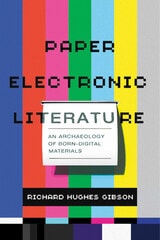
An Archaeology of Born-Digital MaterialsRichard Hughes Gibson
University of Massachusetts Press, 2021
Paper Electronic Literature attests that digital literature's old media elements have much to teach us about the cultural and physical conditions in which we compute; the creativity that new media artists have shown in their dealings with old media; and the distinctively electronic issues that confront digital artists. Moving between avant-garde works and popular ones, fiction writing and poetry generation, Richard Hughes Gibson reveals the diverse ways in which paper has served as a component within electronic literature, particularly in facilitating interactive experiences for users. This important study develops a new critical paradigm for appreciating the multifaceted material innovation that has long marked digital literature.
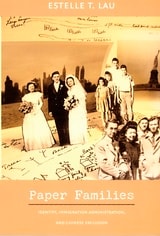
Paper Families
Identity, Immigration Administration, and Chinese ExclusionEstelle T. Lau
Duke University Press, 2006
Drawing on these documents as well as immigration case files, legislative materials, and transcripts of interviews and court proceedings, Lau reveals immigration as an interactive process. Chinese immigrants and their U.S. families were subject to regulation and surveillance, but they also manipulated and thwarted those regulations, forcing the U.S. government to adapt its practices and policies. Lau points out that the Exclusion Acts and the pseudo-familial structures that emerged in response have had lasting effects on Chinese American identity. She concludes with a look at exclusion’s legacy, including the Confession Program of the 1960s that coerced people into divulging the names of paper family members and efforts made by Chinese American communities to recover their lost family histories.
Paper Knowledge
Toward a Media History of DocumentsLisa Gitelman
Duke University Press, 2014
Paper Money Men
Commerce, Manhood, and the Sensational Public Sphere in Antebellum AmericaDavid Anthony
The Ohio State University Press, 2009
Paper Pusher
Power and Protest in Higher EducationKathryn J. Gindlesparger
University of Minnesota Press, 2027
Paperwork is the new protest: leveraging bureaucracy for progressive action
In contemporary higher education, power increasingly circulates through documents rather than debate, making paperwork one of the most consequential sites of protest. Yet as universities become more corporatized and subject to authoritarian influence, bureaucratic writing is often treated as passive, procedural, or politically neutral. Paper Pusher shows how paperwork is a central mechanism of governance and therefore a formidable, underused medium for democratic action and protest within bureaucracies.
Kathryn J. Gindlesparger reframes the “paper pusher” from a symbol of compliance into an agent of institutional accountability and resistance. She develops four avenues for protesting through bureaucracy—voice, filing, circulation, and stasis-seeking—showing how everyday documents such as meeting minutes, policy drafts, budgets, and accreditation reports can be used to push back against authoritarian and corporate forces that undermine an institution’s mission. Rather than emphasizing visible confrontation, Paper Pusher demonstrates how activism can operate quietly and credibly from within systems where overt protest may carry professional risk.
Grounded in story and lived experience, this book is a love letter to office workers, staff, and middle managers whose labor sustains institutions and whose expertise is often overlooked. It foregrounds feminist, working-class, queer, disabled, Black, and brown voices, highlighting how marginalized workers have long used bureaucratic knowledge to create access, protection, and change. Practical and people-centered, Paper Pusher calls for bureaucratic literacy to be taught wherever writing is taught, insisting that paperwork is not grunt work but power work.
Retail e-book files for this title are screen-reader friendly with images accompanied by short alt text and/or extended descriptions.
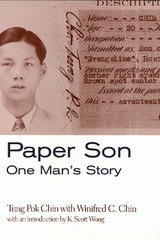
Paper Son
One Man's StoryTung Chin
Temple University Press, 2000
Chin's story begins in the early 1930s, when he followed the example of his father and countless other Chinese who bought documents that falsely identified them as children of Chinese Americans. Arriving in Boston and later moving to New York City, he worked and lived in laundries. Chin was determined to fit into American life and dedicated himself to learning English. But he also became an active member of key organizations -- a church, the Chinese Hand Laundrymen's Alliance, and the Chinese Consolidated Benevolent Association -- that anchored him in the community. A self-reflective and expressive man, Chin wrote poetry commenting on life in China and the hardships of being an immigrant in the United States. His work was regularly published in the China Daily News and brought him to the attention of the FBI, then intent on ferreting out communists and illegal immigrants. His vigorous narrative speaks to the day-to-day anxieties of living as a Paper Son as well as the more universal immigrant experiences of raising a family in modest circumstances and bridging cultures.
Historian K. Scott Wong introduces Chin's memoir, discussing the limitations on immigration from China and what is known about Exclusion-era Chinese American communities. Set in historical context, Tung Pok Chin's unique story offers and engaging account of a twentieth-century Paper Son.
Paper Sons and Daughters
Growing up Chinese in South AfricaUfrieda Ho
Ohio University Press, 2011

Paper Tangos
Julie Taylor
Duke University Press, 1998
Taylor, born in the United States, has lived much of her adult life in Latin America. She has spent years studying the tango in Buenos Aires, dancing during and after the terror of military dictatorships. This book is at once an account of a life lived crossing the borders of two distinct and complex cultures and an exploration of the conflicting meanings of tango for women who love the poetry of its movement yet feel uneasy with the roles it bestows on the male and female dancers. Drawing parallels among the violences of the Argentine Junta, the play with power inherent in tango dancing, and her own experiences with violence both inside and outside the intriguing tango culture, Taylor weaves the line between engaging memoir and insightful cultural critique. Within the contexts of tango’s creative birth and contemporary presentations, this book welcomes us directly into the tango subculture and reveals the ways that personal, political, and historical violence operate in our lives.
The book’s experimental design includes photographs on every page, which form a flip-book sequence of a tango. Not simply a book for tango dancers and fans, Paper Tangos will reward students of Latin American studies, cultural studies, anthropology, feminist studies, dance studies, and the art of critical memoir.
Paper Trails
Migrants, Documents, and Legal InsecuritySarah B. Horton and Josiah Heyman, editors
Duke University Press, 2020
Contributors. Bridget Anderson, Deborah A. Boehm, Susan Bibler Coutin, Ruth Gomberg-Muñoz, Sarah B. Horton, Josiah Heyman, Cecilia Menjívar, Juan Thomas Ordóñez, Doris Marie Provine, Nandita Sharma, Monica Varsanyi
Papers of the Fiftieth Algonquian Conference
Monica Macaulay
Michigan State University Press, 2021
Papers of the Fifty-Fifth Algonquian Conference
Actes du Cinquante-Cinquième Congrès des AlgonquinistesInge Genee
Michigan State University Press, 2026
Papers of the Algonquian Conference is a collection of peer-reviewed scholarship from an annual international forum that focuses on topics related to the languages and cultures of Algonquian peoples. This series touches on a variety of subject areas, including anthropology, archaeology, education, ethnography, history, Indigenous studies, language studies, literature, music, political science, psychology, religion, and sociology. Contributors often cite never-before-published data in their research, giving the reader a fresh and unique insight into the Algonquian peoples and rendering these papers essential reading for those interested in studying Algonquian society
Papers of the Fifty-First Algonquian Conference
Monica Macaulay
Michigan State University Press, 2022
Papers of the Fifty-Fourth Algonquian Conference
Actes du cinquante-quatrième Congrès des AlgonquinistesInge Genee
Michigan State University Press, 2025
Papers of the Fifty-Second Algonquian Conference
Monica Macaulay
Michigan State University Press, 2023
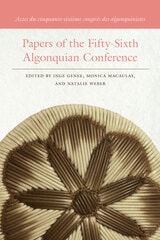
Papers of the Fifty-Sixth Algonquian Conference / Actes du Cinquante-sixième Congrès des Algonquinistes
Inge Genee
Michigan State University Press, 2027
Papers of the Algonquian Conference is a collection of peer-reviewed scholarship from an annual international forum that focuses on topics related to the languages and cultures of Algonquian peoples. This series touches on a variety of subject areas, including anthropology, archaeology, education, ethnography, history, Indigenous studies, language studies, literature, music, political science, psychology, religion, and sociology. Contributors often cite never-before-published data in their research, giving the reader a fresh and unique insight into the Algonquian peoples and rendering these papers essential reading for those interested in studying Algonquian society.
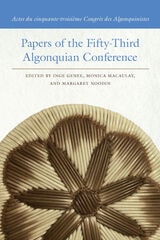
Papers of the Fifty-Third Algonquian Conference / Actes du cinquante-troisième Congrès des Algonquinistes
Inge Genee
Michigan State University Press, 2024
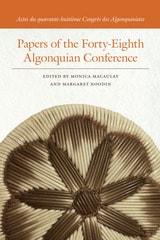
Papers of the Forty-Eighth Algonquian Conference
Monica Macaulay
Michigan State University Press, 2019
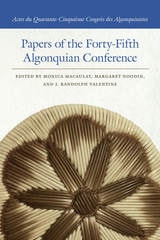
Papers of the Forty-Fifth Algonquian Conference
Monica Macaulay
Michigan State University Press, 2017
Papers of the Forty-Ninth Algonquian Conference
Monica Macaulay
Michigan State University Press, 2020
Papers of the Forty-Seventh Algonquian Conference
Monica Macaulay
Michigan State University Press, 2018
Papers of the Forty-Sixth Algonquian Conference
Monica Macaulay
Michigan State University Press, 2017
Papers of the Michigan Academy of Science, Arts and Letters volume XLV
Editor, Sheridan Baker
University of Michigan Press, 1960
Papyri from Karanis
The Granary C123W. Graham Claytor and Arthur Verhoogt, editors
University of Michigan Press, 2018
The documents are presented with an introduction, transcription of the original Greek or Latin, translation, commentary, and images. A unique community prayer to the emperor and gods (827) is the volume’s most notable contribution. The other papyri are a mix of private and public documents (petitions, declarations, letters, lists, etc.) that date from between the first century BCE and the fourth century CE. The typological and chronological mix of texts shows that they do not form an undisturbed archive but were rather a dump of wastepaper and other household objects.
Michigan’s excavated papyri are here presented for the first time on the basis of their archaeological find spot rather than being organized according to content. The volume’s introduction provides a possible model for analyzing legacy data from the Karanis excavations stored at the University of Michigan. The book will be of interest to papyrologists, ancient historians, and archaeologists of Greco- Roman Egypt.
Papyri from Tebtunis
Part IArthur E.R. Boak
University of Michigan Press, 1944
Para Power
How Paraprofessional Labor Changed EducationNick Juravich
University of Illinois Press, 2024
Understanding paras as key players in Black and Latino struggles for jobs and freedom, Nick Juravich details how the first generation of paras in New York City transformed work in public schools and the relationships between schools and the communities they served. Paraprofessional programs created hundreds of thousands of jobs in working-class Black and Latino neighborhoods. These programs became an important pipeline for the training of Black and Latino teachers in the1970s and early 1980s while paras’ organizing helped drive the expansion and integration of public sector unions.
An engaging portrait of an invisible profession, Para Power examines the lives and practices of the first generation of paraprofessional educators against the backdrop of struggles for justice, equality, and self-determination.
Para-Sites
A Casebook against Cynical ReasonEdited by George E. Marcus
University of Chicago Press, 2000
These cases challenge the condition of cynicism that has been the favored mode of characterizing the mind-set of intellectuals and professionals, comfortable in their lives of middle-class consumption and work. In their effort to establish para-sites of critical awareness parallel to the levels of political and economic power at which they function, these subjects suggest that those who lead ordinary lives of modest power and privilege might not be parasites in relation to the systems they serve, but may be creating unique and independent critical perspectives.
Para-States and Medical Science
Making African Global HealthP. Wenzel Geissler, editor
Duke University Press, 2015
Contributors. Uli Beisel, Didier Fassin, P. Wenzel Geissler, Rene Gerrets, Ann Kelly, Guillaume Lachenal, John Manton, Lotte Meinert, Vinh-Kim Nguyen, Branwyn Poleykett, Susan Reynolds Whyte
Paradigms of Paranoia
The Culture of Conspiracy in Contemporary American FictionSamuel Chase Coale
University of Alabama Press, 2005
Tracing paranoia as a defining pattern of modern American literature.
The recent popularity of The DaVinci Code and The Matrix trilogy exemplifies the fascination Americans have with conspiracy-driven subjects. Though scholars have suggested that in modern times the JFK assassination initiated an industry of conspiracy (i.e., Vietnam and the Pentagon Papers, Area 51, Iran-Contra Affair), Samuel Chase Coale reminds us in this book that conspiracy is foundational in American culture—from the apocalyptic Biblical narratives in early Calvinist households to the fear of Mormon, Catholic, Jewish, and immigrant populations in the 19th century.
Coale argues that contemporary culture—a landscape characterized by doubt, ambiguity, fragmentation, information overload, and mistrust—has fostered a radical skepticism so pervasive that the tendency to envision or construct conspiracies often provides the best explanation for the chaos that surrounds us.
Conspiracy as embodied in narrative form provides a fertile field for explorations of the anxiety lying at the heart of the postmodern experience. Thomas Pynchon's The Crying of Lot 49, Don DeLillo's Underworld, Toni Morrison's Jazz and Paradise, Joan Didion's Democracy, Tim O'Brien's In the Lake of the Woods, and Paul Auster's New York City Trilogy are some of the texts Coale examines for their representations of isolated individuals at the center of massive, anonymous master plots that lay beyond their control. These narratives remind us that our historical sense of national identity has often been based on the demonizing of others and that American fiction arose and still flourishes with apocalyptic visions.
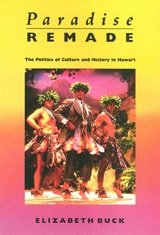
Paradise Remade
The Politics of Culture and History in Hawai'iElizabeth Buck
Temple University Press, 1994
This is a book about the politics of competing cultures and myths in a colonized nation. Elizabeth Buck considers the transformation of Hawaiian culture focusing on the indigenous population rather than on the colonizers. She describes how Hawaii's established religious, social, political, and economic relationships have changed in the past 200 years as a result of Western imperialism. Her account is particularly timely in light of the current Hawaiian demands for sovereignty 100 years after the overthrow of the monarchy in 1893.
Buck examines the social transformation Hawaii from a complex hierarchical, oral society to an American state dominated by corporate tourism and its myths of paradise. She pays particular attention to the ways contemporary Hawaiians are challenging the use of their traditions as the basis for exoticized entertainment.
Buck demonstrates that sacred chants and hula were an integral part of Hawaiian social life; as the repository of the people's historical memory, chants and hula practices played a vital role in maintaining the links between religious, political, and economic relationships. Tracing the ways in which Hawaiian culture has been variously suppressed and constructed by Western explorers, New England missionaries, the tourist industry, ethnomusicologists, and contemporary Hawaiians, Buck offers a fascinating "rereading" of Hawaiian history.

Paradise in the Sea of Sorrow
Our Minamata DiseaseIshimure Michiko
University of Michigan Press, 2003

Paradox Of Natural Mothering
Chris Bobel
Temple University Press, 2001
Author Chris Bobel profiles some thirty natural mothers, probing into their choices and asking whether they are reforming or conforming to women's traditional role. Bobel's subjects say that they have chosen to follow their nature rather than social imperatives. Embracing such lifestyle alternatives as voluntary simplicity and attachment parenting, they place family above status and personal achievement. Bobel illuminates the paradoxes of natural mothering, the ways in which these women resist the trappings of upward mobility but acquiesce to a kind of biological determinism and conventional gender scripts.
Paradoxes of Digital Disengagement
In Search of the Opt-Out ButtonAdi Kuntsman and Esperanza Miyake
University of Westminster Press, 2022
Listen to authors Adi Kuntsman and Esperanza Miyake discuss collective data justice, the rights, refusals and ethics of digital (dis)engagement in this latest podcast from Lateral, the Journal of the Cultural Studies Association.
“The digital now thoroughly saturates our everyday lives to the point where it seems we are drowning. But is it possible to swim on our terms? This book thoughtfully examines this question, critically teasing apart the structures of power that permeate digital relations and charting pathways to a more just digital world. Essential reading for those who want to move beyond personal digital detoxes to challenge and transform our digital society and economy.” - Professor Rob Kitchin, author of The Data Revolution and Data Lives
“The seductions of tech have ushered in the encroachment of technological solutions into policing, law enforcement and ever-widening systems of social regulation across the UK and Europe. This book marks a critical intervention – by conceptualising our understanding of the ways in which data and digital harms are systemically expended against the powerless. It is a must read for those of us who are concerned to resist the (digital) exclusion of the marginalised, and the (digital) banishment of the vulnerable.” - Dr Patrick Williams, author of Data-Driven Policing: The Hardwiring of Discriminatory Policing Practices Across Europe
“While imaginaries of techno futures constructed by the Digital Lords of contemporary societies become self-fulfilling prophecies, we struggle to imagine a present and future free from digital coercion and exclusion. In their powerful interdisciplinary analysis, Adi Kuntsman and Esperanza Miyake delve into the personal, social, political and environmental costs of compulsory digitality. Rejecting a self-defeating naturalisation of digitality and digital inevitability Paradoxes of Digital Disengagement compellingly shows how collective digital justice is imperative in this future/present where the machine rules and people can become marginalized and excluded. A much-needed scholarly intervention that can inspire our collective thinking, research and praxis.” - Dr Benedetta Brevini, author of Is AI Good for the Planet?
“Kuntsman and Miyake have written an engaging book. It offers a readable critique of enforced digitality and broadens the scope of disconnection studies. The detailed analyses of complicated documents are elegantly structured and thought-provoking.” - https://blogs.lse.ac.uk/lsereviewofbooks/2022/11/16/book-review-paradoxes-of-digital-disengagement-in-search-of-the-opt-out-button-by-adi-kuntsman-and-esperanza-miyake/
Life is increasingly governed and mediated through digital and smart technologies, platforms, big data and algorithms. However, the reasons, practices and impact of how the digital is used by different institutions are often deeply linked to social oppression and injustice. Similarly, the ability to resist these digital impositions is based on inequality and privilege. Challenging the ways in which we are increasingly dependent on the digital, this book raises a set of provocative and urgent questions: in a world of compulsory digitality is there an opt out button? Where, when, how, why and to whom is it available? Answering these questions has become even more relevant since the COVID-19 pandemic. In response, the book puts forward the concept of ‘digital disengagement’ which is explored across six key areas of digitisation: health; citizenship; education; consumer culture; labour; and the environment.
Part I examines the difficulty of opting out of compulsory digitality in a world where most things are digital by default. From health apps, algorithmic decision-making to learning analytics, opting out comes with a set of troubling consequences. Part II turns to several examples of disconnection and disengagement. The chapters reveal how phenomena like digital detoxes, time-management apps and online ‘green’ spaces are co-opted by the very digital systems one is trying to resist.
The book critiques issues relating to digital surveillance, algorithmic discrimination and biased tech, corporatisation and monetisation of data, exploitative digital labour, digitalised self-discipline and destruction of the environment. As an interdisciplinary piece of work, the book will be useful to any scholar and activist in Digital, Internet and Social Media Studies; Digital Sociology and Social Policy; Digital Health; Media, Popular and Communication Studies; Consumer culture; and Environment Studies.