Results by title
3064 books match the query 'Social conditions' and 136 start with p
Pleas and Petitions
Hispano Culture and Legislative Conflict in Territorial ColoradoVirginia Sánchez
University Press of Colorado, 2021
Sánchez highlights the struggles experienced by Hispano territorial assemblymen trying to create opportunity and a better life in the face of cultural conflict and the institutional racism used to effectively shut them out of the process of establishing new laws and social order. For example, the federal and Colorado territorial governments did not provide an interpreter for the Hispano assemblymen or translations of the laws passed by the legislature, and they taxed Hispano constituents without representation and denied them due process in court.
The first in-depth history of Hispano sociopolitical life during Colorado’s territorial period, Pleas and Petitions provides fundamental insight into Hispano settlers’ interactions with their Anglo neighbors, acknowledges the struggles and efforts of those Hispano assemblymen who represented southern Colorado during the territorial period, and augments the growing historical record of Hispanos who have influenced the course of Colorado’s history.
Pobladoras, Indígenas, and the State
Conflict Over Women's Rights in ChileRichards, Patricia
Rutgers University Press, 2004
Chile has made a public commitment to equality between women and men through the creation of a National Women’s Service, SERNAM. Yet, indigenous Mapuche women and working-class pobladora activists assert that they have been excluded from programs implemented by SERNAM. Decisions about what constitutes "women’s interests" are usually made by middle class, educated, lighter-skinned women, and the priorities and concerns of poor, working-class, and indigenous women have not come to the fore.
Through critical analysis of the role of the state, the diversity of women’s movements, and the social and political position of indigenous peoples in Latin America, Richards provides an illuminating discussion of the ways in which the state defines women’s interests and constructs women’s citizenship. This book makes important contributions to feminist studies, theories of citizenship, and studies of the intersections of class, gender, and race.
Points of Contact
Disability, Art, and CultureSusan Crutchfield and Marcy Epstein, Editors
University of Michigan Press, 2000
Poison Woman
Figuring Female Transgression in Modern Japanese CultureChristine L. Marran
University of Minnesota Press, 2007
Based on the lives and crimes of no less than twenty real women, dokufu (poison women) narratives emerged as a powerful presence in Japan during the 1870s. During this tumultuous time, as the nation moved from feudalism to oligarchic government, such accounts articulated the politics and position of underclass women, sexual morality, and female suffrage. Over the next century, the figure of the oversexed female criminal, usually guilty of robbery or murder, became ubiquitous in modern Japanese culture.
In Poison Woman, Christine L. Marran investigates this powerful icon, its shifting meanings, and its influence on defining women’s sexuality and place in Japan. She begins by considering Meiji gesaku literature, in which female criminality was often medically defined and marginalized as abnormal. She describes the small newspapers (koshinbun) that originally reported on poison women, establishing journalistic and legal conventions for future fiction about them. She examines zange, or confessional narratives, of female and male ex-convicts from the turn of the century, then reveals how medical and psychoanalytical literature of the 1920s and 1930s offered contradictory explanations of the female criminal as an everywoman or a historical victim of social circumstances and the press. She concludes by exploring postwar pulp fiction (kasutori), film and underground theater of the 1970s, and the feminist writer Tomioka Taeko’s take on the transgressive woman.
Persistent stories about poison women illustrate how a few violent acts by women were transformed into myriad ideological, social, and moral tales that deployed notions of female sexual desire and womanhood. Bringing together literary criticism, the history of science, media theory, and gender and sexuality studies, Poison Woman delves into genre and gender in ways that implicate both in projects of nation-building.
Christine L. Marran is associate professor of Japanese literature and cultural studies at the University of Minnesota.
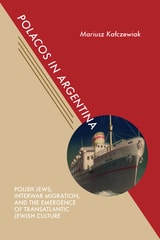
Polacos in Argentina
Polish Jews, Interwar Migration, and the Emergence of Transatlantic Jewish CultureMariusz Kalczewiak
University of Alabama Press, 2020
An examination of the social and cultural repercussions of Jewish emigration from Poland to Argentina in the 1920s and 1930s
Between the 1890s and 1930s, Argentina, following the United States and Palestine, became the main destination for Eastern European Ashkenazi Jews seeking safety, civil rights, and better economic prospects. In the period between 1918 and 1939, sixty thousand Polish Jews established new homes in Argentina. They formed a strong ethnic community that quickly embraced Argentine culture while still maintaining their unique Jewish-Polish character. This mass migration caused the transformation of cultural, social, and political milieus in both Poland and Argentina, forever shaping the cultural landscape of both lands.
In Polacos in Argentina: Polish Jews, Interwar Migration, and the Emergence of Transatlantic Jewish Culture, Mariusz Kałczewiak has constructed a multifaceted and in-depth narrative that sheds light on marginalized aspects of Jewish migration and enriches the dialogue between Latin American Jewish studies and Polish Jewish Studies. Based on archival research, Yiddish travelogues on Argentina, and the Yiddish and Spanish-language press, this study recreates a mosaic of entanglements that Jewish migration wove between Poland and Argentina.
Most studies on mass migration fail to acknowledge the role of the country of origin, but this innovative work approaches Jewish migration to Argentina as a continuous process that took place on both sides of the Atlantic. Taken as a whole, Polacos in Argentina enlightens the heterogeneous and complex issue of immigrant commitments, belongings, and expectations. Jewish emigration from Poland to Argentina serves as a case study of how ethnicity evolves among migrants and their children, and the dynamics that emerge between putting down roots in a new country and maintaining commitments to the country of origin.
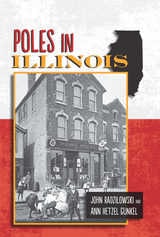
Poles in Illinois
John Radzilowski and Ann Hetzel Gunkel
Southern Illinois University Press, 2020
Authors John Radzilowski and Ann Hetzel Gunkel look at family life among Polish immigrants, their role in the economic development of the state, the working conditions they experienced, and the development of their labor activism. Close-knit Polish American communities were often centered on parish churches but also focused on fraternal and social groups and cultural organizations. Polish Americans, including waves of political refugees during World War II and the Cold War, helped shape the history and culture of not only Chicago, the “capital” of Polish America, but also the rest of Illinois with their music, theater, literature, food.
With forty-seven photographs and an ample number of extensive excerpts from first-person accounts and Polish newspaper articles, this captivating, highly readable book illustrates important and often overlooked stories of this ethnic group in Illinois and the changing nature of Polish ethnicity in the state over the past two hundred years. Illinoisans and Midwesterners celebrating their connections to Poland will treasure this rich and important part of the state’s history.
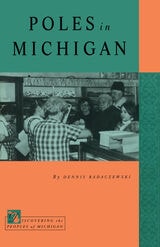
Poles in Michigan
Dennis Badaczewski
Michigan State University Press, 2002
One of the most vibrant and influential ethnic groups in Michigan, Poles have a long history of migration and settlement in the Great Lakes State. From Michigan’s earliest Polish marriage (in 1762) to the most recent post-Cold War migrations, each successive wave of settlement has enriched and enlivened Michigan culture. Yet, Paczki Day and Polish festivals represent a relatively small portion of the Polish experience. Commitments both to religious and ethnic identity, and a belief in the American vision of landownership and success, have combined to create a mainstream ethnic community abundant in ethnic pride. Poles’ success in Michigan continues to attract Polish immigrants from Europe, just as Polonia continues to make its mark on Michigan’s culture.

Policing Black Lives
State Violence in Canada from Slavery to the PresentRobyn Maynard
Duke University Press, 2025
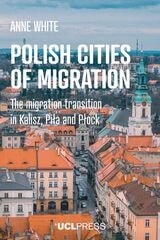
Polish Cities of Migration
The Migration Transition in Kalisz, Pila and PlockAnne White
University College London, 2024
Polish Cities of Migration analyzes Poland’s transition to become a “country of immigration.” Incorporating in-depth interviews with thirty-seven Polish returned migrants, seventy Ukrainians, and seventeen foreigners living in Kalisz, Plock, and Pila, the book explores two interconnected puzzles: how Poland’s migration transition is influenced by its current status as an emigration country, and why migrants are spreading out beyond the metropolises. It argues that migrants’ feelings of comfort in such locations are explained by network and lifestyle considerations, as well as the social acceptance of migration by former migrant Poles.
Polished
College, Class, and the Burdens of Social MobilityMelissa Osborne
University of Chicago Press, 2024
While college initiates a major transition in all students’ lives, low-income and first-generation students attending elite schools are often entering entirely new worlds. Amid the financial and academic challenges of adapting to college, their emotional lives, too, undergo a transformation. Surrounded by peers from different classes and cultural backgrounds, they are faced with an impossible choice: turn away from their former lives to blend in or stay true to themselves and remain on the outside.
An ethnography that draws on in-depth interviews with one hundred and fifty first-generation and low-income students across eighteen elite institutions, Polished uncovers the hidden consequences of the promise of social mobility in today’s educational landscape. Sociologist Melissa Osborne reveals how the very support designed to propel first-generation students forward can unexpectedly reshape their identities, often putting them at odds with their peers and families. Without direct institutional support, this emotional journey can lead to alienation, mental health challenges, poor academic outcomes, and difficult choices between upward mobility or maintaining authenticity and community. Whether you're an educator, advocate, or student, Polished provides a powerful perspective on the uncharted challenges of social mobility and personal identity during college.
Political Essay on the Kingdom of New Spain, Volume 1
A Critical EditionAlexander von Humboldt
University of Chicago Press, 2019
Alexander von Humboldt was the most celebrated modern chronicler of North and South America and the Caribbean, and this translation of his essay on New Spain—the first modern regional economic and political geography—covers his travels across today’s Mexico in 1803–1804. The work canvases natural-scientific and cultural-scientific objects alike, combining the results of fieldwork with archival research and expert testimony.
To show how people, plants, animals, goods, and ideas moved across the globe, Humboldt wrote in a variety of styles, bending and reshaping familiar writerly conventions to keep readers attentive to new inputs. Above all, he wanted his readers to be open-minded when confronted with cultural and other differences in the Americas. Fueled by his comparative global perspective on politics, economics, and science, he used his writing to support Latin American independence and condemn slavery and other forms of colonial exploitation. It is these voluminous and innovative writings on the New World that made Humboldt the undisputed father of modern geography, early American studies, transatlantic cultural history, and environmental studies.
This two-volume critical edition—the third installment in the Alexander von Humboldt in English series—is based on the full text, including all footnotes, tables, and maps, of the second, revised French edition of Essai politique sur le royaume de de Nouvelle Espagne from 1825 to 1827, which has never been translated into English before. Extensive annotations and full-color atlases are available on the series website.
Political Essay on the Kingdom of New Spain, Volume 2
A Critical EditionAlexander von Humboldt
University of Chicago Press, 2019
Alexander von Humboldt was the most celebrated modern chronicler of North and South America and the Caribbean, and this translation of his essay on New Spain—the first modern regional economic and political geography—covers his travels across today’s Mexico in 1803–1804. The work canvases natural-scientific and cultural-scientific objects alike, combining the results of fieldwork with archival research and expert testimony.
To show how people, plants, animals, goods, and ideas moved across the globe, Humboldt wrote in a variety of styles, bending and reshaping familiar writerly conventions to keep readers attentive to new inputs. Above all, he wanted his readers to be open-minded when confronted with cultural and other differences in the Americas. Fueled by his comparative global perspective on politics, economics, and science, he used his writing to support Latin American independence and condemn slavery and other forms of colonial exploitation. It is these voluminous and innovative writings on the New World that made Humboldt the undisputed father of modern geography, early American studies, transatlantic cultural history, and environmental studies.
This two-volume critical edition—the third installment in the Alexander von Humboldt in English series—is based on the full text, including all footnotes, tables, and maps, of the second, revised French edition of Essai politique sur le royaume de de Nouvelle Espagne from 1825 to 1827, which has never been translated into English before. Extensive annotations and full-color atlases are available on the series website.
Political Power in Pre-Colonial Buganda
Economy, Society, and Warfare in the Nineteenth CenturyRichard Reid
Ohio University Press, 2002
Blessed with fertile and well-watered soil, East Africa’s kingdom of Buganda supported a relatively dense population and became a major regional power by the mid-nineteenth century. This complex and fascinating state has also long been in need of a thorough study that cuts through the image of autocracy and military might.
Political Power in Pre-Colonial Buganda explores the material basis of Ganda political power, gives us a new understanding of what Ganda power meant in real terms, and relates the story of how the kingdom used the resources at its disposal to meet the challenges that confronted it. Reid further explains how these same challenges ultimately limited Buganda’s dominance of the East African great lakes region.
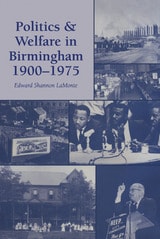
Politics and Welfare in Birmingham, 1900–1975
Edward Shannon LaMonte
University of Alabama Press, 1995
This well-written volume explores the relationships between politics and welfare programs for low-income residents in Birmingham during four periods in the twentieth century:
From the time of its founding in 1871, Birmingham has had a biracial population, so the theme of race relations runs naturally throughout the narrative. LaMonte pays particular attention to those efforts to achieve a more harmonious biracial community, including the failed effort to establish an Urban League in the 1940s, the progressive activities of the Community Chest’s Interracial Division in the 1950s, which were abruptly terminated, and the dramatic events of the Civil Rights Movement in the 1960s, when local events were elevated to international significance.
Politics, Faith, and the Making of American Judaism
Peter Adams
University of Michigan Press, 2014
In 1862, in the only instance of a Jewish expulsion in America, General Ulysses S. Grant banished Jewish citizens from the region under his military command. Although the order was quickly revoked by President Lincoln, it represented growing anti-Semitism in America. Convinced that assimilation was their best defense, Jews sought to Americanize by shedding distinctive dress, occupations, and religious rituals.
American Jews recognized the benefit and urgency of bridging the divide between Reform and Orthodox Judaism to create a stronger alliance to face the challenges ahead. With Grant’s 1868 presidential campaign, they also realized they could no longer remain aloof from partisan politics. As they became a growing influence in American politics, both political parties courted the new Jewish vote.
Once in office, Grant took notice of the persecution of Jews in Romania and Russia, and he appointed more Jews to office than any president before him. Indeed, Simon Wolf, a Washington lawyer who became one of Grant’s closest advisers, was part of a new generation of Jewish leaders to emerge in the post–Civil War era—thoroughly Americanized, politically mature, and committed to the modernized Judaism of the Reform movement.
In Politics, Faith, and the Making of American Judaism, Peter Adams recounts the history of the American Jewish Community’s assimilation efforts, organization, and political mobilization in the late 19th century, as political and cultural imperatives crafted a new, American brand of Judaism.
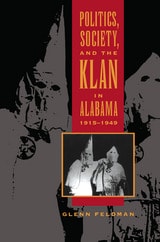
Politics, Society, and the Klan in Alabama, 1915-1949
Glenn Feldman
University of Alabama Press, 1999
This first book-length examination of the Klan in Alabama represents exhaustive research that challenges traditional interpretations.
The Ku Klux Klan has wielded considerable power both as a terrorist group and as a political force. Usually viewed as appearing in distinct incarnations, the Klans of the 20th century are now shown by Glenn Feldman to have a greater degree of continuity than has been previously suspected. Victims of Klan terrorism continued to be aliens, foreigners, or outsiders in Alabama: the freed slave during Reconstruction, the 1920s Catholic or Jew, the 1930s labor organizer or Communist, and the returning black veteran of World War II were all considered a threat to the dominant white culture. Feldman offers new insights into this "qualified continuity" among Klans of different eras, showing that the group remained active during the 1930s and 1940s when it was presumed dormant, with elements of the "Reconstruction syndrome" carrying over to the smaller Klan of the civil rights era.
In addition, Feldman takes a critical look at opposition to Klan activities by southern elites. He particularly shows how opponents during the Great Depression and war years saw the Klan as an impediment to attracting outside capital and federal relief or as a magnet for federal action that would jeopardize traditional forms of racial and social control. Other critics voiced concerns about negative national publicity, and others deplored the violence and terrorism.
This in-depth examination of the Klan in a single state, which features rare photographs, provides a means of understanding the order's development throughout the South. Feldman's book represents definitive research into the history of the Klan and makes a major contribution to our understanding of both that organization and the history of Alabama.

Polygamy in Primetime
Media, Gender, and Politics in Mormon FundamentalismJanet Bennion
Brandeis University Press, 2011
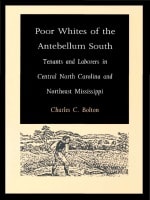
Poor Whites of the Antebellum South
Tenants and Laborers in Central North Carolina and Northeast MississippiCharles C. Bolton
Duke University Press, 1994
Looking at two specific regions--the "settled" central piedmont of North Carolina and the "frontier" of northeast Mississippi--Bolton describes how poor whites played an important, though circumscribed, role in the local economy. Dependent on temporary employment, they represented a troubling presence in a society based on the principles of white independence and black slavery. Although perceived by southern leaders as a threat, poor whites, Bolton argues, did not form a political alliance with either free or enslaved blacks because of numerous factors including white racism, kinship ties, religion, education, and mobility. A concluding discussion of the crisis of 1860-61 examines the rejection of secession by significant numbers of poor whites, as well as the implications for their future as the Old South turned toward the new.
Poor Whites of the Antebellum South sheds light on a group often neglected in southern history. It is an important contribution that will be of interest to all students and historians of the American South.
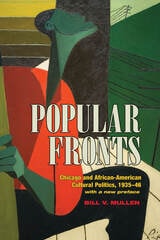
Popular Fronts
Chicago and African-American Cultural Politics, 1935-46Bill V. Mullen
University of Illinois Press, 2015
With a new preface Bill V. Mullen updates his dynamic reappraisal of a critical moment in American cultural history. Mullen's study includes reassessments of the politics of Richard Wright's critical reputation and a provocative reading of class struggle in Gwendolyn Brooks' A Street in Bronzeville. He also takes an in-depth look at the institutions that comprised Chicago's black popular front: the Chicago Defender, the period's leading black newspaper; Negro Story, the first magazine devoted to publishing short stories by and about African Americans; and the WPA-sponsored South Side Community Art Center.
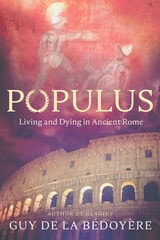
Populus
Living and Dying in Ancient RomeGuy de la Bédoyère
University of Chicago Press, 2024
Frenzied crowds, talking ravens, the stench of the Tiber River: life in ancient Rome was stimulating, dynamic, and often downright dangerous. The Romans relaxed and gossiped in baths, stole precious water from aqueducts, and partied and dined to excess. Everyone from senators to the enslaved crowded into theaters and circuses to watch their favorite singers, pantomime, and comedies and scream their approval at charioteers. The lucky celebrated their accomplishments with elaborate tombs. Amid pervasive inequality and brutality, beauty also flourished through architecture, poetry, and art.
From the smells of fragrant cookshops and religious sacrifices to the cries of public executions and murderous electoral mobs, Guy de la Bédoyère’s Populus draws on a host of historical and literary sources to transport us into the intensity of daily life at the height of ancient Rome.
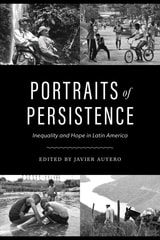
Portraits of Persistence
Inequality and Hope in Latin AmericaJavier Auyero
University of Texas Press, 2024
Profiles of triumph and hardship amid massive inequality in Latin America.
Each chapter of Portraits of Persistence, a project of the University of Texas Urban Ethnography Lab, offers an intimate portrait of one or two individual lives. The subjects are a diverse group of individuals from across the continent: grassroots activists and political brokers, private security entrepreneurs, female drug dealers, shantytown dwellers, and rural farmers, as well as migrants finding routes into and out of the region. Through these accounts, the writers explore issues that are common throughout today's world: precarious work situations, gender oppression, housing displacement, experiences navigating the bureaucracy for asylum seekers, state violence, environmental devastation, and access to good and affordable health care. Carefully situating these experiences within the sociohistorical context of their specific local regions or countries, editor Javier Auyero and his colleagues consider how people make sense of the paths their lives have taken, the triumphs and hardships they have experienced, and the aspirations they hold for the future. Ultimately, these twelve compelling profiles offer unique and personal windows into the region’s complex and multilayered reality.
Positively No Filipinos Allowed
Building Communities and Discourseedited by Antonio T. Tiongson, Jr., Edgardo V. Gutierrez and Ricardo V. Gutierrez, foreword by Lisa Lowe
Temple University Press, 2006

Post-Soviet Chaos
Violence and Dispossession in KazakhstanJoma Nazpary
Pluto Press, 2001
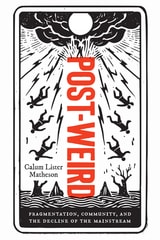
Post-Weird
Fragmentation, Community, and the Decline of the MainstreamCalum Lister Matheson
Rutgers University Press, 2026
An ambitious look at rhetoric and psychosis that explores how communities form when society collapses
American society seems to have fractured. Common touchpoints of authority have receded in recent decades and beliefs that were once taboo are now openly shared, from neo-Nazism to occultism to conspiracy thinking. In this book, Calum Lister Matheson goes beyond the fraying of contemporary American culture to ask how splinter communities form in our current media environment, what keeps them together, and what they build from the ruins of shared language.
In his stirring exploration of how people communicate when old forms of authority and meaning collapse, Matheson examines far-flung groups that have departed the mainstream—Sandy Hook deniers, Appalachian serpent handlers, pro-anorexia bloggers, incels, transvestigators, pseudoscientific reactionaries, and more—and finds unexpected similarities among their many differences. Key among their parallels is the insistence that the symbols shared by each community represent a hidden truth that cannot be questioned or interpreted but is revealed through signs—words, images, videos, and texts. By documenting American fringe cultures, extremism, and the social functions of language, this book rethinks concepts like irony, psychosis, propriety, and what it means to be normal in weird times.
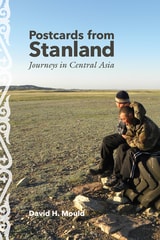
Postcards from Stanland
Journeys in Central AsiaDavid H. Mould
Ohio University Press, 2015
Central Asia has long stood at the crossroads of history. It was the staging ground for the armies of the Mongol Empire, for the nineteenth-century struggle between the Russian and British empires, and for the NATO campaign in Afghanistan. Today, multinationals and nations compete for the oil and gas reserves of the Caspian Sea and for control of the pipelines. Yet “Stanland” is still, to many, a terra incognita, a geographical blank.
Beginning in the mid-1990s, academic and journalist David Mould’s career took him to the region on Fulbright Fellowships and contracts as a media trainer and consultant for UNESCO and USAID, among others. In Postcards from Stanland, he takes readers along with him on his encounters with the people, landscapes, and customs of the diverse countries—Kazakhstan, Kyrgyzstan, Tajikistan, and Uzbekistan—he came to love. He talks with teachers, students, politicians, environmental activists, bloggers, cab drivers, merchants, Peace Corps volunteers, and more.
Until now, few books for a nonspecialist readership have been written on the region, and while Mould brings his own considerable expertise to bear on his account—for example, he is one of the few scholars to have conducted research on post-Soviet media in the region—the book is above all a tapestry of place and a valuable contribution to our understanding of the post-Soviet world.
Postcolonial Configurations
Dictatorship, the Racial Cold War, and Filipino AmericaJosen Masangkay Diaz
Duke University Press, 2023
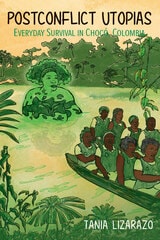
Postconflict Utopias
Everyday Survival in Chocó, ColombiaTania Lizarazo
University of Illinois Press, 2024
A merger of eyewitness accounts and theory, Postconflict Utopias explores the links between lived knowledge and survival while revealing the power unleashed when women ask the simple question, “Why not?”
Poverty and Wealth in East Africa
A Conceptual HistoryRhiannon Stephens
Duke University Press, 2022
Poverty and the Quest for Life
Spiritual and Material Striving in Rural IndiaBhrigupati Singh
University of Chicago Press, 2015
The Indian subdistrict of Shahabad, located in the dwindling forests of the southeastern tip of Rajasthan, is an area of extreme poverty. Beset by droughts and food shortages in recent years, it is the home of the Sahariyas, former bonded laborers, officially classified as Rajasthan’s only “primitive tribe.” From afar, we might consider this the bleakest of the bleak, but in Poverty and the Quest for Life, Bhrigupati Singh asks us to reconsider just what quality of life means. He shows how the Sahariyas conceive of aspiration, advancement, and vitality in both material and spiritual terms, and how such bridging can engender new possibilities of life.
Singh organizes his study around two themes: power and ethics, through which he explores a complex terrain of material and spiritual forces. Authority remains contested, whether in divine or human forms; the state is both despised and desired; high and low castes negotiate new ways of living together, in conflict but also cooperation; new gods move across rival social groups; animals and plants leave their tracks on human subjectivity and religiosity; and the potential for vitality persists even as natural resources steadily disappear. Studying this milieu, Singh offers new ways of thinking beyond the religion-secularism and nature-culture dichotomies, juxtaposing questions about quality of life with political theologies of sovereignty, neighborliness, and ethics, in the process painting a rich portrait of perseverance and fragility in contemporary rural India.
Power & Persuasion Late Antiquity
Towards A Christian EmpirePeter Brown
University of Wisconsin Press, 1992
Power and Everyday Life
The Lives of Working Women in Nineteenth-Century BrazilDias, Maria Odila Silva
Rutgers University Press, 1995
This important new work is a study of the everyday lives of the inhabitants of São Paulo in the nineteenth century. Full of vivid detail, the book concentrates on the lives of working women--black, white, Indian, mulatta, free, freed, and slaves, and their struggles to survive. Drawing on official statistics, and on the accounts of travelers and judicial records, the author paints a lively picture of the jobs, both legal and illegal, that were performed by women. Her research leads to some surprising discoveries, including the fact that many women were the main providers for their families and that their work was crucial to the running of several urban industries. This book, which is a unique record of women’s lives across social and race strata in a multicultural society, should be of interest to students and researchers in women’s studies, urban studies, historians, geographers, economists, sociologists, and anthropologists.
Power and Everyday Life
The Lives of Working Women in Nineteenth-Century BrazilDias, Maria Odila Silva
Rutgers University Press, 1995
This important new work is a study of the everyday lives of the inhabitants of São Paulo in the nineteenth century. Full of vivid detail, the book concentrates on the lives of working women--black, white, Indian, mulatta, free, freed, and slaves, and their struggles to survive. Drawing on official statistics, and on the accounts of travelers and judicial records, the author paints a lively picture of the jobs, both legal and illegal, that were performed by women. Her research leads to some surprising discoveries, including the fact that many women were the main providers for their families and that their work was crucial to the running of several urban industries. This book, which is a unique record of women’s lives across social and race strata in a multicultural society, should be of interest to students and researchers in women’s studies, urban studies, historians, geographers, economists, sociologists, and anthropologists.
Power and Powerlessness
Quiescence and Rebellion in an Appalachian ValleyJohn Gaventa
University of Illinois Press, 1980
Using Clear Fork Valley in central Appalachia as an empirical example, Gaventa attempts to discern the "hidden faces of power" - those forces which shape actions and consciousness in ways not readily apparent in formal American political processes. He seeks to clarify and expand upon past theories (by such writers as Bachrach and Lukes) on the nature and maintenance of power.
The region studied here is characterized by stark incongruity - the co-existence of massive natural wealth (coal and land) with pervasive human poverty attended by high unemployment, limited education, malnutrition, and the prevalent hazards of mining coal: black lung, dismemberment, death, and ecological ruin. This has been the region's status quo under the decades of domination by a British company and its absentee owners. Despite these departure conditions and frequently violent union struggles, culminating in the 1969 murder of UMW reformist Jock Yablonski, acquiescence to this status quo has been maintained. Gaventa searches out the answers to how and why wealth and poverty continue to coexist and the powerless continue to accede to the powerful. His astute analysis poses broader questions about the politics of poverty, working-class consciousness, and corporate power in America.
Power and Society in Greater NY
David C. Hammack
Russell Sage Foundation, 1982
Power in the Blood
A Family NarrativeLinda Tate
Ohio University Press, 2009
Power in the Blood: A Family Narrative traces Linda Tate’s journey to rediscover the Cherokee-Appalachian branch of her family and provides an unflinching examination of the poverty, discrimination, and family violence that marked their lives. In her search for the truth of her own past, Tate scoured archives, libraries, and courthouses throughout Kentucky, Tennessee, Alabama, Illinois, and Missouri, visited numerous cemeteries, and combed through census records, marriage records, court cases, local histories, old maps, and photographs. As she began to locate distant relatives — fifth, sixth, seventh cousins, all descended from her great-greatgrandmother Louisiana — they gathered in kitchens and living rooms, held family reunions, and swapped stories. A past that had long been buried slowly came to light as family members shared the pieces of the family’s tale that had been passed along to them.
Power in the Blood is a dramatic family history that reads like a novel, as Tate’s compelling narrative reveals one mystery after another. Innovative and groundbreaking in its approach to research and storytelling, Power in the Blood shows that exploring a family story can enhance understanding of history, life, and culture and that honest examination of the past can lead to healing and liberation in the present.
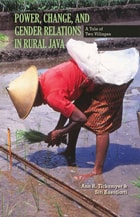
Power, Change, and Gender Relations in Rural Java
A Tale of Two VillagesAnn R. Tickamyer
Ohio University Press, 2012
Women’s status in rural Java can appear contradictory to those both inside and outside the culture. In some ways, women have high status and broad access to resources, but other situations suggest that Javanese women lack real power and autonomy. Javanese women have major responsibilities in supporting their families and controlling household finances. They may also own and manage their own property. Yet these symbols and potential sources of independence and influence are determined by a culturally prescribed, state-reinforced, patriarchal gender ideology that limits women’s autonomy. Power, Change, and Gender Relations in Rural Java examines this contradiction as well as sources of stability and change in contemporary Javanese gender relations.
The authors conducted their research in two rural villages in Yogyakarta, Indonesia, during three important historical and political periods: the end of the New Order regime; the transitional period of reformation; and the subsequent establishment of a democratic government. Their collaboration brings a unique perspective, analyzing how gender is constructed and reproduced and how power is exercised as Indonesia faces the challenges of building a new social order.
Power, Protest, and the Public Schools
Jewish and African American Struggles in New York CityMelissa F. Weiner
Rutgers University Press, 2012
Powerless
The People's Struggle for EnergyDiana Hernández
Russell Sage Foundation, 2025
Approximately one in ten households in the U.S. are energy insecure and four in ten are at risk for energy insecurity. These statistics alone do not convey the acute pain of utility shutoffs, or the relentless toll of chronic energy hardships marked by difficult choices and harsh living conditions. Drawing on survey data and interviews with one hundred energy-insecure individuals and families, Hernández and Laird detail the experience of energy insecurity. Individuals and families suffering from energy insecurity endure economic hardships, such as difficulty paying utility bills, utility debt, and disconnection from utility services. They also struggle with physical challenges, such as poor housing conditions and poor or dysfunctional heating and cooling systems. They are often forced to make difficult choices about what bills to pay. These decisions are sometimes referred to as “heat or eat?” choices, as families cannot afford to pay for heating and food at the same time. Energy insecure individuals and families employ a variety of strategies to keep energy costs down to avoid having to make these hard choices. This includes deliberate underconsumption of energy, enduring physical discomfort, and using dangerous alternatives such as open flames, ovens, or space heaters to try to maintain a comfortable temperature in their home. To be energy insecure is to suffer. Despite the heavy toll of energy insecurity, most people confront these difficulties behind closed doors, believing it is a private matter. Thus, the enormous social crisis of energy insecurity goes unnoticed.
Hernández and Laird argue that household energy is a basic human right and detail policies and practices that would expand access to consistent, safe, clean, and affordable energy. Their proposals include improving the current energy safety net, which is limited and often does not serve the most energy insecure due to stringent program requirements and administrative burdens. They also suggest redesigning rates to accommodate income, promoting enrollment and expansion of discount programs, reforming utility disconnection policies, improving energy literacy, and ensuring an equitable shift to renewable energy resources.
Powerless creates a comprehensive picture of the complex social and environmental issue of energy insecurity and shows how energy equity is not just an aspiration but an achievable reality.
Practicing Community
Class Culture and Power in an Urban NeighborhoodBy Rhoda H. Halperin
University of Texas Press, 1998
Cincinnati's East End river community has been home to generations of working-class people. This racially mixed community has roots that reach back as far as seven generations. But the community is vulnerable. Developers bulldoze "raggedy" but affordable housing to build upscale condos, even as East Enders fight to preserve the community by participating in urban development planning controlled by powerful outsiders.
This book portrays how East Enders practice the preservation of community. Drawing on more than six years of anthropological research and advocacy in the East End, Rhoda Halperin argues for redefining community not merely as a place, but as a set of culturally embedded and class-marked practices that give priority to caring for children and the elderly, procuring livelihood, and providing support for family, friends, and neighbors. These practices create the structures of community within the larger urban power structure.
Halperin uses different genres to weave the voices of East Enders throughout the book. Poems and narratives offer poignant insights into the daily struggles against impersonal market forces that work against the struggle for livelihood. This firsthand account questions commonly held assumptions about working-class people. In a fresh way, it reveals the cultural construction of marginality, from the viewpoints of both "real East Enders" and the urban power structure.
Prayers for the People
Homicide and Humanity in the Crescent CityRebecca Louise Carter
University of Chicago Press, 2019
Inspired by ministers and guided by grieving mothers who hold birthday parties for their deceased sons, Prayers for the People traces the emergence of a powerful new African American religious ideal at the intersection of urban life, death, and social and spiritual change. Carter frames this sensitive ethnography within the complex history of structural violence in America—from the legacies of slavery to free but unequal citizenship, from mass incarceration and overpolicing to social abandonment and the unequal distribution of goods and services. And yet Carter offers a vision of restorative kinship by which communities of faith work against the denial of Black personhood as well as the violent severing of social and familial bonds. A timely directive for human relations during a contentious time in America’s history, Prayers for the People is also a hopeful vision of what an inclusive, nonviolent, and just urban society could be.
Precarious Democracy
Ethnographies of Hope, Despair, and Resistance in BrazilBenjamin Junge
Rutgers University Press, 2021
Precarious Japan
Anne Allison
Duke University Press, 2013
Precarious Motherhood
Navigating Relationships and Support Post-Migration in the UKRachel Benchekroun
University College London, 2025
Precarious Motherhood is a deeply human investigation of the lives of racially minoritized mothers as they navigate the intersecting challenges of financial hardship and the UK’s hostile immigration policies. Based on thorough ethnographic research, Rachel Benchekroun examines how these mothers forge relationships to access support, maintain their children’s well-being, and carve out spaces of belonging in an often unwelcoming system. The book captures the resilience and the relentless precarity of motherhood in migration, where every relationship shapes social barriers and everyday survival.
Through the voices of over twenty migrant mothers, this work sheds light on the personal and political dimensions of motherhood. It provides critical insights into state policies and social infrastructures that shape migrant lives, making it a valuable resource for scholars of migration and social justice.
Precarious Privilege
Race and the Middle-Class Immigrant ExperienceIrene Browne
Russell Sage Foundation, 2024
Browne finds that when asked to identify themselves by race, these immigrants either reject racial identities entirely or draw on belief systems from Mexico and the Dominican Republic that emphasize European-indigenous mixed race identities. When branded as typical Latines in the U.S., Mexican middle-class immigrants emphasize their social class or explain that a typical Latine can be middle-class, while Dominicans simply indicate that they are not Mexican. Rather than blame systemic racism, both Mexican and Dominican middle-class immigrants often attribute misperceptions of their identity to non-Latines’ ignorance or to individual Latines’ lack of effort in trying to assimilate.
But these middle-class Latine immigrants do not simply seek to position themselves on par with the U.S.-born white middle class. Instead, they leverage their cosmopolitanism—for example, their multilingualism or their children’s experiences traveling abroad—to engage in what Browne calls “one-up assimilation,” a strategy that aims to position them above the white middle class, who are often monolingual and unaware of the world outside the United States. Middle-class Latines’ cosmopolitanism and valuing of diversity also lead them to have cordial relations with African Americans, but these immigrants do not see themselves as sharing African Americans’ status as oppressed minorities.
Although the stereotype of the typical Latine has made middle-class Latine immigrants susceptible to stigma, they insist that this stigma does not play a significant role in their lives. In many cases, they view the stereotype as a minor issue, feel that opportunities for upward mobility outweigh any negative experiences, or downplay racism by emphasizing their class privilege. Browne observes that while downplaying racism may help middle-class Latine immigrants maintain their dignity, it also perpetuates inequality by reinforcing the lower status of working-class undocumented immigrants. It is thus imperative, Browne argues, to repeal harsh anti-immigration policies, a move that will not only ease the lives of the undocumented but also send a message about who belongs in the country.
Offering a nuanced exploration of how race, social class, and immigration status intersect, Precarious Privilege provides a complex portrait of middle-class Latine immigrants in the United States today.
Precarious Professionals
Gender, Identities and Social Change in Modern BritainEdited by Heidi Egginton and Zoë Thomas
University of London Press, 2021
Precarious Professionals uncovers the inequalities and insecurities which lay at the heart of professional life in nineteenth and twentieth-century Britain. This book challenges conventional categories in the history of work, exploring instead the everyday labor of maintaining a professional identity on the margins of the traditional professions. Situating new historical perspectives on gender at the forefront of their research, the contributors explore how professional cultures could not only define themselves against but often flourished outside of, the confines of patriarchal codes and structures.
Precarious Professionals offers twelve fascinating case studies, ranging between the 1840s and the 1960s. From pioneering female lawyers and scientists to ballet dancers, secretaries, historians, humanitarian relief workers, social researchers, and Cold War diplomats, this book reveals that precarity was a thread woven throughout the very fabric of modern professional life. Together, these essays enrich our understanding of the histories and mysteries of professional identity and help us to reimagine the future of work in precarious times.
Precarious Rhetorics
Edited by Wendy S. Hesford, Adela C. Licona, and Christa Teston
The Ohio State University Press, 2018
This collection features cross-disciplinary contributions from leading scholars, including the editors of the volume as well as James J. Brown Jr., Gale Coskan-Johnson, Ronald Greene, Lavinia Hirsu, Arabella Lyon, Louis Maraj, Sara McKinnon, Alexandra Schultheis Moore, Kimberlee Pérez, Margaret Price, Amy Shuman, Kristin Swenson, Becca Tarsa, and Belinda Walzer. Chapters emphasize a materialist-rhetorical approach while also drawing on feminist studies, women of color feminisms, affect studies, critical disability studies, critical race and ethnic studies, medical humanities, sexuality studies, queer migration studies, and human rights and humanitarian studies. While theoretically rich, this volume intentionally features chapters that explore precarious rhetorics as they operate in practice—whether in borderlands, politics, public policy, or the quotidian spaces of human activity, such as school, work, social media, and medicine.
Precarity and Belonging
Labor, Migration, and NoncitizenshipCatherine S. Ramírez
Rutgers University Press, 2021
Predatory Economies
The Sanema and the Socialist State in Contemporary AmazoniaAmy Penfield
University of Texas Press, 2023
2024 Honorable Mention, Fernando Coronil Prize, Latin American Studies Association, Section on Venezuelan Studies
A study of the modes of predation used by and against the Sanema people of Venezuela.
Predation is central to the cosmology and lifeways of the Sanema-speaking Indigenous people of Venezuelan Amazonia, but it also marks their experience of modernity under the socialist “Bolivarian” regime and its immense oil wealth. Yet predation is not simply violence and plunder. For Sanema people, it means a great deal more: enticement, seduction, persuasion. It suggests an imminent threat but also opportunity and even sanctuary.
Amy Penfield spent two and a half years in the field, living with and learning from Sanema communities. She discovered that while predation is what we think it is—invading enemies, incursions by gold miners, and unscrupulous state interventions—Sanema are not merely prey. Predation, or appropriation without reciprocity, is essential to their own activities. They use predatory techniques of trickery in hunting and shamanism activities, while at the same time, they employ tactics of manipulation to obtain resources from neighbors and from the state. A richly detailed ethnography, Predatory Economies looks beyond well-worn tropes of activism and resistance to tell a new story of agency from an Indigenous perspective.

Predatory Welfare
Debt, Race, and Cash TransfersErin Torkelson
Duke University Press, 2026
Pregnant on Arrival
Making the Illegal ImmigrantEithne Luibhéid
University of Minnesota Press, 2013
“State alert as pregnant asylum seekers aim for Ireland.” “Country Being Held Hostage by Con Men, Spongers, and Those Taking Advantage of the Maternity Residency Policy.” From 1997 to 2004, headlines such as these dominated Ireland’s mainstream media as pregnant immigrants were recast as “illegals” entering the country to gain legal residency through childbirth. As immigration soared, Irish media and politicians began to equate this phenomenon with illegal immigration that threatened to destroy the country’s social, cultural, and economic fabric.
Pregnant on Arrival explores how pregnant immigrants were made into paradigmatic figures of illegal immigration, as well as the measures this characterization set into motion and the consequences for immigrants and citizens. While focusing on Ireland, Eithne Luibhéid’s analysis illuminates global struggles over the citizenship status of children born to immigrant parents in countries as diverse as the United States, Hong Kong, and elsewhere. Scholarship on the social construction of the illegal immigrant calls on histories of colonialism, global capitalism, racism, and exclusionary nation building but has been largely silent on the role of nationalist sexual regimes in determining legal status. Eithne Luibhéid turns to queer theory to understand how pregnancy, sexuality, and immigrants’ relationships to prevailing sexual norms affect their chances of being designated as legal or illegal.
Pregnant on Arrival offers unvarnished insight into how categories of immigrant legal status emerge and change, how sexual regimes figure prominently in these processes, and how efforts to prevent illegal immigration ultimately redefine nationalist sexual norms and associated racial, gender, economic, and geopolitical hierarchies.