Results by title
2194 books match the query 'Women's Studies' and 92 start with p
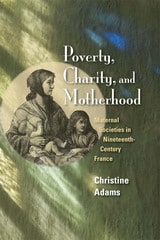
Poverty, Charity, and Motherhood
Maternal Societies in Nineteenth-Century FranceChristine Adams
University of Illinois Press, 2010
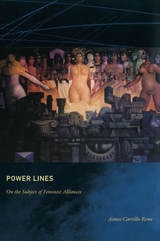
Power Lines
On the Subject of Feminist AlliancesAimee Carrillo Rowe
Duke University Press, 2008
Combining theory, criticism, and narrative nonfiction, Carrillo Rowe develops a politics of relation that encourages the formation of feminist alliances across racial and other boundaries within academia. Such a politics of relation is founded on her belief that our subjectivities emerge in community; our affective investments inform and even create our political investments. Thus experience, consciousness, and agency must be understood as coalitional rather than individual endeavors. Carrillo Rowe’s conversations with academic feminists reveal that women who restrict their primary allies to women of their same race tend to have limited notions of feminism, whereas women who build transracial alliances cultivate more nuanced, intersectional, and politically transformative feminisms. For Carrillo Rowe, the institutionalization of feminism is not so much an achievement as an ongoing relational process. In Power Lines, she offers a set of critical, practical, and theoretical tools for building and maintaining transracial feminist alliances.
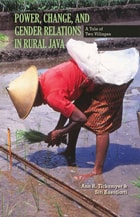
Power, Change, and Gender Relations in Rural Java
A Tale of Two VillagesAnn R. Tickamyer
Ohio University Press, 2012
Women’s status in rural Java can appear contradictory to those both inside and outside the culture. In some ways, women have high status and broad access to resources, but other situations suggest that Javanese women lack real power and autonomy. Javanese women have major responsibilities in supporting their families and controlling household finances. They may also own and manage their own property. Yet these symbols and potential sources of independence and influence are determined by a culturally prescribed, state-reinforced, patriarchal gender ideology that limits women’s autonomy. Power, Change, and Gender Relations in Rural Java examines this contradiction as well as sources of stability and change in contemporary Javanese gender relations.
The authors conducted their research in two rural villages in Yogyakarta, Indonesia, during three important historical and political periods: the end of the New Order regime; the transitional period of reformation; and the subsequent establishment of a democratic government. Their collaboration brings a unique perspective, analyzing how gender is constructed and reproduced and how power is exercised as Indonesia faces the challenges of building a new social order.
Practicing Feminisms, Reconstructing Psychology
Notes on a Liminal ScienceJill Morawski
University of Michigan Press, 1994
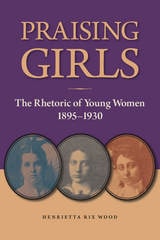
Praising Girls
The Rhetoric of Young Women, 1895-1930Henrietta Rix Wood
Southern Illinois University Press, 2016
The site of the study—Kansas City, Missouri—reflects the diverse rhetorical experiences of girls in cities across the United States at the beginning of the last century. Four case studies examine the writing of privileged white girls at a college preparatory school, Native American girls at an off-reservation boarding school, African American girls at a segregated high school, and working- and middle-class girls at a large whites-only public high school. Wood’s analysis reveals a contemporary concept of epideictic rhetoric that accounts for issues of gender, race, class, and age.

Precious Fire
Maud Russell and the Chinese RevolutionKaren Garner
University of Massachusetts Press, 0

Predecessors, Et Cetera
EssaysAmy Clampitt
University of Michigan Press, 1991
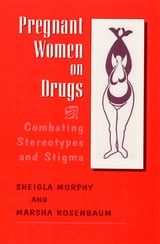
Pregnant Women on Drugs
Combating Stereotypes and StigmaRosenbaum, Marsha
Rutgers University Press, 1998
Sociologists Murphy and Rosenbaum interviewed over 120 women who had children while using drugs. Their interviews reveal how the women became addicted, how they may or may not have modified their behavior to protect their children, and how they have dealt with having children and losing them as a result of their addiction. Not all the women interviewed were from abusive or poor families; there is extensive information on how the study population was selected. Also included are suggestions on how to deal with the problem, including women-centered drug treatment and training programs to help women learn trades as well as parenting skills. Though the interviews are enlightening, readers may wish for more answers to the question of how to deal with the root problem and less about the problems drug-addicted mothers face. For academic libraries, especially those with women's studies and sociology collections.?Danna C. Bell-Russel, Natl. Equal Justice Lib., Washington, DC
Review
A powerful refuation of the media-hype stereotypes of pregnant drug users as selfish and unfeeling, Pregnant Women on Drugs shows the extent to which many drug-using women develop the motivation to achieve their dual goals of improving their children's health and maintaining maternal custody. -- Steven R. Kandall, M.D., F.A.A.P., and author Substance and Shadow: Women and Addiction in the United States
Research-based but intensely personal. . . You will be touched by the poignant descriptions about the real lives of pregnant women on drugs. . . Pertinent reading for researchers, clinicians, and all Americans. -- Loretta P. Finnegan, M.D., researcher and perinatal addiction specialist
Touching and informative. . . Drug-addicted women who have either been ignored or reviled are finally given voice to tell their own stories. Their sad, true, and quintessentially human experiences provide persuasive arguments for compassion and supportive approaches to the problems of substance abuse and pregnancy. -- Lynn Paltrow, civil liberties and reproductive freedom attorney

Pregnant on Arrival
Making the Illegal ImmigrantEithne Luibhéid
University of Minnesota Press, 2013
“State alert as pregnant asylum seekers aim for Ireland.” “Country Being Held Hostage by Con Men, Spongers, and Those Taking Advantage of the Maternity Residency Policy.” From 1997 to 2004, headlines such as these dominated Ireland’s mainstream media as pregnant immigrants were recast as “illegals” entering the country to gain legal residency through childbirth. As immigration soared, Irish media and politicians began to equate this phenomenon with illegal immigration that threatened to destroy the country’s social, cultural, and economic fabric.
Pregnant on Arrival explores how pregnant immigrants were made into paradigmatic figures of illegal immigration, as well as the measures this characterization set into motion and the consequences for immigrants and citizens. While focusing on Ireland, Eithne Luibhéid’s analysis illuminates global struggles over the citizenship status of children born to immigrant parents in countries as diverse as the United States, Hong Kong, and elsewhere. Scholarship on the social construction of the illegal immigrant calls on histories of colonialism, global capitalism, racism, and exclusionary nation building but has been largely silent on the role of nationalist sexual regimes in determining legal status. Eithne Luibhéid turns to queer theory to understand how pregnancy, sexuality, and immigrants’ relationships to prevailing sexual norms affect their chances of being designated as legal or illegal.
Pregnant on Arrival offers unvarnished insight into how categories of immigrant legal status emerge and change, how sexual regimes figure prominently in these processes, and how efforts to prevent illegal immigration ultimately redefine nationalist sexual norms and associated racial, gender, economic, and geopolitical hierarchies.
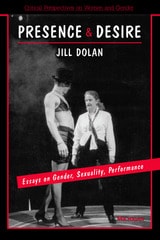
Presence and Desire
Essays on Gender, Sexuality, PerformanceJill Dolan
University of Michigan Press, 1993
This book critically bridges feminist theory and theatrical practice. Dolan examines how performance can subvert normative constructs of gender and sexuality. The collection evaluates mainstream theater, academic stages, subcultural venues, and performance in daily life. It centers sexuality as a primary analytical framework to explore queer visibility and cultural representation. It bridges contemporary feminist theory, poststructuralism, and theatrical practice and places sexuality at the center of its analytical framework to explore how theatrical representation can subvert normative constructs of gender and desire. Dolan evaluates a vast spectrum of performance spaces—ranging from mainstream professional and academic stages to subcultural venues, pornography, and everyday social interactions—to champion queer visibility and claim recognition for women's bodies. Ultimately, the volume functions as a foundational text in performance studies and LGBTQ+ cultural criticism, demonstrating how deliberate theatrical strategies can provoke American culture to actively dismantle and reimagine its traditional social relations
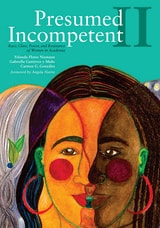
Presumed Incompetent II
Race, Class, Power, and Resistance of Women in AcademiaYolanda Flores Niemann
Utah State University Press, 2020
The courageous and inspiring personal narratives and empirical studies in Presumed Incompetent II: Race, Class, Power, and Resistance of Women in Academia name formidable obstacles and systemic biases that all women faculty—from diverse intersectional and transnational identities and from tenure track, terminal contract, and administrative positions—encounter in their higher education careers. They provide practical, specific, and insightful guidance to fight back, prevail, and thrive in challenging work environments. This new volume comes at a crucial historical moment as the United States grapples with a resurgence of white supremacy and misogyny at the forefront of our social and political dialogues that continue to permeate the academic world.
Contributors: Marcia Allen Owens, Sarah Amira de la Garza, Sahar Aziz, Jacquelyn Bridgeman, Jamiella Brooks, Lolita Buckner Inniss, Kim Case, Donna Castaneda, Julia Chang, Meredith Clark, Meera Deo, Penelope Espinoza, Yvette Flores, Lynn Fujiwara, Jennifer Gomez, Angela Harris, Dorothy Hines, Rachelle Joplin, Jessica Lavariega Monforti, Cynthia Lee, Yessenia Manzo, Melissa Michelson, Susie E. Nam, Yolanda Flores Niemann, Jodi O’Brien, Amelia Ortega, Laura Padilla, Grace Park, Stacey Patton, Desdamona Rios, Melissa Michal Slocum, Nellie Tran, Rachel Tudor, Pamela Tywman Hoff, Adrien Wing, Jemimah Li Young

Pretty Good for a Girl
Women in BluegrassMurphy Henry
University of Illinois Press, 2013

Pretty Modern
Beauty, Sex, and Plastic Surgery in BrazilAlexander Edmonds
Duke University Press, 2010
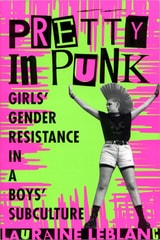
Pretty in Punk
Girl's Gender Resistance in a Boy's SubcultureLeblanc, Lauraine
Rutgers University Press, 1999
Pretty in Punk combines autobiography, interviews, and sophisticated analysis to create the first insider’s examination of the ways punk girls resist gender roles and create strong identities.
Why would an articulate, intelligent, thoughtful young women shave off most of her hair, dye the remainder green, shape it into a mohawk, and glue it onto her head? What attracts girls to male-dominated youth subcultures like the punk movement? What role does the subculture play in their perceptions of themselves, and in their self-esteem? How do girls reconcile a subcultural identity that is deliberately coded “masculine” with the demands of femininity?
Research has focused on the ways media and cultural messages victimize young women, but little attention has been paid to the ways they resist these messages. In Pretty in Punk, Lauraine Leblanc examines what happens when girls ignore these cultural messages, parody ideas of beauty, and refuse to play the games of teenage femininity. She explores the origins and development of the punk subculture, the processes by which girls decide to “go punk,” patterns of resistance to gender norms, and tactics girls use to deal with violence and harassment.
Pretty in Punk takes readers into the lives of girls living on the margins of contemporary culture. Drawing on interviews with 40 girls and women between the ages of 14-37, Leblanc examines the lives of her subjects, illuminating their forms of rebellion and survival. Pretty in Punk lets readers hear the voices of these women as they describe the ways their constructions of femininity—from black lipstick to slamdancing—allow them to reject damaging cultural messages and build strong identities. The price they pay for resisting femininity can be steep—girls tell of parental rejection, school expulsion, institutionalization, and harassment. Leblanc illuminates punk girls’ resistance to adversity, their triumphs over tough challenges, and their work to create individual identities in a masculine world.

Pretty/Funny
Women Comedians and Body PoliticsBy Linda Mizejewski
University of Texas Press, 2014
Women in comedy have traditionally been pegged as either “pretty” or “funny.” Attractive actresses with good comic timing such as Katherine Hepburn, Lucille Ball, and Julia Roberts have always gotten plum roles as the heroines of romantic comedies and television sitcoms. But fewer women who write and perform their own comedy have become stars, and, most often, they’ve been successful because they were willing to be funny-looking, from Fanny Brice and Phyllis Diller to Lily Tomlin and Carol Burnett. In this pretty-versus-funny history, women writer-comedians—no matter what they look like—have ended up on the other side of “pretty,” enabling them to make it the topic and butt of the joke, the ideal that is exposed as funny.
Pretty/Funny focuses on Kathy Griffin, Tina Fey, Sarah Silverman, Margaret Cho, Wanda Sykes, and Ellen DeGeneres, the groundbreaking women comics who flout the pretty-versus-funny dynamic by targeting glamour, postfeminist girliness, the Hollywood A-list, and feminine whiteness with their wit and biting satire. Linda Mizejewski demonstrates that while these comics don’t all identify as feminists or take politically correct positions, their work on gender, sexuality, and race has a political impact. The first major study of women and humor in twenty years, Pretty/Funny makes a convincing case that women’s comedy has become a prime site for feminism to speak, talk back, and be contested in the twenty-first century.

Primal Screams
How the Sexual Revolution Created Identity PoliticsEberstadt, Mary
Templeton Press, 2021
Who am I? The question today haunts every society in the Western world.
Legions of people—especially the young—have become unmoored from a firm sense of self. To compensate, they join the ranks of ideological tribes spawned by identity politics and react with frenzy against any perceived threat to their group.
As identitarians track and expose the ideologically impure, other citizens face the consequences of their rancor: a litany of “isms” run amok across all levels of cultural life, the free marketplace of ideas muted by agendas shouted through megaphones, and a spirit of general goodwill warped into a state of perpetual outrage.
How did we get here? Why have we divided against one another so bitterly? In Primal Screams, acclaimed cultural critic Mary Eberstadt presents the most provocative and original theory to come along in recent years. The rise of identity politics, she argues, is a direct result of the fallout of the sexual revolution, especially the collapse and shrinkage of the family.
As Eberstadt illustrates, humans have forged their identities within the kinship structure from time immemorial. The extended family, in a real sense, is the first tribe and teacher. But with its unprecedented decline across various measures, generations of people have been set adrift and can no longer answer the question Who am I? concerning primordial ties. Desperate for solidarity and connection, they claim membership in politicized groups whose displays of frantic irrationalism amount to primal screams for familial and communal loss.
Written in her impeccable style and with empathy rarely encountered in today’s divisive discourse, Eberstadt’s theory holds immense explanatory power that no serious citizen can afford to ignore. The book concludes with three incisive essays by Rod Dreher, Mark Lilla, and Peter Thiel, each sharing their perspective on the author’s formidable argument.
Primary Lessons
Sarah Bracey White
CavanKerry Press, 2013
Private Bodies, Public Texts
Race, Gender, and a Cultural BioethicsKarla FC Holloway
Duke University Press, 2011
Private Screenings
Television and the Female ConsumerLynn Spigel
University of Minnesota Press, 1992
Profiles in Diversity
Women in the New South AfricaPatricia Romero
Michigan State University Press, 1998
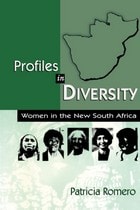
A revealing oral history collection, Profiles in Diversity contains in-depth interviews of twenty-six women in South Africa from different racial, class, and age backgrounds. Conducted in Johannesburg, Pretoria, Bloemfontein, Vryburg, Cape Town, Port Elizabeth, Grahamstown, Durban, and a rural section of Kwa-Zulu Natal, these life histories encompass diverse experiences ranging from a squatter in a township outside Cape Town to an ANC activist in Port Elizabeth, who lost three sons to the struggle for democracy and who herself was imprisoned several times during what many in South Africa now refer to as the "civil war."
Nearly all of these women describe their formative years spent growing up in South Africa's segregated society. Three young black students discuss the hardships they experienced in an unequal educational system as well as aspects of segregation in their childhood. They are joined in their memories and hopes for the future by two mature women—one now a high court judge in Durban and the other a linguist at the University of South Africa in Pretoria—both of whom studied at Harvard in the United States. Nancy Charton, the first woman ordained as an Anglican priest in South Africa, speaks about her past and what led her, in her early seventies, to a vocation in the church.
Three Afrikaner women, including one in her late twenties, speak about growing up in South Africa and articulate their concerns for a future that, in some respects, differs from the predictions of their English-speaking or black sisters. Two now-deceased members of the South African Communist Party provide disparate accounts of what led them to lives of active opposition to the discrimination that marked the lives of people of color, long before apartheid became embedded in South Africa's legal system. Also included is an account by Dr. Goonam, an Indian woman who grew up in relative comfort in the then province of Natal, while Ray Alexander discusses how she witnessed the tyranny visited on the Jews of her native Latvia before immigrating to the Cape.
Proper Women
Feminism and the Politics of Respectability in IranFae Chubin
Temple University Press, 2024
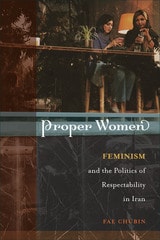
Chubin brings attention to the varying class, ethnic, religious, and national identities of NGO staff and clients that shaped their differing understandings of oppression and justice. Her examination of the tensions within the organization reveals why the efforts of the NGO workers failed to gain purchase among the intended beneficiaries.
Proper Women concludes by encouraging feminist activists to not only examine the role of local politics and transnational connections in shaping their definitions of empowerment, but also consider the advantages of a justice-enhancing practice as opposed to justice monism for their target populations.
Prophesying Daughters
Black Women Preachers and the Word, 1823-1913Chanta M. Haywood
University of Missouri Press, 2003
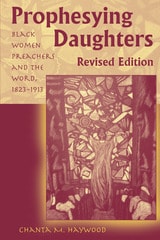
In nineteenth-century America, many black women left their homes, their husbands, and their children to spread the Word of God. Descendants of slaves or former “slave girls” themselves, they traveled all over the country, even abroad, preaching to audiences composed of various races, denominations, sexes, and classes, offering their own interpretations of the Bible. When they were denied the pulpit because of their sex, they preached in tents, bush clearings, meeting halls, private homes, and other spaces. They dealt with domestic ideologies that positioned them as subservient in the home, and with racist ideologies that positioned them as naturally inferior to whites. They also faced legalities restricting blacks socially and physically and the socioeconomic reality of often being part of a large body of unskilled laborers.
Jarena Lee, Julia Foote, Maria Stewart, and Frances Gaudet were four women preachers who endured such hardships because of their religious convictions. Often quoting from the scripture, they insisted that they were indeed prophesying daughters whom God called upon to preach. Significantly, many of these women preachers wrote autobiographies in which they present images of assertive, progressive, pious women—steadfast and unmovable in their religious beliefs and bold in voicing their concerns about the moral standing of their race and society at large.
Chanta M. Haywood examines these autobiographies to provide new insight into the nature of prophesying, offering an alternative approach to literature with strong religious imagery. She analyzes how these four women employed rhetorical and political devices in their narratives, using religious discourse to deconstruct race, class, and gender issues of the nineteenth century.
By exploring how religious beliefs become an avenue for creating alternative ideologies, Prophesying Daughters will appeal to students and scholars of African American literature, women’s studies, and religious studies.
Prosthetic Memories
Postcolonial Feminisms in a More-Than-Human WorldHyaesin Yoon
Duke University Press, 2025
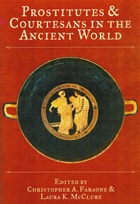
Prostitutes and Courtesans in the Ancient World
Edited by Christopher A. Faraone and Laura K. McClure
University of Wisconsin Press, 2006
Prostitutes and Courtesans in the Ancient World explores the implications of sex-for-pay across a broad span of time, from ancient Mesopotamia to the early Christian period. In ancient times, although they were socially marginal, prostitutes connected with almost every aspect of daily life. They sat in brothels and walked the streets; they paid taxes and set up dedications in religious sanctuaries; they appeared as characters—sometimes admirable, sometimes despicable—on the comic stage and in the law courts; they lived lavishly, consorting with famous poets and politicians; and they participated in otherwise all-male banquets and drinking parties, where they aroused jealousy among their anxious lovers.
The chapters in this volume examine a wide variety of genres and sources, from legal and religious tracts to the genres of lyric poetry, love elegy, and comic drama to the graffiti scrawled on the walls of ancient Pompeii. These essays reflect the variety and vitality of the debates engendered by the last three decades of research by confronting the ambiguous terms for prostitution in ancient languages, the difficulty of distinguishing the prostitute from the woman who is merely promiscuous or adulterous, the question of whether sacred or temple prostitution actually existed in the ancient Near East and Greece, and the political and social implications of literary representations of prostitutes and courtesans.

Prostitution in Medieval Society
The History of an Urban Institution in LanguedocLeah Lydia Otis
University of Chicago Press, 1985
– Catharine R. Stimpson
Prostitution, Power and Freedom
Julia O'Connell Davidson
University of Michigan Press, 1998
The author has conducted an impressive amount of research in nine countries, including conversations with male and female sex tourists, adult and child prostitutes, procurers, and clients. Through her research, O'Connell Davidson demonstrates the complexity of prostitution, arguing that it is not simply an effect of male oppression and violence or insatiable sexual needs, nor is it an unproblematic economic encounter. The book provides a sophisticated explanation of the economic and political inequalities underlying prostitution, but also shows that while prostitution necessarily implies certain freedoms for the clients, the amount of freedom experienced by individual prostititutes varies greatly.
This highly accessible book will be of great interest to those in gender and women's studies, sexuality and cultural studies, the sociology of work and organizations, and social policy. General readers will also appreciate having new ways of thinking about this age-old social phenomenon.
Julia O'Connell Davidson is Lecturer in Sociology, University of Leicester.

Protecting Women
Labor Legislation in Europe, the United States, and Australia, 1880-1920Edited by Ulla Wikander, Alice Kessler-Harris, and Jane Lewis
University of Illinois Press, 1995
Protecting the Spanish Woman
Gender Identity and Empowerment in María de Zayas's WorksXabier Granja Ibarreche
University of Nevada Press, 2023
María de Zayas is unique in the seventeenth century as the only Spanish woman to write a collection of exemplary novels whose quality is often compared to Miguel de Cervantes’ masterful works. Her two main collections of short stories, Novelas amorosas y ejemplares and Desengaños amorosos, encompass a social critique based on literary fiction that exposes flaws in the idealized archetypes of masculine identity in early modern Spain. Zayas’s stories redefine women’s patriarchal disadvantage as a tool to expose the ways in which early modern Spanish women could be empowered to counteract men’s discursive and political authority, which they use to unfairly maintain their own social privilege.
Xabier Granja Ibarreche explores how Zayas defies Spanish hegemony by manipulating and transforming the ideals of courtly masculinity that had been popularized by conduct manuals and the traits they specified for appropriate noble comportment. In doing so, Zayas elaborates a nonofficial discourse throughout plots that subvert patriarchal hierarchies: she rearticulates the existing ideological order to empower women who are no longer willing to remain silent and oppressed by masculine domination after centuries of failing to attain a sufficiently self-sufficient political position to ascend in the social hierarchy. By inverting the male gaze that assumes masculinity as a preeminent identity, Zayas subverts the patriarchal subject/masculine, object/feminine order and destabilizes manly superiority as a basic universal reality, thereby empowering and unshackling Spanish women to liberate Iberian culture from the repressive and pernicious future she forebodes.
Provoking Agents
GENDER AND AGENCY IN THEORY AND PRACTICEEdited by Judith Kegan Gardiner
University of Illinois Press, 1995
dealing with issues of agency. The authors raise issues that are very
important . . . and they raise them as they must be raised--by bridging
theory and action." -- Kathryn Pine Addelson, author of Moral
Passages: Toward a Collectivist Moral Theory
Both the women's liberation movement and those who have studied it characterize
agency as the capacity to make change in individual consciousness, personal
lives, and society. The seventeen contributors to Provoking Agents
explore whether--and how--feminist theory, writing, and other social practices
can help readers move beyond seeing women as a powerless group to effecting
changes in their own lives and, ultimately, becoming social activists.
Topics in this multi-disciplinary collection range from maternal surrogacy
to writing, from consciousness-raising to AIDS activism, from pornography
to local organizing

Public Interests
Media Advocacy and Struggles over U.S. TelevisionPerlman, Allison
Rutgers University Press, 2016
Nearly as soon as television began to enter American homes in the late 1940s, social activists recognized that it was a powerful tool for shaping the nation’s views. By targeting broadcast regulations and laws, both liberal and conservative activist groups have sought to influence what America sees on the small screen. Public Interests describes the impressive battles that these media activists fought and charts how they tried to change the face of American television.

Public Loves, Private Troubles
Migration, Technology, and Intimacy in Rural Indigenous GuatemalaMeghan Farley Webb
University of Alabama Press, 2025
Examines the role of digital technologies in the lives of Kaqchikel Maya women whose husbands work abroad.
Anthropologist Meghan Farley Webb’s ethnography, Public Loves, Private Troubles, uses the lens of cellphones and other digital technologies to unpack marriage, love, sexuality, and family issues of Kaqchikel Maya women who remain in Guatemala while their husbands are part of the transnational migration workforce. Indigenous intimacy has been underexplored in ethnographic literature, and this is among the first books to focus on information technology's impact on intimacy and family in the Maya area. Overall, Webb shows how Maya women are empowered with their more autonomous lives when the husbands are absent but also are constrained by social media monitoring of their activities.
To begin, Webb surveys the Tecpán highland setting and civil war and migration history. She discusses how neoliberal policies are manifested in the financial and emotional stress of having to leave for the United States for economic opportunities. Chapter 1 characterizes the lives of Maya women in Guatemala who “endure” while their husbands are working abroad. Webb describes how marriage, family, and even the Catholic Church shape how the women see themselves and their situations. Chapter 2 delves into the history and use of technologies, such as cellphones and WhatsApp, and how they affect communication in these transnational households. Insight is given to the family and personhood. Chapter 3 focuses on the prominent use of the Facebook platform. Men use the app to conduct extramarital affairs, but the app is also used by couples as a way to express a public performance of devotion and a happy family. Chapter 4 focuses on the surveillance, including malicious gossip, that Kaqchikel women are subjected to especially from their mothers-in-law, who live nearby or in the same household. The narrative culminates in a discussion of how many wives are happier and more empowered without the men at home, yet they still can experience uncertainty, loneliness, and depression.

Public Privates
Performing Gynecology from Both Ends of the SpeculumTerri Kapsalis
Duke University Press, 1997
From J. Marion Sims’s surgical experiments on unanesthetized slave women in the mid-nineteenth century, to the use of cadavers and prostitutes to teach medical students gynecological techniques, Kapsalis focuses on the ways in which women and their bodies have been treated by the medical establishment. Removing gynecology from its private cover within clinic walls and medical textbook pages, she decodes the gynecological exam, seizing on its performative dimension. She considers traditional medical practices and the dynamics of "proper" patient performance; non-traditional practices such as cervical self-exam; and incarnations of the pelvic examination outside the bounds of medicine, including its appearance in David Cronenberg’s film Dead Ringers and Annie Sprinkle’s performance piece "Public Cervix Announcement."
Confounding the boundaries that separate medicine, art, and pornography, revealing the potent cultural attitudes and anxieties about women, female bodies, and female sexuality that permeate the practice of gynecology, Public Privates concludes by locating a venue from which challenging, alternative performances may be staged.
Publishing Women
Salons, the Presses, and the Counter-Reformation in Sixteenth-Century ItalyDiana Robin
University of Chicago Press, 2007
Even the most comprehensive Renaissance histories have neglected the vibrant groups of women writers that emerged in cities across Italy during the mid-1500s—and the thriving network of printers, publishers, and agents that specialized in producing and selling their books. In Publishing Women, Diana Robin finally brings to life this story of women’s cultural and intellectual leadership in early modern Italy, illuminating the factors behind—and the significance of—their sudden dominance.
Focusing on the collective publication process, Robin portrays communities in Naples, Venice, Rome, Siena, and Florence, where women engaged in activities that ranged from establishing literary salons to promoting religious reform. Her innovative cultural history considers the significant roles these women played in tandem with men, rather than separated from them. In doing so, it collapses the borders between women’s history, Renaissance and Reformation studies, and book history to evoke a historical moment that catapulted women’s writings and women-sponsored books into the public sphere for the first time anywhere in Europe.

Publishing the Family
June Howard
Duke University Press, 2001
Publishing the Family describes the sources and controversial outcome of a fascinating literary experiment. Howard embeds the story of The Whole Family in the story of Harper & Brothers’ powerful and pervasive presence in American cultural life, treating the publisher, in effect, as an author.
Each chapter of Publishing the Family casts light on some aspect of life in the United States at a moment that arguably marked the beginning of our own era. Howard revises common views of the turn-of-the-century literary marketplace and discusses the perceived crisis in the family as well as the popular and expert discourses that emerged to remedy it. She also demonstrates how creative women like Bazar editor Elizabeth Jordan blended their own ideas about the “New Woman” with traditional values. Howard places these analyses in the framework of far-reaching historical changes, such as the transformation of the public meaning of emotion and “sentimentality.” Taken together, the chapters in Publishing the Family show how profoundly the modern mapping of social life relies on boundaries between family and business, culture and commerce, which The Whole Family and Publishing the Family constantly unsettle.
Publishing the Family will interest students and scholars of American history, literature, and culture, as well as those studying gender, sexuality, and the family.
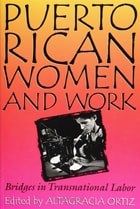
Puerto Rican Women and Work
Bridges in Transnational Laboredited by Altagracia Ortiz
Temple University Press, 1996
Puerto Rican Women and Work: Bridges in Transnational Labor is the only comprehensive study of the role of Puerto Rican women workers in the evolution of a transnational labor force in the twentieth century.
This book examines Puerto Rican women workers, both in Puerto Rico and on the U.S. mainland. It contains a range of information--historical, ethnographic, and statistical. The contributors provide insights into the effects of migration and unionization on women's work, taking into account U.S. colonialism and globalization of capitalism throughout the century as well as the impact of Operation Bootstrap. The essays are arranged in chronological order to reveal the evolutionary nature of women's work and the fluctuations in migration, technology, and the economy. This one-of-a-kind collection will be a valuable resource for those interested in women's studies, ethnic studies, and Puerto Rican and Latino studies, as well as labor studies.
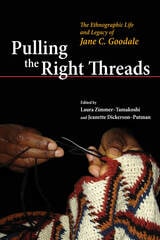
Pulling the Right Threads
The Ethnographic Life and Legacy of Jane C. GoodaleEdited by Laura Zimmer-Tamakoshi and Jeanette Dickerson-Putman
University of Illinois Press, 2007
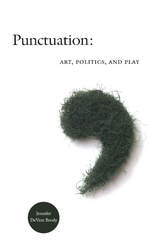
Punctuation
Art, Politics, and PlayJennifer DeVere Brody
Duke University Press, 2008
Brody provides a playful, erudite meditation on punctuation’s power to direct discourse and, consequently, to shape human subjectivity. Her analysis ranges from a consideration of typography as a mode for representing black subjectivity in Ralph Ellison’s Invisible Man to a reflection on hyphenation and identity politics in light of Strunk and White’s prediction that the hyphen would disappear from written English. Ultimately, Brody takes punctuation off the “stage of the page” to examine visual and performance artists’ experimentation with non-grammatical punctuation. She looks at different ways that punctuation performs as gesture in dances choreographed by Bill T. Jones, in the hybrid sculpture of Richard Artschwager, in the multimedia works of the Japanese artist Yayoi Kusama, and in Miranda July’s film Me and You and Everyone We Know. Brody concludes with a reflection on the future of punctuation in the digital era.

Pure Beauty
Judging Race in Japanese American Beauty PageantsRebecca Chiyoko King-O’Riain
University of Minnesota Press, 2006
Push Back, Move Forward
The National Council of Women's Organizations and Coalition AdvocacyLaura R. Woliver
Temple University Press, 2018
The coalition known as the National Council of Women’s Organizations no longer exists today, but the history and the lessons learned from the NCWO’s activism remain as important as ever—perhaps even more so in this age of Trump. Laura Woliver spent fifteen years doing fieldwork and conducting research and interviews to understand how the NCWO coalition group functioned. The result is her impressive study, Push Back, Move Forward.
Woliver explores the foundational work of the NCWO and member groups to promote women’s economic security, citizen status, and political rights. She investigates women’s access to previously “male only” organizations, such as private clubs; the increase in voter participation generated by measures such as early voting; advocacy campaigns for such benefit programs as Social Security and the Affordable Care Act; and global human and women’s rights activism. In addition, she examines the accomplishments of women of color, both alongside and within the NCWO, who orient their politics toward achieving justice and attaining rights.
Push Back, Move Forward artfully documents this important group’s activities while also gleaning larger lessons about coalition organizations.
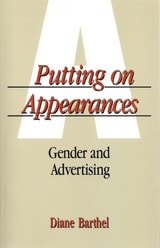
Putting On Appearances
Gender and AdvertisingDiane Barthel
Temple University Press, 1989
In this lively critical analysis, Diane Barthel reveals the previously overlooked and underestimated depth of cultural meaning behind contemporary American advertising. Focusing mainly on ads for beauty products directed at women, she demonstrates how stereotypical gender identities are emphasized and how advertising itself creates a gendered relationship with the consumer. She explores psychological, sociological, and cultural messages in advertising to show how Putting on Appearances is anything but a purely personal matter, and how the social realities in which we are forced to live are conditioned by the personal appearances we choose to create.
Most advertisements are not sexually obvious, but rely instead on sexual story-telling in which seduction, deception, and passion are portrayed as acceptable means for achieving selfhood. Advertisements that proclaim, "Now is the time to paint your knees" speak with one form of authority: those that present the voice of the all-knowing scientist or the nurturing mother rely on others. Celebrities figure as professional beauties and wise older sisters, sharing their secrets with the consumer. "The Gentle Treatment Great Model Search Made Me a Star. Now it’s your turn."
Inseparable from the clothes we wear and the products we use are our ideas and fantasies about our bodies. Beauty products present beauty rituals as transcendent occasions, and diet products call up religious imagery of guilt and salvation. The body itself is to be anxiously manipulated and systematically worked over until the consumer "turns her body into...an advertisement for herself, a complicated sign to be read and admired."
In the series Women in the Political Economy, edited by Ronnie J. Steinberg.
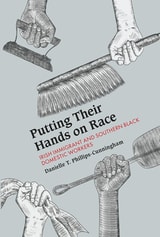
Putting Their Hands on Race
Irish Immigrant and Southern Black Domestic WorkersDanielle T. Phillips-Cunningham
Rutgers University Press, 2020
Putting Their Hands on Race offers an important labor history of 19th and early 20th century Irish immigrant and US southern Black migrant domestic workers. Drawing on a range of archival sources, this intersectional study explores how these women were significant to the racial labor and citizenship politics of their time. Their migrations to northeastern cities challenged racial hierarchies and formations. Southern Black migrant women resisted the gendered racism of domestic service, and Irish immigrant women strove to expand whiteness to position themselves as deserving of labor rights. On the racially fractious terrain of labor, Black women and Irish immigrant women, including Victoria Earle Matthews, the “Irish Rambler”, Leonora Barry, and Anna Julia Cooper, gathered data, wrote letters and speeches, marched, protested, engaged in private acts of resistance in the workplace, and created women’s institutions and organizations to assert domestic workers’ right to living wages and protection.
Putting the Invisible Hand to Work
Concepts and Models for Service Learning in EconomicsKimMarie McGoldrick and Andrea L. Ziegert, Editors
University of Michigan Press, 2002
The two parts of this volume provide a theoretical basis for service learning and offer lessons gleaned from applying it in the classroom. The theoretical chapters outline the learning theory and models of service learning as they can be applied in economics. Service learning is introduced here as a technique that teaches students to "do economics." Also included are specific models of service learning and an overview of assessment issues. The applications chapters detail various examples of using service to enhance learning. These range from using a single service experience in a class to courses that use service experiences as the focus and context for learning economics. Course topics cover environmental and natural resources, statistics, econometrics and research methods, principles and economic issues, labor, the economics of gender, forensic economics, and development economics. Each application provides details regarding the institutional environment in which it was implemented, type of course, enrollment, and process through which student learning was enhanced. Handouts and abbreviated syllabi are included.
Economics educators have a stake in improving their students' long-term economic literacy. Service learning offers significant benefits beyond those offered by pedagogies traditionally found in economics classrooms and should be considered as a teaching strategy by economics professors everywhere.
Kim Marie McGoldrick is Associate Professor of Economics, University of Richmond. Andrea L. Ziegert is Associate Professor of Economics, Denison University.