Results by title
5159 books match the query 'Biography' and 172 start with p

Playgrounds to the Pros
Legends of Peoria BasketballJeff Karzen
University of Illinois Press, 2023
Howard Nathan. A. J. Guyton. Sergio McClain. Marcus Griffin. Frank Williams. Shaun Livingston. This dazzling constellation of talent helped make Peoria a prep basketball hotbed from the 1980s to the 2000s. Jeff Karzen takes readers inside the lives of the players, coaches, and others who defined an era that produced six state titles and four Illinois Mr. Basketball winners.
Drawing on dozens of in-depth interviews, Karzen tells the stories behind the on-court triumphs while providing a panorama of the entire Peoria scene--the rivalries and relationships, the families and friendships, the hopes and hard work. Karzen also follows the players into their Division 1 and NBA careers and pays special attention to the pipeline that, by connecting Peoria to Champaign-Urbana, powered one of the most successful periods in Fighting Illini basketball history.
Intense and intimate, Playgrounds to the Pros chronicles a basketball golden age in America’s quintessential blue collar town.
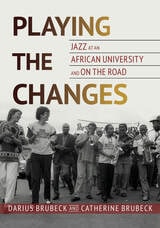
Playing the Changes
Jazz at an African University and on the RoadDarius Brubeck and Catherine Brubeck
University of Illinois Press, 2024
Catherine and Darius Brubeck’s 1983 move to South Africa launched them on a journey that helped transform jazz education. Blending biography with storytelling, the pair recount their time at the University of KwaZulu-Natal, where they built a pioneering academic program in jazz music and managed and organized bands, concerts, and tours around the world.
The Brubecks and the musicians faced innumerable obstacles, from the intensification of apartheid and a lack of resources to the hardscrabble lives that forced even the most talented artists to the margins. Building a program grounded in multi-culturalism, Catherine and Darius encouraged black and white musicians to explore and expand the landscape of South African jazz together Their story details the sometimes wily, sometimes hilarious problem-solving necessary to move the institution forward while offering insightful portraits of South African jazz players at work, on stage, and providing a soundtrack to the freedom struggle and its aftermath.
Frank and richly detailed, Playing the Changes provides insiders’ accounts of how jazz intertwined with struggle and both expressed and resisted the bitter unfairness of apartheid-era South Africa.
Playing with Dynamite
Sharon Harrigan
University of Wisconsin Press, 2017
Playing with Dynamite is about the family secrets that can distance us from each other and the honesty that can bring us closer. It’s about a daughter who goes looking for her father but finds her mother instead. It’s about memory and truth, grieving and growing, and what it means to go home again.
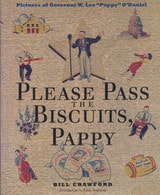
Please Pass the Biscuits, Pappy
Pictures of Governor W. Lee "Pappy" O'DanielBy Bill Crawford
University of Texas Press, 2004
Long before movie stars Ronald Reagan and Arnold Schwarzenegger became governors of California, a popular radio personality with no previous political experience—who wasn't even registered to vote—swept into the governor's office of Texas. W. Lee "Pappy" O'Daniel was a 1930s businessman who discovered the power of radio to sell flour. His musical shows with the Light Crust Doughboys (which launched the career of Bob Wills) and his radio homilies extolling family and Christian values found a vast, enthusiastic audience in Depression-era Texas. When Pappy decided to run for governor in 1938 as a way to sell more flour—a fact he proudly proclaimed throughout the campaign—the people of Texas voted for him in record numbers. And despite the ineptitude for politics he displayed once in office, Texans returned him to the governorship in 1940 and then elected him to the U.S. Senate in 1941 in a special election in which he defeated Lyndon Johnson, as well as to a full term as senator in 1942.
While the hit film O Brother, Where Art Thou? celebrated a fictional "Please Pass the Biscuits, Pappy" O'Daniel, this book captures the essence of the real man through photographs taken by employees of the Texas Department of Public Safety, most of which are previously unpublished. Reminiscent of the work of WPA photographers such as Russell Lee and Dorothea Lange, these photos record the last unscripted era of politics when a charismatic candidate could still address a crowd from an unpainted front porch or a mobile bandstand in the back of a truck. They strikingly confirm that Pappy O'Daniel's ability to connect with people was as great in person as on the radio.
To set the photos in context, Bill Crawford has written an entertaining text that discusses the political landscape in Texas and the United States in the 1930s, as well as the rise of radio as mass medium for advertising and entertainment. He also provides extensive captions for each picture. John Anderson, Photo Archivist of the Texas State Archives, discusses the work of Joel Tisdale and the other DPS photographers who left this extraordinary record of the greatest vote-getter in Texas history, who became one of America's first celebrities to cross the line from entertainment to political office.

Plural Wife
The Life Story of Mabel Finlayson AllredMabel Finlayson Allred, author, and Martha Sonntag Bradley, editor
Utah State University Press, 2012
Mabel Finlayson Allred was a wife of Rulon Allred, leader of the Apostolic United Brethren, one of the major groups of fundamentalist Mormons who, since about the 1930s, have practiced plural marriage as separatists from the mainstream Latter-day Saints Church.
Mabel’s autobiography maintains a mood of everyday normalcy strikingly in contrast with the stress of the ostracized life she was living. Her cheerful tone, expressive of her wish to live simply and gracefully in this world, is tempered by more somber descriptions of her personal struggle with clinical depression, of Rulon Allred’s inner struggles, of tensions with the law and with Allred’s fundamentalist colleagues, and ultimately by her forthright account of his assassination.
Emerging from this unique narrative is the portrait of a woman buoyed by faith in both her religion and her husband, a window into the interior life of a woman seeking a resilient simplicity in an uncommonly challenging life.
Plural Wife, conntextualized by Martha Bradley’s introduction, gives us insight into Mabel’s experience of history during an important period of the 20th century and advances our understanding of life ways of 20th century polygamy and the growth of the fundamentalist movement.
Poe in His Own Time
A Biographical Chronicle of His Life, Drawn from Recollections, Interviews, and Memoirs by Family, Friends, and AssociatesBenjamin F. Fisher
University of Iowa Press, 2010
An image of Edgar Allan Poe (1809–1849) as a man of gloom and mystery continues to hold great popular appeal. Long recognized as one of the greats of American literature, he elicited either highly commendatory or absolutely hostile reactions from many who knew him, from others who claimed to comprehend him as person or as writer, and from still others who circulated as fact opinions intuited from his writings. Whether promoting him as angel or demon, “a man of great and original genius” or “extraordinarily wicked,” the viewpoints in this dramatic collection of primary materials provide vigorous testimony to support the contradictory images of the man and the writer that have prevailed for a century and a half.
Noted Poe scholar Benjamin Fisher includes a comprehensive introduction and a detailed chronology of Poe’s sadly short life; each entry is introduced by a short headnote that places the selection in historical and cultural context, and explanatory notes provide information about people and places. From John Allan’s letter to Secretary of War John Eaton about Poe’s West Point life to John Frankenstein’s hostile verse casting him as an alcoholic, from Rufus Griswold’s first and second posthumous vilifications to James Russell Lowell’s more sensible outline of his life and career, from scornful to commendable reviews to scathing attacks on his morals to recognition of his comic achievements, Fisher has gathered a lively array of materials that read like the most far-fetched of gothic tales.
Poe himself was creative when he supplied information to others about his life and literary career, and the speculative content of many of the portrayals presented in this collection read as if their authors had set out to be equally creative. The sixty-nine recollections gathered in Poe in His Own Time form a dramatic, real-time biographical narrative designed to provide a multitude of perspectives on the famous author, sometimes in conflict with each other and sometimes in agreement but always arresting.
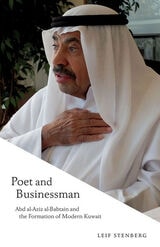
Poet and Businessman
Abd al-Aziz al-Babtain and the Formation of Modern KuwaitLeif Stenberg
Gingko, 2022
This book reviews and analyzes the modern history of Kuwait through the life of Abd al-Aziz Sa‘ud al-Babtain, a wealthy businessman, philanthropist, and poet. He is the head of a large, influential international cultural foundation based in Kuwait City. Abd al-Aziz’s life story tightly interweaves with modern discussions on the history of the state of Kuwait. There are very few books taking a collective grip on the history of the state of Kuwait. Likewise, there are very few studies about the generation of Gulf individuals who experienced, benefitted from, and even suffered from the discovery of oil, and who has been a crucial part of socioeconomic and cultural developments in countries like Kuwait in recent history. By constructing a cohesive overview of the modern history of Kuwait enriched by the life of an individual that has lived through the better part of that particular history, this book fills a lacuna in contemporary scholarship on the Middle East, and especially the Arabian or the Persian Gulf.

Poindexter of Washington
A Study in Progressive PoliticsHoward W Allen
Southern Illinois University Press, 1981
In this study of Miles Poindexter, Insurgent Republican turned conservative, Howard W. Allen reaches beyond the traditional bounds of biography to present a history of the United States Congress during the Progressive era and the early years after World War I.
A congressman (1909–13)and a senator (1913–23), Miles Poindexter of Washington State was an outspoken, progressive reformer before World War I. He struggled to protect “the people” from “special interests,” particularly defending the interest of his section against eastern “colonialism.” A man with a penchant for absolute positions, Poindexter became caught up in the emotionalism of the Insurgent Republican revolt. At one time or another he championed Socialists, the IWW, the striking textile workers in Lawrence, Massachusetts—all unlikely causes for a middle-class lawyer from Spokane.
Regarding foreign policy, Poindexter was an uncompromising nationalist who, with Theodore Roosevelt, declared himself a member of the Progressive party in 1912.
After 1917 Poindexter actively tried to suppress opponents of the war. Following the war his targets were “Bolshevists” and other radicals. He also developed intense hostility toward Socialists, the IWW, and organized labor, fearing radicalism and labor. Reversing his former position, he allied himself with the eastern businessmen and regular Republicans in the Senate. Campaigning for the presidency in 1920, he appealed without success to the most conservative members of the party. He was defeated b a progressive Democrat in his 1922 bid for reelection to the Senate.
Allen examines the traditional sources—archival collections, newspaper files, and congressional reports. When he combines this material with a quantitative analysis of roll-call votes throughout Senator Poindexter’s years in Congress, he creates a remarkably useful method never before attempted in political biography.
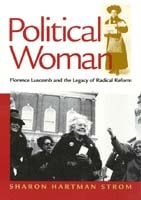
Political Woman
FlorenceSharon Strom
Temple University Press, 2001
Politcal Women counters the traditional narratives that place men at the center of political thinking and history. Showing how three generations of Luscomb's family had set the stage for her activism, this biography presents her story against the backdrop of Boston's politics and larger struggles for social justice. Luscomb participated in every significant social reform movement of her time -- from securing women's right to vote and supporting trade unionism to advocating an end to the war in Vietnam. Luscomb also ran for public office; she was narrowly defeated when she ran for Boston's city council in 1922. Although unsuccessful as a third-party candidate for Congress (in 1936 and 1950) and for Governor of Massachusetts (in 1952), she was one of the few women of her time to seek office. Independent, athletic, and spirited, she apparently never thought that traditional gender prescriptions applied to her. A practicing architect before the First World War, an exuberant hiker all her life, and a member in collective-living arrangements, Luscomb enjoyed a life of rich experiences and sustaining relationships.
In Florence Luscomb's biography, Sharon Hartman Strom suggests that although women were excluded from the activities and sites associated with conventional politics until recently, they did political work that gave purpose to their lives and affected political thinking in their communities, states, and ultimately the nation.

Popular History and the Literary Marketplace, 1840–1920
Gregory M. Pfitzer
University of Massachusetts Press, 2008
Prior to the mid-nineteenth century, most Americans “heard” rather than “read” national history. They absorbed lessons from the past more readily by attending Patriots' Day orations and anniversary commemorations than by reading expensive, multivolume works of patrician historians. By the 1840s, however, innovations in publishing led to the marketing of inexpensive, mass-produced “popular” histories that had a profound influence on historical literacy and learning in the United States. In this book, Gregory M. Pfitzer charts the rise and fall of this genre, demonstrating how and why it was born, flourished, and then became unpopular over time.
Pfitzer begins by exploring how the emergence of a new literary marketplace in the mid-nineteenth century affected the study of history in America. Publishers of popular works hoped to benefit from economies of scale by selling large numbers of inexpensive books at small profit. They hired authors with substantial literary reputations to make the past accessible to middle-class readers. The ability to write effectively for wide audiences was the only qualification for those who dominated this field. Privileging narration and effusive literary style over dispassionate prose, these artists adapted their favorite fictional and poetic conventions with an ease that suggests the degree to which history was viewed as literary art in the nineteenth century.
Beginning as a small cottage industry, popular histories sold in the hundreds of thousands by the 1890s. In an effort to illuminate the cultural conditions for this boom, Pfitzer focuses on the business of book making and book promotion. He analyzes the subscription sales techniques of book agents as well as the aggressive prepublication advertising campaigns of the publishers, including the pictorial embellishments they employed as marketing devices.
He also examines the reactions of professional historians who rejected the fictionalizing and poetic tendencies of popular history, which they equated with loose and undisciplined scholarship. Pfitzer explains how and why these professionals succeeded in challenging the authority of popular histories, and what the subsequent “unpopularity of popular history” meant for book culture and the study of history in the twentieth century.
Populism in Twentieth Century Mexico
The Presidencies of Lázaro Cárdenas and Luis EcheverríaEdited by Amelia M. Kiddle and María L. Muñoz; Foreword by Cuauhtémoc Cárdenas
University of Arizona Press, 2010
This volume brings together twelve original essays that explore the concept of populism in twentieth century Mexico. Contributors analyze the presidencies of two of the century’s most clearly populist figures, evaluating them against each other and in light of other Latin American and Mexican populist leaders. In order to examine both positive and negative effects of populist political styles, contributors also show how groups as diverse as wild yam pickers in 1970s Oaxaca and intellectuals in 1930s Mexico City had access to and affected government projects.
The chapters on the Echeverría presidency are written by contributors at the forefront of emerging scholarship on this topic and demonstrate new approaches to this critical period in Mexican history. Through comparisons to Echeverría, contributors also shed new light on the Cárdenas presidency, suggesting fresh areas of investigation into the work of Mexico’s quintessentially populist leader. Ranging in approach from environmental history to labor history, the essays in this volume present a complex picture of twentieth century populism in Mexico.
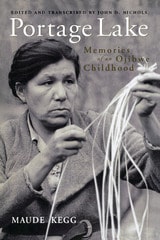
Portage Lake
Memories of an Ojibwe ChildhoodMaude Kegg
University of Minnesota Press, 1993

Portland's Audacious Champion
How Bill Naito Overcame Anti-Japanese Hate and Became an Intrepid Civic LeaderErica Naito-Campbell
Oregon State University Press, 2024
William “Bill” Sumio Naito (1925–1996) was a remarkable and visionary individual—the Portland-born son of Japanese immigrants who became one of the city’s most significant business and civic leaders. Every day thousands of people drive on Naito Parkway alongside Portland’s Waterfront Park, yet little has been written about the man for whom it was named.
In this first biography, Erica Naito-Campbell, Bill’s granddaughter, shows how his story is also the story of Portland, the city he loved. Naito’s life, from the Great Depression and World War II through Portland’s rebirth in the 1970s and its profound growth, tracked most of the major events in the city and was the catalyst for many of them. Through hard-earned success in importing and real estate with his brother Sam, Naito came to wield considerable power in the city, and his leadership led to much of what we consider iconic Portland today: the “Portland Oregon” sign near the Burnside Bridge, the annual Christmas tree in Pioneer Courthouse Square, and Harbor Drive’s conversion to Waterfront Park.
Naito’s name became synonymous with civic leadership, whether it was growing Portland’s urban tree canopy, revitalizing its downtown, or preserving historic buildings. But less is known about his difficult childhood—with a father who worked twelve-hour days and a mother whose treatment of him was harsh at best—and the racism he endured during World War II. After the expulsion of Japanese Americans following Pearl Harbor and his military service in Occupied Japan, Naito overcame great emotional turmoil to return to Portland and become one of its greatest change-makers.
Erica Naito-Campbell uses anecdotes, rich details, and previously unknown stories about Bill Naito to bring Portland’s history to life—while acknowledging that the cost of his success was a family rife with resentments and envy. Her book reveals the emotional wounds that drove Naito to become one of Portland’s most inspiring civic leaders, a pivotal player in the city’s journey from a moribund downtown to a national model for livability, urban renewal, and historic preservation.

Portrait of a Greek Imagination
An Ethnographic Biography of Andreas NenedakisMichael Herzfeld
University of Chicago Press, 1997
Herzfeld explores how personal vision intersects with national cultures by examining the Greek author's novels and recollections as historical accounts. Bringing together the methods of the novelist and the anthropologist in their common concern with both social and lived experience, Herzfeld shows how different perspectives shape the historical record. Nenedakis has endured persecution, exile, imprisonment, and torture under Greece's military dictatorship, and his novels—excerpted here in English for the first time—offer an individual version of historical events. As one of his characters ask, "For was not his life, and are not the lives of all of us, a novel?"
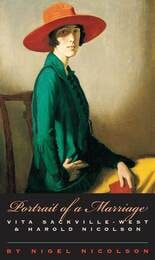
Portrait of a Marriage
Vita Sackville-West and Harold NicolsonNigel Nicolson
University of Chicago Press, 1998
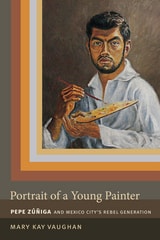
Portrait of a Young Painter
Pepe Zuniga and Mexico City's Rebel GenerationMary Kay Vaughan
Duke University Press, 2015
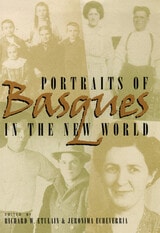
Portraits of Basques in the New World
Richard W. Etulain
University of Nevada Press, 1999
A collection of new essays on notable historic and contemporary Basques of America's Far West that offers a perceptive and lively examination of the lives of one of the West's most resilient and successful ethnic minorities. It is essential reading for anyone interested in the Basque people or those interested in the process of immigration and assimilation: these profiles illustrate how America's Basque immigrants have achieved success in mainstream society while retaining strong ties to their ancient Old World culture.
Portraits of Justice
The Wisconsin Supreme Court's First 150 YearsTrina E. Gray
Wisconsin Historical Society Press, 2003
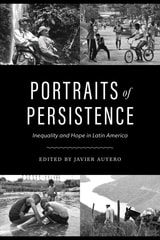
Portraits of Persistence
Inequality and Hope in Latin AmericaJavier Auyero
University of Texas Press, 2024
Profiles of triumph and hardship amid massive inequality in Latin America.
Each chapter of Portraits of Persistence, a project of the University of Texas Urban Ethnography Lab, offers an intimate portrait of one or two individual lives. The subjects are a diverse group of individuals from across the continent: grassroots activists and political brokers, private security entrepreneurs, female drug dealers, shantytown dwellers, and rural farmers, as well as migrants finding routes into and out of the region. Through these accounts, the writers explore issues that are common throughout today's world: precarious work situations, gender oppression, housing displacement, experiences navigating the bureaucracy for asylum seekers, state violence, environmental devastation, and access to good and affordable health care. Carefully situating these experiences within the sociohistorical context of their specific local regions or countries, editor Javier Auyero and his colleagues consider how people make sense of the paths their lives have taken, the triumphs and hardships they have experienced, and the aspirations they hold for the future. Ultimately, these twelve compelling profiles offer unique and personal windows into the region’s complex and multilayered reality.
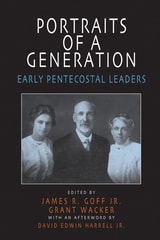
Portraits of a Generation
Early Pentecostal LeadersJames Goff
University of Arkansas Press, 2002
A spirit of religious revival blazed across the United States just after 1900. With a focus on Holy Spirit power, early adherents stirred an enthusiastic response, first at a Bible school in Topeka and then in a small mission on Asuza Street in Los Angeles. Almost immediately, the movement spread to Houston, Chicago, and then northeastern urban centers. By the early 1910s the fervor had reached most parts of the United States, Canada, and northern Mexico, and eventually the converts called themselves pentecostals. Today there are pentecostals all over the world. From the beginning the movement was unusually diverse: women and African Americans were active in many of the early fellowships, and although some groups were segregated, some were interracial. Everytwhere, ordinary people passionately devoted themselves to salvation, Holy Ghost baptism evidenced by speaking in tongues, divine healing, and anticipation of the Lord’s imminent return.
This movement saw itself as leaderless, depending on individual conversion and a radical equality of souls — or, as early devotees would say, on the Holy Spirit. But a closer look reveals a host of forceful, clear-eyed leaders. This volume offers twenty biographical portraits of the first-generation pioneers who wove the different strands of Holy Spirit revivalism into a coherent and dramatically successful movement.
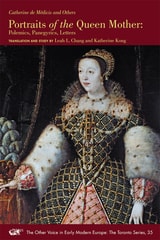
Portraits of the Queen Mother
Polemics, Panegyrics, LettersCatherine de Médicis and Others
Iter Press, 2014
Portraits
A Gallery of IntellectualsEdward Shils
University of Chicago Press, 1997
Highlights include an affectionate treatment of Leo Szilard, the physicist whose involvement with the development of the atomic bomb led him to work ceaselessly to address its social consequences; a discussion of the educational philosophy of Robert Maynard Hutchins, the University of Chicago's fifth and most controversial president; an appreciative account of the Polish emigré Leopold Labedz's well-informed and outspoken resistance to Communism; and an essay about the extraordinary Indian writer Nirad Chaudhuri.
Many of these essays have appeared in The American Scholar, edited by Joseph Epstein, who introduces this volume with his own portrait of Edward Shils.
"Though professionally a sociologist, Edward Shils was a man of wide cosmopolitan culture and experience, greatly concerned with the public problems of his time: in particular with those created by the rise of new and dangerous ideologies, the frightening possibilities of science, and the apparent abrogation of public responsibility by many Western intellectuals."—Hugh Trevor-Roper
The late Edward Shils was a member of the University of Chicago's Committee on Social Thought for forty-five years and a fellow of Peterhouse, Cambridge University. His many books include The Calling of Sociology and The Intellectuals and the Powers, both published by the University of Chicago Press.

Pothole Confidential
My Life as Mayor of MinneapolisR.T. Rybak
University of Minnesota Press, 2016
A pajama party at the Minneapolis–St. Paul International Airport inadvertently helped launch R.T. Rybak’s political career (imagine a rumba line one hundred protesters long chanting, “We deserve to sleep, hey!”), but his earliest lessons in leadership occurred during his childhood. Growing up in a middle-class neighborhood, attending private school with students who had much more than he did, spending evenings at his family’s store in an area where people lived with much less, he witnessed firsthand the opportunity and injustice of the city he called home.
In a memoir that is at once a political coming-of-age story and a behind-the-scenes look at the running of a great city, the three-term mayor takes readers into the highs and lows and the daily drama of a life inextricably linked with Minneapolis over the past fifty years. With refreshing candor and insight, Rybak describes his path through journalism, marketing, and community activism that led to his unlikely (to him, at least) primary election—on September 11, 2001. His personal account of the challenges and crises confronting the city over twelve years, including the tragic collapse of the I-35W bridge, the rising scourge of youth violence, and the bruising fight over a ban on gay marriage (with Rybak himself conducting the first such ceremony at City Hall on August 1, 2013), is also an illuminating, often funny depiction of learning the workings of the job, frequently on the fly, while trying to keep up with his most important constituency, his family.
As bracing as the “fresh air” campaign that swept him into office, Rybak’s memoir is that rare document from a politician: one more concerned with the people he served and the issues of his time than with burnishing his own credentials. As such, it reflects what leadership truly looks like.
Power in the Blood
A Family NarrativeLinda Tate
Ohio University Press, 2009
Power in the Blood: A Family Narrative traces Linda Tate’s journey to rediscover the Cherokee-Appalachian branch of her family and provides an unflinching examination of the poverty, discrimination, and family violence that marked their lives. In her search for the truth of her own past, Tate scoured archives, libraries, and courthouses throughout Kentucky, Tennessee, Alabama, Illinois, and Missouri, visited numerous cemeteries, and combed through census records, marriage records, court cases, local histories, old maps, and photographs. As she began to locate distant relatives — fifth, sixth, seventh cousins, all descended from her great-greatgrandmother Louisiana — they gathered in kitchens and living rooms, held family reunions, and swapped stories. A past that had long been buried slowly came to light as family members shared the pieces of the family’s tale that had been passed along to them.
Power in the Blood is a dramatic family history that reads like a novel, as Tate’s compelling narrative reveals one mystery after another. Innovative and groundbreaking in its approach to research and storytelling, Power in the Blood shows that exploring a family story can enhance understanding of history, life, and culture and that honest examination of the past can lead to healing and liberation in the present.
Practical Audacity
Black Women and International Human RightsStanlie James
University of Wisconsin Press, 2022
Stanlie M. James weaves narratives by and about these women throughout the history of the field, illustrating how they conceptualize, develop, and implement human rights. By centering the courage and innovative interventions of capable and visionary Black women, she places them rightfully alongside such figures as Thurgood Marshall and Charles Hamilton Houston. This volume fundamentally shifts the frame through which human rights struggles are understood, illuminating how those who witness and experience oppression have made some of the biggest contributions to building a better world.

Prairie City, Iowa
Three Seasons at HomeDouglas Bauer
University of Iowa Press, 1979
Bauer grew up "awkward with soil and with machines" in a small town east of Des Moines, As a teenager, he left the farm for college life twenty miles away and, after graduation, took a job with Better Homes and Gardens in Des Moines, writing in the junk-mail fictional persona of "Barbara Joyce,"asking millions of people to subscribe. After a few years he moved to Chicago to work as an editor and writer for Playboy and eventually as a freelance journalist. In the summer of 1975, he returned home to attend his grandmother's funeral and by autumn he moved back to Prairie City, where he stayed for the next three seasons.
Bauer's book is neither a wistful nostalgia about returning to a simpler time and place nor a patronizing look at those who never leave the town in which they were born. What emerges is an unsentimental yet loving account of life in the Midwest. Not just a portrait of Prairie City, Iowa, but of everyone's small town, everywhere.
Prairie Defender
The Murder Trials of Abraham LincolnGeorge R. Dekle, Sr.
Southern Illinois University Press, 2017
2018 ISHS Annual Award Winner for a Scholarly Publication
According to conventional wisdom, Abraham Lincoln spent most of his law career collecting debt and representing railroads, and this focus made him inept at defending clients in homicide cases. In this unprecedented study of Lincoln’s criminal cases, George Dekle disproves these popular notions, showing that Lincoln was first and foremost a trial lawyer. Through careful examination of Lincoln’s homicide cases and evaluation of his legal skills, Dekle demonstrates that criminal law was an important part of Lincoln's practice, and that he was quite capable of defending people accused of murder, trying approximately one such case per year.
Dekle begins by presenting the viewpoints of not only those who see Lincoln as a perfect lawyer whose only flaw was his inability to represent the wrong side of a case but also those who believe Lincoln was a less-than-honest legal hack. The author invites readers to compare these wildly different stereotypes with the flesh-and-blood Lincoln revealed in each case described in the book, including an axe murder suit in which Lincoln assisted the prosecution, a poisoning case he refused to prosecute for $200 but defended for $75, and a case he won by proving that a supposed murder victim was actually still alive.
For each case Dekle covers, he first tells the stories of the feuds, arguments, and insults that led to murder and other criminal activity, giving a gripping view of the seamy side of life in nineteenth-century Illinois. Then he traces the course of the pretrial litigation, describes the trials and the various tactics employed in the prosecution and defense, and critiques the performance of both Lincoln and his adversaries.
Dekle concludes that Lincoln was a competent, diligent criminal trial lawyer who knew the law, could argue it effectively to both judge and jury, and would use all lawful means to defend clients whether he believed them to be innocent or guilty. His trial record shows Lincoln to have been a formidable defense lawyer who won many seemingly hopeless cases through his skill as a courtroom tactician, cross-examiner, and orator. Criminal defendants who could retain Lincoln as a defense attorney were well represented, and criminal defense attorneys who sought him as co-counsel were well served. Providing insight into both Lincoln’s legal career and the culture in which he practiced law, Prairie Defender resolves a major misconception concerning one of our most important historical figures.

Prairie Reunion
Barbara J. Scot
University of Iowa Press, 2000
Prairie Sky
A Pilot's Reflections on Flying and the Grace of AltitudeW. Scott Olsen
University of Missouri Press, 2013
“It’s almost like ballet. Preflight. Starting. Warm-up. The voices from the control tower—the instructions. Taxiing. The rush down the runway. Airborne. There are names for every move. The run-up. Position and hold. Every move needs to be learned, practiced, made so familiar you feel the patterns in every other thing you do. It’s technical, yes. But there is a grace to getting metal and bone into the sky.”
Prairie Sky is a celebration of curiosity and a book for explorers. In this collection of contemplative essays, Scott Olsen invites readers to view the world from a pilot’s seat, demonstrating how, with just a little bit of altitude, the world changes, new relationships become visible, and new questions seem to rise up from the ground.
Whether searching for the still-evident shores of ancient lakes, the dustbowl-era shelterbelt supposed to run the length of the country, or the even more elusive understandings of physics and theology, Olsen shares the unique perspective and insight allowed to pilots.
Prairie Sky explores the reality as well as the metaphor of flight: notions of ceaseless time and boundless space, personal interior and exterior vision, social history, meteorology, and geology. Olsen takes readers along as he chases a new way of looking at the physical world and wonders aloud about how the whole planet moves in interconnected ways not visible from the ground. While the northern prairie may call to mind images of golden harvests and summer twilight such images do not define the region. The land bears marks left by gut-shaking thunderstorms, hard-frozen rivers, sweeping floods, and hurricane-size storms. Olsen takes to the midwestern sky to confront the ordinary world and reveals the magic--the wondrous and unique sights visible from the pilot’s seat of a Cessna.
Like Antoine de Saint-Exupery’s classic work Wind, Sand and Stars, Olsen’s Prairie Sky reveals the heart of what it means to fly. In the grand romantic tradition of the travel essay, it opens the dramatic paradoxes of self and collective, linear and circular, the heart and the border.
Preacher Woman Sings the Blues
The Autobiographies of Nineteenth-Century African American EvangelistsRichard J. Douglass-Chin
University of Missouri Press, 2001
In this thorough and detailed study, Richard Douglass-Chin examines collectively for the first time the autobiographies of nineteenth-century African American women evangelists, along with their eighteenth-century forerunner "Belinda." By studying how black women evangelists employed dialogue created by socioeconomic conditions, the author shows how their writings form the groundwork for a contemporary womanist literature rooted in spirituality. Arguing that the writings have their own unique figurations and forms that develop and alter over time, Douglass-Chin claims that the changing black female spiritual narrative traces an important line in the ongoing traditions of black women's writing, a line that has only now begun to be reclaimed and validated. Through references to the writings of black male autobiographers Frederick Douglass, Richard Allen, Daniel Payne, and John Jea as well as the works of white female autobiographers Harriet Livermore and Phoebe Palmer, Douglass-Chin is able to make valuable comparisons.
Preacher Woman Sings the Blues begins with the study of black evangelists Belinda, Jarena Lee, and Zilpha Elaw, continuing with Rebecca Cox Jackson, Sojourner Truth, Julia Foote, Amanda Smith, Elizabeth, and Virginia Broughton. The author's discussion of Zora Neale Hurston focuses on how Hurston operates as a connection between early black women evangelist writers and black women writing in America today. He ends with the works of Alice Walker, Toni Morrison, and Toni Cade Bambara.
By examining the early traditions prefiguring contemporary African American women's texts and the impact that race and gender have on them, Douglass-Chin shows how the nineteenth-century black women's works are still of utmost importance to many African American women writers today. Preacher Woman Sings the Blues makes a valuable contribution to literary criticism and theoretical analysis and will be welcomed by scholars and students alike.
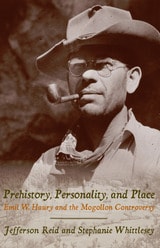
Prehistory, Personality, and Place
Emil W. Haury and the Mogollon ControversyJefferson Reid and Stephanie Whittlesey
University of Arizona Press, 2011
Reid and Whittlesey present the arguments and actions surrounding the Mogollon discovery, definition, and debate. Drawing on extensive interviews conducted with Haury before his death in 1992, they explore facets of the debate that scholars pursued at various times and places and how ultimately the New Archaeology shifted attention from the research questions of cultural affiliation and antiquity that had been at the heart of the controversy. In gathering the facts and anecdotes surrounding the debate, Reid and Whittlesey offer a compelling picture of an academician who was committed to understanding the unwritten past, who believed wholeheartedly in the techniques of scientific archaeology, and who used his influence to assist scholarship rather than to advance his own career.
Prehistory, Personality, and Place depicts a real archaeologist practicing real archaeology, one that fashioned from potsherds and pit houses a true understanding of prehistoric peoples. But more than the chronicle of a controversy, it is a book about places and personalities: the role of place in shaping archaeologists’ intellect and personalities, as well as the unusual intersections of people and places that produced resolutions of some intractable problems in Southwest history.
Pres
The Story of Lester YoungLuc Delannoy
University of Arkansas Press, 1993
Present Past
Ava Kadishson Schieber
Northwestern University Press, 2016
The focus of Present Past is her life after the Shoah. Rejecting stereotypes of survivors as traumatized or broken, Schieber is stark yet exuberant, formidable yet nuanced. The woman who emerges in Schieber’s Present Past is a multifaceted, heterogeneous figure—poet, artist, and survivor. In it, she plays the passionate observer who dispassionately curates the kaleidoscopic memories of her tumultuous personal and professional life in Belgrade, Prague, Tel Aviv, New York, and Chicago.
Organized into thirteen chapters, each a blend of images, poems, and narrative, this moving new work offers myriad points of entry to readers of these genres, those fascinated in the relationship between the Holocaust and art, as well as readers interested in memory and survivorship.
Present Tensions
European Writers on Overcoming DictatorshipsKristina Kaiserová
Central European University Press, 2009
Preso sin Nombre, Celda sin Numero
Jacobo Timerman; Con textos de Arthur Miller y Ariel Dorfman
University of Wisconsin Press, 2004
Wisconsin edition is for sale only in North America.
Press Box Red
The Story Of Lester Rodney,Irwin Silber
Temple University Press, 2003
Pressing On
The Roni Stoneman StoryRoni Stoneman as told to Ellen Wright
University of Illinois Press, 2006
Drawn from more than seventy-five hours of recorded interviews, Pressing On reveals Roni's gifts as a master storyteller. With characteristic spunk and candor, she describes her "pooristic" ("way beyond 'poverty-stricken'") Appalachian childhood, and how her brother Scott taught her to play the challenging and innovative three-finger banjo picking style developed by Earl Scruggs. She also warmly recounts Hee Haw-era adventures with Minnie Pearl, Roy Clark, and Buck Owens; her encounters as a musician with country greats like Loretta Lynn, Johnny Cash, June Carter, and Patsy Cline; as well as her personal struggles with shiftless and violent husbands, her relationships with her children, and her musical life after Hee Haw.

Preston Sturges
The Last Years of Hollywood's First Writer-DirectorNick Smedley and Tom Sturges
Intellect Books, 2019
Pretty Good for a Girl
Women in BluegrassMurphy Henry
University of Illinois Press, 2013

Pretty People
Movie Stars of the 1990sEverett, Anna
Rutgers University Press, 2012
In the 1990s, American civil society got upended and reordered as many social, cultural, political, and economic institutions were changed forever. Pretty People examines a wide range of Hollywood icons who reflect how stardom in that decade was transformed as the nation itself was signaling significant changes to familiar ideas about gender, race, ethnicity, age, class, sexuality, and nationality.
Such actors as Denzel Washington, Andy Garcia, Halle Berry, Angela Bassett, Will Smith, Jennifer Lopez, and Antonio Banderas became bona fide movie stars who carried major films to amazing box-office success. Five of the decade’s top ten films were opened by three women—Julia Roberts, Jodie Foster, and Whoopi Goldberg. “Chick flick” entered the lexicon as Leonardo DiCaprio became the “King of the World,” ushering in the cult of the mega celebrity. Tom Hanks and Tom Cruise defined screen masculinity as stark contrasts between “the regular guy” and “the intense guy” while the roles of Michael Douglas exemplified the endangered “Average White Male.” A fascinating composite portrait of 1990s Hollywood and its stars, this collection marks the changes to stardom and society at century’s end.

Prierias
The Life and Works of Silvestro Mazzolini Da Prierio (1456–1527)Michael Tavuzzi
Duke University Press, 1997
Tavuzzi shows that, aside from being Luther’s first opponent, Prierias played a key role in significant early-sixteenth-century controversies such as the cases of Reuchlin, Erasmus, and Pomponazzi. Drawing on previously untapped primary sources, Tavuzzi traces Prierias’s early career as preacher, professor, inquisitor, and administrator, and places him in the context of the struggles fought between unreformed and observant friars during the Renaissance. Prierias’s activities as Master of the Sacred Palace, his long-standing and bitter conflict with Cardinal Cajetan, and especially his forceful writings warning against the threat of witches and witchcraft are also described. Focusing closely on Prierias’s clash with Luther, Tavuzzi accounts for its development and illuminates the ecclesiological issues at stake. Prierias reveals the little-known world of the friars on the eve of the Reformation.
Primary Lessons
Sarah Bracey White
CavanKerry Press, 2013
Primo Levi and the Politics of Survival
Frederic D. Homer
University of Missouri Press, 2001
At the age of twenty-five, Primo Levi was sent to Hell. Levi, an Italian chemist from Turin, was one of many swept up in the Holocaust of World War II and sent to die in the German concentration camp in Auschwitz. Of the 650 people transported to the camp in his group, only 15 men and 9 women survived. After Soviet liberation of the camp in 1945, Levi wrote books, essays, short stories, poetry, and a novel, in which he painstakingly described the horrors of his experience at Auschwitz. He also spent the rest of his life struggling with the fact that he was not among those who were killed.
In Primo Levi and the Politics of Survival, Frederic D. Homer looks at Primo Levi's life but, more important, shows him to be a significant political philosopher. In the course of his writings, Levi asked and answered his most haunting question: can someone be brutalized by a terrifying experience and, upon return to "ordinary life," recover from the physical and moral destruction he has suffered? Levi used this question to develop a philosophy positing that although man is no match for life, he can become better prepared to contend with the tragedies in life.
According to Levi, the horrors of the world occur because of the strength of human tendencies, which make relationships between human beings exceedingly fragile. He believed that we are ill-constituted beings who have tendencies toward violence and domination, dividing ourselves into Us and Them, with very shallow loyalties. He also maintained that our only refuge is in education and responsibility, which may counter these tendencies. Homer calls Levi's philosophy "optimistic pessimism."
As Homer demonstrates, Levi took his past experiences into account to determine that goodwill and democratic institutions do not come easily to people. Liberal society is to be earned through discipline and responsibility toward our weaknesses. Levi's answer is "civilized liberalism." To achieve this we must counter some of our most stubborn tendencies.
Homer also explores the impact of Levi's death, an apparent suicide, on the way in which his work and theories have been perceived. While several critics discount Levi's work because of the nature of his death, Homer argues that his death is consistent with his philosophy. A book rich in brutally honest philosophy, Primo Levi and the Politics of Survival compels one to look at serious questions about life, tragedy, optimism, solidarity, violence, and human nature.
Primo Levi
An IdentikitMarco Belpoliti
Seagull Books, 2022
Over the last seventy years, Primo Levi (1919–87) has been recognized as the foremost literary witness of the extermination of the European Jews. In Primo Levi: An Identikit, a product of twenty years of research, Marco Belpoliti explores Levi’s tormented life, his trajectory as a writer and intellectual, and, above all, his multifaceted and complex oeuvre.
Organized in a mosaic format, this volume devotes a different chapter to each of Levi’s books. In addition to tracing the history of each book’s composition, publication, and literary influences, Belpoliti explores their contents across the many worlds of Primo Levi: from chemistry to anthropology, biology to ethology, space flights to linguistics. If This Is a Man, his initially rejected masterpiece, is also reread with a fresh perspective. We learn of dreams, animals, and travel; of literary writing, comedy, and tragedy; of shame, memory, and the relationship with other writers such as Franz Kafka and Georges Perec, Jean Améry and Varlam Shalamov. Fundamental themes such as Judaism, the camp, and testimony innervate the book, which is complemented by photographs and letters found by the author in hitherto unexplored archives.
This will be the definitive book on Primo Levi, a treasure trove of stories and reflections that paint a rich, nuanced composite portrait of one of the twentieth century’s most unique and urgent voices.
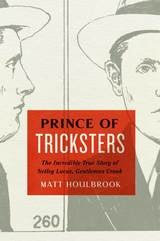
Prince of Tricksters
The Incredible True Story of Netley Lucas, Gentleman CrookMatt Houlbrook
University of Chicago Press, 2016
The lives of Netley Lucas are as flamboyant as they are unlikely. In Prince of Tricksters, Matt Houlbrook picks up the threads of Lucas’s colorful lies and lives. Interweaving crime writing and court records, letters and life-writing, Houlbrook tells Lucas’s fascinating story and, in the process, provides a panoramic view of the 1920s and ’30s. In the restless times after the Great War, the gentlemanly trickster was an exemplary figure, whose tall tales and bogus biographies exposed the everyday difficulties of knowing who and what to trust. Tracing how Lucas both evoked and unsettled the world through which he moved, Houlbrook shows how he prompted a pervasive crisis of confidence that encompassed British society, culture, and politics.
Taking readers on a romp through Britain, North America, and eventually into Africa, Houlbrook confronts readers with the limits of our knowledge of the past and challenges us to think anew about what history is and how it might be made differently.
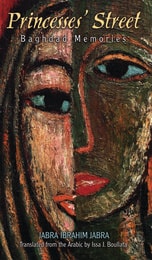
Princesses' Street
Baghdad MemoriesJabra Ibrahim Jabra
University of Arkansas Press, 2005
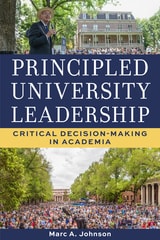
Principled University Leadership
Critical Decision-Making in AcademiaMarc A. Johnson
University of Nevada Press, 2025
Rooted in Johnson’s small-town origins and passion for civic engagement, this narrative offers unique insights into the path to university leadership and the key decisions leaders face. It is an invaluable resource for aspiring and current academic leaders seeking guidance in navigating the complexities of higher education.
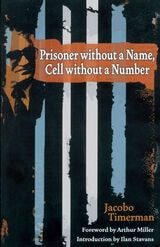
Prisoner Without a Name, Cell Without a Number
Jacobo Timerman
University of Wisconsin Press, 2002
"It ranks with Hannah Arendt's Eichmann in Jerusalem in its examination of the totalitarian mind, the role of anti-Semitism, the silence."—Eliot Fremont-Smith, Village Voice
"It is impossible to read this proud and piercing account of [Timerman's] suffering and his battles without wanting to be counted as one of Timerman's friends."—Michael Walzer, New York Review of Books
"Timerman was a living reminder that real prophets are irritants and not messengers of reassurance. He told it like it is, whether in Argentina, Israel, Europe, or the United States."—Arthur Miller
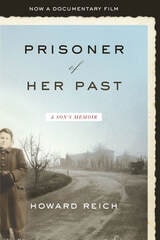
Prisoner of Her Past
A Son's MemoirHoward Reich
Northwestern University Press, 2011
Until February 15, 2001, Howard Reich’s mother, Sonia, had managed to keep almost everything about her experience of the Holocaust from her son. That night, she packed some clothes and fled her house in Skokie, Illinois, convinced that someone was trying to kill her. This was the first indication that she was suffering from late-onset post traumatic stress disorder, a little-known condition that can emerge decades after the initial trauma. For Howard, it was also the opening of a window onto his mother’s past.
In Prisoner of Her Past, Howard Reich has written a moving memoir about growing up as the child of Holocaust survivors and finding refuge from silence and fear in the world of jazz. It is only when Sonia’s memories overwhelm her and Howard begins to piece together her story that he comes to understand how his parents’ lives shaped his own. The paperback edition includes an epilogue by the author that relates developments since the publication of the cloth edition.
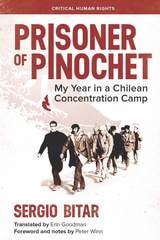
Prisoner of Pinochet
My Year in a Chilean Concentration CampSergio Bitar
University of Wisconsin Press, 2017
Prisoner of Pinochet is the gripping first-person chronicle of Bitar's year as a political prisoner before being expelled from Chile; a poignant narrative of men held captive together in a labor camp under harsh conditions, only able to guess at their eventual fate; and an insightful memoir of the momentous events of the early 1970s that led to seventeen years of bloody authoritarian rule in Chile. Available in English for the first time, this edition includes maps and photos from the 1970s and contextual notes by historian Peter Winn.