Results by title
3369 books match the query 'Cultural & Social' and 173 start with p
Political Ecology in a Yucatec Maya Community
E. N. Anderson with Aurora Dzib Xihum de Cen, Felix Medina Tzuc, and Pastor Valdez Chale
University of Arizona Press, 2005
Unlike many small tropical towns, Chunhuhub in rural Quintana Roo, Mexico, has not been a helpless victim of international forces. Its people are descendants of heroic Mayans who stood off the Spanish invaders. People in Chunhuhub continue to live largely through subsistence farming of maize and vegetables, supplemented by commercial orchard, livestock, and field crop cultivation. They are, however, also self-consciously “modernizing” by seeking better educational and economic opportunities.
Political Ecology in a Yucatec Maya Community tells the story of Chunhuhub at the beginning of the twenty-first century, focusing on the resource management of plants and animals. E. N. Anderson and his Maya co-authors provide a detailed overview of Maya knowledge of and relationships with the environment, describing how these relationships have been maintained over the centuries and are being transformed by modernization. They show that the Quintana Roo Mayas have been working to find ways to continue ancient and sustainable methods of making a living while also introducing modern techniques that can improve that living. For instance, traditional subsistence agriculture is broadly sustainable at current population densities, but hunting is not, and modern mechanized agriculture has an uncertain future.
Bringing the voice of contemporary Mayas to every page, the authors offer an encyclopedic overview of the region: history, environment, agriculture, medicine, social relations, and economy. Whether discussing the fine points of beekeeping or addressing the problem of deforestation, they provide a remarkably detailed account that immerses readers in the landscape.
Maya of the Yucatán Peninsula have had more than their share of successes—and some failures as well—and as a study in political and cultural ecology, Political Ecology in a Yucatec Maya Community has much to tell us about tropical development and about the human condition. Their experience tells us that if we wish to have not only farms but also mahogany, wildlife, and ecotourism, then further efforts are needed.
As Anderson observes, traditional Maya management, with its immense knowledge base, remains the best—indeed, the only—effective system for making a living from the Yucatán’s harsh landscape. Political Ecology in a Yucatec Maya Community is a compelling testament to the daily life practices of modern peasant farmers that can provide us with clues about more efficient management techniques for the conservation of biodiversity worldwide.
Political Ethnography
What Immersion Contributes to the Study of PowerEdited by Edward Schatz
University of Chicago Press, 2009
Scholars of politics have sought in recent years to make the discipline more hospitable to qualitative methods of research. Lauding the results of this effort and highlighting its potential for the future, Political Ethnography makes a compelling case for one such method in particular. Ethnography, the contributors amply demonstrate in a wide range of original essays, is uniquely suited for illuminating the study of politics.
Situating these pieces within the context of developments in political science, Edward Schatz provides an overarching introduction and substantive prefaces to each of the volume’s four sections. The first of these parts addresses the central ontological and epistemological issues raised by ethnographic work, while the second grapples with the reality that all research is conducted from a first-person perspective. The third section goes on to explore how ethnographic research can provide fresh perspectives on such perennial topics as opinion, causality, and power. Concluding that political ethnography can and should play a central role in the field as a whole, the final chapters illuminate the many ways in which ethnographic approaches can enhance, improve, and, in some areas, transform the study of politics.

Political Learning in Adulthood
A Sourcebook of Theory and ResearchEdited by Roberta S. Sigel
University of Chicago Press, 1989
In Political Learning in Adulthood, social scientists for the first time examine the changes in political outlook and behavior that take place during the adult years, providing an invaluable overview of the problems, theories, and methodological approaches that characterize the field of political socialization. They consider which political values remain constant and which are subject to change, and they explore the ways in which both ordinary and extraordinary life events affect adults' political worldviews. Among specific topics considered are the effects of age and aging, the relation between participation in the work force and the development and expression of political views, continuity and change in the wake of revolutionary social and political movements, and the effects of such traumatic and life-threatening situations as war and terrorist activity.
Political Life in the Wake of the Plantation
Sovereignty, Witnessing, RepairDeborah A. Thomas
Duke University Press, 2019
Political Spiritualities
The Pentecostal Revolution in NigeriaRuth Marshall
University of Chicago Press, 2009
After an explosion of conversions to Pentecostalism over the past three decades, tens of millions of Nigerians now claim that “Jesus is the answer.” But if Jesus is the answer, what is the question? What led to the movement’s dramatic rise and how can we make sense of its social and political significance? In this ambitiously interdisciplinary study, Ruth Marshall draws on years of fieldwork and grapples with a host of important thinkers—including Foucault, Agamben, Arendt, and Benjamin—to answer these questions.
To account for the movement’s success, Marshall explores how Pentecostalism presents the experience of being born again as a chance for Nigerians to realize the promises of political and religious salvation made during the colonial and postcolonial eras. Her astute analysis of this religious trend sheds light on Nigeria’s contemporary politics, postcolonial statecraft, and the everyday struggles of ordinary citizens coping with poverty, corruption, and inequality.
Pentecostalism’s rise is truly global, and Political Spiritualities persuasively argues that Nigeria is a key case in this phenomenon while calling for new ways of thinking about the place of religion in contemporary politics.
Politics of Emotion/Power of Affect
Edited by Susanne Witzgall and Marietta Kesting
Diaphanes, 2021
With contributions by Marie-Luise Angerer, Ben Anderson, Jace Clayton, Keren Cytter, Antonio Damasio, Cécile B. Evans, Karianne Fogelberg, Deborah Gould, Susanna Hertrich, Serhat Karakayali, Marietta Kesting, Carolyn Pedwell, and Susanne Witzgall.
Politics, Culture, and Sociability in the Basque Nationalist Party
Roland Vazquez
University of Nevada Press, 2010
Until now, social scientists studying Spanish politics have focused on party systems, regime transition, and election analysis, and anthropologists studying Spain have largely neglected its political parties. This book is a pathbreaking work of political anthropology and an ethnographic study of the Basque Nationalist Party (PNV). Author Roland Vazquez studies Basque nationalism as not merely a political phenomenon but as a cultural and social one as well. He examines the forces that have shaped the Basque political panorama, the nature of Basque political campaigns, Basque cultural and social movements both inside and outside the explicitly partisan milieu, and the role of other parties in the Basque Country. The study is enhanced by extensive interviews and broad fieldwork among Basque contacts of diverse backgrounds and loyalties. The result is a vivid portrait of political life in the contemporary Basque Country, of the tensions between various nationalist parties and philosophies, and of the way politics are influenced by Basque notions of community, social connections, and national identity. The book also serves as a model for studies of other political and nationalist movements and the cultural and social ties and values that drive them.

Popular Music Ethnographies
Practice, Place and IdentityEdited by Sarah Raine, Shane Blackman, Robert McPherson, and Iain A. Taylor
Intellect Books, 2025
This edited collection offers evocative ways into an international selection of popular music, from the Ecuadorian indie scene to Chinese rock. In exploring the experiences of musicians, fans, industry professionals, and academics, the rich complexity of popular music is brought to life through ethnography as an immersive approach to both undertaking and communicating research.
Experimenting with ethnography through the joys and tribulations of musical production, fandom, and scholarship, the contributors critically consider what it means to be a popular music ethnographer and what it means to take an ethnographic approach to studying popular music.
In addition to the critical essays, shorter vignettes are provided by musicians, venue owners, music writers, live music photographers, and fans. Altogether, the book explores the practices, places, and identities behind the music.
Popular Stories and Promised Lands
Fan Cultures and Symbolic PilgrimagesRoger C. Aden
University of Alabama Press, 2007
A conversation about who we are, where we’ve been, and where we might be going.
Popular Stories and Promised Lands enters a conversation about who we are, where we’ve been, and where we might be going by suggesting that possible answers to those questions can be found in the popular stories we encounter at the movies, on television, in popular magazines, and even on the funny pages.
As countless scholars and popular writers have noted, those of us living in the United States find ourselves at a cultural crossroads. We are increasingly aware that the stories that once permeated life in these United States, stories that tell us that social and economic progress comes from working hard, that everyone has an equal opportunity to experience such progress, do not resonate to the degree they once did. Because many Americans have traditionally defined themselves, others, and their unique sense of place through these stories, we find ourselves displaced socially, economically, politically, and/or culturally.
So, Roger Aden says, we go to places of our own making. Fans of the television series The X-Files return to the Funhouse each week for a dose of frightening fun. Fans of the weekly magazine Sports Illustrated play in the American Elysian Fields where democratic efforts at balancing work and play are valued. Fans of the movie Field of Dreams work as altruistic producers in an alternative garden spot.
Grounded in the author’s own experiences and reinforced by the voices of approximately two hundred additional fans of the four popular stories, this book offers a compelling case for understanding the alleged wasteland of popular culture as a fertile site of individually and communally created sacred places.

Popular Witchcraft
Straight from the Witch's MouthJack Fritscher
University of Wisconsin Press, 2004
Jack Fritscher sifts through legends of sorcery and the twisted history of witchcraft, including the casting of spells and incantations, with a focus on the growing role of witchcraft in popular culture and its mainstream commercialization through popular music, Broadway, Hollywood, and politics. As seriously historical as it is fun to read, there is no other book like it.
Population, Contact, and Climate in the New Mexican Pueblos
Ezra B. W. Zubrow
University of Arizona Press, 1974
Porkopolis
American Animality, Standardized Life, and the Factory FarmAlex Blanchette
Duke University Press, 2020

Pornography
Film and CultureLehman, Peter
Rutgers University Press, 2006
In this collection of path-breaking essays, thirteen respected scholars bring critical insights to the reality of porn and what it can tell us about ourselves sexually, culturally, and economically. Moving beyond simplistic feminist and religious positions that cast these films as categorical evils-a collective preserve of sexual perversion, misogyny, pedophilia, and racism-the contributors to this volume raise the bar of the debate and push porn studies into intriguing new territory.
The essays are divided into two sections. The first reprints important debates on the topic and traces the evolution of pornographic film, including comparing its development to that of Hollywood cinema. The second part presents new essays that consider current trends in the field, including pornography's expansion into new technologies.
This book separates this compelling genre from the sensation and shame that have long surrounded and obscured it. It will be of interest to general readers and film scholars alike.
Porous Becomings
Anthropological Engagements with Michel SerresAndreas Bandak and Daniel M. Knight, editors
Duke University Press, 2024
Contributors. Andreas Bandak, Jane Bennett, Tom Boylston, Steven D. Brown, Matei Candea, Alberto Corsín Jiménez, David Henig, Michael Jackson, Daniel M. Knight, Celia Lowe, Morten Nielsen, Stavroula Pipyrou, Elizabeth Povinelli, Andrew Shryock, Arpad Szakolczai
Post/Revolutionary Conditions
Renewed Visions of the Iranian Freedom StruggleAlborz Ghandehari
Northwestern University Press, 2025
An exploration of how the Iranian people have renewed their longtime struggle for freedom
The Woman, Life, Freedom uprising is only the latest manifestation of a century-long struggle for liberation in Iran. This ongoing movement for justice has encompassed two revolutions against domestic dictatorship and foreign imperialism, as well as a series of uprisings since the 1979 Iranian Revolution, which was followed by a new era of repression. Post/Revolutionary Conditions: Renewed Visions of the Iranian Freedom Struggle offers an intersectional analysis of how progressive and radical movement builders have reenvisioned liberation in the post-’79 era, despite new forms of oppression under the Islamic Republic and from US and other foreign imperial powers. Bringing together a diverse array of sources, including oral histories with Iranian labor, student, and gender justice organizers, as well as resistance literature and art, Alborz Ghandehari challenges narratives that treat working-class, feminist, queer, and oppressed ethnic minorities’ movements as separate from one another. Post/Revolutionary Conditions demonstrates how such potent reimaginings of collective liberation and a radically democratic future have been shaped by multiple generations of protest and kindred struggles globally.
Postcolonial Automobility
Car Culture in West AfricaLindsey B. Green-Simms
University of Minnesota Press, 2015
For more than a century cars have symbolized autonomous, unfettered mobility and an increasingly global experience. And yet, they are often used differently outside the centers of global capitalism. This pioneering book considers how, through the lens of the automobile, we can assess the pleasures, dangers, and limits of global modernity in West Africa. Through new and provocative readings of famous plays, novels, and films, as well as recent popular videos, Postcolonial Automobility reveals the surprising ways in which automobility in the region is, at once, an everyday practice, an ethos, a fantasy of autonomy, and an affective activity intimately tied to modern social life.
Lindsey B. Green-Simms begins with the history of motorization in West Africa from the colonial era to the decolonizing decades after World War II, and addresses the tragedy of car accidents through a close reading of Wole Soyinka’s 1965 postindependence play The Road. Shifting to screen media, she discusses Ousmane Sembene’s Xala and Jean-Pierre Bekolo’s Quartier Mozart and reviews popular, low-budget Nollywood films. Finally, Green-Simms considers how feminist texts rewrite and work in dialogue with the male-centered films and novels where the car stands in for patriarchal power and capitalist achievement.
Providing a unique perspective on technology in Africa—one refusing to be confined to narratives of either underdevelopment or inevitable progress—and covering a broad range of interdisciplinary material, Postcolonial Automobility will appeal not only to scholars and students of African literature and cinema but also to those in postcolonial and globalization studies.

Postcolonialisms
An Anthology of Cultural Theory and CriticismDesai, Gaurav
Rutgers University Press, 2005
Bringing together thirty-seven essays that have helped define the study of colonial and postcolonial cultures, this expansive and thoughtfully organized anthology offers an up-to-date and in-depth overview of this rapidly developing field.
Canonical articles, most unexcerpted, explore postcolonialism’s key themes—power and knowledge—while articles by contemporary scholars expand the discipline to include discussions of the discovery of the New World, Native American and indigenous identities in Latin America and the Pacific, settler colonies in Africa and Australia, English colonialism in Ireland, and feminism in Nigeria and Egypt. The inclusion of a broad sampling of histories and theories attests to multiple, even competing postcolonialisms, while the skillful organization of the volume provides a useful map of the field in terms of recognizable patterns, shared family resemblances, and common genealogies.
The book is divided into nine sections: Ideologies of Imperialism, The Critique of Colonial Discourse, The Politics of Language and Literary Studies, Nationalisms and Nativisms, Hybrid Identities, Gender and Sexualities, Reading the Subaltern, Comparative (Post)colonialisms, and Globalization and Postcoloniality. Detailed introductions to each section serve to develop key themes, encourage debate, and contextualize the wide-ranging voices that contribute to the topic.
The most cogent and teachable collection of postcolonial texts yet compiled, this anthology is equally suitable for undergraduate students and seasoned scholars.
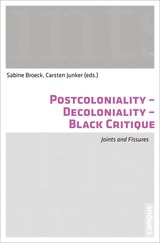
Postcoloniality-Decoloniality-Black Critique
Joints and FissuresEdited by Sabine Broeck and Carsten Junker
Campus Verlag, 2014
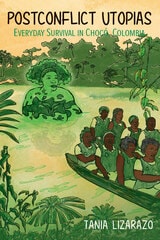
Postconflict Utopias
Everyday Survival in Chocó, ColombiaTania Lizarazo
University of Illinois Press, 2024
A merger of eyewitness accounts and theory, Postconflict Utopias explores the links between lived knowledge and survival while revealing the power unleashed when women ask the simple question, “Why not?”
Posterity Is Now
Practicing Museum Anthropology, Collections Care, and Collaborative Research with Indigenous PeoplesJennifer A. Shannon
University of Wyoming Press, 2025
In this handbook based on over twenty years of teaching and practice at the intersection of museums, anthropology, and Indigenous peoples, Jennifer A. Shannon covers both the theoretical (i.e., exploring the idea of objects as kin) and the pragmatic (i.e., guidelines for how to design and budget collaborative projects). She advocates for fundamental change in how anthropological research design and practice are done within and beyond the museum and how leadership and staff view the very purpose of the museum. She also demonstrates how collaborative museum anthropology can be a model for the fields of anthropology, public scholarship, and social science research more broadly.
Posterity Is Now is a starting point, a “companion to practice,” written in accessible language and equally relevant for use in university classrooms, by qualitative researchers, and by practitioners in museums and cultural centers.
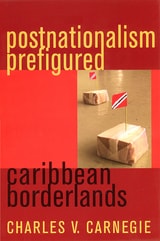
Postnationalism Prefigured
Caribbean BorderlandsCarnegie, Charles V
Rutgers University Press, 2002
Carnegie shows not only that the nation-state is an exhausted form of political organization, but that in the Caribbean the ideological and political reach of the nation-state has always been tenuous at best. Caribbean peoples, he suggests, live continually in breach of the nation-state configuration. Drawing both on his own experiences as a Jamaican-born anthropologist and on the examples provided by those who have always considered national borders as little more than artificial administrative nuisances, Carnegie investigates a fascinating spectrum of individuals, including Marcus Garvey, traders, black albinos, and Caribbean Ba’hais. If these people have not themselves developed a scholarly doctrine of transnationalism, they have, nevertheless, effectively lived its demand and prefigured a postnational life.
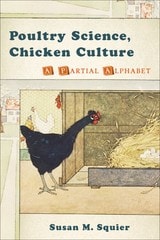
Poultry Science, Chicken Culture
A Partial AlphabetSquier, Susan M
Rutgers University Press, 2010
Spanning fascinating and diverse fields, Susan Merrill Squier assesses the chicken as the focus of film, photography, and visual art in many media; details some of the roles played by chickens and eggs in the development of embryology, biology, and regenerative medicine; traces the iconic figure of the chicken (and the chicken thief) in political discourse during the 2008 presidential election; demonstrates the types of knowledge that have been lost as food production moved from small-scale farming to industrial agriculture; investigates the connection between women and chickens; analyzes the fears and risks behind the panic around avian flu; and scrutinizes the role of chicken farming in international development. A combination of personal passion and surprising scholarly information, Poultry Science, Chicken Culture will change forever the way you think about chickens.
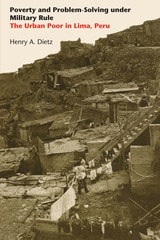
Poverty and Problem-Solving under Military Rule
The Urban Poor in Lima, PeruBy Henry A. Dietz
University of Texas Press, 1980
Poverty and the Quest for Life
Spiritual and Material Striving in Rural IndiaBhrigupati Singh
University of Chicago Press, 2015
The Indian subdistrict of Shahabad, located in the dwindling forests of the southeastern tip of Rajasthan, is an area of extreme poverty. Beset by droughts and food shortages in recent years, it is the home of the Sahariyas, former bonded laborers, officially classified as Rajasthan’s only “primitive tribe.” From afar, we might consider this the bleakest of the bleak, but in Poverty and the Quest for Life, Bhrigupati Singh asks us to reconsider just what quality of life means. He shows how the Sahariyas conceive of aspiration, advancement, and vitality in both material and spiritual terms, and how such bridging can engender new possibilities of life.
Singh organizes his study around two themes: power and ethics, through which he explores a complex terrain of material and spiritual forces. Authority remains contested, whether in divine or human forms; the state is both despised and desired; high and low castes negotiate new ways of living together, in conflict but also cooperation; new gods move across rival social groups; animals and plants leave their tracks on human subjectivity and religiosity; and the potential for vitality persists even as natural resources steadily disappear. Studying this milieu, Singh offers new ways of thinking beyond the religion-secularism and nature-culture dichotomies, juxtaposing questions about quality of life with political theologies of sovereignty, neighborliness, and ethics, in the process painting a rich portrait of perseverance and fragility in contemporary rural India.
Power and Performance
Ethnographic Explorations through Proverbial Wisdom and Theater in Shaba, ZaireJohannes Fabian
University of Wisconsin Press, 1990
In 1985 Johannes Fabian, while engaged in fieldwork in the Shaba province of Zaire, first encountered this saying. Its implications—for the charismatic religious movements Fabian was examining, for the highly charged political atmosphere of Zaire, and for the cultures of the Luba peoples—continued to intrigue him, though its meaning remained elusive. On a later visit, he mentioned the saying to a company of popular actors, and triggered an ethnographic brainstorm. “Spontaneously, they decided it would be just the right topic for their next play. On the spot they began planning—suggestions for a plot were made, problems of translating the French term ‘pouvoir’ were debated, several actors cited sayings and customs from their home villages. . . .”
Power and Performance examines traditional proverbs about power as it illustrates how the performance of Le pouvoir se mange entier was created, rehearsed, and performed. The play deals with the issue of power through a series of conflicts between villagers and their chief. Both rehearsal and performance versions of the text of this drama are included, in Swahili and in English translation.

Power of Nature
Archaeology and Human-Environmental Dynamicsedited by Monica L. Smith
University Press of Colorado, 2022
Climatic events, pathogens, and animals as nonhuman agents, ranging in size from viruses to mega-storms, have presented our species with dynamic conditions that overwhelm human capacities. In some cases, people have modified architecture to deal with a constant onslaught of storms, as in Japan or the Caribbean; in other cases, they have welcomed the occasional natural disaster as a chance to start fresh or to put into place new ideas and practices, as in the case of ancient Roman cities. Using the concept of “agency” as one in which multiple sentient and nonhuman actors interact in a landscape, and exploring locations such as the Caribbean, the Pacific, South Asia, the Andes, the Mediterranean, Mesoamerica, North America, and the Arctic, the authors provide compelling explanations of the effect of an entire realm of natural powers that beset human societies past and present—from storms, earthquakes, and fires to vegetation, domestic animals, and wild birds. Throughout, the emphasis is on the philosophical and engineering adjustments that people make to stay resilient when facing the perpetual changes of the natural world.
Using an archaeological perspective, The Power of Nature illustrates and analyzes the many
ways that people do not control their environments. It will be of interest to archaeologists, as well as scholars in science, biology, botany, forestry, urban studies, and disaster management.
Contributors: Steven Ammeran, Traci Ardren, Katelyn J. Bishop, Karen Mohr Chávez, Sergio Chávez, Stanislava Chávez, Emelie Cobb, Jago Cooper, Harper Dine, Chelsea Fisher, Jennifer Huebert, Dale L. Hutchinson, Sara L. Juengst, Kanika Kalra, François Oliva, Matthew C. Peros, Jordan Pickett, Seth Quintus, John Robb, Monica L. Smith, Jillian A. Swift, Silvia Tomášková, Kyungsoo Yoo
Power, Patronage, and the Local State in Ghana
Barry Driscoll
Ohio University Press, 2023
Powers Of Diaspora
Two Essays On The Relevance Of Jewish CultureJonathan Boyarin
University of Minnesota Press, 2002
Reasserts the centrality of Jewish culture to contemporary discussions of diaspora
Diaspora: the scattering of a people, often described as a condition of helplessness and a pathology to be overcome. It can also be, as Jonathan Boyarin and Daniel Boyarin assert in this provocative work, a unique source of power and strength. Focusing on Jewish experience, Powers of Diaspora forcefully argues that diasporic communities exercise a distinct form of cultural power in order to maintain themselves.
With reference to rabbinic culture and contemporary Jewish ethnography, the authors evoke the cultural strategies of Jewish diaspora—of regeneration through statelessness—that should prove increasingly relevant to the dilemmas and possibilities of the "new diasporas" born in the midst and in the aftermath of the modern world-system. Their work exposes the various methods by which peoples in diaspora "legislate" distinctive ways of life and establish formal communal structures, thus creating fluid yet effective boundaries between themselves and the others who surround them, and critiques the internal power dynamics that can sometimes result.Powers of Diaspora strongly reasserts the place of Jewish culture in contemporary discussions of diaspora, where the cultural politics of postcolonialism have remarginalized Jewish experience; at the same time, it brings insights from studies of other diasporas to bear on the study of Jews. In challenging the equation of diaspora with powerlessness, the book questions the modern nation-state ideal and suggests that diasporic cultural formations offer important clues toward an alternative means of relating culture to polity.
Practice of Everyday Life
Volume 2: Living and CookingMichel De Certeau
University of Minnesota Press, 1998
Practices of Coexistence
Constructions of the Other in Early Modern PerceptionsMarianna D. Birnbaum
Central European University Press, 2017
Practicing Community
Class Culture and Power in an Urban NeighborhoodBy Rhoda H. Halperin
University of Texas Press, 1998
Cincinnati's East End river community has been home to generations of working-class people. This racially mixed community has roots that reach back as far as seven generations. But the community is vulnerable. Developers bulldoze "raggedy" but affordable housing to build upscale condos, even as East Enders fight to preserve the community by participating in urban development planning controlled by powerful outsiders.
This book portrays how East Enders practice the preservation of community. Drawing on more than six years of anthropological research and advocacy in the East End, Rhoda Halperin argues for redefining community not merely as a place, but as a set of culturally embedded and class-marked practices that give priority to caring for children and the elderly, procuring livelihood, and providing support for family, friends, and neighbors. These practices create the structures of community within the larger urban power structure.
Halperin uses different genres to weave the voices of East Enders throughout the book. Poems and narratives offer poignant insights into the daily struggles against impersonal market forces that work against the struggle for livelihood. This firsthand account questions commonly held assumptions about working-class people. In a fresh way, it reveals the cultural construction of marginality, from the viewpoints of both "real East Enders" and the urban power structure.
Practicing Cooperation
Mutual Aid beyond CapitalismAndrew Zitcer
University of Minnesota Press, 2021
A powerful new understanding of cooperation as an antidote to alienation and inequality
From the crises of racial inequity and capitalism that inspired the Black Lives Matter movement and the Green New Deal to the coronavirus pandemic, stories of mutual aid have shown that, though cooperation is variegated and ever changing, it is also a form of economic solidarity that can help weather contemporary social and economic crises. Addressing this theme, Practicing Cooperation delivers a trenchant and timely argument that the way to a more just and equitable society lies in the widespread adoption of cooperative practices. But what renders cooperation ethical, effective, and sustainable?
Providing a new conceptual framework for cooperation as a form of social practice, Practicing Cooperation describes and critiques three U.S.-based cooperatives: a pair of co-op grocers in Philadelphia, each adjusting to recent growth and renewal; a federation of two hundred low-cost community acupuncture clinics throughout the United States, banded together as a cooperative of practitioners and patients; and a collectively managed Philadelphia experimental dance company, founded in the early 1990s and still going strong. Through these case studies, Andrew Zitcer illuminates the range of activities that make contemporary cooperatives successful: dedicated practitioners, a commitment to inclusion, and ongoing critical reflection. In so doing he asserts that economic and social cooperation must be examined, critiqued, and implemented on multiple scales if it is to combat the pervasiveness of competitive individualism.
Practicing Cooperation is grounded in the voices of practitioners and the result is a clear-eyed look at the lived experience of cooperators from different parts of the economy and a guidebook for people on the potential of this way of life for the pursuit of justice and fairness.
Practicing Materiality
Edited by Ruth M. Van Dyke
University of Arizona Press, 2015
Practicing Materiality focuses on the practical job of applying materiality to anthropological investigations, but with the firm retention of anthropocentrism. The philosophical discussions that run through the nine chapters develop practical applications for material studies, including Heideggerian phenomenology, Gellian secondary agency, object life histories, and bundling. Seven case studies are flanked by an introduction and a discussion chapter. The case studies represent a wide range of archaeological and anthropological contexts, from contemporary New York City and Turkey to fifteenth-century Portugal, the ancient southwest United States, and the ancient Andes. Authors in every chapter argue for the rejection of subject/object dualism, regarding material things as actively involved in the negotiation of power within human social relationships. Practicing Materiality demonstrates that it is possible to focus on the entangled lives of things without losing sight of their political and social implications.
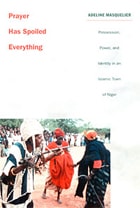
Prayer Has Spoiled Everything
Possession, Power, and Identity in an Islamic Town of NigerAdeline Masquelier
Duke University Press, 2001
To explore the role of bori possession in local definitions of history, power, and identity, Masquelier spent a total of two years in Niger, focusing on the diverse ways in which spirit mediums share, transform, and contest a rapidly changing reality, threatened by Muslim hegemony and financial hardship. She explains how the spread of Islam has provoked irreversible change in the area and how prayer—a conspicuous element of daily life that has become virtually synonymous with Islamic practice in this region of west Africa—has thus become equated with the loss of tradition. By focusing on some of the creative and complex ways that bori at once competes with and borrows from Islam, Masquelier reveals how possession nonetheless remains deeply embedded in Mawri culture, representing more than simple resistance to Islam, patriarchy, or the state. Despite a widening gap between former ways of life and the contradictions of the present, it maintains its place as a feature of daily life in which villagers participate with varying degrees of enthusiasm and approval.
Specialists in African studies, in the anthropology of religion, and in the historical transformations of colonial and postcolonial societies will welcome this study.
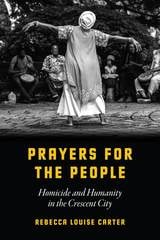
Prayers for the People
Homicide and Humanity in the Crescent CityRebecca Louise Carter
University of Chicago Press, 2019
Inspired by ministers and guided by grieving mothers who hold birthday parties for their deceased sons, Prayers for the People traces the emergence of a powerful new African American religious ideal at the intersection of urban life, death, and social and spiritual change. Carter frames this sensitive ethnography within the complex history of structural violence in America—from the legacies of slavery to free but unequal citizenship, from mass incarceration and overpolicing to social abandonment and the unequal distribution of goods and services. And yet Carter offers a vision of restorative kinship by which communities of faith work against the denial of Black personhood as well as the violent severing of social and familial bonds. A timely directive for human relations during a contentious time in America’s history, Prayers for the People is also a hopeful vision of what an inclusive, nonviolent, and just urban society could be.
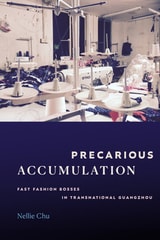
Precarious Accumulation
Fast Fashion Bosses in Transnational GuangzhouNellie Chu
Duke University Press, 2026
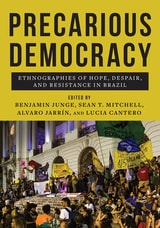
Precarious Democracy
Ethnographies of Hope, Despair, and Resistance in BrazilBenjamin Junge
Rutgers University Press, 2021
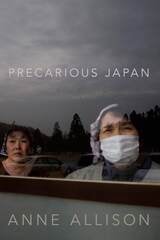
Precarious Japan
Anne Allison
Duke University Press, 2013
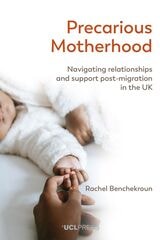
Precarious Motherhood
Navigating Relationships and Support Post-Migration in the UKRachel Benchekroun
University College London, 2025
Precarious Motherhood is a deeply human investigation of the lives of racially minoritized mothers as they navigate the intersecting challenges of financial hardship and the UK’s hostile immigration policies. Based on thorough ethnographic research, Rachel Benchekroun examines how these mothers forge relationships to access support, maintain their children’s well-being, and carve out spaces of belonging in an often unwelcoming system. The book captures the resilience and the relentless precarity of motherhood in migration, where every relationship shapes social barriers and everyday survival.
Through the voices of over twenty migrant mothers, this work sheds light on the personal and political dimensions of motherhood. It provides critical insights into state policies and social infrastructures that shape migrant lives, making it a valuable resource for scholars of migration and social justice.
Preclassic Maya Pottery at Cuello, Belize
Laura J. Kosakowsky
University of Arizona Press, 1987
Predatory Economies
The Sanema and the Socialist State in Contemporary AmazoniaAmy Penfield
University of Texas Press, 2023
2024 Honorable Mention, Fernando Coronil Prize, Latin American Studies Association, Section on Venezuelan Studies
A study of the modes of predation used by and against the Sanema people of Venezuela.
Predation is central to the cosmology and lifeways of the Sanema-speaking Indigenous people of Venezuelan Amazonia, but it also marks their experience of modernity under the socialist “Bolivarian” regime and its immense oil wealth. Yet predation is not simply violence and plunder. For Sanema people, it means a great deal more: enticement, seduction, persuasion. It suggests an imminent threat but also opportunity and even sanctuary.
Amy Penfield spent two and a half years in the field, living with and learning from Sanema communities. She discovered that while predation is what we think it is—invading enemies, incursions by gold miners, and unscrupulous state interventions—Sanema are not merely prey. Predation, or appropriation without reciprocity, is essential to their own activities. They use predatory techniques of trickery in hunting and shamanism activities, while at the same time, they employ tactics of manipulation to obtain resources from neighbors and from the state. A richly detailed ethnography, Predatory Economies looks beyond well-worn tropes of activism and resistance to tell a new story of agency from an Indigenous perspective.

Pregnant on Arrival
Making the Illegal ImmigrantEithne Luibhéid
University of Minnesota Press, 2013
“State alert as pregnant asylum seekers aim for Ireland.” “Country Being Held Hostage by Con Men, Spongers, and Those Taking Advantage of the Maternity Residency Policy.” From 1997 to 2004, headlines such as these dominated Ireland’s mainstream media as pregnant immigrants were recast as “illegals” entering the country to gain legal residency through childbirth. As immigration soared, Irish media and politicians began to equate this phenomenon with illegal immigration that threatened to destroy the country’s social, cultural, and economic fabric.
Pregnant on Arrival explores how pregnant immigrants were made into paradigmatic figures of illegal immigration, as well as the measures this characterization set into motion and the consequences for immigrants and citizens. While focusing on Ireland, Eithne Luibhéid’s analysis illuminates global struggles over the citizenship status of children born to immigrant parents in countries as diverse as the United States, Hong Kong, and elsewhere. Scholarship on the social construction of the illegal immigrant calls on histories of colonialism, global capitalism, racism, and exclusionary nation building but has been largely silent on the role of nationalist sexual regimes in determining legal status. Eithne Luibhéid turns to queer theory to understand how pregnancy, sexuality, and immigrants’ relationships to prevailing sexual norms affect their chances of being designated as legal or illegal.
Pregnant on Arrival offers unvarnished insight into how categories of immigrant legal status emerge and change, how sexual regimes figure prominently in these processes, and how efforts to prevent illegal immigration ultimately redefine nationalist sexual norms and associated racial, gender, economic, and geopolitical hierarchies.
Prehistoric Peoples of South Florida
William E. McGoun
University of Alabama Press, 1993
To many people in South Florida, and "oldtimer" is someone who has lived there for more than five years. Prehistoric Peoples of South Florida considers the culture history of the real South Florida "oldtimers" dating from 10,000 B.C. through the invasion by Europeans and analyzes the ways in which they adapted to their environment through time—or caused their environment to adapt to them.
South Florida is a biological island, its plant communities circumscribed by the southern limits of frost. Its peoples were distinct from those to the north and were less studied by scholars. In recent years the pace of research has increased, but there has been no attempt at synthesis since John M. Goggin wrote his still-unpublished manuscript on the Glades nearly half a century ago. Prehistoric Peoples of South Florida assembles the available knowledge and discusses competing theories, and does so in terms that are understandable to the general reader. McGoun outlines a cultural system that maintained an impressive continuity for 10,000 years—before being destroyed by two centuries of European contact.
Presence and Social Obligation
An Essay on the ShareJames Ferguson
Prickly Paradigm Press, 2021
Pretty Modern
Beauty, Sex, and Plastic Surgery in BrazilAlexander Edmonds
Duke University Press, 2010
Prison Cultures
Performance, Resistance and DesireAylwyn Walsh
Intellect Books, 2023
Using a feminist approach to reach beyond tropes of “bad girls” and simplistic inside vs. outside dynamics, Prison Cultures examines how cultural products can perpetuate or disrupt hegemonic understandings of the world of prisons. Focusing primarily on the UK and using examples from pop cultures, the book identifies how and why prison functions as a fixed field and postulates new ways of viewing performances in and of prison that trouble the institution. A new contribution to the fields of feminist cultural criticism and prison studies, Aylwyn Walsh explores how the development of a theory of resistance and desire is central to the understanding of women’s incarceration. It problematizes the prevalence of purely literary analysis or case studies that proffer particular models of arts practice as transformative of offending behavior.
Prison Land
Mapping Carceral Power across Neoliberal AmericaBrett Story
University of Minnesota Press, 2019
From broken-window policing in Detroit to prison-building in Appalachia, exploring the expansion of the carceral state and its oppressive social relations into everyday life
Prison Land offers a geographic excavation of the prison as a set of social relations—including property, work, gender, and race—enacted across various landscapes of American life. Prisons, Brett Story shows, are more than just buildings of incarceration bound to cycles of crime and punishment. Instead, she investigates the production of carceral power at a range of sites, from buses to coalfields and from blighted cities to urban financial hubs, to demonstrate how the organization of carceral space is ideologically and materially grounded in racial capitalism.
Story’s critically acclaimed film The Prison in Twelve Landscapes is based on the same research that informs this book. In both, Story takes an expansive view of what constitutes contemporary carceral space, interrogating the ways in which racial capitalism is reproduced and for which police technologies of containment and control are employed. By framing the prison as a set of social relations, Prison Land forces us to confront the production of new carceral forms that go well beyond the prison system. In doing so, it profoundly undermines both conventional ideas of prisons as logical responses to the problem of crime and attachment to punishment as the relevant measure of a transformed criminal justice system.
Probing Arts and Emergent Forms of Life
Michael M. J. Fischer
Duke University Press, 2023
Problems in General Linguistics
An Expanded Edition, Volume 1Émile Benveniste
HAU, 2026
This new edition will delight linguists and philosophers already familiar with Benveniste and introduce his work to a new generation of students. Benveniste studies are going through an enthusiastic revival in Europe; after reading this book, readers elsewhere will understand why.
Producing Bollywood
Inside the Contemporary Hindi Film IndustryTejaswini Ganti
Duke University Press, 2012