Results by title
3748 books match the query 'Europe' and 180 start with p
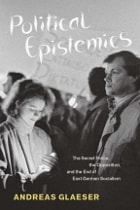
Political Epistemics
The Secret Police, the Opposition, and the End of East German SocialismAndreas Glaeser
University of Chicago Press, 2011
What does the durability of political institutions have to do with how actors form knowledge about them? Andreas Glaeser investigates this question in the context of a fascinating historical case: socialist East Germany’s unexpected self-dissolution in 1989. His analysis builds on extensive in-depth interviews with former secret police officers and the dissidents they tried to control as well as research into the documents both groups produced. In particular, Glaeser analyzes how these two opposing factions’ understanding of the socialist project came to change in response to countless everyday experiences. These investigations culminate in answers to two questions: why did the officers not defend socialism by force? And how was the formation of dissident understandings possible in a state that monopolized mass communication and group formation? He also explores why the Stasi, although always well informed about dissident activities, never developed a realistic understanding of the phenomenon of dissidence.
Out of this ambitious study, Glaeser extracts two distinct lines of thought. On the one hand he offers an epistemic account of socialism’s failure that differs markedly from existing explanations. On the other hand he develops a theory—a sociology of understanding—that shows us how knowledge can appear validated while it is at the same time completely misleading.
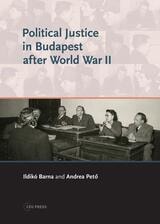
Political Justice in Budapest after World War II
Andrea Peto
Central European University Press, 2015
In Hungary, which fell under Soviet influence at the end of World War II, those who had participated in the wartime atrocities were tried by so called people’s courts. This book analyses this process in an objective, quantitative way, contributing to the present timely discussion on the Hungarian war guilt. The authors apply a special focus on the gender aspect of the trials.
Political justice had a specific nature in Hungary. War criminals began to be brought to trial while fighting was still underway in the western part of the country, well before the Nuremberg trials. Not only crimes committed during the war were tried in the same frame but also post-war ones. As far as the post-war period is concerned, legal proceedings regarding these crimes were most often launched on the basis of Act VII of 1946. This act of law concerned “the criminal law protection of the democratic constitutional order and the republic” and its basic aim was to facilitate the creation of a communist dictatorship and to deal with perceived or real enemies of the regime.
Political Radicalism in Late Imperial Vienna
Origins of the Christian Social Movement, 1848-1897John W. Boyer
University of Chicago Press, 1995
"Offers a comprehensive, multicausal study of the rise of Christian Socialism in Vienna, that phenomenon which was experienced nowhere else in urban Central Europe and which culminated in the famous clash between the Austrian establishment and the colourful, domineering lead of the movement, Karl, Lueger."—R.J.W. Evans, History
"Boyer's analysis is masterful in terms of research, exposition, and organization. His use of available economic data is judicious, and his sense of the social structure of late nineteenth-century Vienna is formidable."—William A. Jenks, American Historical Review
"To understand Viennese and even imperial politics in the latter half of the nineteenth century, Boyer's book is absolutely essential.""—Robert Wegs, Review of Politics
Political Survival of Small Parties in Europe
Jae-Jae Spoon
University of Michigan Press, 2015
It is often thought that small party survival or failure is a result of institutional constraints, the behavior of large parties, and the choices of individual politicians. Jae-Jae Spoon, in contrast, argues that the decisions made by small parties themselves determine their ability to balance the dual goals of remaining true to their ideals while maximizing their vote and seat shares, thereby enabling them to survive even in adverse electoral systems.
Spoon employs a mixed-methods approach in order to explore the policy, electoral, and communication strategies of West European Green Parties from 1980 to the present. She combines cross-national data on these parties with in-depth comparative case studies of two New Politics parties, the French and British Green Parties, that have survived in similar national-level plurality electoral systems. Both of these parties have developed as organizations which run candidates in elections at the local, national, and European levels in their respective countries. The parties’ survival, Spoon asserts, results from their ability to balance their competing electoral, policy, and communication goals.
Political Thought and Political Thinkers
Judith N. Shklar
University of Chicago Press, 1998
This second volume of Shklar's work—which follows the 1997 publication of Redeeming American Political Thought—brings together heretofore uncollected (and several unpublished) essays on a number of themes, including the place of the intellect in the modern political world and the dangers of identity politics. While many of these essays have been previously published, they remain far from accessible. In collecting the work scattered over the past forty years in journals and other publications, noted political theorist Stanley Hoffmann provides an essential guide to Shklar's thought, complemented by George Kateb's comprehensive introduction to her work. Hoffmann's selection, which includes Shklar's classic essay "The Liberalism of Fear," showcases her distinctive defense of liberalism and follows her explorations in this history of moral and political thought as she engages with Bergson, Arendt, and Rousseau.
Political Thought and Political Thinkers displays one of the century's most compelling and flexible intellects in action and is the definitive collection of her work on European history and thinkers.
"Shklar's legacy is an inspiring example of liberal thought at its arresting best, unflinchingly courageous and unmoved by the dreary and unmeaning harmonies conjured up by theories of justice and rights."—John Gray, Times Literary Supplement
Judith N. Shklar (1928-1992) was Cowles Professor of Government at Harvard University and the author of nine books in political theory.
Politics as Development
The Emergence of Political Parties in Nineteenth-Century SerbiaGale Stokes
Duke University Press, 1990

Politics of Contemporary European Cinema
Mike Wayne
Intellect Books, 1995
Mike Wayne identifies some key themes pertinent to a study of the contemporary cultural and political dynamics of European cinema from the mid-1980's, including the fall of the Berlin wall and the end of the Soviet Empire.
Throughout the book, issues are raised that question European culture and the nature of national cinema, including;
• The cultural relationship with Hollywood;
• Debates over cultural plurality and diversity;
• The disintegration of nation states along the eastern flank;
• Postcolonial travels and the hybridisation of the national formation.

Politics of James Connolly
Kieran Allen
Pluto Press, 1990
Kieran Allen breaks this mould, assessing the founder of the Irish Marxist movement ideas from a revolutionary socialist perspective. Allen considers the strengths and weaknesses of Connolly’s revolutionary strategy, the effect of his commitment to international socialism on his nationalist loyalties and arguing that, ultimately, Connolly's enduring relevance derives from his anti-imperialism. Any socialist movement today ignores this book at its peril.
Politics of the Sword
Dueling, Honor, and Masculinity in Modern ItalySteven C. Hughes
The Ohio State University Press, 2007

Politics on the Fringe
The People, Policies, and Organization of the French National FrontEdward G. DeClair
Duke University Press, 1999
Using rare, in-depth interviews with twenty-nine members of the Front elite, as well as public opinion survey data and electoral results, DeClair examines the internal structure of the Front, its political agenda, and its growing influence in France. DeClair shows how the party has dramatically expanded its traditionally narrow core constituency by capitalizing upon anxieties about national identity, immigration, European unification, and rising unemployment. In illustrating how the rhetoric surrounding such topics is key to the Front’s success, DeClair examines the Front’s legacy by detailing the links between the French far-right and similar movements in such countries as Germany, Belgium, Austria, Italy, and the United States. Finally, Politics on the Fringe offers not only a complete picture of the Front’s increasingly influential role in French partisan politics but also further insight into the resurgence of right-wing extremism throughout western societies in the late twentieth century.
This volume will be of primary importance to political scientists and those engaged with European politics, culture, and history. It will also appeal to those concerned with right-wing populism and political movements.
Politics without a Past
The Absence of History in Postcommunist NationalismShari J. Cohen
Duke University Press, 1999
common characterizations of postcommunist politics as either a resurgence of
aggressive nationalism or an evolution toward Western-style democracy. Cohen
draws upon extensive field research to paint a picture of postcommunist
political life in which ideological labels are meaningless and exchangeable
at will, political parties appear and disappear regularly, and citizens
remain unengaged in the political process.
In contrast to the conventional wisdom, which locates the roots of widespread intranational strife in deeply rooted national identities from the past, Cohen argues that a profound ideological vacuum has fueled destructive tension throughout postcommunist Europe and the former Soviet Union. She uses Slovakia as a case study to reveal that communist regimes bequeathed an insidious form of historical amnesia to the majority of the political elite and the societies they govern. Slovakia was particularly vulnerable to communist intervention since its precommunist national consciousness was so weak and its only period of statehood prior to 1993 was as a Nazi puppet-state. To demonstrate her argument, Cohen focuses on Slovakia’s failure to forge a collective memory of the World War II experience. She shows how communist socialization prevented Slovaks from tying their individual family stories—of the Jewish deportations, of the anti-Nazi resistance, or of serving in the wartime government—to a larger historical narrative shared with others, leaving them bereft of historical or moral bearings.
Politics without a Past develops an analytical framework that will be important for future research in Eastern Europe, the former Soviet Union, and beyond. Scholars in political science, history, East European and post-Soviet studies will find Cohen’s methodology and conclusions enlightening. For policymakers, diplomats, and journalists who deal with the region, she offers valuable insights into the elusive nature of postcommunist societies.
Politics, Economy, and Society in Bourbon Central America, 1759-1821
Jordana Dym
University Press of Colorado, 2007
These reforms profoundly changed aspects of Central America's politics and society; however, these essays reveal that changes in the region were shaped both internally and externally and that they weakened the region's ties to metropolitan Spain as often as they reinforced them. Contributors focus on specific policy changes and their consequences as well as transformations throughout the region for which no direct Bourbon inspiration appears to be responsible. Together they demonstrate that whether or not the Crown achieved its primary goals of centralization and control, its policies nevertheless provided opportunities for evident, often subtle, and occasionally unintentional shifts in the colonial government's relationship to its constituent populations. Contributors include Christophe Belaubre, Michel Bertrand, Jordana Dym, Jorge H. González, Timothy Hawkins, Sajid Alfredo Herrera, Gustavo Palma, Eugenia Rodriguez, Doug Tompson, and Stephen Webre.
Pompadour's Medium
Luxury and Reproduction in Eighteenth-Century FranceSusan M. Wager
University of Delaware Press, 2027
Pompadour's Medium reveals the depth of patron, amateur artist, and royal mistress Madame de Pompadour's contributions to the visual arts, long dismissed as superficial and trivial. Her artistic activities centered on an innovative exploration of the relationships between painting, sculpture, and the decorative arts at a moment when advances in reproductive printmaking threatened to flatten the differences between individual mediums. Eighteenth-century France experienced an unprecedented surge in the circulation of images. Increasingly faithful and affordable reproductive prints introduced works of art to ever-widening audiences, while a culture of reproduction was simultaneously thriving at the highest end of the artistic and economic spectrum—in luxury media, such as ceramics, textiles, and metalwork. This book recovers the pivotal role of luxury reproduction in Pompadour’s artistic endeavors, and her essential role in cultivating the intermedial approach of her frequent collaborator, painter François Boucher, who tended to think between media. It is only by restoring the centrality of reproductive media in this artist-patron relationship that we can understand the magnitude of Pompadour’s and Boucher’s contributions to the history of modern art.

Poor Kids in a Rich Country
America's Children in Comparative PerspectiveLee Rainwater
Russell Sage Foundation, 2003
Poor and Pregnant in Paris
Strategies for Survival in the Nineteenth CenturyRachel G Fuchs
Rutgers University Press, 1992
Rachel Fuchs shows how poor urban women in Paris negotiated their environment, and in some respects helped shape it, in their attempt to cope with their problems of poverty and pregnancy. She reveals who the women were and provides insight into the nature of their work and living arrangements. With dramatic detail, and drawing on actual court testimonies, Fuchs portrays poor women's childbirth experiences, their use of charity and welfare, and their recourse to abortion and infanticide as desperate alternatives to motherhood.
Fuchs also provides a comprehensive description of philanthropic and welfare institutions and outlines the relationship between the developing welfare state and official conceptions of womanhood. She traces the evolution of a new morality among policymakers in which secular views, medical hygiene, and a new focus on the protection of children replaced religious morality as a driving force in policy formation.
Combining social, intellectual, and medical history, this study of poor mothers in nineteenth-century society illuminates both class and gender relations in Paris, and illustrates the connection between social policy and the way ordinary women lived their lives.

Popular Culture in the Middle Ages
University of Wisconsin Press, 1986
The culture of the Middle Ages was as complex, if not as various, as our own, as the essays in this volume ably demonstrate. The essays cover a wide range of tipics, from church sculpture as "advertisement" to tricks and illusions as "homeeconomics."
Popular Music in Leeds
Histories, Heritage, People and PlacesEdited by Brett Lashua, Karl Spracklen, and Kitty Ross
Intellect Books, 2023
This is the first scholarly volume to focus on popular music in Leeds. It delves into the rich musical history of Leeds and its long tradition of vibrant venues, nightclubs, dance halls, pubs, and other sites of musical entertainment. The contributors use the popular music of Leeds to exemplify and inform understandings of broader cultural and urban changes, the social and historical significance of music as mass media; music and migration; music, racialization, and social equity; and industrial decline, deindustrialization, neoliberalism, and the rise of the twenty-four-hour city. Charting moments of stark musical politicization and de-politicization, while also tracing arguments about heritagizing popular music within discussions about music’s place in museums and in the urban economy, this book contributes to debates about why music matters, has mattered, and continues to matter in Leeds and beyond.
Popular Sovereignty and the Crisis of German Constitutional Law
The Theory and Practice of Weimar ConstitutionalismPeter C. Caldwell
Duke University Press, 1997
Caldwell makes accessible the rich literature in German constitutional thought of the Weimar period, most of which has been unavailable in English until now. On the liberal left, Hugo Preuss and Hans Kelsen defended a concept of democracy that made the constitution sovereign and, in a way, created the "Volk" through constitutional procedure. On the right, Carl Schmitt argued for a substantial notion of the "Volk" that could overrule constitutional procedure in a state of emergency. Rudolf Smend and Heinrich Triepel located in the constitution a set of inviolable values of the political community, while Hermann Heller saw in it a guarantee of substantial social equality. Drawing on the work of these major players from the 1920s, Caldwell reveals the various facets of the impassioned constitutional struggles that permeated German legal and political culture during the Weimar Republic.
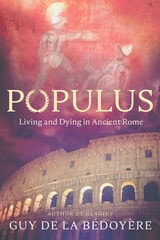
Populus
Living and Dying in Ancient RomeGuy de la Bédoyère
University of Chicago Press, 2024
Frenzied crowds, talking ravens, the stench of the Tiber River: life in ancient Rome was stimulating, dynamic, and often downright dangerous. The Romans relaxed and gossiped in baths, stole precious water from aqueducts, and partied and dined to excess. Everyone from senators to the enslaved crowded into theaters and circuses to watch their favorite singers, pantomime, and comedies and scream their approval at charioteers. The lucky celebrated their accomplishments with elaborate tombs. Amid pervasive inequality and brutality, beauty also flourished through architecture, poetry, and art.
From the smells of fragrant cookshops and religious sacrifices to the cries of public executions and murderous electoral mobs, Guy de la Bédoyère’s Populus draws on a host of historical and literary sources to transport us into the intensity of daily life at the height of ancient Rome.
Portraits of Medieval and Renaissance Living
Essays in Memory of David HerlihySamuel K. Cohn, Jr. and Steven A. Epstein, Editors
University of Michigan Press, 1996
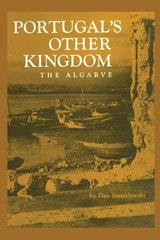
Portugal's Other Kingdom
The AlgarveBy Dan Stanislawski
University of Texas Press, 1963
A land of long ago on the brink of tomorrow. That is the Algarve, the southernmost province of Portugal, a land that knew the Phoenicians, Carthaginians, Greeks, Romans, Visigoths, Moslems—and yet retained its own distinctive personality. In the 1950s it first felt the impact of industrialization, and from that situation the author developed this book.
In presenting this descriptive geography of the Algarve, Dan Stanislawski offers no thesis, except that geographers, economists, politicians, humanists—all those interested in the way the world is developing—should watch the small, culturally disparate areas of the world, to learn what they have of value to teach, to enjoy the qualities of their independent ways of living, and to observe and evaluate their reaction to modern change. This book, the result of detailed observation of one such region, is a valuable contribution to the knowledge necessary to form sound value judgments on the future development of these areas.
From this account the charm of the Algarve emerges in all of its picturesqueness. With the aid of Stanislawski's vivid descriptions, his eighteen helpful maps and graphs, and his more than ninety photographs, the reader moves leisurely through this appealing, but unpublicized, region: along roadways bordered by rock walls and blooming almonds, traveled by sturdy burros bearing their loads of produce; through colorful landscapes of the Lower Algarve, with their pastel-calcimined dwellings and their intensively cultivated plots of olives, figs, carobs, grain, and vegetables; along the rugged cliff coast near Portimão, and the boat-filled port of Faro; past the canyon gardens of the Caldeirão; along the Arade River with its cork barges; northward past Cape S. Vicente to the area of wind-sheared trees.
Guided by Stanislawski, the reader comes to understand Algarvian problems inherent in soils, topography, climate, location, and history. He sees the Algarvians following the occupational practices that have produced for them, in the midst of difficult conditions, a stable culture: fishing, netmaking, shipbuilding, farming, herding, and so on. He realizes that these people, with their unique cultural background and environment, desire to live, and to change, in their own way. Finally, he learns how it is possible to communicate effectively with the Algarvians and with millions of other people whose peculiar problems tend to isolate them from the rest of the world.
Post-Communism
An IntroductionLeslie Holmes
Duke University Press, 1997

Post-Communism
An IntroductionLeslie Holmes
Duke University Press, 0
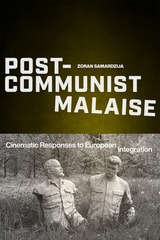
Post-Communist Malaise
Cinematic Responses to European IntegrationZoran Samardzija
Rutgers University Press, 2020
Post-World War One Plebiscites and Their Legacies
Exploring the Right of Self-DeterminationSergiusz Bober
Central European University Press, 2024
Plebiscites, or referendums, are epitomes of direct democracy and the right of self-determination. While direct democracy has always been a key subject in the theory and practice of western liberal democracies, the issue of self-determination has been propelled to the fore by the hegemonistic moves of Russia. By providing a historical analysis of the post-World War One plebiscites, this book deals with enduring, painfully contemporary, and in in any case fundamental, concepts.
The contributors to this edited volume approach the referendums comparatively. After grounding the analysis theoretically, the authors look at detailed aspects of individual cases, with the two plebiscites held in the Danish-German border region of Schleswig in the winter of 1920 as points of departure. They then extend the exploration through the inter-war period and address the effects of border delimitations on everyday life or gender roles in the context of ethnic mobilization. Finally, the book places the post-World War One plebiscites in a long-term perspective. The concluding essays assess, among others, the applicability of plebiscitary solutions to contemporary conflicts, taking into consideration issues of borders, religion, language, identity, and minority rights.

Postcards from Checkpoint Charlie
Images of the Berlin WallEdited by the Bodleian Library
Bodleian Library Publishing, 2008

Postcards from the Trenches
Images from the First World WarEdited by the Bodleian Library
Bodleian Library Publishing, 2008
The cards in this compelling volume were created not only by soldiers, but also by embedded journalists from France, Belgium, Austria, Germany, and Britain. The images capture scenes both humorous and poignant, including soldiers having a mock party with little food to eat, wounded soldiers smiling for the camera, a makeshift trench hospital, the bloody aftermath of a battle, and a huddle of men taking what they know could be their last communion before marching onto the battlefield. Other cards document the mundane duties that dominated wartime life, including men digging trenches, troops marching to new trenches and battlefields, and or soldiers nearly comatose with boredom while waiting for the fight to begin. This stunning visual narrative opens a new window into one of the most analyzed events in history, as the postcards’ images testify to the resilience and bravery of soldiers in the most trying circumstances.
A fascinating and unprecedented historical document, Postcards from the Trenches draws back the curtain to unflinchingly show the daily horror and humanity that define life in war.

Postcards, Translators and Esperanto Pioneers
An Alternative History of International CommunicationGuilherme Fians, Bernhard Struck, and Claire Taylor
University of London Press, 2025
The early twentieth century was a time when steamships, international postal services and the telephone were setting the pace of an early wave of globalisation in Europe. In this increasingly international scenario, what role did language play? To address the geopolitical problem of cross-border linguistic (mis)understanding, international auxiliary languages like Esperanto were created. But what happened to a constructed language when it travelled to different places?
This book tackles these questions by exploring the letters, postcards and activities of John Beveridge (1857–1943) and his family. This Scottish clergyman was a proficient Esperanto speaker, translator and co-founder of several Esperanto organisations. His long-standing engagement with the language left a unique archive that reveals how many Esperanto speakers exchanged letters across borders, produced literature for an international readership, organised congresses and used this language as an entry point into modernity and globalisation from their ‘marginal’ positions in the world.
By tracing this language-based form of grassroots internationalism, the book uncovers wide-reaching networks connecting a corner of Scotland with rural settings and villages in Finland, Bulgaria and Brazil. Ultimately, it asks: what do we learn about international communication and globalisation through the lens of Esperanto and postcards? Focusing on a constructed language and communication technologies that preceded the dominance of global English and social media, this book offers an alternative vantage point on the history of international communication.
Postcolonial Dublin
Imperial Legacies And The Built EnvironmentAndrew Kincaid
University of Minnesota Press, 2006
Postcoloniality-Decoloniality-Black Critique
Joints and FissuresEdited by Sabine Broeck and Carsten Junker
Campus Verlag, 2014
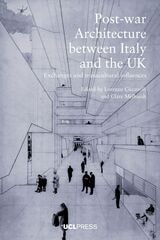
Postwar Architecture Between Italy and the UK
Exchanges and Transcultural InfluencesEdited by Lorenzo Ciccarelli and Clare Melhuish
University College London, 2021
In the aftermath of World War II’s devastation, Italy and the United Kingdom reimagined urban space. Post-war Architecture Between Italy and the UK explores how architects, urbanists, and historians in both countries collaborated around the shared need to rebuild. The authors discuss the far-reaching effects of this cultural exchange, including the influence of historic Italian town centers on British public space and the origin of postmodernism in clashes between British critics and Italian architects. Drawing on a wealth of archival materials, this volume offers new insights into architectural history in post-war Europe.
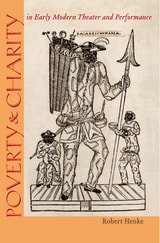
Poverty and Charity in Early Modern Theater and Performance
Robert Henke
University of Iowa Press, 2015
The actor-based theatre and performance traditions examined in this study, which persistently explore felt connections between the itinerant actor and the vagabond beggar, evoke the poor through complex and variegated forms of imagination, thought, and feeling. Early modern theatre does not simply reflect the social ills of hunger, poverty, and degradation, but works them through the forms of poverty, involving displacement, condensation, exaggeration, projection, fictionalization, and marginalization. As the critical mass of medieval charity was put into question, the beggar-almsgiver encounter became more like a performance. But it was not a performance whose script was prewritten as the inevitable exposure of the dissembling beggar. Just as people’s attitudes toward the poor could rapidly change from skepticism to sympathy during famines and times of acute need, fictions of performance such as Edgar’s dazzling impersonation of a mad beggar in Shakespeare’s King Lear could prompt responses of sympathy and even radical calls for economic redistribution.
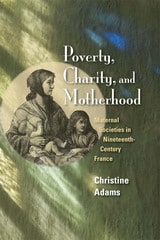
Poverty, Charity, and Motherhood
Maternal Societies in Nineteenth-Century FranceChristine Adams
University of Illinois Press, 2010
Poverty, Inequality, and the Future of Social Policy
Western States in the New World OrderKatherine McFate
Russell Sage Foundation, 1995
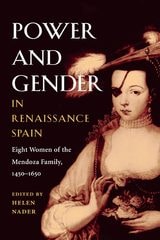
Power and Gender in Renaissance Spain
Eight Women of the Mendoza Family, 1450-1650Edited by Helen Nader
University of Illinois Press, 2003
These essays explore the lives of powerful women whose lineage gave them status within a patriarchal society designed to keep women from public life. Each of the influential and literary women discussed in this volume handled her status differently, and their concerns were not dissimilar from the concerns of feminists today: the blurring of the personal and the political, public versus private space, language and voice, and property.
Spanning the two centuries between Juana Pimentel, a widow who manipulated the patronage system to her own ends, and Luisa de Carvajal y Mendoza, who rejected both convent and marriage in favor of missionary work, Power and Gender in Renaissance Spain reveals a complex society in which women were limited by law, and yet their social status made those laws negotiable.
These women found that their personal agendas had a broad societal impact, challenging the laws of the land and patriarchal assumptions about women's inferiority.
Power and Knowledge Under Communism
A Political History of Economic and Sociological Research in HungaryGyorgy Peteri
Central European University Press, 2026
Power in Concert
The Nineteenth-Century Origins of Global GovernanceJennifer Mitzen
University of Chicago Press, 2013
Power of Petitioning in Early Modern Britain
Edited by Brodie Waddell and Jason Peacey
University College London, 2024
The humble petition was ubiquitous in early modern society and featured prominently in crucial moments such as the outbreak of civil wars and in everyday local negotiations about taxation, welfare, and litigation. People at all levels of society, from noblemen to paupers, used petitions to make their voices heard, and these are valuable sources for mapping the structures of authority and agency that framed early modern society.
The Power of Petitioning in Early Modern Britain offers a holistic study of this crucial topic in early modern British history. The contributors to this volume survey a vast range of sources, showing the myriad ways people petitioned the authorities from the sixteenth to the eighteenth centuries. They cross the jurisdictional, sub-disciplinary, and chronological boundaries that have otherwise constrained the current scholarly literature on petitioning and popular political engagement. Teasing out broad conclusions from innumerable smaller interventions in public life, they not only address the aims, attitudes, and strategies of those involved but also assess the significance of the processes they used. This volume makes it possible to rethink the power of petitioning and to re-evaluate broad trends regarding political culture, institutional change, and state formation.

Power of the Weak
STUDIES ON MEDIEVAL WOMENEdited by Jennifer Carpenter and Sally-Beth MacLean
University of Illinois Press, 1996
sixteenth centuries, these essays suggest that influence and power may
have paradoxically been available to women despite, and sometimes precisely
because of, their subordinate position in society. Striking for its range
of scholarship, this collection explores the power and independence, relationships
and influence of medieval queens, holy women, mothers, widows, Jewish
conversas, and others. Latin and Anglo-Norman hagiography, confessors'
manuals, coronation rituals, responsa literature, and legal theory
are represented.
"An intriguing exploration
of a basic paradox of medieval society, and an excellent blend of theory
and gender studies with detailed work relevant for social and political
history." -- Joel Rosenthal, author of Patriarchy and Families
of Privilege in Fifteenth-Century England
JENNIFER CARPENTER
is a lecturer in history at the University of Otago, Dunedin, New Zealand.
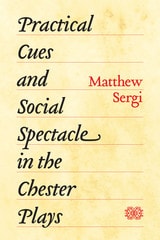
Practical Cues and Social Spectacle in the Chester Plays
Matthew Sergi
University of Chicago Press, 2020
Carefully combing through the plays, Sergi seeks out cues in the dialogues that reveal information about the original staging, design, and acting. These “practical cues,” as he calls them, have gone largely unnoticed by drama scholars, who have focused on the ideology and historical contexts of these plays, rather than the methods, mechanics, and structures of the actual performances. Drawing on his experience as an actor and director, he combines close readings of these texts with fragments of records, revealing a new way to understand how the Chester plays brought biblical narratives to spectators in the noisy streets. For Sergi, plays that once appeared only as dry religious dramas come to life as raucous participatory spectacles filled with humor, camp, and devotion.
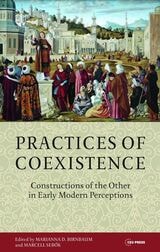
Practices of Coexistence
Constructions of the Other in Early Modern PerceptionsMarianna D. Birnbaum
Central European University Press, 2017
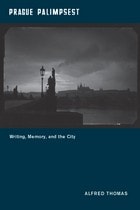
Prague Palimpsest
Writing, Memory, and the CityAlfred Thomas
University of Chicago Press, 2010
A city of immense literary mystique, Prague has inspired writers across the centuries with its beauty, cosmopolitanism, and tragic history. Envisioning the ancient city in central Europe as a multilayered text, or palimpsest, that has been constantly revised and rewritten—from the medieval and Renaissance chroniclers who legitimized the city’s foundational origins to the modernists of the early twentieth century who established its reputation as the new capital of the avant-garde—Alfred Thomas argues that Prague has become a paradoxical site of inscription and effacement, of memory and forgetting, a utopian link to the prewar and pre-Holocaust European past and a dystopia of totalitarian amnesia.
Considering a wide range of writers, including the city’s most famous son, Franz Kafka, Prague Palimpsest reassesses the work of poets and novelists such as Bohumil Hrabal, Milan Kundera, Gustav Meyrink, Jan Neruda, Vítĕzslav Nezval, and Rainer Maria Rilke and engages with other famous authors who “wrote” Prague, including Guillaume Apollinaire, Ingeborg Bachmann, Albert Camus, Paul Celan, and W. G. Sebald. The result is a comparative, interdisciplinary study that helps to explain why Prague—more than any other major European city—has haunted the cultural and political imagination of the West.
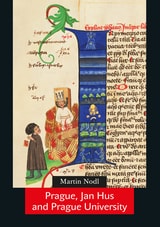
Prague, Jan Hus and Prague University
Martin Nodl
Karolinum Press, 2024
The Czech Reformation offered a radical solution to the spiritual and institutional crisis of the late medieval church at the end of the fourteenth century. The beginnings of this reform are distinctly connected with Prague University, which drew many educated people to Prague from across Europe. Through John Hus—a former Prague University student who became its rector in 1402—the Czech Reformation gave rise to a new, radical ecclesiology. Not only did Hus challenge the hierarchical system of the church, but under his influence, the Czech Reformation acquired a specific national shape, and elements of Czech messianism emerged with the university.
Prague, John Hus and Prague University explores that sentiment within Prague University, as well as its limits and restrictive consequences for the Czech Reformation and Czech medieval society. Emphasis is placed on showing how Prague and the university became a world that existed outside the Christian ecumenism of the time.
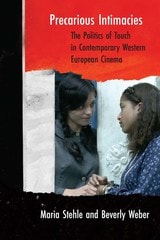
Precarious Intimacies
The Politics of Touch in Contemporary Western European CinemaMaria Stehle and Beverly Weber
Northwestern University Press, 2020
Twenty-first-century Europe is undergoing dramatic political and economic transformations that produce new forms of transnational contact as well as new regimes of exclusion and economic precarity. These political and economic shifts both circumscribe and enable new possibilities for intimacy. Many European films of the last two decades depict experiences of political and economic vulnerability in narratives of precarious intimacies. In these films, stories of intimacy, sex, love, and friendship are embedded in violence and exclusion, but, as Maria Stehle and Beverly Weber show, the politics of touch and connection also offers avenues to theorize forms of attention and affection that challenge exclusive notions of race, citizenship, and belonging.
Precarious Intimacies examines the aesthetic strategies that respond to this tension and proposes a politics of interpretation that identifies the potential and possibility of intimacy.
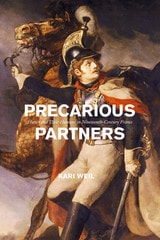
Precarious Partners
Horses and Their Humans in Nineteenth-Century FranceKari Weil
University of Chicago Press, 2020
Weil traces the evolving partnerships established between French citizens and their horses through this era. She considers the newly designed “races” of workhorses who carried men from the battlefield to the hippodrome, lugged heavy loads through the boulevards, or paraded women riders, amazones, in the parks or circus halls—as well as those unfortunate horses who found their fate on a dinner plate. Moving between literature, painting, natural philosophy, popular cartoons, sports manuals, and tracts of public hygiene, Precarious Partners traces the changing social, political, and emotional relations with these charismatic creatures who straddled conceptions of pet and livestock in nineteenth-century France.
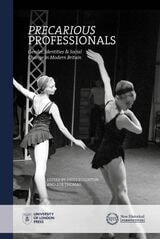
Precarious Professionals
Gender, Identities and Social Change in Modern BritainEdited by Heidi Egginton and Zoë Thomas
University of London Press, 2021
Precarious Professionals uncovers the inequalities and insecurities which lay at the heart of professional life in nineteenth and twentieth-century Britain. This book challenges conventional categories in the history of work, exploring instead the everyday labor of maintaining a professional identity on the margins of the traditional professions. Situating new historical perspectives on gender at the forefront of their research, the contributors explore how professional cultures could not only define themselves against but often flourished outside of, the confines of patriarchal codes and structures.
Precarious Professionals offers twelve fascinating case studies, ranging between the 1840s and the 1960s. From pioneering female lawyers and scientists to ballet dancers, secretaries, historians, humanitarian relief workers, social researchers, and Cold War diplomats, this book reveals that precarity was a thread woven throughout the very fabric of modern professional life. Together, these essays enrich our understanding of the histories and mysteries of professional identity and help us to reimagine the future of work in precarious times.
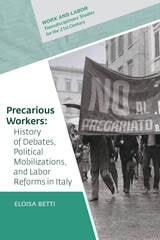
Precarious Workers
History of Debates, Political Mobilization, and Labor Reforms in ItalyEloisa Betti
Central European University Press, 2023
The recent vast upsurge in social science scholarship on job precarity has generally little to say about earlier forms of this phenomenon. Eloisa Betti’s monograph convincingly demonstrates on the example of Italy that even in the post-war phase of Keynesian stability and welfare state, precarious labor was an underlying feature of economic development. She examines how in this short period exceptional politics of labor stability prevailed. The volume then presents the processes whereby labor precarity regained momentum— under the name of flexibility— in the post-Fordist phase from the early 1980s, taking on new forms in the Craxi and Berlusconi eras.
Multiple actors are addressed in the analysis. The book gives voice to intellectuals, scholars, politicians and trade unionists as they have framed the concept and debates on precarious work from the 1950s onwards. Views of labor law experts, politicians and public servants are investigated in regard to labor regulations. Positions of the very precarians are explored, ranging from rural women, industrial homeworkers and blue-collar workers to physicians, university researchers and trainees, unveiling the emergence of anti-precarity social movements. The continuous role of women’s associations and feminist groups in opposing labor precarity since the 1950s is prominently exposed.
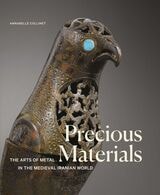
Precious Materials
The Arts of Metal in the Medieval Iranian WorldAnnabelle Collinet
Gingko, 2024
Medieval metalwork is one of the artistic highlights of the Iranian world, as well as of the Département des Arts de l’Islam at the Louvre in Paris, which holds more than one hundred and fifty objects from this period. A new approach to the study of a historic collection, Precious Material: The Arts of Metal in the Medieval Iranian World is a comprehensive overview of the production of metal in medieval Iran. Although this is one of the most important collections in the world, the objects, some well-known but many more unpublished, have never been studied or published as an ensemble. This volume includes a presentation of the collection through the lens of its centers of manufacture, a full technical analysis, as well as the functions and contexts in which the pieces were used. Each object is fully described and illustrated in color with close-up or X-ray images, and many inscriptions have been translated and are included in the catalog entries.
Prefaces to Canon Law Books in Latin Christianity
Selected Translations, 500-1317, second editionRobert Somerville
Catholic University of America Press, 2021
Preliminary Discourse to the Encyclopedia of Diderot
Jean Le Rond d'Alembert
University of Chicago Press, 1995