Results by title
28164 books match the query 'History' and 1297 start with p
Paradox at Play
Metaphor in Meister Eckhart's Sermons: with previously unpublished sermonsClint Johnson
Catholic University of America Press, 2022
Paradoxes of Education in a Republic
Eva T. H. Brann
University of Chicago Press, 1979
Paradoxes of Hawaiian Sovereignty
Land, Sex, and the Colonial Politics of State NationalismJ. Kehaulani Kauanui
Duke University Press, 2018

Paradoxes of Nostalgia
Cold War Triumphalism and Global Disorder since 1989Penny M. Von Eschen
Duke University Press, 2022
Paradoxes of Peace
German Peace Movements Since 1945Alice Holmes Cooper
University of Michigan Press, 1996
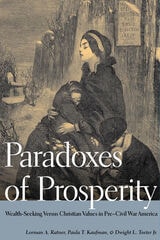
Paradoxes of Prosperity
Wealth Seeking in Pre-Civil War AmericaLorman A. Ratner, Paula T. Kaufman and Dwight L. Teeter Jr.
University of Illinois Press, 2008
At the same time, the United States felt the influence of the rise of popular mass-circulation newspapers and magazines and the surge in American book publishing. Concern over living correctly as well as prosperously was commonly discussed by leading authors and journalists, who were now writing for ever-expanding regional and national audiences. Women became more important as authors and editors, giving advice and building huge markets for women readers, with the magazine Godey's Lady's Book and novels by Susan Warner, Maria Cummins, and Harriet Beecher Stowe expressing women's views about the troubled state of society. Best-selling male writers--including novelist George Lippard, historian George Bancroft, and travel writer Bayard Taylor--were among those adding their voices to concerns about prosperity and morality and about America's place in the world. Writers and publishers discovered that a high moral tone could be exceedingly good for business.
The authors of this book examine how popular writers and widely read newspapers, magazines, and books expressed social tensions between prosperity and morality. This study draws on that nationwide conversation through leading mass media, including circulation-leading newspapers, the New York Herald and the New York Tribune, plus prominent newspapers from the South and West, the Richmond Enquirer and the Cincinnati Enquirer. Best-selling magazines aimed at middle-class tastes, Harper's Magazine and the Southern Literary Messenger, added their voices, as did two leading business magazines.
Paraguay and the Triple Alliance
The Postwar Decade, 1869-1878By Harris Gaylord Warren
University of Texas Press, 1978
In the War of the Triple Alliance—the most terrible conflict in South American history—Paraguay was almost annihilated by the armed forces of Brazil, Argentina, and Uruguay. The chaotic postwar decade began with the Allied occupation of Asunción, which lasted seven years, and was marked by Brazilian-Argentine rivalry and interference in Paraguayan affairs and by the efforts of Paraguay’s governments to revive their stricken land, efforts often thwarted by corruption, factionalism, and revolutions. It ended with the arbitral award eliminating Argentina as a claimant to the Chaco Boreal and with the ascendancy of the Colorado Party, which dominated Paraguayan politics for most of the next century.
This is the first book in any language that examines political, economic, and social developments to provide a well-integrated study of this significant and eventful period. It is based on archival resources, largely unused before, in England, the United States, Brazil, Argentina, and Paraguay, as well as on newspapers, books, pamphlets, and published documents in many libraries. As one historian has said, the study is “a masterpiece of sleuthing and historical synthesis.” It will be of interest not only to students of Paraguay but also to those concerned with Brazilian, Argentine, and Latin American history.
Paraliterary
The Making of Bad Readers in Postwar AmericaMerve Emre
University of Chicago Press, 2017
We should, Emre argues, think of such readers not as non-literary but as paraliterary—thriving outside the institutions we take as central to the literary world. She traces this phenomenon to the postwar period, when literature played a key role in the rise of American power. At the same time as American universities were producing good readers by the hundreds, many more thousands of bad readers were learning elsewhere to be disciplined public communicators, whether in diplomatic and ambassadorial missions, private and public cultural exchange programs, multinational corporations, or global activist groups. As we grapple with literature’s diminished role in the public sphere, Paraliterary suggests a new way to think about literature, its audience, and its potential, one that looks at the civic institutions that have long engaged readers ignored by the academy.
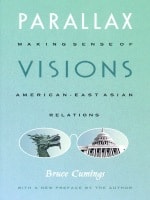
Parallax Visions
Making Sense of American-East Asian Relations at the End of the CenturyBruce Cumings
Duke University Press, 1999
Using information based on thirty years of research, Cumings offers a new perspective on a wide range of issues that originated with the cold war—with particular focus on the possibly inappropriate collaboration between universities, foundations, and intelligence agencies. Seeking to explode the presuppositions that Americans usually bring to the understanding of our relations with East Asia, the study ranges over much of the history of the twentieth century in East Asian–American relations—Pearl Harbor, Hiroshima and Nagasaki, the Korean War, and more recent difficulties in U.S. relations with China and Japan. Cumings also rebuts U.S. media coverage of North Korea’s nuclear diplomacy in the 1990s and examines how experiences of colonialism and postcolonialism have had varying effects on economic development in each of these countries. Positing that the central defining experience of twentieth-century East Asia has been its entanglement first with British and Japanese imperialism, and then with the United States, Cumings ends with a discussion of how the situation could change over the next century as the economic and political global clout of the United States declines.
Illuminating the sometimes self-deluded ideology of cold war America, Parallax Visions will engage historians, political scientists, and students and scholars of comparative politics and social theory, as well as readers interested in questions of modernity and the role of the United States in shaping the destinies of modernizing societies in Asia.

Paralyzing Summer
The True Story of the Ann Arbor V.A. Hospital Poisonings and DeathsZibby Oneal and S. Martin Lindenauer
University of Michigan Press, 2016
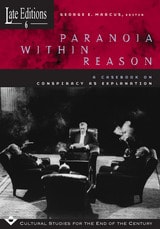
Paranoia within Reason
A Casebook on Conspiracy as ExplanationEdited by George E. Marcus
University of Chicago Press, 1999
Some pieces develop conversations that reveal the post-Cold War situations of countries such as Italy, Russia, Slovenia, and the United States where conspiratorial explanations of national dramas seem to make sense. Other pieces tackle paranoia as a style of debate in such diverse realms as science, psychotherapy, and popular entertainment, where conspiracy theories emerge as a compelling way to address the inadequacies of rational expertise and organization in the face of immense changes that undermine them. Like all of the volumes in the Late Edition series, Paranoia Within Reason offers a provocative challenge to our ways of understanding the ongoing watershed changes that face us.
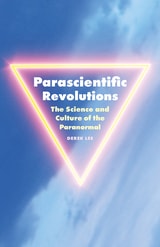
Parascientific Revolutions
The Science and Culture of the ParanormalDerek Lee
University of Minnesota Press, 2025
Unraveling the hidden influence of the paranormal on science, literature, and belief
Telepathy, clairvoyance, precognition, and telekinesis: these attributes of the paranormal mind are widely dismissed as nonsense, but what can an exploration of such pseudoscientific phenomena tell us about accepted scientific and cultural thought? In Parascientific Revolutions, Derek Lee traces the evolution of psi epistemologies across the twentieth and twenty-first centuries to uncover how these ideas have migrated into scientific fields such as quantum physics and neurology, as well as diverse literary genres including science fiction, ethnic literature, and even government training manuals.
Lee introduces the groundbreaking concept of “parascience,” a dynamic cultural space where ideas rejected by the scientific establishment blend with alternative strains of literary, mythic, and philosophical thought to regenerate and return to mainstream discourse. From early modernist works by James Joyce to postwar speculative fiction by Philip K. Dick to ethnofuturist narratives by Ruth Ozeki, Parascientific Revolutions demonstrates how cultural and intellectual currents reshape paranormal ideas over time. Examining psychic surveillance programs like Project Stargate and bizarre particles of extrasensory perception such as the psitron, Lee illustrates the ways paranormal concepts persist and evolve to influence culture.
Presenting pseudoscience as an inevitable by-product of the scientific process, Parascientific Revolutions offers fresh insight into how the paranormal mind continually challenges our understanding of knowledge and belief. It invites readers to reconsider the boundaries between science and the unknown, revealing a world where speculative thought and empirical investigation are deeply intertwined.
Retail e-book files for this title are screen-reader friendly with images accompanied by short alt text and/or extended descriptions.
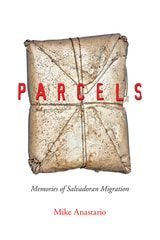
Parcels
Memories of Salvadoran MigrationMike Anastario
Rutgers University Press, 2019

Parenting Empires
Class, Whiteness, and the Moral Economy of Privilege in Latin AmericaAna Yolanda Ramos-Zayas
Duke University Press, 2020
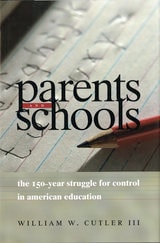
Parents and Schools
The 150-Year Struggle for Control in American EducationWilliam W. Cutler III
University of Chicago Press, 2000
Cutler shows how in the 1920s and 1930s schools expanded their responsibility for children's well-being outside the classroom. These efforts sowed the seeds for later conflict as schools came to be held accountable for solving society's problems. Finally, he brings the reader into recent decades, in which a breakdown of trust, racial tension, and "parents' rights" have taken the story full circle, with parents and schools once again at odds.
Cutler's book is an invaluable guide to understanding how parent-teacher cooperation, which is essential for our children's educational success, might be achieved.
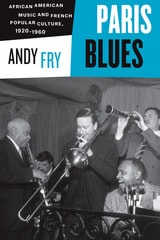
Paris Blues
African American Music and French Popular Culture, 1920-1960Andy Fry
University of Chicago Press, 2014
In Paris Blues, Andy Fry provides an alternative history of African American music and musicians in France, one that looks beyond familiar personalities and well-rehearsed stories. He pinpoints key issues of race and nation in France’s complicated jazz history from the 1920s through the 1950s. While he deals with many of the traditional icons—such as Josephine Baker, Django Reinhardt, and Sidney Bechet, among others—what he asks is how they came to be so iconic, and what their stories hide as well as what they preserve. Fry focuses throughout on early jazz and swing but includes its re-creation—reinvention—in the 1950s. Along the way, he pays tribute to forgotten traditions such as black musical theater, white show bands, and French wartime swing. Paris Blues provides a nuanced account of the French reception of African Americans and their music and contributes greatly to a growing literature on jazz, race, and nation in France.
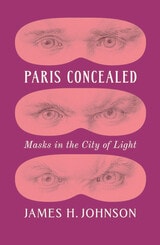
Paris Concealed
Masks in the City of LightJames H. Johnson
University of Chicago Press, 2025
A comprehensive history of masks in France from the seventeenth to the nineteenth century.
Masks can conceal, disguise, or protect. They can guard status, inspire delight, or spread fear. They can also betray trust through insincerity, deceit, and hypocrisy. In Paris Concealed, historian James H. Johnson offers a sweeping history of masks both visible and unseen from the time of Louis XIV to the late nineteenth century, exploring the complex roles that masking and unmasking have played in the fashioning of our social selves.
Drawing from memoirs, novels, plays, and paintings, Paris Concealed explores the many domains in which masks have been decisive. Beginning in the court of Versailles, Johnson charts the genesis of courtly politesse and its widespread condemnation by Enlightenment philosophers and political thinkers. He describes strategies deployed in the era of the French Revolution for unmasking traitors and later efforts to penetrate criminal disguises through telltale marks on the body. He portrays the disruptive power of masks in public balls and carnivals and, with the coming of modernity, evokes their unsettling presence within the unconscious.
Compellingly written and beautifully illustrated, Paris Concealed lays bare the mask’s transformations, from marking one’s position in a static society to inspiring imagined identities in meritocracies to impeding the elusive search for one’s true self. To tell the history of masks, Johnson shows, is to tell the history of modern selfhood.
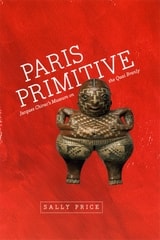
Paris Primitive
Jacques Chirac's Museum on the Quai BranlySally Price
University of Chicago Press, 2007
Paris Primitive recounts the massive reconfiguration of Paris’s museum world that resulted from Chirac’s dream, set against a backdrop of personal and national politics, intellectual life, and the role of culture in French society. Along with exposing the machinations that led to the MQB’s creation, Sally Price addresses the thorny questions it raises about the legacy of colonialism, the balance between aesthetic judgments and ethnographic context, and the role of institutions of art and culture in an increasingly diverse France. Anyone with a stake in the myriad political, cultural, and anthropological issues raised by the MQB will find Price’s account fascinating.
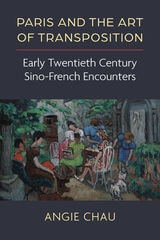
Paris and the Art of Transposition
Early Twentieth Century Sino-French EncountersAngie Chau
University of Michigan Press, 2023
While previous studies of Chinese modernism have focused on how Western modernist aesthetics were adapted or translated to the Chinese context, Angie Chau does the opposite by turning to Paris in the Chinese imaginary and discussing the literary and visual artwork of five artists who moved between France and China: the painter Chang Yu, the poet Li Jinfa, the art critic Fu Lei, the painter Pan Yuliang, and the writer Xu Xu. Chau draws the idea of transposition from music theory where it refers to shifting music from one key or clef to another, or to adapting a song originally composed for one instrument to be played by another. Transposing transposition to the study of art and literature, Chau uses the term to describe a fluid and strategic art practice that depends on the tension between foreign and familiar, new and old, celebrating both novelty and recognition—a process that occurs when a text gets placed into a fresh context.
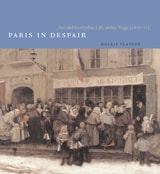
Paris in Despair
Art and Everyday Life under Siege (1870-1871)Hollis Clayson
University of Chicago Press, 2002
But the crisis did not halt artistic production, as some have suggested. In fact, Clayson argues that the siege actually encouraged innovation, fostering changed attitudes and new approaches to representation among a wide variety of artists as they made art out of their individual experiences of adversity and change—art that has not previously been considered within the context of the siege. Clayson focuses especially on Rosa Bonheur, Edgar Degas, Jean-Alexandre-Joseph Falguière, Edouard Manet, and Henri Regnault, but she also covers a host of other artists, including Ernest Barrias, Gustave Courbet, Edouard Detaille, Pierre Puvis de Chavannes, Albert Robida, and James Tissot. Paris in Despair includes more than two hundred color and black-and-white images of works by these artists and others, many never before published.
Using the visual arts as an interpretive lens, Clayson illuminates the wide range of issues at play during the siege and thereafter, including questions of political and cultural identity, artistic masculinity and femininity, public versus private space, everyday life and modernity, and gender and class roles in military and civilian society. For anyone concerned with these issues, or with nineteenth-century French art in general, Paris in Despair will be a landmark work.
Paris in Quotations
Compiled by Jaqueline Mitchell
Bodleian Library Publishing, 2016
Paris in Quotations takes readers on a one-of-a-kind tour of the City of Lights, in which we hear from the likes of Molière and Thomas Gold Appleton, who thought that, “When good Americans die, they go to Paris.” For centuries, Paris has reigned over the popular imagination. For those planning a visit, this collection will be warmly welcomed.

Paris in the Dark
Going to the Movies in the City of Light, 1930–1950Eric Smoodin
Duke University Press, 2020
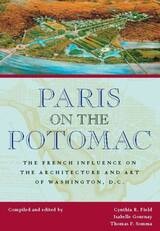
Paris on the Potomac
The French Influence on the Architecture and Art of Washington, D.C.Cynthia R. Field
Ohio University Press, 2007
In 1910 John Merven Carrère, a Paris-trained American architect, wrote, “Learning from Paris made Washington outstanding among American cities.” The five essays in Paris on the Potomac explore aspects of this influence on the artistic and architectural environment of Washington, D.C., which continued long after the well-known contributions of Peter Charles L’Enfant, the transplanted French military officer who designed the city’s plan.
Isabelle Gournay’s introductory essay provides an overview and examines the context and issues involved in three distinct periods of French influence: the classical and Enlightenment principles that prevailed from the 1790s through the 1820s, the Second Empire style of the 1850s through the 1870s, and the Beaux-Arts movement of the early twentieth century. William C. Allen and Thomas P. Somma present two case studies: Allen on the influence of French architecture, especially the Halle aux Blés, on Thomas Jefferson’s vision of the U.S. Capitol; and Somma on David d’Angers’s busts of George Washington and the Marquis de Lafayette. Liana Paredes offers a richly detailed examination of French-inspired interior decoration in the homes of Washington’s elite in the late nineteenth and early twentieth centuries. Cynthia R. Field concludes the volume with a consideration of the influence of Paris on city planning in Washington, D.C., including the efforts of the McMillan Commission and the later development of the Federal Triangle complex.
The essays in this collection, the latest addition to the series Perspectives on the Art and Architectural History of the United States Capitol, originated in a conference held by the U.S. Capitol Historical Society in 2002 at the French Embassy’s Maison Française.
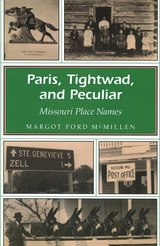
Paris, Tightwad, and Peculiar
Missouri Place NamesMargot Ford McMillen
University of Missouri Press, 1994
Paris, Tightwad, Peculiar, Neosho, Gasconade, Hannibal, Diamond, Quarantine, Zif, and Zig. These are just a few of the names Margot Ford McMillen covers in her lively book on the history of place names in Missouri. The origins behind the names range from humorous to descriptive:
•Tightwad, Missouri, is said to have been named after a store owner who cheated a mailman out of his rightful watermelon to make an extra fifty cents. •Plad, Missouri, was supposed to be named "Glad," but the post office printed the name wrong, and it was too much trouble to get it changed. •Some place names describe a location, such as Big Spring or Flat River. •Other names show the influence of immigrants to the state, like Hermann, which is a German name, or the Maries River, which was derived from the French. •Many places are named for people or wildlife found nearby, while others are backed up by legend or simply picked out of thin air.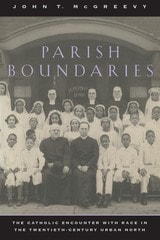
Parish Boundaries
The Catholic Encounter with Race in the Twentieth-Century Urban NorthJohn T. McGreevy
University of Chicago Press, 1996
"Parish Boundaries can take its place in the front ranks of the literature of urban race relations."—Jonathan Dorfman, Washington Post Book Review
"A prodigiously researched, gracefully written book distinguished especially by its seamless treatment of social and intellectual history."—Robert Orsi, American Historical Review
"Parish Boundaries will fascinate historians and anyone interested in the historic connection between parish and race."—Ed Marciniak, Chicago Tribune
"The history that remains to be written will rest on the firm foundation of Mr. McGreevy's remarkable book."—Richard Wightman Fox, New York Times Book Review
Parish behind God's Back
The Changing Culture of Rural BarbadosGeorge Gmelch and Sharon Bohn Gmelch
University of Michigan Press, 1997
Parité!
Sexual Equality and the Crisis of French UniversalismJoan Wallach Scott
University of Chicago Press, 2005
During the 1990s, le mouvement pour la parité successfully campaigned for women's inclusion in elective office with an argument that is unprecedented in the annals of feminism. The paritaristes insisted that if the abstract individual were thought of as sexed, then sexual difference would no longer be a relevant consideration in politics. Scott insists that this argument was neither essentialist nor separatist; it was not about women's special qualities or interests. Instead, parité was rigorously universalist—and for that reason was both misunderstood and a source of heated debate.

Park, Tenement, Slaughterhouse
Elite Imaginaries of Buenos Aires, 1852–1880Antonio Carbone
Campus Verlag, 2022
In the 1860s and 1870s, Buenos Aires was hit by a series of dramatic cholera and yellow fever epidemics that decimated its population and inspired extensive debates on urban space among its elites. The book takes readers into three intriguing spaces—the slaughterhouses, the tenements, and the park of Palermo—which found themselves at the center of the discussions about the causes of epidemic disease. The banning of industrial slaughterhouses from the city, reform of tenement houses, and construction of a major park promised to tackle the problem of disease while giving rise to new visions of the city. By analyzing the discussion on these spaces, the book illuminates critical spatial junctures at the crossroads of both local and global forces and reconstructs the interconnection between elite imaginaries and the production of space. Park, Tenement, Slaughterhouse reveals that the history of epidemic diseases can tell us a great deal about urban space, the relationships between different social classes in cities, and the articulations of global and local forces.

Parks for Texas
Enduring Landscapes of the New DealBy James Wright Steely
University of Texas Press, 1999
State parks across Texas offer a world of opportunities for recreation and education. Yet few park visitors or park managers know the remarkable story of how this magnificent state park system came into being during the depths of the Great Depression in the 1930s. Drawing on archival records and examining especially the political context of the New Deal, James Wright Steely here provides the first comprehensive history of the founding and building of the Texas state park system.
Steely's history begins in the 1880s with the movement to establish parks around historical sites from the Texas Revolution. He follows the fits-and-starts progress of park development through the early 1920s, when Governor Pat Neff envisioned the kind of park system that ultimately came into being between 1933 and 1942.
During the Depression an amazing cast of personalities from Franklin D. Roosevelt to Lyndon Johnson led, followed, or obstructed the drive to create this state park system. The New Deal federal-state partnerships for depression relief gave Texas the funding and personnel to build 52 recreational parks under the direction of the National Park Service. Steely focuses in detail on the activities of the Civilian Conservation Corps, whose members built parks from Caddo Lake in the east to the first park improvements in the Big Bend out west. An appendix lists and describes all the state parks in Texas through 1945, while Steely's epilogue brings the parks' story up to the present.
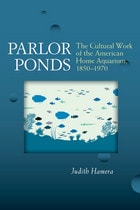
Parlor Ponds
The Cultural Work of the American Home Aquarium, 1850 - 1970Judith Hamera
University of Michigan Press, 2012
Parlor Ponds: The Cultural Work of the American Home Aquarium, 1850–1970 examines the myriad cultural meanings of the American home aquarium during the nineteenth and twentieth centuries and argues that the home aquarium provided its enthusiasts with a potent tool for managing the challenges of historical change, from urbanization to globalization. The tank could be a window to an alien world, a theater for domestic melodrama, or a vehicle in a fantastical undersea journey. Its residents were seen as inscrutable and wholly disposable “its,” as deeply loved and charismatic individuals, and as alter egos by aquarists themselves.
Parlor Ponds fills a gap in the growing field of animal studies by showing that the tank is an emblematic product of modernity, one using elements of exploration, technology, science, and a commitment to rigorous observation to contain anxieties spawned by industrialization, urbanization, changing gender roles, and imperial entanglements. Judith Hamera engages advertisements, images, memoirs, public aquarium programs, and enthusiast publications to show how the history of the aquarium illuminates complex cultural attitudes toward nature and domestication, science and religion, gender and alterity, and national conquest and environmental stewardship with an emphasis on the ways it illuminates American public discourse on colonial and postcolonial expansion.
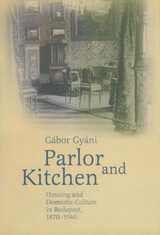
Parlor and Kitchen
Housing and Domestic Culture in Budapest, 1870-1940Gábor Gyáni
Central European University Press, 2002
Besides Berlin, Budapest was the fastest-growing capital city in Europe at the end of the nineteenth century. Parlor and Kitchen, the work of a microhistorian and historical anthropologist, describes the development of private spaces in this newly emerged metropolis.
Author Gábor Gyáni has chosen two distinct groups of contemporary society: the upper middle class and the working class, to present their homes, domestic culture and attitudes. At the same time the book offers a panoramic view of the everyday life of the entire society, on social segregation and mobility. Behind the visual details the author reveals a great deal about the value systems of the groups of society investigated.
Reconstructing minute details as well as case studies, the author has relied on archival sources, private documents, and statistical data. The text is accompanied by contemporary photographs, maps and blueprints.
This enlightening and interesting volume will be of interest not only to historians, anthropologists and sociologists, but also to the general reader with an interest in urban history.
Gábor Gyáni is founder and editor of the quarterly Budapest Review of Books. He is President of the Hungarian-American Historians' Committee and Secretary of the Urban History Workshop of the Hungarian Academy of Sciences.
A student of the late professor Péter Hanák, Gyáni is active in research into the urban and social history of modern Hungary and the theory and methodology of history writing.

Parody in the Middle Ages
The Latin TraditionMartha Bayless
University of Michigan Press, 1996
Bayless' study shows with great clarity that parody was a significant and vibrant literary form in the Middle Ages. In addition, her research sheds new light on clerical culture. The clerics who composed these parodies were far from meddling guardians of somber piety; rather, they appeared to see no contradiction between merriment and devotion. The wide dissemination and long life of these drolleries--some circulated for a thousand years--indicate a taste for clerical amusement that challenges conventional views of medieval solemnity.
Parody in the Middle Ages surveys in detail five of the most common traditions of parody. It provides a complete list of all known medieval Latin parodies, and also provides twenty complete texts in an appendix in the original Latin, with English translations. These texts have been collated from over a hundred manuscripts, many previously unknown. The study brings to light both a form and many texts that have remained obscure and inaccessible until now.
Parody in the Middle Ages appeals to the modern audience not only for its cultural value but also for the same reason the parodies appealed to the medieval audience: they are simply very funny. This welcome new volume will be of particular interest to students of medieval satire and literary culture, to medieval Latinists, and to those who want to explore the breadth of medieval culture.
Martha Bayless is Assistant Professor of English, University of Oregon.
Parsing through Customs
Essays by a Freudian FolkloristAlan Dundes
University of Wisconsin Press, 1987
In these stimulating essays, Alan Dundes presents a history of psychoanalytic studies of folklore while also showing how folklore methodology can be used to clarify and validate psychoanalytic theory. Dundes’ work is unique in its symbolic analysis of the ordinary imagination. His data are children’s games, folktales, everyday speech, cultural metaphors for power and prestige, and rituals associated with childbirth.
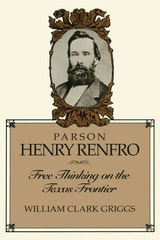
Parson Henry Renfro
Free Thinking on the Texas FrontierBy William C. Griggs
University of Texas Press, 1994
The years following the Texas Revolution held even more turbulent events as diverse droves of pioneers crossed the Sabine and Red Rivers to start new lives in Texas. Early Texas society contended with religious issues, family life in a rugged environment, and the Civil War. This cultural history was clearly reflected in the life of frontier preacher Henry C. Renfro.
Migrating to Texas in 1851, Renfro enrolled in the fledgling Baylor University and became a Baptist preacher. Eventually disillusioned with Baptist orthodoxy, Renfro was disenfranchised on charges of infidelity as he embraced the ideals of the Free Thought Movement, inspired by the writings of men such as Thomas Paine, Spinoza, and Robert Ingersoll.
Renfro's Civil War experience was no less unusual. Serving as both soldier and chaplain, Renfro left a valuable legacy of insight into the conflict, captured in a wealth of correspondence that is in itself significant.
Drawing on a vast body of letters, speeches, sermons, and oral histories that had never before been available, this chronological narrative of "The Parson's" life describes significant changes in Texas from 1850 to 1900, especially the volatile formation and growth of Baptist churches in North Central Texas. William Griggs' study yields numerous new details about the Free Thought Movement and depicts public reaction to sectarian leaders in nineteenth-century Texas.
The author also describes the developing Central Texas region known as the Cross Timbers, including the personal dynamics between a frontier family and its patriarch and encompassing such issues as property conflicts, divorce, and family reconciliation. This work unlocks an enlightening, engaging scene from Texas history.
Partial Stories
Maternal Death from Six AnglesClaire L. Wendland
University of Chicago Press, 2022
By the early twenty-first century, about one woman in twelve could expect to die of a pregnancy or childbirth complication in Malawi. Specific deaths became object lessons. Explanatory stories circulated through hospitals and villages, proliferating among a range of practitioners: nurse-midwives, traditional birth attendants, doctors, epidemiologists, herbalists. Was biology to blame? Economic underdevelopment? Immoral behavior? Tradition? Were the dead themselves at fault?
In Partial Stories, Claire L. Wendland considers these explanations for maternal death, showing how they reflect competing visions of the past and shared concerns about social change. Drawing on extended fieldwork, Wendland reveals how efforts to legitimate a single story as the authoritative version can render care more dangerous than it might otherwise be. Historical, biological, technological, ethical, statistical, and political perspectives on death usually circulate in different expert communities and different bodies of literature. Here, Wendland considers them together, illuminating dilemmas of maternity care in contexts of acute change, chronic scarcity, and endemic inequity within Malawi and beyond.
Parties and Elections in Greece
The Search for LegitimacyRichard Clogg
Duke University Press, 1987
Parties and Prejudice
The Normalization of Antiminority Rhetoric in US PoliticsManeesh Arora
University of Chicago Press, 2025
An essential guide to how the interactions between social norms, party politics, and expressions of prejudice are driving contemporary politics.
Antiminority rhetoric in American politics has grown more overt. What were once fringe comments on Stormfront have now become typical campaign appeals from many mainstream politicians. If there was ever a doubt, this is a poignant reminder that the boundaries of what is “acceptable” and “unacceptable” to say and do are fluid and socially enforced.
In Parties and Prejudice, Maneesh Arora offers a broad framework for understanding this new political terrain. Arora argues that the interaction between social norms and party politics determines what the political consequence of prejudicial speech will be. He illuminates this nuanced relationship by showing that norms vary based on the targeted minority group and the intended audience.
Drawing on experiments, survey data, news coverage, and real-world examples, Parties and Prejudice examines the distinctive ways that egalitarian/inegalitarian norms have developed—within each party—for Black, Muslim, and LGBTQ+ Americans. It is essential reading for understanding Donald Trump’s rise to power, the modern conservative agenda (including opposition to critical race theory and transgender rights), and threats to the development of a multiracial democracy.
Partisan Canons
Anna Brzyski, ed.
Duke University Press, 2007
Focusing on various moments from the seventeenth century to the present, the contributors cover a broad geographic terrain, encompassing the United States, France, Germany, the Netherlands, Poland, Taiwan, and South Africa. Among the essays are examinations of the working and reworking of a canon by an influential nineteenth-century French critic, the limitations placed on what was acceptable as canonical in American textbooks produced during the Cold War, the failed attempt to define a canon of Rembrandt’s works, and the difficulties of constructing an artistic canon in parts of the globe marked by colonialism and the imposition of Eurocentric ideas of artistic value. The essays highlight the diverse factors that affect the production of art canons: market forces, aesthetic and political positions, nationalism and ingrained ideas concerning the cultural superiority of particular groups, perceptions of gender and race, artists’ efforts to negotiate their status within particular professional environments, and the dynamics of art history as an academic discipline and discourse. This volume is a call to historicize canons, acknowledging both their partisanship and its implications for the writing of art history.
Contributors. Jenny Anger, Marcia Brennan, Anna Brzyski, James Cutting, Paul Duro, James Elkins, Barbara Jaffee, Robert Jensen, Jane C. Ju, Monica Kjellman-Chapin, Julie L. McGee, Terry Smith, Linda Stone-Ferrier, Despina Stratigakos
Partisan Ruptures
Self-Management, Market Reform and the Spectre of Socialist YugoslaviaGal Kirn
Pluto Press, 2019
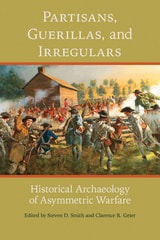
Partisans, Guerillas, and Irregulars
Historical Archaeology of Asymmetric WarfareEdited by Steven D. Smith and Clarence R. Geier
University of Alabama Press, 2019
Essays that explore the growing field of conflict archaeology
Within the last twenty years, the archaeology of conflict has emerged as a valuable subdiscipline within anthropology, contributing greatly to our knowledge and understanding of human conflict on a global scale. Although archaeologists have clearly demonstrated their utility in the study of large-scale battles and sites of conventional warfare, such as camps and forts, conflicts involving asymmetric, guerilla, or irregular warfare are largely missing from the historical record.
Partisans, Guerillas, and Irregulars: Historical Archaeology of Asymmetric Warfare presents recent examples of how historical archaeology can contribute to a better understanding of asymmetric warfare. The volume introduces readers to this growing study and to its historic importance. Contributors illustrate how the wide range of traditional and new methods and techniques of historiography and archaeology can be applied to expose critical actions, sacrifices, and accomplishments of competing groups representing opposing philosophies and ways of life, which are otherwise lost in time.
The case studies offered cover significant events in American and world history, including the French and Indian War, the American Revolution, Indian wars in the Southeast and Southwest, the Civil War, Reconstruction, Prohibition, and World War II. All such examples used here took place at a local or regional level, and several were singular events within a much larger and more complex historic movement. While retained in local memory or tradition, and despite their potential importance, they are poorly, and incompletely addressed in the historic record. Furthermore, these conflicts took place between groups of significantly different cultural and military traditions and capabilities, most taking on a “David vs. Goliath” character, further shaping the definition of asymmetric warfare.
Partition
How and Why Ireland was DividedIvan Gibbons
Haus Publishing, 2022
The Partition of Ireland in 1921, which established Northern Ireland and saw it incorporated into the United Kingdom, sparked immediate civil war and a century of unrest. Today, the Partition remains the single most contentious issue in Irish politics, but its origins—how and why the British divided the island—remain obscured by decades of ensuing struggle.
Cutting through the partisan divide, Partition takes readers back to the first days of the twentieth century to uncover the concerns at the heart of the original conflict. Drawing on extensive primary research, Ivan Gibbons reveals how the idea to divide Ireland came about and gained popular support as well as why its implementation proved so controversial and left a century of troubles in its wake.

Partitioning Bazaar Art
Popular Visual Culture of India and Pakistan around 1947Yousuf Saeed
Seagull Books, 2023
How did inexpensive posters influence nationalism in the decades leading up to and succeeding the Partition of the Indian subcontinent in 1947? If mechanically reproduced images that occupy public spaces reflect the aesthetics of the “masses,” what can a critical interpretation of subcontinental popular visual culture in the mid-twentieth century reveal about the formation of communal identities?
In this essay, Yousuf Saeed studies the selective deification of leaders fighting for Indian independence. He highlights the biased representation within the domain of “patriotic” posters of the time and the evolving portrayal of religious minority communities in India’s popular print culture over subsequent decades. Also charts the turn popular print culture took in post-Partition Pakistan, Saeed focuses on the country’s thriving industry of Sufi-saint posters. Partitioning Bazaar Art is a timely exploration of how nationalism can be defined through popular imagery.
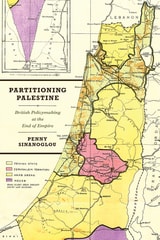
Partitioning Palestine
British Policymaking at the End of EmpirePenny Sinanoglou
University of Chicago Press, 2019

Partitioning Palestine
Legal Fundamentalism in the Palestinian-Israeli ConflictJohn Strawson
Pluto Press, 2010
Law lies at the roots of the Palestinian-Israeli conflict. Jews sought a national home by “Public Law” while Palestinians reject the project as illegal. Britain, the League of Nations and the United Nations all mobilised international law to justify their interventions. After the 1967 war, Israel organised an occupation with excessive legalism that most of the world viewed, in fact, as illegal.
Partitioning Palestine focuses on three key moments in the Palestinian-Israeli conflict: the League of Nations Mandate, the United Nations partition plan and the Oslo agreements. None of these documents are neutral but, rather, encode a variety of meanings. The book traces the way in which these legal narratives have both shaped national identity and sharpened the conflict.
In this pioneering text, John Strawson argues that a committed attachment to the belief in legal justice has hampered the search for a settlement. Law, far from offering conflict resolution, has reinforced the trenches from which Palestinians and Israelis confront one another.
Partners in Conflict
The Politics of Gender, Sexuality, and Labor in the Chilean Agrarian Reform, 1950–1973Heidi Tinsman
Duke University Press, 2002
Tinsman restores women to a scholarly narrative that has been almost exclusively about men, recounting the centrality of women’s labor to the pre-Agrarian Reform world of the hacienda during the 1950s and recovering women’s critical roles in union struggles and land occupations during the Agrarian Reform itself. Providing a theoretical framework for understanding why the Agrarian Reform ultimately empowered men more than women, Tinsman argues that women were marginalized not because the Agrarian Reform ignored women but because, under both the Frei and Allende governments, it promoted the male-headed household as the cornerstone of a new society. Although this emphasis on gender cooperation stressed that men should have more respect for their wives and funneled unprecedented amounts of resources into women’s hands, the reform defined men as its protagonists and affirmed their authority over women.
This is the first monographic social history of Chile’s Agrarian Reform in either English or Spanish, and the first historical work to make sexuality and gender central to the analysis of the reforms.

Partners in Science
Foundations and Natural Scientists, 1900-1945Robert E. Kohler
University of Chicago Press, 1991
"This book is a rich historical tapestry of people, institutions and scientific ideas. It will stand for a long time as a source of precise and detailed information about an important aspect of the scientific enterprise. . .It also contains many valuable lessons for the coming years."—John Ziman, Times Higher Education Supplement
Party Colonisation of the Media in Central and Eastern Europe
Péter Bajomi-Lázár
Central European University Press, 2014
Party Organization and Activism in the American South
Robert P. Steed
University of Alabama Press, 1998
Maps the ways political parties remain vital components in the American political system, especially in the eleven states in the South
As Tocqueville noted more than 100 years ago, “No countries need associations more . . . than those with a democratic social state.” Although some contemporary observers see a decline in associations, especially in the political sphere, the contributors in this volume argue not only that political parties remain an essential component of the American political system but also that grassroots political groups have revitalized the political process, especially in the South.
Using data gathered from local party officials in the eleven southern states, the authors examine such key issues as: Who becomes involved in local party organizations and why? How do parties recruit and retain workers? What are the ideological and issue orientations of these activists? How does intraparty factionalism affect local party organizations? What is the connection between the party organization and its external environment?
The large regional database provides these contributors with the opportunity to extend the study of local party organization and activists, thus addressing some of the significant gaps in previous research. The additional data enable them to clarify the nature of local party organizations and, in a larger sense, the role of the parties in the contemporary American political system.
Pasadena Before the Roses
Race, Identity, and Land Use in Southern California, 1771–1890Yvette J. Saavedra
University of Arizona Press, 2018
But what existed before the roses? Before it was Pasadena, this land was Hahamog’na, the ancestral lands of the Tongva people. Later, it comprised the heart of the San Gabriel Mission lands, and in the Mexican period, it became Rancho San Pascual. The 1771 Spanish conquest of this land set in motion several colonial processes that would continue into the twentieth century and beyond.
In Pasadena Before the Roses, historian Yvette J. Saavedra examines a period of 120 years to illustrate the interconnectedness of power, ideas of land use, and the negotiation of identity within multiple colonial moments. By centering the San Gabriel Mission lands as the region’s economic, social, and cultural foundation, she shows how Indigenous, Spanish, Mexican, and American groups each have redefined the meanings of land use to build their homes and their lives. These visions have resulted in competing colonialisms that framed the racial, ethnic, gender, and class hierarchies of their respective societies.
Pasic & Trumbic
The Kingdom of Serbs, Croats and SlovenesDejan Djokic
Haus Publishing, 2010