Results by title
22279 books match the query 'Social Science' and 1104 start with p
Paradoxes of Hawaiian Sovereignty
Land, Sex, and the Colonial Politics of State NationalismJ. Kehaulani Kauanui
Duke University Press, 2018
Paradoxes of Migration in Tajikistan
Locating the Good LifeElena Borisova
University College London, 2024
Tajikistan is one of the most remittance-dependent countries in the world. Moving beyond economistic push-pull narratives about post-Soviet migration, Paradoxes of Migration in Tajikistan foregrounds the experiences of those who “stay put” in the sending society and struggle to reproduce their moral communities. In this first book-length ethnography of migration in Tajikistan, Elena Borisova examines the role of mobility through historical and cultural ideas about the good life. She demonstrates how mobility becomes entwined with people’s efforts to become good, moral, and modern subjects. Addressing the complex relationship between the economic, imaginative, and moral aspects of (im)mobility, Borisova shows that mass migration from Tajikistan is as much a project of navigating ethical personhood as it is a quest for economic resources.
This book is a beautifully crafted ethnographic account that reveals how transnational regimes and structures of mobility, citizenship, and histories map out in the intimate spheres of the body, the person, and the family. It is a major contribution to contemporary migration research, which is mostly centered on Europe and North America, and to the field of Central Asian studies. Highly readable, it will be of interest to researchers of migration, (im)mobility and citizenship, and to scholars of all disciplines working on Central Asia.
Paradoxes of Peace
German Peace Movements Since 1945Alice Holmes Cooper
University of Michigan Press, 1996
Parallel Views
Education and Access for Deaf People in France and the United StatesThe French American Foundation
Gallaudet University Press, 1994
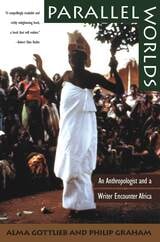
Parallel Worlds
An Anthropologist and a Writer Encounter AfricaAlma Gottlieb and Philip Graham
University of Chicago Press, 1994
"A remarkable look at a remote society [and] an engaging memoir that testifies to a loving partnership . . . compelling."—James Idema, Chicago Tribune
Parallel Worlds
Genre, Discourse, and Poetics in Contemporary, Colonial, and Classic Maya LiteratureKerry M. Hull
University Press of Colorado, 2012
In this volume, contributions from leading scholars in Maya literary studies examine Maya discourse from Classic period hieroglyphic inscriptions to contemporary spoken narratives, focusing on parallelism to unite the literature historically. Contributors take an ethnopoetic approach, examining literary and verbal arts from a historical perspective, acknowledging that poetic form is as important as narrative content in deciphering what these writings reveal about ancient and contemporary worldviews.
Encompassing a variety of literary motifs, including humor, folklore, incantation, mythology, and more specific forms of parallelism such as couplets, chiasms, kennings, and hyperbatons, Parallel Worlds is a rich journey through Maya culture and pre-Columbian literature that will be of interest to students and scholars of anthropology, ethnography, Latin American history, epigraphy, comparative literature, language studies, indigenous studies, and mythology.
Paranatures in Culinary Culture
An Alimentary EcologyThomas R. Parker
University of Minnesota Press, 2025
Uncovering the intricate cultural threads that inform our dietary practices
Paranatures in Culinary Culture embarks on a gastronomic odyssey, redefining foods we thought we knew and revealing the extraordinary stories of ordinary ingredients and the cultural forces shaping our diets. The book begins with a simple premise: to eat is to assimilate the outer world into the inner body, both physically and mentally. But what happens when this assimilation process goes awry? Thomas R. Parker reveals how culinary staples are not only elements of identity formation but also instruments of cultural disruption when their true nature emerges and challenges our preconceptions.
Parker explores how certain foods—bread, oysters, pigs, cheese, and wine—can both create and destabilize narratives, unsettle assimilation, and decenter Western culinary traditions. Taking inspiration from architectural historian David Gissen’s concept of “subnature” and Michel Serres’s idea of the “parasite,” Parker develops the concept of paranatures: flavors, foods, and practices considered unpalatable by different societies at different times. He reveals how certain ordinary foods live parallel paranatural lives, addressing larger issues of colonial and postcolonial food theory and challenging long-held notions that cuisine was meant to uphold.
Serving up a rich blend of history, culture, and gastronomy, Parker leads readers to perceive food as an adventure, inviting them to taste the untamed side of nature. He offers a thought-provoking invitation to reconceptualize the roles and narratives we assign to the natural world and its produce, allowing us to see food, nature, and ourselves in new ways.
Paranoia within Reason
A Casebook on Conspiracy as ExplanationEdited by George E. Marcus
University of Chicago Press, 1999
Some pieces develop conversations that reveal the post-Cold War situations of countries such as Italy, Russia, Slovenia, and the United States where conspiratorial explanations of national dramas seem to make sense. Other pieces tackle paranoia as a style of debate in such diverse realms as science, psychotherapy, and popular entertainment, where conspiracy theories emerge as a compelling way to address the inadequacies of rational expertise and organization in the face of immense changes that undermine them. Like all of the volumes in the Late Edition series, Paranoia Within Reason offers a provocative challenge to our ways of understanding the ongoing watershed changes that face us.

Paranoia, the Bomb, and 1950s Science Fiction Films
Cyndy Hendershot
University of Wisconsin Press, 1999
Parcels
Memories of Salvadoran MigrationMike Anastario
Rutgers University Press, 2019
Parent Trip
Unexpected Roads to Form a FamilyAnndee Hochman
Temple University Press, 2026
Hochman recounts the fraught emotions of couples struggling with infertility, the joy of a single gay man becoming a father in his forties, and the anxiety of people waiting for the adoption worker to call with good news. Parent Trip tells of sperm donors and gestational surrogates, midwives and miscarriages; it chronicles how children prompt parents to recalibrate their lives.
In personal essays that weave throughout the profiles, Hochman connects her interviewees’ lives to the love, heartbreak, and uncertainty in her own path to parenthood. Through myriad mundane and extraordinary moments, Parent Trip not only chronicles the magic and labor of childrearing, it also celebrates the infinite ways real families come to be.
Parental Priorities and Economic Inequality
Casey B. Mulligan
University of Chicago Press, 1997
In Mulligan's model, parents determine the degree of their altruistic concern for their children and spend time with and resources on them accordingly—just as they might make choices about how they spend money. Mulligan tests his model against both old and new evidence on the intergenerational transmission of consumption, earnings, and wealth, including models that emphasize "financial constraints." One major prediction of Mulligan's model confirmed by the evidence is that children of wealthy parents typically spend more than they earn.
Mulligan's innovative approach can also help explain other important behavior, such as charitable giving and "corporate loyalty," and will appeal to a wide range of quantitatively oriented social scientists and sociobiologists.
Parenthood In America
Undervalued, Underpaid, Under SiegeJack C. Westman, M.D.
University of Wisconsin Press, 2001
Parenthood in America brings the insights of experts in child development, education, health, media studies, economics, history, sociology, and human services to bear on practical aspects of childrearing and on the kinds of policies that have a real effect on parenting. In response to the stresses of parenthood today, they call for:
o family-friendly workplaces and decent childcare options
o pediatric health care for all
o programs that aid children’s development as well as their physical health
o recognition by professionals of parents’ expert knowledge about their own children
o alternatives to vapid or violent games and TV programs
o prioritization of time for family meals, talks, chores, and activities
o valuing of caring relationships above wealth and possessions
o appreciation of cultural and religious diversity
o supportive networks among parents, teachers, pediatricians, and childcare providers.
Parenting Empires
Class, Whiteness, and the Moral Economy of Privilege in Latin AmericaAna Yolanda Ramos-Zayas
Duke University Press, 2020
Parenting and Professing
Balancing Family Work with an Academic CareerRachel Hile Bassett
Vanderbilt University Press, 2005

Parenting to a Degree
How Family Matters for College Women's SuccessLaura T. Hamilton
University of Chicago Press, 2016
Hamilton vividly captures the parenting approaches of mothers and fathers from all walks of life—from a CFO for a Fortune 500 company to a waitress at a roadside diner. As she shows, parents are guided by different visions of the ideal college experience, built around classed notions of women’s work/family plans and the ideal age to “grow up.” Some are intensively involved and hold adulthood at bay to cultivate specific traits: professional helicopters, for instance, help develop the skills and credentials that will advance their daughters’ careers, while pink helicopters emphasize appearance, charm, and social ties in the hopes that women will secure a wealthy mate. In sharp contrast, bystander parents—whose influence is often limited by economic concerns—are relegated to the sidelines of their daughter’s lives. Finally, paramedic parents—who can come from a wide range of class backgrounds—sit in the middle, intervening in emergencies but otherwise valuing self-sufficiency above all.
Analyzing the effects of each of these approaches with clarity and depth, Hamilton ultimately argues that successfully navigating many colleges and universities without involved parents is nearly impossible, and that schools themselves are increasingly dependent on active parents for a wide array of tasks, with intended and unintended consequences. Altogether, Parenting to a Degree offers an incisive look into the new—and sometimes problematic—relationship between students, parents, and universities.
Parents Without Papers
The Progress and Pitfalls of Mexican American IntegrationFrank D. Bean is Distinguished Professor of Sociology and Director of the Center for Research on International Migration at the University of California, Irvine. Susan K. Brown is associate professor of sociology at the University of California, Irvine. James D. Bachmeier is assistant professor of sociology at Temple University.
Russell Sage Foundation, 2015
Parents Without Papers provides both a general conceptualization of immigrant integration and an in-depth examination of the Mexican American case. The authors draw upon unique retrospective data to shed light on three generations of integration. They show in particular that the “membership exclusion” experienced by unauthorized Mexican immigrants—that is, their fear of deportation, lack of civil rights, and poor access to good jobs—hinders the education of their children, even those who are U.S.-born. Moreover, they find that children are hampered not by the unauthorized entry of parents itself but rather by the long-term inability of parents, especially mothers, to acquire green cards.
When unauthorized parents attain legal status, the disadvantages of the second generation begin to disappear. These second-generation men and women achieve schooling on par with those whose parents come legally. By the third generation, socioeconomic levels for women equal or surpass those of native white women. But men reach parity only through greater labor-force participation and longer working hours, results consistent with the idea that their integration is delayed by working-class imperatives to support their families rather than attend college.
An innovative analysis of the transmission of advantage and disadvantage among Mexican Americans, Parents Without Papers presents a powerful case for immigration policy reforms that provide not only realistic levels of legal less-skilled migration but also attainable pathways to legalization. Such measures, combined with affordable access to college, are more important than ever for the integration of vulnerable Mexican immigrants and their descendants.
Paris Blues
African American Music and French Popular Culture, 1920-1960Andy Fry
University of Chicago Press, 2014
In Paris Blues, Andy Fry provides an alternative history of African American music and musicians in France, one that looks beyond familiar personalities and well-rehearsed stories. He pinpoints key issues of race and nation in France’s complicated jazz history from the 1920s through the 1950s. While he deals with many of the traditional icons—such as Josephine Baker, Django Reinhardt, and Sidney Bechet, among others—what he asks is how they came to be so iconic, and what their stories hide as well as what they preserve. Fry focuses throughout on early jazz and swing but includes its re-creation—reinvention—in the 1950s. Along the way, he pays tribute to forgotten traditions such as black musical theater, white show bands, and French wartime swing. Paris Blues provides a nuanced account of the French reception of African Americans and their music and contributes greatly to a growing literature on jazz, race, and nation in France.
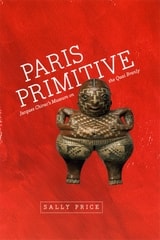
Paris Primitive
Jacques Chirac's Museum on the Quai BranlySally Price
University of Chicago Press, 2007
Paris Primitive recounts the massive reconfiguration of Paris’s museum world that resulted from Chirac’s dream, set against a backdrop of personal and national politics, intellectual life, and the role of culture in French society. Along with exposing the machinations that led to the MQB’s creation, Sally Price addresses the thorny questions it raises about the legacy of colonialism, the balance between aesthetic judgments and ethnographic context, and the role of institutions of art and culture in an increasingly diverse France. Anyone with a stake in the myriad political, cultural, and anthropological issues raised by the MQB will find Price’s account fascinating.
Parish behind God's Back
The Changing Culture of Rural BarbadosGeorge Gmelch and Sharon Bohn Gmelch
University of Michigan Press, 1997
Parité!
Sexual Equality and the Crisis of French UniversalismJoan Wallach Scott
University of Chicago Press, 2005
During the 1990s, le mouvement pour la parité successfully campaigned for women's inclusion in elective office with an argument that is unprecedented in the annals of feminism. The paritaristes insisted that if the abstract individual were thought of as sexed, then sexual difference would no longer be a relevant consideration in politics. Scott insists that this argument was neither essentialist nor separatist; it was not about women's special qualities or interests. Instead, parité was rigorously universalist—and for that reason was both misunderstood and a source of heated debate.
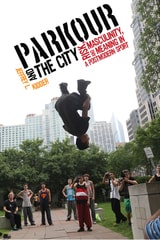
Parkour and the City
Risk, Masculinity, and Meaning in a Postmodern SportKidder, Jeffrey L.
Rutgers University Press, 2017
Parkour’s modern development has been tied closely to the growth of the internet. The sport is inevitably a YouTube phenomenon, making it exemplary of new forms of globalized communication. Parkour’s dangerous stunts resonate, too, Kidder contends, with a neoliberal ideology that is ambivalent about risk. Moreover, as a male-dominated sport, parkour, with its glorification of strength and daring, reflects contemporary Western notions of masculinity. At the same time, Kidder writes, most athletes (known as “traceurs” or “freerunners”) reject a “daredevil” label, preferring a deliberate, reasoned hedging of bets with their own safety—rather than a “pushing the edge” ethos normally associated with extreme sports.

Parliament Buildings
The Architecture of Politics in EuropeEdited by Sophia Psarra, Uta Staiger, and Claudia Sternberg
University College London, 2023
As political polarization undermines confidence in the shared values and established constitutional orders of many nations, it is imperative that we explore how parliaments are to stay relevant and accessible to the citizens whom they serve. The rise of modern democracies is thought to have found physical expression in the staged unity of the parliamentary seating plan. However, the built forms alone cannot give sufficient testimony to the exercise of power in political life.
Parliament Buildings brings together architecture, history, art history, history of political thought, sociology, behavioral psychology, anthropology, and political science to raise a host of challenging questions. How do parliament buildings give physical form to norms and practices, behaviors, rituals, identities, and imaginaries? How are their spatial forms influenced by the political cultures they accommodate? What kinds of histories, politics, and morphologies do the diverse European parliaments share, and how do their political trajectories intersect?
This volume offers an eclectic exploration of the complex nexus between architecture and politics in Europe. Including contributions from architects who have designed or remodeled four parliament buildings in Europe, it provides the first comparative, multi-disciplinary study of parliament buildings across Europe and across history.
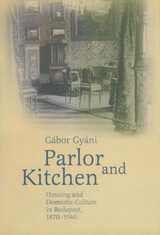
Parlor and Kitchen
Housing and Domestic Culture in Budapest, 1870-1940Gábor Gyáni
Central European University Press, 2002
Besides Berlin, Budapest was the fastest-growing capital city in Europe at the end of the nineteenth century. Parlor and Kitchen, the work of a microhistorian and historical anthropologist, describes the development of private spaces in this newly emerged metropolis.
Author Gábor Gyáni has chosen two distinct groups of contemporary society: the upper middle class and the working class, to present their homes, domestic culture and attitudes. At the same time the book offers a panoramic view of the everyday life of the entire society, on social segregation and mobility. Behind the visual details the author reveals a great deal about the value systems of the groups of society investigated.
Reconstructing minute details as well as case studies, the author has relied on archival sources, private documents, and statistical data. The text is accompanied by contemporary photographs, maps and blueprints.
This enlightening and interesting volume will be of interest not only to historians, anthropologists and sociologists, but also to the general reader with an interest in urban history.
Gábor Gyáni is founder and editor of the quarterly Budapest Review of Books. He is President of the Hungarian-American Historians' Committee and Secretary of the Urban History Workshop of the Hungarian Academy of Sciences.
A student of the late professor Péter Hanák, Gyáni is active in research into the urban and social history of modern Hungary and the theory and methodology of history writing.
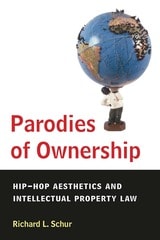
Parodies of Ownership
Hip-Hop Aesthetics and Intellectual Property LawRichard L. Schur
University of Michigan Press, 2009
"Richard Schur offers a provocative view of contemporary African American cultural politics and the relationship between African American cultural production and intellectual property law."
---Mark Anthony Neal, Duke University
"Whites used to own blacks. Now, they accomplish much the same thing by insisting that they 'own' ownership. Blacks shouldn't let them. A culture that makes all artists play by its rules will end up controlling new ideas and stifling change. Richard Schur's fine book explains why."
---Richard Delgado, Seattle University
What is the relationship between hip-hop and African American culture in the post--Civil Rights era? Does hip-hop share a criticism of American culture or stand as an isolated and unique phenomenon? How have African American texts responded to the increasing role intellectual property law plays in regulating images, sounds, words, and logos? Parodies of Ownership examines how contemporary African American writers, artists, and musicians have developed an artistic form that Schur terms "hip-hop aesthetics." This book offers an in-depth examination of a wide range of contemporary African American painters and writers, including Anna Deavere Smith, Toni Morrison, Adrian Piper, Colson Whitehead, Michael Ray Charles, Alice Randall, and Fred Wilson. Their absence from conversations about African American culture has caused a misunderstanding about the nature of contemporary cultural issues and resulted in neglect of their innovative responses to the post--Civil Rights era. By considering their work as a cross-disciplinary and specifically African American cultural movement, Schur shows how a new paradigm for artistic creation has developed.
Parodies of Ownership offers a broad analysis of post--Civil Rights era culture and provides the necessary context for understanding contemporary debates within American studies, African American studies, intellectual property law, African American literature, art history, and hip-hop studies. Weaving together law, literature, art, and music, Schur deftly clarifies the conceptual issues that unify contemporary African American culture, empowering this generation of artists, writers, and musicians to criticize how racism continues to affect our country.
Richard L. Schur is Director, Interdisciplinary Studies Center, and Associate Professor of Interdisciplinary Studies at Drury University. Visit the author's website: http://www2.drury.edu/rschur/index.htm.

Parti-Colored Blocks for a Quilt
Marge Piercy
University of Michigan Press, 1983
Partial Stories
Maternal Death from Six AnglesClaire L. Wendland
University of Chicago Press, 2022
By the early twenty-first century, about one woman in twelve could expect to die of a pregnancy or childbirth complication in Malawi. Specific deaths became object lessons. Explanatory stories circulated through hospitals and villages, proliferating among a range of practitioners: nurse-midwives, traditional birth attendants, doctors, epidemiologists, herbalists. Was biology to blame? Economic underdevelopment? Immoral behavior? Tradition? Were the dead themselves at fault?
In Partial Stories, Claire L. Wendland considers these explanations for maternal death, showing how they reflect competing visions of the past and shared concerns about social change. Drawing on extended fieldwork, Wendland reveals how efforts to legitimate a single story as the authoritative version can render care more dangerous than it might otherwise be. Historical, biological, technological, ethical, statistical, and political perspectives on death usually circulate in different expert communities and different bodies of literature. Here, Wendland considers them together, illuminating dilemmas of maternity care in contexts of acute change, chronic scarcity, and endemic inequity within Malawi and beyond.
Participatory Culture Wars
Controversy, Conflict, and Complicity in FandomSimone Driessen
University of Iowa Press, 2025
Fans, fandoms, and fan practices are no longer the realm of media and popular culture; they have been adopted and co-opted across the contemporary political terrain. This volume offers specific examples and suggests approaches that can help make sense of the constantly shifting interaction between fandom and politics.
Contributors:
Alfred Archer, Renee Barnes, Simone Driessen, Xing Fan, Monica Flegel, Zoe Hurley, Bethan Jones, Sklaerenn Le Gallo, Judith Leggatt, Georgina Mills, Peng Qiao, James Rendell, Mel Stanfill, Michelle Stewart, Rebecca Williams, Christina Wurst
Parties and Prejudice
The Normalization of Antiminority Rhetoric in US PoliticsManeesh Arora
University of Chicago Press, 2025
An essential guide to how the interactions between social norms, party politics, and expressions of prejudice are driving contemporary politics.
Antiminority rhetoric in American politics has grown more overt. What were once fringe comments on Stormfront have now become typical campaign appeals from many mainstream politicians. If there was ever a doubt, this is a poignant reminder that the boundaries of what is “acceptable” and “unacceptable” to say and do are fluid and socially enforced.
In Parties and Prejudice, Maneesh Arora offers a broad framework for understanding this new political terrain. Arora argues that the interaction between social norms and party politics determines what the political consequence of prejudicial speech will be. He illuminates this nuanced relationship by showing that norms vary based on the targeted minority group and the intended audience.
Drawing on experiments, survey data, news coverage, and real-world examples, Parties and Prejudice examines the distinctive ways that egalitarian/inegalitarian norms have developed—within each party—for Black, Muslim, and LGBTQ+ Americans. It is essential reading for understanding Donald Trump’s rise to power, the modern conservative agenda (including opposition to critical race theory and transgender rights), and threats to the development of a multiracial democracy.
Parties in Transition
Warren Miller
Russell Sage Foundation, 1986
Partisans and Partners
The Politics of the Post-Keynesian SocietyJosh Pacewicz
University of Chicago Press, 2016
Wheels-down in Iowa—that most important of primary states—Pacewicz looks to two cities, one traditionally Democratic, the other traditionally Republican, and finds that younger voters are rejecting older-timers’ strict political affiliations. A paradox is emerging—as the dividing lines between America’s political parties have sharpened, Americans are at the same time growing distrustful of traditional party politics in favor of becoming apolitical or embracing outside-the-beltway candidates. Pacewicz sees this change coming not from politicians and voters, but from the fundamental reorganization of the community institutions in which political parties have traditionally been rooted. Weaving together major themes in American political history—including globalization, the decline of organized labor, loss of locally owned industries, uneven economic development, and the emergence of grassroots populist movements—Partisans and Partners is a timely and comprehensive analysis of American politics as it happens on the ground.
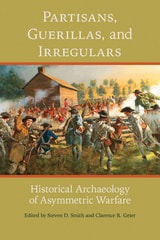
Partisans, Guerillas, and Irregulars
Historical Archaeology of Asymmetric WarfareEdited by Steven D. Smith and Clarence R. Geier
University of Alabama Press, 2019
Essays that explore the growing field of conflict archaeology
Within the last twenty years, the archaeology of conflict has emerged as a valuable subdiscipline within anthropology, contributing greatly to our knowledge and understanding of human conflict on a global scale. Although archaeologists have clearly demonstrated their utility in the study of large-scale battles and sites of conventional warfare, such as camps and forts, conflicts involving asymmetric, guerilla, or irregular warfare are largely missing from the historical record.
Partisans, Guerillas, and Irregulars: Historical Archaeology of Asymmetric Warfare presents recent examples of how historical archaeology can contribute to a better understanding of asymmetric warfare. The volume introduces readers to this growing study and to its historic importance. Contributors illustrate how the wide range of traditional and new methods and techniques of historiography and archaeology can be applied to expose critical actions, sacrifices, and accomplishments of competing groups representing opposing philosophies and ways of life, which are otherwise lost in time.
The case studies offered cover significant events in American and world history, including the French and Indian War, the American Revolution, Indian wars in the Southeast and Southwest, the Civil War, Reconstruction, Prohibition, and World War II. All such examples used here took place at a local or regional level, and several were singular events within a much larger and more complex historic movement. While retained in local memory or tradition, and despite their potential importance, they are poorly, and incompletely addressed in the historic record. Furthermore, these conflicts took place between groups of significantly different cultural and military traditions and capabilities, most taking on a “David vs. Goliath” character, further shaping the definition of asymmetric warfare.

Partitioning Bazaar Art
Popular Visual Culture of India and Pakistan around 1947Yousuf Saeed
Seagull Books, 2023
How did inexpensive posters influence nationalism in the decades leading up to and succeeding the Partition of the Indian subcontinent in 1947? If mechanically reproduced images that occupy public spaces reflect the aesthetics of the “masses,” what can a critical interpretation of subcontinental popular visual culture in the mid-twentieth century reveal about the formation of communal identities?
In this essay, Yousuf Saeed studies the selective deification of leaders fighting for Indian independence. He highlights the biased representation within the domain of “patriotic” posters of the time and the evolving portrayal of religious minority communities in India’s popular print culture over subsequent decades. Also charts the turn popular print culture took in post-Partition Pakistan, Saeed focuses on the country’s thriving industry of Sufi-saint posters. Partitioning Bazaar Art is a timely exploration of how nationalism can be defined through popular imagery.
Partners in Conflict
The Politics of Gender, Sexuality, and Labor in the Chilean Agrarian Reform, 1950–1973Heidi Tinsman
Duke University Press, 2002
Tinsman restores women to a scholarly narrative that has been almost exclusively about men, recounting the centrality of women’s labor to the pre-Agrarian Reform world of the hacienda during the 1950s and recovering women’s critical roles in union struggles and land occupations during the Agrarian Reform itself. Providing a theoretical framework for understanding why the Agrarian Reform ultimately empowered men more than women, Tinsman argues that women were marginalized not because the Agrarian Reform ignored women but because, under both the Frei and Allende governments, it promoted the male-headed household as the cornerstone of a new society. Although this emphasis on gender cooperation stressed that men should have more respect for their wives and funneled unprecedented amounts of resources into women’s hands, the reform defined men as its protagonists and affirmed their authority over women.
This is the first monographic social history of Chile’s Agrarian Reform in either English or Spanish, and the first historical work to make sexuality and gender central to the analysis of the reforms.
Partners in Education
Issues and Trends from the 21st International Congress on the Education of the DeafDonald F. Moores
Gallaudet University Press, 2011
The 21st International Congress on the Education of the Deaf (ICED) witnessed revolutionary exchanges on the vital themes in education. Presenters addressed topics encompassing seven major strands: Educational Environments, Language and Literacy, Early Intervention, Unique Challenges in Developing Countries, Educating Learners with Diverse Needs, Technology in Education, and Sign Language and Deaf Culture. These presentations and ensuing dialogues raised many complex questions. Partners in Education: Issues and Trends from the 21st International Congress on the Education of the Deaf features all of the keynote addresses by renowned luminaries in deaf education: Breda Carty, Karen Ewing, Nassozi Kiyaga, John Luckner, Connie Mayer and Beverly Trezek, volume editor Donald F. Moores, Peter V. Paul, Antti Raike, Claudine Storbeck, James Tucker, and Alys Young.
Most critically, the contributors to this collection explore the many multifaceted challenges facing the world’s deaf students. Deaf children are being diagnosed with overlays of disabilities; more deaf children are growing up in poverty; and many deaf children represent minority racial/ethnic groups or are immigrants to their country of residence. The situation for deaf individuals in the most impoverished countries of the world is desperate and of crisis proportions. This volume brings these themes to light through its exceptional synthesis of the outstanding discourse that took place at ICED 2010, including abstracts from 30 celebrated conference presentations.
Party Colonisation of the Media in Central and Eastern Europe
Péter Bajomi-Lázár
Central European University Press, 2014
Pascua
A Yaqui Village in ArizonaEdward H. Spicer
University of Arizona Press, 0
Edward Spicer devoted most of his professional career to the study of the Yaquis and came to be regarded as a leading authority on that tribe. At the inception of his forty years of research stands Pascua, a firsthand description of daily village life.
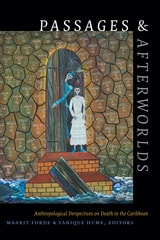
Passages and Afterworlds
Anthropological Perspectives on Death in the CaribbeanMaarit Forde and Yanique Hume, editors
Duke University Press, 2018
Contributors. Donald Cosentino, Maarit Forde, Yanique Hume, Paul Christopher Johnson, Aisha Khan, Keith E. McNeal, George Mentore, Richard Price, Karen Richman, Ineke (Wilhelmina) van Wetering, Bonno (H.U.E.) Thoden van Velzen
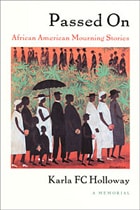
Passed On
African American Mourning Stories, A MemorialKarla FC Holloway
Duke University Press, 2002
With a focus on the “death-care” industry—black funeral homes and morticians, the history of the profession and its practices—Holloway examines all facets of the burial business, from physicians, hospital chaplains, and hospice administrators, to embalming- chemical salesmen, casket makers, and funeral directors, to grieving relatives. She uses narrative, photographs, and images to summon a painful history of lynchings, white rage and riot, medical malpractice and neglect, executions, and neighborhood violence. Specialized caskets sold to African Americans, formal burial photos of infants, and deathbed stories, unveil a glimpse of the graveyards and burial sites of African America, along with burial rituals and funeral ceremonies.
Revealing both unexpected humor and anticipated tragedy, Holloway tells a story of the experiences of black folk in the funeral profession and its clientele. She also reluctantly shares the story of her son and the way his death moved her research from page to person.
In the conclusion, which follows a sermon delivered by Maurice O. Wallace at the funeral for the author’s son, Bem, Holloway strives to commemorate—through observation, ceremony, and the calling of others to remembrance and celebration.
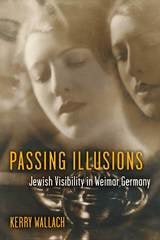
Passing Illusions
Jewish Visibility in Weimar GermanyKerry Wallach
University of Michigan Press, 2017
Passing Performances
Queer Readings of Leading Players in American Theater HistoryRobert A. Schanke and Kim Marra, Editors
University of Michigan Press, 1998
The actors, directors, producers, and agents examined here include Edwin Forrest, Charlotte Cushman, and Adah Isaacs Menken, whose personal lives and careers traded on the same-sex erotics of "true love" in the antebellum period; Elisabeth Marbury, Elsie de Wolfe, Elsie Janis, Nance O'Neil, and Alla Nazimova, whose intimate female liaisons were variously interpreted around the turn of the century; the "lavender marriages" of Alfred Lunt to Lynne Fontanne and Guthrie McClintic to Katharine Cornell; the lesbian collaborations of Margaret Webster and Cheryl Crawford; the comic antics of Monty Woolley, which negotiated codified constructions of homosexual perversion in the post-Freudian interwar years; and the on- and offstage performances of Mary Martin and Joe Cino, which resisted the paranoid enforcements of heterosexual normality in the McCarthy era. Central to these investigations are the complex connections of performances of sexuality and gender and their different implications for men and women practitioners working under pervasive sexism and homophobia.
The volume also includes striking archival photographs of the performers and their performances, and an index to facilitate the cross-referencing of subjects' intersecting careers. Passing Performances will engage both general and academic readers interested in theater, gay and lesbian history, American studies, and biography.
Robert A. Schanke is Professor of Theatre and Chair of the Division of Fine Arts, Central College, Iowa. Kim Marra is Associate Professor of Theatre Arts, University of Iowa.

Passing Performances
Queer Readings of Leading Players in American Theater HistoryRobert A. Schanke and Kim Marra, Editors
University of Michigan Press, 0
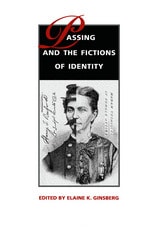
Passing and the Fictions of Identity
Elaine K. Ginsberg
Duke University Press, 1996
These essays consider a wide range of texts and moments from colonial times to the present that raise significant questions about the political motivations inherent in the origins and maintenance of identity categories and boundaries. Through discussions of such literary works as Running a Thousand Miles for Freedom, The Autobiography of an Ex–Coloured Man, Uncle Tom’s Cabin, The Hidden Hand, Black Like Me, and Giovanni’s Room, the authors examine issues of power and privilege and ways in which passing might challenge the often rigid structures of identity politics. Their interrogation of the semiotics of behavior, dress, language, and the body itself contributes significantly to an understanding of national, racial, gender, and sexual identity in American literature and culture.
Contextualizing and building on the theoretical work of such scholars as Judith Butler, Diana Fuss, Marjorie Garber, and Henry Louis Gates Jr., Passing and the Fictions of Identity will be of value to students and scholars working in the areas of race, gender, and identity theory, as well as U.S. history and literature.
Contributors. Martha Cutter, Katharine Nicholson Ings, Samira Kawash, Adrian Piper, Valerie Rohy, Marion Rust, Julia Stern, Gayle Wald, Ellen M. Weinauer, Elizabeth Young
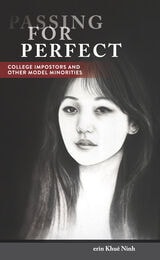
Passing for Perfect
College Impostors and Other Model Minoritieserin Khuê Ninh
Temple University Press, 2021
In her engaging study, Passing for Perfect,erin Khuê Ninh considers the factors that drove college imposters such as Azia Kim—who pretended to be a Stanford freshman—and Jennifer Pan—who hired a hitman to kill her parents before they found out she had never received her high school diploma—to extreme lengths to appear successful. Why would someone make such an illogical choice? And how do they stage these lies so convincingly, and for so long?
These outlier examples prompt Ninh to address the larger issue of the pressures and difficulties of striving to be model minority, where failure is too ruinous to admit. Passing for Perfect insists that being a “model minority” is not a “myth,” but coded into one’s programming as an identity—a set of convictions and aspirations, regardless of present socioeconomic status or future attainability—and that the true cost of turning children into high-achieving professionals may be higher than anyone can bear.
Ninh’s book codifies for readers the difference between imposters who are con artists or shysters and those who don’t know how to stop passing for perfect.
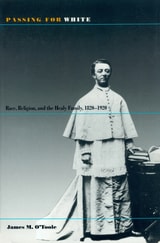
Passing for White
Race, Religion, and the Healy Family, 1820-1920James M. O'Toole
University of Massachusetts Press, 2002
Through the prism of one family's experience, this book explores questions of racial identity, religious tolerance, and black-white “passing” in America. Spanning the century from 1820 to 1920, it tells the story of Michael Morris Healy, a white Irish immigrant planter in Georgia; his African American slave Eliza Clark Healy, who was also his wife; and their nine children. Legally slaves, these brothers and sisters were smuggled north before the Civil War to be educated. In spite of the hardships imposed by American society on persons of mixed racial heritage, the Healy children achieved considerable success. Rejecting the convention that defined as black anyone with “one drop of Negro blood,” they were able to transform themselves into white Americans.
Their unlikely ally in this transition was the Catholic church, as several of them became priests or nuns. One brother served as a bishop in Maine, another as rector of the Cathedral in Boston, and a third as president of Georgetown University. Of the two sisters who became nuns, one was appointed the superior of convents in the United States and Canada. Another brother served for twenty years as a captain in the U.S. Coast Guard, enforcing law and order in the waters off Alaska. The Healy children's transition from black to white should not have been possible according to the prevailing understandings of race, but they accomplished it with apparent ease. Relying on their abilities, and in most cases choosing celibacy, which precluded mixed-race offspring, they forged a place for themselves. They also benefited from the support of people in the church and elsewhere. Even those white Americans who knew the family's background chose to overlook their African ancestry and thereby help them to “get away” with passing. By exploring the lifelong struggles of the members of the Healy family to redefine themselves in a racially polarized society, this book makes a distinctive contribution to our understanding of the enduring dilemma of race in America.
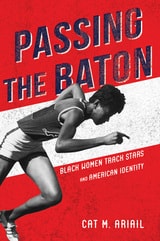
Passing the Baton
Black Women Track Stars and American IdentityCat M. Ariail
University of Illinois Press, 2020
A rare exploration of African American women athletes and national identity, Passing the Baton reveals young Black women as active agents in the remaking of what it means to be American.
Passing the Torch
Does Higher Education for the Disadvantaged Pay Off Across the Generations?Paul Attewell
Russell Sage Foundation, 2007
The steady expansion of college enrollment rates over the last generation has been heralded as a major step toward reducing chronic economic disparities. But many of the policies that broadened access to higher education—including affirmative action, open admissions, and need-based financial aid—have come under attack in recent years by critics alleging that schools are admitting unqualified students who are unlikely to benefit from a college education. In Passing the Torch, Paul Attewell, David Lavin, Thurston Domina, and Tania Levey follow students admitted under the City University of New York’s “open admissions” policy, tracking its effects on them and their children, to find out whether widening college access can accelerate social mobility across generations.
Unlike previous research into the benefits of higher education, Passing the Torch follows the educational achievements of three generations over thirty years. The book focuses on a cohort of women who entered CUNY between 1970 and 1972, when the university began accepting all graduates of New York City high schools and increasing its representation of poor and minority students. The authors survey these women in order to identify how the opportunity to pursue higher education affected not only their long-term educational attainments and family well-being, but also how it affected their children’s educational achievements. Comparing the record of the CUNY alumnae to peers nationwide, the authors find that when women from underprivileged backgrounds go to college, their children are more likely to succeed in school and earn college degrees themselves. Mothers with a college degree are more likely to expect their children to go to college, to have extensive discussions with their children, and to be involved in their children’s schools. All of these parenting behaviors appear to foster higher test scores and college enrollment rates among their children. In addition, college-educated women are more likely to raise their children in stable two-parent households and to earn higher incomes; both factors have been demonstrated to increase children’s educational success.
The evidence marshaled in this important book reaffirms the American ideal of upward mobility through education. As the first study to indicate that increasing access to college among today’s disadvantaged students can reduce educational gaps in the next generation, Passing the Torch makes a powerful argument in favor of college for all.
Passing
Two Publics in a Mexican Border CityRihan Yeh
University of Chicago Press, 2017
Out of the nitty-gritty of quotidian talk and interaction in Tijuana, Yeh captures the dynamics of desire and denial that permeate public spheres in our age of transnational crossings and fortified borders. Original and accessible, Passing is a timely work in light of current fierce debates over immigration, Latin American citizenship, and the US-Mexico border.
Passionate Journeys
Why Successful Women Joined a CultMarion S. Goldman
University of Michigan Press, 2001
Passionate Journeys explores the fascinating stories behind the Bhagwan Rajneesh phenomenon of the 1970s and 1980s, focusing on women who left families, careers, and identities to join the community of Rajneeshpuram. Rajneesh was a spiritual leader for thousands of young Americans, and in rural Oregon his devotees established a thriving community. Marion S. Goldman's extensive interviews with women who participated at Rajneeshpuram provide a fascinating picture of the cultural and social climate that motivated successful, established women to join such a movement.
Passionate Journeys will appeal to specialists in feminist theory and women's studies, sociology, religious studies, American studies, and the history of the Northwest.
Marion S. Goldman is Professor of Sociology, University of Oregon. She is also the author of Gold Diggers and Silver Miners: Prostitution and Social Life on the Comstock Lode.
Passionate Revolutions
The Media and the Rise and Fall of the Marcos RegimeTalitha Espiritu
Ohio University Press, 2017
In the last three decades, the dictatorship of Ferdinand Marcos has commanded the close scrutiny of scholars. These studies have focused on the political repression, human rights abuses, debt-driven growth model, and crony capitalism that defined Marcos’ so-called Democratic Revolution in the Philippines. But the relationship between the media and the regime’s public culture remains underexplored.
In Passionate Revolutions, Talitha Espiritu evaluates the role of political emotions in the rise and fall of the Marcos government. Focusing on the sentimental narratives and melodramatic cultural politics of the press and the cinema from 1965 to 1986, she examines how aesthetics and messaging based on heightened feeling helped secure the dictator’s control while also galvanizing the popular struggles that culminated in “people power” and government overthrow in 1986.
In analyzing news articles, feature films, cultural policy documents, and propaganda films as national allegories imbued with revolutionary power, Espiritu expands the critical discussion of dictatorships in general and Marcos’s in particular by placing Filipino popular media and the regime’s public culture in dialogue. Espiritu’s interdisciplinary approach in this illuminating case study of how melodrama and sentimentality shape political action breaks new ground in media studies, affect studies, and Southeast Asian studies.