Results by title
3027 books match the query 'Sociology' and 166 start with p
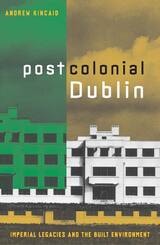
Postcolonial Dublin
Imperial Legacies And The Built EnvironmentAndrew Kincaid
University of Minnesota Press, 2006
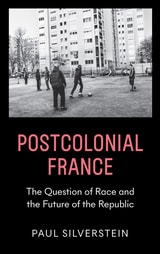
Postcolonial France
The Question of Race and the Future of the RepublicPaul Silverstein
Pluto Press, 2018
Postdigital Intimacies
Relational Lives in the Networked Public-PrivateEdited by Adrienne Evans, Jamie Hakim, Jessica Ringrose, Amy Shields Dobson, and Shaka McGlotten
University College London, 2026
The first full-length study to explore, analyze, and critically engage with intimacy in a world where the digital is embedded in everyday life.
Postdigital Intimacies is a timely collection of research into the complex interplay between digital and nondigital relationships. From vibey social media experiences to shared activism, access to online mental health care, and exposure to harm, the book reveals the social, political, and cultural implications of intimacy in a blurry public-private.

Postgenomics
Perspectives on Biology after the GenomeSarah S. Richardson and Hallam Stevens, editors
Duke University Press, 2015
Contributors. Russ Altman, Rachel A. Ankeny, Catherine Bliss, John Dupré, Michael Fortun, Evelyn Fox Keller, Sabina Leonelli, Adrian Mackenzie, Margot Moinester, Aaron Panofsky, Sarah S. Richardson, Sara Shostak, Hallam Stevens

Postmodernism and a Sociology of the Absurd
Absurd And Other Essays on the "Nouvelle Vague" in American Social ScienceStanford Lyman
University of Arkansas Press, 1997
In the fifth volume in the Studies in American Sociology Series, Stanford M. Lyman offers commentaries on and critiques of postmodernism, poststructuralism, and deconstruction, posing questions concerning theoretical and epistemological problems arising from what appears to be a “nouvelle vague.”
Postmodernism, poststructuralism, and deconstructionism are interrelated aspects of the newest theoretical development in sociology and the social sciences. This new wave of thought challenges virtually all paradigms currently in use. In this, his fifth volume in the Studies in American Sociology Series, Stanford M. Lyman offers commentaries on and critiques of this new perspective, posing questions concerning theoretical and epistemological problems arising from what appears to be a nouvelle vague.
Among the basic themes and issues explored are the allegation that modernity has defaulted on the promise of the Enlightenment; the question of whether the rational basis for knowledge and action is still valid; the controversy over the place of metanarratives and macrosociological outlooks; and newer concerns over race, gender, sexual preferences, the self, and the “Other.”
Professor Lyman provides empirically based and historically specific analyses of the relation of the race question to the problem of otherness and to the legal construction of racial identity in American court proceedings. Focusing on the issues of citizenship affecting European, Middle Eastern, and Asian immigrants; African Americans; and the special cases of the Chinese and Native Americans, he relates major public problems to the modern as well as the postmodern perspectives on justice. The debate over assimilation and multiculturalism, the dynamics of gender-specific emotions as expressed in six decades of Hollywood films, and the postmodern approach to deviance are each examined. He also offers proposals for a social science attuned to, but critical of, postmodernism and poststructuralism. Such a sociology might offer a perspective that treats the drama of social relations in the routine as well as the remarkable aspects of everyday life. Professor Lyman provides not only a new understanding of postmodernism but also a program of how to proceed with respect to its challenges.
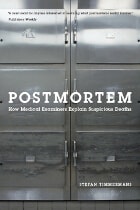
Postmortem
How Medical Examiners Explain Suspicious DeathsStefan Timmermans
University of Chicago Press, 2006
Postmortem goes deep inside the world of medical examiners to uncover the intricate web of pathological, social, legal, and moral issues in which they operate. Stefan Timmermans spent years in a medical examiner’s office, following cases, interviewing examiners, and watching autopsies. While he relates fascinating cases here, he is also more broadly interested in the cultural authority and responsibilities that come with being a medical examiner. Although these professionals attempt to remain objective, medical examiners are nonetheless responsible for evaluating subtle human intentions. Consequently, they may end—or start—criminal investigations, issue public health alerts, and even cause financial gain or harm to survivors. How medical examiners speak to the living on behalf of the dead, is Timmermans’s subject, revealed here in the day-to-day lives of the examiners themselves.
Poverty and Place
Ghettos, Barrios, and the American CityPaul A. Jargowsky
Russell Sage Foundation, 1997
Power
Keith Dowding
University of Minnesota Press, 1996
Power Despite Precarity
Strategies for the Contingent Faculty Movement in Higher EducationJoe Berry
Pluto Press, 2021
Higher education is the site of an ongoing conflict. At the heart of this struggle are the precariously employed faculty 'contingents' who work without basic job security, living wages or benefits. Yet they have the incentive and, if organized, the power to shape the future of higher education.
Power Despite Precarity is part history, part handbook and a wholly indispensable resource in this fight. Joe Berry and Helena Worthen outline the four historical periods that led to major transitions in the worklives of faculty of this sector. They then take a deep dive into the 30-year-long struggle by California State University lecturers to negotiate what is recognized as the best contract for contingents in the US.
The authors ask: what is the role of universities in society? Whose interests should they serve? What are the necessary conditions for the exercise of academic freedom? Providing strategic insight for activists at every organizing level, they also tackle 'troublesome questions' around legality, union politics, academic freedom and how to recognize friends (and foes) in the struggle.
Power Despite Precarity
Strategies for the Contingent Faculty Movement in Higher EducationJoe Berry
Pluto Press, 2021
Higher education is the site of an ongoing conflict. At the heart of this struggle are the precariously employed faculty 'contingents' who work without basic job security, living wages or benefits. Yet they have the incentive and, if organized, the power to shape the future of higher education.
Power Despite Precarity is part history, part handbook and a wholly indispensable resource in this fight. Joe Berry and Helena Worthen outline the four historical periods that led to major transitions in the worklives of faculty of this sector. They then take a deep dive into the 30-year-long struggle by California State University lecturers to negotiate what is recognized as the best contract for contingents in the US.
The authors ask: what is the role of universities in society? Whose interests should they serve? What are the necessary conditions for the exercise of academic freedom? Providing strategic insight for activists at every organizing level, they also tackle 'troublesome questions' around legality, union politics, academic freedom and how to recognize friends (and foes) in the struggle.
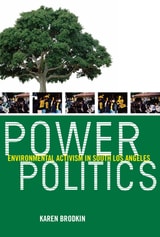
Power Politics
Environmental Activism in South Los AngelesBrodkin, Karen
Rutgers University Press, 2009
Power Politics is a rich and readable study of a grassroots campaign where longtime labor and environmental allies found themselves on opposite sides of a conflict that pitted good jobs against good air. Karen Brodkin analyzes how those issues came to be opposed and in doing so unpacks the racial and class dynamics that shape Americans' grasp of labor and environmental issues. Power Politics' activists stood at the forefront of a movement that is building broad-based environmental coalitions and placing social justice at the heart of a new and robust vision.

Power and Society in Greater NY
David C. Hammack
Russell Sage Foundation, 1982
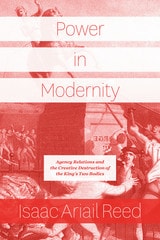
Power in Modernity
Agency Relations and the Creative Destruction of the King’s Two BodiesIsaac Ariail Reed
University of Chicago Press, 2020
He mobilizes this theory to investigate the onset of modernity in the Atlantic world, with a focus on rebellion, revolution, and state formation in colonial North America, the early American Republic, the English Civil War, and French Revolution. Modernity, Reed argues, dismantled the “King’s Two Bodies”—the monarch’s physical body and his ethereal, sacred second body that encompassed the body politic—as a schema of representation for forging power relations. Reed’s account then offers a new understanding of the democratic possibilities and violent exclusions forged in the name of “the people,” as revolutionaries sought new ways to secure delegation, build hierarchy, and attack alterity.
Reconsidering the role of myth in modern politics, Reed proposes to see the creative destruction and eternal recurrence of the King’s Two Bodies as constitutive of the modern attitude, and thus as a new starting point for critical theory. Modernity poses in a new way an eternal human question: what does it mean to be the author of one’s own actions?
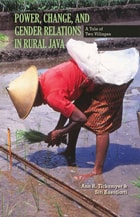
Power, Change, and Gender Relations in Rural Java
A Tale of Two VillagesAnn R. Tickamyer
Ohio University Press, 2012
Women’s status in rural Java can appear contradictory to those both inside and outside the culture. In some ways, women have high status and broad access to resources, but other situations suggest that Javanese women lack real power and autonomy. Javanese women have major responsibilities in supporting their families and controlling household finances. They may also own and manage their own property. Yet these symbols and potential sources of independence and influence are determined by a culturally prescribed, state-reinforced, patriarchal gender ideology that limits women’s autonomy. Power, Change, and Gender Relations in Rural Java examines this contradiction as well as sources of stability and change in contemporary Javanese gender relations.
The authors conducted their research in two rural villages in Yogyakarta, Indonesia, during three important historical and political periods: the end of the New Order regime; the transitional period of reformation; and the subsequent establishment of a democratic government. Their collaboration brings a unique perspective, analyzing how gender is constructed and reproduced and how power is exercised as Indonesia faces the challenges of building a new social order.
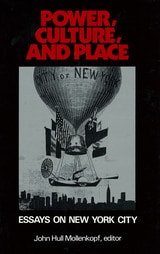
Power, Culture and Place
Essays on New York CityJohn H. Mollenkopf
Russell Sage Foundation, 1988
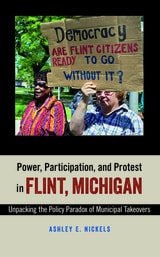
Power, Participation, and Protest in Flint, Michigan
Unpacking the Policy Paradox of Municipal TakeoversAshley E. Nickels
Temple University Press, 2019
When the 2011 municipal takeover in Flint, Michigan placed the city under state control, some supported the intervention while others saw it as an affront to democracy. Still others were ambivalent about what was supposed to be a temporary disruption. However, the city’s fiscal emergency soon became a public health emergency—the Flint Water Crisis—that captured international attention.
But how did Flint’s municipal takeovers, which suspended local representational government, alter the local political system? In Power, Participation, and Protest in Flint, Michigan, Ashley Nickels addresses the ways residents, groups, and organizations were able to participate politically—or not—during the city’s municipal takeovers in 2002 and 2011. She explains how new politics were created as organizations developed, new coalitions emerged and evolved, and people’s understanding of municipal takeovers changed.
Inwalking readers through the policy history of, implementation of, and reaction to Flint’s two municipal takeovers, Nickels highlights how the ostensibly apolitical policy is, in fact, highly political.
Power, Trust, and Meaning
Essays in Sociological Theory and AnalysisS. N. Eisenstadt
University of Chicago Press, 1995
Framed by a new introduction and an extensive epilogue, which are themselves important statements about processes of institutional formations and cultural creativity, the essays trace the major developments of contemporary sociological theory and analysis. Examining themes of trust and solidarity among immigrants, youth groups, and generations, and in friendships, kinships, and patron-client relationships, Eisenstadt explores larger questions of social structure and agency, conflict and change, and the reconstitution of the social order. He looks also at political and religious systems, paying particular attention to great historical empires and the major civilizations.
United by what they reveal about three major dimensions of social life—power, trust, and meaning—these essays offer a vision of culture as both a preserving and a transforming aspect of social life, thus providing a new perspective on the relations between culture and social structure.
Powerless
The People's Struggle for EnergyDiana Hernández
Russell Sage Foundation, 2025
Approximately one in ten households in the U.S. are energy insecure and four in ten are at risk for energy insecurity. These statistics alone do not convey the acute pain of utility shutoffs, or the relentless toll of chronic energy hardships marked by difficult choices and harsh living conditions. Drawing on survey data and interviews with one hundred energy-insecure individuals and families, Hernández and Laird detail the experience of energy insecurity. Individuals and families suffering from energy insecurity endure economic hardships, such as difficulty paying utility bills, utility debt, and disconnection from utility services. They also struggle with physical challenges, such as poor housing conditions and poor or dysfunctional heating and cooling systems. They are often forced to make difficult choices about what bills to pay. These decisions are sometimes referred to as “heat or eat?” choices, as families cannot afford to pay for heating and food at the same time. Energy insecure individuals and families employ a variety of strategies to keep energy costs down to avoid having to make these hard choices. This includes deliberate underconsumption of energy, enduring physical discomfort, and using dangerous alternatives such as open flames, ovens, or space heaters to try to maintain a comfortable temperature in their home. To be energy insecure is to suffer. Despite the heavy toll of energy insecurity, most people confront these difficulties behind closed doors, believing it is a private matter. Thus, the enormous social crisis of energy insecurity goes unnoticed.
Hernández and Laird argue that household energy is a basic human right and detail policies and practices that would expand access to consistent, safe, clean, and affordable energy. Their proposals include improving the current energy safety net, which is limited and often does not serve the most energy insecure due to stringent program requirements and administrative burdens. They also suggest redesigning rates to accommodate income, promoting enrollment and expansion of discount programs, reforming utility disconnection policies, improving energy literacy, and ensuring an equitable shift to renewable energy resources.
Powerless creates a comprehensive picture of the complex social and environmental issue of energy insecurity and shows how energy equity is not just an aspiration but an achievable reality.
Practicing Cooperation
Mutual Aid beyond CapitalismAndrew Zitcer
University of Minnesota Press, 2021
A powerful new understanding of cooperation as an antidote to alienation and inequality
From the crises of racial inequity and capitalism that inspired the Black Lives Matter movement and the Green New Deal to the coronavirus pandemic, stories of mutual aid have shown that, though cooperation is variegated and ever changing, it is also a form of economic solidarity that can help weather contemporary social and economic crises. Addressing this theme, Practicing Cooperation delivers a trenchant and timely argument that the way to a more just and equitable society lies in the widespread adoption of cooperative practices. But what renders cooperation ethical, effective, and sustainable?
Providing a new conceptual framework for cooperation as a form of social practice, Practicing Cooperation describes and critiques three U.S.-based cooperatives: a pair of co-op grocers in Philadelphia, each adjusting to recent growth and renewal; a federation of two hundred low-cost community acupuncture clinics throughout the United States, banded together as a cooperative of practitioners and patients; and a collectively managed Philadelphia experimental dance company, founded in the early 1990s and still going strong. Through these case studies, Andrew Zitcer illuminates the range of activities that make contemporary cooperatives successful: dedicated practitioners, a commitment to inclusion, and ongoing critical reflection. In so doing he asserts that economic and social cooperation must be examined, critiqued, and implemented on multiple scales if it is to combat the pervasiveness of competitive individualism.
Practicing Cooperation is grounded in the voices of practitioners and the result is a clear-eyed look at the lived experience of cooperators from different parts of the economy and a guidebook for people on the potential of this way of life for the pursuit of justice and fairness.
Pragmatism and Social Theory
Hans Joas
University of Chicago Press, 1993
Along with pragmatism's impact on American sociology and social research from 1895 to the 1940s, Joas traces its reception by French and German traditions during this century. He explores the influences of pragmatism—often misunderstood—on Emile Durkheim's sociology of knowledge, and on German thought, with particularly enlightening references to its appropriation by Nazism and its rejection by neo-Marxism. He also explores new currents of social theory in the work of Habermas, Castoriadis, Giddens, and Alexander, fashioning a bridge between Continental thought, American philosophy, and contemporary sociology; he shows how the misapprehension and neglect of pragmatism has led to systematic deficiencies in contemporary social theory.
From this skillful historical and theoretical analysis, Joas creates a powerful case for the enduring legacy of Peirce, James, Dewey, and Mead for social theorists today.
Prairie Crossing
Creating an American Conservation CommunityJohn Scott Watson
University of Illinois Press, 2016
The first comprehensive look at an American conservation community, Prairie Crossing goes beyond windmills and nest boxes to examine an effort to connect adults to the land while creating a healthy and humane setting for raising a new generation attuned to nature. John Scott Watson places Prairie Crossing within the wider context of suburban planning, revealing how two first-time developers implemented a visionary new land ethic that saved green space by building on it. The remarkable achievements include a high rate of resident civic participation, the reestablishment of a thriving prairie ecosystem, the reintroduction of endangered and threatened species, and improved water and air quality. Yet, as Watson shows, considerations like economic uncertainty, lack of racial and class diversity, and politics have challenged, and continue to challenge, Prairie Crossing and its residents.
Precarious Accumulation
Fast Fashion Bosses in Transnational GuangzhouNellie Chu
Duke University Press, 2026
Preference Pollution
How Markets Create the Desires We DislikeDavid George
University of Michigan Press, 2004

Prepared
The Environmental Politics of the End of the WorldAllison Ford
University of Chicago Press, 0
Shares deep insights into the world of “prepping” and reveals how prepping functions as an environmental practice expressed through right-wing ideology.
Sensationalized in TV shows like Doomsday Preppers, ordinary people who prepare for the end of the world are a subject of fascination. While beginners might keep a few days’ worth of food and water on hand in case of a weather emergency, others truly push themselves to acquire the materials, skills, and knowledge they would need to survive complete societal collapse. Though we might think of them as on the fringe, some estimate that there are as many as 20 million preppers worldwide.
Sociologist Allison Ford’s Prepared: The Environmental Politics of the End of the World shares a behind-the-scenes look at preppers. Ford’s ethnography finds that prepping is a response to environmental risk that originates in right-wing political ideology. Instead of turning to collective action to find a solution, however, preppers approach emergency preparedness as an individual responsibility. Preparedness reasserts and confirms preppers’ self-identification as people who protect their families and maintain self-control, without depending upon others. She argues that preppers adopt the strategies that they do because they are culturally attached to their worldviews, specifically their commitments to liberalism and its unspoken gendered, racial, and class hierarchies, which are being challenged by the failures of modernity that preppers observe. Ultimately, Prepared gives critical insight into how people who do not necessarily identify as environmentalists respond to and deal with environmental risk.
Preparing Students to Engage in Equitable Community Partnerships
A HandbookElizabeth A. Tryon
Temple University Press, 2023
Preparing Students to Engage in Equitable Community Partnerships provides a wealth of valuable resources and activities to help impart ideas of identity, privilege, oppression, bias, and power dynamics to best support students and community in these relationships. Believing that authenticity only comes about in an atmosphere of mutual respect and self-awareness, the authors argue for cultural and intellectual humility.
Each chapter looks at topics and issues through different lenses, complete with underlying theories, and relates those discussions to concrete classroom activities, facilitation strategies, and scholarly frames. In addition, the authors include contributions from a diverse group of practitioners at community colleges, private colleges, historically Black colleges and universities, and minority-serving institutions.
Preparing Students to Engage in Equitable Community Partnerships is a much-needed, comprehensive resource for community-engaged professionals as they prepare students for building relationships when entering a community for learning or research purposes.

Present Tensions
European Writers on Overcoming DictatorshipsKristina Kaiserová
Central European University Press, 2009
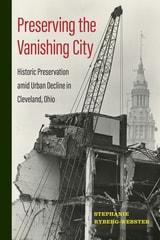
Preserving the Vanishing City
Historic Preservation amid Urban Decline in Cleveland, OhioStephanie Ryberg-Webster
Temple University Press, 2023
Stephanie Ryberg-Webster uncovers the motivations, strategies, and constraints driving Cleveland’s historic preservation sector, led by the public-sector Cleveland Landmarks Commission, nonprofit Cleveland Restoration Society, and a cadre of advocates. She sheds light on the ways in which preservationists confronted severe, escalating, and sustained urban decline, which plagued Cleveland, a prototypical rust-belt industrial city.
Preserving the Vanishing City chronicles the rise of the historic preservation profession in Cleveland and provides six case studies about targeted projects and neighborhood efforts, including industrial heritage, housing preservation and restoration, commercial district revitalization, securing local historic district designations, as well as grassroots organizing, coalition building, and partnerships. Ryberg-Webster also addresses the complexities of historic preservation within the context of rapid racial change in Cleveland’s neighborhoods.
A comprehensive history of preservation within the context of one city’s urban decline, Preserving the Vanishing Cityrecounts the successes, failures, and creative strategies employed to save Cleveland’s built environment.
Presidential Responsiveness and Public Policy-Making
The Publics and the Policies that Presidents ChooseJeffrey E. Cohen
University of Michigan Press, 1999
We expect a president to respond to public opinion as an elected official in a democracy. Indeed, the president needs public support to overcome opposition to his policies in Congress and the bureaucracy. At the same time the president may want to pursue policies that do not have widespread support. How does public opinion affect presidential policy making? Jeffrey Cohen finds that presidents are responsive to the public in selecting issues to focus on. If an issue has captured the interest of the people, then the president will focus on that issue. Cohen finds that having chosen to work on an issue, presidents pay less attention to public opinion when making a policy. The president will try to maintain control over the details of the policy so that the outcome fits his policy agenda. Cohen examines the way presidents from Eisenhower through Clinton have dealt with public opinion in policy making. He uses case studies of issues such as Clinton and gays in the military, Bush and the extension of unemployment benefits, and Kennedy and cutting the income tax, to explore the relationship between presidents and public opinion. In addition Cohen uses a quantitative analysis of State of the Union addresses and positions on roll call votes of presidents from Eisenhower through George Bush to test his theories. This book should appeal to political scientists and historians interested in the presidency and in public opinion, as well as general readers interested in the history of the American presidency.
Pressed for Time
The Acceleration of Life in Digital CapitalismJudy Wajcman
University of Chicago Press, 2014
In Pressed for Time, Judy Wajcman explains why we immediately interpret our experiences with digital technology as inexorably accelerating everyday life. She argues that we are not mere hostages to communication devices, and the sense of always being rushed is the result of the priorities and parameters we ourselves set rather than the machines that help us set them. Indeed, being busy and having action-packed lives has become valorized by our productivity driven culture. Wajcman offers a bracing historical perspective, exploring the commodification of clock time, and how the speed of the industrial age became identified with progress. She also delves into the ways time-use differs for diverse groups in modern societies, showing how changes in work patterns, family arrangements, and parenting all affect time stress. Bringing together empirical research on time use and theoretical debates about dramatic digital developments, this accessible and engaging book will leave readers better versed in how to use technology to navigate life's fast lane.
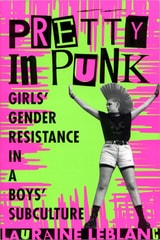
Pretty in Punk
Girl's Gender Resistance in a Boy's SubcultureLeblanc, Lauraine
Rutgers University Press, 1999
Pretty in Punk combines autobiography, interviews, and sophisticated analysis to create the first insider’s examination of the ways punk girls resist gender roles and create strong identities.
Why would an articulate, intelligent, thoughtful young women shave off most of her hair, dye the remainder green, shape it into a mohawk, and glue it onto her head? What attracts girls to male-dominated youth subcultures like the punk movement? What role does the subculture play in their perceptions of themselves, and in their self-esteem? How do girls reconcile a subcultural identity that is deliberately coded “masculine” with the demands of femininity?
Research has focused on the ways media and cultural messages victimize young women, but little attention has been paid to the ways they resist these messages. In Pretty in Punk, Lauraine Leblanc examines what happens when girls ignore these cultural messages, parody ideas of beauty, and refuse to play the games of teenage femininity. She explores the origins and development of the punk subculture, the processes by which girls decide to “go punk,” patterns of resistance to gender norms, and tactics girls use to deal with violence and harassment.
Pretty in Punk takes readers into the lives of girls living on the margins of contemporary culture. Drawing on interviews with 40 girls and women between the ages of 14-37, Leblanc examines the lives of her subjects, illuminating their forms of rebellion and survival. Pretty in Punk lets readers hear the voices of these women as they describe the ways their constructions of femininity—from black lipstick to slamdancing—allow them to reject damaging cultural messages and build strong identities. The price they pay for resisting femininity can be steep—girls tell of parental rejection, school expulsion, institutionalization, and harassment. Leblanc illuminates punk girls’ resistance to adversity, their triumphs over tough challenges, and their work to create individual identities in a masculine world.
Prismatic Metropolis
Inequality in Los AngelesLawrence D. Bobo
Russell Sage Foundation, 2000
Prisms of the People
Power & Organizing in Twenty-First-Century AmericaHahrie Han, Elizabeth McKenna, and Michelle Oyakawa
University of Chicago Press, 2021
Prisms of the People addresses those questions and more. Using data from six movement organizations—including a coalition that organized a 104-day protest in Phoenix in 2010 and another that helped restore voting rights to the formerly incarcerated in Virginia—Hahrie Han, Elizabeth McKenna, and Michelle Oyakawa show that the power of successful movements most often is rooted in their ability to act as “prisms of the people,” turning participation into political power just as prisms transform white light into rainbows. Understanding the organizational design choices that shape the people, their leaders, and their strategies can help us understand how grassroots groups achieve their goals.
Linking strong scholarship to a deep understanding of the needs and outlook of activists, Prisms of the People is the perfect book for our moment—for understanding what’s happening and propelling it forward.

Prisons of Poverty
Loïc Wacquant
University of Minnesota Press, 2009
An international best seller dissects the globalization of penal policies “made in U.S.A.” as part of the spread of neoliberalism
In the early 1990s, Mayor Rudolph Giuliani launched a zero-tolerance campaign aimed at street disorders and petty offenders, incarnated in the infamous “squeegee man.” New York City soon became a planetary showcase for an aggressive approach to law enforcement that, despite its extravagant costs and the absence of connection to the crime drop, came to be admired and imitated by other cities in the United States, Western Europe, and Latin America.
In Prisons of Poverty, Loïc Wacquant tracks the incubation and internationalization of the slogans, theories, and measures composing this new punitive “common sense,” fashioned to curb mounting urban inequality and marginality in the metropolis. He finds that a network of Reagan-era conservative think tanks (led by the Manhattan Institute) forged them as weapons in their crusade to dismantle the welfare state and, in effect, to criminalize poverty. He traces their import and export through the agency of the media and the pro-market policy institutes that have mushroomed across the European Union, particularly in Tony Blair’s Britain. And he shows how academics helped smuggle U.S. techniques of penalization into their countries by dressing them up in scholarly garb.Now available in English for the first time in an expanded edition, Prisons of Poverty reveals how the Washington consensus on economic deregulation and welfare retrenchment was extended to encompass punitive crime control because the invisible hand of the market necessitates and calls forth the iron fist of the penal state.
Private Life, Public Action
How Housing Politics Mobilized Citizens in MoscowAnna Zhelnina
Temple University Press, 2026
Private Life, Public Action traces how residents impacted by the relocation plan became activists despite having little to no experience organizing or even forming political affiliations and opinions. Author Anna Zhelnina details the ways in which neighbors engaged in collective action, as well as the individual and structural changes these interactions caused.
Zhelnina develops the concept of “housing strategies” to explain how residents’ debates with their neighbors about housing were shaped by their private life strategies. She applies her findings about housing in Moscow to ongoing questions about political mobilization, demonstrating how public engagement is shaped by historical and social contexts.
Examining the intersection of housing, politics, and citizenship in contemporary Russia, Private Life, Public Action offers a new way to look at urban change.
In the series Politics, History, and Social Change

Privatising Justice
The Security Industry, War and Crime ControlJohn Lea and Wendy Fitzgibbon
Pluto Press, 2020
The development of the welfare state is seen as central to the decline of what the authors call 'old privatisation'. Its succession by neoliberalism has created the ground for the resurgence of the private sector. The growth of private military, policing and penal systems is located within the broader global changes brought about by neoliberalism and the dystopian future that it portends.
The book is a powerful petition for the reversal of the increasing privatization of the state and the neoliberalism that underlies it.

Problem of the Century
Racial Stratification in the United StatesElijah Anderson
Russell Sage Foundation, 2001
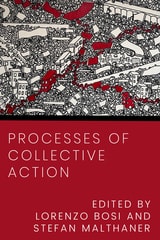
Processes of Collective Action
Edited by Lorenzo Bosi and Stefan Malthaner
Temple University Press, 2027
Whether collective action takes the form of protest campaigns, social movements, political violence or strikes, there is a dynamic nature to the shared goal of effecting change. But whereas most studies look at when collective action begins, the editors and contributors to Processes of Collective Action take a processual approach, looking at how collective action emerges, proceeds, what is achieved, and how different collective actors react to what unfolds.
Bringing together leading scholars of contentious politics, this volume seeks to explore and advance process analysis across different forms of political conflicts, types of actors, and varieties of collective action. Featuring theoretical concepts, methodological tools, and global cutting-edge research, Processes of Collective Action offers a series of case studies and conceptual essays that reflect on crucial issues in and current transformations of collective action.
Contributors: Irina Aguiari, Kenneth T. Andrews, Javier Auyero, Mark R. Beissinger, Kathleen Blee, Donatella della Porta, Mario Diani, Jennifer Earl, Olivier Fillieule, Sarah Gaby, Thomas Hoebel, Chaeyoon Lim, James M. Jasper, Doug McAdam, Anna Milewski, Pamela Oliver, elena pavan, Anastasia Shesterinina, Katherine Sobering, Mary Ellen Stitt, Sidney Tarrow, Katrin Uba, Mattias Wahlström
Processual Sociology
Andrew Abbott
University of Chicago Press, 2016
In Processual Sociology, Abbott first examines the endurance of individuals and social groups through time and then goes on to consider the question of what this means for human nature. He looks at different approaches to the passing of social time and determination, all while examining the goal of social existence, weighing the concepts of individual outcome and social order. Abbott concludes by discussing core difficulties of the practice of social science as a moral activity, arguing that it is inescapably moral and therefore we must develop normative theories more sophisticated than our current naively political normativism. Ranging broadly across disciplines and methodologies, Processual Sociology breaks new ground in its search for conceptual foundations of a rigorously processual account of social life.
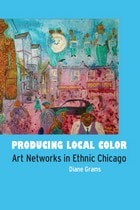
Producing Local Color
Art Networks in Ethnic ChicagoDiane Grams
University of Chicago Press, 2010
In big cities, major museums and elite galleries tend to dominate our idea of the art world. But beyond the cultural core ruled by these moneyed institutions and their patrons are vibrant, local communities of artists and art lovers operating beneath the high-culture radar. Producing Local Color is a guided tour of three such alternative worlds that thrive in the Chicago neighborhoods of Bronzeville, Pilsen, and Rogers Park.
These three neighborhoods are, respectively, historically African American, predominantly Mexican American, and proudly ethnically mixed. Drawing on her ethnographic research in each place, Diane Grams presents and analyzes the different kinds of networks of interest and support that sustain the making of art outside of the limelight. And she introduces us to the various individuals—from cutting-edge artists to collectors to municipal planners—who work together to develop their communities, honor their history, and enrich the experiences of their neighbors through art. Along with its novel insights into these little examined art worlds, Producing Local Color also provides a thought-provoking account of how urban neighborhoods change and grow.
Profession of Medicine
A Study of the Sociology of Applied KnowledgeEliot Freidson
University of Chicago Press, 1988
"Profession of Medicine is a challenging monograph; the ideas presented are stimulating and thought provoking. . . . Given the expanding domain of what illness is and the contentions of physicians about their rights as professionals, Freidson wonders aloud whether expertise is becoming a mask for privilege and power. . . . Profession of Medicine is a landmark in the sociological analysis of the professions in modern society."—Ron Miller, Sociological Quarterly
"This is the first book that I know of to go to the root of the matter by laying open to view the fundamental nature of the professional claim, and the structure of professional institutions."—Everett C. Hughes, Science

Professions And The State
Expertise and Autonomy in the Soviet Union and Eastern Europeedited by Anthony Jones
Temple University Press, 1991
Unlike autonomous professionals in Western industrialized democracies, professionals in a socialist, bureaucratic setting operate as employees of the state. The change in environment has important Implications not only for the practice of professions but also for the concept of professionalism itself. This collection of nine essays is the first to survey the major professions In the USSR, Czechoslovakia, and Poland. The contributors investigate the implications of professional experience in a socialist economy as well as relating changes in professional organization and power to reform movements in general and perestroika in particular.
In the series Labor and Social Change, edited by Paula Rayman and Carmen Sirianni.

Professor Superstar
Fandom and Anti-Fandom of AcademiaMel Stanfill
University of Michigan Press, 2026
Promises Beyond Memory
Archives, Art, and the Afterlives of Violence in Latin AmericaVikki Bell
Duke University Press, 2026
Proposals for a Caring Economy
Matthew J. Wolf-Meyer
University of Minnesota Press, 2025
Offering models of care beyond capitalist constraints
For too long, questions of care provision and inclusion have been shaped by economic justifications. This has led to the deprivation of care to individuals and communities based on capitalist assumptions about what and who can be cared for. Proposals for a Caring Economy takes these assumptions to task. Moving between examples focused on immigration and agriculture, patients and art audiences, green energy transitions and unhoused people, prison abolitionists and clients of domestic violence services, the contributors here argue that we need new ways to conceptualize care and its applications.
Proposals for a Caring Economy articulates an economy that situates care at the forefront; sees the preservation of individual, community, and environmental wellbeing as the primary good; and focuses attention on building a sustainable economy of caring that will radically transform social connections and possibilities.
Contributors: Chelsey R. Carter, Yale U; David McDermott Hughes, Rutgers U; Stephanie Delise Jones, U of California, Riverside; Sameena Mulla, Emory U; Katy Overstreet, Saxo Institute, U of Copenhagen; Michelle Parsons, Northern Arizona U; Adair Rounthwaite, U of Washington; Damien M. Sojoyner, U of California, Irvine; Emily Yates-Doerr, Oregon State U.
Proprietors for a Democratic City
Space and Political Voice in ItalyRobin M. LeBlanc
University of Minnesota Press, 2026
Lessons from Bologna on how ordinary people take charge of urban spaces and make their cities more democratic
Proprietors for a Democratic City examines how nonelite individuals politically engage with urban spaces—even when they do not formally own them. Drawing on more than a decade of fieldwork throughout Bologna, Italy, Robin M. LeBlanc presents valuable models of democratic community-making through imaginative occupation, curation, and coalition-building projects, with critical implications for the study of cities and democracy.
Once a standard-bearer of progressive governance, contemporary Bologna now faces globally emergent challenges to its democratic functioning, from a lack of affordable housing to the rise of an authoritarian and xenophobic Far Right. But amid this precarity, everyday citizens employ the spaces around them to influence the political life of the city. Through interviews with a wide range of Bolognese, from urban planners and real estate developers to housing office staff, retirees in public gardening plots, and members of immigrant and youth squatter collectives, LeBlanc illuminates the humble origins of coalitional work that can meaningfully address today’s urban economic, environmental, and demographic crises.
Challenging both capitalistic and Marxist conventional wisdom, Proprietors for a Democratic City is a vivid portrait of the urban landscape and an inspiring call to empower regular people to create vibrant democratic spaces.
Retail e-book files for this title are screen-reader friendly with images accompanied by short alt text and/or extended descriptions.
Prospect Of Cities
John Friedmann
University of Minnesota Press, 2002
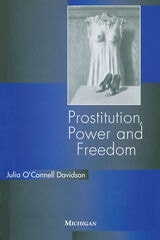
Prostitution, Power and Freedom
Julia O'Connell Davidson
University of Michigan Press, 1998
The author has conducted an impressive amount of research in nine countries, including conversations with male and female sex tourists, adult and child prostitutes, procurers, and clients. Through her research, O'Connell Davidson demonstrates the complexity of prostitution, arguing that it is not simply an effect of male oppression and violence or insatiable sexual needs, nor is it an unproblematic economic encounter. The book provides a sophisticated explanation of the economic and political inequalities underlying prostitution, but also shows that while prostitution necessarily implies certain freedoms for the clients, the amount of freedom experienced by individual prostititutes varies greatly.
This highly accessible book will be of great interest to those in gender and women's studies, sexuality and cultural studies, the sociology of work and organizations, and social policy. General readers will also appreciate having new ways of thinking about this age-old social phenomenon.
Julia O'Connell Davidson is Lecturer in Sociology, University of Leicester.
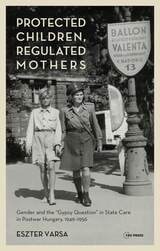
Protected Children, Regulated Mothers
Gender and the "Gypsy Question" in State Care in Postwar Hungary, 1949–1956Eszter Varsa
Central European University Press, 2021
Protected Children, Regulated Mothers examines child protection in Stalinist Hungary as a part of twentieth-century East Central, Eastern, and Southeastern European history. Across the communist bloc, the prewar foster care system was increasingly replaced after 1945 by institutionalization in residential homes. This shift was often interpreted as a further attempt to establish totalitarian control. However, this study—based on hundreds of children's case files and interviews with institution leaders, teachers, and people formerly in state care—provides a new perspective. Rather than being merely a tool of political repression, state care in postwar Hungary was often shaped by the efforts of policy actors and educators to address the myriad of problems engendered by the social and economic transformations that emerged after World War II. This response built on, rather than broke with, earlier models of reform and reformatory education. Yet child protection went beyond safeguarding and educating children; it also focused on parents, particularly lone mothers, regulating not only their entrance to paid work but also their sexuality. In so doing, children's homes both reinforced and changed existing cultural and social patterns, whether about gendered division of work or the assimilation of minorities. Indeed, a major finding of the book is that state socialist child protection continued a centuries-long national project of seeking a “solution to the Gypsy question,” rooted in efforts to eliminate the perceived “workshyness” of Roma.

Protecting Home
Class, Race, and Masculinity in Boys' BaseballGrasmuck, Sherri
Rutgers University Press, 2005
What can neighborhood baseball tell us about class and gender cultures, urban change, and the ways that communities value public space? Through a close exploration of a boys’ baseball league in a gentrifying neighborhood of Philadelphia, sociologist Sherri Grasmuck reveals the accommodations and tensions that characterize multicultural encounters in contemporary American public life. Based on years of ethnographic observation and interviews with children, parents, and coaches, Protecting Home offers an analysis of the factors that account for racial accommodation in a space that was previously known for racial conflict and exclusion. Grasmuck argues that the institutional arrangements and social characteristics of children’s baseball create a cooperative environment for the negotiation of social, cultural, and class differences.
Chapters explore coaching styles, parental involvement, institutional politics, parent-child relations, and children’s experiences. Grasmuck identifies differences in the ways that the mostly white, working-class “old-timers” and the racially diverse, professional newcomers relate to the neighborhood. These distinctions reflect a competing sense of cultural values related to individual responsibility toward public space, group solidarity, appropriate masculine identities, and how best to promote children’s interests—a contrast between “hierarchical communalism” and “child-centered individualism.”
Through an innovative combination of narrative approaches, this book succeeds both in capturing the immediacy of boys’ interaction at the playing field and in contributing to sophisticated theoretical debates in urban studies, the sociology of childhood, and masculinity studies.

Protein
The Making of a Nutritional SuperstarSamantha King and Gavin Weedon
Duke University Press, 2026
Protein is everywhere—praised as a muscle builder, a weight-loss miracle, an anti-aging elixir, and the catch-all solution for everything from exercise recovery to global malnutrition. In Protein, Samantha King and Gavin Weedon argue that protein’s rise to nutritional superstardom has less to do with human dietary needs and more to do with how its indeterminate, adhesive qualities are marshalled towards commercial, scientific, and social imperatives. Tracing its path from nineteenth-century biochemistry to the status it enjoys today, they expose how protein has been marketed as a cure for global hunger, repackaged as an eco-friendly meat alternative, and wielded as a symbol of masculinity in the fitness industry. From whey waste in industrial farming to longevity drugs for aging bodies, Protein unpacks the myths behind the macronutrient and challenges what we think we know about food, health, and the forces that shape our diets.