Results by title
4155 books match the query 'State & Local' and 170 start with p
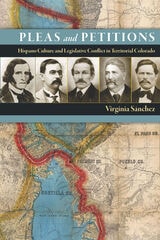
Pleas and Petitions
Hispano Culture and Legislative Conflict in Territorial ColoradoVirginia Sánchez
University Press of Colorado, 2021
Sánchez highlights the struggles experienced by Hispano territorial assemblymen trying to create opportunity and a better life in the face of cultural conflict and the institutional racism used to effectively shut them out of the process of establishing new laws and social order. For example, the federal and Colorado territorial governments did not provide an interpreter for the Hispano assemblymen or translations of the laws passed by the legislature, and they taxed Hispano constituents without representation and denied them due process in court.
The first in-depth history of Hispano sociopolitical life during Colorado’s territorial period, Pleas and Petitions provides fundamental insight into Hispano settlers’ interactions with their Anglo neighbors, acknowledges the struggles and efforts of those Hispano assemblymen who represented southern Colorado during the territorial period, and augments the growing historical record of Hispanos who have influenced the course of Colorado’s history.
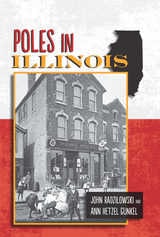
Poles in Illinois
John Radzilowski and Ann Hetzel Gunkel
Southern Illinois University Press, 2020
Authors John Radzilowski and Ann Hetzel Gunkel look at family life among Polish immigrants, their role in the economic development of the state, the working conditions they experienced, and the development of their labor activism. Close-knit Polish American communities were often centered on parish churches but also focused on fraternal and social groups and cultural organizations. Polish Americans, including waves of political refugees during World War II and the Cold War, helped shape the history and culture of not only Chicago, the “capital” of Polish America, but also the rest of Illinois with their music, theater, literature, food.
With forty-seven photographs and an ample number of extensive excerpts from first-person accounts and Polish newspaper articles, this captivating, highly readable book illustrates important and often overlooked stories of this ethnic group in Illinois and the changing nature of Polish ethnicity in the state over the past two hundred years. Illinoisans and Midwesterners celebrating their connections to Poland will treasure this rich and important part of the state’s history.

Poles in Michigan
Dennis Badaczewski
Michigan State University Press, 2002
One of the most vibrant and influential ethnic groups in Michigan, Poles have a long history of migration and settlement in the Great Lakes State. From Michigan’s earliest Polish marriage (in 1762) to the most recent post-Cold War migrations, each successive wave of settlement has enriched and enlivened Michigan culture. Yet, Paczki Day and Polish festivals represent a relatively small portion of the Polish experience. Commitments both to religious and ethnic identity, and a belief in the American vision of landownership and success, have combined to create a mainstream ethnic community abundant in ethnic pride. Poles’ success in Michigan continues to attract Polish immigrants from Europe, just as Polonia continues to make its mark on Michigan’s culture.
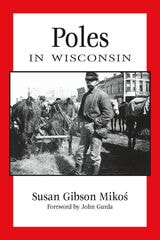
Poles in Wisconsin
Susan Gibson Mikos
Wisconsin Historical Society Press, 2012
In this all-new addition to the People of Wisconsin series, author Susan Mikos traces the history of Polish immigrants as they settled in America’s northern heartland. The second largest immigrant population after Germans, Poles put down roots in all corners of the state, from the industrial center of Milwaukee to the farmland around Stevens Point, in the Cutover, and beyond. In each locale, they brought with them a hunger to own land, a willingness to work hard, and a passion for building churches.
Included is a first person memoir from Polish immigrant Maciej Wojda, translated for the first time into English, and historical photographs of Polish settlements around our state.

Poletown
COMMUNITY BETRAYEDJeanie Wylie
University of Illinois Press, 1989
"This book is about the ramifications of raw corporate power going unchecked." -- John Conyers, Michigan congressman
"Racial class is a fundamental problem in America. But Poletown demonstrates that economic class is even more fundamental." -- Rev. Jesse Jackson

Political Prairie Fire
The Nonpartisan League, 1915-1922Robert L. Morlan
University of Minnesota Press, 1955
Political Prairie Fire was first published in 1955. Minnesota Archive Editions uses digital technology to make long-unavailable books once again accessible, and are published unaltered from the original University of Minnesota Press editions.
Political Prairie Fire was first published in 1955.
The farmers of North Dakota were ripe for revolt when the magnetic figure of A. C. Townley strode into their midst and offered them a new political formula to redress their grievances. Townley's plan was simple but revolutionary; it called for the formation of a Nonpartisan Political League dedicated to the election of candidates through the established two-party system and to a platform emphasizing public ownership of certain vital farm services and facilities, such as terminal grain elevators and hail insurance on crops.
Like the great prairie fires of the plains states, the political flames of the Nonpartisan League spread swiftly from one farm to the next across North Dakota and into the adjoining states. The League is regarded by many as the last of the great agrarian protest movements. It is historically significant because it achieved a measure of success well beyond that of most similar movements. It controlled the government of one state for some years, elected state officials and legislators in a number of midwestern and western states, and sent several congressmen to Washington. Its impact helped shape the destinies of a dozen states and the political philosophies of an important segment of the nation's voters. The League's methods of operation often serve today as a guide for political action.
This is the first detailed, unbiased history of the Nonpartisan League. Thoroughly documented for the specialist, it is nevertheless equally interesting for the general reader.
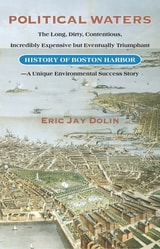
Political Waters
The Long, Dirty, Contentious, Incredibly Expensive but Eventually Triumphant History of Boston Harbor-A Unique Environmental Success StoryEric Jay Dolin
University of Massachusetts Press, 2004
Boston Harbor served as a colonial gateway to the world, witnessed the Boston Tea Party, and helped the community transform itself from an outpost of a few hardy settlers into a bustling metropolis and self-proclaimed hub of the universe. Yet for hundreds of years Boston Harbor was also a cesspool. Long before Bostonians dumped tea into the harbor to protest English taxes, they dumped sewage there.
As the Boston area grew and prospered, its sewage problems worsened, as did the harbor's health, to the point where in the 1980s it was considered the most polluted harbor in the country and ridiculed as the “harbor of shame.” Then, in one of the most impressive environmental comebacks in American history, Boston Harbor was dramatically cleaned up. All it took was two lawsuits, two courts, dozens of lawyers, the creation of a powerful sewage authority, thousands of workers, millions of labor hours, and billions of dollars.
Sewage management is rarely as compelling and exciting as higher profile environmental issues such as global climate change, preserving endangered species, or protecting tropical rainforests. But it can be, as Eric Jay Dolin shows in this engaging narrative account. Boston's struggle to deal with its sewage is an epic story of failure and success, replete with colorful characters, political, bureaucratic, and legal twists and turns, engineering feats, and massive amounts of money. In the end, success hinged on the often overlooked yet monumentally important act of responsibly disposing of the waste people produce every day.
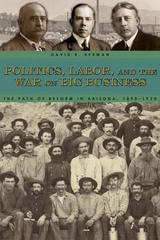
Politics, Labor, and the War on Big Business
The Path of Reform in Arizona, 1890-1920David R. Berman
University Press of Colorado, 2012
In the 1890s, once-heavily courted corporations had become, in the eyes of many, outside "money interests" or "beasts" that exploited the wealth of the sparsely settled area. Arizona's anticorporate reformers condemned the giant corporations for mistreating workers, farmers, ranchers, and small-business people and for corrupting the political system. During a thirty-year struggle, Arizona reformers called for changes to ward off corporate control of the political system, increase corporate taxation and regulation, and protect and promote the interests of working people.
Led by George W.P. Hunt and progressive Democrats, Arizona's brand of Progressivism was heavily influenced by organized labor, third parties, and Socialist activists. As highly powerful railroad and mining corporations retaliated, conflict took place on both political levels and industrial backgrounds, sometimes in violent form.
Politics, Labor and the War on Big Business places Arizona's experience in the larger historical discussion of reform activity of the period, considering issues involving the role of government in the economy and the possibility of reform, topics highly relevant to current debates.
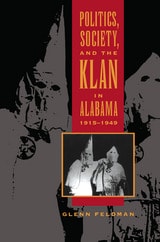
Politics, Society, and the Klan in Alabama, 1915-1949
Glenn Feldman
University of Alabama Press, 1999
This first book-length examination of the Klan in Alabama represents exhaustive research that challenges traditional interpretations.
The Ku Klux Klan has wielded considerable power both as a terrorist group and as a political force. Usually viewed as appearing in distinct incarnations, the Klans of the 20th century are now shown by Glenn Feldman to have a greater degree of continuity than has been previously suspected. Victims of Klan terrorism continued to be aliens, foreigners, or outsiders in Alabama: the freed slave during Reconstruction, the 1920s Catholic or Jew, the 1930s labor organizer or Communist, and the returning black veteran of World War II were all considered a threat to the dominant white culture. Feldman offers new insights into this "qualified continuity" among Klans of different eras, showing that the group remained active during the 1930s and 1940s when it was presumed dormant, with elements of the "Reconstruction syndrome" carrying over to the smaller Klan of the civil rights era.
In addition, Feldman takes a critical look at opposition to Klan activities by southern elites. He particularly shows how opponents during the Great Depression and war years saw the Klan as an impediment to attracting outside capital and federal relief or as a magnet for federal action that would jeopardize traditional forms of racial and social control. Other critics voiced concerns about negative national publicity, and others deplored the violence and terrorism.
This in-depth examination of the Klan in a single state, which features rare photographs, provides a means of understanding the order's development throughout the South. Feldman's book represents definitive research into the history of the Klan and makes a major contribution to our understanding of both that organization and the history of Alabama.

Polka Heartland
Why the Midwest Loves to PolkaRick March
Wisconsin Historical Society Press, 2015
"Polka Heartland" captures the beat that pulses in the heart of Midwestern culture--the polka--and offers up the fascinating history of how "oompah-pah" came to be the sound of middle America. From the crowded dance tent at Pulaski Polka Days to an off-the-grid Mexican polka dance in small-town Wisconsin, "Polka Heartland" explores the people, places, and history behind the Midwest's favorite music.
From polka's surprising origin story as a cutting-edge European fad to an exploration of the modern-day polka scene, author Rick March and photographer Dick Blau take readers on a joyful romp through this beloved, unique, and richly storied genre. "Polka Heartland" describes the artists, venues, instruments, and music-makers who have been pivotal to polka's popularity across the Midwest and offers six full-color photo galleries to immerse readers in today's vibrant polka scene.

Polygamy Question
Janet Bennion
Utah State University Press, 2015
The practice of polygamy occupies a unique place in North American history and has had a profound effect on its legal and social development. The Polygamy Question explores the ways in which indigenous and immigrant polygamy have shaped the lives of individuals, communities, and the broader societies that have engaged with it. The book also considers how polygamy challenges our traditional notions of gender and marriage and how it might be effectively regulated to comport with contemporary notions of justice.
The contributors to this volume—scholars of law, anthropology, sociology, political science, economics, and religious studies—disentangle diverse forms of polygamy and polyamory practiced among a range of religious and national backgrounds including Mormon and Muslim. They chart the harms and benefits these models have on practicing women, children, and men, whether they are independent families or members of coherent religious groups. Contributors also address the complexities of evaluating this form of marriage and the ethical and legal issues surrounding regulation of the practice, including the pros and cons of legalization.
Plural marriage is the next frontier of North American marriage law and possibly the next civil rights battlefield. Students and scholars interested in polygamy, marriage, and family will find much of interest in The Polygamy Question.
Contributors include Kerry Abrams, Martha Bailey, Lori Beaman, Janet Bennion, Jonathan Cowden, Shoshana Grossbard, Melanie Heath, Debra Majeed, Rose McDermott, Sarah Song, and Maura Irene Strassberg.
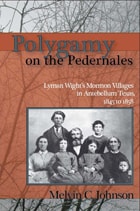
Polygamy on the Pedernales
Lyman Wight's Mormon Village in Antebellum TexasMelvin C. Johnson
Utah State University Press, 2006
In the wake of Joseph Smith Jr.’s murder in 1844, his following splintered, and some allied themselves with a maverick Mormon apostle, Lyman Wight. Sometimes called the "Wild Ram of Texas," Wight took his splinter group to frontier Texas, a destination to which Smith, before his murder, had considered moving his followers, who were increasingly unwelcome in the Midwest. He had instructed Wight to take a small band of church members from Wisconsin to establish a Texas colony that would prepare the ground for a mass migration of the membership. Having received these orders directly from Smith, Wight did not believe the former’s death changed their significance. If anything, he felt all the more responsible for fulfilling what he believed was a prophet’s intention.
Antagonism with Brigham Young and the other LDS apostles grew, and Wight refused to join with them or move to their new gathering place in Utah. He and his small congregation pursued their own destiny, becoming an interesting component of the Texas frontier, where they had a significant economic role as early millers and cowboys and a political one as a buffer with the Comanches. Their social and religious practices shared many of the idiosyncracies of the larger Mormon sect, including polygamous marriages, temple rites, and economic cooperatives. Wight was a charismatic but authoritarian and increasingly odd figure, in part because of chemical addictions. His death in 1858 while leading his shrinking number of followers on yet one more migration brought an effective end to his independent church.

Poor but Proud
Alabama's Poor WhitesWayne Flynt
University of Alabama Press, 2001
CHOICE OUTSTANDING ACADEMIC BOOK (SPONSORED BY CHOICE MAGAZINE)
JAMES F. SULZBY BOOK AWARD (SPONSORED BY ALABAMA HISTORICAL ASSOCIATION)
ALABAMA LIBRARY AUTHOR AWARD (SPONSORED BY ALABAMA LIBRARY ASSOCIATION)
LILLIAN SMITH BOOK AWARD (SPONSORED BY SOUTHERN REGIONAL COUNCIL)
A groundbreaking history of class, culture, and resilience in the Alabama South.
First published in 1989 by The University of Alabama Press, this new paperback version will make the classic work available for general readers, bookstores, and classrooms.
Wayne Flynt addresses the life experiences of poor whites through their occupations, society, and culture. He explores their family structure, music, religion, folklore, crafts, and politics and describes their attempts to resolve their own problems through labor unions and political movements. He reveals that many of our stereotypes about poor whites are wildly exaggerated; few were derelicts or "white trash." Even though racism, emotionalism, and a penchant for violence were possible among poor whites, most bore their troubles with dignity and self-respect - working hard to eventually lift themselves out of poverty.
The phrase "poor but proud" aptly describes many white Alabamians who settled the state and persisted through time. During the antebellum years, poor whites developed a distinctive culture on the periphery of the cotton belt. As herdsmen, subsistence farmers, mill workers, and miners, they flourished in a society more renowned for its two-class division of planters and slaves. The New Deal era and the advent of World War II broke the long downward spiral of poverty and afforded new opportunities for upward mobility.
Popular Fronts
Chicago and African-American Cultural Politics, 1935-46Bill V. Mullen
University of Illinois Press, 2015
With a new preface Bill V. Mullen updates his dynamic reappraisal of a critical moment in American cultural history. Mullen's study includes reassessments of the politics of Richard Wright's critical reputation and a provocative reading of class struggle in Gwendolyn Brooks' A Street in Bronzeville. He also takes an in-depth look at the institutions that comprised Chicago's black popular front: the Chicago Defender, the period's leading black newspaper; Negro Story, the first magazine devoted to publishing short stories by and about African Americans; and the WPA-sponsored South Side Community Art Center.
Population Trends in New Jersey
James W. Hughes
Rutgers University Press, 2022
The authors also highlight key trends that will continue to transform the state: domestic migration out of the state and immigration into it; increasing diversity; slower overall population growth; contracting fertility; the household revolution and changing living arrangements; generational disruptions; and suburbanization versus re-urbanization. All of these factors help place in context the result of the 2020 decennial U.S. Census.
While the book focuses on New Jersey, the Garden State is a template of demographic, economic, social, and other forces characterizing the United States in the twenty-first century.
Populism to Progressivism In Alabama
Sheldon Hackney
University of Alabama Press, 2010
WINNER OF THE ALBERT J. BEVERIDGE AWARD OF THE AMERICAN HISTORICAL ASSOCIATION
A classic study of race, reform, and political change in the New South.
Populism to Progressivism in Alabama by Sheldon Hackney is a landmark study of the political and social transformation of Alabama during the pivotal years between 1890 and 1910. Widely recognized as a classic work of Southern history, the book examines the rise of the Populist movement, the emergence of Progressive reform, and the forces that reshaped political power in the state at the turn of the twentieth century.
Hackney explores the complex relationships among race, class, economic change, agrarian protest, and democratic participation. He investigates how farmers, laborers, political leaders, and reformers responded to industrialization, shifting economic conditions, and the challenges of governance in the New South. Central to the narrative are debates over voting rights, disfranchisement, race relations, and the creation of new political institutions that would shape Alabama's future for generations.
Combining quantitative methods with traditional historical scholarship, Hackney provides a nuanced interpretation of both Populism and Progressivism, challenging simplistic accounts of reform and political change. Essential reading for understanding Alabama and the modern South, this influential volume remains a foundational resource for historians, political scientists, students, and anyone interested in the history of American democracy and regional transformation.
Populist Revolt
A History of the Farmers' Alliance and the People's PartyJohn D. Hicks
University of Minnesota Press, 1931
Populist Revolt was first published in 1931. Minnesota Archive Editions uses digital technology to make long-unavailable books once again accessible, and are published unaltered from the original University of Minnesota Press editions.
When The Populist Revolt was originally published, the New York Times critic called it "far and away the best account of populism that we have—and one not likely to be replaced." That prophecy proved right; the book has not been replaced, and historians and critics agree that it is the definitive work on its subject. Now it is made available once more, after being out of print for some time.
This is a history of the Farmers' Alliance and the People's Party, under whose banners a great crusade for farm relief was waged in the 1880's and 1890's. As important as the chronicle of the political movement itself is the detailed picture which Professor Hicks gives of the conditions which set the stage for this agrarian revolt. He describes the inequities and malpractices which beset both the new settlers of the West and the poverty-ridden whites and Negroes of the South following the Civil War.
The story of Populism itself is a lively one, people with such picturesque leaders as "Pitchfork" Ben Tillman of South Carolina, "Sockless" Jerry Simpson and Mary Elizabeth Lease—the "Patrick Henry in petticoats"—of Kansas, "Bloody Bridles" Waite of Colorado, Thomas E. Watson of Georgia, Dr. C. W. Macune of Texas, James B. Weaver of Iowa, and Ignatius Donnelly of Minnesota.
In these pages, Professor Hicks has, as Frederic L. Paxson pointed out, "presented the case for Populism better than the Populists themselves could do it." Henry Steele Commanger calls the book a "thorough, scholarly, sympathetic and spirited history of the entire Populist movement."

Port Newark and the Origins of Container Shipping
Angus Kress Gillespie
Rutgers University Press, 2023
This fascinating study traces the birth of containerization to Port Newark, New Jersey, in 1956 when trucker Malcom McLean thought of a brilliant new way to transport cargo. It tells the story of how Port Newark grew rapidly as McLean’s idea was backed by both New York banks and the US military, who used containerization to ship supplies to troops in Vietnam. Angus Gillespie takes us behind the scenes of today’s active container shipping operations in Port Newark, talking to the pilots who guide the ships into port, the Coast Guard personnel who help manage the massive shipping traffic, the crews who unload the containers, and even the chaplains who counsel and support the mariners. Port Newark shines a spotlight on the unsung men and women who help this complex global shipping operation run smoothly.
Since McLean's innovation, Port Newark has expanded with the addition of the nearby Elizabeth Marine Terminal. This New Jersey complex now makes up the busiest seaport on the East Coast of the United States. Some have even called it “America’s Front Door.” The book tells the story of the rapid growth of worldwide containerization, and how Port Newark has adapted to bigger ships with deeper channels and a raised bridge. In the end, there is speculation of the future of this port with ever-increasing automation, artificial intelligence, and automation.
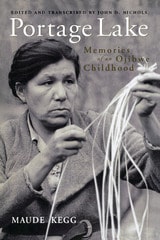
Portage Lake
Memories of an Ojibwe ChildhoodMaude Kegg
University of Minnesota Press, 1993
Portland in Three Centuries
The Place and the PeopleCarl Abbott
Oregon State University Press, 2011

Portland in Three Centuries
The Place and the PeopleCarl Abbott
Oregon State University Press, 2022
Incorporating social history and contemporary scholarship in his narrative, Abbott examines current metropolitan character and issues, giving close attention to historical background. He explores the context of opportunities and problems that have helped to shape the rich mosaic that is Portland.
This revised and updated second edition includes greater attention to the Indigenous peoples of the Portland region, Portland’s communities of color, and the challenges of recent years that have thrust Portland into the national spotlight.
A highly readable character study of a city, and enhanced by more than sixty historic and contemporary images, Portland in Three Centuries will appeal to readers interested in Portland, in Oregon, and in Pacific Northwest history.

Portland's Audacious Champion
How Bill Naito Overcame Anti-Japanese Hate and Became an Intrepid Civic LeaderErica Naito-Campbell
Oregon State University Press, 2024
William “Bill” Sumio Naito (1925–1996) was a remarkable and visionary individual—the Portland-born son of Japanese immigrants who became one of the city’s most significant business and civic leaders. Every day thousands of people drive on Naito Parkway alongside Portland’s Waterfront Park, yet little has been written about the man for whom it was named.
In this first biography, Erica Naito-Campbell, Bill’s granddaughter, shows how his story is also the story of Portland, the city he loved. Naito’s life, from the Great Depression and World War II through Portland’s rebirth in the 1970s and its profound growth, tracked most of the major events in the city and was the catalyst for many of them. Through hard-earned success in importing and real estate with his brother Sam, Naito came to wield considerable power in the city, and his leadership led to much of what we consider iconic Portland today: the “Portland Oregon” sign near the Burnside Bridge, the annual Christmas tree in Pioneer Courthouse Square, and Harbor Drive’s conversion to Waterfront Park.
Naito’s name became synonymous with civic leadership, whether it was growing Portland’s urban tree canopy, revitalizing its downtown, or preserving historic buildings. But less is known about his difficult childhood—with a father who worked twelve-hour days and a mother whose treatment of him was harsh at best—and the racism he endured during World War II. After the expulsion of Japanese Americans following Pearl Harbor and his military service in Occupied Japan, Naito overcame great emotional turmoil to return to Portland and become one of its greatest change-makers.
Erica Naito-Campbell uses anecdotes, rich details, and previously unknown stories about Bill Naito to bring Portland’s history to life—while acknowledging that the cost of his success was a family rife with resentments and envy. Her book reveals the emotional wounds that drove Naito to become one of Portland’s most inspiring civic leaders, a pivotal player in the city’s journey from a moribund downtown to a national model for livability, urban renewal, and historic preservation.

Portraits of Conflict
A Photographic History of Louisiana in the Civil WarCarl H. Moneyhon
University of Arkansas Press, 1990
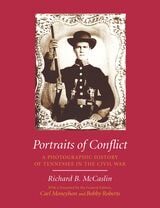
Portraits of Conflict
Tennessee: A Photographic History of Tennessee in the Civil WarRichard B. McCaslin
University of Arkansas Press, 2007

Portraits of Justice
The Wisconsin Supreme Court's First 150 YearsTrina E. Gray
Wisconsin Historical Society Press, 2003

Positively Main Street
Bob Dylan’s MinnesotaToby Thompson
University of Minnesota Press, 2008
“That boy . . . this fellow, Toby . . . has got some lessons to learn.” —Bob Dylan, Rolling Stone, November 29, 1969
"Toby Thompson was there first." —Greil Marcus
“A first-rate novelistic account of Thompson’s own psyche as he uncovers the Dylan few people know . . . A new look at young Dylan done with kindness, enthusiasm and superb language.” —William Kennedy, Look Magazine
“Essential reading. Thompson, unprecedentedly, managed to interview not only Echo Helstrom, almost certainly the ‘Girl of the North Country,’ but Dylan’s mother and brother, his uncle, his friends.” —Michael Gray, Bob Dylan Encyclopedia
“Dylan fans will not want to miss this book.” —Sioux City Journal
“Enough to satisfy any Dylan fan with all the gossip he’ll ever need.” —Huntsville Times
“Well worth the attention of anyone who has fallen under the spell of the boy from the North Country.” —Los Angeles Times
“It’s a must.” —Ft. Worth Press
"Thompson tracked down anybody who knew 'Die-lan' (as the Hibbingites called him), including the guy at the local music store, the guy at the motorcycle shop, his English and music teachers, his uncles, his brother David and even his reluctant but ultimately charmingly chatty mother. Of course, Thompson traveled into a few dead ends. But the stuff with Dylan's mom and his high school girlfriend, Echo Helstrom, is priceless. Positively Main Street is a free-wheelin', fun and quick read that is surprisingly informative." —Minneapolis Star Tribune
"Hundreds of books have been written about Minnesota's most famous songwriter; Bob Dylan's life and music has been analyzed by fans, scholars, and even himself. So, why do we need Toby Thompson's Positively Main Street: Bob Dylan's Minnesota? Because it's a forgotten milestone. Published in 1971, it was the first biography on Dylan. Although it's been out of print since 1977, the book is, with the exception of Dylan's autobiography, perhaps the most readable and necessary volume on the folk icon." —City Pages
"The new Positively Main Street is a lovely little book, even better than the original, a cherished addition to the Dylan bookshelf. Thompson and the University of Minnesota Press have enhanced what was already a classic and made it available to a whole new audience. Dylan fans owe them a debt of gratitude." —The Dylan Daily
"[Thompson] ends up not only interviewing 'the Girl from the North Country,' Echo Haelstrom, and 'Bob’s' mother and brother and teachers etc., but also filling in for Dylan among his old friends and acquaintances, playing Dylan’s songs on the guitar and harmonica and singing them, in a way that may have seemed stratingly revolutionary at the time for a journalist to do, he actually recreates a bit of Dylan’s existence as his own." —Michael Lally, Lally's Alley

Possessing Polynesians
The Science of Settler Colonial Whiteness in Hawai`i and OceaniaMaile Arvin
Duke University Press, 2019
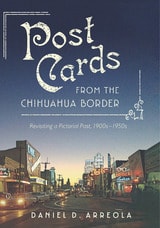
Postcards from the Chihuahua Border
Revisiting a Pictorial Past, 1900s–1950sDaniel D. Arreola
University of Arizona Press, 2019
In Postcards from the Chihuahua Border Daniel D. Arreola captures the exhilaration of places in time, taking us back to Mexico’s northern border towns of Cuidad Juárez, Ojinaga, and Palomas in the early twentieth century. Drawing on more than three decades of archival work, Arreola uses postcards and maps to unveil the history of these towns along west Texas’s and New Mexico’s southern borders.
Postcards offer a special kind of visual evidence. Arreola’s collection of imagery and commentary about them shows us singular places, enriching our understandings of history and the history of change in Chihuahua. No one postcard tells the entire story. But image after image offers a collected view and insight into changing perceptions. Arreola’s geography of place looks both inward and outward. We see what tourists see, while at the same time gaining insight about what postcard photographers and postcard publishers wanted to be seen and perceived about these border communities.
Postcards from the Chihuahua Border is a colorful and dynamic visual history. It invites the reader to time travel, to revisit another era—the first half of the last century—when these border towns were framed and made popular through picture postcards.
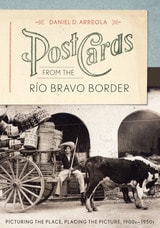
Postcards from the Río Bravo Border
Picturing the Place, Placing the Picture, 1900s–1950sBy Daniel D. Arreola
University of Texas Press, 2013
Between 1900 and the late 1950s, Mexican border towns came of age both as tourist destinations and as emerging cities. Commercial photographers produced thousands of images of their streets, plazas, historic architecture, and tourist attractions, which were reproduced as photo postcards. Daniel Arreola has amassed one of the largest collections of these border town postcards, and in this book, he uses this amazing visual archive to offer a new way of understanding how the border towns grew and transformed themselves in the first half of the twentieth century, as well as how they were pictured to attract American tourists.
Postcards from the Río Bravo Border presents nearly two hundred images of five significant towns on the lower Río Bravo—Matamoros, Reynosa, Nuevo Laredo, Piedras Negras, and Villa Acuña. Using multiple images of sites within each city, Arreola tracks changes both within the cities as places and in the ways in which the cities have been pictured for tourist consumption. He makes a strong case that visual imagery has a shaping influence on how we negotiate and think about places, creating a serial scripting or narrating of the place. Arreola also shows how postcard images, when systematically and chronologically arranged, can tell us a great deal about how Mexican border towns have been viewed over time. This innovative visual approach demonstrates that historical imagery, no less than text or maps, can be assembled to tell a compelling geographical story about place and time.

Postcards from the Sonora Border
Visualizing Place Through a Popular Lens, 1900s–1950sDaniel D. Arreola
University of Arizona Press, 2017
Young men ride horses on a dusty main road through town. Cars and gas stations gradually intrude on the land, and, years later, curiosity shops and cantinas change the face of Mexican border towns south of Arizona. Between 1900 and the late 1950s, Mexican border towns came of age both as centers of commerce and as tourist destinations. Postcards from the Sonora Border reveals how images—in this case the iconic postcard—shape the way we experience and think about place.
Making use of his personal collection of historic images, Daniel D. Arreola captures the evolution of Sonoran border towns, creating a sense of visual “time travel” for the reader. Supported by maps and visual imagery, the author shares the geographical and historical story of five unique border towns—Agua Prieta, Naco, Nogales, Sonoyta, and San Luis Río Colorado.
Postcards from the Sonora Border introduces us to these important towns and provides individual stories about each, using the postcards as markers. No one postcard view tells the complete story—rather, the sense of place emerges image by image as the author pulls readers through the collection as an assembled view. Arreola reveals how often the same locations and landmarks of a town were photographed as postcard images generation after generation, giving a long and dynamic view of the inhabitants through time. Arranged chronologically, Arreola’s postcards allow us to discover the changing perceptions of place in the borderlands of Sonora, Mexico.

Pot Roast, Politics, and Ants in the Pantry
Missouri's Cookbook HeritageCarol Fisher & John Fisher
University of Missouri Press, 2008
When is a cookbook more than just a cookbook? When it’s a gateway to our culinary heritage. For well over a hundred years, Missouri’s cookbooks have helped readers serve up tasty dishes to the state’s tables, but these publications also document the evolution of our kitchens and households.
Pot Roast,Politics, and Ants in the Pantry, a treasure trove of anecdotes and nuggets of historical information about cookery in the Show-Me State, draws from more than 150 publications to reveal Missouri’s cookbook heritage and to deliver a generous sampling of recipes. Carol Fisher and John Fisher look back to manuscript cookbooks from 1821 St. Louis, then progress through the years and around Missouri before arriving at today’s online recipes. Along the way, they dish out servings of kitchen medicine, household hints, and cookbook literature gleaned from the state’s cache of culinary gems.
From handwritten family recipe collections and mimeographed publications to glossy color editions, the texts the Fishers have obtained from libraries and historical societies as well as their own extensive cookbook collection include such curiosities as the Julia Clark Household Memoranda Book from the William Clark papers, an 1880 production by the Ladies of St. Louis called My Mother’s Cookbook, Mary Foote Henderson’s Practical Cooking and Dinner Giving, and Albert E. Brumley’s All-Day Singin’ and Dinner on the Ground. They tell how various ethnic communities raised money by creating cookbooks, how the state’s Beef Council and Pork Association put recipes on the Internet, and how restaurants like the Blue Owl in Kimmswick and Stephenson’s Apple Farm Restaurant near Kansas City enhanced their reputations with their own cookbooks. Festival cookbooks, company cookbooks, even cookbooks tied to world events—they’re all here in one delightful book.
In this vastly entertaining review, readers will learn where to find recipes for dandelion wine, mock turtle soup (requiring a large calf’s head split open by the butcher), and vinegar pie—as well as the curative properties of potato water, tips for raising chickens in the basement, and even “how to cook a husband.” An extensive bibliography includes information to help readers track down the books discussed and also those on their own wish lists.
Pot Roast, Politics, and Ants in the Pantry: Missouri’s Cookbook Heritage shows how, instead of being just collections of recipes, cookbooks provide history lessons, document changing food ways, and demonstrate the cultural diversity of the state. From Julia Clark’s simple frontier recipes for puddings and preserves to Irma Rombauer’s encyclopedic Joy of Cooking—originally self-published in Missouri—Carol Fisher and John Fisher have laid out a smorgasbord of reading pleasure for cookbook collectors, nostalgia buffs, and gourmands alike.

Pothole Confidential
My Life as Mayor of MinneapolisR.T. Rybak
University of Minnesota Press, 2016
A pajama party at the Minneapolis–St. Paul International Airport inadvertently helped launch R.T. Rybak’s political career (imagine a rumba line one hundred protesters long chanting, “We deserve to sleep, hey!”), but his earliest lessons in leadership occurred during his childhood. Growing up in a middle-class neighborhood, attending private school with students who had much more than he did, spending evenings at his family’s store in an area where people lived with much less, he witnessed firsthand the opportunity and injustice of the city he called home.
In a memoir that is at once a political coming-of-age story and a behind-the-scenes look at the running of a great city, the three-term mayor takes readers into the highs and lows and the daily drama of a life inextricably linked with Minneapolis over the past fifty years. With refreshing candor and insight, Rybak describes his path through journalism, marketing, and community activism that led to his unlikely (to him, at least) primary election—on September 11, 2001. His personal account of the challenges and crises confronting the city over twelve years, including the tragic collapse of the I-35W bridge, the rising scourge of youth violence, and the bruising fight over a ban on gay marriage (with Rybak himself conducting the first such ceremony at City Hall on August 1, 2013), is also an illuminating, often funny depiction of learning the workings of the job, frequently on the fly, while trying to keep up with his most important constituency, his family.
As bracing as the “fresh air” campaign that swept him into office, Rybak’s memoir is that rare document from a politician: one more concerned with the people he served and the issues of his time than with burnishing his own credentials. As such, it reflects what leadership truly looks like.
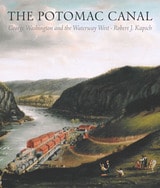
Potomac Canal
George Washington and the Waterway WestROBERT J. KAPSCH
West Virginia University Press, 2007
The Potomac Canal: George Washington and the Waterway West is a history of a new nation’s first effort to link the rich western agricultural lands with the coastal port cities of the east. The Potomac Canal Company was founded in 1785, and was active until it was overtaken by the Chesapeake and Ohio Canal Company in 1828. During its operation, the canal system was used to ship flour from mills in the foothills of Appalachia to the tidewater of the Chesapeake, where the flour was shipped to the Caribbean as trade for sugar and other goods. This trade soon became the basis of agricultural wealth in West Virginia’s eastern panhandle and throughout the Appalachian Piedmont. Coal was also shipped via the canal system from the upper reaches of the Potomac River to workshops at Harpers Ferry and beyond. This industrial trade route laid the foundation for what would eventually become the Chesapeake and Ohio Canal and the Baltimore and Ohio Railroad.

Pottery and Chronology at Angel
Sherri Hilgeman
University of Alabama Press, 2000
By analyzing the pottery found at a well-known archaeological site, Hilgeman constructs the long-awaited timeline for the rise and decline of this ancient society.
Located near present-day Evansville, Indiana, the Angel site is one of the important archaeological towns associated with prehistoric Mississippian society. More than two million artifacts were collected from this site during excavations from 1939 to 1989, but, until now, no systematic survey of the pottery sherds had been conducted. This volume, documenting the first in-depth analysis of Angel site pottery, also provides scholars of Mississippian culture with a chronology of this important site.
Angel is generally thought to have been occupied from before A.D. 1200 to 1450, but scholars have been forced to treat this period as one chronological unit without any sense of the growth and decline of the society that occupied it. Using radiocarbon assays and an analysis of its morphological and stylistic attributes of pottery, Sherri Hilgeman is able to divide the occupation of Angel into a series of recognizable stages. She then correlates those stages with similar ones at other archaeological excavations—especially nearby Kincaid—making it possible to compare Angel society with other native cultures of the lower Ohio Valley. Through this important contribution to native pottery studies, Hilgeman opens a window into the lifeways of prehistoric Angel society and places that society in the larger context of Mississippian culture.
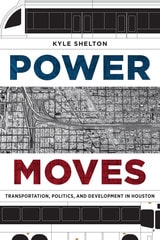
Power Moves
Transportation, Politics, and Development in HoustonBy Kyle Shelton
University of Texas Press, 2017
Since World War II, Houston has become a burgeoning, internationally connected metropolis—and a sprawling, car-dependent city. In 1950, it possessed only one highway, the Gulf Freeway, which ran between Houston and Galveston. Today, Houston and Harris County have more than 1,200 miles of highways, and a third major loop is under construction nearly thirty miles out from the historic core. Highways have driven every aspect of Houston’s postwar development, from the physical layout of the city to the political process that has transformed both the transportation network and the balance of power between governing elites and ordinary citizens.
Power Moves examines debates around the planning, construction, and use of highway and public transportation systems in Houston. Kyle Shelton shows how Houstonians helped shape the city’s growth by attending city council meetings, writing letters to the highway commission, and protesting the destruction of homes to make way for freeways, which happened in both affluent and low-income neighborhoods. He demonstrates that these assertions of what he terms “infrastructural citizenship” opened up the transportation decision-making process to meaningful input from the public and gave many previously marginalized citizens a more powerful voice in civic affairs. Power Moves also reveals the long-lasting results of choosing highway and auto-based infrastructure over other transit options and the resulting challenges that Houstonians currently face as they grapple with how best to move forward from the consequences and opportunities created by past choices.
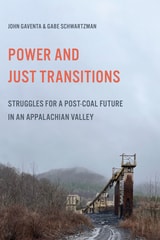
Power and Just Transitions
Struggles for a Post-Coal Future in an Appalachian ValleyJohn Gaventa and Gabe Schwartzman
University of Illinois Press, 2026
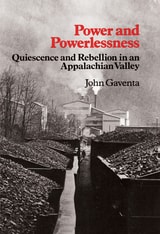
Power and Powerlessness
Quiescence and Rebellion in an Appalachian ValleyJohn Gaventa
University of Illinois Press, 1980
Using Clear Fork Valley in central Appalachia as an empirical example, Gaventa attempts to discern the "hidden faces of power" - those forces which shape actions and consciousness in ways not readily apparent in formal American political processes. He seeks to clarify and expand upon past theories (by such writers as Bachrach and Lukes) on the nature and maintenance of power.
The region studied here is characterized by stark incongruity - the co-existence of massive natural wealth (coal and land) with pervasive human poverty attended by high unemployment, limited education, malnutrition, and the prevalent hazards of mining coal: black lung, dismemberment, death, and ecological ruin. This has been the region's status quo under the decades of domination by a British company and its absentee owners. Despite these departure conditions and frequently violent union struggles, culminating in the 1969 murder of UMW reformist Jock Yablonski, acquiescence to this status quo has been maintained. Gaventa searches out the answers to how and why wealth and poverty continue to coexist and the powerless continue to accede to the powerful. His astute analysis poses broader questions about the politics of poverty, working-class consciousness, and corporate power in America.

Power, Participation, and Protest in Flint, Michigan
Unpacking the Policy Paradox of Municipal TakeoversAshley E. Nickels
Temple University Press, 2019
When the 2011 municipal takeover in Flint, Michigan placed the city under state control, some supported the intervention while others saw it as an affront to democracy. Still others were ambivalent about what was supposed to be a temporary disruption. However, the city’s fiscal emergency soon became a public health emergency—the Flint Water Crisis—that captured international attention.
But how did Flint’s municipal takeovers, which suspended local representational government, alter the local political system? In Power, Participation, and Protest in Flint, Michigan, Ashley Nickels addresses the ways residents, groups, and organizations were able to participate politically—or not—during the city’s municipal takeovers in 2002 and 2011. She explains how new politics were created as organizations developed, new coalitions emerged and evolved, and people’s understanding of municipal takeovers changed.
Inwalking readers through the policy history of, implementation of, and reaction to Flint’s two municipal takeovers, Nickels highlights how the ostensibly apolitical policy is, in fact, highly political.
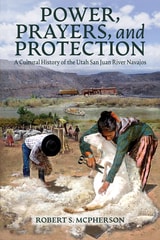
Power, Prayers, and Protection
A Cultural History of the Utah San Juan River NavajoRobert S. McPherson
University Press of Colorado, 2022
Navajo oral tradition is rich in stories and themes that form the basis for ceremonial performance. Everything that is physical, emotional, or spiritual has been placed in this world by the holy people at the time of creation, a process recognized in these accounts and teachings. Each chapter references sacred narratives that provide power through prayers that bring protection and a path for believers to follow. Topics include life on the river before and during the introduction of the white man, efficacy of the chantways, teachings of medicine people, childhood memories, arrival of trading posts, encounters with the automobile and other technology, livestock reduction and its aftermath, and the development of the Aneth oilfield with its ensuing protests. This is the Navajo elders’ story as seen through their eyes and told in their voice.
Power, Protest, and the Public Schools
Jewish and African American Struggles in New York CityMelissa F. Weiner
Rutgers University Press, 2012

Prairie City, Iowa
Three Seasons at HomeDouglas Bauer
University of Iowa Press, 1979
Bauer grew up "awkward with soil and with machines" in a small town east of Des Moines, As a teenager, he left the farm for college life twenty miles away and, after graduation, took a job with Better Homes and Gardens in Des Moines, writing in the junk-mail fictional persona of "Barbara Joyce,"asking millions of people to subscribe. After a few years he moved to Chicago to work as an editor and writer for Playboy and eventually as a freelance journalist. In the summer of 1975, he returned home to attend his grandmother's funeral and by autumn he moved back to Prairie City, where he stayed for the next three seasons.
Bauer's book is neither a wistful nostalgia about returning to a simpler time and place nor a patronizing look at those who never leave the town in which they were born. What emerges is an unsentimental yet loving account of life in the Midwest. Not just a portrait of Prairie City, Iowa, but of everyone's small town, everywhere.
Prairie Grass Roots
An Iowa Small Town in the Early Twentieth CenturyThomas J. Morain
University of Iowa Press, 1998

Prairie Justice
A History of Illinois Courts under French, English, and American LawRoger L. Severns. Edited by John A. Lupton
Southern Illinois University Press, 2015
Winner, ISHS Superior Achievement Award for a Scholarly Publication, 2016
A concise legal history of Illinois through the end of the nineteenth century, Prairie Justice covers the region’s progression from French to British to early American legal systems, which culminated in a unique body of Illinois law that has influenced other jurisdictions. Written by Roger L. Severns in the 1950s and published in serial form in the 1960s, Prairie Justice is available now for the first time as a book, thanks to the work of editor John A. Lupton, an Illinois and legal historian who also contributed an introduction.
Illinois’ legal development demonstrates the tension between two completely different European legal systems, between river communities and prairie towns, and between agrarian and urban interests. Severns uses several rulings—including a reconstitution of the Supreme Court in 1824, slavery-related cases, and the impeachment of a Supreme Court justice—to examine political movements in Illinois and their impact on the local judiciary. Through legal decisions, the Illinois judiciary became an independent, co-equal branch of state government. By the mid-nineteenth century, Illinois had established itself as a leading judicial authority, influencing not only the growing western frontier but also the industrialized and farming regions of the country. With a close eye for detail, Severns reviews the status of the legal profession during the 1850s by looking new members of the Court, the nostalgia of circuit riding, and how a young lawyer named Abraham Lincoln rose to prominence.
Illinois has a rich judicial history, but that history has not been adequately documented until now. With the publication of Prairie Justice, those interested in Illinois legal history finally have a book that covers the development of the state’s judiciary in its formative years.
Prairie Power
Voices of 1960s Midwestern Student ProtestRobbie Lieberman
University of Missouri Press, 2019
Praying in the Pine Straw
The Camp-Meeting Experience in AlabamaRobert C. Morgan
University of Alabama Press, 2025
Step into the South’s brush arbors and piney woods where faith runs deep, stories run wild, and the old-time camp meeting was anything but quiet.
Praying in Pine Straw immerses readers in the raw, rollicking, and deeply human world of Alabama’s camp meetings—a Southern tradition where fire-and-brimstone preaching echoed through pine forests and where faith was often accompanied by contradiction. From “treeing the Devil” to “holy laughter,” these revivals blended heartfelt worship with all the complications of human nature. Mule-drawn wagons brought the faithful to rustic camps, where gospel fervor mingled with whiskey traders, local politicians, and opportunists of every kind. Preachers thundered against sin—even as they sometimes flirted with it themselves.
Robert C. Morgan offers a textured portrait of camp meetings as both spiritual experience and cultural spectacle, reviving a Southern tradition that flourished from the late nineteenth to mid-twentieth centuries. With a blend of humor and keen insight, Praying in the Pine Straw unveils the enduring contradictions of “old-time religion” and its significant influence on Southern culture and faith—a legacy that is both treasured and complex.

Pre-Gay L.A.
A Social History of the Movement for Homosexual RightsC. Todd White
University of Illinois Press, 2008

Pregnancy, Motherhood, and Choice in Twentieth-Century Arizona
Mary S. Melcher
University of Arizona Press, 2012
Early twentieth-century Arizona was a life-threatening place for new and expectant mothers. Towns were small and very far apart, and the weather and harsh landscape often delayed midwives. It was not uncommon for a woman to give birth without medical care and with the aid of only family members. By the 1920s, Arizona was at the top of the list for the highest number of infant deaths.
Mary Melcher’s Pregnancy, Motherhood, and Choice in Twentieth-Century Arizona provides a deep and diverse history of the dramatic changes in childbirth, birth control, infant mortality, and abortion over the course of the last century. Using oral histories, memoirs, newspaper accounts, government documents, letters, photos, and biographical collections, this fine-grained study of women’s reproductive health places the voices of real women at the forefront of the narrative, providing a personal view into some of the most intense experiences of their lives.
Tackling difficult issues such as disparities in reproductive health care based on race and class, abortion, and birth control, this book seeks to change the way the world looks at women’s health. An essential read for both historians and public health officials, this book reveals that many of the choices and challenges that women once faced remain even today.
Prehistoric Biological Relationships in the Great Lakes Region
Richard Guy Wilkinson
University of Michigan Press, 1971
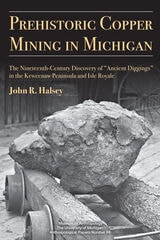
Prehistoric Copper Mining in Michigan
The Nineteenth-Century Discovery of “Ancient Diggings” in the Keweenaw Peninsula and Isle RoyaleJohn R Halsey
University of Michigan Press, 2018
Prehistoric Peoples of South Florida
William E. McGoun
University of Alabama Press, 1993
To many people in South Florida, and "oldtimer" is someone who has lived there for more than five years. Prehistoric Peoples of South Florida considers the culture history of the real South Florida "oldtimers" dating from 10,000 B.C. through the invasion by Europeans and analyzes the ways in which they adapted to their environment through time—or caused their environment to adapt to them.
South Florida is a biological island, its plant communities circumscribed by the southern limits of frost. Its peoples were distinct from those to the north and were less studied by scholars. In recent years the pace of research has increased, but there has been no attempt at synthesis since John M. Goggin wrote his still-unpublished manuscript on the Glades nearly half a century ago. Prehistoric Peoples of South Florida assembles the available knowledge and discusses competing theories, and does so in terms that are understandable to the general reader. McGoun outlines a cultural system that maintained an impressive continuity for 10,000 years—before being destroyed by two centuries of European contact.