Results by title
5159 books match the query 'Biography' and 172 start with p
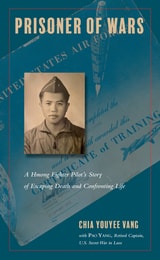
Prisoner of Wars
A Hmong Fighter Pilot's Story of Escaping Death and Confronting LifeChia Youyee Vang
Temple University Press, 2021
Retired Captain Pao Yang was a Hmong airman trained by the U.S. Air Force and CIA to fly T-28D aircraft for the U.S. Secret War in Laos. However, his plane was shot down during a mission in June 1972. Yang survived, but enemy forces captured him and sent him to a POW camp in northeastern Laos. He remained imprisoned for four years after the United States withdrew from Vietnam because he fought on the American side of the war.
Prisoner of Wars shows the impact the U.S Secret War in Laos had on Hmong combatants and their families. Chia Vang uses oral histories thatpoignantly recount Yang’s story and the deeply personal struggles his loved ones—who feared he had died—experienced in both Southeast Asia and the United States. As Yang eventually rebuilt his life in America, he grappled with issues of freedom and trauma.
Yang’s life provides a unique lens through which to better understand the lasting impact of the wars in Southeast Asia and the diverse journeys that migrants from Asia made over the last two centuries. Prisoner of Wars makes visible an aspect of the collateral damage that has been left out of dominant Vietnam War narratives.
Prisons and Patriots
Japanese American Wartime Citizenship, Civil Disobedience, and Historical MemoryCherstin Lyon
Temple University Press, 2011
Prisons and Patriots provides a detailed account of forty-one Nisei (second-generation Japanese Americans), known as the Tucsonians, who were imprisoned for resisting the draft during WWII. Cherstin Lyon parallels their courage as resisters with that of civil rights hero Gordon Hirabayashi, well known for his legal battle against curfew and internment, who also resisted the draft. These dual stories highlight the intrinsic relationship between the rights and the obligations of citizenship, particularly salient in times of war.
Lyon considers how wartime civil disobedience has been remembered through history—how soldiers have been celebrated for their valor while resisters have been demonized as unpatriotic. Using archival research and interviews, she presents a complex picture of loyalty and conflict among first-generation Issei and Nisei. Lyon contends that the success of the redress movement has made room for a narrative that neither reduces the wartime confinement to a source of shame nor proffers an uncritical account of heroic individuals.
Private Practices
Harry Stack Sullivan, the Science of Homosexuality, and American LiberalismWake, Naoko
Rutgers University Press, 2011
Private Practices examines the relationship between science, sexuality, gender, race, and culture in the making of modern America between 1920 and 1950, when contradictions among liberal intellectuals affected the rise of U.S. conservatism. Naoko Wake focuses on neo-Freudian, gay psychiatrist Harry Stack Sullivan, founder of the interpersonal theory of mental illness. She explores medical and social scientists' conflicted approach to homosexuality, particularly the views of scientists who themselves lived closeted lives.
Wake discovers that there was a gap--often dramatic, frequently subtle--between these scientists' "public" understanding of homosexuality (as a "disease") and their personal, private perception (which questioned such a stigmatizing view). This breach revealed a modern culture in which self-awareness and open-mindedness became traits of "mature" gender and sexual identities. Scientists considered individuals of society lacking these traits to be "immature," creating an unequal relationship between practitioners and their subjects. In assessing how these dynamics--the disparity between public and private views of homosexuality and the uneven relationship between scientists and their subjects--worked to shape each other, Private Practices highlights the limits of the scientific approach to subjectivity and illuminates its strange career--sexual subjectivity in particular--in modern U.S. culture.
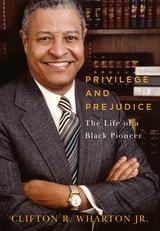
Privilege and Prejudice
The Life of a Black PioneerClifton R. Wharton
Michigan State University Press, 2015

Probably Someday Cancer
Genetic Risk and Preventative MastectomyKim Horner
University of North Texas Press, 2019
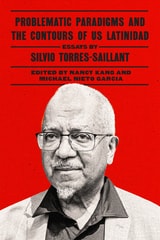
Problematic Paradigms and the Contours of US Latinidad
Essays by Silvio Torres-SaillantEdited by Nancy Kang and Michael Nieto Garcia
University of Texas Press, 2026
Silvio Torres-Saillant’s collected writings examine political contradictions within Latinx identity in the United States.
Since the 1990s Silvio Torres-Saillant’s work has questioned the notion of Latinidad, challenging presumptions of panethnic unity within the US Hispanic population and assessing dominant modes of Latinx representation. The essays in Problematic Paradigms and the Contours of US Latinidad examine the dynamics of a diverse collective of over 65 million people whose cultural heritage, ancestral origins, and belief systems arguably differ as much as they resemble one another. The volume dissects prevailing assumptions, namely the essentializing sense of homogeneity in the Latinx “community,” which mask important nuances and fascinating contradictions. Torres-Saillant also targets the role of marketing and mass communications in shaping popular perceptions of ethnic groups, thereby tracing connections between media rhetoric and the language of scholarship.
Newly revised by editors Nancy Kang and Michael Nieto Garcia, this collection curates Torres-Saillant’s core contributions to Latinx studies over the last two decades and underscores the veteran scholar’s evolving thoughts on key conversations in the field. The epilogue narrates his beginnings in Caribbean studies, acknowledges his ongoing analysis of Dominican blackness, and discourages uncritical views of cultural heritage.
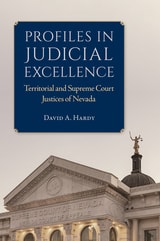
Profiles in Judicial Excellence
Territorial and Supreme Court Justices of NevadaDavid A. Hardy
University of Nevada Press, 2025
Until the publication of Judge David A. Hardy’s Profiles in Judicial Excellence: Territorial and Supreme Court Justices of Nevada, there has been no single source containing biographies of these influential figures from the state’s history from 1861 to 1997. Hardy curates various sources and presents profiles of these judges in sequential order of their service. He also examines the influence of territorial judges in the 1864 vote for statehood. The Nevada judiciary has played an integral, but often unrecognized, role in shaping the unique character of the Silver State.
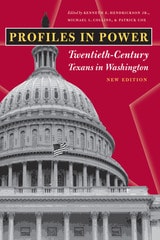
Profiles in Power
Twentieth-Century Texans in Washington, New EditionEdited by Kenneth E. Hendrickson, Jr., Michael L. Collins, and Patrick Cox
University of Texas Press, 2004
Profiles in Power offers concise biographies of fourteen twentieth-century Texans who wielded significant political power and influence in Washington, D.C. First published in 1993 by Harlan Davidson, it has been revised and updated with new chapters on John Nance Garner and Henry Gonzalez and expanded chapters on Lyndon Johnson, Barbara Jordan, Ralph Yarborough, Jim Wright, and John Tower. Demonstrating the validity of a biographical approach to history, the book as a whole covers all the major political issues of the twentieth century, as well as the pivotal role of Texans in defining the national agenda.
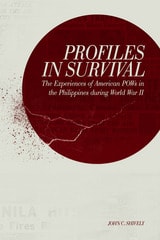
Profiles in Survival
The Experiences of American POWs in the Philippines during World War IIJohn C. Shively
Indiana Historical Society Press, 2012

Project 9
The Birth of the Air Commandos in World War IIDennis R. Okerstrom
University of Missouri Press, 2026
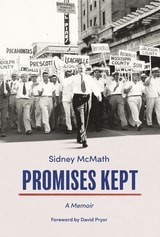
Promises Kept
A MemoirSidney S. McMath
University of Arkansas Press, 2003
Winner of the 2006 Booker Worthen Literary Prize and the 2004 Ragsdale Award
A dominating spirit of public service animated the life of Sidney Sanders McMath (1912–2003), the thirty-fourth governor of Arkansas. Promises Kept, completed and published when McMath was in his nineties, tells his story in his own words—from the piney hills of South Arkansas to the battlefields of World War II; through the human dramas of the courtroom to the marbled corridors of the State Capitol.
In Promises Kept, McMath recounts a rural upbringing that grounded him in the concerns of everyday Arkansans. He tells his life story through key milestones, including distinguished military service and a dramatic political rise to governor of Arkansas. During his four years in office, he pursued reform and modernization by expanding roads and electricity to rural areas, fighting the poll tax, building the state’s first medical center, opening Democratic primaries to Black voters, and standing with President Harry Truman in resisting the segregationist Dixiecrats. McMath’s political career ended amid unproven allegations tied to the highway program—charges he addresses directly here—and concludes with his return to the law, where landmark cases earned him honors.
Throughout, McMath reveals the excitement and the hard choices of real democracy, offering compelling human stories and a crucial perspective of a pivotal time in Arkansas history.
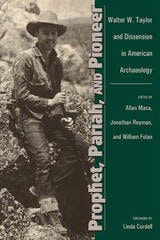
Prophet, Pariah, and Pioneer
Walter W. Taylor and Dissension in American ArchaeologyAllan Maca
University Press of Colorado, 2026
In his 1948 work A Study of Archeology, recently minted Harvard Ph.D. Walter W. Taylor delivered the strongest and most substantial critique of American archaeology ever published. He created many enemies with his dissection of the research programs of America's leading scholars, who took it as a personal affront. Taylor subsequently saw his ideas co-opted, his research pushed to the margins, and his students punished. Publicly humiliated at the 1985 Society for American Archaeology meeting, he suffered ridicule until his death in 1997.
Nearly everyone in the archaeological community read Taylor's book at the time, and despite the negative reaction, many were influenced by it. Few young scholars dared to directly engage and build on his "conjunctive approach," yet his suggested methods nevertheless began to be adopted and countless present-day authors highlight his impact on the 1960s formation of the "New Archaeology."
In Prophet, Pariah, and Pioneer, peers, colleagues, and former students offer a critical consideration of Taylor's influence and legacy. Neither a festschrift nor a mere analysis of his work, the book presents an array of voices exploring Taylor and his influence, sociologically and intellectually, as well as the culture of American archaeology in the second half of the twentieth century.
Prospero's Son
Life, Books, Love, and TheaterSeth Lerer
University of Chicago Press, 2013
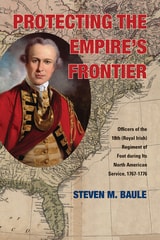
Protecting the Empire’s Frontier
Officers of the 18th (Royal Irish) Regiment of Foot during Its North American Service, 1767–1776Steven M. Baule
Ohio University Press, 2013
Protecting the Empire’s Frontier tells stories of the roughly eighty officers who served in the 18th (Royal Irish) Regiment of Foot, which served British interests in America during the crucial period from 1767 through 1776. The Royal Irish was one of the most wide-ranging regiments in America, with companies serving on the Illinois frontier, at Fort Pitt, and in Boston, New York, and Philadelphia, with some companies taken as far afield as Florida, Spanish Louisiana, and present-day Maine. When the regiment was returned to England in 1776, some of the officers remained in America on staff assignments. Others joined provincial regiments, and a few joined the American revolutionary army, taking up arms against their king and former colleagues.
Using a wide range of archival resources previously untapped by scholars, the text goes beyond just these officers’ service in the regiment and tells the story of the men who included governors, a college president, land speculators, physicians, and officers in many other British regular and provincial regiments. Included in these ranks were an Irishman who would serve in the U.S. Congress and as an American general at Yorktown; a landed aristocrat who represented Bath as a member of Parliament; and a naval surgeon on the ship transporting Benjamin Franklin to France. This is the history of the American Revolutionary period from a most gripping and everyday perspective.
An epilogue covers the Royal Irish’s history after returning to England and its part in defending against both the Franco-Spanish invasion attempt and the Gordon Rioters. With an essay on sources and a complete bibliography, this is a treat for professional and amateur historians alike.
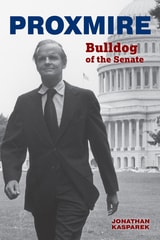
Proxmire
Bulldog of the SenateJonathan Kasparek
Wisconsin Historical Society Press, 2019
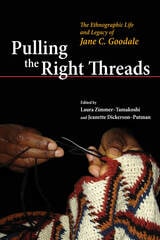
Pulling the Right Threads
The Ethnographic Life and Legacy of Jane C. GoodaleEdited by Laura Zimmer-Tamakoshi and Jeanette Dickerson-Putman
University of Illinois Press, 2007

Pura Belpré Awards
Celebrating Latino Authors and IllustratorsRose Zertuche Treviño
American Library Association, 2006
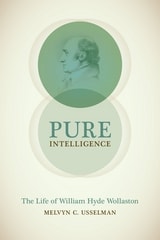
Pure Intelligence
The Life of William Hyde WollastonMelvyn C. Usselman
University of Chicago Press, 2015
Pure Intelligence is the first book-length study of Wollaston, his science, and the environment in which he thrived. Drawing on previously-unstudied laboratory records as well as historical reconstructions of chemical experiments and discoveries, and written in a highly accessible style, Pure Intelligence will help to reinstate Wollaston in the history of science, and the pantheon of its great innovators.

Purple Hummingbird
A Biography of Elizabeth Warder Crozer CampbellClaude N. Warren and Joan S. Schneider
University of Utah Press, 2016
Elizabeth Warder Crozer Campbell and her husband, William Campbell, found themselves forced to move to the Mojave Desert in 1924, its dry climate proving to be the best for William’s frail lungs burned by mustard gas in World War I. They camped at Twentynine Palm Oasis in what is now Joshua Tree National Park, homesteaded nearby, and became a central part of that early community. Life in the remote, stark landscape contrasted sharply with Elizabeth’s early years of wealth and privilege in Pennsylvania. Her resilient spirit made the best of what at first seemed like a bleak situation: she became an amateur archaeologist and explored the desert. A keen observer and independent thinker, she soon hypothesized that prehistoric people had lived in the California deserts along the shores of late Pleistocene lakes and waterways much earlier than was then believed. She devised a means for testing her hypothesis and found evidence to support it. Her interpretations, however, conflicted with the archaeological paradigm of the day and she was dismissed by formally trained archaeologists. Even so, she and her husband continued their work, convinced of the accuracy of her findings. Four decades later the archaeological establishment validated and accepted her ideas. Campbell’s research ultimately revolutionized archaeological thought, forming the basis of today’s landscape archaeology.

Pushkin's Button
Serena Vitale
University of Chicago Press, 2000
"Pushkin's Button will keep all constituencies of reader fastened to their seats, as they watch Petersburg's lofty denizens leave no moment of the hurtling Pushkin scandal unrecorded or not speculated on."—Monika Greenleaf,Los Angeles Times
"[A] deliciously entertaining whydunit, a book in which every page seduces with a riddle. . . . Vivacious, seductive, original."—Michael Dirda, Washington Post
"A delightful combination of retrograde pleasures (court balls, the demise of a doomed genius) and primary sources. . . . Illuminating."—Richard Lamb, New York Times Book Review
"A book almost impossible to put down."—George Steiner, New Yorker
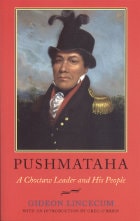
Pushmataha
A Choctaw Leader and His PeopleGideon Lincecum, with an introdution by Greg O'Brien
University of Alabama Press, 2004
Comprises two valuable, original, and difficult-to-find pieces on Choctaw history and culture that originally appeared in the 1904 and 1906 volumes of Publications of the Mississippi Historical Society
This important book comprises two articles that appeared in the 1904 and 1906 volumes of Publications of the Mississippi Historical Society. In “Life of Apushimataha,” Gideon Lincecum tells the story of Choctaw chief Pushmataha, who was born in Mississippi in 1764. A fearless warrior, his name literally means “one whose tomahawk is fatal in war or hunting.” As a charismatic leader, his foresight in making an alliance with General Andrew Jackson brought the Choctaws into war with the Creek Nation and into the War of 1812 but served to their benefit for many years with the United States government. In 1824, Pushmataha traveled to Washington, DC, to negotiate the Treaty of Doak’s Stand as pressure grew for Choctaw removal to Oklahoma Territory, but he fell ill and died there. He was buried with full military honors in the Congressional Cemetery at Arlington.
In “Choctaw Traditions about Their Settlement in Mississippi and the Origin of Their Mounds,” Lincecum translates a portion of the Skukhaanumpula—the traditional history of the tribe, which was related to him verbally by Chata Immataha, “the oldest man in the world, a man that knew everything.” It explains how and why the sacred Nanih Waya mound was erected and how the Choctaws formed new towns, and it describes the structure of leadership roles in their society.
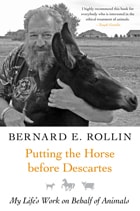
Putting the Horse before Descartes
My Life's Work on Behalf of AnimalsAuthored by Bernard Rollin
Temple University Press, 2011
When philosopher Bernard Rollin was six years old, he visited an animal shelter and was told about unwanted dogs being put to sleep. The event shaped his moral outlook and initiated his concern for how animals were treated. In his irreverent memoir, Putting the Horse before Descartes, Rollin provides an account of how he came to educate himself and others about the ethical treatment of animals and work toward improvements in animal welfare.
Rollin describes, in witty, often disarming detail, how he became an outspoken critic of how animals were being treated in veterinary and medical schools as well as in research labs. Putting the Horse before Descartes showcases the passionate animal advocate at his best. He recalls teaching veterinary students about ethical issues. He also recalls face-offs with ranchers and cowboys about branding methods and roping competitions in rodeos. In addition, he describes his work to legally mandate more humane conditions for agricultural and laboratory animals. As public concern about animal welfare and the safety of the food supply heighten, Rollin carries on this work all over the world—in classrooms, lecture halls and legislatures, meetings of agricultural associations and industrial settings, as well as in print.
Putting the Horse before Descartes, ultimately, is more than a memoir. Rollin offers a wide-ranging discussion of ethical issues in many settings and he testifies to the myriad ways that people of good conscience accept their ethical responsibility in regard to animals.