Results by title
28164 books match the query 'History' and 1297 start with p

Patients of the State
The Politics of Waiting in ArgentinaJavier Auyero
Duke University Press, 2012
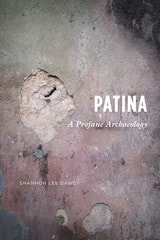
Patina
A Profane ArchaeologyShannon Lee Dawdy
University of Chicago Press, 2016
In Patina, anthropologist Shannon Lee Dawdy examines what was lost and found through the destruction of Hurricane Katrina. Tracking the rich history and unique physicality of New Orleans, she explains how it came to adopt the nickname “the antique city.” With innovative applications of thing theory, Patina studies the influence of specific items—such as souvenirs, heirlooms, and Hurricane Katrina ruins—to explore how the city’s residents use material objects to comprehend time, history, and their connection to one another. A leading figure in archaeology of the contemporary, Dawdy draws on material evidence, archival and literary texts, and dozens of post-Katrina interviews to explore how the patina aesthetic informs a trenchant political critique. An intriguing study of the power of everyday objects, Patina demonstrates how sharing in the care of a historic landscape can unite a city’s population—despite extreme divisions of class and race—and inspire civil camaraderie based on a nostalgia that offers not a return to the past but an alternative future.
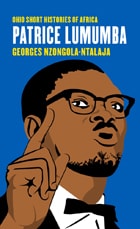
Patrice Lumumba
Georges Nzongola-Ntalaja
Ohio University Press, 2014
Patrice Lumumba was a leader of the independence struggle in what is today the Democratic Republic of the Congo, as well as the country’s first democratically elected prime minister. After a meteoric rise in the colonial civil service and the African political elite, he became a major figure in the decolonization movement of the 1950s. Lumumba’s short tenure as prime minister (1960–1961) was marked by an uncompromising defense of Congolese national interests against pressure from international mining companies and the Western governments that orchestrated his eventual demise.
Cold war geopolitical maneuvering and well-coordinated efforts by Lumumba’s domestic adversaries culminated in his assassination at the age of thirty-five, with the support or at least the tacit complicity of the U.S. and Belgian governments, the CIA, and the UN Secretariat. Even decades after Lumumba’s death, his personal integrity and unyielding dedication to the ideals of self-determination, self-reliance, and pan-African solidarity assure him a prominent place among the heroes of the twentieth-century African independence movement and the worldwide African diaspora.
Georges Nzongola-Ntalaja’s short and concise book provides a contemporary analysis of Lumumba’s life and work, examining both his strengths and his weaknesses as a political leader. It also surveys the national, continental, and international contexts of Lumumba’s political ascent and his swift elimination by the interests threatened by his ideas and practical reforms.
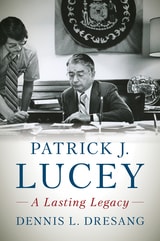
Patrick J. Lucey
A Lasting LegacyDennis L. Dresang
Wisconsin Historical Society Press, 2020
Preceding his service as governor, Lucey played a key role in rebuilding the Democratic Party in Wisconsin, returning a state that had been dominated by Republicans to a more moderate two-party system. As party chairman, he built coalitions between World War II veterans, remnants of the defunct Progressive Party, urban socialists, and activists in rural communities throughout the state.
Through exclusive interviews and unprecedented access to archival materials, Dennis L. Dresang shares the story of this pivotal figure in Wisconsin history, from his small-town rural roots to his wide-ranging influence.

Patrick Leigh Fermor
Noble Encounters between Budapest and TransylvaniaMichael O'Sullivan
Central European University Press, 2018
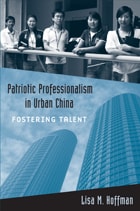
Patriotic Professionalism in Urban China
Fostering TalentAuthored by Lisa M. Hoffman
Temple University Press, 2010
In the post-Maoist era, China adopted a strategy for investing in the “quality” of its people—through education and training opportunities—that created talented labor. In her significant ethnographic study, Patriotic Professionalism in Urban China, Lisa Hoffman explains why the development of “human capital” is seen as fundamental for economic growth and national progress. She examines these new urban employees, who were deemed vital to the success of the global city in China, and who hoped for social mobility, a satisfying career, and perhaps a family.
Patriotic Professionalism in Urban China addresses the emergence of this urban professional subject in Dalian, a port city in China. Hoffman identifies who these new professionals are, what choices they have made, and how they have remained closely connected with the nation—although not necessarily the Communist party—leading to a new social form she calls “Patriotic Professionalism.”
Hoffman contributes to the understanding of changing urban life in China while providing an analysis of the country’s “late-socialist neoliberalism.” In the process, she asks pressing questions about how such shifts in urban life reshape cities, impact individual and family decisions, and reflect economic growth in China in tandem with “global” neoliberal practices.
Patriotism is a Catholic Virtue
Irish-American Catholics, The American Church and the Coming of the Great WarThomas J. Rowland
Catholic University of America Press, 2023
Patriots and Redeemers in Japan
Motives in the Meiji RestorationGeorge M. Wilson
University of Chicago Press, 1991
"By bringing some very interesting critical theory to his reading, Wilson has produced a book that will shift the terms of discussion on this event."—Harry D. Harootunian
Patriots from the Barrio
The Story of Company E, 141st Infantry: The Only All Mexican American Army Unit in World War IIDave Gutierrez
Westholme Publishing, 2018
The Inspiring True Story of a Segregated Unit Whose Exploits Underscore the Forgotten Latino Contribution to the Allied Victory in World War II
As a child, Dave Gutierrez hung on every word his father recalled about his cousin Ramon, “El Sancudo” (the mosquito), and his service in World War II, where he earned a Silver Star, three Purple Hearts, and escaped from the Germans twice. Later, Dave decided to find out more about his father’s cousin, and in the course of his research he discovered that Ramon Gutierrez was a member of Company E, 141st Infantry, a part of the 36th “Texas” Division that was comprised entirely of Mexican Americans—the only such unit in the entire U.S. Army. The division landed at Salerno, Italy, in 1943, among first American soldiers to set foot in Europe. In the ensuing months, Company E and the rest of the 36th would battle their way up the mountainous Italian peninsula against some of Nazi Germany’s best troops. In addition to the merciless rain, mud, and jagged peaks, swift cold rivers crisscrossed the region, including the Rapido, where Company E would face its greatest challenge. In an infamous episode, the 36th Division was ordered to cross the Rapido despite reports that the opposite bank was heavily defended. In the ensuing debacle, the division was ripped apart, and Company E sustained appalling casualties. The company rebounded and made the storied landings at Anzio and ultimately invaded southern France for a final push into Germany. The men of Company E distinguished themselves as rugged fighters capable of warring amid the rubble of destroyed villages and in the devastated countryside.
Based on extensive archival research and veteran and family accounts, Patriots from the Barrio: The Story of Company E, 141st Infantry: The Only All Mexican American Army Unit in World War II brings to life the soldiers whose service should never have gone unrecognized for so long. With its memorable personalities, stories of hope and immigration, and riveting battle scenes, this beautifully written book is a testament to the shared beliefs of all who have fought for the ideals of the American flag.

Patristic Exegesis in Context
Exploring the Genres of Early Christian Biblical InterpretationMiriam De Cock
Catholic University of America Press, 2023

Pattern and Loom
A Practical Study of the Development of Weaving Techniques in China, Western Asia and EuropeJohn Becker
National University of Singapore Press, 2014

Patterns in Circulation
Cloth, Gender, and Materiality in West AfricaNina Sylvanus
University of Chicago Press, 2016
Sylvanus brings wax cloth’s unique and complex history to light: born as a nineteenth-century Dutch colonial effort to copy Javanese batik cloth for Southeast Asian markets, it was reborn as a status marker that has dominated the visual economy of West African markets. Although most wax cloth is produced in China today, it continues to be central to the expression of West African women’s identity and power. As Sylvanus shows, wax cloth expresses more than this global motion of goods, capital, aesthetics, and labor—it is a form of archive where intimate and national memories are stored, always ready to be reanimated by human touch. By uncovering this crucial aspect of West African material culture, she enriches our understanding of global trade, the mutual negotiations that drive it, and the how these create different forms of agency and subjectivity.
Patterns of Behavior
Konrad Lorenz, Niko Tinbergen, and the Founding of EthologyRichard W. Burkhardt, Jr.
University of Chicago Press, 2005
In Patterns of Behavior, Richard W. Burkhardt Jr. traces the scientific theories, practices, subjects, and settings integral to the construction of a discipline pivotal to our understanding of the diversity of life. Central to this tale are Konrad Lorenz and Niko Tinbergen, 1973 Nobel laureates whose research helped legitimize the field of ethology and bring international attention to the culture of behavioral research. Demonstrating how matters of practice, politics, and place all shaped "ethology's ecologies," Burkhardt's book offers a sensitive reading of the complex interplay of the field's celebrated pioneers and a richly textured reconstruction of ethology's transformation from a quiet backwater of natural history to the forefront of the biological sciences.

Patterns of Persistence
Utah Women Legislators, 1993–2026Tiffany Greene and Marie Cornwall
University of Utah Press, 2027
Patterson for Alabama
The Life and Career of John PattersonGene Howard
University of Alabama Press, 2013
Patton's Pawns
The 94th US Infantry Division at the Siegfried LineTony Le Tissier
University of Alabama Press, 2007
The 94th US Infantry Division was an organization formed late in the Second World War, made up largely of draft-deferred university students as enlisted men and an officer corps pulled together from various domestic postings with unfortunate consequences for mutual trust and respect.
Initially used as part of the force blockading the Brittany ports after D-Day, in December of 1944, the division was incorporated into General Patton’s Third Army south of the Moselle-Saar Triangle, the base of which was a portion of the Siegfried Line known as the Orscholz Switch. Its first combat experience came in battalion-sized attacks during that terrible winter while the Battle of the Bulge raged to the north, and the Division suffered heavy casualties, many due to the ferocity of the winter weather. Patton, with characteristic zeal, excoriated the division’s officers and senior NCOs for the rate of non-combat casualties. Thereafter, the division was ordered forward on an all-out assault to break through the Siegfried Line. After horrific fighting against entrenched defenders, with ice turning to mud as spring approached, on February 19, 1945, the 94th broke through to open the roads to Trier and the Rhine.
This book is the most comprehensive study to date of the fierce fighting between the 94th U.S. Infantry Division and their German counterparts during that spring of 1945. It sheds new light on the achievements of the outnumbered division in penetrating Germany’s Westwall. With characteristic verve and detail, Tony Le Tissier narrates the action and illuminates the tribulations and sacrifices of American soldiers who won their laurels at great cost.
Patton's Shadow
The Making of a Hero in Modern MemoryNathan C. Jones
University of Alabama Press, 2024
An engrossing account of the myth and legend of George S. Patton and what his reputation illuminates about American culture and hero worship
Patton’s Shadow by Nathan C. Jones, a leading authority on George S. Patton, offers a definitive account of the creation of the Patton legend and what it illuminates about American culture and the worship of heroes. Jones traces how the persona of Patton, a brash and brilliant general in the European theater of World War II, transcended the individual man and became a cultural icon and byword for triumphal American might.
Patton was a hero lionized and celebrated in his own time. Patton as well as the US Army cultivated his persona during and after the war. His image was used to promote patriotism, commercial goods, and military recruitment. The 1970 Academy Award–winning film starring George C. Scott cemented his iconic image for millions of Americans, further embellishing Patton’s persona and introducing him to entirely new generations of young Americans.
Patton’s Shadow is an intellectually omnivorous tour de force that draws on ideas about heroes from sources as timeless as ancient mythology and as contemporary as Abraham Maslow, Max Weber, and Carl Jung. Jones artfully locates the honored altar that heroes occupy in the human heart and then answers insightful questions about what America’s embrace of Patton in particular as a military hero illuminates about the United States, about Patton’s generation, and about our own.
Jones’s engrossing work will fascinate readers interested in American history, military history, and the psychology of heroism.
Patton's War
An American General's Combat Leadership Volume 3: January 1-December 21, 1945Kevin M. Hymel
University of Missouri Press, 2026
As with his previous volume, Hymel relies on Patton’s original diaries (not the transcribed, embellished versions historians have relied on for many years) and personal letters to tell the general’s story. Hymel also mined various archives to explain Patton’s encounters with soldiers, government officials, civilians, and reporters to expand on his narrative.
Throughout this three-volume work, Patton emerges not as a larger-than-life myth, but as a human being, one held back by the personal prejudices and antisemitism that ultimately proved to be his demise. Despite these personal failings, Patton was, above all, as Hymel reveals, a commander bent on winning, or, as the general himself might have put it, getting the enemy to dance to his tune.
Patton's War
An American General's Combat Leadership, Volume 2: August–December 1944Kevin M. Hymel
University of Missouri Press, 2023
Finalist for the 2023 Gilder Lehrman Military History Prize
This second of three volumes of Patton’s War picks up where the first one left off, examining General George S. Patton’s leadership of the U.S. Third Army. The book follows Patton’s contributions to both the Normandy and Brittany campaigns—the closing of the Falaise Pocket in Normandy, and racing to the port cities in Brittany. It ends with Patton and his corps rescuing the besieged town of Bastogne in the Battle of the Bulge.
As he did in the preceding volume, Hymel relies not only on Patton’s diaries and letters, but countless veteran interviews, surveys, and memoirs. He also provides a unique insight missed by previous Patton scholars. Instead of using Patton’s transcribed diaries, which were heavily edited and embellished, he consults Patton’s original, hand-written diaries to uncover previously unknown information about the general.
This second volume of Hymel’s groundbreaking work shows Patton at the height of his generalship, successfully leading his army without the mistakes and caustic behavior that almost got him sent home earlier—even if we also see a Patton still guided at times by racism and antisemitism.
Patton's War
An American General's Combat Leadership, Volume I: November 1942–July 1944Kevin M. Hymel
University of Missouri Press, 2021
Patton
Battling with HistoryJ. Furman Daniel
University of Missouri Press, 2025
Patton deliberately cultivated the image of himself as a warrior from ages past; the more interesting truth is that he was an exceptionally dedicated student of history. He was a hard worker and voracious reader who gave a great deal of thought to how military history might inform his endeavors. Most scholars have overlooked this element of Patton’s character, which Daniel argues is essential to understanding the man’s genius.
Patton
Ordeal and TriumphLadislas Farago
Westholme Publishing, 2005
"The best Patton biography."—Military Bookman
He is America's most famous general. He represents toughness, focus, determination, and the ideal of achievement in the face of overwhelming odds. He was the most feared and respected adversary to his enemies and an object of envy, admiration, and sometimes, scorn to his professional peers. An early proponent of tank warfare, George S. Patton moved from being a foresighted lieutenant in the First World War to commanding the Third Army in the next, leading armored divisions in the Allied offensive that broke the back of Nazi Germany. Patton was an enigmatic figure. His image among his troops and much of the press achieved legendary status through his bold and colorful comments and combat leadership, yet these same qualities nearly jeopardized his career and forced him out of the battle on several occasions. Victory was impossible without Patton, and returning to the field, his army was responsible for one of the most crushing advances in the history of warfare.
In Ladislas Farago's masterpiece, Patton: Ordeal and Triumph, the complete story of this fascinating personality is revealed. Born into an aristocratic California family, Patton rose in military rank quickly and was tapped to lead the Allied landings in North Africa in 1942. Under Patton's direction, American troops cut their teeth against Rommel's Afrikakorps, advanced further and more quickly than British General Montgomery's army in the conquest of Sicily, and ultimately continued their exploits by punching into Germany and checking the Russian westward advance at the end of World War II. A sweeping, absorbing biography and critically hailed, Patton: Ordeal and Triumph provides unique insights into Patton's life and leadership style and is military history at its finest.
Patty's Got a Gun
Patricia Hearst in 1970s AmericaWilliam Graebner
University of Chicago Press, 2008
Paul Hymans
BelgiumSally Marks
Haus Publishing, 2010
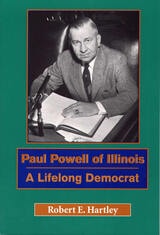
Paul Powell of Illinois
A Lifelong DemocratRobert E. Hartley
Southern Illinois University Press, 1999
Paul Powell emerged from the hill country of southern Illinois to serve in state government from 1935 until his death in 1970. His political tenure included three terms as Speaker of the Illinois House, four terms as minority leader, and two terms as secretary of state. The sponsor of hundreds of bills, he worked tirelessly for his constituents in southern Illinois. He also worked tirelessly to promote his own interests.
In this first political biography of Powell, Robert E. Hartley follows the money. He tells how this man of humble origins and meager means amassed a world-class political and financial base. Part of that story is the disclosure of a personal fortune that boggled minds, including the unbelievable yarn of the $800,000 cash found in the hotel room following Powell's death.
Powell never earned a state salary of more than $30,000 per year, yet in the last year of his life, his federal income tax return showed an income of more than $200,000. At his death his estate totaled $3.2 million, and, when settled in 1978, was worth $4.6 million, including nearly $1 million in racetrack stock.
Following Powell's story, Hartley takes us deep into the Illinois political world of the 1940s, 1950s, and 1960s, a time when politicians were on an "honor system" regarding their financial holdings. This was before disclosure of political contributions, before computer records, and before public meetings laws.
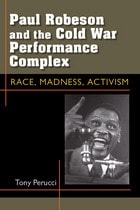
Paul Robeson and the Cold War Performance Complex
Race, Madness, ActivismTony Perucci
University of Michigan Press, 2012
Actor and singer Paul Robeson's performances in Othello, Show Boat, and The Emperor Jones made him famous, but his midcentury appearances in support of causes ranging from labor and civil rights to antilynching and American warmongering made him notorious. When Robeson announced at the 1949 Paris Peace Conference that it was "unthinkable" for blacks to go to war against the Soviet Union, the mainstream American press declared him insane.
Notions of Communism, blackness, and insanity were interchangeably deployed during the Cold War to discount activism such as Robeson's, just a part of an array of social and cultural practices that author Tony Perucci calls the Cold War performance complex. Focusing on two key Robeson performances---the concerts in Peekskill, New York, in 1949 and his appearance before the House Committee on Un-American Activities in 1956---Perucci demonstrates how these performances and the government's response to them are central to understanding the history of Cold War culture in the United States. His book provides a transformative new perspective on how the struggle over the politics of performance in the 1950s was also a domestic struggle over freedom and equality. The book closely examines both of these performance events as well as artifacts from Cold War culture---including congressional documents, FBI files, foreign policy papers, the popular literature on mental illness, and government propaganda films---to study the operation of power and activism in American Cold War culture.
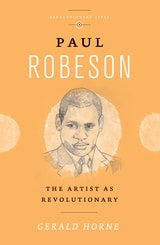
Paul Robeson
The Artist as RevolutionaryGerald Horne
Pluto Press, 2015
“A fine, taut analysis of the great African American athlete, singer, actor, and political activist.”
—Choice, Highly Recommended
Paul Robeson should be remembered today as the forerunner of Malcolm X, Dr. Martin Luther King, Jr. and Muhammad Ali. He sacrificed his fame and fortune a performer and athlete in order to fight for the rights of African Americans during the time of Jim Crow and U.S. Apartheid.
A world-famous singer and actor, a trained lawyer, an early star of American professional football and a polyglot who spoke over a dozen languages: these could be the crowning achievements of a life well-lived. Yet for Paul Robeson the higher calling of social justice led him to abandon both the NFL and Hollywood and become one of the most important political activists of his generation, a crusader for freedom and equality who battled both Jim Crow and US Senator Joseph McCarthy during the communist witch hunt of the 1950s.
In Paul Robeson: The Artist as Revolutionary, Gerald Horne discovers within Robeson's remarkable and revolutionary life the story of the twentieth century's great political struggles: against racism, against colonialism, against poverty—and for international socialism. Chapters include:
*”The Best Known American in the World"
*Rising Revolutionary
*From Moscow to Madrid
*"Black Stalin"?
*Robeson: Primary Victim of the "Blacklist"
*Triumph—and Tragedy
*Death of a Revolutionary
In the Introduction, Horne writes: “Paul Robeson—activist, artist, athlete—experienced a dramatic rise and fall, perhaps unparalleled in U.S. history. From mingling with the elite of London society and Hollywood in the 1930s, by the time he died in 1976, he was a virtual recluse in a plain abode in a working-class neighborhood of Philadelphia. What helps to explicate this tragic art of his life is a fateful decision he made when fascism was rising: he threw in his lot with those battling for socialism and decide to sacrifice his thriving artistic career on behalf of the struggle against Jim Crow—or U.S. apartheid.”
This critical and searching biography provides an opportunity for readers to comprehend the triumphs and tragedies of the revolutionary progressive movement of which Paul Robeson was not just a part, but perhaps its most resonant symbol.
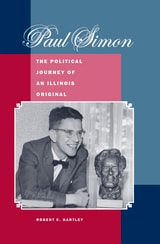
Paul Simon
The Political Journey of an Illinois OriginalRobert E. Hartley
Southern Illinois University Press, 2009
With Paul Simon: The Political Journey of an Illinois Original, author Robert E. Hartley presents the first thorough, objective volume on the journalistic and political career of one of Illinois’s most respected public figures. Hartley’s detailed account offers a fully rounded portrait of a man whose ideals and tenacity not only spurred reform on both state and national levels during his celebrated forty-year career but also established the lasting legacy of a political legend.
Simon first became a public figure at the age of nineteen, when he assumed the post of editor and publisher of a weekly newspaper in Troy, Illinois. From there, he used his paper to launch a fierce crusade against the crime and corruption plaguing Madison County. This battle sparked his entry into politics, helping to land him a seat in the state legislature in 1954. While serving, he campaigned tirelessly according to his principles, earning him the mass voter approval that would usher him into the seat of lieutenant governor in 1968—the first person elected to that position who did not share party affiliation with the governor.
As lieutenant governor, Simon initiated many changes to the position, remaking it to better serve the citizens of the state of Illinois. The cornerstone of his reform plan was an ombudsman program designed to allow the people of the state to voice problems they had with government and state agencies. The program, extremely popular with the public and the press, solved problems and helped to make Simon a household name throughout Illinois. Although he faced challenges along the way, including racial upheaval in Cairo and the student and police riots on the Carbondale campus of Southern Illinois University, Simon’s outspoken honesty and strong support of his constituents earned him the utmost esteem and popularity.
While his 1972 bid for governor of Illinois ultimately failed, this did not deter Simon from his dedication to social progress. In 1974 he began his remarkable twenty-two-year career in the U.S. House of Representatives and Senate, where he earned the admiration of the country for his political integrity. Despite the praise and support Simon had earned during his time in Washington, he was unable to win the Democratic presidential nomination in 1988 and returned to the Senate, winning a second term in 1990. Simon committed time and energy to the myriad issues of interest to him, especially in the field of education, with one of his biggest successes coming with the passage of the National Literacy Act, which he sponsored. He continued to foster his ties to journalism throughout his lengthy political career, authoring numerous books, articles, and columns, all of which he used to relentlessly promote open government and social programs.
This vivid account of the public life of Paul Simon reveals a man whose personal honor and dedication were unshakeable throughout nearly half a century in the political arena. Robert E. Hartley provides a candid perspective on Simon’s accomplishments and victories, as well as his mistakes and losses, revealing new insights into the life of this dynamic and widely respected public figure.
Pay for Play
A History of Big-Time College Athletic ReformRonald A. Smith
University of Illinois Press, 2011
Pay for Your Pleasures
Mike Kelley, Paul McCarthy, Raymond PettibonCary Levine
University of Chicago Press, 2013
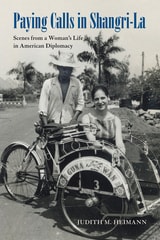
Paying Calls in Shangri-La
Scenes from a Woman’s Life in American DiplomacyJudith M. Heimann
Ohio University Press, 2016
Judith M. Heimann entered the diplomatic life in 1958 to join her husband, John, in Jakarta, Indonesia, at his American Embassy post. This, her first time out of the United States, would set her on a path across the continents as she mastered the fine points of diplomatic culture. She did so first as a spouse, then as a diplomat herself, thus becoming part of one of the Foreign Service’s first tandem couples.
Heimann’s lively recollections of her life in Africa, Asia, and Europe show us that when it comes to reconciling our government’s requirements with the other government’s wants, shuttle diplomacy, Skype, and email cannot match on-the-ground interaction. The ability to gauge and finesse gesture, tone of voice, and unspoken assumptions became her stock-in-trade as she navigated, time and again, remarkably delicate situations.
This insightful and witty memoir gives us a behind-the-scenes look at a rarely explored experience: that of one of the very first married female diplomats, who played an unsung but significant role in some of the important international events of the past fifty years. To those who know something of today’s world of diplomacy, Paying Calls in Shangri-La will be an enlightening tour through the way it used to be—and for aspiring Foreign Service officers and students, it will be an inspiration.
Published in association with ADST-DACOR Diplomats and Diplomacy Series
Paying for the Party
How Fundraising Demands Lead to Less Productive and Less Representative LegislaturesMichael R. Kistner
University of Chicago Press, 2026
A revealing, data-rich exploration of how American legislators transformed from active policymakers into party fundraisers.
Lawmakers in Congress and state legislatures across the United States spend enormous amounts of time and effort fundraising, not just for their own seats but for the party. Whether dialing for dollars or hosting high-priced fundraising events, the pursuit of campaign funds is now a massive part of the American legislator’s job description. What explains this transformation, and what are the consequences for public policy?
In Paying for the Party, Michael Kistner uses new theory and new data to answer these questions. He shows that state legislative party organizations—Democratic and Republican caucuses in capitols across the country—are responsible for turning their members into single-minded seekers of money. Parties reward legislators who contribute the most with powerful leadership and committee positions. Consequently, the members who now hold these agenda-setting positions are increasingly neither the most productive nor knowledgeable lawmakers, but rather those who can raise the most money. And when legislators are asked to raise more money, they skip committee hearings for fundraising events, enacting fewer substantive policies as a result. Paying for the Party shows that parties in contemporary American legislatures have hollowed out the policymaking capacity of their institutions and empowered a decidedly non-representative set of legislators.

Paying the Price
Ignacio Ellacuría and the Murdered Jesuits of El SalvadorTeresa Whitfield
Temple University Press, 1994
On November 16, 1989, on the campus of El Salvador's University of Central America, six Jesuits and two women were murdered by members of the Salvadoran army, an army funded and trained by the United States. One of the murdered Jesuits was Ignacio Ellacuría, the university's Rector and a key, although controversial, figure in Salvadoran public life. From an opening account of this terrible crime, Paying the Price asks, Why were they killed and what have their deaths meant? Answers come through Teresa Whitfield's detailed examination of Ellacuría's life and work. His story is told in juxtaposition with the crucial role played by the unraveling investigation of the Jesuits' murders within El Salvador's peace process.
A complex and nuanced book, Paying the Price offers a history of the Church in El Salvador in recent decades, an analysis of Ellacuría's philosophy and theology, an introduction to liberation theology, and an account of the critical importance of the University of Central America. In the end, Whitfield's comprehensive picture of conditions in El Salvador suggest that the Jesuits' murders were almost inevitable. A crime that proved a turning point in El Salvador's civil war, the murders expressed the deep tragedy of the Salvadoran people beyond suffering the heartless cruelty, violence, and deceitfulness of a corrupt military and their patrons in the U.S. government.
Whitfield draws on her extensive research of Jesuit archives and private papers, Ellacuría's diaries, documents declassified by the U.S. government, and 200 interviews conducted with sources ranging from Jesuits to Salvadoran military officers, U.S. officials and congressmen to human rights campaigners.
Paying with Their Bodies
American War and the Problem of the Disabled VeteranJohn M. Kinder
University of Chicago Press, 2015
America has grappled with the questions posed by injured veterans since its founding, and with particular force since the early twentieth century: What are the nation’s obligations to those who fight in its name? And when does war’s legacy of disability outweigh the nation’s interests at home and abroad? In Paying with Their Bodies, John M. Kinder traces the complicated, intertwined histories of war and disability in modern America. Focusing in particular on the decades surrounding World War I, he argues that disabled veterans have long been at the center of two competing visions of American war: one that highlights the relative safety of US military intervention overseas; the other indelibly associating American war with injury, mutilation, and suffering. Kinder brings disabled veterans to the center of the American war story and shows that when we do so, the history of American war over the last century begins to look very different. War can no longer be seen as a discrete experience, easily left behind; rather, its human legacies are felt for decades.
The first book to examine the history of American warfare through the lens of its troubled legacy of injury and disability, Paying with Their Bodies will force us to think anew about war and its painful costs.
Payoffs in the Cloakroom
The Greening of the Michigan Legislature, 1938-1946Bruce A. Rubenstein
Michigan State University Press, 1995
Payoffs in the Cloakroom is a spellbinding follow-up to Rubenstein and Ziewacz's critically acclaimed Three Bullets Sealed His Lips. Three Bullets brought to life new evidence on the 1945 murder of Michigan Senator Warren Hooper. Payoffs in the Cloakroom takes up where Three Bullets left off, unraveling a complex web of political corruption and dirty state politics. In the process, the authors demonstrate that Senator Hooper was murdered to prevent his grand jury testimony against republican boss Frank McKay, who was facing bribery charges.
Making use of actual court proceeding, personal interviews, and newspaper accounts, and even a re-evaluation of police evidence, Rubenstein and Ziewacz tell a story that contains all the ingredients of first-class detective fiction—only in this instance, the story is based on fact. With chapter titles such as "Charlie and His Little Black Book," "I Never Dreamed Murder," and "Them Bones, Them Bones," the authors have, once again, provided a stimulating and absorbing account of one of the darker chapters of Michigan's political history.
Pea Ridge and Prairie Grove
Scenes and Incidents fo the War in ArkansasWilliam Baxter
University of Arkansas Press, 2000
With the goal of sketching “at least some of the bright lights and dark shadows of the war;” William Baxter authored his regional classic, Pea Ridge and Prairie Grove, in 1864, before the actual end of the Civil War.
Primarily focusing on the civilians of the region, Baxter vividly describes their precarious and vulnerable positions during the advances and retreats of armies as Confederate and Federal forces marched across their homeland. In his account, Baxter describes skirmishes and cavalry charges outside his front door, the “firing” of his town’s buildings during a Confederate retreat, clashes between secessionist and Unionist neighbors, the feeding of hungry soldiers and the forceful appropriation of his remaining food supply, and the sickening sight of the wounded emerging from the Prairie Grove battlefield.
Since its original printing, this firsthand account has only been reprinted once, in 1957, and both editions are considered collectors’ items today. Of interest to Civil War scholars and general readers alike, Baxter’s compelling social history is rendered even more comprehensive by William Shea’s introduction. Pea Ridge and Prairie Grove is a valuable personal account of the Civil War in the Trans-Mississippi West which enables us to better comprehend the conflict as a whole and its devastating effect on the general populace of the war-torn portions of the country.
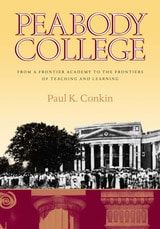
Peabody College
From a Frontier Academy to the Frontiers of Teaching and LearningPaul K. Conkin
Vanderbilt University Press, 2002
It all began as a small frontier academy in 1785. The institution that would become Peabody experienced its first reinvention two decades later as it became Cumberland College, and then, in 1826, the University of Nashville. The University maintained an elite undergraduate college until 1850, and, despite the success of its medical school and a military institute, it failed in three subsequent efforts to restart its undergraduate program.
In 1875 the University offered its campus and degree-granting authority to the first normal school in the state of Tennessee, a school funded by the Peabody Education Fund. The Peabody Normal College was the best in the South, and, as such, exerted an enormous influence on education in the region.
A new era began in 1909. The trustees of the Peabody Fund, at its liquidation, provided an eventual $1.5 million to establish a graduate-level George Peabody College for Teachers. It opened for classes in 1914, on its present campus, where it quickly became the premier teachers' college in the South. As was the case with many private, independent institutions, Peabody faced intermittent financial struggles, which finally ended with its union with Vanderbilt. Today Peabody is, by almost any criteria, one of the five or six strongest colleges of education in the United States.
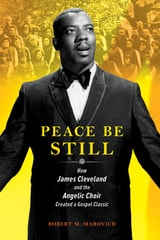
Peace Be Still
How James Cleveland and the Angelic Choir Created a Gospel ClassicRobert M. Marovich
University of Illinois Press, 2021
In September of 1963, Reverend Lawrence Roberts and the Angelic Choir of the First Baptist Church of Nutley, New Jersey, teamed with rising gospel star James Cleveland to record Peace Be Still. The LP and its haunting title track became a phenomenon. Robert M. Marovich draws on extensive oral interviews and archival research to chart the history of Peace Be Still and the people who created it. Emerging from an established gospel music milieu, Peace Be Still spent several years as the bestselling gospel album of all time. As such, it forged a template for live recordings of services that transformed the gospel music business and Black worship. Marovich also delves into the music's connection to fans and churchgoers, its enormous popularity then and now, and the influence of the Civil Rights Movement on the music's message and reception.
The first in-depth history of a foundational recording, Peace Be Still shines a spotlight on the people and times that created a gospel music touchstone.
Peace and Bread in Time of War
Jane Addams
University of Illinois Press, 2002
Addams's unyielding pacifism during the Great War drew criticism from politicians and patriots who deemed her the "most dangerous woman in America." Even those who had embraced her ideals of social reform condemned her outspoken opposition to U.S. entry into World War I or were ambivalent about her peace platforms. Turning away from the details of the war itself, Addams relies on memory and introspection in this autobiographical portrayal of efforts to secure peace during the Great War. "I found myself so increasingly reluctant to interpret the motives of other people that at length I confined all analysis of motives to my own," she writes. Using the narrative technique she described in The Long Road of Women's Memory, an extended musing on the roles of memory and myth in women's lives, Addams also recalls attacks by the press and defends her political ideals.
Katherine Joslin's introduction provides additional historical context to Addams's involvement with the Woman's Peace Party, the Women's International League for Peace and Freedom, and her work on Herbert Hoover's campaign to provide relief and food to women and children in war-torn enemy countries.
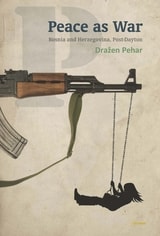
Peace as War
Bosnia-Herzegovina Post-DaytonDrazen Pehar
Central European University Press, 2019
Peacebuilding, Power, and Politics in Africa
Devon Curtis
Ohio University Press, 2012
Peacebuilding, Power, and Politics in Africa is a critical reflection on peacebuilding efforts in Africa. The authors expose the tensions and contradictions in different clusters of peacebuilding activities, including peace negotiations; statebuilding; security sector governance; and disarmament, demobilization, and reintegration. Essays also address the institutional framework for peacebuilding in Africa and the ideological underpinnings of key institutions, including the African Union, NEPAD, the African Development Bank, the Pan-African Ministers Conference for Public and Civil Service, the UN Peacebuilding Commission, the World Bank, and the International Criminal Court. The volume includes on-the-ground case study chapters on Sudan, the Great Lakes Region of Africa, Sierra Leone and Liberia, the Niger Delta, Southern Africa, and Somalia, analyzing how peacebuilding operates in particular African contexts.
The authors adopt a variety of approaches, but they share a conviction that peacebuilding in Africa is not a script that is authored solely in Western capitals and in the corridors of the United Nations. Rather, the writers in this volume focus on the interaction between local and global ideas and practices in the reconstitution of authority and livelihoods after conflict. The book systematically showcases the tensions that occur within and between the many actors involved in the peacebuilding industry, as well as their intended beneficiaries. It looks at the multiple ways in which peacebuilding ideas and initiatives are reinforced, questioned, reappropriated, and redesigned by different African actors.
A joint project between the Centre for Conflict Resolution in Cape Town, South Africa, and the Centre of African Studies at the University of Cambridge.

Peaceful Resistance
Building a Palestinian University Under OccupationGabi Baramki
Pluto Press, 2009
This book tells the remarkable story of Birzeit University, Palestine’s oldest university in the Occupied Territories.
Founded against the backdrop of occupation, it is open to all students, irrespective of income. Putting the study of democracy and tolerance at the heart of its curriculum, Birzeit continues to produce idealistic young people who can work to bring about a peaceful future. Gabi Baramki explains how the University has survived against shocking odds, including direct attacks where Israeli soldiers have shot unarmed students. Baramki himself has been dragged from his home at night, beaten and arrested. Yet Birzeit continues to thrive, putting peace at the heart of its teaching, and offering Palestinians the opportunities that only education can bring.
Peacekeeping on the Plains
Army Operations in Bleeding KansasTony R. Mullis
University of Missouri Press, 2004

Pearls, Peaches, and Peddlers
Short Essays on Arkansas’s Amazing HistoryTom Dillard
University of Arkansas Press, 2027
In Pearls, Peaches, and Peddlers: Short Essays on Arkansas’s Amazing History, Tom Dillard offers a lively portrait of Arkansas that reveals how the state was shaped by ordinary people, unexpected industries, and moments of upheaval both grand and small.
The seventy-four essays collected here draw upon Dillard’s career as a historian, archivist, educator, and preservationist to challenge familiar myths, reveal overlooked stories, and demonstrate how the history of one state can illuminate the larger American experience.
Pearls, People, and Power
Pearling and Indian Ocean WorldsPedro Machado
Ohio University Press, 2019
Pearls, People, and Power is the first book to examine the trade, distribution, production, and consumption of pearls and mother-of-pearl in the global Indian Ocean over more than five centuries. While scholars have long recognized the importance of pearling to the social, cultural, and economic practices of both coastal and inland areas, the overwhelming majority have confined themselves to highly localized or at best regional studies of the pearl trade. By contrast, this book stresses how pearling and the exchange in pearl shell were interconnected processes that brought the ports, islands, and coasts into close relation with one another, creating dense networks of connectivity that were not necessarily circumscribed by local, regional, or indeed national frames.
Essays from a variety of disciplines address the role of slaves and indentured workers in maritime labor arrangements, systems of bondage and transoceanic migration, the impact of European imperialism on regional and local communities, commodity flows and networks of exchange, and patterns of marine resource exploitation between the Industrial Revolution and Great Depression. By encompassing the geographical, cultural, and thematic diversity of Indian Ocean pearling, Pearls, People, and Power deepens our appreciation of the underlying historical dynamics of the many worlds of the Indian Ocean.
Contributors: Robert Carter, William G. Clarence-Smith, Joseph Christensen, Matthew S. Hopper, Pedro Machado, Julia T. Martínez, Michael McCarthy, Jonathan Miran, Steve Mullins, Karl Neuenfeldt, Samuel M. Ostroff, and James Francis Warren.
Peasant Intellectuals
Anthropology and History in TanzaniaSteven Feierman
University of Wisconsin Press, 1990
Scholars who study peasant society now realize that peasants are not passive, but quite capable of acting in their own interests. But, do coherent political ideas emerge within peasant society or do peasants act in a world where elites define political issues? Peasant Intellectuals is based on ethnographic research begun in 1966 and includes interviews with hundreds of people from all levels of Tanzanian society. Steven Feierman provides the history of the struggles to define the most basic issues of public political discourse in the Shambaa-speaking region of Tanzania. Feierman also shows that peasant society contains a rich body of alternative sources of political language from which future debates will be shaped.
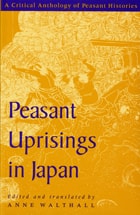
Peasant Uprisings in Japan
A Critical Anthology of Peasant HistoriesEdited by Anne Walthall
University of Chicago Press, 1991
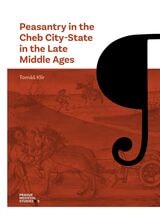
Peasantry in the Cheb City-State in the Late Middle Ages
Socioeconomic Mobility and MigrationTomáš Klír
Karolinum Press, 2024
The medieval peasantry represents a particularly compelling unknown for historians, as it holds the key to understanding both later economic growth and the surprising stagnation experienced in some European regions. Our current knowledge about the social structures and institutions of the medieval peasantry remains superficial, with almost nothing known about their real inner dynamics and demographic aspects. The present monograph confronts this issue head-on, taking advantage of previously neglected written sources from the Cheb city-state, which are unique in the European context. Drawing from this material, the book presents a remarkably detailed view of social mobility, migration, and the reproduction of social structures among the peasantry in the late Middle Ages while offering new perspectives on the mass abandonment of rural settlements during that period. It also identifies hitherto unknown mechanisms by which peasant communities responded to family demographic cycles and short-term economic fluctuations.
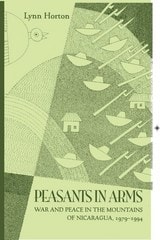
Peasants In Arms
War and Peace in the Mountains of Nicaragua, 1979–1994Lynn Horton
Ohio University Press, 1999
Drawing on testimonies from contra collaborators and ex-combatants, as well as pro-Sandinista peasants, this book presents a dynamic account of the growing divisions between peasants from the area of Quilalí who took up arms in defense of revolutionary programs and ideals such as land reform and equality and those who opposed the FSLN.
Peasants in Arms details the role of local elites in organizing the first anti-Sandinista uprising in 1980 and their subsequent rise to positions of field command in the contras. Lynn Horton explores the internal factors that led a majority of peasants to turn against the revolution and the ways in which the military draft, and family and community pressures reinforced conflict and undermined mid-decade FSLN policy shifts that attempted to win back peasant support.
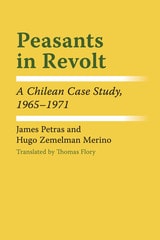
Peasants in Revolt
A Chilean Case Study, 1965–1971By James Petras and Hugo Zemelman Merino; translated by Thomas Flory
University of Texas Press, 1973
Based on extended interviews at the Culiprán fundo in Chile with peasants who recount in their own terms their political evolution, this is an in-depth study of peasants in social and political action. It deals with two basic themes: first, the authoritarian structure within a traditional latifundio and its eventual replacement by a peasant-based elected committee, and second, the events shaping the emergence of political consciousness among the peasantry. Petras and Zemelman Merino trace the careers of local peasant leaders, followers, and opponents of the violent illegal land seizure in 1965 and the events that triggered the particular action.
The findings of this study challenge the oft-accepted assumption that peasants represent a passive, traditional, downtrodden group capable only of following urban-based elites. The peasant militants, while differing considerably in their ability to grasp complex political and social problems, show a great deal of political skill, calculate rationally on the possibility of success, and select and manipulate political allies on the basis of their own primary needs. The politicized peasantry lend their allegiance to those forces with whom they anticipate they have the most to gain—and under circumstances that minimize social costs. The authors identify the highly repressive political culture within the latifundio—reinforced by the national political system—as the key factor inhibiting overt expressions of political demands.
The emergence of revolutionary political consciousness is found to be the result of cumulative experiences and the breakdown of traditional institutions of control. The violent illegal seizure of the farm is perceived by the peasantry as a legitimate act based on self-interest as well as general principles of justice—in other words, the seizure is perceived as a “natural act,” suggesting that perhaps two sets of moralities functioned within the traditional system.
The book is divided into two parts: the first part contains a detailed analysis of peasant behavior; the second contains transcriptions of peasant interviews. Combined, they give the texture and flavor of insurgent peasant politics.