Results by title
4127 books match the query 'Science' and 223 start with p
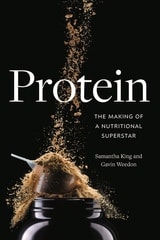
Protein
The Making of a Nutritional SuperstarSamantha King and Gavin Weedon
Duke University Press, 2026
Protein is everywhere—praised as a muscle builder, a weight-loss miracle, an anti-aging elixir, and the catch-all solution for everything from exercise recovery to global malnutrition. In Protein, Samantha King and Gavin Weedon argue that protein’s rise to nutritional superstardom has less to do with human dietary needs and more to do with how its indeterminate, adhesive qualities are marshalled towards commercial, scientific, and social imperatives. Tracing its path from nineteenth-century biochemistry to the status it enjoys today, they expose how protein has been marketed as a cure for global hunger, repackaged as an eco-friendly meat alternative, and wielded as a symbol of masculinity in the fitness industry. From whey waste in industrial farming to longevity drugs for aging bodies, Protein unpacks the myths behind the macronutrient and challenges what we think we know about food, health, and the forces that shape our diets.
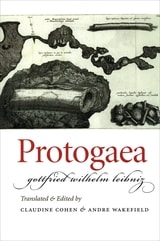
Protogaea
Gottfried Wilhelm Leibniz
University of Chicago Press, 2008
Though the works of Leibniz have been widely translated, Protogaea has languished in its original Latin for centuries. Now Claudine Cohen and Andre Wakefield offer the first English translation of this central text in natural philosophy and natural history. Written between 1691 and 1693, and first published after Leibniz’s death in 1749, Protogaea reemerges in this bilingual edition with an introduction that carefully situates the work within its historical context.
Protostars and Planets
Tom Gehrels
University of Arizona Press, 1979
Protostars and Planets II
David C. Black
University of Arizona Press, 1985
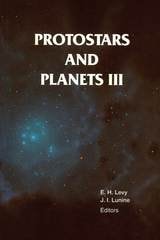
Protostars and Planets III
Eugene Levy
University of Arizona Press, 1993
Protostars and Planets III reflects the enormous progress made in understanding star and planet formation as a result of new observational capabilities and cooperative research among scientists from diverse fields.
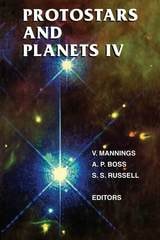
Protostars and Planets IV
Vince Mannings
University of Arizona Press, 2000
Protostars and Planets IV is also the first book to include chapters describing the discoveries of extrasolar planets, brown dwarfs, and Edgeworth-Kuiper Belt objects, and the first to include high-resolution optical and near-infrared images of protoplanetary disks. Protostars and Planets IV is an unsurpassed reference not only for established researchers but also for younger scientists whose imagination and work will lead to tomorrow's discoveries.

Protostars and Planets V
Edited by Bo Reipurth, David Jewitt, and Klaus Keil
University of Arizona Press, 2007
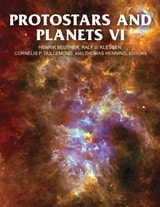
Protostars and Planets VI
Edited by Henrik Beuther, Ralf S. Klessen, Cornelis P. Dullemond, and Thomas Henning
University of Arizona Press, 2014
question: How do planets and their host stars form and evolve? Protostars and Planets VI brings together more than 250 contributing authors at the forefront of their field, conveying the latest results in this research area and establishing a new foundation for advancing our understanding of stellar and planetary formation.
Continuing the tradition of the Protostars and Planets series, this latest volume uniquely integrates the cross-disciplinary aspects of this broad field. Covering an extremely wide range of scales, from the formation of large clouds in our Milky Way galaxy down to small chondrules in our solar system, Protostars and Planets VI takes an encompassing view with the goal of not only highlighting what we know but, most importantly, emphasizing the frontiers of what we do not know.
As a vehicle for propelling forward new discoveries on stars, planets, and their origins, this latest volume in the Space Science Series is an indispensable resource for both current scientists and new students in astronomy, astrophysics, planetary science, and the study of meteorites.

Provincialising nature
multidisciplinary approaches to the politics of the environment in Latin AmericaEdited by Michela Coletta and Malayna Raftopoulos
University of London Press, 2016
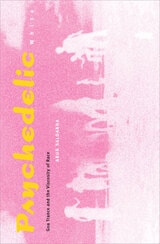
Psychedelic White
Goa Trance and the Viscosity of RaceArun Saldanha
University of Minnesota Press, 2007
A bold new approach to racial difference conceived through rave tourism
The village of Anjuna, located in the coastal Indian state of Goa, has been one of the premier destinations on the global rave scene for nearly two decades. The birthplace of Goa trance, the most psychedelic variety of electronic dance music, Anjuna first attracted adventurous Westerners in the 1970s who were drawn there by its tropical beaches, tolerant locals, and readily available drugs. Today, rave tourists travel to Goa to take part in round-the-clock dance parties and lose themselves in the crowds, the music, and the drugs. But do they really escape where they come from and who they are?
A rich and theoretically sophisticated ethnography, Psychedelic White explains how race plays out in Goa’s white counterculture and grapples with how to make sense of racism when it is not supposed to be there. Goa is a site of particularly revealing forms of interracial collision, and contrary to author Arun Saldanha’s expectations that the nature of rave would create an inclusive atmosphere, he repeatedly witnessed stark segregation between white and Indian tourists. He came to understand race in its creative dimension as a shifting and fuzzy assemblage of practices, environments, sounds, and substances—dance skills, sunlight, conversation, cannabis, and tea. In doing so, his work shows how the rave scene in Goa harbors conflicting tendencies regarding race. The complicated intersection of cultures and phenotypes, Saldanha asserts, helps to consolidate whiteness. Race emerges not through rigid boundaries but rather through what he terms viscosity, the degree to which bodies gather together for pleasure and self-transformation.
Challenging the prevailing conception of racial difference as a purely social construction and offering building on the works of Gilles Deleuze and Félix Guattari, Psychedelic White presents nothing less than a new materialist approach to race.

Psychoanalysis--A Theory in Crisis
Marshall Edelson
University of Chicago Press, 1988
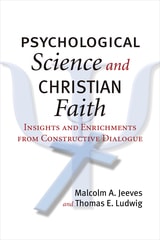
Psychological Science and Christian Faith
Insights and Enrichments from Constructive DialogueMalcolm A. Jeeves
Templeton Press, 2018
Because Christianity and psychology deal with different levels of truth and speak vastly different languages, efforts to unify them often create more problems than they solve. What is needed is a better way to think about the relationship—an approach that does justice to the emerging insights from psychological science and biblical scholarship and that can enrich our understanding of both. In this volume, two accomplished psychologists show how this complementary dialogue can unfold, giving us a broader, deeper understanding of ourselves, our relationships, and our place in the cosmos.
.
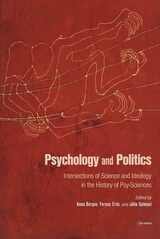
Psychology and Politics
Intersections of Science and Ideology in the History of Psy-SciencesFerenc Eros
Central European University Press, 2019
Psy-sciences (psychology, psychiatry, psychoanalysis, pedagogy, criminology, special education, etc.) have been connected to politics in different ways since the early twentieth century. Here in twenty-two essays scholars address a variety of these intersections from a historical perspective.
The chapters include such diverse topics as the cultural history of psychoanalysis, the complicated relationship between psychoanalysis and the occult, and the struggles for dominance between the various schools of psychology. They show the ambivalent positions of the "psy" sciences in the dictatorships and authoritarian regimes of Nazi Germany, East European communism, Latin-American military dictatorships, and South African apartheid, revealing the crucial role of psychology in legitimating and "normalizing" these regimes.
The authors also discuss the ideological and political aspects of mental health and illness in Hungary, Germany, post-WW1 Transylvania, and Russia. Other chapters describe the attempt by critical psychology to understand the production of academic, therapeutic, and everyday psychological knowledge in the context of the power relations of modern capitalist societies.
Public Reactions to Nuclear Waste
Citizens’ Views of Repository SitingRiley E. Dunlap, Michael E. Kraft, and Eugene A. Rosa, eds.
Duke University Press, 1993
A much-needed supplement to the largely technical literature on this problem, the book provides extensive studies of the reaction of citizens--whether rural or urban, near-site residents or prospective visitors--to proposed nuclear waste sites around the nation, particularly Nevada's Yucca Mountain. Conducted by distinguished sociologists, psychologists, political scientists, and economists, these studies constitute the most comprehensive account available of the impact of public perceptions and opinions on the nuclear waste policy process in the United States. As such, the collection will clarify the politics of nuclear waste siting and will give impetus to the stalled debate over the issue.
Contributors. Rodney K. Baxter, Julia G. Brody, Bruce Clary, Lori Cramer, William H. Desvousges, Riley E. Dunlap, Douglas Easterling, Judy K. Fleishman, James Flynn, William R. Freudenburg, Michael E. Kraft, Richard S. Krannich, Howard Kunreuther, Mark Layman, Ronald L. Little, Robert Cameron Mitchell, Alvin H. Mushkatel, Joanne M. Nigg, K. David Pijawka, Eugene A. Rosa, Paul Slovic
Public Response to Peacetime Uses of Atomic Energy
Volume I: Community DifferencesBurton R. Fisher, Benjamin J. Darsky, and Charles A. Metzner
University of Michigan Press, 1951
Public Response to Peacetime Uses of Atomic Energy
Volume II: Individual and Group AnalysisBurton R. Fisher, Benjamin J. Darsky, and Charles A. Metzner
University of Michigan Press, 1951
Publications of the Astronomical Observatory of the University of Michigan
Volume IIDetroit Observatory
University of Michigan Press, 1916
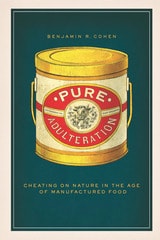
Pure Adulteration
Cheating on Nature in the Age of Manufactured FoodBenjamin R. Cohen
University of Chicago Press, 2019
In the latter nineteenth century, extraordinary changes in food and agriculture gave rise to new tensions in the ways people understood, obtained, trusted, and ate their food. This was the Era of Adulteration, and its concerns have carried forward to today: How could you tell the food you bought was the food you thought you bought? Could something manufactured still be pure? Is it okay to manipulate nature far enough to produce new foods but not so far that you question its safety and health? How do you know where the line is? And who decides?
In Pure Adulteration, Benjamin R. Cohen uses the pure food crusades to provide a captivating window onto the origins of manufactured foods and the perceived problems they wrought. Cohen follows farmers, manufacturers, grocers, hucksters, housewives, politicians, and scientific analysts as they struggled to demarcate and patrol the ever-contingent, always contested border between purity and adulteration, and as, at the end of the nineteenth century, the very notion of a pure food changed.
In the end, there is (and was) no natural, prehuman distinction between pure and adulterated to uncover and enforce; we have to decide. Today’s world is different from that of our nineteenth-century forebears in many ways, but the challenge of policing the difference between acceptable and unacceptable practices remains central to daily decisions about the foods we eat, how we produce them, and what choices we make when buying them.
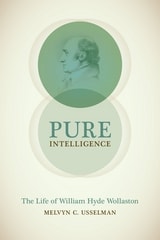
Pure Intelligence
The Life of William Hyde WollastonMelvyn C. Usselman
University of Chicago Press, 2015
Pure Intelligence is the first book-length study of Wollaston, his science, and the environment in which he thrived. Drawing on previously-unstudied laboratory records as well as historical reconstructions of chemical experiments and discoveries, and written in a highly accessible style, Pure Intelligence will help to reinstate Wollaston in the history of science, and the pantheon of its great innovators.
Putting Inequality in Context
Class, Public Opinion, and Representation in the United StatesChristopher Ellis
University of Michigan Press, 2017
Christopher Ellis argues citizens’—and legislators’—views of class politics are driven by lived experience in particular communities. While some experience is formally political, on an informal basis citizens learn a great deal about their position in the broader socioeconomic spectrum and the social norms governing how class intersects with day-to-day life. These factors are important for policymakers, since most legislators do not represent “the public” at large, but specific constituencies.
Focusing on U.S. congressional districts as the contextual unit of interest, Ellis argues individuals’ political behavior cannot be separated from their environment, and shows how income’s role in political processes is affected by the contexts in which citizens and legislators interact. Political inequality exists in the aggregate, but it does not exist everywhere. It is, rather, a function of specific arrangements that depress the political influence of the poor. Identifying and understanding these factors is a crucial step in thinking about what reforms might be especially helpful in enhancing equality of political voice.
Putting Science in Its Place
Geographies of Scientific KnowledgeDavid N. Livingstone
University of Chicago Press, 2003
Putting Science in Its Place establishes the fundamental importance of geography in both the generation and the consumption of scientific knowledge, using historical examples of the many places where science has been practiced. Livingstone first turns his attention to some of the specific sites where science has been made—the laboratory, museum, and botanical garden, to name some of the more conventional locales, but also places like the coffeehouse and cathedral, ship's deck and asylum, even the human body itself. In each case, he reveals just how the space of inquiry has conditioned the investigations carried out there. He then describes how, on a regional scale, provincial cultures have shaped scientific endeavor and how, in turn, scientific practices have been instrumental in forming local identities. Widening his inquiry, Livingstone points gently to the fundamental instability of scientific meaning, based on case studies of how scientific theories have been received in different locales. Putting Science in Its Place powerfully concludes by examining the remarkable mobility of science and the seemingly effortless way it moves around the globe.
From the reception of Darwin in the land of the Maori to the giraffe that walked from Marseilles to Paris, Livingstone shows that place does matter, even in the world of science.
Pyrocene Park
A Journey into the Fire History of Yosemite National ParkStephen J. Pyne
University of Arizona Press, 2023
In the last decade, fire has blasted into public attention. California’s blazes have captured national and global media interest with their drama and urgency. Expand the realm of fire to include the burning of fossil fuels, and the fire story also subsumes climate change. Renowned fire historian Stephen J. Pyne argues that the relationship between fire and humans has become a defining feature of our epoch, and he reveals how Yosemite offers a cameo of how we have replaced an ice age with a fire age: the Pyrocene.
Organized around a backcountry trek to a 50-year experiment in restoring fire, Pyrocene Park describes the 150-year history of fire suppression and management that has led us, in part, to where the park is today. But there is more. Yosemite’s fire story is America’s, and the Earth’s, as it shifts from an ice-informed world to a fire-informed one. Pyrocene Park distills that epic story into a sharp miniature.
Flush with people, ideas, fires, and controversy, Pyrocene Park is a compelling and accessible window into the American fire scene and the future it promises.
Pyrrhic Progress
The History of Antibiotics in Anglo-American Food ProductionClaas Kirchhelle
Rutgers University Press, 2020
2020 Choice Outstanding Academic Title
Winner of the 2020 Turriano Prize from ICOHTEC
Short-listed and highly commended for the Antibiotic Guardian Award from Public Health England
Long-listed for the Michel Déon Prize from the Royal Irish Academy
Pyrrhic Progress analyses over half a century of antibiotic use, regulation, and resistance in US and British food production. Mass-introduced after 1945, antibiotics helped revolutionize post-war agriculture. Food producers used antibiotics to prevent and treat disease, protect plants, preserve food, and promote animals’ growth. Many soon became dependent on routine antibiotic use to sustain and increase production. The resulting growth of antibiotic infrastructures came at a price. Critics blamed antibiotics for leaving dangerous residues in food, enabling bad animal welfare, and selecting for antimicrobial resistance (AMR) in bacteria, which could no longer be treated with antibiotics. Pyrrhic Progress reconstructs the complicated negotiations that accompanied this process of risk prioritization between consumers, farmers, and regulators on both sides of the Atlantic. Unsurprisingly, solutions differed: while Europeans implemented precautionary antibiotic restrictions to curb AMR, consumer concerns and cost-benefit assessments made US regulators focus on curbing drug residues in food. The result was a growing divergence of antibiotic stewardship and a rise of AMR. Kirchhelle’s comprehensive analysis of evolving non-human antibiotic use and the historical complexities of antibiotic stewardship provides important insights for current debates on the global burden of AMR. This Open Access ebook is available under a CC-BY-NC-ND license, and is supported by a generous grant from Wellcome Trust.