Results by title
8812 books match the query 'Political Science' and 592 start with p
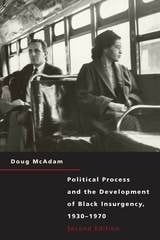
Political Process and the Development of Black Insurgency, 1930-1970
Doug McAdam
University of Chicago Press, 1999
"[A] first-rate analytical demonstration that the civil rights movement was the culmination of a long process of building institutions in the black community."—Raymond Wolters, Journal of American History
"A fresh, rich, and dynamic model to explain the rise and decline of the black insurgency movement in the United States."—James W. Lamare, Annals of the American Academy of Political and Social Science
Political Psychology in International Relations
Rose McDermott
University of Michigan Press, 2004
In the wake of September 11, the American public has been besieged with claims that politics is driven by personality. Saddam Hussein, Osama bin Laden, Kim Chong-Il, Ayatollah Khameinei-America's political rogues' gallery is populated by individuals whose need for recognition supposedly drives their actions on the world stage. How does personality actually drive politics? And how is personality, in turn, formed by political environment? Political Psychology in International Relations provides students and scholars with the analytical tools they need to answer these pressing questions, and to assess their implications for policy in a real and sometimes dangerous world.
Political Recruitment across Two Centuries
Mexico, 1884-1991By Roderic Ai Camp
University of Texas Press, 1995
During more than twenty years of field research, Roderic Ai Camp built a monumental database of biographical information on more than 3,000 leading national figures in Mexico. In this major contribution to Mexican political history, he draws on that database to present a definitive account of the paths to power Mexican political leaders pursued during the period 1884 to 1992.
Camp’s research clarifies the patterns of political recruitment in Mexico, showing the consequences of choosing one group over another. It calls into question numerous traditional assumptions, including that upward political mobility was a cause of the Mexican Revolution of 1910.
Comparing Mexican practices with those in several East Asian countries also allows Camp to question many of the tenets of political recruitment theory. His book will be of interest to students not only of Mexican politics but also of history, comparative politics, political leadership, and Third World development.

Political Repression in Modern America
FROM 1870 TO 1976Robert Justin Goldstein
University of Illinois Press, 1978
Enhanced with a new introduction and an updated bibliography, Political Repression in Modern America remains an essential record of the relentless intolerance that suppresses radical dissent in the United States.
Political Science and Changing Politics
Edited by Philip Van Praag
Amsterdam University Press, 2017

Political Science as Puzzle Solving
Bernard Grofman, Editor
University of Michigan Press, 2001
Each of the essays in this volume addresses a particular empirical puzzle involving decisions or outcomes that, at least on the surface, seem difficult (if not impossible) to explain. In the first three essays, the authors look at the behavior of an individual or an organization such as trade union or political party that, at first blush, does not seem to make sense: Why would a political leader gamble on a vote of confidence that he didn't need to call and the failure of which would seriously harm his party's future prospects? Why would a trade union conduct a strike that it knows it can't win? Why didn't the Japanese Socialist party modify its platform to attract more voters so as to give it a chance of holding power in Japan? The authors show that behavior that appears irrational is not really so once we understand the full context in which the behavior is embedded. The fourth essay asks how a major empire--the Soviet empire--could have dissolved so quickly. Here the explanation involves an interesting new theory: the power of "decisive inaction." The final essay elaborates a formal model of equilibrium behavior in the social welfare system to consider the empirical puzzle of why increasing unemployment benefits often appear not to significantly increase the attractiveness of the unemployment option. The contributors are Miriam Golden, Kaare Strom, Masaru Kohno, Richard Anderson, George Tsebelis and Roland Stephen.

Political Style
The Artistry of PowerRobert Hariman
University of Chicago Press, 1995
In critical studies of classic texts, Hariman identifies four dominant political styles. The realist style, as found in Machiavelli's The Prince, creates a world of sheer power, constant calculation, and emotional control; this style is the common sense of modern political science. The courtly style, depicted in Kapuscinski's The Emperor, is characterized by high decorousness, hierarchies, and fixation on the body of the sovereign; this style infuses mass media coverage of the American presidency. The republican style, reflected in Cicero's letters to Atticus, promotes the art of oratory, consensus, and civility; it informs our ideal of democratic conversation. The bureaucratic style, as captured in Kafka's The Castle, emphasizes institutional procedures, official character, and the priority of writing; this style structures everday life.
Hariman looks at effective political artistry in figures from antiquity to modern politicians such as Vaclav Havel, Ronald Reagan, and Bill Clinton. He discusses the crises to which each style is susceptible, as well as the social and moral consequences of each style's success.

Political Support in Canada
The Crisis YearsAllan Kornberg and Harold D. Clarke, editors
Duke University Press, 1983
The nature of popular support is first considered in broad, theoretical terms, then from the standpoint of those agents most responsible for maintaining support in Canadian democracy, then as influenced by particular issues and policies, and finally as it affects and is affected by the separatist movement in Quebec.
Political Survival of Small Parties in Europe
Jae-Jae Spoon
University of Michigan Press, 2015
It is often thought that small party survival or failure is a result of institutional constraints, the behavior of large parties, and the choices of individual politicians. Jae-Jae Spoon, in contrast, argues that the decisions made by small parties themselves determine their ability to balance the dual goals of remaining true to their ideals while maximizing their vote and seat shares, thereby enabling them to survive even in adverse electoral systems.
Spoon employs a mixed-methods approach in order to explore the policy, electoral, and communication strategies of West European Green Parties from 1980 to the present. She combines cross-national data on these parties with in-depth comparative case studies of two New Politics parties, the French and British Green Parties, that have survived in similar national-level plurality electoral systems. Both of these parties have developed as organizations which run candidates in elections at the local, national, and European levels in their respective countries. The parties’ survival, Spoon asserts, results from their ability to balance their competing electoral, policy, and communication goals.

Political Theology Reimagined
Alex Dubilet and Vincent W. Lloyd, editors
Duke University Press, 2025
Contributors. Prathama Banerjee, Agata Bielik-Robson, Kirill Chepurin, Alex Dubilet, James Edward Ford III, Lucia Hulsether, Basit Kareem Iqbal, Ada S. Jaarsma, Siobhan Kelly, David Kline, Adam Kotsko, Dana Lloyd, Vincent W. Lloyd, Beatrice Marovich, Aseel Najib, Milad Odabaei, Inese Radzins, George Shulman, Martin Shuster, Rafael Vizcaíno
Political Theology
Four Chapters on the Concept of SovereigntyCarl Schmitt
University of Chicago Press, 2005
Focusing on the relationships among political leadership, the norms of the legal order, and the state of political emergency, Schmitt argues in Political Theology that legal order ultimately rests upon the decisions of the sovereign. According to Schmitt, only the sovereign can meet the needs of an "exceptional" time and transcend legal order so that order can then be reestablished. Convinced that the state is governed by the ever-present possibility of conflict, Schmitt theorizes that the state exists only to maintain its integrity in order to ensure order and stability. Suggesting that all concepts of modern political thought are secularized theological concepts, Schmitt concludes Political Theology with a critique of liberalism and its attempt to depoliticize political thought by avoiding fundamental political decisions.
Political Theory and Public Policy
Robert E. Goodin
University of Chicago Press, 1983
Goodin—a political scientist who is also an associate editor of Ethics—shows that empirical and ethical theory can and should guide policy. To be useful, however, these philosophical discussions of public affairs must draw upon actual policy experiences rather than contrived cases. Further, they must reflect the broader social consequences of policies rather than just the dilemmas of personal conscience.
Effectively integrating the literatures of social science, policy science, and philosophy, Goodin provides a theoretically sophisticated yet empirically well-grounded analysis of public policies, the principles underlying them, the institutions shaping them, and the excuses offered for their failures. This analysis is enhanced by the author's discussion of such specific cases as the disposal of nuclear wastes and the priority accorded national defense—cases that illustrate Goodin's theoretical and methodological framework for approaching policy issues.
Political Thought and Political Thinkers
Judith N. Shklar
University of Chicago Press, 1998
This second volume of Shklar's work—which follows the 1997 publication of Redeeming American Political Thought—brings together heretofore uncollected (and several unpublished) essays on a number of themes, including the place of the intellect in the modern political world and the dangers of identity politics. While many of these essays have been previously published, they remain far from accessible. In collecting the work scattered over the past forty years in journals and other publications, noted political theorist Stanley Hoffmann provides an essential guide to Shklar's thought, complemented by George Kateb's comprehensive introduction to her work. Hoffmann's selection, which includes Shklar's classic essay "The Liberalism of Fear," showcases her distinctive defense of liberalism and follows her explorations in this history of moral and political thought as she engages with Bergson, Arendt, and Rousseau.
Political Thought and Political Thinkers displays one of the century's most compelling and flexible intellects in action and is the definitive collection of her work on European history and thinkers.
"Shklar's legacy is an inspiring example of liberal thought at its arresting best, unflinchingly courageous and unmoved by the dreary and unmeaning harmonies conjured up by theories of justice and rights."—John Gray, Times Literary Supplement
Judith N. Shklar (1928-1992) was Cowles Professor of Government at Harvard University and the author of nine books in political theory.
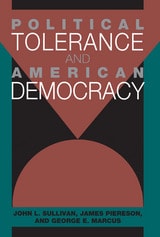
Political Tolerance and American Democracy
John L. Sullivan, James Piereson, and George E. Marcus
University of Chicago Press, 1982
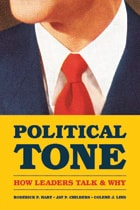
Political Tone
How Leaders Talk and WhyRoderick P. Hart, Jay P. Childers, and Colene J. Lind
University of Chicago Press, 2013
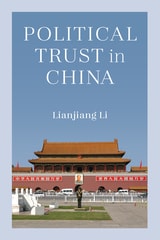
Political Trust in China
Lianjiang Li
University of Michigan Press, 2025
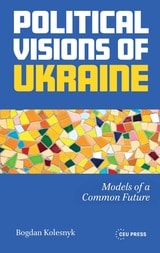
Political Visions of Ukraine
Models of a Common FutureBogdan Kolesnyk
Central European University Press, 2026
Drawing on intellectual discourses from 2013 onwards, this book maps those collisions, reconstructing Ukraine’s “noumenal parliament” — the constellation of voices that have vied to define the nation’s future. Bogdan Kolesnyk explains why Ukraine’s is not a single story but a composite of many, why neither liberal consolidation nor national stories alone provide a sufficient answer, and suggests how justice, reason and republican institutions might be the anchors for plural polity to endure.
In attempting to understand Ukrainian socio-political reality on its own terms from beyond its borders, this book urgently enquires what kind of future is worth fighting for?
Political Waters
The Long, Dirty, Contentious, Incredibly Expensive but Eventually Triumphant History of Boston Harbor-A Unique Environmental Success StoryEric Jay Dolin
University of Massachusetts Press, 2004
Boston Harbor served as a colonial gateway to the world, witnessed the Boston Tea Party, and helped the community transform itself from an outpost of a few hardy settlers into a bustling metropolis and self-proclaimed hub of the universe. Yet for hundreds of years Boston Harbor was also a cesspool. Long before Bostonians dumped tea into the harbor to protest English taxes, they dumped sewage there.
As the Boston area grew and prospered, its sewage problems worsened, as did the harbor's health, to the point where in the 1980s it was considered the most polluted harbor in the country and ridiculed as the “harbor of shame.” Then, in one of the most impressive environmental comebacks in American history, Boston Harbor was dramatically cleaned up. All it took was two lawsuits, two courts, dozens of lawyers, the creation of a powerful sewage authority, thousands of workers, millions of labor hours, and billions of dollars.
Sewage management is rarely as compelling and exciting as higher profile environmental issues such as global climate change, preserving endangered species, or protecting tropical rainforests. But it can be, as Eric Jay Dolin shows in this engaging narrative account. Boston's struggle to deal with its sewage is an epic story of failure and success, replete with colorful characters, political, bureaucratic, and legal twists and turns, engineering feats, and massive amounts of money. In the end, success hinged on the often overlooked yet monumentally important act of responsibly disposing of the waste people produce every day.

Political and Social Writings
Volume 1, 1946-1955Cornelius CastoriadisDavid Ames Curtis, EditorTranslated by David Ames Curtis
University of Minnesota Press, 1988
Political and Social Writings: Volume 1, 1946–1955 was first published in 1988. Minnesota Archive Editions uses digital technology to make long-unavailable books once again accessible, and are published unaltered from the original University of Minnesota Press editions.
A series of writings by the man who inspired the students of the Workers' Rebellion in May of 1968.
"Given the rapid pace of change in the Soviet Union and Eastern Europe, and the radical nature of these transformations, the work of Cornelius Castoriadis, a consistent and radical critic of Soviet Marxism, gains renewed significance. . . . these volumes are instructive because they enable us to trace his rigorous engagement with the project of socialist construction from his break with Trotskyism to his final breach with Marxism . . . and would be read with profit by all those seeking to comprehend the historical originality of events in the USSR and Eastern Europe." –Contemporary Sociology
Political and Social Writings
Volume 2, 1955-1960Cornelius CastoriadisDavid Ames Curtis, EditorTranslated by David Ames Curtis
University of Minnesota Press, 1988
Political and Social Writings:Volume 2, 1955–1960 was first published in 1988. Minnesota Archive Editions uses digital technology to make long-unavailable books once again accessible, and are published unaltered from the original University of Minnesota Press editions.
A series of writings by the man who inspired the students of the Workers' Rebellion in May of 1968.
"Given the rapid pace of change in the Soviet Union and Eastern Europe, and the radical nature of these transformations, the work of Cornelius Castoriadis, a consistent and radical critic of Soviet Marxism, gains renewed significance....these volumes are instructive because they enable us to trace his rigorous engagement with the project of socialist construction from his break with Trotskyism to his final breach with Marxism. . . and would be read with profit by all those seeking to comprehend the historical originality of events in the USSR and Eastern Europe." –Contemporary Sociology
Political and Social Writings
Volume 3, 1961-1979Cornelius CastoriadisDavid Ames Curtis, EditorTranslated by David Ames Curtis
University of Minnesota Press, 1992
Political and Social Writings: Volume 3, 1961–1979 was first published in 1992. Minnesota Archive Editions uses digital technology to make long-unavailable books once again accessible, and are published unaltered from the original University of Minnesota Press editions.
This work offers an extraordinary wealth and variety of writings from the crucial years that followed the publication of Castoriadis's landmark text, Modern Capitalism and Revolution. The "new orientation" he proposed for the Socialisme ou Barbarie group centered on the emerging roles of women, youth, and minorities in the growing challenge to established society in the early sixties. Resistance within the group to this new orientation led Castoriadis to criticize the "neopaleo- Marxism" of Jean-François Lyotard and others who ultimately left Socialisme ou Barbarie. A heightened concern for ethnological issues culminated in what might be called, to the embarrassment of today's "poststructuralists," Castoriadis's "premature antistructuralism."
Additional texts examine the dissolution of the group itself and analyze the May 1968 rebellion of workers and students - who, according to their own testimony, were inspired by ideas developed in the group's journal. Also included were many of Castoriadis's still-relevant political writings from the seventies, which were developed in tandem with the more explicitly philosophical work now found in The Imaginary Institution of Society and Crossroads in the Labyrinth.
Political and Social Writings: Volume 3 provides key elements for a radical renewal of emancipatory thought and action while offering an irreplaceable and hitherto missing perspective on postwar French thought.
Political and Sociological Theory and Its Applications
George E.G. Catlin
University of Michigan Press, 1964
Politicians Don't Pander
Political Manipulation and the Loss of Democratic ResponsivenessLawrence R. Jacobs and Robert Y. Shapiro
University of Chicago Press, 2000
In this provocative and engagingly written book, the authors argue that the reality is quite the opposite. In fact, when not facing election, contemporary presidents and members of Congress routinely ignore the public's policy preferences and follow their own political philosophies, as well as those of their party's activists, their contributors, and their interest group allies. Politicians devote substantial time, effort, and money to tracking public opinion, not for the purposes of policymaking, but to change public opinion—to determine how to craft their public statements and actions to win support for the policies they and their supporters want.
Taking two recent, dramatic episodes—President Clinton's failed health care reform campaign, and Newt Gingrich's "Contract with America"—as examples, the authors show how both used public opinion research and the media to change the public's mind. Such orchestrated displays help explain the media's preoccupation with political conflict and strategy and, the authors argue, have propelled levels of public distrust and fear of government to record highs.
Revisiting the fundamental premises of representative democracy, this accessible book asks us to reexamine whether our government really responds to the broad public or to the narrower interests and values of certain groups. And with the 2000 campaign season heating up, Politicians Don't Pander could not be more timely.
"'Polling has turned leaders into followers,' laments columnist Marueen Dowd of The New York Times. Well, that's news definitely not fit to print say two academics who have examined the polls and the legislative records of recent presidents to see just how responsive chief executives are to the polls. Their conclusion: not much. . . . In fact, their review and analyses found that public opinion polls on policy appear to have increasingly less, not more, influence on government policies."—Richard Morin, The Washington Post

Politicized Property
Network Ties and Renationalization in SerbiaMiloš Resimic
University of Michigan Press, 2027
Politicized Property analyzes the under-researched phenomenon of renationalization—the return of previously privatized firms to state ownership. Highlighting the evolving relationship between political parties and firms, the book demonstrates that renationalization of newly privatized firms is influenced by varying patterns of their embeddedness in political and ownership networks operating within the context of political and institutional uncertainty. These ownership reversals underpin the construction of new political and social orders and have far-reaching consequences for democratic governance. By placing renationalization at the center of postcommunist transformation, Miloš Resimić also links it to contemporary processes of democratic backsliding.
Using Serbia as a case study, Resimić tests the argument with an original administrative dataset tracking political affiliations and ownership structures of 125 strategic Serbian firms privatized through tender sale, complemented by in-depth case studies and interviews with oligarchs, politicians, and bureaucrats. Tracing over a decade of political and ownership ties among strategic Serbian firms, the book uncovers the micro-level foundations of renationalization. To demonstrate that these dynamics are observable across the postcommunist world and beyond, comparative chapters extend the analysis to Hungary under Viktor Orbán, Poland, Montenegro, and Argentina, showing that reversals of privatization are integral to the political economy of postcommunist capitalism.
Politicized Society (2nd ed.)
The Long Shadow of Taiwan's One-party LegacyMikael Mattlin
National University of Singapore Press, 2011
Politicizing Digital Space
Theory, the Internet, and Renewing DemocracyTrevor Garrison Smith
University of Westminster Press, 2017
The objective of this book is to outline how a radically democratic politics can be reinvigorated in theory and practice through the use of the internet. The author argues that politics in its proper sense can be distinguished from anti-politics by analyzing the configuration of public space, subjectivity, participation, and conflict. Each of these terrains can be configured in a more or less political manner, though the contemporary status quo heavily skews them towards anti-political configuration.
Using this understanding of what exactly politics entails, this book considers how the internet can both help and hinder efforts to move each area in a more political direction. By explicitly interpreting contemporary theories of the political in terms of the internet, this analysis avoids the twin traps of both technological determinism and technological cynicism.
Raising awareness of what the word ‘politics’ means, the author develops theoretical work by Arendt, Rancière, Žižek and Mouffe to present a clear and coherent view of how in theory, politics can be digitized and alternatively how the internet can be deployed in the service of trulydemocratic politics.
Politicizing Islam in Austria
The Far-Right Impact in the Twenty-First CenturyFarid Hafez
Rutgers University Press, 2024
Politicizing Islam in Austria examines this anti-Muslim swerve in Austrian politics through a comprehensive analysis of government policies and regulations, as well as party and public discourses. In their innovative study, Hafez and Heinisch show how the far-right Austrian Freedom Party (FPÖ) adapted anti-Muslim discourse to their political purposes and how that discourse was then appropriated by the conservative center-right Austrian People’s Party (ÖVP). This reconfiguration of the political landscape prepared the way for a right-wing coalition government between conservatives and far-right actors that would subsequently institutionalize anti-Muslim political demands and change the shape of the civic conditions and public perceptions of Islam and the Muslim community in the republic.
Politicking Online
The Transformation of Election Campaign CommunicationsPanagopoulos, Costas
Rutgers University Press, 2009
While the Internet may have transformed the landscape of modern political campaigns throughout the world, Costas Panagopoulos reminds readers that officials and campaign workers need to adapt to changing circumstances, know the limits of their methods, and combine new technologies with more traditional techniques to achieve an overall balance.
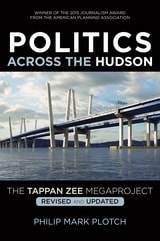
Politics Across the Hudson
The Tappan Zee MegaprojectPhilip Mark Plotch
Rutgers University Press, 2015
The State of New York built one of the world’s longest, widest, and most expensive bridges—the new Tappan Zee Bridge—stretching more than three miles across the Hudson River, approximately thirteen miles north of New York City. In Politics Across the Hudson, urban planner Philip Plotch offers a behind-the-scenes look at three decades of contentious planning and politics centered around this bridge, recently renamed for Governor Mario M. Cuomo, the state's governor from 1983 to 1994. He reveals valuable lessons for those trying to tackle complex public policies while also confirming our worst fears about government dysfunction.
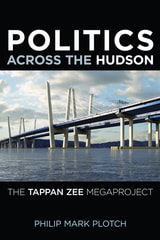
Politics Across the Hudson
The Tappan Zee MegaprojectPhilip Mark Plotch
Rutgers University Press, 2015
Politics Of The Global
Himadeep Muppidi
University of Minnesota Press, 2004
Examines globalism as a social production, opening up new paths of resistance
Though presented often as an objective process, globalization is frequently analyzed from subjective perspectives that are closed to their own historical and geographical specificity. Refusing the false choice between objectivity and subjectivity, Himadeep Muppidi considers the production of the global as an intersubjective process involving the interplay of meanings, identities, and practices from historically different locations.
Muppidi illustrates how the politics of globalization are played out in two multicultural democracies, India and the United States—particularly rich examples given the increasing interactions between them in the areas of global economy and security. Software experts and skilled professionals flow from India to the United States; the United States outsources service sector jobs to India. Although they differ in their approaches to worldwide regulation of weapons of mass destruction, India and the United States cooperate in opposing terrorism. Treating globalization as an intersubjective process reveals the different political possibilities (e.g., colonial coercion, postcolonial ambivalence, and postcolonial co-option) that are opened by global relays of meanings, identities, and power. Muppidi concludes by exploring a variety of spaces and strategies for resisting the colonization of the global.
Politics Over Process
Partisan Conflict and Post-Passage Processes in the U.S. CongressHong Min Park, Steven S. Smith, and Ryan J. Vander Wielen
University of Michigan Press, 2018
Politics Reformed
The Anglo-American Legacy of Covenant TheologyGlenn A. Moots
University of Missouri Press, 2022
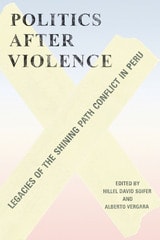
Politics after Violence
Legacies of the Shining Path Conflict in PeruEdited by Hillel David Soifer and Alberto Vergara
University of Texas Press, 2019
Between 1980 and 1994, Peru endured a bloody internal armed conflict, with some 69,000 people killed in clashes involving two insurgent movements, state forces, and local armed groups. In 2003, a government-sponsored “Truth and Reconciliation Committee” reported that the conflict lasted longer, affected broader swaths of the national territory, and inflicted higher costs in both human and economic terms than any other conflict in Peru’s history. Of those killed, 75 percent were speakers of an indigenous language, and almost 40 percent were among the poorest and most rural members of Peruvian society. These unequal impacts of the violence on the Peruvian people revealed deep and historical disparities within the country.
This collection of original essays by leading international experts on Peruvian politics, society, and institutions explores the political and institutional consequences of Peru’s internal armed conflict in the long 1980s. The essays are grouped into sections that cover the conflict itself in historical, comparative, and theoretical perspectives; its consequences for Peru’s political institutions; its effects on political parties across the ideological spectrum; and its impact on public opinion and civil society. This research provides the first systematic and nuanced investigation of the extent to which recent and contemporary Peruvian politics, civil society, and institutions have been shaped by the country’s 1980s violence.
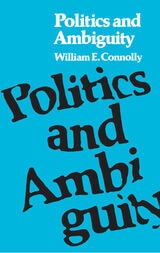
Politics and Ambiguity
William E. Connolly
University of Wisconsin Press, 1987
In a series of stimulating essays, William E. Connolly explores the element of ambiguity in politics. He argues that democratic politics in a modern society requires, if it is to flourish, an appreciation of the ambiguous character of the standards and principles we cherish the most. Connolly’s work, lucidly, presented and intellectually challenging, will be of interest to students and scholars of political science, philosophy, rhetoric, and law, and to all whose interests include the connections between contemporary epistemological arguments and politics and, more broadly, between thought and language.
Connolly criticizes the ways in which contemporary politics extends normalization into various areas of modern existence. He argues, against this trend, for an approach that would provide relief from the rigid identity formations that result from normalization.
In supporting his thesis, Connolly shows how the imperative for growth must be relaxed if normalizing pressures are to be obviated. His, however, is not the familiar antigrowth argument; rather, he ties his thesis to his general antinormalization argument, asking how one could create an ethic that would sustain itself when the growth imperatives are relaxed. Connolly’s chapters on the work of other thinkers (including Michel Foucault, Jürgen Habermas, Richard Rorty, and Charles Taylor) are linked with his main theme, as he shows how various tendencies in the philosophy of the social sciences and in political theory aid and abed the normalizing tendency.
His analyses of Rorty and Taylor are especially important. Connolly shows the significance of antifoundationalism (Rorty’s contribution to the debate on epistemology), while providing a compelling critique both of Rorty’s stance and Taylor's alternative to it.
Especially important to Connolly’s thesis is the ontology on which it rests. He shows how the endorsement of an ontology of discordance within concord—a view that all systems of meaning impose order on that which was not designed to fit neatly within them—can support a more democratizing process. His final chapter, “Where the Word Breaks Off,” vindicates the ontology of discordance, which has governed the argument throughout the text.
Throughout these essays, Connolly builds a consistent argument for the politicalization of normalization, disclosing forms of normalization where others have seen unproblematic modes of communication and problem solving. Original in concept and bold in presentation, Connolly’s work will form the basis for considerable debate in the several disciplines it serves.
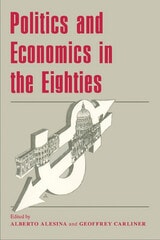
Politics and Economics in the Eighties
Edited by Alberto Alesina and Geoffrey Carliner
University of Chicago Press, 1991
Certain to provoke controversy, this interdisciplinary volume brings together policy experts to provide a coherent analysis of the most important economic policy changes of the 1980s. Through a detailed examination of voting patterns, monetary and fiscal policies, welfare spending, tax reform, minimum wage legislation, the savings and loan collapse, and international trade policy, the authors explore how politics can influence the direction of economic policymaking.
Politics and Foreign Direct Investment
Nathan M. Jensen, Glen Biglaiser, Quan Li, Edmund Malesky, Pablo M. Pinto, Santiago M. Pinto, and Joseph L. Staats
University of Michigan Press, 2012
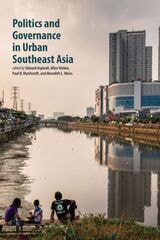
Politics and Governance in Urban Southeast Asia
Edited by Edward Aspinall, Allen Hicken, Paul D. Hutchcroft, and Meredith Weiss
National University of Singapore Press, 2026
As Southeast Asia’s cities continue to swell, this timely volume analyzes urban politics in the region.
Why have some Southeast Asian cities become laboratories of reform while others remain mired in old patterns of patronage politics and substandard public services? This has become an important question now that over half of Southeast Asia’s population lives in urban areas, transforming the politics of the region. Quintessentially urban problems—traffic congestion, sanitation, public transport, housing, and the like—increasingly preoccupy policymakers, while the region’s swelling urban middle classes expect their mayors and city governments to provide ever-better infrastructure and amenities.
Drawing on close case studies of a diverse set of seventeen urban areas across four Southeast Asian countries—Indonesia, Malaysia, the Philippines, and Thailand—this volume offers fresh insights into how the region’s urban politics are changing. It provides a new framework for understanding why some cities are flourishing and others are not. Exploring the factors that shape distinct local governance regimes in these cities, Politics and Governance in Urban Southeast Asia also throws light on how urban residents use community associations, informal networks, and other political mechanisms to access the public services they want and need.
Politics and Partnerships
The Role of Voluntary Associations in America's Political Past and PresentEdited by Elisabeth S. Clemens and Doug Guthrie
University of Chicago Press, 2011
But despite the ubiquity of the idea of volunteerism in public policy debates, analysis of its role in American governance has been fragmented. Bringing together a diverse set of disciplinary approaches, Politics and Partnerships is a thorough examination of the place of voluntary associations in political history and an astute investigation into contemporary experiments in reshaping that role. The essays here reveal the key role nonprofits have played in the evolution of both the workplace and welfare and illuminate the way that government’s retreat from welfare has radically altered the relationship between nonprofits and corporations.
Politics and Policies in Post-Communist Transition
Primary and Secondary Privatisation in Central Europe and the Former Soviet UnionKároly Attila Soós
Central European University Press, 2011
Politics and Welfare in Birmingham, 1900–1975
Edward Shannon LaMonte
University of Alabama Press, 1995
This well-written volume explores the relationships between politics and welfare programs for low-income residents in Birmingham during four periods in the twentieth century:
From the time of its founding in 1871, Birmingham has had a biracial population, so the theme of race relations runs naturally throughout the narrative. LaMonte pays particular attention to those efforts to achieve a more harmonious biracial community, including the failed effort to establish an Urban League in the 1940s, the progressive activities of the Community Chest’s Interracial Division in the 1950s, which were abruptly terminated, and the dramatic events of the Civil Rights Movement in the 1960s, when local events were elevated to international significance.
Politics and the Architecture of Choice
Bounded Rationality and GovernanceBryan D. Jones
University of Chicago Press, 2001
Jones shows how we compensate for and replicate these limitations in groups by linking the behavioral foundations of human nature to the operation of large-scale organizations in modern society. Situating his argument within the current debate over the rational choice model of human behavior, Jones argues that we should begin with rationality as a standard and then study the uniquely human ways in which we deviate from it.
Politics and the Class Divide
Working People and the Middle Class LeftDavid Croteau
Temple University Press, 1994

Politics and the Constitution in the History of the United States
William W. Crosskey
University of Chicago Press, 1980
This third volume of Politics and the Constitution, which Crosskey began and William Jeffrey has finished, treats political activity in the period 1776-87, and is in many ways the heart of the work as Crosskey conceived it. In support of the lexicographic analysis of volumes 1 and 2, volume 3 shows that nationalist ideas and sentiments were a powerful force in American public opinion from the Revolution to the eve of the Constitutional Convention. The creation of a generally empowered national government in Philadelphia, it is argued, was the fruition of a long-active political movement, not the unintended or accidental result of a temporary conservative coalition.
This view of the political background of the Constitutional Convention directly challenges the Madisonian-Jeffersonian orthodoxy on the subject. In support of his interpretation, Crosskey amassed a wealth of primary source materials, including heretofore unexplored pamphlets and newspapers. This exhaustive research makes this unique work invaluable for scholars of the period, both for the primary sources collected as well as for the provocative interpretation offered.
Politics and the Constitution in the History of the United States, Volumes 1 and 2
William W. Crosskey
University of Chicago Press, 1953
Politics and the Human Body
Assault on DignityJean Bethke Elshtain
Vanderbilt University Press, 1995
In this challenging new book, Jean Bethke Elshtain, a nationally recognized scholar in political science and philosophy, and J. Timothy Cloyd, a strong new voice in social and political science, have assembled a collection of thought-provoking essays on these issues written by some of the finest minds of our day.

Politics and the Order of Love
An Augustinian Ethic of Democratic CitizenshipEric Gregory
University of Chicago Press, 2008
Gregory examines a broad range of Augustine’s texts and their reception in different disciplines and identifies two classical themes which have analogues in secular political theory: love—and related notions of care, solidarity, and sympathy—and sin—as well as related notions of cruelty, evil, and narrow self-interest. From an Augustinian point of view, Gregory argues, love and sin constrain each other in ways that yield a distinctive vision of the limits and possibilities of politics.
In providing a constructive argument for Christian participation in liberal democratic societies, Gregory advances efforts to revive a political theology in which love’s relation to justice is prominent. Politics and the Order of Love will provoke new conversations for those interested in Christian ethics, moral psychology, and the role of religion in a liberal society.
Politics as Development
The Emergence of Political Parties in Nineteenth-Century SerbiaGale Stokes
Duke University Press, 1990
Politics as a Moral Problem
János Kis
Central European University Press, 2008
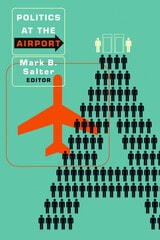
Politics at the Airport
Mark B. Salter
University of Minnesota Press, 2008
Establishes the airport as a crucial site in the rise of the surveillance state
Few sites are more symbolic of both the opportunities and vulnerabilities of contemporary globalization than the international airport.
Politics at the Airport brings together leading scholars to examine how airports both shape and are shaped by current political, social, and economic conditions. Focusing on the ways that airports have become securitized, the essays address a wide range of practices and technologies—from architecture, biometric identification, and CCTV systems to “no-fly lists” and the privatization of border control—now being deployed to frame the social sorting of safe and potentially dangerous travelers. This provocative volume broadens our understanding of the connections among power, space, bureaucracy, and migration while establishing the airport as critical to the study of politics and global life.Contributors: Peter Adey, Colin J. Bennett, Gillian Fuller, Francisco R. Klauser, Gallya Lahav, David Lyon, Benjamin J. Muller, Valérie November, Jean Ruegg.