Results by title
28167 books match the query 'History' and 1297 start with p
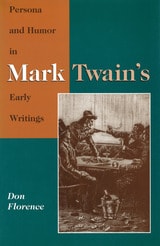
Persona and Humor in Mark Twain's Early Writings
Don Florence
University of Missouri Press, 1995
In Persona and Humor in Mark Twain's Early Writings, Don Florence explains that Samuel Clemens did more than use the borrowed name of Mark Twain to sign his writings. He also developed a separate identity, or persona, becoming "a literary personality in his own right."
Challenging mainstream Twain criticism on many fronts, Florence focuses exclusively on Twain's early writings. He demonstrates how Twain evolved in his early narratives into the "Mark Twain" we now recognize. Florence maintains that this process was evolutionary: Although Twain might have been dependent on Clemens for the initial experiences, they become Twain's experiences, necessary for his development as a persona. Traditionally, critics of Twain have been preoccupied with dualities, but Florence sees this emphasis upon polarities as an oversimplification. He argues that much of Twain's humor strives to shape more and more of the world, giving Twain multiple narrative voices and letting him be inclusive, not exclusive.
Finally, this study asserts that there is more continuity to Mark Twain's career than has been generally recognized. Many Twain scholars have argued that Twain's later writings are radically different from his earlier writings because of their emphasis upon illusion and dream. Florence argues that the preoccupation with illusion and fantasy is scarcely new. Whether Twain's mood is exuberant or dark, he emphasizes subjectivity over objectivity, the dominance of fantasy, the creative powers of humor, and his ability as persona to determine what we consider "reality." Florence contends that Twain's early writings show Mark Twain gradually evolving into a masterfully comic persona.
Jargon-free and eloquently written, Persona and Humor in Mark Twain's Early Writings provides a fascinating look at Mark Twain's developing genius and will be a welcome addition to Twain literature.
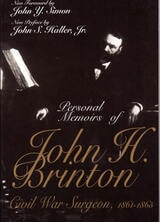
Personal Memoirs of John H. Brinton
Civil War Surgeon, 1861-1865John H. Brinton. Preface by John S. Haller, Jr. Foreword by John Y. Simon
Southern Illinois University Press, 1996
John Hill Brinton (1832–1907) met, observed, and commented on practically the entire hierarchy of the Union army; serving as medical director for Ulysses S. Grant, he came into contact with Philip H. Sheridan, John C. Frémont, Henry W. Halleck, William A. Hammond, D. C. Buell, John A. Rawlins, James Birdseye McPherson, C. F. Smith, John A. McClernand, William S. Rosecrans, and his first cousin George Brinton McClellan. John Y. Simon points out in his foreword that Brinton was one of the first to write about a relatively obscure Grant early in the war:
"Brinton found a quiet and unassuming man smoking a pipe—he could not yet afford cigars— and soon recognized a commander with mysterious strength of intellect and character."
Positioned perfectly to observe the luminaries of the military, Brinton also occupied a unique perspective from which to comment on the wretched state of health and medicine in the Union army and on the questionable quality of medical training he found among surgeons. With both A.B. and A.M. degrees from the University of Pennsylvania and postgraduate training in Paris and Vienna at a time when most medical schools required only a grammar school education, Brinton was exceptional among Civil War doctors. He found, as John S. Haller, Jr., notes in his preface, "the quality of candidates for surgeon’s appointments was meager at best." As president of the Medical Examining Board, Brinton had to lower his standards at the insistence of Secretary of War Edwin Stanton. Haller points out that one "self-educated candidate for an appointment as brigade surgeon explained to the board that he could do ‘almost anything, from scalping an Indian, up and down.’" Brinton assigned this singular candidate to duty in Kansas "where Brinton hoped he would do the least amount of damage." Throughout the war, the dearth of qualified surgeons created problems.
Brinton’s memoirs reveal a remarkable Civil War surgeon, a witness to conditions in Cairo, the Battle of Belmont, and the Siege of Fort Donelson who encountered almost every Union military leader of note.
Brinton wrote his memoirs for the edification of his family, not for public consumption. Yet he was, as Haller notes, a "keen observer of character." And with the exception of Brinton’s acceptance of late nineteenth-century gossip favorable to his cousin General McClellan, Simon finds the memoirs "remarkable for accuracy and frankness." His portrait of Grant is vivid, and his comments on the state of medicine during the war help explain, in Haller’s terms, why the "Civil War was such a medical and human tragedy."

Personal Names in Asia
History, Culture and IdentityEdited by Yangwen Zheng and Chales J-H MacDonald
National University of Singapore Press, 2009
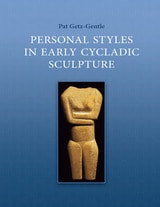
Personal Styles in Early Cycladic Sculpture
Pat Getz-Gentle; With a Chapter by Jack de Vries
University of Wisconsin Press, 2001

Personal Writings Of Eliza Roxcy Snow
Maureen Beecher
Utah State University Press, 2000
Personalist Papers
John F. Crosby
Catholic University of America Press, 2004
Persons of the Market
Conservatism, Corporate Personhood, and Economic TheologyKevin Musgrave
Michigan State University Press, 2022
light on their seemingly odd marriage in contemporary American politics. Author Kevin Musgrave highlights the ways that theories of corporate and human personhood have long been and remain bound together by examining four case studies: the U.S. Supreme Court’s 1886 Santa Clara decision, the role of early twentieth-century advertisers in endowing corporations with souls, Justice Lewis Powell Jr.’s eponymous memo of 1971, and the arc of the conservative movement from Ronald Reagan to Donald Trump. Tracing this rhetorical history of the extension and attribution of personhood to the corporate form illustrates how the corporation has for many increasingly become a normative model or ideal to which human persons should aspire. In closing, the book offers preliminary ideas about how we might fashion a more democratic and humane understanding of what it means to be a person.

Perspectives of Black Popular Culture
Harry B. Shaw
University of Wisconsin Press, 1990

Perspectives of Saskatchewan
Jene M. Porter
University of Manitoba Press, 2008
Perspectives on Milwaukee's Past
Edited by Margo Anderson and Victor Greene
University of Illinois Press, 2008
In this volume, a diverse group of scholars explores key themes in the distinctive history of Milwaukee, from settlement to the present, both in terms of the area's internal development and its comparative standing with other Great Lakes cities. Contributors discuss the importance of socialism and labor in local politics; Milwaukee's ethnic diversity, including long-standing African American, Latino, and Asian communities as well as an unusually large and significant German American population; the function and origins of the city's residential architecture; and the role of religious and ethnic culture in forming the city's identity. Rich in detail, the essays also challenge readers and researchers to pursue additional research on the city and the region by identifying critical areas and methods for future investigations into Milwaukee's past.
Contributors are Margo Anderson, Steven M. Avella, John D. Buenker, Jack Dougherty, Eric Fure-Slocum, Victor Greene, Thomas C. Hubka, Judith T. Kenny, Genevieve G. McBride, Aims McGuinness, Anke Ortlepp, Joseph A. Rodriguez, and N. Mark Shelley.

Perspectives on War and Peace in Central America
Mis Lam#19Sung Ho Kim
Ohio University Press, 1992
Perspectives on Women's Archives
All rights reserved. No part of this publication may be reproduced, stored in a retrieval system, or transmitted in any form or by any means without prior permission from the publisher.
Society of American Archivists, 2013

Perspectives on the Human Genome Project and Genomics
Christopher R. Donohue
University of Minnesota Press, 2026
Interdisciplinary voices reflect on some of the most complex and consequential scientific undertakings of our time
Perspectives on the Human Genome Project and Genomics is a groundbreaking volume that examines the pivotal roles of the National Institutes of Health (NIH) and the National Human Genome Research Institute (NHGRI) in the Human Genome Project (HGP) and the development of other major genomics projects. Drawing on newly uncovered archival materials and oral histories from NHGRI, this volume offers a multifaceted narrative of transformative scientific achievements of the twentieth and twenty-first centuries.
Coeditors Christopher R. Donohue and Alan C. Love bring together a range of perspectives on the HGP’s progress and legacy, as well as other major genomics projects, to explore not only their scientific achievements but also their social and political dimensions. Presenting reflections from historians, philosophers, and sociologists alongside those of key NHGRI scientists like Eric Green, Mark Guyer, and Elise Feingold; experts like Nature editor-in-chief Magdalena Skipper and geneticist Eric Vilain; and scholars of the ethical, legal, and social implications of genomics like Jean McEwan and Joy Boyer, Perspectives on the Human Genome Project and Genomics highlights the international, interdisciplinary collaborations and collective long view that underpinned these genomics initiatives aimed at a better understanding of our basic biology and genetic diseases.
From genomic variation and sequencing technologies to the integration of big data and the influence of ancestry and gender, this book is an essential resource for deepening the discussion of the scientific, historical, and ethical impacts of genomics and a fascinating collection of insights into coordinated science in the making.
Contributors: Rina Bliss, Joy Boyer, Lisa D. Brooks, Michel Dubois, Elise A. Feingold, Adam Felsenfeld, Miguel García-Sancho, Eric D. Green, Catherine Guaspare, Chris Gunter, Stephan Guttinger, Mark Guyer, Elke Jordan, Jonathan E. LoTempio Jr., Jean McEwen, Jane Peterson, Anya Plutynski, Ramya M. Rajagopalan, Emanuele Ratti, Sahotra Sarkar, Jeffery A. Schloss, Magdalena Skipper, Alexandra Soulier, Thomas Stoeger, Eric Vilain, Kris A. Wetterstrand.
Retail e-book files for this title are screen-reader friendly with images accompanied by short alt text and/or extended descriptions.
Perspectives
Modes of Viewing and Knowing in Nineteenth-Century EnglandLinda M. Shires
The Ohio State University Press, 2009
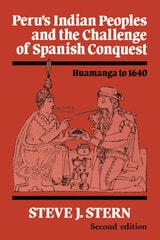
Peru's Indian Peoples and the Challenge of Spanish Conquest
Huamanga to 1640Steve J. Stern
University of Wisconsin Press, 1993
This second edition of Peru’s Indian Peoples and the Challenge of Spanish Conquest includes Stern’s 1992 reflections on the ten years of historical interpretation that have passed since the book’s original publication—setting his analysis of Huamanga in a larger perspective.
“This book is a monument to both scholarship and comprehension, comparable in its treatment of the indigenous peoples after the conquest only to that of Charles Gibson for the Aztecs, and perhaps the best volume read by this reviewer in several years.”—Frederick P. Bowser, American Historical Review
“Peru’s Indian Peoples and the Challenge of Spanish Conquest is clearly indispensable reading for Andeanists and highly recommended to ethnohistorians generally. In technical respects it is a job done right, and conceptually it stands out as a handsome example of anthropology and history woven into one tight fabric of inquiry.”—Frank Salomon, Ethnohistory

Peruvian Lives across Borders
Power, Exclusion, and HomeM. Cristina Alcalde
University of Illinois Press, 2018
Alcalde draws on interviews, surveys, participant observation, and textual analysis to argue that to belong is to exclude. To that end, transnational Peruvians engage in both subtle and direct policing along the borders of belonging. These acts allow them to claim and maintain the social status they enjoyed in their homeland even as they profess their openness and tolerance. Alcalde details these processes and their origins in Peru's gender, racial, and class hierarchies. As she shows, the idea of return—whether desired or rejected, imagined or physical—spurs constructions of Peruvianness, belonging, and home.
Deeply researched and theoretically daring, Peruvian Lives across Borders answers fascinating questions about an understudied group of migrants.

Peruvians in Paterson
Building Businesses and CommunityGianncarlo Muschi
Rutgers University Press, 2027
Peruvians were among the first Latinos to arrive in Paterson and other cities in New Jersey during the post-WW II period. Over successive generations, they established a prosperous ethnic enclave that contributed to Paterson’s socioeconomic renewal. Yet their migration experience has remained relatively unexamined by scholars. This book examines the role of entrepreneurship and informality in the emergence and evolution of the Peruvian community of Paterson. It highlights the historical significance of the establishment of small businesses and social organizations as important cultural elements that validated their physical presence in the area. By uncovering the diverse strategies that Peruvians utilized for building a community, Muschi contends that their culture of informality and resourcefulness paved the way for their economic advancement and the consolidation of the Peruvian community. This book also shows that the informal economic practices introduced by Peruvians altered the social and economic landscape of Paterson and contributed to the revitalization of the local economy. Through the examination of oral histories, archival material from local newspapers, and memoirs declassified by the Peruvian consulate, the author challenges the oversimplified portrayal of Latinos as blue- collar workers with few opportunities for socioeconomic advancement. Peruvians in Paterson demonstrates that Latino migrants achieve wealth and ethnic empowerment in the process of adjustment and community building, suggesting new lines for future research.
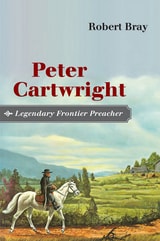
Peter Cartwright, Legendary Frontier Preacher
Robert Bray
University of Illinois Press, 2005
Robert Bray tells the full story of the long relationship between Cartwright and Lincoln, including their political campaigns against each other, their social antagonisms, and their radical disagreements on the Christian religion, as well as their shared views on slavery and the central fact of their being "self-made."
In addition, the biography examines in close detail Cartwright's instrumental role in Methodism's bitter "divorce" of 1844, in which the southern conferences seceded in a remarkable prefigurement of the United States a decade later. Finally, Peter Cartwright attempts to place the man in his appropriate national context: as a potent "man of words" on the frontier, a self-authorizing "legend in his own time," and, surprisingly, an enduring western literary figure.
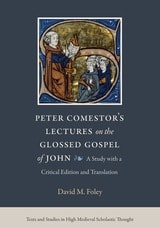
Peter Comestor's Lectures on the Glossed Gospel of John
A Study with a Critical Edition and TranslationPeter Comestor
Catholic University of America Press, 2023

Peter Comestor's Lectures on the Gospel of Luke and its Glosses
Peter Comestor
Catholic University of America Press, 0
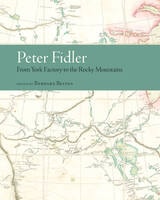
Peter Fidler
From York Factory to the Rocky MountainsBarbara Belyea
University Press of Colorado, 2026
The two journals—“From York Factory to Buckingham House” and “From Buckingham House to the Rocky Mountains”—detail Fidler’s travels over a period of nine months. They include remarks on fur trade history, organization of the inland brigade, three distinct geographical regions, and the daily life of a Plains nation. Belyea’s introduction and ample notes provide insight into the way geographic, specifically cartographic, information was noted in the journals, with additional information on industry trading techniques, traders’ economic decisions, broad changes in regional social and economic conditions, and interactions with indigenous peoples.
Fidler’s journals are an exceptional record of the fur trade’s western expansion and the daily life of a Plains nation at the height of its power and prosperity. With its rich analysis of primary source documents and painstaking reproduction of historical trade routes, Peter Fidler: From York Factory to the Rocky Mountains will be of great value to students and scholars in the fields of fur trade studies, cartography, travel literature, and Canadian history, as well as general readers interested in westward expansion, exploration, commerce, and indigenous-colonial relations.
Peter Lombard and the Biblical Gloss
Textual Fluidity in Mid-Twelfth-Century ParisMark Clark
Catholic University of America Press, 2026
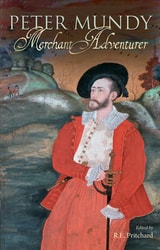
Peter Mundy, Merchant Adventurer
Edited by R. E. Pritchard
Bodleian Library Publishing, 2011
Peter Mundy was an English merchant trader of the seventeenth century who spent most of his life traveling the world, including western Europe, Poland, and Istanbul. Fueled by an insatiable curiosity about the world around him, Mundy kept a detailed account of his travels, illustrated throughout with his own lively drawings of the people and animals he encountered.
Peter and Caesar
Political Authority and the Catholic ChurchEdward A. Goerner
St. Augustine's Press, 2020
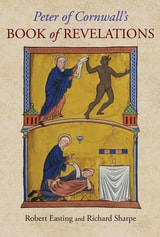
Peter of Cornwall’s Book of Revelations
Peter of Cornwall
Bodleian Library Publishing, 2013
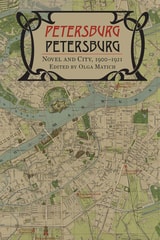
Petersburg/Petersburg
Novel and City, 1900–1921Olga Matich
University of Wisconsin Press, 2010
Since its founding three hundred years ago, the city of Saint Petersburg has captured the imaginations of the most celebrated Russian writers, whose characters map the city by navigating its streets from the aristocratic center to the gritty outskirts. While Tsar Peter the Great planned the streetscapes of Russia’s northern capital as a contrast to the muddy and crooked streets of Moscow, Andrei Bely’s novel Petersburg (1916), a cornerstone of Russian modernism and the culmination of the “Petersburg myth” in Russian culture, takes issue with the city’s premeditated and supposedly rational character in the early twentieth century.
“Petersburg”/Petersburg studies the book and the city against and through each other. It begins with new readings of the novel—as a detective story inspired by bomb-throwing terrorists, as a representation of the aversive emotion of disgust, and as a painterly avant-garde text—stressing the novel’s phantasmagoric and apocalyptic vision of the city. Taking a cue from Petersburg’s narrator, the rest of this volume (and the companion Web site, stpetersburg.berkeley.edu/) explores the city from vantage points that have not been considered before—from its streetcars and iconic art-nouveau office buildings to the slaughterhouse on the city fringes. From poetry and terrorist memoirs, photographs and artwork, maps and guidebooks of that period, the city emerges as a living organism, a dreamworld in flux, and a junction of modernity and modernism.
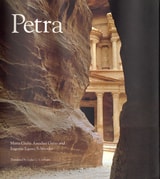
Petra
Maria Giulia Amadasi Guzzo and Eugenia Equini Schneider
University of Chicago Press, 2002
In this lavishly illustrated book, Maria Giulia Amadasi Guzzo and Eugenia Equini Schneider provide an accessible overview of the history and culture of the Nabateans, including their language, religion, politics, and economy, as well as a detailed guide to the city of Petra and its art and architecture. A major stop on the spice trade route, Petra attracted wealth and culture from across the Arabic and classical worlds and was abundantly furnished with more than 800 monuments. Perhaps the most well known of these is the Khazneh el-Faroun, or Treasury, a royal tomb more than 130 feet high with a magnificent Hellenistic facade carved from the salmon pink sandstone of the surrounding cliffs. But no less impressive were Petra's advanced achievements in hydraulic engineering, including elaborate water conservation systems and dams.
For anyone who has felt the lure and wonder of ancient cities and civilizations in exotic locations, Petra will be a delightful and invaluable resource.
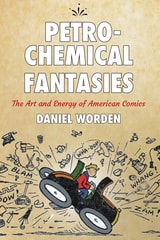
Petrochemical Fantasies
The Art and Energy of American ComicsDaniel Worden
The Ohio State University Press, 2024
Finalist, Comics Studies Society Charles Hatfield Book Prize 2025
Nominee, Eisner Award for Best Academic/Scholarly Work 2025
In Petrochemical Fantasies, Daniel Worden reveals the entwined history of comics and fossil fuels in the United States. From the 1840s to the present, comics have depicted the power, pollution, and rapid expansion of energy systems—especially the explosive growth of coal and oil. In the 1930s, some of the first comic books were the gas station giveaways Gulf Funny Weekly and Standard Oil Comics. And in recent years, comics have become one of the major sites for visualizing life after oil, a striking reversal of the medium’s early boosterism.
Surveying the work of acclaimed artists such as Nell Brinkley, George Herriman, Jack Kirby, Winsor McCay, and R. F. Outcault and recovering little-known works, Worden advances a new history of American comics in the Anthropocene. From late nineteenth- and early twentieth-century editorial cartoons and superhero comics that visualize our modern energy culture to contemporary comics grappling with climate crises, Petrochemical Fantasies places comics, environmental humanities, and energy studies in conversation with each other to unearth the crucial but overlooked history of comics’ place in US energy culture.
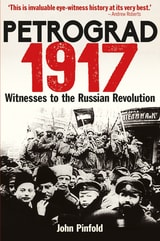
Petrograd, 1917
Witnesses to the Russian RevolutionJohn Pinfold
Bodleian Library Publishing, 2017
Assembling extracts from letters, journals, diaries, and memoirs from a remarkably diverse cast of both Russians and foreign nationals who were there when the revolution broke, Petrograd, 1917 is a strikingly close-up account of these world-shaking events. Each entry is supplemented with a short introductory note that sets it in context, and the book is rounded out with more than seventy illustrations, including photographs of the Romanovs and the violence in the streets as well as propaganda posters, postcards to loved ones, and more. In these pages, the drama and terror of those days comes to life once more, a century on.
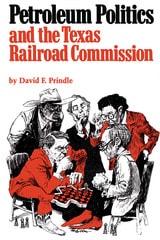
Petroleum Politics and the Texas Railroad Commission
By David F. Prindle
University of Texas Press, 1981
The single most important domestic source of oil and gas is managed by the Texas Railroad Commission. As a result, the Commission has for decades exerted a profound influence on United States and world energy policy. This influence may even increase with the recent decision to remove price controls on oil and gas. Commission decisions determine where and when oil and gas wells are drilled, how much can be produced from them, and how the products can be transported. Since the 1930s the Commission has heavily influenced both the supply and the price of petroleum in the rest of the country simply because Texas provides such a large proportion of the United States' petroleum.
As might be expected with the management of resources worth billions of dollars, the Railroad Commission has been an arena of intense political maneuvering. David Prindle examines in detail seven policymaking episodes, covering five decades of the Commission's history. He recounts the economic and political cleavages arising from clashes of interest, the efforts of individuals and organizations to exert influence, the motives and methods underlying the policy choices of the Commissioners, and the political and economic consequences of those choices, both for Texas and for the rest of the country.
This detailed look at the Railroad Commission and the politics of petroleum in Texas will be of interest to the general public and all those involved in the oil and gas industry. Scholars and students in the field of policy studies, especially energy policy, will find this book to be an invaluable guide to an important sector of the American petroleum industry.
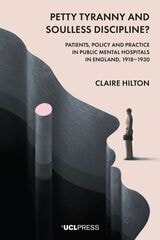
Petty Tyranny and Soulless Discipline?
Patients, Policy and Practice in Public Mental Hospitals in England, 1918–1930Claire Hilton
University College London, 2025
Petty Tyranny and Soulless Discipline? examines England’s public mental hospitals for the working class after World War I. Claire Hilton combines narratives of patients’ difficult daily lives with an analysis of competing agendas from campaigners, the government, and new medical knowledge to build a complex picture of mental health provision. Patient experiences, including their admission, care, treatment, discharge, and sometimes death, are illuminated in previously unexplored primary sources and situated within the broader context of reform and change (or lack thereof). While offering a comprehensive history of psychiatric care in early twentieth-century England, the book also draws on historical insights to reflect on contemporary mental health practices, making it relevant to historians, mental health professionals, and patients alike.
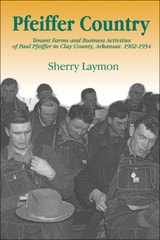
Pfeiffer Country
The Tenant Farms and Business Activities of Paul Pfeiffer in Clay County, Arkansas, 1902-1954Sherry Laymon
Butler Center for Arkansas Studies, 2009
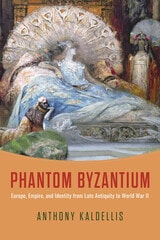
Phantom Byzantium
Europe, Empire, and Identity from Late Antiquity to World War IIAnthony Kaldellis
University of Chicago Press, 2026
Unveiling the ideological foundations of Byzantine studies, Phantom Byzantium is a pioneering survey of western European perceptions of the eastern Roman empire (also known as Byzantium) spanning late antiquity to World War II. Through ten chronological chapters, Anthony Kaldellis makes the case that western Europe gradually formed its identity by adopting prestigious cultural elements from the eastern empire but simultaneously portraying the east as inferior. The West modeled its Roman imperial style on Constantinople while minimizing the latter as Greek rather than Roman; appropriated a host of Christian traditions from the east while casting the east as schismatic, heretical, or treacherous; and, during the Renaissance, used classical Hellenic philology from Greek scholars before marginalizing them as unworthy bearers of that tradition. This orientalizing impulse worked to buttress western exceptionalism and resulted in the fictitious construction of “Byzantium” as Europe’s evil doppelgänger, embodying the worst versions of traditions fundamental to European identity and casting the region as despotic, superstitious, and degenerate.
Explaining the creation, history, and functions of the ideological construct of Byzantium in the western imagination and European self-fashioning, this book has critical implications for contemporary views of European history.

Phantom Islands
In Search of Mythical LandsDirk Liesemer
Haus Publishing, 2018
Beautifully illustrated with colored maps and charts, Phantom Islands shows the cunning of imposters and frauds, the earnestness of explorers searching for knowledge, and the pleasure that can be found in our willingness to deceive and to be deceived.
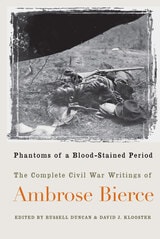
Phantoms of a Blood-Stained Period
The Complete Civil War Writings of Ambrose BierceJames Russell Duncan
University of Massachusetts Press, 2002

Phantoms of the Prairie
The Return of Cougars to the MidwestJohn W. Laundré
University of Wisconsin Press, 2012
Last seen in the 1880s, cougars (also known as pumas or mountain lions) are making a return to the plains regions of the Midwest. Their comeback, heralded by wildlife enthusiasts, has brought concern and questions to many. Will the people of the region make room for cougars? Can they survive the highly altered landscape of the Midwest? Is there a future for these intrepid pioneers if they head even farther east?
Using GIS technology, and historical data, among many other methods, Phantoms of the Prairie takes readers on a virtual journey, showing how the cougar might move over the landscape with minimal human contact. Drawing on his years of research on cougars, John W. Laundré offers an overview of what has been, what is, and what might be regarding the return of cougars to their ancestral prairie homeland.
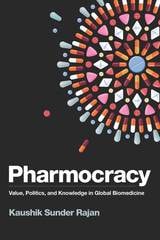
Pharmocracy
Value, Politics, and Knowledge in Global BiomedicineKaushik Sunder Rajan
Duke University Press, 2017
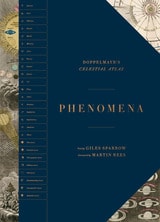
Phenomena
Doppelmayr's Celestial AtlasGiles Sparrow
University of Chicago Press, 2022
The expansive and intricate Atlas Coelestis, created by Johann Doppelmayr in 1742, set out to record everything known about astronomy at the time, covering constellations, planets, moons, comets, and more, all rendered in exquisite detail. Through stunning illustrations, historical notes, and scientific explanations, Phenomena contextualizes Doppelmayr’s atlas and creates a spectacular handbook to the heavens.
Phenomena begins by introducing Doppelmayr’s life and work, placing his extraordinary cosmic atlas in the context of discoveries made in the Renaissance and Enlightenment and highlighting the significance of its publication. This oversized book presents thirty beautifully illustrated and richly annotated plates, covering all the fundamentals of astronomy—from the dimensions of the solar system to the phases of the moon and the courses of comets. Each plate is accompanied by expert analysis from astronomer Giles Sparrow, who deftly presents Doppelmayr’s references and cosmological work to a modern audience. Each plate is carefully deconstructed, isolating key stars, planets, orbits, and moons for in-depth exploration. A conclusion reflects on the development of astronomy since the publication of the Atlas and traces the course of the science up to the present day. Following the conclusion is a timeline of key discoveries from ancient times onward along with short biographies of the key players in this history.
Phenomenal Blackness
Black Power, Philosophy, and TheoryMark Christian Thompson
University of Chicago Press, 2022
Phenomenal Blackness examines the changing interdisciplinary investments of key mid-century Black writers and thinkers, including the growing interest in German philosophy and critical theory. Mark Christian Thompson analyzes this shift in intellectual focus across the post-war decades, placing Black Power thought in a philosophical context.
Prior to the 1960s, sociologically oriented thinkers such as W. E. B. Du Bois had understood Blackness as a singular set of socio-historical characteristics. In contrast, writers such as Amiri Baraka, James Baldwin, Angela Y. Davis, Eldridge Cleaver, and Malcolm X were drawn to notions of an African essence, an ontology of Black being. With these perspectives, literary language came to be seen as the primary social expression of Blackness. For this new way of thinking, the works of philosophers such as Adorno, Habermas, and Marcuse were a vital resource, allowing for continued cultural-materialist analysis while accommodating the hermeneutical aspects of Black religious thought. Thompson argues that these efforts to reimagine Black singularity led to a phenomenological understanding of Blackness—a “Black aesthetic dimension” wherein aspirational models for Black liberation might emerge.

Phenomenal Justice
Violence and Morality in ArgentinaEva van Roekel
Rutgers University Press, 2020
Short-listed for the Juan E. Méndez Book Award for Human Rights in Latin America from Duke University Libraries
How do victims and perpetrators of political violence caught up in a complicated legal battle experience justice on their own terms? Phenomenal Justice is a compelling ethnography about the reopened trials for crimes against humanity committed during the brutal military dictatorship that ruled Argentina between 1976 and 1983. Grounded in phenomenological anthropology and the anthropology of emotion, this book establishes a new theoretical basis that is faithful to the uncertainties of justice and truth in the aftermath of human rights violations. The ethnographic observations and the first-person stories about torture, survival, disappearance, and death reveal the enduring trauma, heartfelt guilt, happiness, battered pride, and scratchy shame that demonstrate the unreserved complexities of truth and justice in post-conflict societies. Phenomenal Justice will be an indispensable contribution to a better understanding of the military dictatorship in Argentina and its aftermath.
Phenomenological Approaches to Popular Culture
Michael T. Carroll
University of Wisconsin Press, 2000
The fifteen essays in this volume demonstrate the way in which phenomenological approaches can illuminate popular culture studies, and in so doing they take on the entire range of popular culture.
Phenomenology and Deconstruction, Volume One
The Dream is OverRobert Denoon Cumming
University of Chicago Press, 1991
In this analysis Cumming deals with how a philosophy can be vulgarized (as Heidegger's was by Nazism but in Heidegger's own view by Sartre), with problems of periodization, with how the history of philosophy can be disinguished as a philosophical discipline from intellectual history. Cumming also elaborates an analogy between a philosophical method and style.
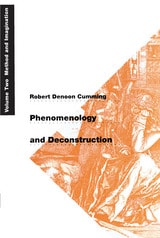
Phenomenology and Deconstruction, Volume Two
Method and ImaginationRobert Denoon Cumming
University of Chicago Press, 1992
Cumming also shows that conversion is not merely a personal predisposition of Sartre's—further manifest in his later conversions to Heidegger and to a version of Marxism. Conversion is also philosophical preoccupation, illustrated by the "conversion to the imaginary" whereby Sartre explains how he himself, as well as Genet and Flaubert, became writers. Finally, Cumming details how Husserl's phenomenological method contributed both to the shaping of Sartre's style as a literary writer and to his theory of style.
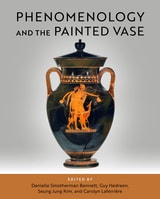
Phenomenology and the Painted Vase
Edited by Danielle Smotherman Bennett, Guy Hedreen, SeungJung Kim, and Carolyn Laferrière
University of Wisconsin Press, 2026
Most people today encounter ancient Greek vases as static, untouchable artifacts safely out of reach behind glass, in the quiet of a museum gallery. Once, however, these vessels were also useful objects, made to be held, filled, and generally used in a variety of settings, from the ritual to the quotidian. This volume considers these ancient vases together with the theoretical frameworks developed by pioneers of phenomenology such as Maurice Merleau-Ponty and Edmund Husserl, helping us encounter Greek vases as they once were. The principles of phenomenology require that we understand objects as active participants in shaping the manner in which humans experience the world. A phenomenological perspective allows us to see how the function and use of Greek vases shaped both their visual appearance and the perceptual experience of them—as well as our continued understanding of them today—while taking into account multisensory perspectives. With this alternative approach to the study of classical pottery, the authors offer new and illuminating insights not just into the objects in question but also into ancient Greek culture and life more broadly.
Phenomenology and the Problem of History
A Study of Husserl's Transcendental PhilosophyDavid Carr
Northwestern University Press, 2009
Phenomenology
Between Essentialism and Transcendental PhilosophyJ.N. Mohanty
Northwestern University Press, 1997
This collection of essays traces the themes of essentialism and transcendentalism as they have appeared in the development of phenomenology from Husserl to Derrida. Beginning with Husserl's major phenomenological themes--essence, meaning, transcendental subjectivity, and life-world--Mohanty examines the tensions within phenomenology in general and within Husserl's phenomenology in particular. The accessibility of these essays, coupled with Mohanty's consideration of lesser-known phenomenologists (Ingarden, Scheler, Hartmann, et. al.) mark this as a major updating of phenomenology for a contemporary audience.

Phil Jasner "On the Case"
His Best Writing on the Sixers, the Dream Team, and BeyondAndy Jasner
Temple University Press, 2017
Allen Iverson loved Philadelphia Daily News basketball beat reporter Phil Jasner, calling him “the best” in the world of sports journalism. From 1981 until his death in 2010, Jasner was always “on the case,” going to great lengths to track athletes down for a quote or a story. He was most known for covering the team’s famous players, including World B. Free and Bobby Jones, Julius Erving and Moses Malone, Charles Barkley, and, of course, Iverson. His tremendous output was beloved by players and fans alike, earning him many honors, including inductions into six Halls of Fame.
Phil Jasner “On the Case” collects the best of Jasner’s writing throughout his illustrious career. Jasner wrote about baseball, the Eagles, and the Philadelphia Atoms’ soccer with the same insight and aplomb he showed in his coverage of The Big 5, the 76ers’ championship season in 1983, and the Dream Team. Lovingly assembled—each chapter is introduced by some of the most prominent figures Jasner covered, from Vince Papale, Doug Collins, and Billy Cunningham to Iverson and Barkley—this collection recounts a distinguished sportswriter’s remarkable career.
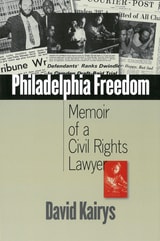
Philadelphia Freedom
Memoir of a Civil Rights LawyerDavid Kairys
University of Michigan Press, 2008
"David Kairys is one of the grand long-distance runners in the struggle for justice in America. His brilliant legal mind and superb lawyerly skills are legendary. This marvelous book is his gift to us!"
---Cornel West, Professor of Religion and African American Studies, Princeton University, and award-winning author of Race Matters
Philadelphia Freedom is the spellbinding tale of an idealistic young lawyer coming of age in the political cauldron of the 1960s and 1970s. From his immersion in the civil rights movement to his determined court battles to quell criminal violence by Philadelphia police, Kairys recounts how he helped make history in the city of brotherly love."
---William K. Marimow, Editor and Executive Vice President, Philadelphia Inquirer, and recipient of two Pulitzer Prizes
"In the current climate of political deception and the trampling of our civil rights, Kairys's compelling book is a clenched fist, a prayer for social justice and a call to conscience."
---Steve Lopez, Los Angeles Times columnist and former Philadelphia Inquirer columnist
"With engaging, insider stories of innovative legal strategies of a truly creative lawyer, this book evokes the ebullient spirit of progressive social change launched in the 1960s and should be read by aspiring and practicing lawyers as well as anyone interested in American social history. Philadelphia Freedom reads like a suspense novel and reveals how novel legal and political thinking can and does make a real difference to individuals and to the quality of justice."
---Martha L. Minow, Jeremiah Smith, Jr. Professor of Law, Harvard University
"David Kairys's compelling book properly explains the vital role that civil rights attorneys play in our system of justice."
---Judge John E. Jones III, United States District Court for the Middle District of Pennsylvania, and presiding judge in the landmark Kitzmiller v. Dover Area School District case
A memoir that is also a compelling page-turner, Philadelphia Freedom is the poignant, informative, often inspiring account of renowned civil-rights lawyer David Kairys's personal quest for achieving social justice during the turbulent 1960s and 70s.
Philadelphia Freedom brings us intimately and directly into Kairys's burgeoning law career and the struggles of the 60s as his professional and private life navigated the turmoil and promise of the civil rights and antiwar movements.
Many of the cases Kairys took on involved discrimination and equal protection, freedom of speech, and government malfeasance. Kairys is perhaps most well known for his victory in the Camden 28 draft board case, in which the FBI set up a sting of the Catholic anti-war left at the behest of the highest levels of government.
The stories and cases range from nationally important and recognizable---the family of the scientist the CIA unwittingly gave LSD in the 1950s; the leading race discrimination case against the FBI; Dr. Benjamin Spock's First Amendment case before the Supreme Court; the city handgun lawsuits Kairys conceived---to those he encountered in his early work as a public defender. The characters include public figures such as FBI Directors J. Edgar Hoover and Louis Freeh; CIA Director William Colby; Pennsylvania Senator Arlen Specter; New York Attorney General Eliot Spitzer; U.S. Attorneys General Edward Levi and John Mitchell; Georgia Governor Lester Maddox; Pennsylvania Governor, former Philadelphia Mayor, and Democratic National Committee chair Ed Rendell; Philadelphia Mayor and Police Commissioner Frank Rizzo. But some of the most memorable are not well known, involving regular people caught up in the often heartless machinery of the courts and legal system.
Though it reads like a novel, with all the elements of character, plot, and suspense, Philadelphia Freedom also has historical significance as a firsthand account of the 1960s and 70s and contains social commentary about race as well as insights and major perspectives on the nature and social role of law.
David Kairys is Professor of Law at Beasley School of Law, Temple University. He was a full-time civil rights lawyer from 1968 to 1990.
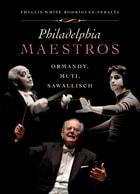
Philadelphia Maestros
Ormandy, Muti, SawallischPhyllis Rodriquez-Peralta
Temple University Press, 2006
Philadelphia Mural Arts @ 30
Jane Golden
Temple University Press, 2014
The Mural Arts Program of Philadelphia began in 1984 as a summer youth program with modest support from city government. Under the guidance of Jane Golden, however, it gradually grew into one of the largest and most successful public art organizations in the country, garnering support from local corporations, foundations, and individuals to extend the reach and effectiveness of its innovative programs.
Now three decades later, the Mural Arts Program has created more than 3,800 murals and public art projects that have made lasting imprints in every Philadelphia neighborhood. In the process, Mural Arts has engaged thousands of people of all ages from across the city, helped hundreds of ex-offenders train for new jobs, transformed the face of struggling commercial corridors, and developed funding partners in both public and private sectors.
While the Mural Arts Program has significantly changed the appearance of the city, it has also demonstrated how participatory public art can empower individuals and promote communal healing around difficult issues. Philadelphia Mural Arts @ 30 is a celebration of and guide to the program's success. Unlike Philadelphia Murals and the Stories They Tell and its sequel, More Philadelphia Murals and the Stories They Tell, Philadelphia Murals @ 30 showcases the results of 21 projects completed since 2009 and features essays by policy makers, curators, scholars, and educators that offer valuable lessons for artists, activists, and communities to emulate.
Philadelphia Mural Arts @ 30 traces the program's history and evolution, acknowledging the challenges and rewards of growth and change while maintaining a core commitment to social, personal, and community transformation.
Contributors include: Dr. Arthur C. Evans, Jr., Arlene Goldbard, Thora Jacobson, Rick Lowe, Dr. Samantha L. Matlin, Paulette Moore, Jeremy Nowak, Maureen H. O'Connell, Elisabeth Perez Luna, Robin Rice, Dr. Jacob Kraemer Tebes, Elizabeth Thomas, Cynthia Weiss, Howard Zehr, and the editors.