Results by title
18284 books match the query 'United States' and 850 start with p
Police Interrogation and Confessions
Essays in Law and PolicyYale Kamisar
University of Michigan Press, 2025
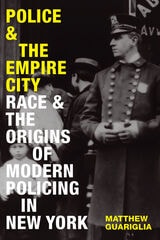
Police and the Empire City
Race and the Origins of Modern Policing in New YorkMatthew Guariglia
Duke University Press, 2023

Police in the Hallways
Discipline in an Urban High SchoolKathleen Nolan
University of Minnesota Press, 2011
As zero-tolerance discipline policies have been instituted at high schools across the country, police officers are employed with increasing frequency to enforce behavior codes and maintain order, primarily at poorly performing, racially segregated urban schools. Actions that may once have sent students to the detention hall or resulted in their suspension may now introduce them to the criminal justice system. In Police in the Hallways, Kathleen Nolan explores the impact of policing and punitive disciplinary policies on the students and their educational experience.
Through in-depth interviews with and observations of students, teachers, administrators, and police officers, Nolan offers a rich and nuanced account of daily life at a Bronx high school where police patrol the hallways and security and discipline fall under the jurisdiction of the NYPD. She documents how, as law enforcement officials initiate confrontations with students, small infractions often escalate into “police matters” that can lead to summonses to criminal court, arrest, and confinement in juvenile detention centers.
Nolan follows students from the classroom and the cafeteria to the detention hall, the dean’s office, and the criminal court system, clarifying the increasingly intimate relations between the school and the criminal justice system. Placing this trend within the context of recent social and economic changes, as well as developments within criminal justice and urban school reform, she shows how this police presence has created a culture of control in which penal management overshadows educational innovation.
Police in the Hallways also examines the prevalent forms of oppositional behavior through which students express their frustrations and their deep sense of exclusion. With compassion and clear-eyed analysis, Nolan sounds a warning about this alarming convergence of prison and school cultures and the negative impact that it has on the real lives of low-income students of color—and, in turn, on us all.
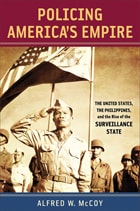
Policing America’s Empire
The United States, the Philippines, and the Rise of the Surveillance StateAlfred W. McCoy
University of Wisconsin Press, 2009
But security techniques bred in the tropical hothouse of colonial rule were not contained, McCoy shows, at this remote periphery of American power. Migrating homeward through both personnel and policies, these innovations helped shape a new federal security apparatus during World War I. Once established under the pressures of wartime mobilization, this distinctively American system of public-private surveillance persisted in various forms for the next fifty years, as an omnipresent, sub rosa matrix that honeycombed U.S. society with active informers, secretive civilian organizations, and government counterintelligence agencies. In each succeeding global crisis, this covert nexus expanded its domestic operations, producing new contraventions of civil liberties—from the harassment of labor activists and ethnic communities during World War I, to the mass incarceration of Japanese Americans during World War II, all the way to the secret blacklisting of suspected communists during the Cold War.
“With a breathtaking sweep of archival research, McCoy shows how repressive techniques developed in the colonial Philippines migrated back to the United States for use against people of color, aliens, and really any heterodox challenge to American power. This book proves Mark Twain’s adage that you cannot have an empire abroad and a republic at home.”—Bruce Cumings, University of Chicago
“This book lays the Philippine body politic on the examination table to reveal the disease that lies within—crime, clandestine policing, and political scandal. But McCoy also draws the line from Manila to Baghdad, arguing that the seeds of controversial counterinsurgency tactics used in Iraq were sown in the anti-guerrilla operations in the Philippines. His arguments are forceful.”—Sheila S. Coronel, Columbia University
Policing Contingencies
Peter K. Manning
University of Chicago Press, 2003
Manning begins by developing a model of policing as drama—a way of communicating various messages to the public in an effort to enforce moral boundaries. Unexpected outcomes, or contingencies, continually rewrite the plot of this drama, requiring officers to adjust accordingly. New information technologies, media scrutiny and representations, and community policing also play important roles, and Manning studies these influences in detail. He concludes that their impacts have been quite limited, because the basic structure of policing—officer assessments based on encounters during routine patrols—has remained unchanged. For policing to really change, Manning argues, its focus will need to shift to prevention.
Written with precision and judiciously argued, Policing Contingencies will be of value to scholars of sociology, criminology, information technology, and cultural theory.
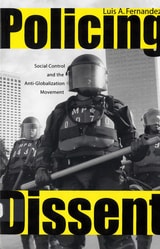
Policing Dissent
Social Control and the Anti-Globalization MovementLuis A. Fernandez
Rutgers University Press, 2008
In November 1999, fifty-thousand anti-globalization activists converged on Seattle to shut down the World Trade Organization’s Ministerial Meeting. Using innovative and network-based strategies, the protesters left police flummoxed, desperately searching for ways to control the emerging anti-corporate globalization movement. Faced with these network-based tactics, law enforcement agencies transformed their policing and social control mechanisms to manage this new threat.
Policing Dissent provides a firsthand account of the changing nature of control efforts employed by law enforcement agencies when confronted with mass activism. The book also offers readers the richness of experiential detail and engaging stories often lacking in studies of police practices and social movements. This book does not merely seek to explain the causal relationship between repression and mobilization. Rather, it shows how social control strategies act on the mind and body of protesters.
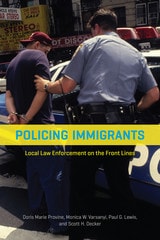
Policing Immigrants
Local Law Enforcement on the Front LinesDoris Marie Provine, Monica W. Varsanyi, Paul G. Lewis, and Scott H. Decker
University of Chicago Press, 2016
Policing Immigrants traces the transition of immigration enforcement from a traditionally federal power exercised primarily near the US borders to a patchwork system of local policing that extends throughout the country’s interior. Since federal authorities set local law enforcement to the task of bringing suspected illegal immigrants to the federal government’s attention, local responses have varied. While some localities have resisted the work, others have aggressively sought out unauthorized immigrants, often seeking to further their own objectives by putting their own stamp on immigration policing. Tellingly, how a community responds can best be predicted not by conditions like crime rates or the state of the local economy but rather by the level of conservatism among local voters. What has resulted, the authors argue, is a system that is neither just nor effective—one that threatens the core crime-fighting mission of policing by promoting racial profiling, creating fear in immigrant communities, and undermining the critical community-based function of local policing.
Policing Protest
The Control of Mass Demonstrations in Western DemocraciesDonatella della Porta Della Porta
University of Minnesota Press, 1998
The first international examination of how police respond to political protests.
The way in which police handle political demonstrations is always potentially controversial. In contemporary democracies, police departments have two different, often conflicting aims: keeping the peace and defending citizens’ right to protest. This collection, the only resource to examine police interventions cross-nationally, analyzes a wide array of policing styles. The contributors look at cultures and political power to examine the methods, the trends and cycles, and the consequences of policing protest.
Focusing on Italy, France, Germany, Great Britain, Switzerland, Spain, the United States, and South Africa, the contributors explore the various police strategies of coercion, negotiation, and information surveillance. They discuss protest policing in relation to specific countries’ governments and consider public opinion, media, and the police’s perception of reality to illustrate the reciprocal ways in which police and protest are defined. Moreover, this volume considers the profound changes from the forceful 1960s to a “softer” 1990s, including the consequences of this move.Comparative and innovative, Policing Protest highlights the crucial influences of demonstration interventions and lends greater understanding to the study of social movements and their relationship to the state. Contributors: Rocco De Biasi, U of Genoa; Olivier Fillieule, Institute of Political Science, Paris; Oscar Jaime-Jiménez, Universidad Nacional de Educación a Distancia, Madrid; Fabien Jobard, U of Rouen, France; Hanspeter Kriesi, U of Geneva; Gary T. Marx, Massachusetts Institute of Technology and U of Colorado, Boulder; John McCarthy, Catholic U of America; Clark McPhail, U of Illinois; Fernando Reinares, Universidad Nacional de Educación a Distancia, Madrid; Robert Reiner, London School of Economics; David Schweingruber; P. A. J. Waddington, U of Reading, UK; Martin Winter, U of Halle, Germany; Dominique Wisler, U of Geneva.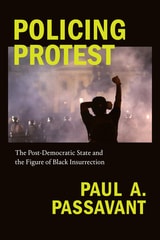
Policing Protest
The Post-Democratic State and the Figure of Black InsurrectionPaul A. Passavant
Duke University Press, 2021
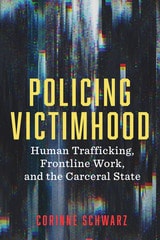
Policing Victimhood
Human Trafficking, Frontline Work, and the Carceral StateCorinne Schwarz
Rutgers University Press, 2023
In Policing Victimhood, Corinne Schwarz interviewed with service providers in the Midwestern US, a region that, though colloquially understood as “flyover country,” regularly positions itself as a leader in state-level anti-trafficking policies and collaborative networks. These frontline workers’ perceptions and narratives are informed by their interpersonal, day-to-day encounters with exploited or trafficked persons. Their insights underscore how anti-trafficking policies are put into practice and influenced by specific ideologies and stereotypes. Extending the reach of street-level bureaucracy theory to anti-trafficking initiatives, Schwarz demonstrates how frontline workers are uniquely positioned to perpetuate or radically counter punitive anti-trafficking efforts.
Taking a cue from anti-carceral feminist critiques and critical trafficking studies, Schwarz argues that ongoing anti-trafficking efforts in the US expand the punitive arm of the state without addressing the role of systemic oppression in perpetuating violence. The violence inherent to the carceral state—and required for its continued expansion—is the same violence that perpetuates the exploitation of human trafficking. In order to solve the “problem” of human trafficking, advocates, activists, and scholars must divest from systems that center punishment and radically reinvest their efforts in dismantling the structural violence that perpetuates social exclusion and vulnerability, what she calls the “-isms” and “-phobias” that harm some at the expense of others’ empowerment. Policing Victimhood encourages readers to imagine a world without carceral violence in any of its forms.
Policing Welfare
Punitive Adversarialism in Public AssistanceSpencer Headworth
University of Chicago Press, 2021
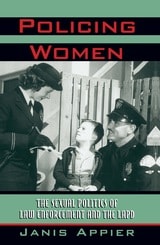
Policing Women
The Sexual Politics of Law Enforcement and the LAPDJanis Appier
Temple University Press, 1998
With a new vision of non-coercive police work and crime prevention, Progressive reformers exerted political and social pressure to create positions for female officers dedicated to guiding and protecting juveniles and women. Women reformers pointed to changing sexual mores among working-class female youth to emphasize the need for a new approach to policing.
The policewomen who undertook the work of counseling sexually active teenage girls and their families saw themselves as helping young people achieve moral equilibrium during a period in which standards of context were in flux. In the Los Angeles Police Department, the first to hire women, this social work was primarily the responsibility of the City Mother's Bureau; in other major cities, policewomen's roles were similarly constructed as maternalistic. Scrutinizing case records, public statements, and departmental policies governing policewomen, Appier shows how female officers handled the complex gender politics of their work with the public and within their departments.
Appier reveals that many of these pioneering policewomen succeeded in expanding the scope of policework and carving out a rewarding professional niche, despite continued attempts to oust them or limit their sphere of action. But this advancement was short-lived; within a generation a masculinized model of crime fighting took hold, and policewomen's authority eroded.

Policing as Though People Matter
Dorothy Guyot
Temple University Press, 1991
In this work, Dorothy Guyot asks: What makes a good police department? In analyzing the transformation of the police department in Troy, New York. she explains a set of standards by which the quality of police service can be judged and illustrates a way to improve services over the long run. Throughout her case study and analysis, Guyot asks penetrating questions about the performance of police departments. She maintains that when police officers are treated as professionals by their department, they will act professionally toward citizens. This examination of fifteen years of policymaking within a single department looks at policing as a complex social service in an urban environment.
Rather than accepting the traditional "chain of command" authoritarian model of police administration, Guyot draws an analogy to hospital organization and suggests that the practitioner, whether a physician or a cop on the beat, performs the service with a tremendous amount of discretion. It follows that better management tactics at the police chief level as well as better employment policies will result in more responsible and dedicated policing by officers. The author demonstrates how, under the leadership of George W. O’Connor, the Troy P.D. changed from a backward department to one that promotes competence, as well as concern for citizens, among its individual officers.
The book is organized by issues and provides a full picture of how upgrading can be achieved through clear and specific goals. Throughout this case study, Guyot provides many examples of the behavior of police officers on the street, to illustrate the differences made by restructuring the department.
Policy Challenges in Modern Health Care
Edited by David Mechanic, Lynn B. Rogut, David Colby, and James R. Knickman
Rutgers University Press, 2005
Health care delivery in the United States is an enormously complex enterprise, and its $1.6 trillion annual expenditures involve a host of competing interests. While arguably the nation offers among the most technologically advanced medical care in the world, the American system consistently under performs relative to its resources. Gaps in financing and service delivery pose major barriers to improving health, reducing disparities, achieving universal insurance coverage, enhancing quality, controlling costs, and meeting the needs of patients and families.
Bringing together twenty-five of the nation’s leading experts in health care policy and public health, this book provides a much-needed perspective on how our health care system evolved, why we face the challenges that we do, and why reform is so difficult to achieve. The essays tackle tough issues including: socioeconomic disadvantage, tobacco, obesity, gun violence, insurance gaps, the rationing of services, the power of special interests, medical errors, and the nursing shortage.
Linking the nation’s health problems to larger political, cultural, and philosophical contexts, Policy Challenges in Modern Health Care offers a compelling look at where we stand and where we need to be headed.
Policy Dynamics
Edited by Frank R. Baumgartner and Bryan D. Jones
University of Chicago Press, 2002
To investigate these questions, Policy Dynamics draws on the most extensive data set yet compiled for public policy issues in the United States. Spanning the past half-century, these data make it possible to trace policies and legislation, public and media attention to them, and governmental decisions over time and across institutions. Some chapters analyze particular policy areas, such as health care, national security, and immigration, while others focus on institutional questions such as congressional procedures and agendas and the differing responses by Congress and the Supreme Court to new issues.
Policy Dynamics presents a radical vision of how the federal government evolves in response to new challenges-and the research tools that others may use to critique or extend that vision.
Policy Issues Affecting Lesbian, Gay, Bisexual, and Transgender Families
Sean Cahill and Sarah Tobias
University of Michigan Press, 2010
Lesbian, gay, bisexual, and transgender people face the same family issues as their heterosexual counterparts, but that is only the beginning of their struggle. The LGBT community also encounters legal barriers to government recognition of their same-sex relationships and relationships to their own children. Policy Issues Affecting Lesbian, Gay, Bisexual, and Transgender Families addresses partner recognition, parenting, issues affecting children of LGBT parents, health care, discrimination, senior care and elder rights, and equal access to social services.
Sean Cahill and Sarah Tobias provide up-to-date, accurate analysis of the major policies affecting LGBT people, their same-sex partners, and their children. This valuable resource offers literature reviews of demographic research as well as original research based on the U.S. Census same-sex couple sample. It also provides a look at the 30-year history of right-wing anti-gay activism and the intra-community intellectual debates over the fight for marriage.
"The sheer diversity of gay people and opinion shines through Cahill and Tobias's fact-packed depiction of same-sex couples and their kids, their needs and day-to-day challenges, and the movement for fairness and the freedom to marry. The disparate personal stories and struggles in this informative book underscore the importance of ending discrimination in marriage and ensuring that no family is left behind."
—Evan Wolfson, Founder and Executive Director of the Freedom to Marry Project
"A concise, comprehensive guide to gay-family issues that combines an impassioned progressive sensibility with a firm respect for facts."
—Jonathan Rauch, senior writer and columnist for National Journal,Atlantic Monthly correspondent, and author of Gay Marriage: Why It Is Good for Gays, Good for Straights, and Good for America
"Cahill and Tobias offer readers a thorough and immensely readable guide to the legal problems faced by LGBT families."
—Ellen Andersen, Indiana University–Purdue University at Indianapolis
"For an account of policy issues that frame lesbian, gay, bisexual, and transgender (LGBT) family lives here in the United States, one need look no further. Sean Cahill and Sarah Tobias supply accurate and up-to-date information about the legal and policy contexts of LGBT lives across the country. This book is sure to be a valuable resource for students and scholars, as well as for others seeking to understand and challenge discrimination based on sexual orientation or gender identity."
—Charlotte J. Patterson, University of Virginia
Sean Cahill is Director of the National Gay and Lesbian Task Force Policy Institute.
Sarah Tobias is a feminist theorist and LGBT activist who earned her Ph.D. in Political Science from Columbia University. She has taught Political Theory at colleges in New York and New Jersey, and currently works as Senior Policy Analyst in the Democracy program at Demos, a New York City–based think tank.
Policy Reform in American Agriculture
Analysis and PrognosisDavid Orden, Robert Paarlberg, and Terry Roe
University of Chicago Press, 1999
This work analyzes the mixed performance of past agricultural support programs, reviews the current debate concerning farm policies, and critically assesses the often staunch political resistance to much-needed policy reforms. Casting a keen eye toward the most recent developments on both national and international fronts, the authors consider the ramifications of the 1996 Federal Agriculture Improvement and Reform (FAIR) Act as well as multilateral efforts to gain agricultural reform during the Uruguay Round of GATT. Their prognosis hinges upon both the continued growth and competitiveness of the world market and, perhaps more importantly, the ongoing commitment of congressional reform advocates.
Policy Regimes
College Writing and Public Education Policy in the United StatesTyler S. Branson
Southern Illinois University Press, 2021
Author Tyler S. Branson argues that education reform initiatives in the twentieth century can be understood in terms of historical shifts in the ideas, interests, and governing arrangements that inform the teaching of writing. Today, policy regimes of “accountability” shape education reform programs such as Common Core in K-12 and Dual Enrollment in postsecondary institutions. This book reopens the conversation between policy makers and writing teachers, empirically describing the field’s institutional/historical relationship to policy and the ways teachers work on a daily basis to carry out policy. Federal and state accountability policy significantly shapes classrooms before teachers even enter them, but Branson argues the classroom is where teachers leverage disciplinary knowledge about writing to bridge, partner with, support, and sometimes resist education policies.
Branson deftly blends policy critique, archival analysis, and participant observation to offer the first scholarly treatment of the National Council of Teachers of English (NCTE) Washington Task Force as well as a rare empirical study of a dual enrollment course offered in a high school. This book’s macro-and-micro-level analysis of education policy reveals how writing teachers, researchers, and administrators can strengthen their commitments to successfully teaching their students across all levels of education, while deepening their understanding of the ways education policy helps—and hinders—those commitments.
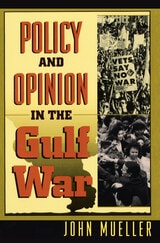
Policy and Opinion in the Gulf War
John Mueller
University of Chicago Press, 1994
Mueller analyzes key issues: the actual shallowness of public support for war; the effect of public opinion on the media (rather than the other way around); the use and misuse of polls by policy makers; the American popular focus on Hussein's ouster as a central purpose of the War; and the War's short-lived impact on voting. Of particular interest is Mueller's conclusion that Bush succeeded in leading the country to war by increasingly convincing the public that it was inevitable, rather than right or wise.
Throughout, Mueller, author of War, Presidents, and Public Opinion, an analysis of public opinion during the Korean and Vietnam wars, places this analysis of the Gulf crisis in a broad political and military context, making comparisons to wars in Panama, Vietnam, Korea, and the Falklands, as well as to World War II and even the War of 1812. The book also collects nearly 300 tables charting public opinion through the Gulf crisis, making Policy and Opinion in the Gulf War an essential reference for anyone interested in recent American politics, foreign policy, public opinion, and survey research.
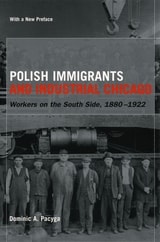
Polish Immigrants and Industrial Chicago
Workers on the South Side, 1880-1922Dominic A. Pacyga
University of Chicago Press, 2003
Polished
College, Class, and the Burdens of Social MobilityMelissa Osborne
University of Chicago Press, 2024
While college initiates a major transition in all students’ lives, low-income and first-generation students attending elite schools are often entering entirely new worlds. Amid the financial and academic challenges of adapting to college, their emotional lives, too, undergo a transformation. Surrounded by peers from different classes and cultural backgrounds, they are faced with an impossible choice: turn away from their former lives to blend in or stay true to themselves and remain on the outside.
An ethnography that draws on in-depth interviews with one hundred and fifty first-generation and low-income students across eighteen elite institutions, Polished uncovers the hidden consequences of the promise of social mobility in today’s educational landscape. Sociologist Melissa Osborne reveals how the very support designed to propel first-generation students forward can unexpectedly reshape their identities, often putting them at odds with their peers and families. Without direct institutional support, this emotional journey can lead to alienation, mental health challenges, poor academic outcomes, and difficult choices between upward mobility or maintaining authenticity and community. Whether you're an educator, advocate, or student, Polished provides a powerful perspective on the uncharted challenges of social mobility and personal identity during college.
Political Arithmetic
Simon Kuznets and the Empirical Tradition in EconomicsRobert William Fogel, Enid M. Fogel, Mark Guglielmo, and Nathaniel Grotte
University of Chicago Press, 2013
With Political Arithmetic, Nobel Prize–winning economist Robert Fogel and his collaborators tell the story of economist Simon Kuznets, the founding of the National Bureau of Economic Research, and the creation of the concept of GNP, which for the first time enabled us to measure the performance of entire economies. The book weaves together the many strands of political and economic thought and historical pressures that together created the demand for more detailed economic thinking—Progressive-era hopes for activist government, the production demands of World War I, Herbert Hoover’s interest in business cycles as President Harding’s commerce secretary, and the catastrophic economic failures of the Great Depression—and shows how, through trial and error, measurement and analysis, economists such as Kuznets rose to the occasion and in the process built a discipline whose knowledge could be put to practical use in everyday decision-making.
The product of a lifetime of studying the workings of economies and skillfully employing the tools of economics, Political Arithmetic is simultaneously a history of a key period of economic thought and a testament to the power of applied ideas.

Political Attitudes over the Life Span
The Bennington Women after Fifty YearsDuane F. Alwin
University of Wisconsin Press, 1992
The culmination of one of the most famous long-term studies in American sociology, this examination of political attitudes among women who attended Bennington College in the 1930s and 1940s now spans five decades, from late adolescence to old age. Theodore Newcomb’s 1930s interviews at Bennington, where the faculty held progressive views that contrasted with those of the conservative families of the students, showed that political orientations are still quite malleable in early adulthood. The studies in 1959-60 and 1984 show the persistence of political attitudes over the adult life span: the Bennington women, raised in conservative homes, were liberalized in their college years and have remained politically involved and liberal in their views, even in their sixties and seventies.
Here the authors analyze the earlier studies and then introduce the 1984 data. Using data from National Election Studies for comparison, they show that the Bennington group is more liberal and hold its opinions more intensely than both older and younger Americans, with the exception of the generation that achieved political maturity in the 1960s. The authors point out that the majority of the Bennington women’s children are of this 1945–54 generation and suggest that this factor played an important role in the stability of the women’s political views. Within their own generation, the Bennington women also appear to hold stronger political views than other college-educated women.
Innovative in its methodology and extremely rich in its data, this work will contribute to developmental and social psychology, sociology, political science, women’s studies, and gerontology.
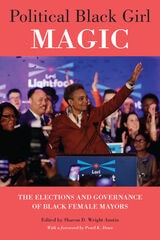
Political Black Girl Magic
The Elections and Governance of Black Female MayorsEdited by Sharon D. Wright Austin
Temple University Press, 2023
Case studies in this interdisciplinary volume include female mayors in Atlanta, Baltimore, Charlotte, Chicago, Compton, and Washington, DC, among other cities, along with discussion of each official’s political context. Covering mayors from the 1960s to the present, Political Black Girl Magic identifies the most significant obstacles black women have faced as mayors and mayoral candidates, and seeks to understand how race, gender, or the combination of both affected them.
Contributors: Andrea Benjamin, Nadia E. Brown, Pearl K. Dowe, Christina Greer, Precious Hall, Valerie C. Johnson, Yolanda Jones, Lauren King, Angela K. Lewis-Maddox, Minion K.C. Morrison, Marcella Mulholland, Stephanie A. Pink-Harper, Kelly Briana Richardson, Emmitt Y. Riley, III, Ashley Robertson Preston, Taisha Saintil, Jamil Scott, Fatemeh Shafiei, James Lance Taylor, LaRaven Temoney, Linda Trautman, and the editor

Political Business Cycles
The Political Economy of Money, Inflation, and UnemploymentThomas D. Willett, ed.
Duke University Press, 1988
Political Economy of U.S. - Taiwan Trade
Robert Baldwin, Tain-Jy Chen, and Douglas Nelson, Editors
University of Michigan Press, 1995

Political Economy of the Urban Ghetto
Daniel R. Fusfeld and Timothy Bates
Southern Illinois University Press, 1984
The income of blacks in most northern industrial states today is lower relative to the income of whites than in 1949.Fusfeld and Bates examine the forces that have led to this state of affairs and find that these economic relationships are the product of a complex pattern of historical development and change in which black-white economic relationships play a major part, along with patterns of industrial, agricultural, and technological change and urban development. They argue that today’s urban racial ghettos are the result of the same forces that created modern America and that one of the by-products of American affluence is a ghettoized racial underclass.
These two themes, they state, are essential for an understanding of the problem and for the formulation of policy. Poverty is not simply the result of poor education, skills, and work habits but one outcome of the structure and functioning of the economy. Solutions require more than policies that seek to change people: they await a recognition that basic economic relationships must be changed.
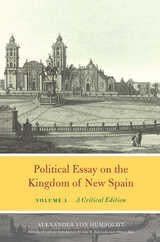
Political Essay on the Kingdom of New Spain, Volume 1
A Critical EditionAlexander von Humboldt
University of Chicago Press, 2019
Alexander von Humboldt was the most celebrated modern chronicler of North and South America and the Caribbean, and this translation of his essay on New Spain—the first modern regional economic and political geography—covers his travels across today’s Mexico in 1803–1804. The work canvases natural-scientific and cultural-scientific objects alike, combining the results of fieldwork with archival research and expert testimony.
To show how people, plants, animals, goods, and ideas moved across the globe, Humboldt wrote in a variety of styles, bending and reshaping familiar writerly conventions to keep readers attentive to new inputs. Above all, he wanted his readers to be open-minded when confronted with cultural and other differences in the Americas. Fueled by his comparative global perspective on politics, economics, and science, he used his writing to support Latin American independence and condemn slavery and other forms of colonial exploitation. It is these voluminous and innovative writings on the New World that made Humboldt the undisputed father of modern geography, early American studies, transatlantic cultural history, and environmental studies.
This two-volume critical edition—the third installment in the Alexander von Humboldt in English series—is based on the full text, including all footnotes, tables, and maps, of the second, revised French edition of Essai politique sur le royaume de de Nouvelle Espagne from 1825 to 1827, which has never been translated into English before. Extensive annotations and full-color atlases are available on the series website.

Political Essay on the Kingdom of New Spain, Volume 2
A Critical EditionAlexander von Humboldt
University of Chicago Press, 2019
Alexander von Humboldt was the most celebrated modern chronicler of North and South America and the Caribbean, and this translation of his essay on New Spain—the first modern regional economic and political geography—covers his travels across today’s Mexico in 1803–1804. The work canvases natural-scientific and cultural-scientific objects alike, combining the results of fieldwork with archival research and expert testimony.
To show how people, plants, animals, goods, and ideas moved across the globe, Humboldt wrote in a variety of styles, bending and reshaping familiar writerly conventions to keep readers attentive to new inputs. Above all, he wanted his readers to be open-minded when confronted with cultural and other differences in the Americas. Fueled by his comparative global perspective on politics, economics, and science, he used his writing to support Latin American independence and condemn slavery and other forms of colonial exploitation. It is these voluminous and innovative writings on the New World that made Humboldt the undisputed father of modern geography, early American studies, transatlantic cultural history, and environmental studies.
This two-volume critical edition—the third installment in the Alexander von Humboldt in English series—is based on the full text, including all footnotes, tables, and maps, of the second, revised French edition of Essai politique sur le royaume de de Nouvelle Espagne from 1825 to 1827, which has never been translated into English before. Extensive annotations and full-color atlases are available on the series website.
Political Monopolies in American Cities
The Rise and Fall of Bosses and ReformersJessica Trounstine
University of Chicago Press, 2008
Situating her in-depth studies of Chicago and San Jose in the broad context of data drawn from more than 240 cities over the course of a century, she finds that the answer—a resounding yes—illuminates the nature of political power. Both political machines and reform governments, she reveals, bias the system in favor of incumbents, effectively establishing monopolies that free governing coalitions from dependence on the support of their broader communities. Ironically, Trounstine goes on to show, the resulting loss of democratic responsiveness eventually mobilizes residents to vote monopolistic regimes out of office. Envisioning an alternative future for American cities, Trounstine concludes by suggesting solutions designed to free urban politics from this damaging cycle.
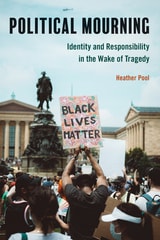
Political Mourning
Identity and Responsibility in the Wake of TragedyHeather Pool
Temple University Press, 2021
What leads us to respond politically to the deaths of some citizens and not others? This is one of the critical questions Heather Pool asks in Political Mourning. Born out of her personal experiences with the trauma of 9/11, Pool’s astute book looks at how death becomes political, and how it can mobilize everyday citizens to argue for political change.
Pool examines four tragedies in American history—the Triangle Shirtwaist Factory Fire, the lynching of Emmett Till, the September 11 attacks, and the Black Lives Matter movement—that offered opportunities to tilt toward justice and democratic inclusion. Some of these opportunities were taken, some were not. However, these watershed moments show, historically, how political identity and political responsibility intersect and how racial identity shapes who is mourned. Political Mourning helps explain why Americans recognize the names of Trayvon Martin and Sandra Bland; activists took those cases public while many similar victims have been ignored by the news media.
Concluding with an afterword on the coronavirus, Pool emphasizes the importance of collective responsibility for justice and why we ought to respond to tragedy in ways that are more politically inclusive.
Political Participation and Government Regulation
Sam Peltzman
University of Chicago Press, 1998
This collection reflects Peltzman's long career studying the interface between the private economy and the public sector. It will be essential to anyone who wishes to study government activity and voting behavior from an economic perspective.
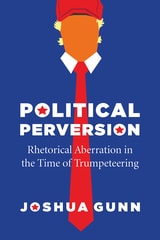
Political Perversion
Rhetorical Aberration in the Time of TrumpeteeringJoshua Gunn
University of Chicago Press, 2020
Drawing on insights from critical theory, media ecology, and psychoanalysis, Gunn argues that perverse rhetorics dominate not only the political sphere but also our daily interactions with others, in person and online. From sexting to campaign rhetoric, Gunn advances a new way to interpret our contemporary political context that explains why so many of us have difficulty deciphering the appeal of aberrant public figures. In this book, Trump is only the tip of a sinister, rapidly growing iceberg, one to which we ourselves unwittingly contribute on a daily basis.
Political Policing
The United States and Latin AmericaMartha K. Huggins
Duke University Press, 1998
After a historical review of policing in the United States and Europe over the past century, Huggins reveals how the United States, in order to protect and strengthen its position in the world system, has used police assistance to establish intelligence and other social control infrastructures in foreign countries. The U.S.-encouraged centralization of Latin American internal security systems, Huggins claims, has led to the militarization of the police and, in turn, to an increase in state-sanctioned violence. Furthermore, Political Policing shows how a domestic police force—when trained by another government—can lose its power over legitimate crime as it becomes a tool for the international interests of the nation that trains it.
Pointing to U.S. responsibility for violations of human rights by foreign security forces, Political Policing will provoke discussion among those interested in international relations, criminal justice, human rights, and the sociology of policing.
Political Prairie Fire
The Nonpartisan League, 1915-1922Robert L. Morlan
University of Minnesota Press, 1955
Political Prairie Fire was first published in 1955. Minnesota Archive Editions uses digital technology to make long-unavailable books once again accessible, and are published unaltered from the original University of Minnesota Press editions.
Political Prairie Fire was first published in 1955.
The farmers of North Dakota were ripe for revolt when the magnetic figure of A. C. Townley strode into their midst and offered them a new political formula to redress their grievances. Townley's plan was simple but revolutionary; it called for the formation of a Nonpartisan Political League dedicated to the election of candidates through the established two-party system and to a platform emphasizing public ownership of certain vital farm services and facilities, such as terminal grain elevators and hail insurance on crops.
Like the great prairie fires of the plains states, the political flames of the Nonpartisan League spread swiftly from one farm to the next across North Dakota and into the adjoining states. The League is regarded by many as the last of the great agrarian protest movements. It is historically significant because it achieved a measure of success well beyond that of most similar movements. It controlled the government of one state for some years, elected state officials and legislators in a number of midwestern and western states, and sent several congressmen to Washington. Its impact helped shape the destinies of a dozen states and the political philosophies of an important segment of the nation's voters. The League's methods of operation often serve today as a guide for political action.
This is the first detailed, unbiased history of the Nonpartisan League. Thoroughly documented for the specialist, it is nevertheless equally interesting for the general reader.
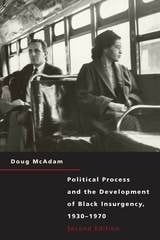
Political Process and the Development of Black Insurgency, 1930-1970
Doug McAdam
University of Chicago Press, 1999
"[A] first-rate analytical demonstration that the civil rights movement was the culmination of a long process of building institutions in the black community."—Raymond Wolters, Journal of American History
"A fresh, rich, and dynamic model to explain the rise and decline of the black insurgency movement in the United States."—James W. Lamare, Annals of the American Academy of Political and Social Science

Political Repression in Modern America
FROM 1870 TO 1976Robert Justin Goldstein
University of Illinois Press, 1978
Enhanced with a new introduction and an updated bibliography, Political Repression in Modern America remains an essential record of the relentless intolerance that suppresses radical dissent in the United States.
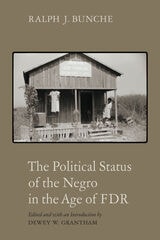
Political Status of the Negro in the Age of FDR
A Carnegie-Myrdal Report Emphasizing the American SouthRalph J. Bunche
University of Chicago Press, 1973
This volume presents the essence of a massive report prepared in 1940 by a team headed by political scientist and civil rights leader Ralph J. Bunche for the Carnegie Corporation’s Survey of the Negro in America. The report was used by Swedish social economist Gunnar Myrdal in writing his monumental An American Dilemma, and it shaped Myrdal’s treatment of the Black political experience. As a valuable historical document, it provides a backdrop against which we can measure change in the Black American’s political status and interpret the origins and consequences of the second Reconstruction.
The Political Status of the Negro introduces essential information about political practices in the Southern states. It offers insight into the historical, economic, sociological, and psychological factors that accounted for these practices, as well as some understanding of the myths, stereotypes, and symbols that contemporaries often used to explain and justify them. The study’s most enduring value lies in its wealth of personal interviews which were conducted in the South in the late 1930s and in its first-hand impressions of the African Americans and Southern politics.
The book is divided into two parts: The first contains Bunche’s explanations, comments, and analytical writings on the subject; the second includes almost all of the interviews and field reports. To this text historian Dewey W. Grantham added a comprehensive introduction that discusses Bunche and his work, the preparation of the research manuscript, and the book’s role in Gunnar Myrdal’s later work.
Political Tolerance and American Democracy
John L. Sullivan, James Piereson, and George E. Marcus
University of Chicago Press, 1982
Political Vocabularies
FDR, the Clergy Letters, and the Elements of Political ArgumentMary E. Stuckey
Michigan State University Press, 2018
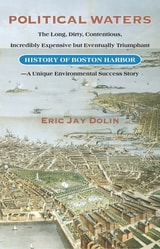
Political Waters
The Long, Dirty, Contentious, Incredibly Expensive but Eventually Triumphant History of Boston Harbor-A Unique Environmental Success StoryEric Jay Dolin
University of Massachusetts Press, 2004
Boston Harbor served as a colonial gateway to the world, witnessed the Boston Tea Party, and helped the community transform itself from an outpost of a few hardy settlers into a bustling metropolis and self-proclaimed hub of the universe. Yet for hundreds of years Boston Harbor was also a cesspool. Long before Bostonians dumped tea into the harbor to protest English taxes, they dumped sewage there.
As the Boston area grew and prospered, its sewage problems worsened, as did the harbor's health, to the point where in the 1980s it was considered the most polluted harbor in the country and ridiculed as the “harbor of shame.” Then, in one of the most impressive environmental comebacks in American history, Boston Harbor was dramatically cleaned up. All it took was two lawsuits, two courts, dozens of lawyers, the creation of a powerful sewage authority, thousands of workers, millions of labor hours, and billions of dollars.
Sewage management is rarely as compelling and exciting as higher profile environmental issues such as global climate change, preserving endangered species, or protecting tropical rainforests. But it can be, as Eric Jay Dolin shows in this engaging narrative account. Boston's struggle to deal with its sewage is an epic story of failure and success, replete with colorful characters, political, bureaucratic, and legal twists and turns, engineering feats, and massive amounts of money. In the end, success hinged on the often overlooked yet monumentally important act of responsibly disposing of the waste people produce every day.
Political Writings
Edited by Jude Davies
University of Illinois Press, 2011
Politicians Don't Pander
Political Manipulation and the Loss of Democratic ResponsivenessLawrence R. Jacobs and Robert Y. Shapiro
University of Chicago Press, 2000
In this provocative and engagingly written book, the authors argue that the reality is quite the opposite. In fact, when not facing election, contemporary presidents and members of Congress routinely ignore the public's policy preferences and follow their own political philosophies, as well as those of their party's activists, their contributors, and their interest group allies. Politicians devote substantial time, effort, and money to tracking public opinion, not for the purposes of policymaking, but to change public opinion—to determine how to craft their public statements and actions to win support for the policies they and their supporters want.
Taking two recent, dramatic episodes—President Clinton's failed health care reform campaign, and Newt Gingrich's "Contract with America"—as examples, the authors show how both used public opinion research and the media to change the public's mind. Such orchestrated displays help explain the media's preoccupation with political conflict and strategy and, the authors argue, have propelled levels of public distrust and fear of government to record highs.
Revisiting the fundamental premises of representative democracy, this accessible book asks us to reexamine whether our government really responds to the broad public or to the narrower interests and values of certain groups. And with the 2000 campaign season heating up, Politicians Don't Pander could not be more timely.
"'Polling has turned leaders into followers,' laments columnist Marueen Dowd of The New York Times. Well, that's news definitely not fit to print say two academics who have examined the polls and the legislative records of recent presidents to see just how responsive chief executives are to the polls. Their conclusion: not much. . . . In fact, their review and analyses found that public opinion polls on policy appear to have increasingly less, not more, influence on government policies."—Richard Morin, The Washington Post
Politics Over Process
Partisan Conflict and Post-Passage Processes in the U.S. CongressHong Min Park, Steven S. Smith, and Ryan J. Vander Wielen
University of Michigan Press, 2018
Politics and Economics in the Eighties
Edited by Alberto Alesina and Geoffrey Carliner
University of Chicago Press, 1991
Certain to provoke controversy, this interdisciplinary volume brings together policy experts to provide a coherent analysis of the most important economic policy changes of the 1980s. Through a detailed examination of voting patterns, monetary and fiscal policies, welfare spending, tax reform, minimum wage legislation, the savings and loan collapse, and international trade policy, the authors explore how politics can influence the direction of economic policymaking.
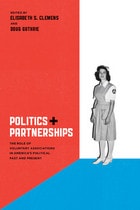
Politics and Partnerships
The Role of Voluntary Associations in America's Political Past and PresentEdited by Elisabeth S. Clemens and Doug Guthrie
University of Chicago Press, 2011
But despite the ubiquity of the idea of volunteerism in public policy debates, analysis of its role in American governance has been fragmented. Bringing together a diverse set of disciplinary approaches, Politics and Partnerships is a thorough examination of the place of voluntary associations in political history and an astute investigation into contemporary experiments in reshaping that role. The essays here reveal the key role nonprofits have played in the evolution of both the workplace and welfare and illuminate the way that government’s retreat from welfare has radically altered the relationship between nonprofits and corporations.
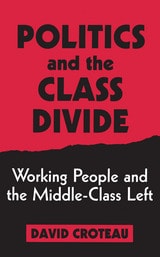
Politics and the Class Divide
Working People and the Middle Class LeftDavid Croteau
Temple University Press, 1994

Politics and the Constitution in the History of the United States
William W. Crosskey
University of Chicago Press, 1980
This third volume of Politics and the Constitution, which Crosskey began and William Jeffrey has finished, treats political activity in the period 1776-87, and is in many ways the heart of the work as Crosskey conceived it. In support of the lexicographic analysis of volumes 1 and 2, volume 3 shows that nationalist ideas and sentiments were a powerful force in American public opinion from the Revolution to the eve of the Constitutional Convention. The creation of a generally empowered national government in Philadelphia, it is argued, was the fruition of a long-active political movement, not the unintended or accidental result of a temporary conservative coalition.
This view of the political background of the Constitutional Convention directly challenges the Madisonian-Jeffersonian orthodoxy on the subject. In support of his interpretation, Crosskey amassed a wealth of primary source materials, including heretofore unexplored pamphlets and newspapers. This exhaustive research makes this unique work invaluable for scholars of the period, both for the primary sources collected as well as for the provocative interpretation offered.
Politics and the Constitution in the History of the United States, Volume 3
The Political Background of the Federal ConventionWilliam W. Crosskey and William Jeffrey
University of Chicago Press, 1980
Politics and the Constitution in the History of the United States, Volumes 1 and 2
William W. Crosskey
University of Chicago Press, 1953