1566 books match the query 'Christianity' and 6 start with q
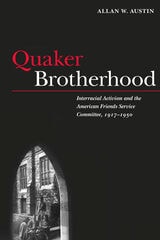
cover of Quaker Brotherhood: Interracial Activism and the American Friends Service Committee, 1917-1950

Quaker Brotherhood

Interracial Activism and the American Friends Service Committee, 1917-1950

Allan W. Austin

University of Illinois Press, 2012
 
The Religious Society of Friends and its service organization, the American Friends Service Committee (AFSC) have long been known for their peace and justice activism. The abolitionist work of Friends during the antebellum era has been well documented, and their contemporary anti-war and anti-racism work is familiar to activists around the world. Quaker Brotherhood is the first extensive study of the AFSC's interracial activism in the first half of the twentieth century, filling a major gap in scholarship on the Quakers' race relations work from the AFSC's founding in 1917 to the beginnings of the civil rights movement in the early 1950s.
 
Allan W. Austin tracks the evolution of key AFSC projects such as the Interracial Section and the American Interracial Peace Committee, which demonstrate the tentativeness of the Friends' activism in the 1920s, as well as efforts in the 1930s to make scholarly ideas and activist work more theologically relevant for Friends. Documenting the AFSC's efforts to help European and Japanese American refugees during World War II, Austin shows that by 1950, Quakers in the AFSC had honed a distinctly Friendly approach to interracial relations that combined scholarly understandings of race with their religious views.
 
In tracing the transformation of one of the most influential social activist groups in the United States over the first half of the twentieth century, Quaker Brotherhood presents Friends in a thoughtful, thorough, and even-handed manner. Austin portrays the history of the AFSC and race--highlighting the organization's boldness in some aspects and its timidity in others--as an ongoing struggle that provides a foundation for understanding how shared agency might function in an imperfect and often racist world.
 
Highlighting the complicated and sometimes controversial connections between Quakers and race during this era, Austin uncovers important aspects of the history of Friends, pacifism, feminism, American religion, immigration, ethnicity, and the early roots of multiculturalism.
[more]
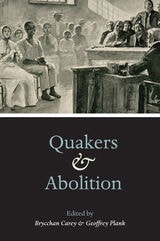
cover of Quakers and Abolition

Quakers and Abolition

Edited by Brycchan Carey and Geoffrey Plank

University of Illinois Press, 2014

This collection of fifteen insightful essays examines the complexity and diversity of Quaker antislavery attitudes across three centuries, from 1658 to 1890. Contributors from a range of disciplines, nations, and faith backgrounds show Quaker's beliefs to be far from monolithic. They often disagreed with one another and the larger antislavery movement about the morality of slaveholding and the best approach to abolition.

Not surprisingly, contributors explain, this complicated and evolving antislavery sensibility left behind an equally complicated legacy. While Quaker antislavery was a powerful contemporary influence in both the United States and Europe, present-day scholars pay little substantive attention to the subject. This volume faithfully seeks to correct that oversight, offering accessible yet provocative new insights on a key chapter of religious, political, and cultural history.

Contributors include Dee E. Andrews, Kristen Block, Brycchan Carey, Christopher Densmore, Andrew Diemer, J. William Frost, Thomas D. Hamm, Nancy A. Hewitt, Maurice Jackson, Anna Vaughan Kett, Emma Jones Lapsansky-Werner, Gary B. Nash, Geoffrey Plank, Ellen M. Ross, Marie-Jeanne Rossignol, James Emmett Ryan, and James Walvin.

[more]
cover of Quakers and Abolition

Quakers and Abolition

Brycchan Carey

University of Illinois Press, 2018
This collection of fifteen insightful essays examines the complexity and diversity of Quaker antislavery attitudes across three centuries, from 1658 to 1890. Contributors from a range of disciplines, nations, and faith backgrounds show Quaker's beliefs to be far from monolithic. They often disagreed with one another and the larger antislavery movement about the morality of slaveholding and the best approach to abolition. Not surprisingly, contributors explain, this complicated and evolving antislavery sensibility left behind an equally complicated legacy. While Quaker antislavery was a powerful contemporary influence in both the United States and Europe, present-day scholars pay little substantive attention to the subject. This volume faithfully seeks to correct that oversight, offering accessible yet provocative new insights on a key chapter of religious, political, and cultural history. Contributors include Dee E. Andrews, Kristen Block, Brycchan Carey, Christopher Densmore, Andrew Diemer, J. William Frost, Thomas D. Hamm, Nancy A. Hewitt, Maurice Jackson, Anna Vaughan Kett, Emma Jones Lapsansky-Werner, Gary B. Nash, Geoffrey Plank, Ellen M. Ross, Marie-Jeanne Rossignol, James Emmett Ryan, and James Walvin.
[more]
cover of Queering Black Atlantic Religions: Transcorporeality in Candomblé, Santería, and Vodou

Queering Black Atlantic Religions

Transcorporeality in Candomblé, Santería, and Vodou

Roberto Strongman

Duke University Press, 2019

In Queering Black Atlantic Religions Roberto Strongman examines Haitian Vodou, Cuban Lucumí/Santería, and Brazilian Candomblé to demonstrate how religious rituals of trance possession allow humans to understand themselves as embodiments of the divine. In these rituals, the commingling of humans and the divine produces gender identities that are independent of biological sex. As opposed to the Cartesian view of the spirit as locked within the body, the body in Afro-diasporic religions is an open receptacle. Showing how trance possession is a primary aspect of almost all Afro-diasporic cultural production, Strongman articulates transcorporeality as a black, trans-Atlantic understanding of the human psyche, soul, and gender as multiple, removable, and external to the body.
[more]
cover of Quest for a Christian America, 1800–1865: A Social History of the Disciples of Christ, Volume 1

Quest for a Christian America, 1800–1865

A Social History of the Disciples of Christ, Volume 1

David Edwin Harrell Jr.

University of Alabama Press, 2003

The definitive social history of the Disciples of Christ in the 19th century

Quest for a Christian America, 1800–1865: A Social History of the Disciples of Christ, Volume 1 by David Edwin Harrell Jr. is the definitive social history of the early Disciples of Christ and the broader Restoration Movement, one of the most influential religious reform movements in nineteenth-century America. Led by visionary figures such as Alexander Campbell and Barton W. Stone, the movement sought to restore the practices and principles of the early Christian church while promoting unity among believers in a rapidly changing nation.

Moving beyond traditional denominational history, Harrell examines the social, cultural, and political forces that shaped the movement's development between 1800 and the Civil War. He explores how Disciples responded to major issues of the era, including economic growth, reform movements, slavery, sectional conflict, patriotism, pacifism, and the challenges posed by an increasingly modern and diverse society. Through careful analysis, Harrell demonstrates how these concerns influenced both the movement's theology and its vision for a Christian nation.

Quest for a Christian America illuminates the origins of a movement whose descendants include the modern Christian Church (Disciples of Christ), Independent Christian Churches, and Churches of Christ. The book offers valuable insight into the relationship between religion, culture, and public life in nineteenth-century America.
[more]
cover of Questions on Aristotle's Categories

Questions on Aristotle's Categories

John Duns Scotus

Catholic University of America Press, 2014

This work is the first English translation of Scotus's commentary on Aristotle's Quaestiones super Praedicamenta. Although there are numerous Latin commentaries on Aristotle's Categories, Scotus's Questions is one of the few commentaries on the Categories written in the thirteenth century covering all of Aristotle's text, including the often neglected post-praedicamenta, and the only complete Latin commentary available in English. Moreover, unlike many of the commentaries, Scotus's text is one of the last commentaries to be written before the nominalist reduction of the categories to substance and quality. The question format allows Scotus a great deal of liberty to discuss the categories in detail, as well as matters that are only remotely raised by the text. Altogether, the forty-four questions cover the following subjects: questions 1-4 are prolegomena to the work itself and raise the question of its subject matter as well as whether there can be a science of the categories; questions 5-8 deal with equivocals, univocals, and denominatives; questions 9-11 discuss Aristotle's two rules regarding predication and the sufficiency of the categories; questions 12-36 discuss the four main categories treated by Aristotle, namely, substance, quantity, relation, and quality; and the remaining eight questions discuss the post-praedicamenta.
[more]