Results by title
496 books match the query 'Ethnic identity' and 4 start with q
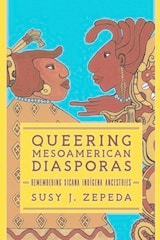
Queering Mesoamerican Diasporas
Remembering Xicana Indigena AncestriesSusy J. Zepeda
University of Illinois Press, 2022
A fascinating exploration of hidden Indígena histories and silences, Queering Mesoamerican Diasporas blends scholarship with spirit practices to reimagine the root work, dis/connection to land, and the political decolonization of Xicana/x peoples.

Queering Mestizaje
Transculturation and PerformanceAlicia Arrizón
University of Michigan Press, 2006

Quiché Rebelde
Religious Conversion, Politics, and Ethnic Identity in GuatemalaBy Ricardo Falla
University of Texas Press, 2001
Since the arrival of the Spanish in the sixteenth century, the Maya population of Guatemala has been forced to adapt to extraordinary challenges. Under colonial rule, the Indians had to adapt enough to satisfy the Spanish while resisting those changes not necessary for survival, applying their understanding of the world to the realities they confronted daily. Despite the major changes wrought in their way of life by centuries of submission, the Maya have managed to regenerate, and thus maintain, their self-identity.
Among the major challenges they have faced has been the imposition of outside religions. Quiché Rebelde examines what happened when Acción Católica came into the Guatemalan municipio of San Antonio Ilotenango, Quiché, to convert its inhabitants.
Ricardo Falla, a Guatemalan Jesuit priest and anthropologist, analyzes the movement's origins and why some people became part of it while others resisted. He shows how religion was used as another tool to readapt to the changing environment—natural, economic, political, and social. His work is the first major empirical study of how change occurred in a Maya community with no serious loss of Maya identity—and how the process of conversion is related to more general processes of cultural change that actually strengthen ethnic identity.

Quinceañera Style
Social Belonging and Latinx Consumer IdentitiesBy Rachel Valentina González
University of Texas Press, 2019
Winner of the Emily Toth Award for Best Single Work in Women's Studies, Popular Culture Association
Co-winner of the Elli Kongas Maranda Prize, Women's Section of the American Folklore Society (AFS)
A dynamic study of social negotiation and consumerism in the coming-of-age quinceañera celebration and the impact of normalizing spectacles of luxury.
Quinceañera celebrations, which recognize a girl’s transition to young womanhood at age fifteen, are practiced in Latinx communities throughout the Americas. But in the consumer-driven United States, the ritual has evolved from a largely religious ceremony to an elaborate party where social status takes center stage. Examining the many facets of this contemporary debut experience, Quinceañera Style reports on ethnographic fieldwork in California, Texas, the Midwest, and Mexico City to reveal a complex, compelling story. Along the way, we meet a self-identified transwoman who uses the quinceañera as an intellectual space in her activist performance art. We explore the economic empowerment of women who own barrio boutiques specializing in the quinceañera’s many accessories and made-in-China gowns. And, of course, we meet teens themselves, including a vlogger whose quince-planning tips have made her an online sensation.
Disrupting assumptions, such as the belief that Latino communities in the United States can’t desire upward mobility without abandoning ethnoracial cultural legacies, Quinceañera Style also underscores the performative nature of class and the process of constructing a self in the public, digital sphere.