Results by title
5448 books match the query 'History and criticism' and 31 start with q
Q. Aurelius Symmachus
A Political BiographyCristiana Sogno
University of Michigan Press, 2010
Symmachus was a brilliant orator, writer, and statesman, often flatly labeled as one of the last pagan senators. Cristiana Sogno offers a reconstruction of the political career of Symmachus through close analysis of his extensive writings, while also proposing a critical reevaluation of his historical importance. In contrast to traditional interpretation, Sogno's study demonstrates that Symmachus was primarily an influential politician, rather than a mere pagan zealot.
By portraying the individual experience of Symmachus, the book sets forth a new approach for interpreting the political aspirations, mentality, and attitudes of Roman senators. The much-studied question of the Christianization of the Western aristocracy has created the illusion of a Christian and a pagan aristocracy rigidly separated from each other. Through her study of Symmachus, Sogno demonstrates the primary importance of politics over religion in the public activity of the late Roman aristocracy. Although the book is specifically addressed to scholars and students of Late Antiquity, it will also be of interest to classicists, ancient historians, and non-specialists who wish to know more about this pivotal period in Roman history.
Cristiana Sogno received her Ph.D. in Classics and History from Yale University. Currently she is Townsend Assistant Professor of Classics at Cornell University. Visit Professor Sogno's website at: http://www.fordham.edu.
Qualified Hope
A Postmodern Politics of TimeMitchum Huehls
The Ohio State University Press, 2009
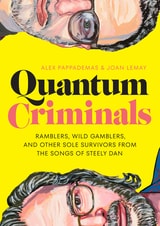
Quantum Criminals
Ramblers, Wild Gamblers, and Other Sole Survivors from the Songs of Steely DanBy Alex Pappademas and Joan LeMay
University of Texas Press, 2023
“ONE OF THE SHARPEST, FUNNIEST, AND BEST BOOKS EVER ABOUT ANY ROCK ARTIST”—Rolling Stone
“WEIRD AND WONDROUS”—New York Times
“I ADORED IT”—Michael Chabon
A literary and visual exploration of the songs of Steely Dan.
Steely Dan’s songs are exercises in fictional world-building. No one else in the classic-rock canon has conjured a more vivid cast of rogues and heroes, creeps and schmucks, lovers and dreamers and cold-blooded operators—or imbued their characters with so much humanity.
Pulling from history, lived experience, pulp fiction, the lore of the counterculture, and their own darkly comic imaginations, Donald Fagen and Walter Becker summoned protagonists who seemed like fully formed people with complicated pasts, scars they don’t talk about, delusions and desires and memories they can’t shake. From Rikki to Dr. Wu, Hoops McCann to Kid Charlemagne, Franny from NYU to the Woolly Man without a Face, every name is a locked-room mystery, beguiling listeners and earning the band an exceptionally passionate and ever-growing cult fandom.
Quantum Criminals presents the world of Steely Dan as it has never been seen, much less heard. Artist Joan LeMay has crafted lively, color-saturated images of her favorite characters from the Daniverse to accompany writer Alex Pappademas’s explorations of the famous and obscure songs that inspired each painting, in short essays full of cultural context, wild speculation, inspired dot-connecting, and the occasional conspiracy theory. All of it is refracted through the perspectives of the characters themselves, making for a musical companion unlike any other. Funny, discerning, and visually stunning, Quantum Criminals is a singular celebration of Steely Dan’s musical cosmos.
Quarter Notes
Improvisations and InterviewsCharles Wright
University of Michigan Press, 1995
This satisfying collection includes reminiscences and meditations on the details of memory and what it means to visit the past; the vices of titleism and the hydrosyllabic foot in poetry; a comparison of poems and journeys; appreciation of poets Donald Justice and John Crow Ransom; an attempt to define "image"; discussions of the current state of poetry; and various highlights from the Charles Wright Literary Festival.
Charles Wright's books of poetry include The World of the Ten Thousand Things and Country Music: Selected Early Poems. He received the 1993 Ruth Lilly Poetry Prize and the 1992 Award of Merit Medal from the American Academy of Arts and Letters. He is Souder Family Professor of English, University of Virginia.
Queequeg's Coffin
Indigenous Literacies and Early American LiteratureBirgit Brander Rasmussen
Duke University Press, 2012
By recovering the literatures and textual practices that were indigenous to the Americas, Birgit Brander Rasmussen reimagines the colonial conflict as one organized by alternative but equally rich forms of literacy. From central Mexico to the northeastern shores of North America, in the Andes and across the American continents, indigenous peoples and European newcomers engaged each other in dialogues about ways of writing and recording knowledge. In Queequeg's Coffin, such exchanges become the foundation for a new kind of early American literary studies.
Queer African Cinemas
Lindsey B. Green-Simms
Duke University Press, 2022
Queer Constellations
Subcultural Space In The Wake Of The CityDianne Chisholm
University of Minnesota Press, 2004
Discovers parallels between modern gay and lesbian views of urban life and Benjamin’s Paris, “the capital of the nineteenth century”
Queer Constellations investigates the dreams and catastrophes of recent urban history viewed through new queer narratives of inner-city life. The “gay village,” “gay mecca,” “gai Paris,” the “lesbian flaneur,” the “lesbian bohème”—these and other urban phantasmagoria feature paradoxically in this volume as figures of revolutionary utopia and commodity spectacle, as fossilized archetypes of social transformation and ruins of haunting cultural potential.
Dianne Chisholm introduces readers to new practices of walking, seeing, citing, and remembering the city in works by Neil Bartlett, Samuel R. Delany, Robert Glück, Alan Hollinghurst, Gary Indiana, Eileen Myles, Sarah Schulman, Gail Scott, Edmund White, and David Wojnarowicz. Reading these authors with reference to the history, sociology, geography, and philosophy of space, particularly to the everyday avant-garde production and practice of urban space, Chisholm reveals how—and how effectively—queer narrative documentary resembles and reassembles Walter Benjamin’s constellations of Paris, “capital of the nineteenth century.” Considering experimental queer writing in critical conjunction with Benjamin’s city writing, the book shows how a queer perspective on inner-city reality exposes contradictions otherwise obscured by mythic narratives of progress.If Benjamin regards the Paris arcade as a microcosm of high capitalism, wherein the (un)making of industrial society is perceived retrospectively, in contemporary queer narrative we see the sexually charged and commodity-entranced space of the gay bathhouse as a microcosm of late capitalism and as an exemplary site for excavating the contradictions of mass sex. In Chisholm’s book we discover how, looking back on the ruins of queer mecca, queer authors return to Benjamin to advance his “dialectics of seeing;” how they cruise the paradoxes of market capital, blasting a queer era out of the homogeneous course of history.
Queer Contiguities of Nigerian Literature
Kerry Manzo
Michigan State University Press, 2026
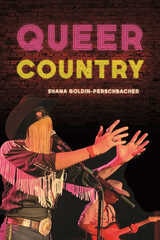
Queer Country
Shana Goldin-Perschbacher
University of Illinois Press, 2022
- A Variety Best Music Book of 2022
- A No Depression Most Memorable Music Book of 2022
- A Library Journal Best Arts and Humanities Book of 2022
- A Pitchfork Best Music Book of 2022
- A Boot Best Music Book of 2022
- A Ticketmaster Best Music Book of 2022
- A Happy Magazine Best Music Book of 2022
- Woody Guthrie First Book Award winner
- Awarded a Certificate of Merit in the 2023 ARSC Awards for Excellence in Historical Recorded Sound Research in the category Best Historical Research in Country, Folk, Roots, or World Music.
Though frequently ignored by the music mainstream, queer and transgender country and Americana artists have made essential contributions as musicians, performers, songwriters, and producers. Queer Country blends ethnographic research with analysis and history to provide the first in-depth study of these artists and their work. Shana Goldin-Perschbacher delves into the careers of well-known lesbian artists like k.d. lang and Amy Ray and examines the unlikely success of singer-songwriter Patrick Haggerty, who found fame forty years after releasing the first out gay country album. She also focuses on later figures like nonbinary transgender musician Rae Spoon and renowned drag queen country artist Trixie Mattel; and on recent breakthrough artists like Orville Peck, Amythyst Kiah, and chart-topping Grammy-winning phenomenon Lil Nas X. Many of these musicians place gender and sexuality front and center even as it complicates their careers. But their ongoing efforts have widened the circle of country/Americana by cultivating new audiences eager to connect with the artists’ expansive music and personal identities.
Detailed and one-of-a-kind, Queer Country reinterprets country and Americana music through the lives and work of artists forced to the margins of the genre's history.
Queer Economic Dissonance and Victorian Literature
Meg Dobbins
The Ohio State University Press, 2022
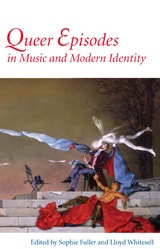
Queer Episodes in Music and Modern Identity
Edited by Sophie Fuller and Lloyd Whitesell
University of Illinois Press, 2001
Exploring the relationship between queer sexuality and music in the late nineteenth and early twentieth century
Queer Episodes in Music and Modern Identity approaches modern sexuality by way of music. Through the hidden or lost stories of composers, scholars, patrons, performers, audiences, repertoires, venues, and specific works, this intriguing volume explores points of intersection between music and queerness in Europe and the United States in the years 1870 to 1950--a period when dramatic changes in musical expression and in the expression of individual sexual identity played similar roles in washing away the certainties of the past. Pursuing the shadowy, obscured tracks of queerness, contributors unravel connections among dissident identities and concrete aspects of musical style, gestures, and personae.
Contributors are Byron Adams, Philip Brett, Malcolm Hamrick Brown, Sophie Fuller, Mitchell Morris, Jann Pasler, Ivan Raykoff, Fiona Richards, Eva Rieger, Gillian Rodger, Sherrie Tucker, and Lloyd Whitesell.
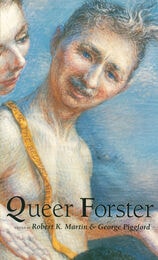
Queer Forster
Edited by Robert K. Martin and George Piggford
University of Chicago Press, 1997
Many previous critics of Forster downplayed his homosexuality or read Forster naively in terms of gay liberation. This collection situates Forster within the Bloomsbury Group and examines his relations to major figures such as Henry James, Edward Carpenter, and Virginia Woolf. Particular attention is paid to Forster's several accounts of India and their troubled relation to the British colonial enterprise. Analyzing a wide range of Forster's work, the authors examine material from Forster's undergraduate writings to stories written more than a half-century later.
A landmark book for the study of gender in literature, Queer Forster brings the terms "queer" and "gay" into conversation, opening up a dialogue on wider dimensions of theory and allowing a major revaluation of modernist inventions of sexual identity.

Queer Gothic
George E. Haggerty
University of Illinois Press, 2000
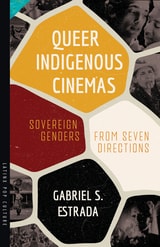
Queer Indigenous Cinemas
Sovereign Genders from Seven DirectionsGabriel S. Estrada
University of Arizona Press, 2026
The seven Indigenous directions—east, south, west, north, down, up, and center—provide a map of understanding gender in media history.
In Queer Indigenous Cinemas, scholar Gabriel S. Estrada offers an analysis of queer Indigenous media from the Americas, the Pacific, and the Caribbean. This groundbreaking work uses Indigenous directional space and sovereign mapping methods to uncover the emotional, spiritual, and cultural dimensions of queer Indigenous lives. The book’s seven chapters—each one of the directions—look closely at media such as cinema and streaming videos that draw on Indigenous concepts from diverse nations such as Diné, Caxcan, Kanaka Maoli, and Nehiyawak. Estrada discusses how the cinema brings into focus the ways that many Indigenous genders do not conform with the male/female binary, genders and sexualities that may or may not overlap with contemporary constructions of gay, lesbian, bisexual, transgender, intersex, and two-spirit (LGBTQI2+) identities.
Highlighting the struggles and resistances of two-spirit peoples, Estrada’s analysis engages with films that represent the diverse and sovereign identities of queer Indigenous peoples. Estrada provides a framework for understanding how queer Indigenous media producers confront colonial trauma and reclaims space for the spiritual and bodily sovereignty of LGBTQI2+ peoples.
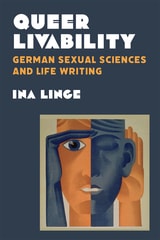
Queer Livability
German Sexual Sciences and Life WritingIna Linge
University of Michigan Press, 2023
Finalist: Waterloo Centre for German Studies Book Prize | December 10, 2024
This book brings together an exciting new archive of queer and trans voices from the history of sexual sciences in the German-speaking world. A new language to express possibilities of gender and sexuality emerged at the turn of the twentieth century, from Sigmund Freud’s theories of homosexuality in Vienna to Magnus Hirschfeld’s “third sex” in Berlin. Together, they provided a language of sex and sexuality that is still recognizable today. Queer Livability: German Sexual Sciences and Life Writing shows that individual voices of trans and queer writers had a significant impact on the production of knowledge about gender and sexuality during this time and introduces lesser known texts to a new readership. It shows the remarkable power of queer life writing in imagining and creating the possibilities of a livable life in the face of restrictive legal, medical, and social frameworks.
Queer Livability: German Sexual Sciences and Life Writing will be of interest to anyone who wants to learn more about LGBTQ+ history and literature. It also provides a fascinating insight into the historical roots for our thinking about gender and sexuality today. The book will be of relevance to an academic readership of students and faculty in German studies, literary studies, European history, and the interdisciplinary fields of gender and sexuality studies, medical humanities, and the history of sexuality.

Queer Marxism in Two Chinas
Petrus Liu
Duke University Press, 2015
Queer Nations
Marginal Sexualities in the MaghrebJarrod Hayes
University of Chicago Press, 2000
In this incisive postcolonial study, Jarrod Hayes uses literary analysis to examine how Francophone novelists from the Maghreb engaged in a diametric nation-building project. Their works imagined a diverse nation peopled by those who were excluded by the dominant political discourses, especially those who did not conform to traditional sexual norms. By incorporating representations of marginal sexualities, sexual dissidence, and gender insubordination, Maghrebian novelists imagined an anticolonial struggle that would result in sexual liberation and envisioned nations that could be defined and developed inclusively.
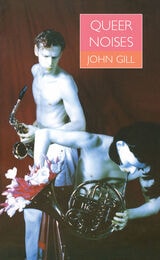
Queer Noises
Male and Female Homosexuality in Twentieth-Century MusicJohn Gill
University of Minnesota Press, 1995
Queer Optimism
Lyric Personhood and Other Felicitous PersuasionsMichael D. Snediker
University of Minnesota Press, 2008
A new paradigm for queer theory
Michael Snediker offers a much-needed counterpoint to queer theoretical discourse, which has long privileged melancholy, self-shattering, incoherence, shame, and the death drive. Recovering the forms of positive affect that queer theory has jettisoned, Snediker insists that optimism must itself be taken beyond conventional tropes of hope and futurity and reimagined as necessary for critical engagement.
Through fresh, perceptive, and sensitive readings of the poetry of Emily Dickinson, Hart Crane, Jack Spicer, and Elizabeth Bishop, Snediker reveals that each of these poets demonstrated an interest in the durability of positive affects. Dickinson, Snediker argues, expresses joy and grace as much as pain and loss, and the myriad cryptic smiles in Hart Crane’s White Building contradict prevailing narratives of Crane’s apocryphal literary failures and eventual suicide. Snediker’s ambitious and sophisticated study, informed by thinkers such as Winnicott, Deleuze, and de Man, both supplements and challenges the work of queer theory’s leading figures, including Judith Butler, Leo Bersani, Eve Kosofsky Sedgwick, and Lee Edelman. Queer Optimism revises our understanding of queer love and affiliation, examining Spicer’s serial collusion with matinee idol Billy the Kid as well as the critically neglected force of Bishop’s epistolary and poetic reparations of the drowned figure of Hart Crane. In doing so, Snediker persuasively reconceives a theoretical field of optimism that was previously unavailable to scrupulous critical inquiry and provides a groundbreaking approach to modern American poetry and poetics.
Queer Tidalectics
Linguistic and Sexual Fluidity in Contemporary Black Diasporic LiteratureEmilio Amideo
Northwestern University Press, 2021
Amideo engages and extends the work of Black queer studies, Oceanic studies, ecocriticism, phenomenology, and new materialism through the theorizations of Sara Ahmed, Omise’eke Natasha Tinsley, M. Jacqui Alexander, Édouard Glissant, José Esteban Muñoz, and Edward Kamau Brathwaite, among others. Ambitious in scope and captivating to read, Queer Tidalectics brings Caribbean writers like Glissant and Brathwaite into queer literary analysis—a major scholarly contribution.
Queer Velocities
Time, Sex, and Biopower on the Early Modern StageJennifer Eun-Jung Row
Northwestern University Press, 2022
The twin innovations of precise, portable timepieces and the development of the theater as a state institution together ignited new types of embodiments, orderly and disorderly pleasures, and normative and wayward rhythms of life. Row leverages a painstakingly formalist and rhetorical analysis of tragedies by Jean Racine and Pierre Corneille to show how the staging of delay or haste can critically interrupt the normative temporalities of marriage, motherhood, mourning, or sovereignty—the quotidian rhythms and paradigms so necessary for the biopolitical management of life. Row’s approach builds on the queer turn to temporality and Elizabeth Freeman’s notion of the chronobiopolitical to wager that queerness can also be fostered by the sensations of disruptive speed and slowness. Ultimately, Row suggests that the theater not only contributed to the glitter of Louis XIV’s absolutist spectacle but also ignited new forms of knowing and feeling time, as well as new modes of loving, living, and being together.
Queer Voices in Hip Hop
Cultures, Communities, and Contemporary PerformanceLauron J. Kehrer
University of Michigan Press, 2022
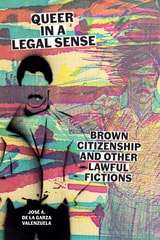
Queer in a Legal Sense
Brown Citizenship and Other Lawful FictionsJosé A. de la Garza Valenzuela
University of Texas Press, 2026
Contrasting works by queer Chicano writers against the legal landscape of sexuality and migration to interrogate the “lawful fiction” that denies queer migrants citizenship and community.
Activists for immigrants and queer people under assault by US authorities focus overwhelmingly on protections presumed to be afforded by citizenship through narratives that have rarely had a place for queer immigrants, who have consistently faced special obstacles to legal entry and citizenship that only recently are being applied more widely. Queer in a Legal Sense studies literary works by gay Chicanx writers alongside instruments of law, showing through this juxtaposition how racialized queer people have been imagined as nonviable from the standpoint of citizenship. In stories by John Rechy, Arturo Islas, Rigoberto González, Michael Nava, and Jaime Cortez, José de la Garza Valenzuela finds what has gone missing in the migrant movement’s pursuit of gendered avenues to civic participation. Further, these works illuminate the production of fictions in canons of law, like those announced by the Florida legislature’s “Purple Pamphlet” and by the US Supreme Court in Boutilier v. INS and Bowers v. Hardwick. Queer in a Legal Sense argues that, through selective ommissions and inclusions, legal fictions place queerness outside the boundaries of citizenship and powerfully undermine queer representation in pro-migrant advocacy.

Queering Cold War Poetry
Ethics of Vulnerability in Cuba and the United StatesEric Keenaghan
The Ohio State University Press, 2009
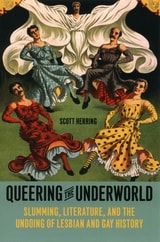
Queering the Underworld
Slumming, Literature, and the Undoing of Lesbian and Gay HistoryScott Herring
University of Chicago Press, 2007
In this major rethinking of American literature and culture, Scott Herring explores how a key group of authors manipulated this genre to paradoxically evade the confines of sexual identification. Queering the Underworld examines a range of writers, from Jane Addams and Willa Cather to Carl Van Vechten and Djuna Barnes, revealing how they fulfilled the conventions of slumming literature but undermined its goals, and in the process, queered the genre itself. Their work frustrated the reader’s desire for sexual knowledge, restored the inscrutability of sexual identity, and cast doubt on the value of a homosexual subculture made visible and therefore subject to official control.
Herring is persuasive and polemical in connecting these writers to ongoing debates about lesbian and gay history and politics, and Queering the Underworld will be widely read by students and scholars of literature, history, and sexuality.

Questing Fictions
Latin America’s Family RomanceDjelal KadirForeword by Terry Cochran
University of Minnesota Press, 1986
Questing Fictions was first published in 1986. Minnesota Archive Editions uses digital technology to make long-unavailable books once again accessible, and are published unaltered from the original University of Minnesota Press editions.
Questing Fictions analyzes twentieth-century Latin American fiction in the light of contemporary literary theory. Djelal Kadir examines key works by several writers—including Jorges Luis Borges, Octavio Paz, Lezama Lima, Alejo Carpentier, Juan Rulfo, and Carlos Fuentes—and demonstrates how these writers are obliged to invent their own reality and how their successors inevitably must continue that inventive tradition. In a larger sense, Kadir describes how works of literature originate and, in turn, generate other literary works.
Aiming at the specific nature of discourse written from the perspective of non-European cultures, Questing Fictions identifies and focuses on the predicament of writers caught between the cultural domination of Europe and the need to strive for cultural autonomy. Kadir explains that this predicament is shared by all Latin American authors and may well characterize all recently emergent literatures. He traces the problems of continuity and rupture within the Latin American tradition and addresses, as well, deeper questions of narrative and narration. In the process, Kadir reveals the interrelatedness of the continent's principal fables and shows their relationship to the larger Western tradition. Finally, Questing Fictions posits that Latin American narratives cannot escape the the quest for an identity that they can never fully attain.
Questions of Poetics
Language Writing and ConsequencesBarrett Watten
University of Iowa Press, 2016
Each chapter is a theoretical inquiry into an aspect of poetics in an expanded sense—from the relation of experimental poetry to cultural logics of liberation and political economy, to questions of community and the politics of the avant-garde, to the cultural contexts where it is produced and intervenes. Each serves as a kind of thought experiment that theorizes and assesses the consequences of Language writing in expanded fields of meaning that include history, political theory, art history, and narrative theory. While all are grounded in a series of baseline questions of poetics, they also polemically address the currently turbulent debates on the politics of the avant-garde, especially Language writing, among emerging communities of poets.
In manifold ways, Watten masterfully demonstrates the aesthetic and political aims of Language writing, its influence on emerging literary schools, and its present aesthetic, critical, and political horizons. Questions of Poetics will be a major point of reference in continuing debates on poetry and literary history, a critical reexamination for already familiar readers and a clearly presented introduction for new ones.
Questions of Travel
Postmodern Discourses of DisplacementCaren Kaplan
Duke University Press, 1996
Addressing a wide range of writers, including Paul Fussell, Edward Said, James Clifford, Gilles Deleuze, Jean Baudrillard, Gayatri Spivak, Edward Soja, Doreen Massey, Chandra Mohanty, and Adrienne Rich, Kaplan demonstrates that symbols and metaphors of travel are used in ways that obscure key differences of power between nationalities, classes, races, and genders. Neither rejecting nor dismissing the powerful testimony of individual experiences of modern exile or displacement, Kaplan asks how mystified metaphors of travel might be avoided. With a focus on theory’s colonial discourses, she reveals how these metaphors continue to operate in the seemingly liberatory critical zones of poststructuralism and feminist theory. The book concludes with a critique of the politics of location as a form of essentialist identity politics and calls for new feminist geographies of place and displacement.
Quick, Said the Bird
Williams, Eliot, Moore, and the Spoken WordRichard Swigg
University of Iowa Press, 2012
Quiet Methodologies
Humility in the HumanitiesSuzanne Bost
University of Minnesota Press, 2025
Reimagining humanities scholarship with humility and inclusive attention
How might foregrounding the writings of colonized peoples transform the ways we work in the humanities? In an era dominated by loud political rhetoric, Suzanne Bost advocates for quieter modes of scholarship: intellectual humility rather than ego, collaboration and conversation rather than singular argumentation, continual reflection and revision rather than defensiveness, and a willingness to believe in different ways of being and knowing rather than adhering to academic norms. With Quiet Methodologies, she demonstrates practical decolonial scholarship and proposes alternative approaches for fostering meaningful engagement.
Turning to feminist, queer, and decolonial writings from Gloria Anzaldúa, Alexis Pauline Gumbs, Audre Lorde, and many others, Bost reflects on what we do when we work with literature, culture, and ideas. She weaves together multiple voices, methods of writing, and culturally diverse epistemologies and uses creative devices such as collage, her own original poetry, revision, lists, images, and conversation to disengage academic thought and writing from colonial theories and archives that have passed as neutral. Eschewing conventional monograph formats, her work embraces a reciprocal and heterogeneous learning process with profound ethical implications.
Part of a movement of reimagining research and education through care, Quiet Methodologies is a powerful exploration of the possibilities of criticism during crises. It encourages readers to be visionary and pragmatic, challenging current conditions and offering alternative ideas for the future of the humanities.
Retail e-book files for this title are screen-reader friendly with images accompanied by short alt text and/or extended descriptions.
Quince Duncan
Writing Afro-Costa Rican and Caribbean IdentityDorothy E. Mosby
University of Alabama Press, 2013