Results by title
1947 books match the query 'Music' and 8 start with q
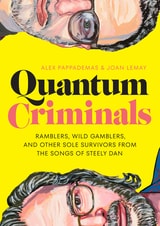
Quantum Criminals
Ramblers, Wild Gamblers, and Other Sole Survivors from the Songs of Steely DanBy Alex Pappademas and Joan LeMay
University of Texas Press, 2023
“ONE OF THE SHARPEST, FUNNIEST, AND BEST BOOKS EVER ABOUT ANY ROCK ARTIST”—Rolling Stone
“WEIRD AND WONDROUS”—New York Times
“I ADORED IT”—Michael Chabon
A literary and visual exploration of the songs of Steely Dan.
Steely Dan’s songs are exercises in fictional world-building. No one else in the classic-rock canon has conjured a more vivid cast of rogues and heroes, creeps and schmucks, lovers and dreamers and cold-blooded operators—or imbued their characters with so much humanity.
Pulling from history, lived experience, pulp fiction, the lore of the counterculture, and their own darkly comic imaginations, Donald Fagen and Walter Becker summoned protagonists who seemed like fully formed people with complicated pasts, scars they don’t talk about, delusions and desires and memories they can’t shake. From Rikki to Dr. Wu, Hoops McCann to Kid Charlemagne, Franny from NYU to the Woolly Man without a Face, every name is a locked-room mystery, beguiling listeners and earning the band an exceptionally passionate and ever-growing cult fandom.
Quantum Criminals presents the world of Steely Dan as it has never been seen, much less heard. Artist Joan LeMay has crafted lively, color-saturated images of her favorite characters from the Daniverse to accompany writer Alex Pappademas’s explorations of the famous and obscure songs that inspired each painting, in short essays full of cultural context, wild speculation, inspired dot-connecting, and the occasional conspiracy theory. All of it is refracted through the perspectives of the characters themselves, making for a musical companion unlike any other. Funny, discerning, and visually stunning, Quantum Criminals is a singular celebration of Steely Dan’s musical cosmos.
Quartetto
Four Parts for String QuartetGiuseppe Verdi
University of Chicago Press, 2011
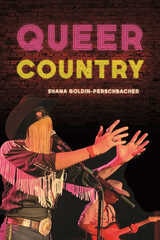
Queer Country
Shana Goldin-Perschbacher
University of Illinois Press, 2022
- A Variety Best Music Book of 2022
- A No Depression Most Memorable Music Book of 2022
- A Library Journal Best Arts and Humanities Book of 2022
- A Pitchfork Best Music Book of 2022
- A Boot Best Music Book of 2022
- A Ticketmaster Best Music Book of 2022
- A Happy Magazine Best Music Book of 2022
- Woody Guthrie First Book Award winner
- Awarded a Certificate of Merit in the 2023 ARSC Awards for Excellence in Historical Recorded Sound Research in the category Best Historical Research in Country, Folk, Roots, or World Music.
Though frequently ignored by the music mainstream, queer and transgender country and Americana artists have made essential contributions as musicians, performers, songwriters, and producers. Queer Country blends ethnographic research with analysis and history to provide the first in-depth study of these artists and their work. Shana Goldin-Perschbacher delves into the careers of well-known lesbian artists like k.d. lang and Amy Ray and examines the unlikely success of singer-songwriter Patrick Haggerty, who found fame forty years after releasing the first out gay country album. She also focuses on later figures like nonbinary transgender musician Rae Spoon and renowned drag queen country artist Trixie Mattel; and on recent breakthrough artists like Orville Peck, Amythyst Kiah, and chart-topping Grammy-winning phenomenon Lil Nas X. Many of these musicians place gender and sexuality front and center even as it complicates their careers. But their ongoing efforts have widened the circle of country/Americana by cultivating new audiences eager to connect with the artists’ expansive music and personal identities.
Detailed and one-of-a-kind, Queer Country reinterprets country and Americana music through the lives and work of artists forced to the margins of the genre's history.
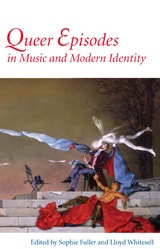
Queer Episodes in Music and Modern Identity
Edited by Sophie Fuller and Lloyd Whitesell
University of Illinois Press, 2001
Exploring the relationship between queer sexuality and music in the late nineteenth and early twentieth century
Queer Episodes in Music and Modern Identity approaches modern sexuality by way of music. Through the hidden or lost stories of composers, scholars, patrons, performers, audiences, repertoires, venues, and specific works, this intriguing volume explores points of intersection between music and queerness in Europe and the United States in the years 1870 to 1950--a period when dramatic changes in musical expression and in the expression of individual sexual identity played similar roles in washing away the certainties of the past. Pursuing the shadowy, obscured tracks of queerness, contributors unravel connections among dissident identities and concrete aspects of musical style, gestures, and personae.
Contributors are Byron Adams, Philip Brett, Malcolm Hamrick Brown, Sophie Fuller, Mitchell Morris, Jann Pasler, Ivan Raykoff, Fiona Richards, Eva Rieger, Gillian Rodger, Sherrie Tucker, and Lloyd Whitesell.
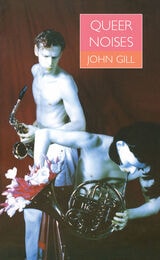
Queer Noises
Male and Female Homosexuality in Twentieth-Century MusicJohn Gill
University of Minnesota Press, 1995
Queer Voices in Hip Hop
Cultures, Communities, and Contemporary PerformanceLauron J. Kehrer
University of Michigan Press, 2022
Queer and Trans Aesthetics
Lloyd Whitesell
University of Michigan Press, 2026
If a creative individual identifies as queer or trans, does that fact belong solely to the realm of biography, or does it pertain to their artistic achievement? In Queer and Trans Aesthetics, Lloyd Whitesell discusses literature, visual culture, audio-visual media, music, and performance from the 19th to the 21st century. Through this analysis, Whitesell develops a systematic framework to enrich our understanding of LGBTQ aesthetics and cultural production. He traces the history of queer aesthetic inquiry, develops a justification for a synthetic approach, identifies a fund of expressive strategies motivated by queer subjectivity, and highlights how such strategies create affinity across differences of gender, race, local context, and artistic media.
Rooted in a gender-inclusive theory of queer/trans subjectivity, the book draws on testimony from people of diverse backgrounds, genders, and races. Whitesell engages with debates in the existing scholarly literature while making connections between a wide range of artists: some from mainstream canons, some established subcultural figures, and others only now emerging as notable contributors to queer culture. The book explores five expressive archetypes or poses which have had profound significance in queer art traditions: the Monster, the Victim, the Trickster, the Dandy, and the Dreamer. Each offers a repertoire of creative responses to social oppression and configures queer subjective experience in a unique way. With its unique systematic approach, Queer and Trans Aesthetics enhances our knowledge of queer aesthetic traditions across genres and time.
Quelques riens pour album
Gioachino Rossini
University of Chicago Press, 1982