Results by title
936 books match the query 'LGBTQ+ Studies' and 78 start with q
Queer Tourism
Geographies of Globalization, Volume 8Jasbir K. Puar, ed.
Duke University Press, 0
Essays explore a range of geographical areas and cover topics that include an autoethnographic account of a queer traveler in Cuba, the development of gay and lesbian tourism in Madrid and Mexico, and gay and lesbian tourist events such as World Pride 2001 in Rome. The collection also includes an essay focusing on lesbian tourism—a study of the history of lesbian tourism on Eresos, Lesvos.
Contributors. Lionel Cantú, Gabriel Giorgi, Venetia Kantsa, Lawrence La Fountain-Stokes, Michael Luongo, Kevin Markwell, Jasbir Kaur Puar, Dereka Rushbrook
Queer Traffic
Sex, Panic, Free TradeJennifer Tyburczy
Duke University Press, 2025

Queer Transexions of Race, Nation, and Gender, Volume 15
Anne McClintock, Phillip Brian Harper, José Esteban Muñoz and Trish Rosen, eds.
Duke University Press, 0
In the first section of this issue, Race and Queer Sexuality, international authors address topics ranging from Asian American queer identity and its relation to transnational and diasporic concerns to homophobia and its relationship to black nationalism in South Africa. Other subjects include, sexuality, race, and public space; lesbian pedagogy and the nation in Latin America; and an analysis of cross-race and cross-gender drag in the work of L.A. drag queen Vaginal Creme Davis. In the second section, The Politics of Transgression, contributors focus on transgression and its relationship to power and history. One essay explores Irish immigration in the U.S. and the Irish female body as a figure of transnational contagion and blood panic, while another focuses on Oscar Wilde, race, and queer sexuality. Other pieces include a meditation on British filmmaker and writer Derek Jarman’s film, Blue.
Race and Queer Sexuality confronts the limitations of prior work in queer theory while providing a starting point for discussion of race, queer sexuality, and the politics of transgression that will be part of queer theory of the future.
Contributors. Judith Butler, David Eng, Licia Fiol-Mata, Judith Halberstam, Phillip Brian Harper, Neville Hoad, Rachel Holmes, Don Kulick, Tim Lawrence, Rosalind Morris, José Esteban Muñoz, Ben Singer, David Valentine, Priscilla Wald, Riki Anne Wilchins
Queer Twin Cities
University of Minnesota Press, 2010
A pioneering look at the queer history, politics, and spaces of the Twin Cities
The Twin Cities is home to one of the largest and most vital GLBT populations in the nation—and one of the highest percentages of gay residents in the country. Drawn from the pioneering work of the Twin Cities GLBT Oral History Project—a collective organization of students, scholars, and activists devoted to documenting and interpreting the lives of GLBT people in Minneapolis and St. Paul—Queer Twin Cities is a uniquely critical collection of essays on Minnesota’s vibrant queer communities, past and present.
A rich blend of oral history, archival research, and ethnography, Queer Twin Cities uses sexuality to chart connections between people’s lives in Minnesota. Topics range from turn-of-the-century Minneapolis amid moral reform—including the highly publicized William Williams murder trial and efforts to police Bridge Square, aka ‘skid row’—to northern Minnesota and the importance of male companionship among lumber workers, and to postwar life, when the increased visibility of queer life went hand in hand with increased regulation, repression, and violence. Other essays present a portrait of early queer spaces in the Twin Cities, such as Kirmser’s Bar, the Viking Room, and the Persian Palms, and the proliferation of establishments like the Dugout and the 19 Bar. Exploring the activism of GLBT Two-Spirit indigenous people, the antipornography movements of the 1980s, and the role of gay men in the gentrification of Minneapolis neighborhoods, this volume brings the history of queer life and politics in the Twin Cities into fascinating focus.Engaging and revelatory, Queer Twin Cities offers a critical analysis of local history and community and fills a glaring omission in the culture and history of Minnesota, looking not only to a remarkable past but to our collective future.
Queer Visibility in Post-socialist Cultures
Edited by Nárcisz Fejes and Andrea P. Balogh
Intellect Books, 2013
Queer Voices in Hip Hop
Cultures, Communities, and Contemporary PerformanceLauron J. Kehrer
University of Michigan Press, 2022
Queer Wars
The New Gay Right and Its CriticsPaul Robinson
University of Chicago Press, 2004
Queer Wars limns this new gay right, offering the first extended consideration of gay conservatism and its more trenchant critics. Here celebrated historian of gay culture Paul Robinson draws particular attention to three features of this new political movement. First, he explores how gay conservatives have rejected the idea that commitment to gay freedom should involve equal dedication to the causes of other marginalized people, be they racial minorities, women, or the poor. Second, Robinson demonstrates why gay conservatives embrace more traditional gender ideals—why they are hostile to effeminacy among men and mannishness among women. Finally, exploring the support for sexual restraint among gay conservatives, Robinson dissects their condemnation of promiscuity and their assault on behavior they deem dissolute.
Timely and rich in suggestive propositions, Queer Wars will prove to be essential reading for anyone interested in gay culture and contemporary politics.
Queer about Comics
Darieck Scott and Ramzi Fawaz, special issue editors
Duke University Press, 2018
Contributors examine the relationships among reader, creator, and community across a range of comics production, including mainstream superhero comics, independent LGBTQ comics, and avant-garde and experimental feminist narratives. They also address queer forms of identification elicited by the classic X-Men character Rogue, the lesbian grassroots publishing networks that helped shape Alison Bechdel’s oeuvre, and the production of black queer fantasy in the Black Panther comic book series, among other topics.
Contributors andré carrington, Anthony Michael D’Agostino, Ramzi Fawaz, Margaret Galvan, Yetta Howard, Joshua Abraham Kopin, Kate McCullough, Darieck Scott, Jessica Q. Stark, Shelley Streeby, Rebecca Wanzo
Queer and Trans Aesthetics
Lloyd Whitesell
University of Michigan Press, 2026
If a creative individual identifies as queer or trans, does that fact belong solely to the realm of biography, or does it pertain to their artistic achievement? In Queer and Trans Aesthetics, Lloyd Whitesell discusses literature, visual culture, audio-visual media, music, and performance from the 19th to the 21st century. Through this analysis, Whitesell develops a systematic framework to enrich our understanding of LGBTQ aesthetics and cultural production. He traces the history of queer aesthetic inquiry, develops a justification for a synthetic approach, identifies a fund of expressive strategies motivated by queer subjectivity, and highlights how such strategies create affinity across differences of gender, race, local context, and artistic media.
Rooted in a gender-inclusive theory of queer/trans subjectivity, the book draws on testimony from people of diverse backgrounds, genders, and races. Whitesell engages with debates in the existing scholarly literature while making connections between a wide range of artists: some from mainstream canons, some established subcultural figures, and others only now emerging as notable contributors to queer culture. The book explores five expressive archetypes or poses which have had profound significance in queer art traditions: the Monster, the Victim, the Trickster, the Dandy, and the Dreamer. Each offers a repertoire of creative responses to social oppression and configures queer subjective experience in a unique way. With its unique systematic approach, Queer and Trans Aesthetics enhances our knowledge of queer aesthetic traditions across genres and time.
Queer and Trans Migrations
Dynamics of Illegalization, Detention, and DeportationEdited by Eithne Luibheid and Karma R. Chavez
University of Illinois Press, 2020
Bridging voices and works from inside and outside of the academy, and international in scope, Queer and Trans Migrations illuminates new perspectives in the field of queer and trans migration studies.
Contributors: Andrew J. Brown, Julio Capó, Jr., Anna Carastathis, Jack Cáraves, Karma R. Chávez, Ryan Conrad, Elif, Katherine Fobear, Monisha Das Gupta, Jamila Hammami, Edward Ou Jin Lee, Leece Lee-Oliver, Eithne Luibhéid, Hana Masri, Yasmin Nair, Bamby Salcedo, Fadi Saleh, Rafael Ramirez Solórzano, José Guadalupe Herrera Soto, Myrto Tsilimpounidi, Suyapa Portillo Villeda, Sasha Wijeyeratne, Ruben Zecena

Queer in Russia
A Story of Sex, Self, and the OtherLaurie Essig
Duke University Press, 1999
While male homosexual acts were criminalized in Russia before 1993, women attracted to women were policed by the medical community, who saw them less as criminals than as diseased persons potentially cured by drug therapy or transsexual surgery. After describing accounts of pre-perestroika persecution, Essig examines the more recent state of sexual identities in Russia. Although the fall of communism brought new freedom to Russian queers, there are still no signs of a mass movement forming around the issue, and few identify themselves as lesbians or gay men, even when they are involved in same-sex relations. Essig does reveal, however, vibrant manifestations of gay life found at the local level—in restaurants, discos, clubs, and cruising strips, in newspapers, journals, literature, and the theater. Concluding with a powerful exploration of the surprising affinities between some of Russia’s most prominent nationalists and its queers, Queer in Russia fills a gap in both Russian and cultural studies.
Queer in Translation
Sexual Politics under Neoliberal IslamEvren Savci
Duke University Press, 2021
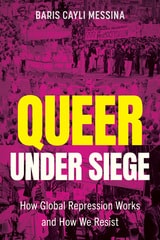
Queer under Siege
How Global Repression Works and How We ResistBaris Cayli Messina
Temple University Press, 2027
Queer Under Siege reveals that collective repression is not only a global system, but also a moral process that shapes how people tolerate (and even justify) exclusion and oppression. Baris Cayli Messina probes the question of what kind of society sustains its morality by expelling those who are already most vulnerable? and interrogates why societies continually generate the conditions that produce repression, requiring the unyielding struggle of queer people to survive.
Cayli Messina draws on archives, court records, suicide letters, and activist testimony from the around the world to develop a conceptual framework to trace this process through three interlocking forms and mechanisms: moral eviction, which defines moral repression; punitive hypervisibility, which animates political repression; and sanctioned oblivion, which consolidates epistemic repression.
Queer Under Siege shows that the criminalization of queer life is not a misfire, but an intentional and systematic action that makes disparate societies perceive social order as safe. Arguing that survival is a political act across borders and generations, Cayli Messina traces effective methods of queer activism.

Queer/Early/Modern
Carla Freccero
Duke University Press, 2006
Combining feminist theory, queer theory, psychoanalysis, deconstruction, and literary criticism, Freccero takes up a series of theoretical and historical issues related to debates in queer theory, feminist theory, the history of sexuality, and early modern studies. She juxtaposes readings of early and late modern texts, discussing the lyric poetry of Petrarch, Louise Labé, and Melissa Ethridge; David Halperin’s take on Michel Foucault via Apuleius’s The Golden Ass and Boccaccio’s Decameron; and France’s domestic partner legislation in connection with Marguerite de Navarre’s Heptameron. Turning to French cleric Jean de Léry’s account, published in 1578, of having witnessed cannibalism and religious rituals in Brazil some twenty years earlier and to the twentieth-century Brandon Teena case, Freccero draws on Jacques Derrida’s concept of spectrality to propose both an ethics and a mode of interpretation that acknowledges and is inspired by the haunting of the present by the past.
Queer/Migration, Volume 14
Eithne Luibhéid ,spec issue ed
Duke University Press, 0
The issue, featuring essays by both established and emerging scholars, situates queer migration within global processes of colonization, globalization, capitalism, nationalism, and slavery. One contributor argues that a queer Atlantic history emerged during the Middle Passage experience of slavery, connecting this history to the contemporary movement of Haitian refugees and Dominican migrant laborers. Another contributor considers how the policing of queer migrant bodies and of “unnatural offenses” by colonial administrations in the Nicobar and Andaman islands ultimately reconfigured the ecology of the entire Indian Ocean archipelago. Still another contributor theorizes how gay couples composed of young Asian émigrés and considerably older white citizens negotiate Australian immigration policy to subvert dominant forms of nationalism and citizenship embedded in long histories of inequality between Australia and Asia. Other essays explore how transgender histories and theories transform queer migration scholarship; how “queer complicities” with contemporary neoliberal migration politics uphold regimes of violence and inequality; and how migration regimes and settlement policies in various parts of the world identify individuals as “queer,” “deviant,” or “abnormal” within racial, gender, class, cultural, and geopolitical hierarchies.
Contributors. Bobby Benedicto, Carlos Ulises Decena, Kale Bantigue Fajardo, Maja Horn, Adi Kuntsman, Eithne Luibhéid, Clare Sears, Omise’eke Natasha Tinsley, Kath Weston, Audrey Yue
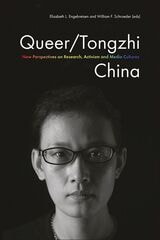
Queer/Tongzhi China
New Perspectives on Research, Activism and Media CulturesEdited by Elisabeth L. Engebretsen and William F. Schroeder
National University of Singapore Press, 2015
Queerbaiting and Fandom
Teasing Fans through Homoerotic PossibilitiesJoseph Brennan
University of Iowa Press, 2019
In this first-ever comprehensive examination of queerbaiting, fan studies scholar Joseph Brennan and his contributors examine cases that shed light on the sometimes exploitative industry practice of teasing homoerotic possibilities that, while hinted at, never materialize in the program narratives. Through a nuanced approach that accounts for both the history of queer representation and older fan traditions, these essayists examine the phenomenon of queerbaiting across popular TV, video games, children’s programs, and more.
Contributors: Evangeline Aguas, Christoffer Bagger, Bridget Blodgett, Cassie Brummitt, Leyre Carcas, Jessica Carniel, Jennifer Duggan, Monique Franklin, Divya Garg, Danielle S. Girard, Mary Ingram-Waters, Hannah McCann, Michael McDermott, E. J. Nielsen, Emma Nordin, Holly Eva Katherine Randell-Moon, Emily E. Roach, Anastasia Salter, Elisabeth Schneider, Kieran Sellars, Isabela Silva, Guillaume Sirois, Clare Southerton
Queering Gay and Lesbian Studies
Thomas Piontek
University of Illinois Press, 2005
In this pioneering new study, Thomas Piontek provides a critical analysis of the development of gay and lesbian studies alongside the development of queer theory, the disputes between them, and criticism of their activities from both in and outside of the gay academic community. Examining disputes about transgendering, gay male promiscuity, popular culture, gay history, political activism, and non-normative sexual practices, Piontek argues that it is vital to queer gay and lesbian studies--opening this emerging discipline to queer critical interventions without, however, further institutionalizing queer theory.
Queering Mesoamerican Diasporas
Remembering Xicana Indigena AncestriesSusy J. Zepeda
University of Illinois Press, 2022
A fascinating exploration of hidden Indígena histories and silences, Queering Mesoamerican Diasporas blends scholarship with spirit practices to reimagine the root work, dis/connection to land, and the political decolonization of Xicana/x peoples.
Queering Mestizaje
Transculturation and PerformanceAlicia Arrizón
University of Michigan Press, 2006
Queering Rehoboth Beach
Beyond the BoardwalkJames T. Sears
Temple University Press, 2024
Sears draws upon extensive oral history accounts, archival material, and personal narratives to chronicle “the Battle for Rehoboth,” which unfolded in the late 20th century, as conservative town leaders and homeowners opposed progressive entrepreneurs and gay activists. He recounts not just the emergence of the gay and lesbian bars, dance clubs, and organizations that drew the queer community to the region, but also the efforts of local politicians and homeowners, among other groups who fought to develop and protect the traditional identity of this beach town. Moreover, issues of race, class, and gender and sexuality informed opinions as residents and visitors struggled with the AIDS crisis and the legacy of Jim Crow.
Queering Rehoboth Beach is more than just an inspiring story about a community’s resilience and determination to establish a safe space for itself in the wake of the era of Don’t Ask, Don’t Tell. It is also a terrific beach read.
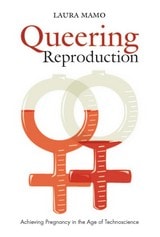
Queering Reproduction
Achieving Pregnancy in the Age of TechnoscienceLaura Mamo
Duke University Press, 2007
Mamo provides an overview of a shift within some lesbian communities from low-tech methods of self-insemination to a reliance on outside medical intervention and fertility treatments. Reflecting on the issues facing lesbians who become parents through assisted reproductive technologies, Mamo explores questions about the legal rights of co-parents, concerns about the genetic risks of choosing an anonymous sperm donor, and the ways decisions to become parents affect sexual and political identities. In doing so, she investigates how lesbians navigate the medical system with its requisite range of fertility treatments, diagnostic categories, and treatment trajectories. Combining moving narratives and insightful analysis, Queering Reproduction reveals how medical technology reconfigures social formations, individual subjectivity, and notions of kinship.
Queering the Color Line
Race and the Invention of Homosexuality in American CultureSiobhan B. Somerville
Duke University Press, 2000
At about the same time that the 1896 Supreme Court Plessy v. Ferguson decision hardened the racialized boundary between black and white, prominent trials were drawing the public’s attention to emerging categories of sexual identity. Somerville argues that these concurrent developments were not merely parallel but in fact inextricably interrelated and that the discourses of racial and sexual “deviance” were used to reinforce each other’s terms. She provides original readings of such texts as Havelock Ellis’s late nineteenth-century work on “sexual inversion,” the 1914 film A Florida Enchantment, the novels of Pauline E. Hopkins, James Weldon Johnson’s Autobiography of an Ex-Coloured Man, and Jean Toomer’s fiction and autobiographical writings, including Cane. Through her analyses of these texts and her archival research, Somerville contributes to the growing body of scholarship that focuses on discovering the intersections of gender, race, and sexuality.
Queering the Color Line will have broad appeal across disciplines including African American studies, gay and lesbian studies, literary criticism, cultural studies, cinema studies, and gender studies.
Queering the Public Sphere in Mexico and Brazil
Sexual Rights Movements in Emerging DemocraciesRafael de la Dehesa
Duke University Press, 2010
De la Dehesa studied the archives of activists, social-movement organizations, political parties, religious institutions, legislatures, and state agencies, and he interviewed hundreds of individuals, not only LGBT activists, but also feminists, AIDS and human-rights activists, party militants, journalists, academics, and state officials. He marshals his prodigious research to reveal the interplay between evolving representative institutions and LGBT activists’ entry into the political public sphere in Latin America, offering a critical analysis of the possibilities opened by emerging democratic arrangements, as well as their limitations. At the same time, exploring activists’ engagement with the international arena, he offers new insights into the diffusion and expression of transnational norms inscribing sexual rights within a broader project of liberal modernity. Queering the Public Sphere in Mexico and Brazil is a landmark examination of LGBT political mobilization.
Queering the Renaissance
Jonathan Goldberg, ed.
Duke University Press, 1994
The presence of contemporary history can be felt throughout the volume, beginning with an investigation of the uses of Renaissance precedents in the 1986 U.S. Supreme Court decision Bowers v. Hardwick, to a piece on the foundations of 'our' national imaginary, and an afterword that addresses how identity politics has shaped the work of early modern historians. The volume examines canonical and noncanonical texts, including highly coded poems of the fifteenth-century Italian poet Burchiello, a tale from Marguerite de Navarre's Heptameron, and Erasmus's letters to a young male acolyte. English texts provide a central focus, including works by Spenser, Shakespeare, Bacon, Donne, Beaumont and Fletcher, Crashaw, and Dryden. Broad surveys of the complex terrains of friendship and sodomy are explored in one essay, while another offers a cross-cultural reading of the discursive sites of lesbian desire.
Contributors. Alan Bray, Marcie Frank, Carla Freccero, Jonathan Goldberg, Janet Halley, Graham Hammill, Margaret Hunt, Donald N. Mager, Jeff Masten, Elizabeth Pittenger, Richard Rambuss, Alan K. Smith, Dorothy Stephens, Forrest Tyler Stevens, Valerie Traub, Michael Warner
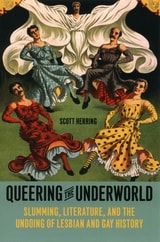
Queering the Underworld
Slumming, Literature, and the Undoing of Lesbian and Gay HistoryScott Herring
University of Chicago Press, 2007
In this major rethinking of American literature and culture, Scott Herring explores how a key group of authors manipulated this genre to paradoxically evade the confines of sexual identification. Queering the Underworld examines a range of writers, from Jane Addams and Willa Cather to Carl Van Vechten and Djuna Barnes, revealing how they fulfilled the conventions of slumming literature but undermined its goals, and in the process, queered the genre itself. Their work frustrated the reader’s desire for sexual knowledge, restored the inscrutability of sexual identity, and cast doubt on the value of a homosexual subculture made visible and therefore subject to official control.
Herring is persuasive and polemical in connecting these writers to ongoing debates about lesbian and gay history and politics, and Queering the Underworld will be widely read by students and scholars of literature, history, and sexuality.
Queerly Centered
LGBTQA Writing Center Directors Navigate the WorkplaceTravis Webster
Utah State University Press, 2021
Queers Read This!
LGBTQ Literature NowRamzi Fawaz and Shante Pradigm Smalls, special issue editors
Duke University Press, 2018
Contributors: Aliyyah Abdur-Rahman, Cynthia Barounis, Tyler Bradway, Ramzi Fawaz, Jennifer James, Martin Joseph Ponce, Natalie Prizel, Shanté Paradigm Smalls, Samuel Solomon.