Results by title
163 books match the query '1945-1989' and 9 start with r
Race, Ethnicity, and the Cold War
A Global PerspectivePhilip E. Muehlenbeck
Vanderbilt University Press, 2012
Table of Contents
Preface
Introduction: The Borders of Race and Nation
Nico Slate
Part I: Race and the International System
Token Diplomacy: The United States, Race, and the Cold War
Michael L. Krenn
A Wind of Change? White Redoubt and the Postcolonial Moment in South Africa, 1960-1963
Ryan M. Irwin
Part II: Race, Ethnicity, and Decolonization
Race, Labor, and Security in the Panama Canal Zone: The 1946 Greaves Rape Case, Local 713, and the Isthmian Cold War Crackdown
Michael Donoghue
Race, Identity, and Diplomacy in the Papua Decolonization Struggle, 1949-1962
David Webster
"For a Better Guinea": Winning Hearts and Minds in Portuguese Guinea
Luís Nuno Rodrigues
Part III: Race and the Interplay of Domestic and International Politics
Testing the Limits of Soviet Internationalism: African Students in the Soviet Union
Maxim Matusevich
Crimes against Humanity in the Congo: Nazi Legacies and the German Cold War in Africa
Katrina M. Hagen
Race and the Cuban Revolution: The Impact of Cuba's Intervention in Angola
Henley Adams
Part IV: Ethnicity and the Interplay of Domestic and International Politics
Ethnic Nationalism in the Cold War Context: The Cyprus Issue in the Greek and Greek American Public Debate, 1954-1989
Zinovia Lialiouti and Philip E. Muehlenbeck
God Bless Reagan and God Help Canada: The Polish Canadian Action Group and Solidarność in Toronto
Eric L. Payseur
Ethnic Nationalism and the Collapse of Soviet Communism
Mark R. Beissinger
Rebels All!
Rebels All! A Short History of the Conservative Mind in Postwar AmericaMattson, Kevin
Rutgers University Press, 2008
Outstanding Academic Title of 2008
Do you ever wonder why conservative pundits drop the word “faggot” or talk about killing and then Christianizing Muslims abroad? Do you wonder why the right’s spokespeople seem so confrontational, rude, and over-the-top recently? Does it seem strange that conservative books have such apocalyptic titles? Do you marvel at why conservative writers trumpeted the “rebel” qualities of George W. Bush just a few years back?
There is no doubt that the style of the political right today is tough, brash, and by many accounts, not very conservative sounding. After all, isn’t conservatism supposed to be about maintaining standards, upholding civility, and frowning upon rebellion? Historian Kevin Mattson explains the apparent contradictions of the party in this fresh examination of the postwar conservative mind. Examining a big cast of characters that includes William F. Buckley, Whittaker Chambers, Norman Podhoretz, Irving Kristol, Kevin Phillips, David Brooks, and others, Mattson shows how right-wing intellectuals have always, but in different ways, played to the populist and rowdy tendencies in America’s political culture. He boldly compares the conservative intellectual movement to the radical utopians among the New Left of the 1960s and he explains how conservatism has ingested central features of American culture, including a distrust of sophistication and intellectualism and a love of popular culture, sensation, shock, and celebrity.
Both a work of history and political criticism, Rebels All! shows how the conservative mind made itself appealing, but also points to its endemic problems. Mattson’s conclusion outlines how a recast liberalism should respond to the conservative ascendancy that has marked our politics for the last thirty years.
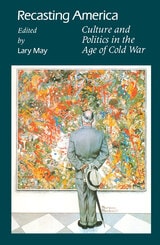
Recasting America
Culture and Politics in the Age of Cold WarEdited by Lary May
University of Chicago Press, 1989

Religion and Nationalism in Soviet and East European Politics
Pedro Ramet, ed.
Duke University Press, 1988
Religion and the Cold War
A Global PerspectivePhilip E. Muehlenbeck
Vanderbilt University Press, 2012
Students and scholars will find in this volume a level of comprehensiveness rarely achieved in Cold War studies. Each chapter reveals that the power and influence of ideas are just as important as military might in the struggles between superpowersand that few ideas, then as now, carry as much force as religious ideology. As Muehlenbeck and his contributors demonstrate, no area of the world, and no religious tenet, was safe from the manipulations of a powerful set of players focused solely on their own sphere of influence.
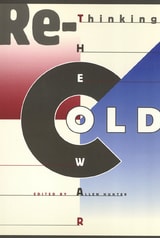
Rethinking the Cold War
edited by Allen Hunter
Temple University Press, 1997
This collection of essays offers a more complex and nuanced analysis of Cold War history. It challenges the prevailing perspective, which editor Allen Hunter terms "vindicationism." Writing from different disciplinary and conceptual vantage points, the contributors to the collection invite a rethinking of what the Cold War was, how fully it defined the decades after World War II, what forces sustained it, and what forces led to its demise. By exploring a wide range of central themes of the era, Rethinking the Cold War widens the discussion of the Cold War's place in post-war history and intellectual life.
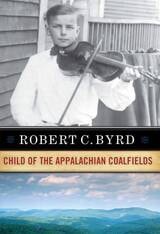
Robert C. Byrd
Child of the Appalachian CoalfieldsRobert C. Byrd
West Virginia University Press, 2010
This autobiography follows United States Senator Robert C. Byrd’s experiences from his boyhood in the early 1920s to his election in 2000, which won him an unprecedented eighth term in the Senate. Along the way, Senator Byrd offers commentary on national and international events that occurred throughout his long life in public service. Senator Byrd’s journey from the hardscrabble coalfields to the marbled halls of Congress has inspired generations of people in West Virginia and throughout the nation. From reading the stories of the Founding Fathers as a young boy by the light of a kerosene lamp to the swearing of an oath for more than a half-century to guard the United States Constitution, Senator Byrd’s life is legendary. Byrd always stands by his principles, earning the affection of the people of his home state and the respect of Americans from all walks of life. With his beloved Erma ever by his side, Robert C. Byrd has never forgotten his roots, harkening back to those early lessons that he learned as a child of the Appalachian coalfields.
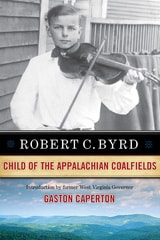
Robert C. Byrd
Child of the Appalachian CoalfieldsROBERT C. BYRD
West Virginia University Press, 2015
This autobiography follows West Virginia senator Robert C. Byrd’s experiences from his boyhood in the early 1920s to his election in 2000, which won him an unprecedented eighth term in the Senate. Within these pages, Senator Byrd offers commentary on national and international events that occurred throughout his long life in public service.
His journey from the hardscrabble coalfields to the marbled halls of Congress has inspired generations of people in West Virginia and throughout the nation. From reading the stories of the Founding Fathers as a young boy by the light of a kerosene lamp to the swearing of an oath for more than a half-century to guard the US Constitution, Senator Byrd’s life is legendary.
Until his death on June 28, 2010, Byrd stood by his principles, earning the affection of the people of his home state and the respect of Americans from all walks of life. With his beloved Erma ever by his side, Robert C. Byrd never forgot his roots, harkening back to those early lessons that he learned as a child of the Appalachian coalfields.
This new paperback edition includes a foreword by Gaston Caperton, governor of West Virginia from 1989–1997.
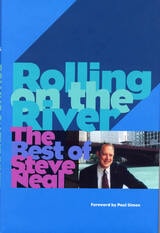
Rolling on the River
The Best of Steve NealSteve Neal. Foreword by Paul Simon
Southern Illinois University Press, 1999
The longtime political columnist for the Chicago Sun-Times, Neal covered Jane M. Byrne's election in 1979 as the city's first woman mayor and Harold Washington's 1983 triumph as Chicago's first African American mayor. Even people who are not interested in politics are drawn to Neal's column because of his hard-hitting style and lucid insights. Rolling on the River is the first published collection of his work.
In these pages, you'll meet the state legislator who never met a special interest he did not like, an alderman groveling to a mob boss, and the prosecutor who gained notoriety as a publicity hound. Of a junketing congressman, Neal writes: "Instead of sending out a congressional newsletter, [he] ought to be sending his constituents 'Wish you were here' postcards of sandy beaches."
Neal's beat is politics, but his interests are rich and varied. He also writes about sports, music, literature, and film with a point of view that is fresh and original. Neal shows how Muhammad Ali became the heavyweight champion who transcended sports and how Sid Luckman changed football. He writes of Kenny Washington's importance in breaking professional football's color barrier and Steve Prefontaine's courage in taking on the little gray men of the sports establishment. Neal chronicles Paul Robeson's struggles: "His name became a great whisper. . . . The injustices against Paul Robeson have not been righted."
Nobel laureate Saul Bellow tells Neal that comedy is the bright hope of American fiction because it is too difficult for writers in this country to grasp the worst of the human condition. Neal tells why Frank Sinatra called Chicago his kind of town and also shows how the city inspires the poetry of Gwendolyn Brooks.
Neal, a former White House correspondent, shares his perspective as one of the few reporters to have interviewed Ronald Reagan in four different decades. He recalls spending an evening with Richard M. Nixon, defends Harry Truman's most controversial decision, and writes from Ireland of John F. Kennedy's enduring legacy in the nation of his ancestors. Neal portrays William Jefferson Clinton as the "world's oldest teenager."
With vivid imagery, Neal makes his subjects come alive. Mayor Richard M. Daley is likened to Forrest Gump, and the legendary boxing announcer Ben Bentley is hailed as the last of the Damon Runyon characters.
Tough but fair. Illuminating. Compassionate. That's the best of Steve Neal.