Results by title
10 books match the query 'Agronomy'
A Little Bit of Land
Jessica Gigot
Oregon State University Press, 2022
From midwifing new lambs to harvesting basil, Jessica Gigot invites the reader into her life on a small farm and the uncommon road that led her there. Fascinated by farming and the burgeoning local food movement, she spent her twenties wandering the Pacific Northwest, interning at small farms and doing graduate work in horticulture, always with an eye towards learning as much as she could about how and why people farm. Despite numerous setbacks and the many challenges of farming, she created a family and farm life defined by resilience and a genuine love of the land.
In A Little Bit of Land, Gigot explores the intricacies of small-scale agriculture in the Pacific Northwest and the changing role of women in this male-dominated industry. Gigot alternates between chapters describing joys, routines, and challenges of farm life and chapters reflecting on her formative experiences in agriculture, on farms and in classrooms from Ashland to the Skagit Valley. Throughout, she explores questions of sustainability, economics, health, and food systems.
Adapting to the Land
A History of Agriculture in ColoradoJohn F. Freeman
University Press of Colorado, 2021
Ancestral Puebloans farmed and grazed within the limits of nature. Early settlers adjusted their cultivation methods through trial and error, while later agriculturists relied on research and technical advice from the Colorado Agricultural College. As part of wartime mobilization, the federal government prompted farmers to efficiently increase yields. To meet the demand for food and fiber scientific and technical innovations led to the development of new plant cultivars and livestock breeds, advances in mechanization, and widespread use of synthetic amendments. Increasing concern over soil fertility and the loss of irrigation water to urbanization contributed to more changes. Despite, or perhaps because of, what we see today along the Front Range, Colorado may still have a chance to slow or even reverse its seemingly unrestrained growth, creating a more vibrant, earth-friendly society in which agriculture plays an increasingly significant part. Scientific discoveries and innovations in regenerative cultivation are clearing the path to a more sustainable future.
Adapting to the Land adds an ecological and horticultural perspective to historical interpretations of recurring agricultural issues in the state and tracks the concept of stewardship, suggesting that spiritual beliefs continue to contribute to debates over acceptable agricultural practices and the effects of urbanization upon the land. This book will be a key resource for students, scholars, and general readers interested in agricultural and Colorado history, sustainability, and rural sociology.
Boll Weevil Blues
Cotton, Myth, and Power in the American SouthJames C. Giesen
University of Chicago Press, 2011
Between the 1890s and the early 1920s, the boll weevil slowly ate its way across the Cotton South from Texas to the Atlantic Ocean. At the turn of the century, some Texas counties were reporting crop losses of over 70 percent, as were areas of Louisiana, Arkansas, and Mississippi. By the time the boll weevil reached the limits of the cotton belt, it had destroyed much of the region’s chief cash crop—tens of billions of pounds of cotton, worth nearly a trillion dollars.
As staggering as these numbers may seem, James C. Giesen demonstrates that it was the very idea of the boll weevil and the struggle over its meanings that most profoundly changed the South—as different groups, from policymakers to blues singers, projected onto this natural disaster the consequences they feared and the outcomes they sought. Giesen asks how the myth of the boll weevil’s lasting impact helped obscure the real problems of the region—those caused not by insects, but by landowning patterns, antiquated credit systems, white supremacist ideology, and declining soil fertility. Boll Weevil Blues brings together these cultural, environmental, and agricultural narratives in a novel and important way that allows us to reconsider the making of the modern American South.
Environmental Safety of Genetically Engineered Crops
Rebecca Grumet
Michigan State University Press, 2010

Genetic Improvement of Crops
Emergent TechniquesIrwin Rubenstein
University of Minnesota Press, 1980

Nematodes in Soil Ecosystems
Edited by Diana W. Freckman
University of Texas Press, 1982
Many species of the phylum Nematoda, the nonsegmented worms, play an important role as animal or plant parasites; most species are active contributors to the decomposition cycle in soil ecosystems, but the details of that contribution are just beginning to be understood.
Agricultural nematologists, vitally involved in the study of the methodology, taxonomy, and biology of the species due to the direct relationship between crop yield and the size of plant-parasitic nematode populations, have provided much information about the nematodes. More recently, ecologists have contributed additional data on the structure and function of the total soil community, including energy flow and nutrient cycling, and have examined the critical and multifaceted role of soil nematodes in such communities. Nematodes in Soil Ecosystems provides a valuable synthesis of significant research in this area and may stimulate further important communication between the agricultural and ecological branches of nematode research.
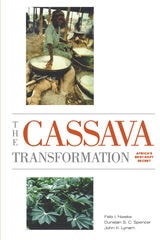
The Cassava Transformation
Africa's Best-Kept SecretFelix I. Nweke
Michigan State University Press, 2002
Cassava is Africa's "poverty fighter" and second most important food crop. This book discusses Cassava's real role and traces research over the past 65 years. The "Cassava transformation" that is now underway in Africa has changed this traditional, reserve crop to a high-yield cash crop. However, Cassava is being neglected by governments and donor agencies because of myths and half-truths about its nutritional value and role in farm systems.
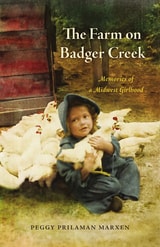
The Farm on Badger Creek
Memories of a Midwest GirlhoodPeggy Prilaman Marxen
Wisconsin Historical Society Press, 2021
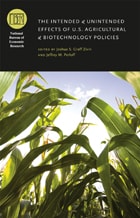
The Intended and Unintended Effects of U.S. Agricultural and Biotechnology Policies
Edited by Joshua S. Graff Zivin and Jeffrey M. Perloff
University of Chicago Press, 2012
Using economic models and empirical analysis, this volume examines a wide range of agricultural and biofuel policy issues and their effects on American agricultural and related agrarian insurance markets. Beginning with a look at the distribution of funds by insurance programs—created to support farmers but often benefiting crop processors instead—the book then examines the demand for biofuel and the effects of biofuel policies on agricultural price uncertainty. Also discussed are genetically engineered crops, which are assuming an increasingly important role in arbitrating tensions between energy production, environmental protection, and the global food supply. Other contributions discuss the major effects of genetic engineering on worldwide food markets. By addressing some of the most challenging topics at the intersection of agriculture and biotechnology, this volume informs crucial debates.
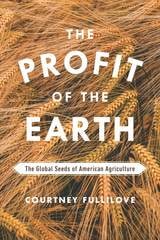
The Profit of the Earth
The Global Seeds of American AgricultureCourtney Fullilove
University of Chicago Press, 2017
Organized into three thematic parts, The Profit of the Earth is a narrative history of the collection, circulation, and preservation of seeds. Fullilove begins with the political economy of agricultural improvement, recovering the efforts of the US Patent Office and the nascent US Department of Agriculture to import seeds and cuttings for free distribution to American farmers. She then turns to immigrant agricultural knowledge, exploring how public and private institutions attempting to boost midwestern wheat yields drew on the resources of willing and unwilling settlers. Last, she explores the impact of these cereal monocultures on biocultural diversity, chronicling a fin-de-siècle Ohio pharmacist’s attempt to source Purple Coneflower from the diminishing prairie. Through these captivating narratives of improvisation, appropriation, and loss, Fullilove explores contradictions between ideologies of property rights and common use that persist in national and international development—ultimately challenging readers to rethink fantasies of global agriculture’s past and future.