Results by title
314 books match the query 'African' and 10 start with r
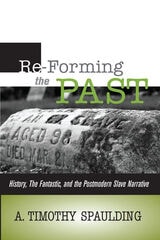
RE-FORMING THE PAST
HISTORY, THE FANTASTIC, & THE POSTMODERN SLAVE NARRATIVEA. Timothy Spaulding
The Ohio State University Press, 2005
In their rejection of mimetic representation and traditional historiography, Spaulding contextualizes postmodern slave narrative. By addressing both literary and popular African American texts, Re-Forming the Past expands discussions of both the African American literary tradition and postmodern culture.
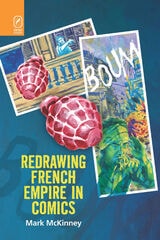
Redrawing French Empire in Comics
Mark McKinney
The Ohio State University Press, 2020
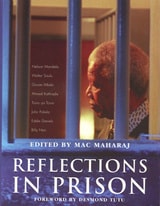
Reflections in Prison
Voices From the South African Liberation StruggleMac Maharaj
University of Massachusetts Press, 2002
Written by Mandela, Walter Sisulu, Ahmed Kathrada, Govan Mbeki, and four other leaders of the anti-apartheid movement, these essays provide a rare view of their thinking at a critical point in the liberation struggle, on the eve of the 1976 Soweto Uprising. The leaders describe their philosophies, strategies, and hopes. They debate such crucial issues as violent versus nonviolent forms of struggle, diversity and unity, the ideological challenge of the Black Consciousness movement, and how to accommodate different interpretations of African nationalism.
The book begins with a foreword by Desmond Tutu and a contextualizing introduction by Maharaj. Then come two essays by Mandela and one each by Sisulu, Kathrada, Mbeki, Billy Nair, John Pokela, Eddie Daniels and Andimba Toivo Ya Toivo. Each essay is preceded by a short biography of the author, a description of his life in prison, and a pencil sketch by a black South African artist.
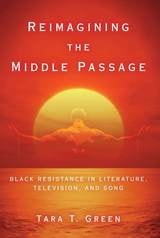
Reimagining the Middle Passage
Black Resistance in Literature, Television, and SongTara T. Green
The Ohio State University Press, 2018
Exploring the presence of water and its impact on African descendants,Reimagining the Middle Passageoffers fresh analyses of Alex Haley’sRootsand the television adaptations; the history of flooding in Black communities in literature such as Jesmyn Ward’sSalvage the Bonesand Paule Marshall’sPraisesong for the Widow, in blues songs, and in television shows such asTreme; and stories of resistance found in myths associated with Marie Laveau and flying Africans.

Religion and Politics in East Africa
The Period since IndependenceHölger Bernt Hansen
Ohio University Press, 1994
Religious activities have been of continuing importance in the rise of protest against postcolonial governments in Eastern Africa. Governments have attempted to “manage“ religious affairs in both Muslim and Christian areas. Religious denominations have acted as advocates of human rights and in opposition to one-party-state regimes. Islamic fundamentalism changed with the ending of the Cold War.
The book is divided into four parts: The Challenge of Islam; Christianity, Sectarianism, and Politics in Uganda; Christians and Muslim in Kenyan Politics; and Cross-cultural Complications. An introductory essay by Michael Twaddle provides and overview of the changing character of politico-religious conflict in Eastern Africa. Holger Bernt Hansen summarizes the presentation with a discussion of dilemmas and challenges in the study of religion and politics.
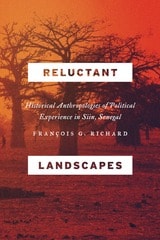
Reluctant Landscapes
Historical Anthropologies of Political Experience in Siin, SenegalFrancois G. Richard
University of Chicago Press, 2018
Reluctant Landscapes is an exploration of the making and remaking of political experience and physical landscapes among rural communities in the Siin province of Senegal between the late 1500s and the onset of World War II. By recovering the histories of farmers and commoners who made up African states’ demographic core in this period, Richard shows their crucial—but often overlooked—role in the making of Siin history. The book also delves into the fraught relation between the Seereer, a minority ethnic and religious group, and the Senegalese nation-state, with Siin’s perceived “primitive” conservatism standing at odds with the country’s Islamic modernity. Through a deep engagement with oral, documentary, archaeological, and ethnographic archives, Richard’s groundbreaking study revisits the four-hundred-year history of a rural community shunted to the margins of Senegal’s national imagination.

Rethinking Cosmopolitanism
Africa in Europe / Europe in AfricaSalah M. Hassan and Chika Okeke-Agula, special issue editors
Duke University Press, 2020
Contributors. Hans Belting, Susan Buck-Morss, Jareh Das, Naminata Diabate, Fatima El Tayeb, Salah M. Hassan, Achille Mbembe, Sandy Prita Meier, Chika Okeke-Agulu, Tejumola Olaniyan, Manuela Ribeiro Sanches, Berni Searle, Bahia Shehab, Brett M. Van Hoesen, Selene Wendt, Siegfried Zielinski
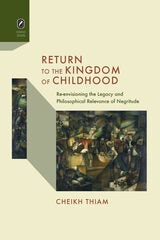
Return to the Kingdom of Childhood
Re-envisioning the Legacy and Philosophical Relevance of NegritudeCheikh Thiam
The Ohio State University Press, 2014
Thiam contends that Senghor’s conception of race entails an innovative Afri-centered epistemology and ontology. For Senghor, races are the effects of particular groups’ relations to the world. The so-called “Negroes,” for example, are determined by their epistemology based on their fluid understanding of the ontological manifestations of being. The examination of this ontology and its ensuing epistemology, which is constitutive of the foundation of Senghor’s entire oeuvre, indicates that Negritude is a postcolonial philosophy that stands on its own.
The hermeneutics of Senghor’s race theory show that the Senegalese thinker’s pioneering postcolonial philosophy remains relevant in the postcolonial era. In fact, it questions and expands the works of major contemporary African-descended scholars such as Paul Gilroy, Edouard Glissant, and Molefi Asante. Thiam’s approach is thoroughly interdisciplinary, combining perspectives from philosophy, literary analysis, anthropology, and postcolonial, African, and cultural studies.
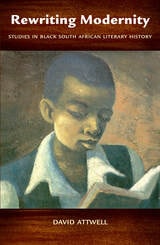
Rewriting Modernity
Studies in Black South African Literary HistoryDavid Attwell
Ohio University Press, 2006
Rewriting Modernity: Studies in Black South African Literary History connects the black literary archive in South Africa—from the nineteenth-century writing of Tiyo Soga to Zakes Mda in the twenty-first century—to international postcolonial studies via the theory of transculturation, a position adapted from the Cuban anthropologist Fernando Ortiz.
David Attwell provides a welcome complication of the linear black literary history—literature as a reflection of the process of political emancipation—that is so often presented. He focuses on cultural transactions in a series of key moments and argues that black writers in South Africa have used print culture to map themselves onto modernity as contemporary subjects, to negotiate, counteract, reinvent, and recast their positioning within colonialism, apartheid, and the context of democracy.
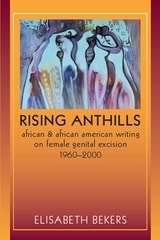
Rising Anthills
African and African American Writing on Female Genital Excision, 1960–2000Elisabeth Bekers
University of Wisconsin Press, 2010
Rising Anthills (the title refers to a Dogon myth) analyzes works in English, French, and Arabic by African and African American writers, both women and men, from different parts of the African continent and the diaspora. Attending closely to the nuances of language and the complexities of the issue, Bekers explores lesser-known writers side by side with such recognizable names as Ngugi wa Thiong’o, Flora Nwapa, Nawal El Saadawi, Ahmadou Kourouma, Calixthe Beyala, Alice Walker, and Gloria Naylor. Following their literary discussions of female genital excision, she discerns a gradual evolution—from the 1960s, when writers mindful of its communal significance carefully “wrote around” the physical operation, through the 1970s and 1980s, when they began to speak out against the practice and their societies’ gender politics, to the late 1990s, when they situated their denunciations of female genital excision in a much broader, international context of women’s oppression and the struggle for women’s rights.