Results by title
69 books match the query 'American Culture' and 3 start with r
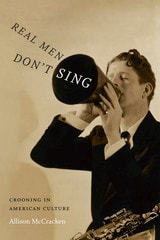
Real Men Don't Sing
Crooning in American CultureAllison McCracken
Duke University Press, 2015

Restoring the Faith
The Assemblies of God, Pentecostalism, and American CultureEdith L. Blumhofer
University of Illinois Press, 1993
Edith Blumhofer uses the Assemblies of God, the largest classical Pentecostal denomination in the world, as a lens through which to view the changing nature of Anglo Pentecostalism in the United States. She illustrates how the original mission to proclaim the end resulted in the development of Bible schools, the rise of the charismatic movement, and the popularity of such figures as Aimee Semple McPherson, Charles Fox Parham, and David Du Plessis. Blumhofer also examines the sect's use of radio and television and the creation of a parallel Christian culture
Risqué Business
Breastaurants in American CultureTy Matejowsky
University of Alabama Press, 2025
Risqué Business serves up the breastaurant industry, where food service, sex appeal, identity, and gender politics mix.
Risqué Business explores the rise and ongoing cultural reckoning of “breastaurants”: sports bar–style restaurants like Hooters and Twin Peaks, which have long relied on the sexualized presentation of female servers to attract a mostly straight, male clientele. Ty Matejowsky, professor of anthropology at the University of Central Florida, is uniquely positioned in America’s foundational, breastaurant-saturated landscape. From this vantage, he offers a well-balanced account that draws on pop culture, media analysis, and contemporary gender politics. He delivers a smart, layered analysis of how breastaurants commodify youth and femininity, uphold retrograde masculinity, and serve as symbolic battlegrounds in today's highly charged political environments including America's deeply polarized Red State/Blue State divide.
With case studies, cultural critique, and a critical lens on labor and sexuality, Matejowsky reveals how these restaurants are more than just risqué marketing gimmicks. They reflect deeper anxieties about gender, identity, and the uneasy fusion of sex and service in American consumer culture. Risqué Business is a high-spirited study of an industry that thrives at the intersection of appetite and identity.