Results by title
967 books match the query 'Theater' and 90 start with a

A Biographical Dictionary of Actors, Volume 1, Abaco to Belfille
Actresses, Musicians, Dancers, Managers, and Other Stage Personnel in London, 1660-1800Philip H. Highfill, Jr., Kalman A. Burnim, and Edward A. Langhans
Southern Illinois University Press, 1973
Tobe completed in 12volumes, this monumental work here begins publication with the first two volumes—Abaco to Bertie and Bertin to Byzard. When completed, it is expected that the biographical dictionary will include information on more than 8,500 individuals.
Hundreds of printed sources have been searched for this project, and dozens of repositories combed, and the names of personnel listed have been filtered through parish registers whenever possible. From published and unpublished sources, from wills, archives of professional societies and guilds, from records of colleges, universities, and clubs, and from the contributions of selfless scholars, the authors have here assembled material which illuminates theatrical and musical activity in London in the 1660–1800 period.
The information here amassed will doubtless be augmented by other specialists in Restoration and eighteenth-century theatre and drama, but it is not likely that the number of persons now known surely or conjectured finally to have been connected with theatrical enterprise in this period will ever be increased considerably. Certainly, the contributions made here add immeasurably to existing knowledge, and in a number of instances correct standard histories or reference works.
The accompanying illustrations, estimated to be some 1,400 likenesses—at least one picture of each subject for whom a portrait exists—may prove to be a useful feature of the Work. The authors have gone beyond embellishment of the text, and have attempted to list all original portraits any knowledge of which is now recoverable, and have tried to ascertain the present location of portraits in every medium.
A Biographical Dictionary of Actors, Volume 10, M'Intosh to Nash
Actresses, Musicians, Dancers, Managers, and Other Stage Personnel in London, 1660-1800Philip H. Highfill, Jr.
Southern Illinois University Press, 1984
Those featured in Volume 10 include Margaret Martyr, a singer, actress, and dancer whose “conjugal virtues were often impeached,” according to the July 1792Thespian Magazine. The Dictionary describes this least constant of lovers as “of middling height, with a figure well-proportioned for breeches parts. [Her] black-haired, black-eyed beauty and clear soprano made her an immediate popular success in merry maids and tuneful minxes, the piquant and the pert, for a quarter century.”
A Biographical Dictionary of Actors, Volume 12, Pinner to Rizzo
Actresses, Musicians, Dancers, Managers, and Other Stage Personnel in London, 1660-1800Philip H. Highfill, Jr., Kalman A. Burnim, and Edward A. Langhans
Southern Illinois University Press, 1987
A Biographical Dictionary of Actors, Volume 13, Roach to H. Siddons
Actresses, Musicians, Dancers, Managers, and Other Stage Personnel in London, 1660-1800Philip H. Highfill, Jr., Kalman A. Burnim, and Edward A. Langhans
Southern Illinois University Press, 1991
Like the works already published, these latest volumes of the Biographical Dictionary deal with theatre people of every ilk, ranging from dressers and one-performance actors to trumpeter John Shore (inventor of the tuning fork) and the incomparable Sarah Siddons.
Also prominent is Susanna Rowson, a novelist, actress, and early female playwright. Although born into a British military family, Rowson often wrote plays that dealt with patriotic American themes and spent much of her career on the American stage.
The theatrical jewel of these volumes is the "divine Sarah" Siddons: "She raised the tragedy to the skies," wrote William Hazlitt, and "embodied to our imagination the fables of mythology, of the heroic and dignified mortals of elder time." She endured much tragedy herself, including a crippling debilitating illness and the deaths of five of her seven children. Siddons played major roles in both comedy and tragedy, not the least of which was a performance as Hamlet.
A Biographical Dictionary of Actors, Volume 14, S. Siddons to Thynne
Actresses, Musicians, Dancers, Managers, and Other Stage Personnel in London, 1660-1800Philip H. Highfill, Jr., Kalman A. Burnim, and Edward A. Langhans
Southern Illinois University Press, 1991
Like the works already published, these latest volumes of the Biographical Dictionary deal with theatre people of every ilk, ranging from dressers and one-performance actors to trumpeter John Shore (inventor of the tuning fork) and the incomparable Sarah Siddons.
Also prominent is Susanna Rowson, a novelist, actress, and early female playwright. Although born into a British military family, Rowson often wrote plays that dealt with patriotic American themes and spent much of her career on the American stage.
The theatrical jewel of these volumes is the "divine Sarah" Siddons: "She raised the tragedy to the skies," wrote William Hazlitt, and "embodied to our imagination the fables of mythology, of the heroic and dignified mortals of elder time." She endured much tragedy herself, including a crippling debilitating illness and the deaths of five of her seven children. Siddons played major roles in both comedy and tragedy, not the least of which was a performance as Hamlet.
A Biographical Dictionary of Actors, Volume 15, Tibbett to M. West
Actresses, Musicians, Dancers, Managers, and Other Stage Personnel in London, 1660-1800Philip H. Highfill, Jr., Kalman A. Burnim, and Edward A. Langhans
Southern Illinois University Press, 1993
A major project begun in 1973 reaches its conclusion with the publication of volumes 15 and 16 of the Biographical Dictionary, a series considered "a reference work of the first order" by Theatre and Performing Arts Collections.
Among performers highlighted in these last volumes is Catherine Tofts, a gifted singer whose popular acclaim was captured in lines by Samuel Phillips: "How are we pleas’d when beauteous Tofts appears, / To steal our Souls through our attentive Ears?’ / Ravish’d we listen to th’ inchanting Song, / And catch the falling Accents from her Tongue." The first singer of English birth to master the form of Italian opera, Tofts frequently won leading roles over native Italian singers. Her salary—£400 to £500 a season—was one of the highest in the theatre. Her popularity declined, however, as her demands for payment increased—a situation captured in an epigram Alexander Pope may have penned: "So bright is thy beauty, so charming thy song, / As had drawn both the beasts and their Orpheus along; /But such is thy avarice, and such is thy pride, / That the beasts must have starved, and the poets have died."
John Vanbrugh, whose play The Relapse is ranked as one of the best comedies of the Restoration period, became a subordinate crown architect under Sir Christopher Wren in 1702. In 1703, Vanbrugh began plans for the Queen’s Theatre in the Haymarket, an enterprise endorsed by the Kit Cat Club (of which Vanbrugh was a member). Even though his lavish design was acoustically defective, restructuring helped correct the problem and the theatre eventually became the exclusive center for opera in London.
A Biographical Dictionary of Actors, Volume 16, W. West to Zwingman
Actresses, Musicians, Dancers, Managers, and Other Stage Personnel in London, 1660-1800Philip H. Highfill, Jr., Kalman A. Burnim, and Edward A. Langhans
Southern Illinois University Press, 1993
A major project begun in 1973 reaches its conclusion with the publication of volumes 15 and 16 of the Biographical Dictionary, a series considered "a reference work of the first order" by Theatre and Performing Arts Collections.
Among performers highlighted in these last volumes is Catherine Tofts, a gifted singer whose popular acclaim was captured in lines by Samuel Phillips: "How are we pleas’d when beauteous Tofts appears, / To steal our Souls through our attentive Ears?’ / Ravish’d we listen to th’ inchanting Song, / And catch the falling Accents from her Tongue." The first singer of English birth to master the form of Italian opera, Tofts frequently won leading roles over native Italian singers. Her salary—£400 to £500 a season—was one of the highest in the theatre. Her popularity declined, however, as her demands for payment increased—a situation captured in an epigram Alexander Pope may have penned: "So bright is thy beauty, so charming thy song, / As had drawn both the beasts and their Orpheus along; /But such is thy avarice, and such is thy pride, / That the beasts must have starved, and the poets have died."
John Vanbrugh, whose play The Relapse is ranked as one of the best comedies of the Restoration period, became a subordinate crown architect under Sir Christopher Wren in 1702. In 1703, Vanbrugh began plans for the Queen’s Theatre in the Haymarket, an enterprise endorsed by the Kit Cat Club (of which Vanbrugh was a member). Even though his lavish design was acoustically defective, restructuring helped correct the problem and the theatre eventually became the exclusive center for opera in London.
A Biographical Dictionary of Actors, Volume 2, Belfort to Byzand
Actresses, Musicians, Dancers, Managers, and Other Stage Personnel in London, 1660-1800Philip H. Highfill, Jr., Kalman A. Burnim, and Edward A. Langhans
Southern Illinois University Press, 1973
Tobe completed in 12volumes, this monumental work here begins publication with the first two volumes—Abaco to Bertie and Bertin to Byzard. When completed, it is expected that the biographical dictionary will include information on more than 8,500 individuals.
Hundreds of printed sources have been searched for this project, and dozens of repositories combed, and the names of personnel listed have been filtered through parish registers whenever possible. From published and unpublished sources, from wills, archives of professional societies and guilds, from records of colleges, universities, and clubs, and from the contributions of selfless scholars, the authors have here assembled material which illuminates theatrical and musical activity in London in the 1660–1800 period.
The information here amassed will doubtless be augmented by other specialists in Restoration and eighteenth-century theatre and drama, but it is not likely that the number of persons now known surely or conjectured finally to have been connected with theatrical enterprise in this period will ever be increased considerably. Certainly, the contributions made here add immeasurably to existing knowledge, and in a number of instances correct standard histories or reference works.
The accompanying illustrations, estimated to be some 1,400 likenesses—at least one picture of each subject for whom a portrait exists—may prove to be a useful feature of the Work. The authors have gone beyond embellishment of the text, and have attempted to list all original portraits any knowledge of which is now recoverable, and have tried to ascertain the present location of portraits in every medium.
A Biographical Dictionary of Actors, Volume 3, Cabanel to Cory
Actresses, Musicians, Dancers, Managers, and Other Stage Personnel in London, 1660-1800Philip H. Highfill, Jr., Kalman A. Burnim, and Edward A. Langhans
Southern Illinois University Press, 1975
Volumes three and four of this monumental work include full entries for all such illustrious names as those of the Cibbers—Colley, Theophilus, and Susanna Maria—Kitty Clive, and Charlotte Charke, George Colman, the Elder, and the Younger, William Davenant, and De Loutherboug. But here also are full entries for dozens of important secondary figures and of minor ones whose stories have never been told, as well as a census (and at least a few recoverable facts) for even the most inconsiderable performers and servants of the theatres.
As in the previous volumes in this distinguished series, the accompanying illustrations include at least one picture of each subject for whom a portrait exists.
A Biographical Dictionary of Actors, Volume 4, Corye to Dynion
Actresses, Musicians, Dancers, Managers, and Other Stage Personnel in London, 1660-1800Philip H. Highfill, Jr., Kalman A. Burnim, and Edward A. Langhans
Southern Illinois University Press, 1975
Volumes three and four of this monumental work include full entries for all such illustrious names as those of the Cibbers—Colley, Theophilus, and Susanna Maria—Kitty Clive, and Charlotte Charke, George Colman, the Elder, and the Younger, William Davenant, and De Loutherboug. But here also are full entries for dozens of important secondary figures and of minor ones whose stories have never been told, as well as a census (and at least a few recoverable facts) for even the most inconsiderable performers and servants of the theatres.
As in the previous volumes in this distinguished series, the accompanying illustrations include at least one picture of each subject for whom a portrait exists.
A Biographical Dictionary of Actors, Volume 5, Eagan to Garrett
Actresses, Musicians, Dancers, Managers, and Other Stage Personnel in London, 1660-1800Philip H. Highfill, Jr., Kalman A. Burnim, and Edward A. Langhans
Southern Illinois University Press, 1978
In contrast to each other, Volume 5 is a sociological portrait of mostly little people in their tragic and comic efforts to achieve fame on the London stage during the Restoration and eighteenth century, whereas Volume 6 is dominated by the glamour of David Garrick, Nell Gwyn, and Joseph Grimaldi, the celebrated clown. Some 250 portraits individualize the great and small of the theatres of London.
A Biographical Dictionary of Actors, Volume 6, Garrick to Gyngell
Actresses, Musicians, Dancers, Managers, and Other Stage Personnel in London 1660-1800Philip H. Highfill, Jr., Kalman A. Burnim, and Edward A. Langhans
Southern Illinois University Press, 1978
In contrast to each other, Volume 5 is a sociological portrait of mostly little people in their tragic and comic efforts to achieve fame on the London stage during the Restoration and eighteenth century, whereas Volume 6 is dominated by the glamour of David Garrick, Nell Gwyn, and Joseph Grimaldi, the celebrated clown. Some 250 portraits individualize the great and small of the theatres of London.
A Biographical Dictionary of Actors, Volume 7, Habgood to Houbert
Actresses, Musicians, Dancers, Managers, and Other Stage Personnel in London, 1660-1800Philip H. Highfill, Jr., Kalman A. Burnim, and Edward A. Langhans
Southern Illinois University Press, 1982
Volume 7 includes such notables as the composers Handel and Haydn and the alluring actress Elizabeth Hartley.
A Biographical Dictionary of Actors, Volume 8, Hough to Keyse
Actresses, Musicians, Dancers, Managers, and Other Stage Personnel in London, 1660-1800Philip H. Highfill, Jr., Kalman A. Burnim, and Edward A. Langhans
Southern Illinois University Press, 1982
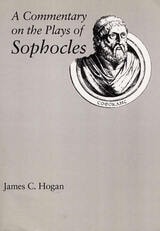
A Commentary on the Plays of Sophocles
James C. Hogan
Southern Illinois University Press, 1991
James C. Hogan introduces each play by highlighting specific and interpretive problems relevant to that play before turning to a line-by-line analysis. The line analysis is comprehensive, ranging from the meanings of words and phrases that pertain to a variety of Greek ideas and institutions to metaphor and imagery specific to each play as well as plots and borrowings from earlier poetry, styles, and characterizations.
Along with his examination of the seven extant plays of Sophocles in English translations, Hogan provides a general introduction to the theatre in Sophocles’ time, discussing staging, the conventions of the Greek theatre, the text of the plays, and mythology and religion.
A Concept of Dramatic Genre and the Comedy of a New Type
V. Ulea
Southern Illinois University Press, 2002
Applying systems theory to the comedies of Chekhov, Balzac, Kleist, Moliere, and Shakespeare, A Concept of Dramatic Genre and the Comedy of a New Type: Chess, Literature, and Film approaches dramatic genre from the point of view of the degree of richness and strength of a character’s potential. Its main focus is to establish a methodology for analyzing the potential from multidimensional perspectives, using systems thinking. The whole concept is an alternative to the Aristotelian plot-based approach and is applied to an analysis of western and eastern European authors as well as contemporary American film.
This innovative study consists of three parts: The first part is mostly theoretical, proposing a new definition of the dramatic as a category linked to general systems phenomena and offering a new classification of dramatic genre. In the second part, Ulea offers a textual analysis of some works based on this new classification. She analyzes comedies, tragedies, and dramas on the same or similar topics in order to reveal what makes them belong to opposite types of dramatic genre.
Additionally, she considers the question of fate and chance, with regard to tragedy and comedy, from the point of view of the predispositioning theory. In the third part, Ulea explores an analysis of the comedy of a new type—CNT. Her emphasis is on the integration of the part and the whole in approaching the protagonist’s potential. She introduces the term quasi-strong potential in order to reveal the illusory strength of protagonists of the CNT and to show the technique of CNT’s analysis and synthesis.
Ulea’s research begins with the notion of the comic, traditionally considered synonymous with the laughable, and attempts to approach it as independent from the laughable and laughter. The necessity to do so is dictated by the desire to penetrate the enigmatic nature of Chekhov’s comedy. The result is A Concept of Dramatic Genre and the Comedy of a New Type: Chess, Literature, and Film, a completely new approach to potential and systems thinking—which has never been a focus of dramatic theory before. Such potential is the touchstone of the comic and comedy, their permanent basic characteristic, the heart and axis around which the comedic world spins.
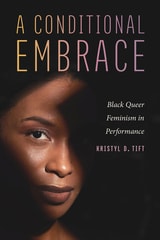
A Conditional Embrace
Black Queer Feminism in PerformanceKristyl D. Tift
The Ohio State University Press, 2026
In A Conditional Embrace, Kristyl D. Tift seeks to understand how Black queer women theater and film artists depict their own survival in heterosexist temporalities and spaces. Using the framework of lovin’ on—a theory inspired by Black feminist thought, performance theory, and queer theory—Tift closely reads the works of a selection of artists to investigate the “conditional embrace” of Black queer art in society. Her intersectional and intertextual methodology considers the text and body as part and parcel of performance work, allowing her to examine the multiple and complex intersections of identity at play in works meant to be read and performed. Tift puts the work of more visible artists such as Dee Rees, Sharon Bridgforth, and Staceyann Chin in direct conversation with lesser-known contributors to Black queer feminist performance such as Shirlene Holmes and Donnetta Lavinia Grays, analyzing not only their plays, installations, and poetry but also interviews, personal essays, performances, and more. Centering the works of artists situated, by birth or migration, in the Southern US and the Caribbean, A Conditional Embrace explores how artists at the margins of art and society represent Black queer women’s survival through processes of self-making, community-building, and homemaking.
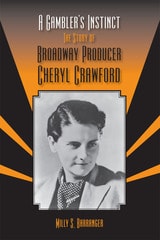
A Gambler’s Instinct
The Story of Broadway Producer Cheryl CrawfordMilly S. Barranger
Southern Illinois University Press, 2010
Broadway producer Cheryl Crawford (1902–1986) declared in her 1977 autobiography, “The theatre has been my life.” Crawford was notoriously circumspect about her private life, and only now, with Milly S. Barranger’s insightful biography, is her full story revealed.
A major Broadway producer in an era when women producers were exceedingly rare, Crawford found unprecedented success with the plays of Tennessee Williams, including The Rose Tattoo and Sweet Bird of Youth, but her enduring legend is as a musical producer, having brought Kurt Weill’s One Touch of Venus, Lerner and Loewe’s Brigadoon and Paint Your Wagon to the stage. Her commercial success, though, was balanced with the founding of studios that would enable actors to explore their art outside the strictures of commercial theater. She cofounded the Group Theatre with Harold Clurman and Lee Strasberg, the American Repertory Theatre with Margaret Webster and Eva Le Gallienne, and the Actors Studio with Elia Kazan and Robert Lewis, but her idealism was constantly frustrated by unfulfilled artistic promises from her male counterparts and by the chronic shortage of funding for the nonprofit enterprises.
As Barranger traces Crawford’s career as an independent producer, she tells the parallel story of American theater in the mid-twentieth century, making A Gambler’s Instinct both an enjoyable and informative biography of a remarkable woman and an important addition to the literature of the modern theater.
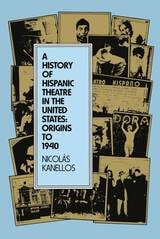
A History of Hispanic Theatre in the United States
Origins to 1940By Nicolás Kanellos
University of Texas Press, 1990
Hispanic theatre flourished in the United States from the mid-nineteenth century until the beginning of the Second World War—a fact that few theatre historians know. A History of Hispanic Theatre in the United States: Origins to 1940 is the very first study of this rich tradition, filled with details about plays, authors, artists, companies, houses, directors, and theatrical circuits.
Sixteen years of research in public and private archives in the United States, Mexico, Spain, and Puerto Rico inform this study. In addition, Kanellos located former performers and playwrights, forgotten scripts, and old photographs to bring the life and vitality of live theatre to his text. He organizes the book around the cities where Hispanic theatre was particularly active, including Los Angeles, San Antonio, New York, and Tampa, as well as cities on the touring circuit, such as Laredo, El Paso, Tucson, and San Francisco.
Kanellos charts the major achievements of Hispanic theatre in each city—playwriting in Los Angeles, vaudeville and tent theatre in San Antonio, Cuban/Spanish theatre in Tampa, and pan-Hispanism in New York—as well as the individual careers of several actors, writers, and directors. And he uncovers many gaps in the record—reminders that despite its popularity, Hispanic theatre was often undervalued and unrecorded.
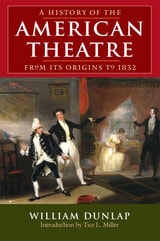
A History of the American Theatre from Its Origins to 1832
William Dunalp, Introduction by Tice L. Miller
University of Illinois Press, 2005
As America passed from a mere venue for English plays into a country with its own nationally regarded playwrights, William Dunlap lived the life of a pioneer on the frontier of the fledgling American theatre, full of adventures, mishaps, and close calls. He adapted and translated plays for the American audience and wrote plays of his own as well, learning how theatres and theatre companies operated from the inside out.
Dunlap's masterpiece, A History of American Theatre was the first of its kind, drawing on the author's own experiences. In it, he describes the development of theatre in New York, Philadelphia, and South Carolina as well as Congress's first attempts at theatrical censorship. Never before previously indexed, this edition also includes a new introduction by Tice L. Miller.
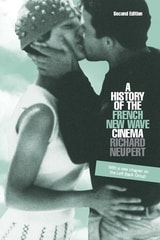
A History of the French New Wave Cinema
Richard Neupert
University of Wisconsin Press, 2007
The French New Wave cinema is arguably the most fascinating of all film movements, famous for its exuberance, daring, and avant-garde techniques. A History of the French New Wave Cinema offers a fresh look at the social, economic, and aesthetic mechanisms that shaped French film in the 1950s, as well as detailed studies of the most important New Wave movies of the late 1950s and early 1960s.
Richard Neupert first tracks the precursors to New Wave cinema, showing how they provided blueprints for those who would follow. He then demonstrates that it was a core group of critics-turned-directors from the magazine Cahiers du Cinéma—especially François Truffaut, Claude Chabrol, and Jean-Luc Godard—who really revealed that filmmaking was changing forever. Later, their cohorts Eric Rohmer, Jacques Rivette, Jacques Doniol-Valcroze, and Pierre Kast continued in their own unique ways to expand the range and depth of the New Wave.
In an exciting new chapter, Neupert explores the subgroup of French film practice known as the Left Bank Group, which included directors such as Alain Resnais and Agnès Varda. With the addition of this new material and an updated conclusion, Neupert presents a comprehensive review of the stunning variety of movies to come out of this important era in filmmaking.
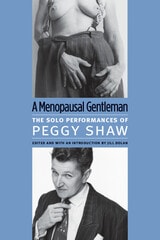
A Menopausal Gentleman
The Solo Performances of Peggy ShawPeggy Shaw
University of Michigan Press, 2011
"With classic butch finesse---that handsome combination of vulnerability and toughness---Peggy Shaw pieces together the challenges of growing up butch in the 1950s. Shaw is an engaging performer and inspired writer."
---Gay Community News
Obie-award-winning performer and writer Peggy Shaw has been playing her gender-bending performances on Off Broadway, regional, and international stages for three decades. Co-founder of the renowned troupe Split Britches, Shaw has gone on to create memorable solo performances that mix achingly honest introspection with campy humor, reflecting on everything from her Irish-American working-class roots to her aging butch body.
This collection of Shaw's solo performance scripts evokes a 54-year-old grandmother who looks like a 35-year-old man (in her classic Menopausal Gentleman); a mother's ambivalent ministrations to a daughter she treated like a son (in the raw You're Just Like My Father); Shaw's love for her biracial grandson, for whom she models masculinity (in the musically punctuated To My Chagrin); and a mapping of her body's long, bittersweet history (in the lyrical Must: The Inside Story, a collaboration with the UK's Clod Ensemble). The book also includes a selection of Shaw's other classic monologues and an extensive introduction by Jill Dolan, Professor of English and Theater and Dance at Princeton University and the blogger behind The Feminist Spectator website.
A volume in the series Triangulations: Lesbian/Gay/Queer Theater/Drama/Performance
Cover photos by Eva Weiss (top) and Robin Holland/robinholland.com (bottom).
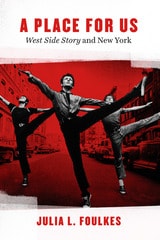
A Place for Us
“West Side Story” and New YorkJulia L. Foulkes
University of Chicago Press, 2016
That vision of postwar New York is at the heart of Julia L. Foulkes’s A Place for Us. A lifelong fan of the show, Foulkes became interested in its history when she made an unexpected discovery: scenes for the iconic film version were shot on the demolition site destined to become part of the Lincoln Center redevelopment area—a crowning jewel of postwar urban renewal. Foulkes interweaves the story of the creation of the musical and film with the remaking of the Upper West Side and the larger tale of New York’s postwar aspirations. Making unprecedented use of director and choreographer Jerome Robbins’s revelatory papers, she shows the crucial role played by the political commitments of Robbins and his fellow gay, Jewish collaborators, Leonard Bernstein and Arthur Laurents. Their determination to evoke life in New York as it was actually lived helped give West Side Story its unshakable sense of place even as it put forward a vision of a new, vigorous, determinedly multicultural American city.
Beautifully written and full of surprises for even the most dedicated West Side Story fan, A Place for Us is a revelatory new exploration of an American classic.
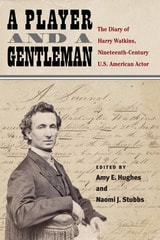
A Player and a Gentleman
The Diary of Harry Watkins, Nineteenth-Century U.S. American ActorEdited by Amy E. Hughes and Naomi J. Stubbs
University of Michigan Press, 2018
Hardworking actor, playwright, and stage manager Harry Watkins (1825–94) was also a prolific diarist. For fifteen years Watkins regularly recorded the plays he saw, the roles he performed, the books he read, and his impressions of current events. Performing across the U.S., Watkins collaborated with preeminent performers and producers, recording his successes and failures as well as his encounters with celebrities such as P. T. Barnum, Junius Brutus Booth, Edwin Forrest, Anna Cora Mowatt, and Lucy Stone. His is the only known diary of substantial length and scope written by a U.S. actor before the Civil War—making Watkins, essentially, the antebellum equivalent of Samuel Pepys. Theater historians Amy E. Hughes and Naomi J. Stubbs have selected, edited, and annotated excerpts from the diary in an edition that offers a vivid glimpse of how ordinary people like Watkins lived, loved, struggled, and triumphed during one of the most tumultuous periods in U.S. history. The selections in A Player and a Gentleman are drawn from a more expansive digital archive of the complete diary. The book, like its digital counterpart, will richly enhance our knowledge of antebellum theater culture and daily life in the U.S. during this period.
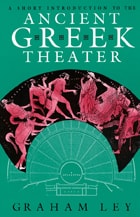
A Short Introduction to the Ancient Greek Theater
Graham Ley
University of Chicago Press, 1991
Reexamining the surviving plays of the tragic writers Aeschylus, Sophocles, and Euripides and of the comedian Aristophanes, Graham Ley discusses the actor's technique, the power and range of the chorus, the use of theatrical space, and parody in the plays. A series of diagrams relates the theater to the city and political life of ancient Athens, and photographic illustrations of scenes from Greek vases document the visualization of theatrical performance.
An ideal companion to The Complete Greek Tragedies (University of Chicago Press), Ley's work is a valuable user's guide to the critical assessment of modern translations and adaptations of tragedy and comedy. It is designed for all students of Greek drama with an interest in performance, and for theatrical practitioners who require a concise but informative introduction to one of the great periods of world drama.
A Short Introduction to the Ancient Greek Theater
Revised EditionGraham Ley
University of Chicago Press, 2007
Reexamining the surviving plays of Aeschylus, Sophocles, Euripides, and Aristophanes, Graham Ley here discusses acting technique, scenery, the power and range of the chorus, the use of theatrical space, and parody in their plays. In addition to photos of scenes from Greek vases that document theatrical performance, this new edition includes notes on ancient mime and puppetry and how to read Greek playtexts as scripts, as well as an updated bibliography. An ideal companion to The Complete Greek Tragedies, also published by the University of Chicago Press, Ley’s work is a concise and informative introduction to one of the great periods of world drama.
"Anyone faced with Athenian tragedy or comedy for the first time, in or out of the classroom, would do well to start with A Short Introduction to Ancient Greek Theater."—Didaskalia
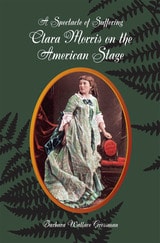
A Spectacle of Suffering
Clara Morris on the American StageBarbara Wallace Grossman
Southern Illinois University Press, 2009
Once called "America's greatest actress," renowned for the passion and power of her performances, Clara Morris (1847-1925) has been largely forgotten. A Spectacle of Suffering: Clara Morris on the American Stage is the first full-length study of the actress's importance as a feminist in the late nineteenth and early twentieth centuries. Detailing her daunting health problems and the changing tastes in entertainment that led to her retirement from the stage, Barbara Wallace Grossman explores Morris's dramatic reinvention as an author. During a second robust career, she published hundreds of newspaper and magazine articles and nine books—six works of fiction and three memoirs.
Grossman draws on the fifty-four-volume diary that Morris kept from 1868 until 1924, as well as on the manuscript fragments and notes of journalist George T. MacAdam, who died in 1929 before completing the actress's biography. Grossman provides a dramatic account of Morris's life and work from her troubled early years, through an unhappy marriage, morphine addiction, and invalidism, to the challenges of touring, the decline of her artistic reputation, and the demands of the writing career she pursued so tenaciously. A Spectacle of Suffering reveals how Morris, even after experiencing blindness and the loss of her home, livelihood, and family, did not succumb to despair and found comfort in the small pleasures of her circumscribed life.
A Spectacle of Suffering recovers an important figure in American theatre and ensures that Morris will be remembered not simply as an actress but as a respected writer and beloved public figure, admired for her courage in dealing with adversity. The book, which is enhanced by twenty-four illustrations, is the only published biography of Clara Morris. It is as much a tribute to the power of the human spirit as it is an effective means of exploring American theatre and society in the Gilded Age.
A Student Guide to Play Analysis
David Rush
Southern Illinois University Press, 2005
With the skills of a playwright, the vision of a producer, and the wisdom of an experienced teacher, David Rush offers a fresh and innovative guide to interpreting drama in A Student Guide to Play Analysis, the first undergraduate teaching tool to address postmodern drama in addition to classic and modern. Covering a wide gamut of texts and genres, this far-reaching and user-friendly volume is easily paired with most anthologies of plays and is accessible even to those without a literary background.
Contending that there are no right or wrong answers in play analysis, Rush emphasizes the importance of students developing insights of their own. The process is twofold: understand the critical terms that are used to define various parts and then apply these to a particular play. Rush clarifies the concepts of plot, character, and language, advancing Aristotle’s concept of the Four Causes as a method for approaching a play through various critical windows. He describes the essential difference between a story and a play, outlines four ways of looking at plays, and then takes up the typical structural devices of a well-made play, four primary genres and their hybrids, and numerous styles, from expressionism to postmodernism.
For each subject, he defines critical norms and analyzes plays common to the canon. A Student Guide to Play Analysis draws on thoughtful examinations of such dramas as The Cherry Orchard, The Good Woman of Setzuan, Fences, The Little Foxes, A Doll House, The Glass Menagerie, and The Emperor Jones. Each chapter ends with a list of questions that will guide students in further study.
A Theater of Our Own
A History and a Memoir of 1,001 Nights in ChicagoRichard Christiansen, with a foreword by Brian Dennehy
Northwestern University Press, 2004
A Theater of Our Own is a fascinating, fast-paced, and fact-filled chronicle of Chicago's legendary theater scene by the long-time chief critic for the Chicago Tribune. Who produced the first stage adaptation of "The Wizard of Oz" in 1902-nearly forty years before the movie classic? What entertainment juggernaut began in a converted Chinese laundry on Wells Street in 1959? Where did Louis (Studs) Terkel make his stage debut? When did the original production of "Grease" open at Kingston Mines Theater? Richard Christiansen, former chief critic for the Chicago Tribune, answers these and many more questions about the rich role of the theater in Chicago, from its earliest days in 1837 to its present state as a diverse community of artists with international stature.
In A Theater of Our Own, he draws upon his exclusive interviews, insights, and memories gathered over a period of more than forty years of reviewing the arts. This history and memoir traces the evolution of the Chicago theater scene from small theaters to major institutions such as the Steppenwolf Theatre Company, the Goodman Theater, and The Second City. Along the way, Richard Christiansen relates his behind-the-scenes conversations with some of Chicago's most acclaimed writers, directors, and actors--David Mamet, Frank Galati, Mary Zimmerman, John Malkovich, Laurie Metcalf, Harold Ramis, Gary Sinise, and Joe Mantegna--all a part of Chicago's theater renaissance from the 1970s onward. To this day, Chicago remains a city known for its imaginative, innovative, and influential theaters and artists. A Theater of Our Own, a valuable contribution to the history of theater, is a book written for anyone who enjoys the theater and its people as well as the story of Chicago.

A Triptych from the Russian Theatre
An Artistic Biography of the Komissarzhevsky FamilyVictor Borovsky
University of Iowa Press, 2001
Act Like a Man
Challenging Masculinities in American DramaRobert Vorlicky
University of Michigan Press, 1995
In the first comprehensive study of plays written for male characters only, Robert Vorlicky offers a new theory that links cultural codes governing gender and the conventions determining dramatic form. Act Like a Manlooks at a range of plays, including those by O'Neill, Albee, Mamet, Baraka, and Rabe as well as new works by Philip Kan Gotanda, Alonzo Lamont, and Robin Swados, to examine how dialogue within these works reflects the social codes of male behavior and inhibits individualization among men.
Plays in which women are absent are often characterized by the location of a male "other"—a female presence who distances himself from the dominant, impersonal masculine ethos and thereby becomes a facilitator of personal communication. The potential authority of this figure is so powerful that its presence becomes the primary determinant of the quality of men's interaction and of the range of male subjectivities possible. This formulation becomes the basis of an alternative theory of American dramatic construction, one that challenges traditional dramaturgical notions of realism.
The book will appeal to scholars and students interested in drama, gender, race, sexuality, and American culture, as well as playwrights, teachers of playwrights, and artistic directors. It includes an extensive bibliography of more than four hundred male-cast plays and monodramas, the first such compilation and one that points to further research into a previously unexplored area.
Acting Egyptian
Theater, Identity, and Political Culture in Cairo, 1869–1930By Carmen M. K. Gitre
University of Texas Press, 2019
In the late nineteenth and early twentieth centuries, during the “protectorate” period of British occupation in Egypt—theaters and other performance sites were vital for imagining, mirroring, debating, and shaping competing conceptions of modern Egyptian identity. Central figures in this diverse spectrum were the effendis, an emerging class of urban, male, anticolonial professionals whose role would ultimately become dominant. Acting Egyptian argues that performance themes, spaces, actors, and audiences allowed pluralism to take center stage while simultaneously consolidating effendi voices.
From the world premiere of Verdi’s Aida at Cairo’s Khedivial Opera House in 1871 to the theatrical rhetoric surrounding the revolution of 1919, which gave women an opportunity to link their visibility to the well-being of the nation, Acting Egyptian examines the ways in which elites and effendis, men and women, used newly built performance spaces to debate morality, politics, and the implications of modernity. Drawing on scripts, playbills, ads, and numerous other sources, the book brings to life provocative debates that fostered a new image of national culture and performances that echoed the events of urban life in the struggle for independence.
Acting in Real Time
Paul Binnerts
University of Michigan Press, 2012
Acting in Real Timeby renowned Dutch director and acting teacher Paul Binnerts describes his method for Real-Time Theater, which authorizes actors to actively determine how a story is told---they are no longer mere vehicles for delivering the playwright's message or the director's interpretations of the text. This level of involvement allows actors to deepen their grasp of the material and amplify their stage presence, resulting in more engaged and nuanced performances.
The method offers a postmodern challenge to Stanislavski and Brecht, whose theories of stage realism dominated the twentieth century. In providing a new way to consider the actor's presence on stage, Binnerts advocates breaking down the "fourth wall" that separates audiences and actors and has been a central tenet of acting theories associated with realism. In real-time theater, actors forgo attempts to become characters and instead understand their function to be storytellers who are fully present on stage and may engage the audience and their fellow actors directly.
Paul Binnerts analyzes the ascendance of realism as the dominant theater and acting convention and how its methods can hinder the creation of a more original, imaginative theater. His description of the techniques of real-time theater is illuminated by practical examples from his long experience in the stage. The book then offers innovative exercises that provide training in the real-time technique, including physical exercises that help the actor become truly present in performance. Acting in Real Time also includes a broad overview of the history of acting and realism's relationship to the history of theater architecture, offering real-time theater as an alternative. The book will appeal to actors and acting students, directors, stage designers, costume designers, lighting designers, theater historians, and dramaturgs.
Acting the Part
Audience Participation in PerformanceE. B. Hunter
University of Michigan Press, 2025
Actors and American Culture, 1880-1920
Benjamin Mcarthur
University of Iowa Press, 2000
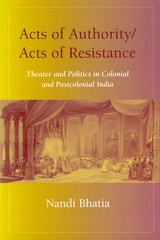
Acts of Authority/Acts of Resistance
Theater and Politics in Colonial and Postcolonial IndiaNandi Bhatia
University of Michigan Press, 2004
Nandi Bhatia argues that Indian theater was a significant force in the struggle against oppressive colonial and postcolonial structures, as it sought to undo various schemes of political and cultural power through its engagement with subjects derived from mythology, history, and available colonial models such as Shakespeare. Bhatia's attention to local histories within a postcolonial framework places performance in a global and transcultural context. Drawing connections between art and politics, between performance and everyday experience, Bhatia shows how performance often intervened in political debates and even changed the course of politics.
One of the first Western studies of Indian theater to link the aesthetics and the politics of that theater, Acts of Authority/Acts of Resistance combines in-depth archival research with close readings of dramatic texts performed at critical moments in history. Each chapter amplifies its themes against the backdrop of specific social conditions as it examines particular dramatic productions, from The Indigo Mirror to adaptations of Shakespeare plays by Indian theater companies, illustrating the role of theater in bringing nationalist, anticolonial, and gendered struggles into the public sphere.
Nandi Bhatia is Associate Professor of English at the University of Western Ontario.
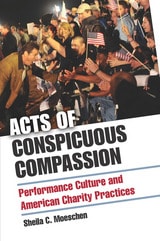
Acts of Conspicuous Compassion
Performance Culture and American Charity PracticesSheila C. Moeschen
University of Michigan Press, 2016
Sheila C. Moeschen sheds new light on the legacy and involvement of disabled people within charity—specifically, the articulation of performance culture as a vital theoretical framework for discussing issues of embodiment and identity, a framework that dislodges previously held notions of the disabled existing as passive “objects” of pity. This work gives rise to a more complicated and nuanced discussion of the participation of the disabled community in the charity industry, of the opportunities afforded by performance culture for disabled people to act as critical agents of charity, and of the new ethical and political issues that arise from employing performance methodology in a culture with increased appetites for voyeurism, display, and complex spectacle.
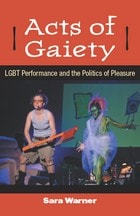
Acts of Gaiety
LGBT Performance and the Politics of PleasureSara Warner
University of Michigan Press, 2013
Acts of Gaiety explores the mirthful modes of political performance by LGBT artists, activists, and collectives that have inspired and sustained deadly serious struggles for revolutionary change. The book explores antics such as camp, kitsch, drag, guerrilla theater, zap actions, rallies, manifestos, pageants, and parades alongside more familiar forms of "legitimate theater." Against queer theory's long-suffering romance with mourning and melancholia and a national agenda that urges homosexuals to renounce pleasure if they want to be taken seriously by mainstream society, Acts of Gaiety seeks to reanimate notions of "gaiety" as a political value for LGBT activism.
The book mines the archives of lesbian-feminist activism of the 1960s-70s, highlighting the outrageous gaiety that lay at the center of the social and theatrical performances of the era and uncovering original documents long thought to be lost. Juxtaposing historical figures such as Valerie Solanas and Jill Johnston with more recent performers and activists (including Hothead Paisan, Bitch & Animal, and the Five Lesbian Brothers), Warner shows how reclaiming this largely discarded and disavowed past elucidates possibilities for being and belonging. Acts of Gaiety explores the mutually informing histories of gayness as politics and as joie de vivre, along with the centrality of liveliness to queer performance and protest.
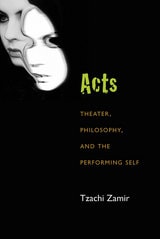
Acts
Theater, Philosophy, and the Performing SelfTzachi Zamir
University of Michigan Press, 2014
Why do people act? Why are other people drawn to watch them? How is acting as a performing art related to role-playing outside the theater? As the first philosophical study devoted to acting, Acts: Theater, Philosophy, and the Performing Selfsheds light on some of the more evasive aspects of the acting experience— such as the import of the actor's voice, the ethical unease sometimes felt while embodying particular sequences, and the meaning of inspiration. Tzachi Zamir explores acting’s relationship to everyday role-playing through a surprising range of examples of “lived acting,” including pornography, masochism, and eating disorders. By unearthing the deeper mobilizing structures that underlie dissimilar forms of staged and non-staged role-playing, Acts offers a multi-layered meditation on the percolation from acting to life.
The book engages questions of theatrical inspiration, the actor’s “energy,” the difference between acting and pretending, the special role of repetition as part of live acting, the audience and its attraction to acting, and the unique significance of the actor’s voice. It examines the embodied nature of the actor’s animation of a fiction, the breakdown of the distinction between what one acts and who one is, and the transition from what one performs into who one is, creating an interdisciplinary meditation on the relationship between life and acting.

Adapting Performance Between Stage and Screen
Victoria Lowe
Intellect Books, 2020
Provides a new foundation for discussions about theater, film, and translations between the two mediums.
Adapting Performance Between Stage and Screen provides an introduction to adaptations between theater and film, establishing a framework for considering these as distinct from literary adaptation. The book places emphasis on performance and event, opening new avenues of exploration to include non-literary issues such as the treatment of space and place, mis en scène, acting styles, and star personas. The recent growth of digital theater is examined to foreground the “events” of theater and cinema—largely ignored in adaptation studies—with phenomena such as National Theatre Live analyzed for the different ways that “liveness” is adapted.
Drawing from case studies that explore distinct periods in British film and theater history, the volume looks at issues surrounding theatrical naturalism and cinematic realism and illustrates the principle that adaptations can't be divorced from the historical and cultural moment in which they are produced. Adapting Performance Between Stage and Screen explores how cultural values can be articulated in the act of translating between media, providing a new framework for the discussion of theater and film as dramatic works.
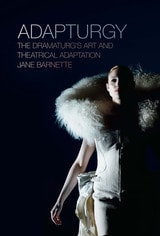
Adapturgy
The Dramaturg's Art and Theatrical AdaptationJane Barnette
Southern Illinois University Press, 2018
The dual nature of dramaturgy and adaptation as both process and product is reflected in the structure and organization of the book. Part 1 explores the ways that linking adaptation to dramaturgy advances our understanding of both practices. Part 2 demonstrates three different methods—each grounded in a detailed case study—for analyzing theatrical adaptations. Part 3 offers concrete strategies for the dramaturg: dramaturgy for the adapted script; the production dramaturgy of stage adaptations; and the role of the dramaturg in the postmortem for a production. Rounding out the book are two appendixes containing interviews with adapters and theatre-makers and representative program notes from different play adaptations.
Plays adapted from literature and other media represent a rapidly growing part of the theatre. This book offers both practical and theoretical tools for understanding and creating these new works.
Aesthetic Citizenship
Immigration and Theater in Twenty-First-Century ParisEmine Fisek
Northwestern University Press, 2017
From neighborhood associations and humanitarian alliances to arts organizations both large and small, Fisek traces how theater has emerged as a practice with the perceived capacity to address questions regarding immigrant rights, integration, and experience. In Aesthetic Citizenship, she explores how the stage, one of France’s most evocative cultural spaces, has come to play a role in contemporary questions about immigration, citizenship and national identity. Yet Fişek’s insightful research also illuminates Paris’s broader historical, political, and cultural through-lines that continue to shape the relationship between theater and migration in France.
By focusing on how French public discourses on immigration are not only rendered meaningful but also inhabited and modified in the context of activist and arts practice, Aesthetic Citizenship seeks to answer the fundamental question: is theater a representational act or can it also be a transformative one?
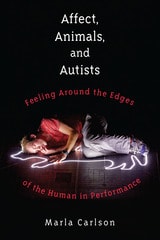
Affect, Animals, and Autists
Feeling Around the Edges of the Human in PerformanceMarla Carlson
University of Michigan Press, 2018
By analyzing specific structures of affect with the vocabulary of emotions, Marla Carlson builds upon the conception of affect articulated by psychologist Silvan Tomkins. The book treats a diverse selection of live performance and archival video and analyzes the ways in which they affect their audiences. The range of performances includes commercially successful productions such as The Curious Incident of the Dog in the Night-Time, War Horse, and The Lion King as well as to the more avant-garde and experimental theater created by Robert Wilson and Christopher Knowles, Back to Back Theatre, Elevator Repair Service, Pig Iron Theatre, and performance artist Deke Weaver.
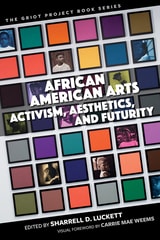
African American Arts
Activism, Aesthetics, and Futurityweems, carrie mae
Bucknell University Press, 2020
Contributors: Carrie Mae Weems, Carmen Gillespie, Rikki Byrd, Amber Lauren Johnson, Doria E. Charlson, Florencia V. Cornet, Daniel McNeil, Lucy Caplan, Genevieve Hyacinthe, Sammantha McCalla, Nettrice R. Gaskins, Abby Dobson, J. Michael Kinsey, Shondrika Moss-Bouldin, Julie B. Johnson, Sharrell D. Luckett, Jasmine Eileen Coles, Tawnya Pettiford-Wates, Rickerby Hinds.
Published by Bucknell University Press. Distributed worldwide by Rutgers University Press.
African Theatre for Development
Edited by Kamal Salhi
Intellect Books, 1998
• reveals the dynamic position of the arts and culture in post-independent countries as well as changes in influences and audiences,
• shows African theatre to be about aesthetics and rituals, the sociological and the political, the anthropological and the historical,
• examines theatre's role as a performing art throughout the continent, representing ethnic identities and defining intercultural relationships,
• investigates African theatre's capacity to combine contemporary cultural issues into the whole artistic fabric of performing arts, and
• considers the variety of voices, forms and practices through which contemporary African intellectual circles are negotiating the forces of tradition and modernity.
The book provides an opportunity to discover contemporary material from experts, critics and artists from across the world. The contributions are in a language and style that allow them to be read either as aids to formal study or as elements of discussion to interest the general reader.
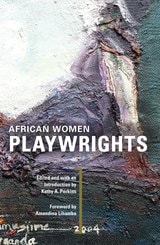
African Women Playwrights
Edited and with an Introduction by Kathy A. Perkins. Foreword by Amandina Lihamb
University of Illinois Press, 2008
This anthology consists of nine plays by a diverse group of women from throughout the African continent. The plays focus on a wide range of issues, such as cultural differences, AIDS, female circumcision, women's rights to higher education, racial and skin color identity, prostitution as a form of survival for young girls, and nonconformist women resisting old traditions. In addition to the plays themselves, this collection includes commentaries by the playwrights on their own plays, and editor Kathy A. Perkins provides additional commentary and a bibliography of published and unpublished plays by African women.
The playwrights featured are Ama Ata Aidoo, Violet R. Barungi, Tsitsi Dangarembga, Nathalie Etoke, Dania Gurira, Andiah Kisia, Sindiwe Magona, Malika Ndlovu (Lueen Conning), Juliana Okoh, and Nikkole Salter.
After Live
Possibility, Potentiality, and the Future of PerformanceDaniel Sack
University of Michigan Press, 2015
Agitated States
Performance in the American Theater of CrueltyAnthony Kubiak
University of Michigan Press, 2002
Beginning with the writings of John Winthrop and others, through the Federalist and "romantic" stages of American cultural life, and into the modern and contemporary periods, Anthony Kubiak finds an America not usually discovered by traditional or materialist approaches to history. He deploys the psychoanalytic theory of Jacques Lacan, the cultural theory of SlavojZizek, and the performance theory of Herbert Blau in an unparalleled reappraisal of dominant American identity, culture, and history.
Anthony Kubiak is Associate Professor of English, University of South Florida. He is also author of Stages of Terror: Terrorism, Ideology, and Coercion as Theatre History.
Alchemies of Theater
Plays, Scores, WritingsDick Higgins
University of Michigan Press, 2024
Alchemies of Theater brings together a broad selection of Higgins’s writings and theater-related work, much of it unpublished or long out of print, including plays and performance scores, drawings, and writings on theater and performance. As this book demonstrates, Higgins deconstructed the drama long before it became a project of theater; undercut the traditional roles of author and director; created what is now considered “devised” theater; pioneered the use of media in theater, writing the first electronic opera; and was a precursor in deconstruction and “postdramatic” avant-garde traditions. His Intermedia manifesto offered a sweeping view of interdisciplinarity—in effect, a new arts ecology.
Alcman and the Cosmos of Sparta
Gloria Ferrari
University of Chicago Press, 2008