Results by title
399 books match the query 'American fiction' and 22 start with r
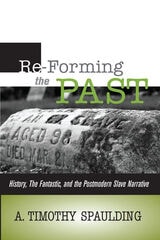
RE-FORMING THE PAST
HISTORY, THE FANTASTIC, & THE POSTMODERN SLAVE NARRATIVEA. Timothy Spaulding
The Ohio State University Press, 2005
In their rejection of mimetic representation and traditional historiography, Spaulding contextualizes postmodern slave narrative. By addressing both literary and popular African American texts, Re-Forming the Past expands discussions of both the African American literary tradition and postmodern culture.
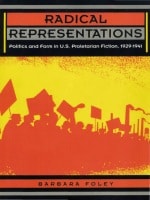
Radical Representations
Politics and Form in U.S. Proletarian Fiction, 1929–1941Barbara Foley
Duke University Press, 1994
Josephine Herbst, William Attaway, Jack Conroy, Thomas Bell and Tillie Olsen, are among the radical writers whose work Foley reexamines. Her fresh approach to the U.S. radicals' debates over experimentalism, the relation of art to propaganda, and the nature of proletarian literature recasts the relation of writers to the organized left. Her grasp of the left's positions on the "Negro question" and the "woman question" enables a nuanced analysis of the relation of class to race and gender in the proletarian novel. Moreover, examining the articulation of political doctrine in different novelistic modes, Foley develops a model for discussing the interplay between politics and literary conventions and genres.
Radical Representations recovers a literature of theoretical and artistic value meriting renewed attention form those interested in American literature, American studies, the U. S. left, and cultural studies generally.
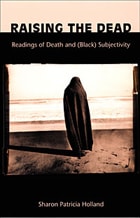
Raising the Dead
Readings of Death and (Black) SubjectivitySharon Patricia Holland
Duke University Press, 2000
Holland argues that the presence of blacks, Native Americans, women, queers, and other “minorities” in society is, like death, “almost unspeakable.” She gives voice to—or raises—the dead through her examination of works such as the movie Menace II Society, Toni Morrison’s novel Beloved, Leslie Marmon Silko’s Almanac of the Dead, Randall Kenan’s A Visitation of Spirits, and the work of the all-white, male, feminist hip-hop band Consolidated. In challenging established methods of literary investigation by putting often-disparate voices in dialogue with each other, Holland forges connections among African-American literature and culture, queer and feminist theory.
Raising the Dead will be of interest to students and scholars of American culture, African-American literature, literary theory, gender studies, queer theory, and cultural studies.
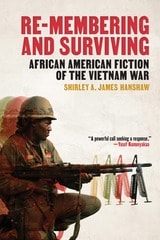
Re-Membering and Surviving
African American Fiction of the Vietnam WarShirley A. James Hanshaw
Michigan State University Press, 2020
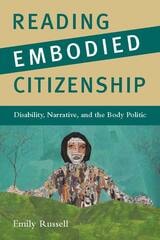
Reading Embodied Citizenship
Disability, Narrative, and the Body PoliticRussell, Emily
Rutgers University Press, 2011
Liberal individualism, a foundational concept of American politics, assumes an essentially homogeneous population of independent citizens. When confronted with physical disability and the contradiction of seemingly unruly bodies, however, the public searches for a story that can make sense of the difference. The narrative that ensues makes "abnormality" an important part of the dialogue about what a genuine citizen is, though its role is concealed as an exception to the rule of individuality rather than a defining difference. Reading Embodied Citizenship brings disability to the forefront, illuminating its role in constituting what counts as U.S. citizenship.
Drawing from major figures in American literature, including Mark Twain, Flannery O'Connor, Carson McCullers, and David Foster Wallace, as well as introducing texts from the emerging canon of disability studies, Emily Russell demonstrates the place of disability at the core of American ideals. The narratives prompted by the encounter between physical difference and the body politic require a new understanding of embodiment as a necessary conjunction of physical, textual, and social bodies. Russell examines literature to explore and unsettle long-held assumptions about American citizenship.
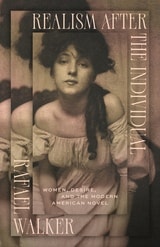
Realism after the Individual
Women, Desire, and the Modern American NovelRafael Walker
University of Chicago Press, 2026
Realism after the Individual offers a new theoretical paradigm for understanding realist novels published in the United States between 1900 and 1920, a period that has been described wrongheadedly as a “gulf” or a “valley” in American literary history. In this generation of writers, only three have remained in favor among critics: Kate Chopin, Edith Wharton, and Theodore Dreiser. Others have disappeared from view altogether—writers such as Robert Grant, Robert Herrick, and Booth Tarkington, all of whom were critically acclaimed bestsellers in their day.
As Rafael Walker shows, this generation of writers deserves new attention for the way they revised many core facets of the nineteenth-century novel in response to the historical shifts around it. This generation of novelists not only rejected liberal individualism but also formulated alternative paradigms for conceptualizing selfhood. The result was a slew of woman-centered realist novels that broke with literary precedent: The novels punish characters not for desiring too much but for failing to desire enough, they depict subjectivity not as private and interior but as outward-facing, and they view closure not as the novel’s aim but as a convention to flout. Realism after the Individual both revises prevailing views of American realism and lays the foundation for an alternative account of the development of literary modernism, one that illuminates the continuity between realism and the modernism that followed it.

Realism and Naturalism in Nineteenth-Century American Literature, Revised Edition
Donald Pizer
Southern Illinois University Press, 1984
The 1966 edition of this book has become a standard work. In this new, revised edition, Pizer has dropped three chapters and has refined and extended the work by adding six: “American Literary Naturalism: An Approach Through Form,” “American Literary Naturalism: The Example of Dreiser,” “The Problem of Philosophy in the Naturalistic Novel,” “Hamlin Garland’s 1891 Main-Travelled Roads: Local Color as Art,” “Jack London: The Problem of Form,” and “Dreiser’s ‘Nigger Jeff’: The Development of an Aesthetic.”
The book contains definitions of realism and naturalism based on representative novels of the period ranging from Howells’ Rise of Silas Lapham to Crane’s Red Badge of Courage; analyses of the literary criticism of the age, stressing that of Howells, Garland, and Norris; and close readings of specific works by major figures of the period.
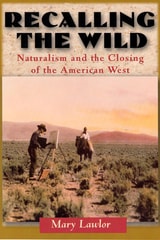
Recalling the Wild
Naturalism and the Closing of the American WestLawlor, Mary
Rutgers University Press, 2000
Ever since the first interactions between Europeans and Native Americans, the “West” has served as a site of complex geographical, social and cultural transformation. American literature is defined, in part, by the central symbols derived from these points of contact. By the end of the nineteenth century, the Western frontier was declared “closed,” a demise solidified by Frederick Jackson Turner’s influential essay “The Significance of the Frontier in American History (1893). At the same time, “naturalism” was popularized by the writings of Frank Norris, Stephen Crane, Jack London, Willa Cather, and the photographs of Edward Curtis. Though very different artists, they were united by their common attraction to the mythic American West.
As she investigates the interactions of representations of the West, Lawlor effortlessly melds literary studies, American studies, and history. She traces the cultural conception of the American West through its incarnations in the “westernism” of Daniel Boone and James Fenimore Cooper and the romanticism of the expansive frontier they helped formulate. Simultaneously, however, the influence of evolutionism and the styles of French naturalism began to challenge this romantic idiom. This naturalistic discourse constructed the West as a strictly material place, picturing a limited and often limiting geography that portrayed regional identity as the product of material “forces” rather than of individualistic enterprise.
With subtle, probing language, Lawlor explains how literary and artistic devices helped shape the idea of the American West and the changing landscape of the continent at the turn of the last century.
Reconstituting Authority
American Fiction in the Province of the Law, 1880-1920William E. Moddelmog
University of Iowa Press, 2000
The second half of the book turns from the rule of law to the issue of property, specifically the Lockean version of the self that tied identity to legal conceptions of property and economic value. In separate discussions of Charles Chesnutt, Edith Wharton, and Theodore Dreiser, Reconstituting Authority reveals authors as closely engaged with those changing perspectives on property and identity, in ways that challenged the racial, gendered, and economic consequences of America's possessive individualism.
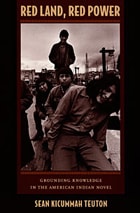
Red Land, Red Power
Grounding Knowledge in the American Indian NovelSean Kicummah Teuton
Duke University Press, 2008
While engaging a wide spectrum of Native American writing, Teuton focuses on three of the most canonized and, he contends, most misread novels of the era—N. Scott Momaday’s House Made of Dawn (1968), James Welch’s Winter in the Blood (1974), and Leslie Marmon Silko’s Ceremony (1977). Through his readings, he demonstrates the utility of tribal realism as an interpretive framework to explain social transformations in Indian Country during the Red Power era and today. Such transformations, Teuton maintains, were forged through a process of political awakening that grew from Indians’ rethought experience with tribal lands and oral traditions, the body and imprisonment, in literature and in life.
Red Weather
Janet McAdams
University of Arizona Press, 2012
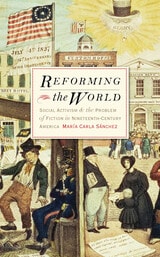
Reforming the World
Social Activism and the Problem of Fiction in Nineteenth-Century AmericaMaria Carla Sanchez
University of Iowa Press, 2009
In her informed and innovative work, Sánchez considers those authors both familiar (Lydia Maria Child, Harriet Jacobs, and Harriet Beecher Stowe) and those all but lost to history (Timothy Shay Arthur). Along the way, she refers to some of the most notable American writers in the period (Emerson, Thoreau, and Poe). Illuminating the intersection of reform and fiction, Reforming the World visits important questions about the very purpose of literature, telling the story of “a revolution that never quite took place," one that had no grandiose or even catchy name. But it did have numerous settings and participants: from the slums of New York, where prostitutes and the intemperate made their homes, to the offices of lawyers who charted the downward paths of broken men, to the tents for revival meetings, where land and souls alike were “burned over” by the grace of God.
Reimagining Realism
A New Anthology of Late Nineteenth- and Early Twentieth-Century American Short FictionCharles A. Johanningsmeier
Ohio University Press, 2022
This innovative collection reinvents the standard American short fiction anthology and offers readers an invigorated, inclusive, and nuanced understanding of American literary history and culture from the Civil War to the end of World War I.
Beginning with one of Louisa May Alcott’s Hospital Sketches, originally published in 1863, this anthology offers a refreshing perspective on American literature from the latter half of the nineteenth century through the first decades of the twentieth. Based on Alcott’s brief stint as a Civil War nurse, Hospital Sketches stands in contrast to the sentimentality of her better-known Little Women and illustrates a blending of romanticism and realism. Furthermore, its thematic focus on the tension between idealized notions of noble, patriotic duty and the horrific reality of war exemplifies a dominant American cultural mindset at the time.
Following this model of complicating accepted ideas about realism and of particular authors, Reimagining Realism brings together dozens of texts that engage with the immense changes and upheavals that characterized American culture over the next six decades: war, abolition, voting rights, westward expansion, immigration, racism and ethnocentrism, industrial production, labor reforms, transportation, urban growth, journalism, mass media, education, and economic disparity.
Reimagining Realism presents a collection of works much more diverse than what is typically found in other anthologies of short fiction from this era. Some selections are lesser-known works by familiar authors that enable readers to see dimensions of these authors that are rarely considered but deserve further study. The book also features authors from many previously underrepresented groups and includes some outstanding works by authors whose names are almost completely unknown to today’s readers—but which deserve greater attention.
The volume’s editors, in their intent to spur readers to further reimagine realism, to represent the spectrum of viewpoints prevalent during this era, and to spark critical thinking and productive discussion, have been careful not to apply any type of political litmus test to the included works. They have also refrained from categorizing works according to convention, so as not to predispose readers to restrictive interpretations, and have provided only brief, highly readable headnotes and annotations that will help readers better understand the texts.
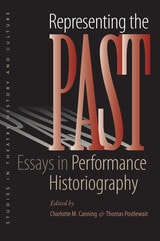
Representing the Past
Essays in Performance HistoriographyCharlotte M. Canning
University of Iowa Press, 2010
How do historians represent the past? How do theatre historians represent performance events? The fifteen challenging essays in Representing the Past: Essays in Performance Historiography focus on the fundamental epistemological conditions and procedures that serve as the foundational ideas that guide all historians in their endeavors. Unified by their investigations into how best to understand and then represent the past, this diverse group of scholars in the field of theatre history and performance studies offers insights into the abiding issues that all historians face in the task of representing human events and actions.
Five primary ideas provide the topics as well as the intellectual parameters for this book: archive, time, space, identity, and narrative. Taking these as the conceptual framework for historical research and analysis, the essayists cover an expansive range of case studies and problems in the historical study of performance from the Americas to Africa and from Europe to India and China. Considering not only how historians think about these concepts in their research and writing but more pointedly—and historiographically—how they think with them, the essayists demonstrate the power and centrality of each of these five ideas in historical scholarship from initial research to the writing of essays and books.
Performance history has a diversity of identities, locations, sources, and narratives. This compelling engagement with the concepts essential to historical understanding is a valuable contribution to the historiography of performance—for students, teachers, and the future of the discipline itself. Expanding upon its classic predecessor, Interpreting the Theatrical Past: Essays in the Historiography of Performance, this exciting new collection illustrates the contemporary richness of historical thinking and writing in the field of performance history.

Rereading the Revolution
The Turn-of-the-Century American Revolutionary War NovelAnita Lawson
University of Wisconsin Press, 2000
Approximately fifty historical novels dealing with the American Revolution were published in the United States from 1896 to 1906. Benjamin S. Lawson critically examines the narrative strategies employed in these works and the ways in which fiction is made to serve the purpose of vivifying national history.
Writing within the conventions of the historical romance, these authors created plots that reflect the enveloping concerns of the War for Independence, such as the young American woman who often must choose between suitors on opposite sides in the wider conflict.
Lawson concludes that these works reassured readers of the worth of an Anglo-American heritage. They were escapist fantasies to the degree that they failed to confront contemporary realities of crisis and change: the New Immigration, urbanization and industrialization, labor strife, the plight of the poor, and agitation on behalf of women and ethnic minorities.
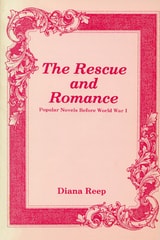
Rescue and Romance
Popular Novels Before World War IDiana Reep
University of Wisconsin Press, 1982
This study of the rescue motif in popular American novels before World War I focuses on the rescue convention as part of the romantic plot of the novels. The rescue as a structured convention that controls the movement of the romantic plot appears in all types of domestic novels, gothics, dime novels, historical romances, and westerns.

Resisting Regionalism
Gender And Naturalism In American Fiction, 1885-1915Donna Campbell
Ohio University Press, 1997
When James Lane Allen defined the “Feminine Principle” and the “Masculine Principle” in American fiction for the Atlantic Monthly in 1897, he in effect described local color fiction and naturalism, two branches of realism often regarded as bearing little relationship to each other. In this award-winning study of both movements, Resisting Regionalism explores the effect the cultural dominance of women’s local color fiction in the 1890’s had on young male naturalist writers, who rebelled against the local colorists and their “teacup tragedies.”
An immensely popular genre, local color fiction reached its peak in the 1880s in such literary journals as Harper’s Monthly, Scribner’s, the Atlantic Monthly, and the Century. These short stories exhibited local “characters,” depicted marginal groups and vanishing folkways, and addressed issues of absence, loss, limitation, and the past. Despite such prickly themes, according to Donna Campbell, local color fiction “fulfilled some specific needs of the public – for nostalgia, for a retreat into mildly exotic locales, for a semblance of order preserved in ritual.”
By the turn of the century, however, local color fiction was fading from the scene, supplanted by writers of adventure fiction and historical romances, with whom local colorists increasingly merged, and opposed by the naturalists. In examining this historic shift, Resisting Regionalism shows that far from being distanced from local color fiction, nationalism emerged in part as a dissenting response to its popularity and to the era’s concerns about the dominance of feminine influence in American literature. The new generation of authors, including Crane, Norris, London, Frederic, Wharton, resisted the cultural myths and narrative strategies common to local colorists Sarah Orne Jewett, Rose Terry Cooke, Mary E. Wilkins Freeman, and Constance Fenimore Woolson. Yet, as Campbell underscores in her analysis of Stephan Crane’s The Monster, the naturalists could, and did, integrate local color conventions with the grotesque and horrifying to powerful effect.
In clear, accessible prose, Resisting Regionalism provides fresh readings of naturalistic works in the context of the dispute between local color and naturalism. In the process, this book shows the debt naturalism owes to local color fiction and illuminates a neglected but significant literary era.

Road-Book America
Contemporary Culture and the New PicaresqueRowland A. Sherrill
University of Illinois Press, 2000
Road-Book America discloses how the old picaresque tradition, embodied in such novels as Henry Fielding's Tom Jones and Daniel Defoe's Moll Flanders, opens to include a number of new American texts, both fiction and nonfiction, that decisively share the characterizing form. Sherrill's discussion encompasses hundreds of American narratives published in the past four decades, including such examples of the genre as William Least Heat-Moon's Blue Highways, John Steinbeck's Travels with Charley, James Leo Herlihy's Midnight Cowboy, Bill Moyers's Listening to America, and E. L. Doctorow's Billy Bathgate.
Sketching the socially marginal, ingenuous, traveling characters common to both old and new versions, Sherrill shows how the "new American picaresque" transforms the satirical aims of the original into an effort to map and catalog the immensity and variety of America.
Open, resilient, perennially hopeful, and endowed with a protean adaptability, the protagonist of the new American picaresque follows a therapeutic path for the alienated modern self. Mining the relevance of the reformulated picaresque for American life, Road-Book America shows how this old form, adaptable as the picaro himself, lays the groundwork for spiritual renewal and a restoration of cultural confidence in some old ways of being American.
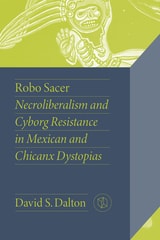
Robo Sacer
Necroliberalism and Cyborg Resistance in Mexican and Chicanx DystopiasDavid S. Dalton
Vanderbilt University Press, 2023
Harvey L. Johnson Publication Award, Southwest Council of Latin American Studies, 2026
Premio Alambique, Alambique: Revista Académica de Ciencia Ficción y Fantasía, 2025
Robo Sacer engages the digital humanities, critical race theory, border studies, biopolitical theory, and necropolitical theory to interrogate how technology has been used to oppress people of Mexican descent—both within Mexico and in the United States—since the advent of the North American Free Trade Agreement (NAFTA) in 1994. As the book argues, robo-sacer identity emerges as transnational flows of bodies, capital, and technology become an institutionalized state of exception that relegates people from marginalized communities to the periphery.
And yet the same technology can be utilized by the oppressed in the service of resistance. The texts studied here represent speculative stories about this technological empowerment. These texts theorize different means of techno-resistance to key realities that have emerged within Mexican and Chicano/a/x communities under the rise and reign of neoliberalism. The first three chapters deal with dehumanization, the trafficking of death, and unbalanced access to technology. The final two chapters deal with the major forms of violence—feminicide and drug-related violence—that have grown exponentially in Mexico with the rise of neoliberalism. These stories theorize the role of technology both in oppressing and in providing the subaltern with necessary tools for resistance.
Robo Sacer builds on the previous studies of Sayak Valencia, Irmgard Emmelhainz, Guy Emerson, Achille Mbembe, and of course Giorgio Agamben, but it differentiates itself from them through its theorization on how technology—and particularly cyborg subjectivity—can amend the reigning biopolitical and necropolitical structures of power in potentially liberatory ways. Robo Sacer shows how the cyborg can denaturalize constructs of zoē by providing an outlet through which the oppressed can tell their stories, thus imbuing the oppressed with the power to combat imperialist forces.
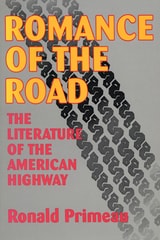
Romance Of The Road
Literature Of The American HighwayRonald Primeau
University of Wisconsin Press, 1996
Writers examined include Jack Kerouac, Jim Dodge, Ralph Waldo Emerson, William Least Heat Moon, Robert M. Pirsig, Henry Miller, Joan Didion, Mona Simpson, and Walt Whitman.
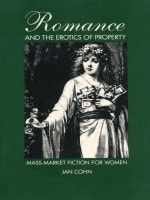
Romance and the Erotics of Property
Mass-Market Fiction for WomenJan Cohn
Duke University Press, 1988
Cohn argues that a full understanding of the contemporary romance requires an investigation of its literary and historical sources and analogues. Three principal sources are examined in the context of women's history in bourgeois society. Pride and Prejudice, Jane Erye, and Gone With the Wind demonstrate the development of romance fiction's themes, yet in all three the central love story is complicated by issues of property, the sign of male power. Jan Cohn further considers the development of the genre n the fictions of Harriet Lewis and May Agnes Fleming, prolific and popular American romance writers of the late nineteenth century who developed the role of the villain, thereby bringing into focus the sexual and economic struggles faced by the heroine.
Romance and the Erotics of Property sets romance fiction against a historic and literary background, arguing that contemporary romance disguises as tales of love the subversive fantasies of female appropriation and male property and power.
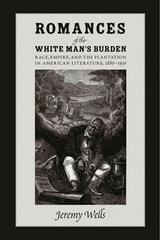
Romances of the White Man's Burden
Race, Empire, and the Plantation in American Literature, 1880-1936Jeremy Wells
Vanderbilt University Press, 2011
Romances of the White Man's Burden takes on works in American literature in which the proverbial "old plantation" is made to seem not a relic but a harbinger, a sign that the South had arrived at a multiracial modernity and harmony before the rest of the United States. Focusing on writers such as Joel Chandler Harris, Thomas Nelson Page, Henry W. Grady, Thomas Dixon, and William Faulkner, Jeremy Wells reveals their shared fixation on the figure of the white southern man as specially burdened by history. Each of these writers, in his own way, presented the plantation South as an emblem, not an aberration, of America.