138 books match the query 'Appreciation' and 8 start with r
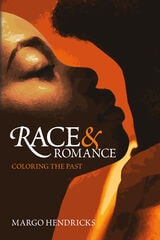
cover of Race and Romance: Coloring the Past

Race and Romance

Coloring the Past

Margo Hendricks

Arizona Center for Medieval and Renaissance Studies, 2021

This study brings race and the literary tradition of romance into dialogue.

Race and Romance: Coloring the Past explores the literary and cultural genealogy of colorism, white passing, and white presenting in the romance genre. The scope of the study ranges from Heliodorus’ Aithiopika to the short novels of Aphra Behn, to the modern romance novel Forbidden by Beverly Jenkins. This analysis engages with the troublesome racecraft of “passing” and the instability of racial identity and its formation from the premodern to the present. The study also looks at the significance of white settler colonialism to early modern romance narratives. A bridge between studies of early modern romance and scholarship on twenty-first-century romance novels, this book is well-suited for those interested in the romance genre.
[more]
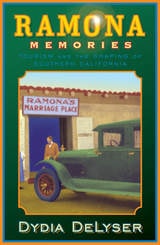
cover of Ramona Memories: Tourism and the Shaping of Southern California

Ramona Memories

Tourism and the Shaping of Southern California

Dydia DeLyser

University of Minnesota Press, 2005

The most important woman in the history of southern California never lived. The eponymous heroine of Helen Hunt Jackson's popular 1884 novel Ramona, a half-Indian beauty raised on a wealthy Mexican rancho, nonetheless left an indelible imprint on southern California's landscape. Within a year of its publication, landmarks identified with Ramona's fictional life - her birthplace, her home, the site of her wedding, and her grave - became important, even canonical parts of a visit to southern California. One could take the Ramona freeway to town, cook like Ramona, and smell like Ramona. The novel's romanticized version of California's Hispanic past also inspired films, songs, musical instruments, jewelry, clothes, beer, wine, canned goods, collectibles, and a play that still draws thirty thousand people annually. Although historians and other writers have acknowledged Ramona's importance in the shaping of southern California's regional identity, there has never been an in-depth study of the origins and evolution of the "Ramona Myth" itself - until now. In Ramona Memories, Dydia DeLyser traces the myth's emergence within the context of the late nineteenth- and early twentieth-century tourist industry. DeLyser explores the establishment of tourist attractions by fans of the novel. She details the stories of individual Ramona enthusiasts who, guided by numerous travel books and articles, wove the text of the novel and its lavishly described locations into their own lives, from pilgrimages to either of the two ranchos acclaimed as Ramona's home to Ramona-themed luncheons and hopeful honeymoon visits to the Wishing Well at her marriage place. Based on more than a decade of meticulous research, Ramona Memories reveals how a fiction - and the real places and products that it inspired - helped to make an idealized past visible, permeating southern California's social memory.
[more]
cover of Re-living the American Frontier: Western Fandoms, Reenactment, and Historical Hobbyists in Germany and America Since 1900

Re-living the American Frontier

Western Fandoms, Reenactment, and Historical Hobbyists in Germany and America Since 1900

Nancy Reagin

University of Iowa Press, 2021

The historic and mythic elements of the American Old West—covered wagon trains, herds of buffalo, teepee villages, Indigenous warriors on horseback, cowboys on open ranges, and white settlers “taming” a wilderness with their plows and log cabins—have exerted a global fascination for more than 200 years and became the foundation for fan communities who have endured for generations. This book examines some of those communities, particularly German fans inspired by the authors of Westerns such as Karl May, and American enthusiasts of Laura Ingalls Wilder’s Little House on the Prairie series.

But the Old West (like all visions of the past) proved to be shifting cultural terrain. In both Germany and the U. S., Western narratives of white settlement were once seen as “apolitical” and were widely accepted by white people. But during the Nazi period in Germany and in East Germany after 1945, the American West was reevaluated and politically repurposed. Then, during the late twentieth century, understandings of the West changed in the U. S. as well, while the violence of white settler colonialism and the displacement of Indigenous peoples became a flashpoint in the culture wars between right and left. Reagin shows that the past that fans seek to recreate is shaped by the changing present, as each new generation adapts and relives their own West.
 
[more]
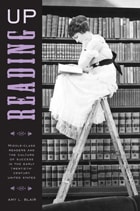
cover of Reading Up: Middle-Class Readers and the Culture of Success in the Early Twentieth-Century United States

Reading Up

Middle-Class Readers and the Culture of Success in the Early Twentieth-Century United States

Amy Blair

Temple University Press, 2011

A person who reads a book for self-improvement rather than aesthetic pleasure is “reading up.” Reading Up is Amy Blair's engaging study of popular literary critics who promoted reading generally and specific books as vehicles for acquiring cultural competence and economic mobility. Combining methodologies from the history of the book and the history of reading, to mass-cultural studies, reader-response criticism, reception studies, and formalist literary analysis, Blair shows how such critics influenced the choices of striving readers and popularized some elite writers.

Framed by an analysis of Hamilton Wright Mabie's role promoting the concept of “reading up” during his ten-year stint as the cultivator of literary taste for the highly popular Ladies' Home Journal, Reading Up reveals how readers flocked to literary works that they would be expected to dislike. Blair shows that while readers could be led to certain books by a trusted adviser, they frequently followed their own path in interpreting them in unexpected ways.

[more]
cover of Renaissance Postscripts: Responding to Ovid's Heroides in Sixteenth-Century France

Renaissance Postscripts

Responding to Ovid's Heroides in Sixteenth-Century France

Paul White

The Ohio State University Press, 2009
Ovid’s Heroides, a collection consisting mainly of poetic love letters sent by mythological heroines to their absent lovers, held a particular fascination for Renaissance readers. To understand their responses to these letters, we must ask exactly how and in what contexts those readers first encountered them: were they read in Latin or in the vernacular; as source texts for the learning of grammar and history or as love poetry; as epistolary and rhetorical models or as moral examples?
 
Renaissance Postscripts: Responding to Ovid’s Heroides in Sixteenth-Century France by Paul White offers an account of the wide variety of responses to the Heroides within the realm of humanist education, in the works of both Latin commentators and French translators, and as an example of a particular mode of imitation. The author examines how humanists shaped the discourse of Ovid’s heroines and heroes to pedagogical ends and analyses even the woodcuts that illustrated various editions. This study traces comparative readings of French translations through a period noted for important shifts in attitudes to the text and to poetic translation in general and offers an important history of the “reply epistle”—a mode of imitation attempted both in Latin and the vernacular. Renaissance Postscripts shows that while the Heroides was a versatile text that could serve a wide range of pedagogical and literary purposes, it was also a text that resisted the attempts of its interpreters to have the final word.


[more]
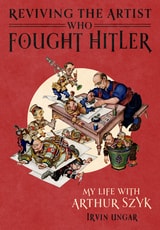
cover of Reviving the Artist Who Fought Hitler: My Life with Arthur Szyk

Reviving the Artist Who Fought Hitler

My Life with Arthur Szyk

Irvin Ungar

University of Texas Press, 2026

The intertwining story of a noted anti-Nazi artist and the former rabbi who revived his reputation.

During World War II, the Polish-Jewish immigrant Arthur Szyk became America’s leading anti-Nazi artist. His art was so effective that Adolf Hitler reportedly put a bounty on his head while the US military declared him a “citizen-soldier” of the free world. Szyk steadfastly fought for the rescue of European Jewry during the Holocaust, creating artworks like De Profundis, which imagines Jesus sharing the suffering of countless lifeless Jews. His civil rights art challenged segregation and his illuminated Declaration of Independence resides in the Library of Congress. Szyk’s masterwork, an illustrated Passover Haggadah, is considered by many to be one of the most beautiful books ever produced by human hands.

Once world-famous, Arthur Szyk was all but forgotten after his death in 1951. Reviving the Artist Who Fought Hitler recounts Irvin Ungar's decades-long journey to restore Szyk to public consciousness, and become the principal collector, dealer, scholar, and promoter of Szyk’s art in the United States, Europe, and Israel. Richly illustrated and full of forgotten history, this memoir is an inspiring story of artistic passion and an invitation to commune with a heroic advocate for all humanity.

[more]
cover of Romance Reader's Advisory: The Librarian's Guide to Love in the Stacks

Romance Reader's Advisory

The Librarian's Guide to Love in the Stacks

American Library Association, 2000

[more]
cover of Russia Reads Rousseau, 1762-1825

Russia Reads Rousseau, 1762-1825

Thomas Barran

Northwestern University Press, 2002

This book is the first study of the dynamics and individual character of the Russian reception of Rousseau. An earlier version of the manuscript was reviewed by the Harriman Institute in 1994, and was subsequently revised and resubmitted.
[more]