Results by title
3258 books match the query 'Art' and 128 start with r
REMEX
Toward an Art History of the NAFTA EraBy Amy Sara Carroll
University of Texas Press, 2017
REMEX presents the first comprehensive examination of artistic responses and contributions to an era defined by the North American Free Trade Agreement (1994–2008). Marshaling over a decade’s worth of archival research, interviews, and participant observation in Mexico City and the Mexico–US borderlands, Amy Sara Carroll considers individual and collective art practices, recasting NAFTA as the most fantastical inter-American allegory of the turn of the millennium. Carroll organizes her interpretations of performance, installation, documentary film, built environment, and body, conceptual, and Internet art around three key coordinates—City, Woman, and Border. She links the rise of 1990s Mexico City art in the global market to the period’s consolidation of Mexico–US border art as a genre. She then interrupts this transnational art history with a sustained analysis of chilanga and Chicana artists’ remapping of the figure of Mexico as Woman.
A tour de force that depicts a feedback loop of art and public policy—what Carroll terms the “allegorical performative”—REMEX adds context to the long-term effects of the post-1968 intersection of D.F. performance and conceptualism, centralizes women artists’ embodied critiques of national and global master narratives, and tracks post-1984 border art’s “undocumentation” of racialized and sexualized reconfigurations of North American labor pools. The book’s featured artwork becomes the lens through which Carroll rereads a range of events and phenomenon from California’s Proposition 187 to Zapatismo, US immigration policy, 9/11 (1973/2001), femicide in Ciudad Juárez, and Mexico’s war on drugs.
Race Sounds
The Art of Listening in African American LiteratureNicole Brittingham Furlonge
University of Iowa Press, 2018
We live in a world of talk. Yet Race Sounds argues that we need to listen more—not just hear things, but actively listen—particularly in relation to how we engage race, gender, and class differences. Forging new ideas about the relationship between race and sound, Furlonge explores how black artists—including well-known figures such as writers Ralph Ellison and Zora Neale Hurston, and singers Bettye LaVette and Aretha Franklin, among others—imagine listening. Drawing from a multimedia archive, Furlonge examines how many of the texts call on readers to “listen in print.” In the process, she gives us a new way to read and interpret these canonical, aurally inflected texts, and demonstrates how listening allows us to engage with the sonic lives of difference as readers, thinkers, and citizens.
Intervening in discourses of African American and black feminist literatures, where sound and voice dominate, Furlonge shifts our attention to listening as an aural strategy of cultural, social, and civic engagement that not only enlivens how we read, write, and critique texts, but also informs how we might be more effective audiences for each other and against injustice in our midst. The result is a fascinating examination that brings new insights to African American literature and art, American literature, democratic philosophy, and sound studies.
Races of Mankind
The Sculptures of Malvina HoffmanMarianne Kinkel
University of Illinois Press, 2011
A fascinating cultural history, Races of Mankind examines how we continually re-negotiate the veracity of race through collaborative processes involved in the production, display, and circulation of visual representations.
Radical Aesthetics and Modern Black Nationalism
GerShun Avilez
University of Illinois Press, 2016
A bold addition to an advancing field, Radical Aesthetics and Modern Black Nationalism rewrites recent black cultural production even as it uncovers unexpected ways of locating black radicalism.
Radical Coherency
Selected Essays on Art and Literature, 1966 to 2005David Antin
University of Chicago Press, 2011
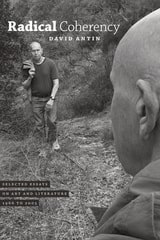
“We got to talking”—so David Antin begins the introduction to Radical Coherency, embarking on the pursuit that has marked much of his breathless, brilliantly conversational work. For the past forty years, whether spoken under the guise of performance artist or poet, cultural explorer or literary critic, Antin’s innovative observations have helped us to better understand everything from Pop to Postmodernism.
Intimately wedded to the worlds of conceptual art and poetics, Radical Coherency collects Antin’s influential critical essays and spontaneous, performed lectures (or “talk pieces”) for the very first time, capturing one of the most distinctive perspectives in contemporary literature. The essays presented here range from the first serious assessment of Andy Warhol published in a major art journal, as well as Antin’s provocative take on Clement Greenberg’s theory of Modernism, to frontline interventions in present debates on poetics and fugitive pieces from the ’60s and ’70s that still sparkle today—and represent a gold mine for art historians of the period. From John Cage to Allan Kaprow, Mark Rothko to Ludwig Wittgenstein, Antin takes the reader on an idiosyncratic, personal journey through twentieth-century culture with his trademark antiformalist panache—one thatwill be welcomed by any fan of this consummate trailblazer.
Radical Desires
French Gay Liberation and Anticolonial CritiqueEdited by Hauke Branding and Julian Volz
Diaphanes, 2025
Despite a historically rich tradition of thinking about the relation between sexuality, desire, and revolution, there is little engagement with desire’s radicality today. This volume attends to the radicality of desire as a starting point for overcoming heteropatriarchal capitalism by turning to the specific radical homosexual critique as it was first formulated in France in the 1970s in the writings of the Mouvement de Libération des Femmes and the Front Homosexuel d’Action Révolutionnaire, as well as in the conceptions of their most important protagonists, Monique Wittig and Guy Hocquenghem.
Radical Desires seeks to emphasize the anti-identitarian character of the French gay liberation movement, as well as its implicit and explicit critique of gender and sexual binaries. At the same time, the volume is also interested in intersectionally expanding this critique by confronting it with anticolonial and queer of color perspectives. As French gay liberation activists’ relations to North African men were often problematic, several contributions engage with the latent orientalist and racist tropes that appear in the movement’s writings. By aiming to go beyond a mere historicization of these ambivalences and exploring which contemporary problems appear in a different light as a result, Radical Desires highlights the (dis-)continuous relationship between current debates and those in 1970s France.
To explore the multiplicity of forms with or in which these critiques were expressed, this volume places theoretical perspectives in conversation with artistic perspectives on queer liberation in a transnational context. Contributors include Friederike Beier, Antoine Idier, Émilie Notéris, Lukas Betzler, Mohammad Shawky Hassan, Sido Lansari, Todd Shepard, and Julian Volz.
Raising Bilingual Bambini
The Art of Immersing Our Family in the la Dolce VitaEric Dregni
University of Minnesota Press, 2026
A father’s memoir of preparing a dual-language household for a stint living abroad—and all of the ensuing challenges and rewards
After living in Modena, Italy, for three years, Eric Dregni and his wife, Katy, dreamed of returning one day—future children in tow—to give their kids the experience of living abroad. When they become parents, they decide to raise their children with a global perspective in a bilingual household: Katy speaking only English to them and Eric speaking only Italian.
Despite their extended family’s confusion about this experiment, they persist through their three kids’ childhoods, sending them to an immersion language camp and preparing them for life abroad. Eventually, the family packs up and moves to Florence, where the bambini can stop to see Michelangelo’s David on the way home from school, indulge in fresh pasta and gelato, and learn how to argue like real Italians. Sooner than anyone would like, three months of la dolce vita comes to an end, and they head back to Minnesota, trying to bring a taste of Italian culture home with them.
A fast-paced memoir/travelogue, Raising Bilingual Bambini is Dregni’s passionate testament to the value of an international perspective, his loving tribute to the family’s time together in Italy, and a bittersweet reflection on what it meant to return to Minnesota (until their trip to Sicily several years later). Writing with his signature humor and sincerity, Eric Dregni offers a heartfelt story about family and finding a home together in a new place.
Retail e-book files for this title are screen-reader friendly with images accompanied by short alt text and/or extended descriptions.
Rated RX
Sheree Rose with and after Bob FlanaganEdited by Yetta Howard
The Ohio State University Press, 2020
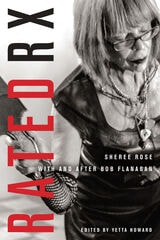
Curated with attention to queer-crip subjectivities and transgressive feminisms, Rated RX includes essays by and interviews with scholars, artists, and Rose’s collaborators that address gender politics, archival practices, minority embodiment, and disability in Rose’s work as well as more than eighty photographs and rare archival materials reflecting Rose’s recent and past performances. Offering a necessary corrective, Rated RX is the first collection to underscore Sheree Rose as a legendary figure in performance art and BDSM subcultural history, reflecting her lifetime of involvement in documenting the underground and the transformative role her work plays in sexual, subcultural, and art exhibitionism.

Re-Imagining the City
Art, Globalization and Urban SpacesEdited by Elizabeth Grierson and Kristen Sharp
Intellect Books, 2013
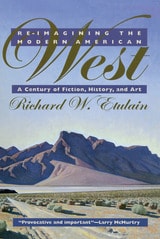
Re-imagining the Modern American West
A Century of Fiction, History, and ArtRichard W. Etulain
University of Arizona Press, 1996
He discusses novelists from Jack London to John Steinbeck and on to Joan Didion. He covers historians from Frederick Jackson Turner to Earl Pomeroy and Patricia Nelson Limerick, and artists from Frederic Remington and Charles Russell to Georgia O’Keeffe and R. C. Gorman. The author places emphasis on women painters and authors such as Mary Hallock Foote, Mary Austin, Willa Cather, and Judith Baca. He also stresses important works of ethnic writers including Leslie Marmon Silko, Rudolfo Anaya, and Amy Tan. An intriguing survey of tendencies and trends and a well-defined profile of influences and outgrowths, this book will be valuable to students and scholars of western culture and history, American studies, and related disciplines. General readers will appreciate the book’s balanced structure and spirited writing style. All readers, whatever their level of interest, will discover the major cultural inventions of the American West over the past one hundred years.
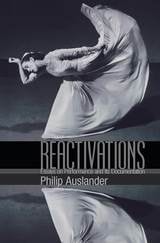
Reactivations
Essays on Performance and Its DocumentationPhilip Auslander
University of Michigan Press, 2018
performance from its documentation? What is the value of performance documentation?
The book treats performance documentation as a specific discursive use of media that arose in the middle of the 20th century alongside such forms of performance as the Happening and that is different, both discursively and as a practice, from traditional theater and dance photography. Philip Auslander explores the phenomenal relationship between the spectator who experiences the performance from the document and the document itself. The document is not merely a secondary iteration of the original event but a vehicle that gives us meaningful access to the performance itself as an artistic work.
Reading Bande Dessinée
Critical Approaches to French-language Comic StripAnn Miller
Intellect Books, 2007
Ann Miller’s groundbreaking book not only parses bande dessinée as visual narrative art, but it shows readers how to study it, as she places these comic strips in the context of debates surrounding the form’s legitimization, approaches it from a cultural studies perspective, and examines bande dessinée in its relationship to subjectivity in the body. Miller here illuminates such disparate concepts as Astérix and the mythologizing of Frenchness, historical memory and the Algerian war, and characterizations of the new managerial bourgeoisie in the context of Francophone comic strips. Reading Bande Dessinée will help lay a scholarly foundation for the growing interest in this captivating art form in the Anglophone world.
“The work provides both a key analysis for scholars of the bande dessinée, as well as a manual for a modern application of critical theory.”—Dr. Laurence Grove, University of Glasgow
Reading Boyishly
Roland Barthes, J. M. Barrie, Jacques Henri Lartigue, Marcel Proust, and D. W. WinnicottCarol Mavor
Duke University Press, 2007
To “read boyishly” is to covet the mother’s body as a home both lost and never lost, to desire her as only a son can, as only a body that longs for, but will never become Mother, can. Nostalgia (from the Greek nostos = return to native land, and algos = suffering or grief) is at the heart of the labor of boyish reading, which suffers in its love affair with the mother. The writers and the photographer that Mavor lovingly considers are boyish readers par excellence: Barrie, creator of Peter Pan, the boy who refused to grow up; Barthes, the “professor of desire” who lived with or near his mother until her death; Proust, the modernist master of nostalgia; Winnicott, therapist to “good enough” mothers; and Lartigue, the child photographer whose images invoke ghostlike memories of a past that is at once comforting and painful.
Drawing attention to the interplay between writing and vision, Reading Boyishly is stuffed full with more than 200 images. At once delicate and powerful, the book is a meditation on the threads that unite mothers and sons and on the writers and artists who create from those threads art that captures an irretrievable past.
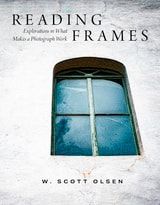
Reading Frames
Explorations in What Makes a Photograph WorkW. Scott Olsen
University of Utah Press, 2026
A collaboration between English professor and photographer W. Scott Olsen and Tomasz Trzebiatowski, founder of Frames magazine, Reading Frames gathers sixty-nine photographs first featured in Frames’ digital companion. Olsen’s essays interrogate the compositional and aesthetic elements of the photographs, but rather than offering technical instruction, Olsen writes with a literary sensibility, tracing how light, tone, color, and line evoke mood, meaning, and story. The essays ask us to linger with each photograph, guiding readers toward attentiveness, presence, and conversation with the image itself. Suited both to introductory photography classes and to general readers, this book is an example of how truly seeing an image is not the same as looking at it.
Reading Medieval Images
The Art Historian and the ObjectElizabeth Sears and Thelma K. Thomas, Editors
University of Michigan Press, 2002
What kind of language do they use to descibe what they see? How do they construct arguments using visual evidence? What sorts of arguments do they make? In this unusual anthology, eighteen prominent art historians specializing in the medieval field (European, Byzantine, and Islamic) provide answers to these fundamental questions, not directly but by way of example. Each author, responding to invitation, has chosen for study a single image or object and has submitted it to sustained analysis. The collection of essays, accompanied by statements on methodology by the editors, offers an accessible introduction to current art-historical practice.
Thelma K. Thomas is Associate Professor of the History of Art and Associate Curator of the Kelsey Museum, University of Michigan.
Reading Southern Art
Essays on the Visual Arts in the United States from the Colonies to TodayRachel Stephens
University of Arkansas Press, 2027
For too long, the visual culture of the American South has been framed through narrow lenses: elite patronage, regional nostalgia, and selective narratives that privilege whiteness while overlooking the complexity of the region’s artistic production. Reading Southern Art: Essays on the Visual Arts in the United States from the Colonies to Today intervenes decisively in this tradition, illuminating the vast visual and material history of the South through works produced by a variety of artists across the region.
Edited by Rachel Stephens, this collection examines Southern art from the seventeenth century until today, covering a diverse variety of media, from traditional fine arts to material and visual culture, ephemera, and public monuments. Analyzing an array of works, from portraits to vernacular traditions to contemporary artistic practice, Reading Southern Art considers how histories, visual and otherwise, are constructed and revised and how the art of the American South has shaped, and been shaped by, such contested histories.
Reading in the Wilderness
Private Devotion and Public Performance in Late Medieval EnglandJessica Brantley
University of Chicago Press, 2007
Drawing on the work of W. J. T. Mitchell, Michael Camille, and others working at the image-text crossroads, Reading in the Wilderness addresses the manuscript’s texts and illustrations to examine connections between reading and performance within the solitary monk’s cell and also outside. Brantley reimagines the medieval codex as a site where the meanings of images and words are performed, both publicly and privately, in the act of reading.
Reading the Figural, or, Philosophy after the New Media
D. N. Rodowick
Duke University Press, 2001
To fully comprehend the emergence of the figural requires a genealogical critique of the aesthetic, Rodowick claims. Seeking allies in this effort to deconstruct the opposition of word and image and to create new concepts for comprehending the figural, he journeys through a range of philosophical writings: Thierry Kuntzel and Marie-Claire Ropars-Wuilleumier on film theory; Jacques Derrida on the deconstruction of the aesthetic; Siegfried Kracauer and Walter Benjamin on the historical image as a utopian force in photography and film; and Gilles Deleuze and Michel Foucault on the emergence of the figural as both a semiotic regime and a new stratagem of power coincident with the appearance of digital phenomena and of societies of control.
Scholars of philosophy, film theory, cultural criticism, new media, and art history will be interested in the original and sophisticated insights found in this book.
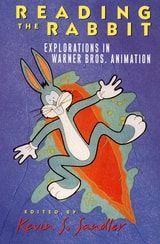
Reading the Rabbit
Explorations in Warner Bros. AnimationSandler, Kevin S
Rutgers University Press, 1998
"A wide-ranging inquiry into an important area of contemporary scholarly interest, and also an engaging, well written and intelligently conceived collection." -Eric Smoodin, author of Animating Culture: Hollywood Cartoons From the Sound Era
Despite the success of Bugs Bunny, Daffy Duck, and their Looney cohorts, Warner Bros. animation worked in the shadow of Disney for many years. The past ten years have seen a resurgence in Warner Bros. animation as they produce new Bugs Bunny cartoons and theatrical features like Space Jam as well as television shows like Tiny Toon Adventures and Animaniacs. While Disney's animation plays it safe and mirrors traditional cinema stories, Warner Bros. is known for a more original and even anarchistic style of narration, a willingness to take risks in story construction, a fearlessness in crossing gender lines with its characters, and a freedom in breaking boundaries. This collection of essays looks at the history of Warner Bros. animation, compares and contrasts the two studios, charts the rise and fall of creativity and daring at Warner's, and analyzes the ways in which the studio was for a time transgressive in its treatment of class, race, and gender. It reveals how safety and commercialization have, in the end, triumphed at Warner Bros. just as they much earlier conquered Disney.
The book also discusses fan parodies of Warner Bros. animation on the Internet today, the Bugs Bunny cross-dressing cartoons, cartoons that were censored by the studio, and the merchandising and licensing strategies of the Warner Bros. studio stores. Contributors are Donald Crafton, Ben Fraser, Michael Frierson, Norman M. Klein, Terry Lindvall, Bill Mikulak, Barry Putterman, Kevin S. Sandler, Hank Sartin, Linda Simensky, Kirsten Moana Thompson, Gene Walz, and Timothy R. White.
Readings in Primary Art Education
Edited by Steve Herne, Sue Cox, and Robert Watts
Intellect Books, 2009
Readings in Primary Art Education focuses on the challenges of and approaches to teaching art to primary-school students. Drawn from articles originally published in the International Journal of Art and Design, this volume gathers the work of the best scholars in the field and provides a critical framework for developing methods of teaching art to young students. Capturing the key issues and debates that are shaping both curricula and practice, Readings in Primary Art Education is an essential starting point for anyone involved in art education. This collection of essays will be a welcome addition to art and design education and will be of interest to those active in primary art and design education, including practicing teachers and scholars.
Real Magic
Edited by Susanne Witzgall
Diaphanes, 2018
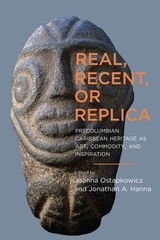
Real, Recent, or Replica
Precolumbian Caribbean Heritage as Art, Commodity, and InspirationEdited by Joanna Ostapkowicz and Jonathan A. Hanna
University of Alabama Press, 2021
A CHOICE OUTSTANDING ACADEMIC TITLE, 2022
Examines the largely unexplored topics in Caribbean archaeology of looting of heritage sites, fraudulent artifacts, and illicit trade of archaeological materials
Real, Recent, or Replica: Precolumbian Caribbean Heritage as Art, Commodity, and Inspiration is the first book-length study of its kind to highlight the increasing commodification of Caribbean Precolumbian heritage. Amerindian art, including “Taíno” art, has become highly coveted by collectors, spurring a prolific and increasingly sophisticated black market of forgeries, but also contemporary artistic engagement, openly appreciated as modern artworks taking inspiration from the past. The contributors to this volume contend with difficult subject matter including the continued looting of archaeological sites in the region, the seismic increase of forgeries, and the imbalance of power and economic relations between the producers and consumers of neo-Amerindian art.
The case studies document the considerable time depth of forgeries in the region (since the late nineteenth century), address the policies put in place by Caribbean governments and institutions to safeguard national patrimony, and explore the impact looted and forged artifacts have on how museums and institutions collect and ultimately represent the Caribbean past to their audiences. Overall, the volume emphasizes the continued desire for the “authentic” Precolumbian artifact, no matter the cost. It provides insights for archaeologists, museum professionals, art historians, and collectors to combat illegal trade and support communities in creating sustainable heritage industries.
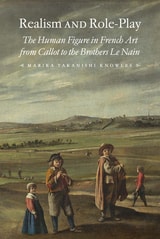
Realism and Role-Play
The Human Figure in French Art from Callot to the Brothers Le NainMarika Takanishi Knowles
University of Delaware Press, 2011
Published by University of Delaware Press. Distributed worldwide by Rutgers University Press.
Realism, Writing, Disfiguration
On Thomas Eakins and Stephen CraneMichael Fried
University of Chicago Press, 1987
"An extraordinary achievement of scholarship and critical analysis. It is a book distinguished not only for its brilliance but for its courage, its grace and wit, its readiness to test its arguments in tough-minded ways, and its capacity to meet the challenge superbly. . . . This is a landmark in American cultural and intellectual studies."—Sacvan Bercovitch, Harvard University
Rebuilding Story Worlds
The Obscure Cities by Schuiten and PeetersJan Baetens
Rutgers University Press, 2020
Rebuilding Story Worlds offers the first full-length study of this seminal series, exploring both the artistic traditions from which it emerges and the innovative ways it plays with genre, gender, and urban space. Comics scholar Jan Baetens examines how Schuiten’s work as an architectural designer informs the series’ concerns with the preservation of historic buildings. He also includes an original interview with Peeters, which reveals how poststructuralist critical theory influenced their construction of a rhizomatic fictional world, one which has made space for fan contributions through the Alta Plana website.
Synthesizing cutting-edge approaches from both literary and visual studies, Rebuilding Story Worlds will give readers a new appreciation for both the aesthetic ingenuity of The Obscure Cities and its nuanced conception of politics.

Recasting Commodity and Spectacle in the Indigenous Americas
Edited by Helen Gilbert and Charlotte Gleghorn
University of London Press, 2014
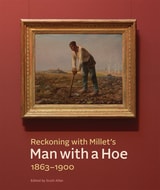
Reckoning with Millet's "Man with a Hoe," 1863–1900
Scott Allan
J. Paul Getty Trust, The, 2023
A monumentalizing portrayal of a peasant bowed over by brutal toil, Man with a Hoe (1860–62) by Jean-François Millet (1814–1875) is arguably the most art historically significant painting in the J. Paul Getty Museum’s collection of nineteenth-century European art. This volume situates the work in the arc of Millet’s career and traces its fascinating and contentious reception, from its scandalous debut at the 1863 Paris Salon to the years following its acquisition by American collectors in the 1890s. The essays examine the painting’s tumultuous public life, beginning in France, where critics attacked it on aesthetic and political grounds as a radical realist provocation; through its transformative movement in the art market during the remaining years of the artist’s life and following his death; to its highly publicized arrival in California as a celebrated masterpiece. In the United States it was enlisted to serve philanthropic interests, became the subject of a popular poem, and once again became embroiled in controversy, in this case one that was strongly inflected by American racial politics. This is the first publication dedicated to the work since its acquisition by the Getty Museum in 1985.
This volume is published to accompany an exhibition on view at the J. Paul Getty Museum at the Getty Center from September 12 to December 10, 2023.
Reclaiming Time
Race, Temporality, and Black Expressive CultureIsaiah Matthew Wooden
Northwestern University Press, 2025
Showing how twenty-first-century Black theater and media arts challenge dominant conceptualizations of time
Reclaiming Time: Race, Temporality, and Black Expressive Culture examines works by contemporary Black artists in multiple media—drama, film, performance art, and photography—that trouble dominant conceptualizations and normative configurations of time in relation to race in the twenty-first century. Isaiah Matthew Wooden explores the ways in which an intentional and sometimes ludic engagement with time and temporality has enabled these artists to probe urgent questions and themes concerning the conditions of contemporary Black life.
Wooden surveys a diverse array of performance-based and visual texts to explore the rich practices of contemporary Black expressive culture: dramatic works by playwrights Eisa Davis, Tarell Alvin McCraney, and Robert O’Hara; performance art and photography by visual artists Jefferson Pinder and LaToya Ruby Frazier; and feature-length cinema by director-producer Tanya Hamilton. These works expose normative time as specious and evidence the transformative potential in honing practices of Black temporal experimentation and intervention. By putting this cross-disciplinary set of texts in conversation with each other, Wooden sheds new light on the shrewd ways that they each reflect an investment in unbinding time from the exigencies of normativity and teleology, as well as on their shared commitments to reclaiming time to reimagine and represent Blackness in all its multiplicities.
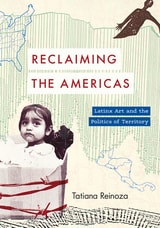
Reclaiming the Americas
Latinx Art and the Politics of TerritoryTatiana Reinoza
University of Texas Press, 2023
2023 Outstanding Book Award, National Association for Ethnic Studies
2024 Finalist, Charles Rufus Morey Book Award, College Art Association
2024 Best Arts Book, Empowering Latino Futures’ International Latino Book Awards
2025 Ewell L. Newman Book Award, American Historical Print Collectors Society
2025 Finalist, Charles C. Eldredge Prize, the Smithsonian American Art Museum
How Latinx artists around the US adopted the medium of printmaking to reclaim the lands of the Americas.
Printmakers have conspired, historically, to illustrate the maps created by European colonizers that were used to chart and claim their expanding territories. Over the last three decades, Latinx artists and print studios have reclaimed this printed art form for their own spatial discourse. This book examines the limited editions produced at four art studios around the US that span everything from sly critiques of Manifest Destiny to printed portraits of Dreamers in Texas.
Reclaiming the Americas is the visual history of Latinx printmaking in the US. Tatiana Reinoza employs a pan-ethnic comparative model for this interdisciplinary study of graphic art, drawing on art history, Latinx studies, and geography in her discussions. The book contests printmaking’s historical complicity in the logics of colonization and restores the art form and the lands it once illustrated to the Indigenous, migrant, mestiza/o, and Afro-descendant people of the Americas.
Reconsidering Olmec Visual Culture
The Unborn, Women, and CreationBy Carolyn E. Tate
University of Texas Press, 2012
Recently, scholars of Olmec visual culture have identified symbols for umbilical cords, bundles, and cave-wombs, as well as a significant number of women portrayed on monuments and as figurines. In this groundbreaking study, Carolyn Tate demonstrates that these subjects were part of a major emphasis on gestational imagery in Formative Period Mesoamerica. In Reconsidering Olmec Visual Culture, she identifies the presence of women, human embryos, and fetuses in monuments and portable objects dating from 1400 to 400 BC and originating throughout much of Mesoamerica. This highly original study sheds new light on the prominent roles that women and gestational beings played in Early Formative societies, revealing female shamanic practices, the generative concepts that motivated caching and bundling, and the expression of feminine knowledge in the 260-day cycle and related divinatory and ritual activities.
Reconsidering Olmec Visual Culture is the first study that situates the unique hollow babies of Formative Mesoamerica within the context of prominent females and the prevalent imagery of gestation and birth. It is also the first major art historical study of La Venta and the first to identify Mesoamerica's earliest creation narrative. It provides a more nuanced understanding of how later societies, including Teotihuacan and West Mexico, as well as the Maya, either rejected certain Formative Period visual forms, rituals, social roles, and concepts or adopted and transformed them into the enduring themes of Mesoamerican symbol systems.
Recording Memories from Political Violence
A Film-maker's JourneyCahal McLaughlin
Intellect Books, 2010
Based on work the author has carried out with survivor groups in Northern Ireland and South Africa, Recording Memories from Political Violence draws on written and audiovisual texts to describe and analyze the use of documentary filmmaking in recording experiences of political conflict. A variety of issues relevant to the genre are addressed at length, including the importance of ethics in the collaboration between the filmmaker and the participant and the effect of location on the accounts of participants. Cahal McLaughlin draws on the diverse fields of film and cultural studies, as well as nearly twenty years of production experience, in this informed and instructive contribution to documentary filmmaking and post-conflict studies.
Recording Reality, Desiring the Real
Elizabeth Cowie
University of Minnesota Press, 2010
Cowie claims that, as a radical film form, documentary has been a way for filmmakers to acknowledge historical and contemporary realities by presenting images of these realities. If documentary is the desire to know reality through its images and sounds, she asks, what kind of speaking (and speaking about) emerges in documentary, and how are we engaged by it? In considering this and other questions, Cowie examines a range of noteworthy films, including Spike Lee’s When the Levees Broke, John Huston’s Let There Be Light, and Milica Tomic’s Portrait of My Mother.
Recording Reality, Desiring the Real stakes documentary’s central place in cinema as both an art form and a form of social engagement, which together create a new understanding of spectatorship.
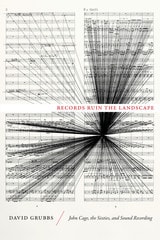
Records Ruin the Landscape
John Cage, the Sixties, and Sound RecordingDavid Grubbs
Duke University Press, 2014
In their day, few of these works circulated in recorded form. By contrast, contemporary listeners can encounter this music not only through a flood of LP and CD releases of archival recordings but also in even greater volume through Internet file sharing and online resources. Present-day listeners are coming to know that era's experimental music through the recorded artifacts of composers and musicians who largely disavowed recordings. In Records Ruin the Landscape, Grubbs surveys a musical landscape marked by altered listening practices.
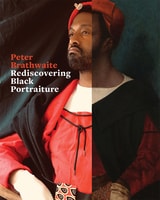
Rediscovering Black Portraiture
Peter Brathwaite
J. Paul Getty Trust, The, 0
“These mirror images with their uncanny resemblances traverse space and time, spotlighting the black lives that have been silenced by the canon of western art, while also inviting us to interrogate the present.” —Times (UK)
Since the beginning of the COVID-19 pandemic, Peter Brathwaite has thoughtfully researched and reimagined more than one hundred artworks featuring portraits of Black sitters—all posted to social media with the caption “Rediscovering #blackportraiture through #gettymuseumchallenge.”
Rediscovering Black Portraiture collects more than fifty of Brathwaite’s most intriguing re-creations. Introduced by the author and framed by contributions from experts in art history and visual culture, this fascinating book offers a nuanced look at the complexities and challenges of building identity within the African diaspora and how such forces have informed Black portraits over time. Artworks featured include The Adoration of the Magi by Georges Trubert, Portrait of an Unknown Man by Jan Mostaert, Rice n Peas by Sonia Boyce, Barack Obama by Kehinde Wiley, and many more. This volume also invites readers behind the scenes, offering a glimpse of the elegant artifice of Brathwaite’s props, setup, and process.
An urgent and compelling exploration of embodiment, representation, and agency, Rediscovering Black Portraiture serves to remind us that Black subjects have been portrayed in art for nearly a millennium and that their stories demand to be told.
An exhibition of Brathwaite’s re-creations is on view at the Bristol Museum & Art Gallery in Bristol, UK from April 14 to September 3, 2023.
Rediscovering Korean Cinema
Sangjoon Lee, Editor
University of Michigan Press, 2019
This groundbreaking collection of thirty-five essays by a wide range of academic specialists situates current scholarship on Korean cinema within the ongoing theoretical debates in contemporary global film studies. Chapters explore key films of Korean cinema, from Sweet Dream, Madame Freedom, The Housemaid, and The March of Fools to Oldboy, The Host, and Train to Busan, as well as major directors such as Shin Sang-ok, Kim Ki-young, Im Kwon-taek, Bong Joon-ho, Hong Sang-soo, Park Chan-wook, and Lee Chang-dong. While the chapters provide in-depth analyses of particular films, together they cohere into a detailed and multidimensional presentation of Korean cinema’s cumulative history and broader significance.
With its historical and critical scope, abundance of new research, and detailed discussion of important individual films, Rediscovering Korean Cinema is at once an accessible classroom text and a deeply informative compendium for scholars of Korean and East Asian studies, cinema and media studies, and communications. It will also be an essential resource for film industry professionals and anyone interested in international cinema.
Redreaming the Renaissance
Essays on History and Literature in Honor of Guido RuggieroMary Lindemann
University of Delaware Press, 2024
Refaire le monde
Edited by Simon Maurer and Daniel Morgenthaler
Diaphanes, 2021
The exhibition involves some eighty different authorial voices, bringing diverse attitudes and actions into the safe space of the museum. This book is both a documentation of these new values and new worlds and a guide to them. It is people-focused, positing the arts as the model for a new human reality. Refaire le monde features many artists, including: Ursula Biemann, Pascale Birchler, Corina Gamma, Vincent Glanzmann, Fabrice Gygi, A. C. Kupper, Asia Andrzejka Merlin, Gianni Motti, Tanja Roscic, Heidi Specogna, Bertold Stallmach, and many more, as well as all those who participated in various parallel events.
Reflections of a Civil War Historian
Essays on Leadership, Society, and the Art of WarHerman Hattaway & Foreword by Frank E. Vandiver
University of Missouri Press, 2003
Reflections on Baroque
Robert Harbison
University of Chicago Press, 2001
Reflections
The American Collection of the Columbus Museum of ArtNannette V. Maciejunes
Ohio University Press, 2019
Reframing Berlin
Architecture, Memory-Making and Film LocationsChristopher S. Wilson and Gul Kacmaz Erk
Intellect Books, 2024
Concerned with the connection between the built environment and the passage of time, Reframing Berlin uses film locations in the city to reveal the influence that urban transformation has on memory-making. Covering the city’s history since the beginning of cinema, the book proposes the term urban strategy to understand the range of consequential actions taken by politicians, developers, and other powerful figures to shape the nature and future of buildings, streets, and districts. Organizing these strategies from demolition to memorialization, the authors study the ways these actions forget or recall aspects of place. Using cinematic representations of Berlin as an audiovisual archive, the study details how the city has adjusted to its traumatic twentieth-century history through architectural transformations. Two dissimilar case studies frame each strategy, indicating that an approach that works for one building may not be sufficient for another.
Reframing Consciousness
Art, mind and technologyEdited by Roy Ascott
Intellect Books, 2000
Loosely themed around four key elements of Mind, Body, Art and Values, the editor leads the investigation through the familiar territories of interactive media and artificial life, combining them with new and ancient ideas about creativity and authorship, the body and personal identity. This is the first book to recognise the paradigmatic changes which art, in alliance with science and technology is currently undergoing.
Reframing Reality
The Aesthetics of the Surrealist Object in French and Czech CinemaAlison Frank
Intellect Books, 2013
Reframing the Ethnographic Museum
Histories, Politics and FuturesEdited by Michael Rowlands, Nick Stanley, and Graeme Were
University College London, 2025
Ethnographic museums are at a crossroads; caught between colonial legacies, and the difficulties of captivating new audiences in a digital world. Reframing the Ethnographic Museum brings together leading scholars and curators to study the shifting role of these institutions in a rapidly changing cultural and political landscape. From Asia to Africa, the book explores how different museum strategies have grappled with decolonization and digital transformation, engaging in critical analysis and including case studies of innovative curatorial practices.
As museums confront calls for accountability and reconsider their collections, this volume provides a relevant exploration of the dilemmas and possibilities facing ethnographic display today. Reframing the Ethnographic Museum urges us to rethink how we engage with the past, and how museums can become spaces of dialogue and reflection.
Regime Change
New Horizons in Islamic Art and Visual CultureEdited by Christiane Gruber and Bihter Esener
Gingko, 2024
The essays collected in this volume highlight some of the regimes of thought and changing trends that structure the field of Islamic art history. The authors present new research exploring the intentions of patrons, the agency of craftsmen, and their responses to previous artistic production, thereby allowing artifacts and monuments to be set within their historical, social, and artistic contexts.
In their contributions, Annabel Teh Gallop, Dmitry Bondarev, and Umberto Bongianino discuss significant changes to Qur’an production due to dynastic and political regime changes in Sumatra and the Malay Peninsula, as well as in Borno and Morocco in Africa. Corinne Mühlemann looks at changes in the role and status of designers and weavers making silk in Khurasan in the post-Mongol period. Lisa Golombek, Michael Chagnon, and Farshid Emami explore Safavid art and architecture, focusing on the material and sensorial qualities of a group of tiled arch panels tiles with narrative scenes, a delicately painted vase, and the clocks of the main square of seventeenth-century Isfahan. Regime change also comes about through technological shifts, and Ulrich Marzolph and Yasemin Gencer ask how the rise of photography and new printing techniques shaped the production, exchange, and transmission of images in Iran and Turkey.
Religion and Political Tolerance in America
Advances in the State of the ArtPaul Djupe
Temple University Press, 2015
The essays in Religion and Political Tolerance in America seek to understand how these elements interrelate. The editor and contributors to this important volume present new and innovative research that wrestles with the fundamental question of the place of religion in democratic society. They address topics ranging from religious contributions to social identity to the political tolerance that religious elites (clergy) hold and advocate to others, and how religion shapes responses to intolerance.
The conclusion, by Ted Jelen, emphasizes that religion’s take on political tolerance is nuanced and that they are not incompatible; religion can sometimes enhance the tolerance of ordinary citizens.
Religion on the Rocks
Hohokam Rock Art, Ritual Practice, and Social TransformationAaron M. Wright
University of Utah Press, 2014
We are nearly all intrigued by the petroglyphs and pictographs of the American Southwest, and we commonly ask what they “mean”. Religion on the Rocks redirects our attention to the equally important matter of what compelled ancient peoples to craft rock art in the first place. To examine this question, Aaron Wright presents a case study from Arizona's South Mountains, an area once flanked by several densely populated Hohokam villages. Synthesizing results from recent archaeological surveys, he explores how the mountains' petroglyphs were woven into the broader cultural landscape and argues that the petroglyphs are relics of a bygone ritual system in which people vied for prestige and power by controlling religious knowledge. The features and strategic placement of the rock art suggest this dimension of Hohokam ritual was participatory and prominent in village life. Around AD 1100, however, petroglyph creation and other ritual practices began to wane, denoting a broad transformation of the Hohokam social world. Wright’s examination of the South Mountains petroglyphs offers a novel narrative of how Hohokam villagers negotiated a concentration of politico-religious authority around platform mounds. Readers will come away with a better understanding of the Hohokam legacy and a greater appreciation for rock art's value to anthropology.
Remaking Beijing
Tiananmen Square and the Creation of a Political SpaceWu Hung
University of Chicago Press, 2005
Wu Hung grew up in Beijing and experienced much of the city's makeover firsthand. In this lavishly illustrated work, he offers a vivid, often personal account of the struggle over Beijing's reinvention, drawing particular attention to Tiananmen Square—the most sacred space in the People's Republic of China. Remaking Beijing considers the square's transformation from a restricted imperial domain into a public arena for political expression, from an epic symbol of socialism into a holy relic of the Maoist regime, and from an official and monumental complex into a site for unofficial and antigovernment demonstrations.
Wu Hung also explores how Tiananmen Square has become a touchstone for official art in modern China—as the site for Mao's monumental portrait, as the location of museums narrating revolutionary history, and as the grounds for extravagant National Day parades celebrating the revolutionary masses. He then shows how in recent years the square has inspired artists working without state sponsorship to create paintings, photographs, and even performances that reflect the spirit of the 1989 uprisings and pose a forceful challenge to official artworks and the sociopolitical system that supports them.
Remaking Beijing will reward anyone interested in modern Chinese history, society, and art, or, more generally, in how urban renewal becomes intertwined with cultural and national politics.
Rembrandt's Enterprise
The Studio and the MarketSvetlana Alpers
University of Chicago Press, 1990
"With the publication [of Rembrandt's Enterprise], Svetlana Alpers has firmly established herself in the front ranks of art historians at work today. . . . The book is not a long one. Yet, there is more perceptive scholarship packed into its four chapters than is typically found in a whole shelf of the more common outpourings of academic writers. Rembrandt's Enterprise is less a book of archival discoveries than of fresh interpretation of the revered artist and his milieu. . . . Alpers makes us see how Rembrandt's complex and enormously popular art has embedded itself in our ways of thinking about who we are and how we live, even in the late 20th century."—Christopher Knight, Los Angeles Herald Examiner

Rembrandt's Jews
Steven Nadler
University of Chicago Press, 2004
Rembrandt's Jews puts this myth to the test as it examines both the legend and the reality of Rembrandt's relationship to Jews and Judaism. In his elegantly written and engrossing tour of Jewish Amsterdam—which begins in 1653 as workers are repairing Rembrandt's Portuguese-Jewish neighbor's house and completely disrupting the artist's life and livelihood—Steven Nadler tells us the stories of the artist's portraits of Jewish sitters, of his mundane and often contentious dealings with his neighbors in the Jewish quarter of Amsterdam, and of the tolerant setting that city provided for Sephardic and Ashkenazic Jews fleeing persecution in other parts of Europe. As Nadler shows, Rembrandt was only one of a number of prominent seventeenth-century Dutch painters and draftsmen who found inspiration in Jewish subjects. Looking at other artists, such as the landscape painter Jacob van Ruisdael and Emmanuel de Witte, a celebrated painter of architectural interiors, Nadler is able to build a deep and complex account of the remarkable relationship between Dutch and Jewish cultures in the period, evidenced in the dispassionate, even ordinary ways in which Jews and their religion are represented—far from the demonization and grotesque caricatures, the iconography of the outsider, so often found in depictions of Jews during the Middle Ages and the Renaissance.
Through his close look at paintings, etchings, and drawings; in his discussion of intellectual and social life during the Dutch Golden Age; and even through his own travels in pursuit of his subject, Nadler takes the reader through Jewish Amsterdam then and now—a trip that, under ever-threatening Dutch skies, is full of colorful and eccentric personalities, fiery debates, and magnificent art.