Results by title
1272 books match the query 'Asia' and 57 start with r
Race and the Education of Desire
Foucault's History of Sexuality and the Colonial Order of ThingsAnn Laura Stoler
Duke University Press, 1995
Drawing on Foucault’s little-known 1976 College de France lectures, Stoler addresses his treatment of the relationship between biopower, bourgeois sexuality, and what he identified as “racisms of the state.” In this critical and historically grounded analysis based on cultural theory and her own extensive research in Dutch and French colonial archives, Stoler suggests how Foucault’s insights have in the past constrained—and in the future may help shape—the ways we trace the genealogies of race.
Race and the Education of Desire will revise current notions of the connections between European and colonial historiography and between the European bourgeois order and the colonial treatment of sexuality. Arguing that a history of European nineteenth-century sexuality must also be a history of race, it will change the way we think about Foucault.
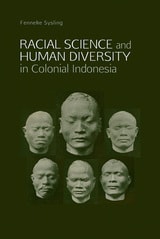
Racial Science and Human Diversity in Colonial Indonesia
Fenneke Sysling
National University of Singapore Press, 2016
In this new monograph, Fenneke Sysling draws on published works and private papers to describe the way Dutch racial scientists tried to make sense of the human diversity in the Indonesian archipelago. The making of racial knowledge, it contends, cannot be explained solely in terms of internal European intellectual developments. It was ‘on the ground’ that ideas about race were made and unmade with a set of knowledge strategies that did not always combine well. Sysling describes how skulls were assembled through the colonial infrastructure, how measuring sessions were resisted, what role photography and plaster casting played in racial science and shows how these aspects of science in practice were entangled with the Dutch colonial Empire.

Radiation Brain Moms and Citizen Scientists
The Gender Politics of Food Contamination after FukushimaAya Hirata Kimura
Duke University Press, 2016
Radiation and Revolution
Sabu Kohso
Duke University Press, 2020
Re-enchanting Modernity
Ritual Economy and Society in Wenzhou, ChinaMayfair Yang
Duke University Press, 2020
Reaction to World News Events and the Influence of Mass Media in an Indian Village
Thomas Poffenberger and Shirley B. Poffenberger
University of Michigan Press, 1971
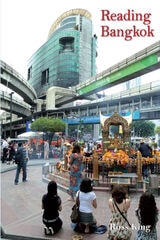
Reading Bangkok
Ross King
National University of Singapore Press, 2011
The author structures the book around external intrusions and local resistance. Geographically, this process is seen in movement from centre to periphery (Thonburi, Rattanakosin, Ratchadamnoen, Sukhumvit, Ratchadapisek, Khlong Toei, the universities). Chronologically, the city underwent various forms of colonization: incorporation of the periphery, which in turn colonized Bangkok; the economic colonization of the 19th and 20th centuries; colonization by consumption brought on in large part by globalized tourism; colonization by the "better" ideas of others (typically from the West); and finally colonization by "better" ways of thinking - notably the intrusions of the universities and of popular democracy.
This exceptionally innovative study draws on urban planning and development, history, anthropology, and political economy, and a rich body of empirical data to provide insights into the maze of power relations, inequalities and global influences that is normally hidden from view. Reading Bangkok is that rare thing, a study that genuinely changes the way its subject is seen and understood.

Reading Ruth in Asia
Jione Havea
SBL Press, 2015
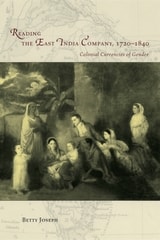
Reading the East India Company 1720-1840
Colonial Currencies of GenderBetty Joseph
University of Chicago Press, 2003
Drawing on the British East India Company's records as well as novels, memoirs, portraiture and guidebooks, Joseph shows how the company's economic and archival practices intersected to produce colonial "fictions" or "truth-effects" that strictly governed class and gender roles—in effect creating a "grammar of power" that kept the far-flung empire intact. And while women were often excluded from this archive, Joseph finds that we can still hear their voices at certain key historical junctures. Attending to these voices, Joseph illustrates how the writing of history belongs not only to the colonial project set forth by British men, but also to the agendas and mechanisms of agency—of colonized Indian, as well as European women. In the process, she makes a valuable and lasting contribution to gender studies, postcolonial theory, and the history of South Asia.
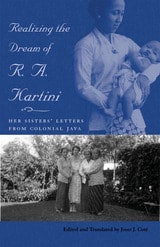
Realizing the Dream of R. A. Kartini
Her Sisters’ Letters from Colonial JavaJoost J. Coté
Ohio University Press, 2008
Realizing the Dream of R. A. Kartini: Her Sisters’ Letters from Colonial Java presents a unique collection of documents reflecting the lives, attitudes, and politics of four Javanese women in the early twentieth century. Joost J. Coté translates the correspondence between Raden Ajeng Kartini, Indonesia’s first feminist, and her sisters, revealing for the first time her sisters’ contributions in defining and carrying out her ideals. With this collection, Coté aims to situate Kartini’s sisters within the more famous Kartini narrative–and indirectly to situate Kartini herself within a broader narrative.
The letters reveal the emotional lives of these modern women and their concerns for the welfare of their husbands and the success of their children in rapidly changing times. While by no means radical nationalists, and not yet extending their horizons to the possibility of an Indonesian nation, these members of a new middle class nevertheless confidently express their belief in their own national identity.
Realizing the Dream of R. A. Kartini is essential reading for scholars of Indonesian history, providing documentary evidence of the culture of modern, urban Java in the late colonial era and an insight into the ferment of the Indonesian nationalist movement in which these women and their husbands played representative roles.
Recasting Women
Essays in Indian Colonial HistorySangari, Kumkum
Rutgers University Press, 1990
The political and social life of India in the last decade has given rise to a variety of questions concerning the nature and resilience of patriarchal systems in a transitional and post-colonial society. The contributors to this interdisciplinary volume recognize that every aspect of reality is gendered, and that such a recognition involves a dismantling of the ideological presuppositions of the so-called gender neutral ideologies, as well as the boundaries of individual disciplines.
The first set of essays seeks to analyze the patriarchal discourses of a colonial society and includes an analysis of the shaping of Hindu-Aryan identity, the parameters of the discourse on widow-immolation, the "defeminization" of popular culture in nineteenth-century urban Calcutta, the nature of the reforms proposed by early women's journals in Hindi, and the implications of the nationalist movement and of Indo-Anglian leterature on middle-class patriarchal norms.
The second set of articles relates to women of the productive classes--the reconstitution of patriarchies in the agrarian transition in Haryana, in the Oudh peasant movement, in the armed peasant struggle in Telangana, and among the working class in Bengal. The contributors explore the interrelation of patriarchies with political economy, law, religion, and culture, and suggest a different history of "reform" movements, and of class and gender relations.
Recentering Globalization
Popular Culture and Japanese TransnationalismKoichi Iwabuchi
Duke University Press, 2002
Iwabuchi has conducted extensive interviews with producers, promoters, and consumers of popular culture in Japan and East Asia. Drawing upon this research, he analyzes Japan’s "localizing" strategy of repackaging Western pop culture for Asian consumption and the ways Japanese popular culture arouses regional cultural resonances. He considers how transnational cultural flows are experienced differently in various geographic areas by looking at bilateral cultural flows in East Asia. He shows how Japanese popular music and television dramas are promoted and understood in Taiwan, Hong Kong, and Singapore, and how "Asian" popular culture (especially Hong Kong’s) is received in Japan.
Rich in empirical detail and theoretical insight, Recentering Globalization is a significant contribution to thinking about cultural globalization and transnationalism, particularly in the context of East Asian cultural studies.

Reclaiming the Nation
The Return of the National Question in Africa, Asia and Latin AmericaEdited by Sam Moyo and Paris Yeros
Pluto Press, 2011
This book compares the trajectories of states and societies in Africa, Asia and Latin America under neoliberalism, a time marked by serial economic crises, escalating social conflicts, the re-militarisation of North-South relations and the radicalisation of social and nationalist forces.
Sam Moyo and Paris Yeros bring together researchers and activists from the three continents to assess the state of national sovereignty and the challenges faced by popular movements today. They show that global integration has widened social and regional inequalities within countries, exacerbated ethnic, caste, and racial conflicts, and generally reduced the bureaucratic capacities of states to intervene in a defensive way. Moreover, inequalities between the countries of the South have also widened. These structural tensions have all contributed to several distinct political trajectories among states: from fracture and foreign occupation, to radicalisation and uncertain re-stabilisation.
This book re-draws the debate on the political economy of the contemporary South and provides students of international studies with an important collection of readings.

Red Creative
Culture and Modernity in ChinaJustin O'Connor and Xin Gu
Intellect Books, 2020
Red Creative is an exploration of China’s cultural economy over the last twenty years, particularly through the lens of its creative hub of Shanghai. The research presented here raises questions about the nature of contemporary ‘creative’ capitalism and the universal claims of Western modernity, offering new ways of thinking about cultural policy in China.
Taking a long-term historical perspective, Justin O’Connor and Xin Gu analyze the ongoing development of China’s cultural industries, examining the institutions, regulations, interests, and markets that underpin the Chinese cultural economy and the strategic position of Shanghai within it. Further, the authors explore cultural policy reforms in post-colonial China and articulate Shanghai’s significance in paving China’s path to modernity and entry to global capitalism. In-depth and illuminating, Red Creative carefully situates China’s contemporary cultural economy in its larger global and historical context, revealing the limits of Western thought in understanding Chinese history, culture, and society.
Red Lights
The Lives of Sex Workers in Postsocialist ChinaTiantian Zheng
University of Minnesota Press, 2009
Zheng embarked on two years of intensely embedded ethnographic fieldwork in her birthplace, Dalian, a large northeastern Chinese seaport of over six million people. During this time, Zheng lived and worked with a group of hostesses in a karaoke bar, facing many of the same dangers that they did and forming strong, intimate bonds with them. The result is an especially engaging, moving story of young, rural women struggling to find meaning, develop a modern and autonomous identity, and, ultimately, survive within an oppressively patriarchal state system.
Moving from her case studies to broader theories of sex, gender, and power, Zheng connects a growth in capitalist entrepreneurialism to the emergence of an urban sex industry, brilliantly illuminating the ways in which hostesses, their clients, and the state are mutually created in postsocialist China.
Red Revolution, Green Revolution
Scientific Farming in Socialist ChinaSigrid Schmalzer
University of Chicago Press, 2016
In Red Revolution, Green Revolution, Sigrid Schmalzer explores the intersection of politics and agriculture in socialist China through the diverse experiences of scientists, peasants, state agents, and “educated youth.” The environmental costs of chemical-intensive agriculture and the human costs of emphasizing increasing production over equitable distribution of food and labor have been felt as strongly in China as anywhere—and yet, as Schmalzer shows, Mao-era challenges to technocracy laid important groundwork for today’s sustainability and food justice movements. This history of “scientific farming” in China offers us a unique opportunity not only to explore the consequences of modern agricultural technologies but also to engage in a necessary rethinking of fundamental assumptions about science and society.
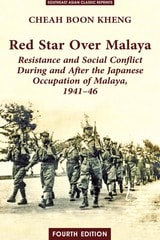
Red Star Over Malaya
Resistance and Social Conflict During and After the Japanese Occupation, 1941-1946Cheah Boon Kheng
National University of Singapore Press, 2012
As Japanese forces withdrew from the countryside, the Chinese guerrillas of the communist-led resistance movement, the Malayan People's Anti-Japanese Army (MPAJA), emerged from the jungle and took control of some 70 per cent of the country's smaller towns and villages, seriously alarming the Malay population. When the British Military Administration sought to regain control of these liberated areas, the ensuing conflict set the tone for future political conflicts and marked a crucial stage in the history of Malaya. Based on extensive archival research, Red Star Over Malaya provides a riveting account of the way the Japanese occupation reshaped colonial Malaya, and of the tension-filled months that followed Japan's surrender. This book is fundamental to an understanding of social and political developments in Malaysia during the second half of the 20th century.
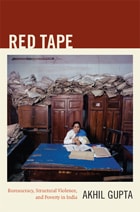
Red Tape
Bureaucracy, Structural Violence, and Poverty in IndiaAkhil Gupta
Duke University Press, 2012
Gupta conducted ethnographic research among officials charged with coordinating development programs in rural Uttar Pradesh. Drawing on that research, he offers insightful analyses of corruption; the significance of writing and written records; and governmentality, or the expansion of bureaucracies. Those analyses underlie his argument that care is arbitrary in its consequences, and that arbitrariness is systematically produced by the very mechanisms that are meant to ameliorate social suffering. What must be explained is not only why government programs aimed at providing nutrition, employment, housing, healthcare, and education to poor people do not succeed in their objectives, but also why, when they do succeed, they do so unevenly and erratically.
Redefining Japaneseness
Japanese Americans in the Ancestral HomelandYamashiro, Jane H
Rutgers University Press, 2017
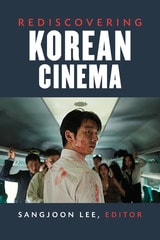
Rediscovering Korean Cinema
Sangjoon Lee, Editor
University of Michigan Press, 2019
This groundbreaking collection of thirty-five essays by a wide range of academic specialists situates current scholarship on Korean cinema within the ongoing theoretical debates in contemporary global film studies. Chapters explore key films of Korean cinema, from Sweet Dream, Madame Freedom, The Housemaid, and The March of Fools to Oldboy, The Host, and Train to Busan, as well as major directors such as Shin Sang-ok, Kim Ki-young, Im Kwon-taek, Bong Joon-ho, Hong Sang-soo, Park Chan-wook, and Lee Chang-dong. While the chapters provide in-depth analyses of particular films, together they cohere into a detailed and multidimensional presentation of Korean cinema’s cumulative history and broader significance.
With its historical and critical scope, abundance of new research, and detailed discussion of important individual films, Rediscovering Korean Cinema is at once an accessible classroom text and a deeply informative compendium for scholars of Korean and East Asian studies, cinema and media studies, and communications. It will also be an essential resource for film industry professionals and anyone interested in international cinema.
Reel World
An Anthropology of CreationAnand Pandian
Duke University Press, 2015
Refracted Visions
Popular Photography and National Modernity in JavaKaren Strassler
Duke University Press, 2010
Oriented to projects of selfhood, memory, and social affiliation, popular photographs recast national iconographies in an intimate register. They convey the longings of Indonesian national modernity: nostalgia for rural idylls and “tradition,” desires for the trappings of modernity and affluence, dreams of historical agency, and hopes for political authenticity. Yet photography also brings people into contact with ideas and images that transcend and at times undermine a strictly national frame. Photography’s primary practitioners in the postcolonial era have been Chinese Indonesians. Acting as cultural brokers who translate global and colonial imageries into national idioms, these members of a transnational minority have helped shape the visual contours of Indonesian belonging even as their own place within the nation remains tenuous. Refracted Visions illuminates the ways that everyday photographic practices generate visual habits that in turn give rise to political subjects and communities.
Refugee Lifeworlds
The Afterlife of the Cold War in CambodiaY-Dang Troeung
Temple University Press, 2022
Cambodian history is Cold War history, asserts Y-Dang Troeung in Refugee Lifeworlds. Constructing a genealogy of the afterlife of the Cold War in Cambodia, Troeung mines historical archives and family anecdotes to illuminate the refugee experience, and the enduring impact of war, genocide, and displacement in the lives of Cambodian people.
Troeung, a child of refugees herself, employs a method of autotheory that melds critical theory, autobiography, and textual analysis to examine the work of contemporary artists, filmmakers, and authors. She references a proverb about the Cambodian kapok tree that speaks to the silences, persecutions, and modes of resistance enacted during the Cambodian Genocide, and highlights various literary texts, artworks, and films that seek to document and preserve Cambodian histories nearly extinguished by the Khmer Rouge regime.
Addressing the various artistic responses to prisons and camps, issues of trauma, disability, and aphasia, as well as racism and decolonialism, Refugee Lifeworlds repositions Cambodia within the broader transpacific formation of the Cold War. In doing so, Troeung reframes questions of international complicity and responsibility in ways that implicate us all.
Regenerating Japan
Organicism, Modernism and National Destiny in Oka Asajiro's Evolution and Human LifeGregory Sullivan
Central European University Press, 2018
As the first step toward a comprehensive reinterpretation of the role of evolutionary science and biomedicine in pre-1945 Japan, this book addresses the early writings of that era’s most influential exponent of shinkaron (evolutionism), the German-educated research zoologist and popularizer of biomedicine, Oka Asajirō (1868–1944). Concentrating on essays that Oka published in the years during and after the Russo-Japanese War (1904–5), the author describes the process by which Oka came to articulate a programmatic modernist vision of national regeneration that would prove integral to the ideological climate in Japan during the first half of the twentieth century. In contrast to other scholars who insist that Oka was merely a rationalist enlightener bent on undermining state Shinto orthodoxy, Gregory Sullivan maintains that Oka used notions from evolutionary biology of organic individuality—especially that of the nation as a super-organism—to underwrite the social and geopolitical aims of the Meiji state.
The author suggests that this generative scientism gained wide currency among early twentieth-century political and intellectual elites, including Emperor Hirohito himself, who had personal connections to Oka. The wartime ideology may represent an unfinished attempt to synthesize Shinto fundamentalism and the eugenically-oriented modernism that Oka was among the first to articulate.
Regimes of Contention
Resistance and the Governmentality of Resources in Indigenous PhilippinesMacario Lacbawan
Campus Verlag, 2021
The notion of indigeneity in the Philippines is politically fraught. Most who live on the archipelago are descendants of aboriginal peoples, whether they claim tribal affiliation or not, and those who do enact traditional identities share little else in common. As a result, the term “indigenous” remains unstable and malleable seventy-five years after independence. Connecting insights from Tillian and Foucauldian social theory, Regimes illuminates how the ever-changing Philippine state, from the 1970s through today, constructs artificial subjectivities that Indigenous peoples must embody to access ancestral resources held by the federal government. What emerges is a lucid illustration of how governmentality is entangled with indigeneity in the Philippines.
Regimes of Desire
Young Gay Men, Media, and Masculinity in TokyoThomas Baudinette
University of Michigan Press, 2021
Shinjuku Ni-chōme is a nightlife district in central Tokyo filled with bars and clubs targeting the city’s gay male community. Typically understood as a “safe space” where same-sex attracted men and women from across Japan’s largest city can gather to find support from a relentlessly heteronormative society, Regimes of Desire reveals that the neighborhood may not be as welcoming as previously depicted in prior literature. Through fieldwork observation and interviews with young men who regularly frequent the neighborhood’s many bars, the book reveals that the district is instead a space where only certain performances of gay identity are considered desirable. In fact, the district is highly stratified, with Shinjuku Ni-chōme’s bar culture privileging “hard” masculine identities as the only legitimate expression of gay desire and thus excluding all those men who supposedly “fail” to live up to these hegemonic gendered ideals.
Through careful analysis of media such as pornographic videos, manga comics, lifestyle magazines and online dating services, this book argues that the commercial imperatives of the Japanese gay media landscape and the bar culture of Shinjuku Ni-chōme act together to limit the agency of young gay men so as to better exploit them economically. Exploring the direct impacts of media consumption on the lives of four key informants who frequent the district’s gay bars in search of community, fun and romance, Regimes of Desire reveals the complexity of Tokyo’s most popular “gay town” and intervenes in debates over the changing nature of masculinity in contemporary Japan.
Reigning the River
Urban Ecologies and Political Transformation in KathmanduAnne M. Rademacher
Duke University Press, 2011
Rademacher conducted research during a volatile period in Nepal’s political history. As clashes between Maoist revolutionaries and the government intensified, the riverscape became a site of competing claims to a capital city that increasingly functioned as a last refuge from war-related violence. In this time of intense flux, efforts to ensure, create, or imagine ecological stability intersected with aspirations for political stability. Throughout her analysis, Rademacher emphasizes ecology as an important site of dislocation, entitlement, and cultural meaning.
Reinventing Chinese Tradition
The Cultural Politics of Late SocialismKa-ming Wu
University of Illinois Press, 2015
Ka-ming Wu's ethnographic account of contemporary Yan'an documents how people have reworked the revival of three rural practices--paper-cutting, folk storytelling, and spirit cults--within (and beyond) the socialist legacy. Moving beyond dominant views of Yan'an folk culture as a tool of revolution or object of market reform, Wu reveals how cultural traditions become battlegrounds where conflicts among the state, market forces, and intellectuals in search of an authentic China play out. At the same time, she shows these emerging new dynamics in the light of the ways rural residents make sense of rapid social change.
Alive with details, Reinventing Chinese Tradition is an in-depth, eye-opening study of an evolving culture and society within contemporary China.
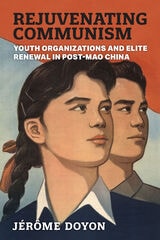
Rejuvenating Communism
Youth Organizations and Elite Renewal in Post-Mao ChinaJérôme Doyon
University of Michigan Press, 2023
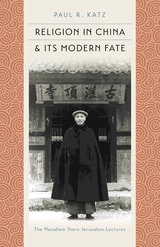
Religion in China and Its Modern Fate
Paul R. Katz
Brandeis University Press, 2014
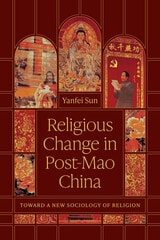
Religious Change in Post-Mao China
Toward a New Sociology of ReligionYanfei Sun
University of Chicago Press, 2026
In Religious Change in Post-Mao China, sociologist Yanfei Sun examines the transformation of major religions and the broader religious ecology in China in the wake of the death of Mao Zedong. Drawing on two decades of research that integrates ethnographic, historical, and comparative methods, this book explores the remarkable rise of Protestantism, the challenges faced by Catholicism, the revival of Chinese popular religion, the complex dynamics of Chinese Buddhism, and the unrealized potential of new religious movements. Why do some religions thrive and others struggle in post-Mao China? Sun describes both the internal institutional factors that allow some religions to flourish and the wider sociopolitical context that supports or discourages religious expansion. She thereby introduces an ambitious theoretical framework—one whose applicability extends beyond China, offering a template for analyzing religious dynamics in other parts of the world.
A must-read for scholars of religious studies, sociology, and China studies, Religious Change in Post-Mao China not only provides critical insights into China’s evolving religious landscape but also offers a powerful lens for examining the forces behind religious change, both past and present.
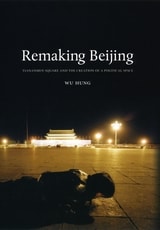
Remaking Beijing
Tiananmen Square and the Creation of a Political SpaceWu Hung
University of Chicago Press, 2005
Wu Hung grew up in Beijing and experienced much of the city's makeover firsthand. In this lavishly illustrated work, he offers a vivid, often personal account of the struggle over Beijing's reinvention, drawing particular attention to Tiananmen Square—the most sacred space in the People's Republic of China. Remaking Beijing considers the square's transformation from a restricted imperial domain into a public arena for political expression, from an epic symbol of socialism into a holy relic of the Maoist regime, and from an official and monumental complex into a site for unofficial and antigovernment demonstrations.
Wu Hung also explores how Tiananmen Square has become a touchstone for official art in modern China—as the site for Mao's monumental portrait, as the location of museums narrating revolutionary history, and as the grounds for extravagant National Day parades celebrating the revolutionary masses. He then shows how in recent years the square has inspired artists working without state sponsorship to create paintings, photographs, and even performances that reflect the spirit of the 1989 uprisings and pose a forceful challenge to official artworks and the sociopolitical system that supports them.
Remaking Beijing will reward anyone interested in modern Chinese history, society, and art, or, more generally, in how urban renewal becomes intertwined with cultural and national politics.
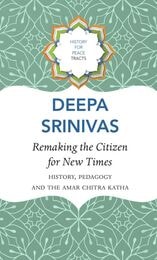
Remaking the Citizen for New Times
History, Pedagogy and the Amar Chitra KathaDeepa Sreenivas
Seagull Books, 2024
How does orthodoxy maintain its power over culture? In Remaking the Citizen for New Times, Deepa Sreenivas explores how the Amar Chitra Katha, a widely read comic series started in 1967 in India, influenced the historical and national consciousness of young readers in a conservative direction. Tacitly blaming Nehruvian welfarism of the time for the moral decline of the nation, the Amar Chitra Katha emerged as a literary articulation of the Indian right’s Hindu-nationalist ideology in a modern, bourgeois guise. To renew Hindutva hegemony, the comic series gave orthodox ideas a new sheen, both in its form and content, merging Western comic styles with Indian visual storytelling traditions on the one hand, and combining mythological characters with political figureheads into harmonious narratives on the other—making it difficult to sift history from myths and legends. Sreenivas deftly argues that these mythological-political tales emphasized the instructive rather than the informative potential of history, encouraging neoliberal values such as merit and hard work while ignoring caste or class as systemic issues.

Remembering Tanizaki Jun’ichiro and Matsuko
Diary Entries, Interview Notes, and Letters, 1954-1989Anthony H. Chambers
University of Michigan Press, 2017
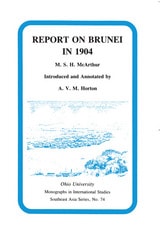
Report On Brunei In 1904
Mis Sea#74M.S.H. Mcarthur
Ohio University Press, 1987
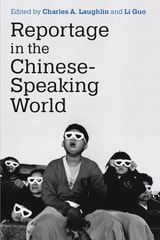
Reportage in the Chinese-Speaking World
Edited by Charles A. Laughlin and Li Guo
University of Michigan Press, 2026
Reportage in the Chinese-Speaking World examines reportage as an important aesthetic form of cultural production in the Sinophone world. Originating as a proletarian nonfiction form in interwar Europe, reportage spread around the world, coming into its own in the Sinophone world from the 1930s to today. Going beyond fact-based journalism, reportage is pursued through a variety of artistic forms and media, from nonfiction writing to photography to documentary film. Reportage’s plurimedial representations facilitate and amplify intersectional struggles against multiple forms of social and political oppression. Engaging its audiences in affective ethico-political exchanges with (human or nonhuman) subjects, reportage promotes audiences’ empathetic responses to the democratic appeals of marginalized groups whose status, identity, or situation manifest emergent ethical challenges in the society of their time.
This work offers new understandings of reportage’s dialectical relationship with its readership by evoking sympathetic identifications with personal contemplations of place, hearth, and senses of belonging. Covering a breadth of media across mainland China, Taiwan, and the Sinophone diaspora in the United States and Japan, this book examines how intermediality cultivates distinctive expressions in reportage, cross-cultural empathy, and ethico-political relationships between the reporter, photographer, filmmaker, and their surroundings.
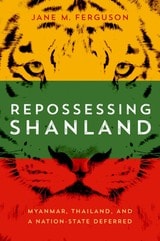
Repossessing Shanland
Myanmar, Thailand, and a Nation-State DeferredJane M. Ferguson
University of Wisconsin Press, 2022
Based on close readings of Shan-language media and years of ethnographic research in a community of soldiers and their families, Jane M. Ferguson details the origins of these movements and tells the story of the Shan in their own voices. She shows how the Shan have forged a homeland and identity during great upheaval by using state building as an ongoing project of resistance, resilience, and accommodation within both countries. In avoiding a good/bad moral binary and illuminating cultural complexities, Repossessing Shanland offers a fresh perspective on identity formation, transformation, and how people understand and experience borderlands today.
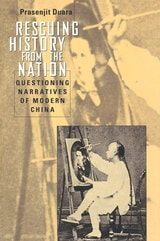
Rescuing History from the Nation
Questioning Narratives of Modern ChinaPrasenjit Duara
University of Chicago Press, 1995
The backlash against such histories has resulted in a tendency to view the past as largely constructed, imagined, or invented. In this book, Duara offers a way out of the impasse between constructionism and the evolving nation; he redefines history as a series of multiple, often conflicting narratives produced simultaneously at national, local, and transnational levels. In a series of closely linked case studies, he considers such examples as the very different histories produced by Chinese nationalist reformers and partisans of popular religions, the conflicting narratives of statist nationalists and of advocates of federalism in early twentieth-century China. He demonstrates the necessity of incorporating contestation, appropriation, repression, and the return of the repressed subject into any account of the past that will be meaningful to the present. Duara demonstrates how to write histories that resist being pressed into the service of the national subject in its progress—or stalled progress—toward modernity.
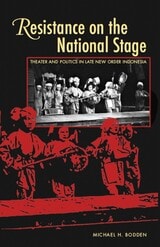
Resistance on the National Stage
Theater and Politics in Late New Order IndonesiaMichael H. Bodden
Ohio University Press, 2010
Resistance on the National Stage analyzes the ways in which, between 1985 and 1998, modern theater pracxadtitioners in Indonesia contributed to a rising movement of social protest against the long-governing New Order regime of President Suharto. It examines the work of an array of theater groups and networks from Jakarta, Bandung, and Yogyakarta that pioneered new forms of theater-making and new themes that were often presented more directly and critically than previous groups had dared to do.
Michael H. Bodden looks at a wide range of case studies to show how theater contributed to and helped build the opposition. He also looks at how specific combinations of social groups created tensions and gave modern theater a special role in bridging social gaps and creating social networks that expanded the reach of the prodemocracy movement. Theater workers constructed new social networks by involving peasants, Muslim youth, industrial workers, and lower-middle-class slum dwellers in theater productions about their own lives. Such networking and resistance established theater as one significant arena in which the groundwork for the ouster of Suharto in May 1998, and the succeeding Reform era, was laid.
Resistance on the National Stage will have broad appeal, not only for scholars of contemporary Indonesian culture and theater, but also for those interested in Indonesian history and politics, as well as scholars of postcolonial theater and culture.
Resisting Spirits
Drama Reform and Cultural Transformation in the People's Republic of ChinaMaggie Greene
University of Michigan Press, 2019
Responsive Democracy
Increasing State Accountability in East AsiaJeeyang Rhee Baum
University of Michigan Press, 2011
"Responsive Democracy is a pioneering contribution to the political analysis of administrative law in East Asia. Both political scientists and legal academics will greatly benefit from the author's in-depth analysis of the intersection between presidential power and administrative law in the contrasting cases of South Korea, Taiwan, and the Philippines."
---Susan Rose-Ackerman, Yale University Law School
"Baum's book is a very significant contribution because it focuses on a part of the world that has often been neglected in studies of democratization. It focuses attention on the nuts and bolts of what we mean by democratic consolidation and responsiveness. Indeed, if more political science were written with this clarity, we would all enjoy reading the literature much more!"
---Joseph Fewsmith, Boston University
Under what conditions is a newly democratic government likely to increase transparency, accountability, and responsiveness to its citizens? What incentives might there be for bureaucrats, including those appointed by a previously authoritarian government, to carry out the wishes of an emerging democratic regime? Responsive Democracy addresses an important problem in democratic transition and consolidation: the ability of the chief executive to control the state bureaucracy.
Using three well-chosen case studies---the Philippines, South Korea, and Taiwan---Jeeyang Rhee Baum explores the causes and consequences of codifying rules and procedures in a newly democratic government. In the Philippines, a president facing opposition has the option of appointing and dismissing officials at will and, therefore, has no need for administrative procedure acts. However, in South Korea and Taiwan, presidents employ such legislation to rein in recalcitrant government agencies, and, as a consequence, increase transparency, accountability, and responsiveness. Moreover, as Baum demonstrates by drawing upon surveys conducted both before and after implementation, administrative procedural reforms in South Korea and Taiwan improved public confidence in and attitudes toward democratic institutions.
Jeeyang Rhee Baum is a Research Fellow at the Ash Center for Democratic Governance and Innovation, John F. Kennedy School of Government, Harvard University.
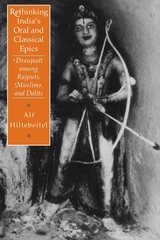
Rethinking India's Oral and Classical Epics
Draupadi among Rajputs, Muslims, and DalitsAlf Hiltebeitel
University of Chicago Press, 1999
Using his own fieldwork as a starting point, Alf Hiltebeitel analyzes how the oral tradition of the south Indian cult of the goddess Draupadi and five regional martial oral epics compare with one another and tie in with the Sanskrit epics. Drawing on literary theory and cultural studies, he reveals the shared subtexts of the Draupadi cult Mahabharata and the five oral epics, and shows how the traditional plots are twisted and classical characters reshaped to reflect local history and religion. In doing so, Hiltebeitel sheds new light on the intertwining oral traditions of medieval Rajput military culture, Dalits ("former Untouchables"), and Muslims.
Breathtaking in scope, this work is indispensable for those seeking a deeper understanding of South Asia's Hindu and Muslim traditions.
This work is the third volume in Hiltebeitel's study of the Draupadi cult. Other volumes include Mythologies: From Gingee to Kuruksetra (Volume One), On Hindu Ritual and the Goddess (Volume Two), and Rethinking the Mahabharata (Volume Four).
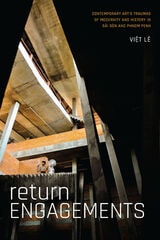
Return Engagements
Contemporary Art's Traumas of Modernity and History in Sài Gòn and Phnom PenhViet Lê
Duke University Press, 2021
Return
Nationalizing Transnational Mobility in AsiaXiang Biao, Brenda S. A. Yeoh and Mika Toyota, eds.
Duke University Press, 2013
Contributors. Sylvia Cowan, Johan Lindquist, Melody Chia-wen Lu, Koji Sasaki, Shin Hyunjoon, Mariko Asano Tamanoi, Mika Toyota, Carol Upadhya, Wang Cangbai, Xiang Biao, Brenda S. A. Yeoh
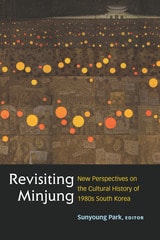
Revisiting Minjung
New Perspectives on the Cultural History of 1980s South KoreaSunyoung Park, Editor
University of Michigan Press, 2019
Revisiting Minjung brings new themes, new subjectivities, and new theoretical perspectives to the study of the rich ecosystem of 1980s Korean culture. Treated here is a wide array of topics, including the origins of minjung ideology, its critique by the right wing, minjung art and music, workers’ literary culture, women writers and the resurgence of feminism, erotic cinema, science fiction, transnational political travels, and the representations of race and queerness in 1980s popular culture. The book thus details the origins and development of some of the movements that shape cultural life in South Korea today, and it does so through analyses that engage some of the most pressing debates in current scholarship in Korea and abroad.
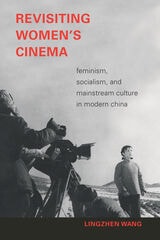
Revisiting Women's Cinema
Feminism, Socialism, and Mainstream Culture in Modern ChinaLingzhen Wang
Duke University Press, 2021
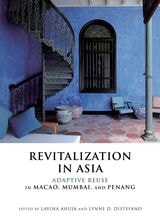
Revitalization in Asia
Adaptive Reuse in Macao, Mumbai, and PenangEdited by Lavina Ahuja and Lynne D. DiStefano
Hong Kong University Press, 2025
Revitalization in Asia offers a clear understanding of the value of sustainable adaptive reuse within an Asian context. Three highly urbanized places—Macao, Mumbai, and Penang —are considered in detail through essays and timelines that examine both conservation and planning perspectives. Six essays look at the connection between adaptive reuse and the three dimensions of sustainability regarding the United Nations' Sustainable Development Goals. Additionally, for each location, five case studies offer a comparative framework for understanding similarities and differences between adaptive reuse projects.
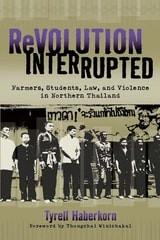
Revolution Interrupted
Farmers, Students, Law, and Violence in Northern ThailandTyrell Haberkorn; Foreword by Thongchai Winichakul
University of Wisconsin Press, 2011
In October 1973 a mass movement forced Thailand’s prime minister to step down and leave the country, ending nearly forty years of dictatorship. Three years later, in a brutal reassertion of authoritarian rule, Thai state and para-state forces quashed a demonstration at Thammasat University in Bangkok. In Revolution Interrupted, Tyrell Haberkorn focuses on this period when political activism briefly opened up the possibility for meaningful social change. Tenant farmers and their student allies fomented revolution, she shows, not by picking up guns but by invoking laws—laws that the Thai state ultimately proved unwilling to enforce.
In choosing the law as their tool to fight unjust tenancy practices, farmers and students departed from the tactics of their ancestors and from the insurgent methods of the Communist Party of Thailand. To first imagine and then create a more just future, they drew on their own lived experience and the writings of Thai Marxian radicals of an earlier generation, as well as New Left, socialist, and other progressive thinkers from around the world. Yet their efforts were quickly met with harassment, intimidation, and assassinations of farmer leaders. More than thirty years later, the assassins remain unnamed.
Drawing on hundreds of newspaper articles, cremation volumes, activist and state documents, and oral histories, Haberkorn reveals the ways in which the established order was undone and then reconsolidated. Examining this turbulent period through a new optic—interrupted revolution—she shows how the still unnameable violence continues to constrict political opportunity and to silence dissent in present-day Thailand.
Revolution and Subjectivity in Postwar Japan
J. Victor Koschmann
University of Chicago Press, 1996
In a major contribution to modern Japanese intellectual history, J. Victor Koschmann analyzes the debate over subjectivity. He traces the arguments of intellectuals from various disciplines and political viewpoints, and finds that despite their stress on individual autonomy, they all came to define subjectivity in terms of deterministic historical structures, thus ultimately deferring the possibility of radical change in Japan.
Establishing a basis for historical dialogue about democratic revolution, this book will interest anyone concerned with issues of nationalism, postcolonialism, and the formation of identities.
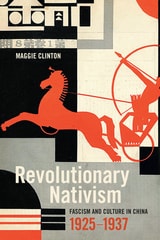
Revolutionary Nativism
Fascism and Culture in China, 1925-1937Maggie Clinton
Duke University Press, 2017