Results by title
788 books match the query 'Caribbean & Latin American' and 32 start with r
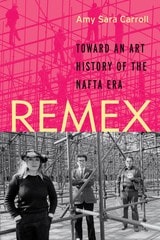
REMEX
Toward an Art History of the NAFTA EraBy Amy Sara Carroll
University of Texas Press, 2017
REMEX presents the first comprehensive examination of artistic responses and contributions to an era defined by the North American Free Trade Agreement (1994–2008). Marshaling over a decade’s worth of archival research, interviews, and participant observation in Mexico City and the Mexico–US borderlands, Amy Sara Carroll considers individual and collective art practices, recasting NAFTA as the most fantastical inter-American allegory of the turn of the millennium. Carroll organizes her interpretations of performance, installation, documentary film, built environment, and body, conceptual, and Internet art around three key coordinates—City, Woman, and Border. She links the rise of 1990s Mexico City art in the global market to the period’s consolidation of Mexico–US border art as a genre. She then interrupts this transnational art history with a sustained analysis of chilanga and Chicana artists’ remapping of the figure of Mexico as Woman.
A tour de force that depicts a feedback loop of art and public policy—what Carroll terms the “allegorical performative”—REMEX adds context to the long-term effects of the post-1968 intersection of D.F. performance and conceptualism, centralizes women artists’ embodied critiques of national and global master narratives, and tracks post-1984 border art’s “undocumentation” of racialized and sexualized reconfigurations of North American labor pools. The book’s featured artwork becomes the lens through which Carroll rereads a range of events and phenomenon from California’s Proposition 187 to Zapatismo, US immigration policy, 9/11 (1973/2001), femicide in Ciudad Juárez, and Mexico’s war on drugs.
Rabinal Achi
A Fifteenth-Century Maya Dynastic DramaAlain Breton
University Press of Colorado, 2007
The drama is set in the Guatemalan highlands in the second half of the fifteenth century. In an exemplary trial that takes place in Kajyub, the capital of the Rabinaleb at that time, a captured enemy warrior (Quiché Achi) appears before the royal court. A series of combative dialogues pits the offending warrior against the local warrior (Rabinal Achi) and the king (Job Toj), reconstructing the deeds of those involved and retracing the antagonistic history of these two Mayan groups, the Quiché and the Rabinaleb.
Alain Breton approaches the text from an anthropological and ethnographical perspective, demonstrating that this indigenous text reenacts pre-Columbian historic paradigms. Breton's work is based on the Pérez Manuscript (1913), a facsimile of which is included in its entirety. Breton translated into French an entirely new transcription of the original text, and Teresa Lavender Fagan and Robert Schneider translated the text into English. Both the transcription and the translation are accompanied by detailed commentary and a glossary.

Race, Elections, and Power in Modern Brazil
Andrew Janusz
University of Michigan Press, 2027
While Brazil is famous for its history of racial diversity and was once revered as a “racial democracy,” its political arena is a site of separation. Elected officials in the country, which has the largest African descendant population of any country outside of Africa, are overwhelmingly white. Why are Afro-Brazilians not elected in proportion to their population size? And how does their underrepresentation affect the policymaking process?
In Race, Elections, and Power in Modern Brazil, Andrew Janusz argues that race shapes who runs for public office, who is elected, and who they represent. Drawing on surveys, interviews, and administrative election datasets, he shows that white politicians have several electoral advantages over their Afro-Brazilian competitors. Due to social stereotypes and racism, white Brazilians are more likely than Afro-Brazilians to be recruited by party elites, raise campaign funds, and be favored by voters. Using original data on legislator behavior, Janusz also finds that Brazil’s predominately white lawmakers are largely unresponsive to the needs of marginalized Afro-Brazilians and less likely than their Afro-Brazilian counterparts to advance legislation that would meaningfully enhance their quality of life. Providing compelling empirical evidence that Brazil is a racialized democracy, this book offers an accessible and eye-opening look at the central role race plays in Brazilian politics.
Racial Alterity, Wixarika Youth Activism, and the Right to the Mexican City
Diana Negrín
University of Arizona Press, 2019
This book examines the legacy of the racial imaginary in Mexico with a focus on the Wixarika (Huichol) Indigenous peoples of the western Sierra Madre from the colonial period to the present. Through an examination of the politics of identity, space, and activism among Wixarika university students living and working in the western Mexican cities of Tepic and Guadalajara, geographer Diana Negrín analyzes the production of racialized urban geographies and reveals how Wixarika youth are making claims to a more heterogeneous citizenship that challenges these deep-seated discourses and practices. Through the weaving together of historical material, critical interdisciplinary scholarship, and rich ethnography, this book sheds light on the racialized history, urban transformation, and contemporary Indigenous activism of a region of Mexico that has remained at the margins of scholarship.
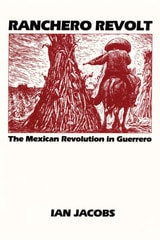
Ranchero Revolt
The Mexican Revolution in GuerreroBy Ian Jacobs
University of Texas Press, 1982
The Mexican Revolution has most often been characterized as the revolt of the oppressed rural masses against the conservative regime of Porfirio Díaz. In Ranchero Revolt Ian Jacobs challenges this populist interpretation of the Revolution by exploring the crucial role played by the rural middle class—rancheros—in the organization and final victory of the Revolution.
Jacobs focuses on the Revolution as it developed in Guerrero, the rebellious Mexican state still frequently at odds with central authority. His is the first account in English of the genesis and development of the Revolution in this important Mexican state and the first detailed history in any language of Guerrero in the period 1876 to 1940.
Stressing as it does the conservative tendencies of the Revolution in Mexico, Ranchero Revolt is a major contribution to revisionist history. It is a striking example of the trend toward local and regional studies of Mexican history that are transforming much of the conventional wisdom about modern Mexico.
Among these studies, however, Ranchero Revolt is unusual in its chronological scope, embracing not only the origins and military struggle of the Revolution but also the emergence of a new revolutionary state in the 1920s and 1930s. Especially valuable are Jacobs' descriptions of the agrarian developments that preceded and followed the Revolution; the vagaries of local factions; and the process of political centralization that took place first under Díaz and later under the revolutionary regimes.
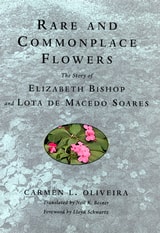
Rare and Commonplace Flowers
The Story of Elizabeth Bishop and Lota de Macedo SoaresOliveira, Carmen
Rutgers University Press, 2003
Rare and Commonplace Flowers—a Brazilian bestseller—tells the story of two women. Elizabeth Bishop, the Pulitzer Prize–winning American poet, sought artistic inspiration in Brazil. There she met and fell in love with Lota de Macedo Soares, a self-trained Brazilian architect. This dual biography—brilliantly researched, and written in a lively, novelistic style—follows their relationship from 1951 to 1967, the time when the two lived together in Brazil. The fact that these two women had an intimate relationship caused an uproar when it first came to public notice.
The relationship started out happily, yet ended tragically. In 1961, Soares became increasingly obsessed with building and administering Flamengo Park, Rio de Janeiro’s equivalent to New York City’s Central Park. Though she had been the driving force behind the park’s inception, the ultimate credit that was due her was stripped away because of petty politics and chicanery. As Soares’s career declined and Bishop’s flourished, their relationship crumbled.
Rare and Commonplace Flowers is a tale of two artists and two cultures, offering unique perspectives on both women and their work. Carmen L. Oliveira provides an unparalleled level of detail and insight, due to both her familiarity with Brazil as well as her access to the country’s artistic elite, many of whom had a direct connection with Bishop and Soares. Rare pictures of the two artists and their home bring this unique story to life.
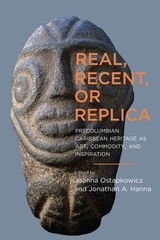
Real, Recent, or Replica
Precolumbian Caribbean Heritage as Art, Commodity, and InspirationEdited by Joanna Ostapkowicz and Jonathan A. Hanna
University of Alabama Press, 2021
A CHOICE OUTSTANDING ACADEMIC TITLE, 2022
Examines the largely unexplored topics in Caribbean archaeology of looting of heritage sites, fraudulent artifacts, and illicit trade of archaeological materials
Real, Recent, or Replica: Precolumbian Caribbean Heritage as Art, Commodity, and Inspiration is the first book-length study of its kind to highlight the increasing commodification of Caribbean Precolumbian heritage. Amerindian art, including “Taíno” art, has become highly coveted by collectors, spurring a prolific and increasingly sophisticated black market of forgeries, but also contemporary artistic engagement, openly appreciated as modern artworks taking inspiration from the past. The contributors to this volume contend with difficult subject matter including the continued looting of archaeological sites in the region, the seismic increase of forgeries, and the imbalance of power and economic relations between the producers and consumers of neo-Amerindian art.
The case studies document the considerable time depth of forgeries in the region (since the late nineteenth century), address the policies put in place by Caribbean governments and institutions to safeguard national patrimony, and explore the impact looted and forged artifacts have on how museums and institutions collect and ultimately represent the Caribbean past to their audiences. Overall, the volume emphasizes the continued desire for the “authentic” Precolumbian artifact, no matter the cost. It provides insights for archaeologists, museum professionals, art historians, and collectors to combat illegal trade and support communities in creating sustainable heritage industries.
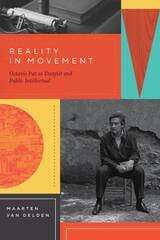
Reality in Movement
Octavio Paz as Essayist and Public IntellectualMaarten van Delden
Vanderbilt University Press, 2021
Reality in Movement looks at a wide range of topics of interest in Paz's career, including his engagement with the subversive, adversary strain in Western culture; his meditations on questions of cultural identity and intercultural contact; his dialogue with both leftist and conservative ideological traditions; his interest in feminism and psychoanalysis, and his theory of poetry. It concludes with a chapter on Octavio Paz as a literary character—a kind of reception study.
Offering a complex and nuanced portrait of Paz as a writer and thinker—as well as an understanding of the era in which he lived—Reality in Movement will appeal to students of Octavio Paz and of Mexican literature more generally, and to readers with an interest in the many significant literary, cultural, political, and historical topics Paz wrote about over the course of his long career.

Reclaiming Black Brazil
Literature, Culture, and the Politics of DiasporaEdited by Cristina Ferreira Pinto-Bailey and Paulo Dutra
Amherst College Press, 2027
Covering nearly two centuries of cultural production, this compelling collection brings together critical readings from the genesis of Afro-Brazilian literary studies alongside some of Brazil’s most vital contemporary voices. From nineteenth-century pioneer Maria Firmina dos Reis to the boundary-breaking trans performer Linn da Quebrada, the contributions to this book trace a powerful lineage of Black intellectual, artistic, and political expression.
The authors engage urgently with questions of identity and the enduring realities of racism in Brazilian society, while confronting why race remains both central and controversial in Brazil’s cultural imagination. The contributors illuminate how Afro-Brazilian writers, artists, and thinkers have continually forged spaces to create, theorize, and assert their own subjectivities—challenging erasure and reclaiming Black agency. By mapping this expansive tradition across literature, music, and cultural thought, this book reveals not only the richness of Afro-Brazilian creativity, but also why Brazil still struggles to fully embrace its Blackness. Both historically grounded and sharply contemporary, it is an essential exploration of race, culture, and resistance in Brazil that will speak to scholars not just of Brazil but also of Latin America and the African diaspora.
Reclaiming Haiti's Futures
Returned Intellectuals, Placemaking, and Radical ImaginationDarlène Elizabeth Dubuisson
Rutgers University Press, 2025
Winner of the 2024 Annual Book Award from the Society for Latin American and Caribbean Anthropology (SLACA)
Co-winner of the Isis Duarte Book Prize from the Latin American Studies Association
Haiti was once a beacon of Black liberatory futures, but now it is often depicted as a place with no future where emigration is the only way out for most of its population. But Reclaiming Haiti's Futures tells a different story. It is a story about two generations of Haitian scholars who returned home after particular crises to partake in social change. The first generation, called jenerasyon 86, were intellectuals who fled Haiti during the Duvalier dictatorship (1957–1986). They returned after the regime fell to participate in the democratic transition through their political leadership and activism. The younger generation, dubbed the jenn doktè, returned after the 2010 earthquake to partake in national reconstruction through public higher education reform. An ethnography of the future, the book explores how these returned scholars resisted coloniality's fractures and displacements by working toward and creating inhabitability or future-oriented places of belonging through improvisation, rasanblaj (assembly), and radical imagination. By centering on Haiti and the Caribbean, the book offers insights not just into the Haitian experience but also into how fractures have come to typify more aspects of life globally and what we might do about it.
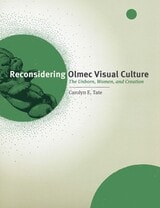
Reconsidering Olmec Visual Culture
The Unborn, Women, and CreationBy Carolyn E. Tate
University of Texas Press, 2012
Recently, scholars of Olmec visual culture have identified symbols for umbilical cords, bundles, and cave-wombs, as well as a significant number of women portrayed on monuments and as figurines. In this groundbreaking study, Carolyn Tate demonstrates that these subjects were part of a major emphasis on gestational imagery in Formative Period Mesoamerica. In Reconsidering Olmec Visual Culture, she identifies the presence of women, human embryos, and fetuses in monuments and portable objects dating from 1400 to 400 BC and originating throughout much of Mesoamerica. This highly original study sheds new light on the prominent roles that women and gestational beings played in Early Formative societies, revealing female shamanic practices, the generative concepts that motivated caching and bundling, and the expression of feminine knowledge in the 260-day cycle and related divinatory and ritual activities.
Reconsidering Olmec Visual Culture is the first study that situates the unique hollow babies of Formative Mesoamerica within the context of prominent females and the prevalent imagery of gestation and birth. It is also the first major art historical study of La Venta and the first to identify Mesoamerica's earliest creation narrative. It provides a more nuanced understanding of how later societies, including Teotihuacan and West Mexico, as well as the Maya, either rejected certain Formative Period visual forms, rituals, social roles, and concepts or adopted and transformed them into the enduring themes of Mesoamerican symbol systems.
Red Against Blue
The Liberal Party in Colombian Politics, 1863 - 1899Helen Delpar
University of Alabama Press, 1981
A landmark study of Liberalism, political conflict, and nation-building in Colombia.
Red Against Blue: The Liberal Party in Colombian Politics, 1863–1899 is a seminal study of the political forces that shaped modern Colombia during the nineteenth century. In this carefully researched work, historian Helen Delpar traces the rise, dominance, decline, and transformation of the Colombian Liberal Party, offering readers a deeper understanding of one of Latin America's most influential political movements. Through extensive use of political writings, personal papers, electoral records, and contemporary sources, Delpar reconstructs the complex world of Colombian politics during an era marked by ideological conflict, regional division, constitutional experimentation, and recurring civil unrest.
The book examines the period from the adoption of the federal Constitution of 1863 through the end of the nineteenth century, when Liberal leaders sought to shape Colombia's political future while confronting growing opposition from Conservative rivals. Delpar explores the origins of Colombian Liberalism, the development of party ideology, the regional bases of political support, and the personalities who guided the party through both triumph and defeat. Her analysis reveals a political movement that was far more diverse and dynamic than conventional interpretations have suggested.
As Liberal influence declined in the 1880s and Conservatives consolidated power under the Regeneration movement, political tensions intensified. Delpar shows how these struggles helped lay the groundwork for the devastating War of the Thousand Days at the century's close, one of the most significant conflicts in Colombian history.
Combining narrative history with insightful political analysis, Red Against Blue remains an indispensable resource for students and scholars of Latin American history, political development, democracy, and nation-building. It offers a compelling portrait of a society grappling with questions of power, ideology, regional identity, and the meaning of political participation in a rapidly changing world.
Rediscovering The New World
Inter-American LiteratureEarl E. Fitz
University of Iowa Press, 1991
The concept of "American" literature is not the exclusive province of any one nation. Thanks to the historical circumstances that governed the European conquest and settlement of the Americas, we can and should approach the writings of English and French Canada, the United States, Spanish America, and Brazil as a cohesive group of American literature, worthy of study without constant reference to European texts. Now, Rediscovering the New World makes a timely addition to this expanding field on Inter-American scholarship that should help lead tothe formation of a new canon.
This adventurous and ambitious work begins with an examination of Pre-Columbian literature (and shows that his powerful tradition remains alive and well in the twentieth century), then confronts the narratives of discovery and conquest, the New World epic, identity as the Ur-theme of American literature, miscegenation as another integral theme, and regionalism as a shaping force. Other striking these and juxtapositions include a comparison of Henry James and Machado de Assis as the first two great New World novelists, modernism as both a distinct literary movement and an amorphous body of aesthetic principles, and the conflict between "civilization" and "barbarism."
More in the exploratory spirit of the French Canadian voyageur than in the spirit of the conquistador, Rediscovering the New World is the first scholarly work in English to integrate an international set of American literary cultures. It should inspire other explorers as the field of Inter-American literary relations continues to evolve.
Reflections on Latin American Development
By Roberto de Olivera Campos; introduction by Benjamin Higgins
University of Texas Press, 1967
Economic development has been an challenge facing the countries of Latin America. Because the United States, from the very nature of its geographic and economic relationship with its southern neighbors, must inevitably exercise a strong influence on the course which that development takes, it is important that North Americans understand conditions in Latin America and the attitudes of its peoples. Roberto de Oliveira Campos, former Brazilian Minister of Economic Planning, is in a unique position to evaluate both past accomplishments and future problems.
In this group of essays, Campos gives a comprehensive analysis of many aspects of Latin American development in the mid-twentieth century. He examines relations between the United States and Latin America from a variety of angles, and he outlines the basic problems of economic development, of governmental policy, and of public and private administration. He gives particular attention in several essays to the relationship of foreign trade and foreign aid to economic development, and he presents a long discussion of the Alliance for Progress—its history, its purposes, its accomplishments, and its failures.
Campos’s philosophy regarding the role of the state in economic development and other questions emerges clearly from these pithy essays. “The valid distinction I see on the basis of my analysis of men and things is between pragmatic or functional nationalists and romantic or temperamental nationalists,” he writes. “The latter confuse intention with results. They start with enthusiasm and end in fanaticism, this being, according to Santayana, ‘the art of redoubling efforts after losing sight of objectives.’ . . . Many [romantic nationalists], though they do not confess it, favor the dangerous purgery of revolution.
“The pragmatic nationalist seeks to operate within the frame of democratic institutions and prefers reform to revolution. As to myself, I shall continue considering myself a pragmatic nationalist. I renounce the temptation of mobilizing resentment in order to gain the authority to plan development. I would rather strengthen the national entrepreneur than merely antagonize the foreigner. I would want the state not to do what it cannot do in order to do what it should do. I prefer to love my own country rather than to hate the others’.”
Reinterpreting the Spanish American Essay
Women Writers of the 19th and 20th CenturiesEdited by Doris Meyer
University of Texas Press, 1995
Latin American women have long written essays on topics ranging from gender identity and the female experience to social injustice, political oppression, lack of educational opportunities, and the need for female solidarity in a patriarchal environment. But this rich vein of writing has often been ignored and is rarely studied.
This volume of twenty-one original studies by noted experts in Latin American literature seeks to recover and celebrate the accomplishments of Latin American women essayists. Taking a variety of critical approaches, the authors look at the way women writers have interpreted the essay genre, molded it to their expression, and created an intellectual tradition of their own. Some of the writers they treat are Flora Tristan, Gertrudis Gómez de Avellaneda, Clorinda Matto de Turner, Victoria Ocampo, Alfonsina Storni, Rosario Ferré, Christina Peri Rossi, and Elena Poniatowska.
This book is the first of a two-volume project that reexamines the Latin American essay from a feminist perspective. The second volume, also edited by Doris Meyer, contains thirty-six essays in translation by twenty-two women authors.
Reinventing the Lacandón
Subaltern Representations in the Rain Forest of ChiapasBrian Gollnick
University of Arizona Press, 2008
Religion Without Redemption
Social Contradictions and Awakened Dreams in Latin AmericaLuis Martinez Andrade
Pluto Press, 2015
Martínez Andrade focuses on the central role of religion in the region and how it influences people’s interaction with changes in modern economics. Capitalism in Latin America, Martínez Andrade argues, has taken on religious characteristics, with places of worship—shopping malls and department stores—as well as its own prophets. This form of cultural religion is often contradictory in surprising ways: not only does it legitimate oppression, it can also be a powerful source of rebellion, unveiling a subversive side to the status quo. Religion Without Redemption advances the ideas of liberation theory, and challenges the provincialism to which many Latin American thinkers are usually consigned.

Report on the State of UK-Based Research on Latin America and the Caribbean 2014
Edited by Antoni Kapcia and Linda A. Newson
University of London Press, 2015
Rereading the Spanish American Essay
Translations of 19th and 20th Century Women’s EssaysEdited by Doris Meyer
University of Texas Press, 1995
Latin American intellectual history is largely founded on essayistic writing. Women's essays have always formed a part of this rich tradition, yet they have seldom received the respect they merit and are often omitted entirely from anthologies.
This volume and its earlier companion, Reinterpreting the Spanish American Essay: Women Writers of the 19th and 20th Centuries, seek to remedy that neglect. This book collects thirty-six notable essays by twenty-two women writers, including Flora Tristan, Gertrudis Gómez de Avellaneda, Clorinda Matto de Turner, Victoria Ocampo, Alfonsina Storni, Rosario Ferré, Christina Peri Rossi, and Elena Poniatowska. All of the essays are here translated into English for the first time, many by the same scholars who wrote critical studies of the authors in the first volume. Each author's work is also prefaced by a brief biographical sketch.
Resistance and Survival
Children’s Narrative from Central America and the CaribbeanAnn González
University of Arizona Press, 2009
Many of these stories are in some way lessons in resistance and survival in a world where “the toughest kid on the block,” often an outsider, demands that a group of children “play or pay,” on his terms. González demonstrates that where traditional strategies have proposed the model of the “trickster” or the “paradoxically astute fool,” to mock the pretensions of the would-be oppressor, new trends indicate that the region’s children—and those who write for them—show increasing interest in playing the game on their own terms, getting to know the Other, embracing difference, and redefining their identity and role within the new global culture.
Resistance and Survival emphasizes the hope underlying this contemporary children’s literature for a world in which all voices can be heard and valued—the hope of an authentic happy ending.
Resisting Brazil's Military Regime
An Account of the Battles of Sobral PintoBy John W. F. Dulles
University of Texas Press, 2007
Praised by his many admirers as a "courageous and fearless" defender of human rights, Heráclito Fontoura Sobral Pinto (1893-1991) was the most consistently forceful opponent of the regime of Brazilian dictator Getúlio Vargas. John W. F. Dulles chronicled Sobral's battles with the Vargas government in Sobral Pinto, "The Conscience of Brazil": Leading the Attack against Vargas (1930-1945), which History: Reviews of New Books called "a must-read for anyone wanting to understand twentieth-century Brazil."
In this second and final volume of his biography of Sobral Pinto, Professor Dulles completes the story of the fiery crusader's fight for democracy, morality, and justice, particularly for the downtrodden. Drawing on Sobral's vast correspondence, Dulles offers an extensive account of Sobral's opposition to the military regime that ruled Brazil from 1964 to 1985. He describes how Sobral Pinto defended those who had been politically influential before April, 1964, as well as other victims of the regime, including Communists, once-powerful labor leaders, priests, militant journalists, and students. Because Sobral Pinto participated in so many of the struggles against the military regime, his experiences provide vivid new insights into this important period in recent Brazilian history. They also shed light on developments in the Catholic Church (Sobral, a devout Catholic, vigorously opposed liberation theology), as well as on Sobral's key role in preserving Brazil's commission for defending human rights.
Responding to Crisis in Contemporary Mexico
The Political Writings of Paz, Fuentes, Monsiváis, and PoniatowskaClaire Brewster
University of Arizona Press, 2005
Claire Brewster has mined direct quotations from a host of publications to illustrate the techniques that they used in combating government and editorial restraints. Brewster first addresses the Student Movement of 1968—the violent suppression of which was a watershed in the relationship between the Mexican government and people—and illustrates the ways in which the student crisis affected the writers’ relationships with presidents Luis Echeverría Alvarez and José López Portillo. She next considers the profound social and political repercussions of the 1985 earthquake as described by Poniatowska and Monsiváis and the consequent emergence of Mexican civil society. She then outlines Paz’s and Monsiváis’s vociferous responses to the 1988 presidential election campaigns and their highly contentious result, and lastly she examines the Chiapas rebellion from January to July 1994.
The eloquent Zapatista spokesman, Subcomandante Marcos, challenged Mexican writers to a duel of words, and Brewster analyzes the ways in which the four writers took up the gauntlet—and in so doing reveals the development of their political thoughts and their relationships with the Mexican people and the federal government. The work of these four authors charts an important historical era, and a close examination of their essays reveals their maturation as writers and provides an understanding of the development of Mexican society. By bringing their opinions and attitudes to light, Brewster unearths a rich lode of insight into the inner workings of Mexican intellectuals and invites observers of contemporary Mexico to reconsider their role in reflecting social change.
Resurrecting Tenochtitlan
Imagining the Aztec Capital in Modern Mexico CityDelia Cosentino and Adriana Zavala
University of Texas Press, 2023
Honorable Mention, ALAA-Arvey Foundation Book Award, Association of Latin American Art
Finalist, 2024 Charles Rufus Morey Book Award, College Art Association
How Mexican artists and intellectuals created a new identity for modern Mexico City through its ties to Aztec Tenochtitlan.
After archaeologists rediscovered a corner of the Templo Mayor in 1914, artists, intellectuals, and government officials attempted to revive Tenochtitlan as an instrument for reassessing Mexican national identity in the wake of the Revolution of 1910. What followed was a conceptual excavation of the original Mexica capital in relation to the transforming urban landscape of modern Mexico City.
Revolutionary-era scholars took a renewed interest in sixteenth century maps as they recognized an intersection between Tenochtitlan and the foundation of a Spanish colonial settlement directly over it. Meanwhile, Mexico City developed with modern roads and expanded civic areas as agents of nationalism promoted concepts like indigenismo, the embrace of Indigenous cultural expressions. The promotion of artworks and new architectural projects such as Diego Rivera’s Anahuacalli Museum helped to make real the notion of a modern Tenochtitlan. Employing archival materials, newspaper reports, and art criticism from 1914 to 1964, Resurrecting Tenochtitlan connects art history with urban studies to reveal the construction of a complex physical and cultural layout for Mexico’s modern capital.
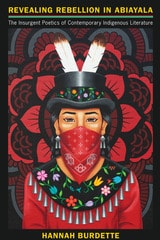
Revealing Rebellion in Abiayala
The Insurgent Poetics of Contemporary Indigenous LiteratureHannah Burdette
University of Arizona Press, 2019
Revealing Rebellion in Abiayala explores the intersections between Indigenous literature and social movements over the past thirty years through the lens of insurgent poetics. Author Hannah Burdette is interested in how Indigenous literature and social movements are intertwined and why these phenomena arise almost simultaneously in disparate contexts across the Americas.
Literature constitutes a key weapon in political struggles as it provides a means to render subjugated knowledge visible and to envision alternatives to modernity and coloniality. The surge in Indigenous literature and social movements is arguably one of the most significant occurrences of the twenty-first century, and yet it remains understudied. Revealing Rebellion in Abiayala bridges that gap by using the concept of Abiayala as a powerful starting point for rethinking inter-American studies through the lens of Indigenous sovereignty.
Revisiting the Falklands-Malvinas Question
Transnational and Interdisciplinary PerspectivesEdited by Guillermo Mira and Fernando Pedrosa
University of London Press, 2020
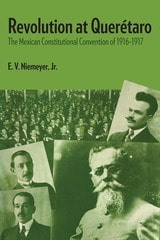
Revolution at Querétaro
The Mexican Constitutional Convention of 1916–1917By E. V. Niemeyer, Jr.
University of Texas Press, 1974
In two of the most fateful months of Mexican history, the delegates to the Constitutional Convention of 1916–1917 came to grips with the basic problem of twentieth-century Mexico. They hammered out pragmatic solutions to establish the legal foundations of the Mexican Revolution, the definitive break between the old Mexico and the new, the constitutional bases for the socioeconomic changes from 1917 onward. Honored and obeyed, dishonored and disobeyed, many times amended, the constitution they wrote still serves as the instrument for achieving the national purpose.
Revolution at Querétaro is the first book in English to study in depth the remarkable convention that produced the Constitution of 1917. It chronicles the unfolding of ideas expressed in the debates on the most significant articles of the constitution, those that have given it a revolutionary flavor and have served the groundwork for the emergence of Mexico as a modern nation. These articles concern the Catholic church and its role in the sphere of education (Article 3); the relationship of the church to the state (Articles 24 and 130); the attack on vested interest and the establishment of guidelines for agrarian reform (Article 27); the drafting of a detailed labor code (Article 123); and attempts to implement municipal reform (Article 114). Other debates described in the book concern unsuccessful attempts to institute prohibition, outlaw bullfights, abolish capital punishment, and grant suffrage to women.
This study also sheds light on the delegates themselves, who they were and where they came from, their idiosyncrasies and attitudes, and their individual contributions to the writing of the constitution. Much material is taken from unpublished albums in which the delegates recorded their sentiments during the convention.
Rising Powers and Foreign Policy Revisionism
Understanding BRICS Identity and Behavior Through TimeCameron G. Thies and Mark David Nieman
University of Michigan Press, 2017
State identity is investigated qualitatively through the use of role theory and the identification of national role conceptions. Both economic and militarized conflict behavior are examined using Bayesian change-point modeling, which identifies structural breaks in time series data, revealing potential wholesale revision of foreign policy. Using this innovative approach to show that the behavior of rising powers is governed not simply by the structural dynamics of power but also by the roles that these rising powers define for themselves, they assert that this process will likely lead to a much more evolutionary approach to foreign policy and will not necessarily generate international conflict.
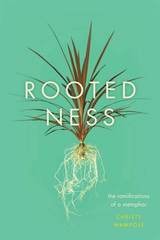
Rootedness
The Ramifications of a MetaphorChristy Wampole
University of Chicago Press, 2016
Wampole examines both the philosophical implications of this metaphor and its political evolution. From the root as home to the root as genealogical origin to the root as the past itself, rootedness has survived in part through its ability to subsume other compelling metaphors, such as the foundation, the source, and the seed. With a focus on this concept’s history in France and Germany, Wampole traces its influence in diverse areas such as the search for the mystical origins of words, land worship, and nationalist rhetoric, including the disturbing portrayal of the Jews as an unrooted, and thus unrighteous, people. Exploring the works of Martin Heidegger, Simone Weil, Jean-Paul Sartre, Paul Celan, and many more, Rootedness is a groundbreaking study of a figure of speech that has had wide-reaching—and at times dire—political and social consequences.
Ruben Dario Centennial Studies
Edited by Miguel Gonzalez-Gerth and George D. Schade
University of Texas Press, 1970
Rubén Darío (1867–1916), the undisputed standard-bearer of the Modernist movement in Hispanic letters, was born in Nicaragua. In 1886 he went to Chile, where he published Azul (1888), his first important book of poems and stories. Later he lived for extended periods in Argentina, Spain, and France, and in these countries produced his best work: compelling poems of beauty, style, and dignity, especially Cantos de vida y esperanza (1905). The perfection of form, exotic essences, and rich ornamentation of his earlier work give way in his most mature poems to self-probings and doubts, the anguish so characteristic of twentieth-century literature. But the hedonistic note, the quenchless appetite for life, dominating Azul and Prosas profanas (1896) never die out, and are magnificently present in El poema del otoño (1910). Darío has had a tremendous impact on Hispanic literature. He is one of the best examples of the poet who is true to his art as determined by his innermost impulses. His poetry has fertilized a whole generation of writers in Spanish America and in Spain, and even now his influence continues to be felt.
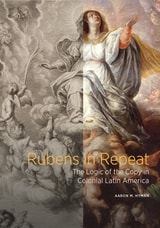
Rubens in Repeat
The Logic of the Copy in Colonial Latin AmericaAaron M. Hyman
J. Paul Getty Trust, The, 2021
Winner of the Latin American Studies Association's 2022 Best Book in Colonial Latin American Studies.
This book examines the reception in Latin America of prints designed by the Flemish artist Peter Paul Rubens, showing how colonial artists used such designs to create all manner of artworks and, in the process, forged new frameworks for artistic creativity.
Peter Paul Rubens (1577–1640) never crossed the Atlantic himself, but his impact in colonial Latin America was profound. Prints made after the Flemish artist’s designs were routinely sent from Europe to the Spanish Americas, where artists used them to make all manner of objects.
Rubens in Repeat is the first comprehensive study of this transatlantic phenomenon, despite broad recognition that it was one of the most important forces to shape the artistic landscapes of the region. Copying, particularly in colonial contexts, has traditionally held negative implications that have discouraged its serious exploration. Yet analyzing the interpretation of printed sources and recontextualizing the resulting works within period discourse and their original spaces of display allow a new critical reassessment of this broad category of art produced in colonial Latin America—art that has all too easily been dismissed as derivative and thus unworthy of sustained interest and investigation. This book takes a new approach to the paradigms of artistic authorship that emerged alongside these complex creative responses, focusing on the viceroyalties of New Spain and Peru in the seventeenth and eighteenth centuries. It argues that the use of European prints was an essential component of the very framework in which colonial artists forged ideas about what it meant to be a creator.
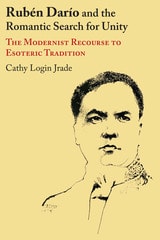
Rubén Darío and the Romantic Search for Unity
The Modernist Recourse to Esoteric TraditionBy Cathy Login Jrade
University of Texas Press, 1983
Modernism was the major Spanish American literary movement of the late nineteenth and early twentieth centuries. Leader of that influential movement was Rubén Darío, the Nicaraguan now recognized as one of the most important Hispanic poets of all time.
Like the Romantics in England and the Symbolists on the Continent, Darío and other Modernists were strongly influenced by occultist thought. But, as the poet Octavio Paz has written, "academic criticism has ... preferred to close its eyes to the stream of occultism that runs throughout Darío's work. This silence damages our comprehension of his poetry."
Cathy Login Jrade's groundbreaking study corrects this critical oversight. Her work clearly demonstrates that esoteric tradition is central to Modernism and that an understanding of this centrality clarifies both the nature of the movement and its relationship to earlier European literature.
After placing Modernism in a broad historical and literary perspective, Jrade examines the impact of esoteric beliefs upon Darío's view of the world and the role of poetry in it. Through detailed and insightful analyses of key poems, she explores the poet's quest for solutions to the nineteenth-century crisis of belief.
The movement that Ruben Darío headed brought Hispanic poetry into the mainstream of the "modern tradition," with its sense of fragmentation and alienation and its hope for integration and reconciliation with nature. Rubén Darío and the Romantic Search for Unity enriches our understanding of that movement and the work of its leading poet.
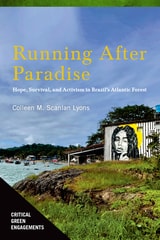
Running After Paradise
Hope, Survival, and Activism in Brazil's Atlantic ForestColleen M. Scanlan Lyons
University of Arizona Press, 2022
The pressures on this tropical forest are palpable. So are people’s responses to these pressures. What was once the state’s economic mainstay, cacao production, is only now beginning to make a comeback after a disease decimated the crops of large and small farmers alike. Tourism, another economic hope, is susceptible to economic crises and pandemics. And the threat of a massive state-led infrastructure project involving mining, a railroad, and an international port has loomed over the region for well over a decade.
Southern Bahia is at a crossroads: develop a sustainable, forest-based economy or run the risk of losing the identity and soul of this place forevermore. Through the lives of environmentalists, farmers, quilombolas, and nativos—people who are in and of this place—this book brings alive the people who are grappling with this dilemma.
Anthropologist Colleen M. Scanlan Lyons brings the eye of a storyteller to present this complex struggle, weaving in her own challenges of balancing family and fieldwork alongside the stories of the people who live in this dynamic region. Intertwined tales, friendships, and hope emerge as people both struggle to sustain their lives in a biodiversity hotspot and strive to create their paradise.