Results by title
165 books match the query 'Caribbean Area' and 5 start with r
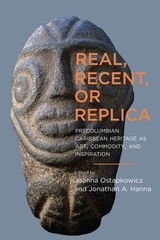
Real, Recent, or Replica
Precolumbian Caribbean Heritage as Art, Commodity, and InspirationEdited by Joanna Ostapkowicz and Jonathan A. Hanna
University of Alabama Press, 2021
A CHOICE OUTSTANDING ACADEMIC TITLE, 2022
Examines the largely unexplored topics in Caribbean archaeology of looting of heritage sites, fraudulent artifacts, and illicit trade of archaeological materials
Real, Recent, or Replica: Precolumbian Caribbean Heritage as Art, Commodity, and Inspiration is the first book-length study of its kind to highlight the increasing commodification of Caribbean Precolumbian heritage. Amerindian art, including “Taíno” art, has become highly coveted by collectors, spurring a prolific and increasingly sophisticated black market of forgeries, but also contemporary artistic engagement, openly appreciated as modern artworks taking inspiration from the past. The contributors to this volume contend with difficult subject matter including the continued looting of archaeological sites in the region, the seismic increase of forgeries, and the imbalance of power and economic relations between the producers and consumers of neo-Amerindian art.
The case studies document the considerable time depth of forgeries in the region (since the late nineteenth century), address the policies put in place by Caribbean governments and institutions to safeguard national patrimony, and explore the impact looted and forged artifacts have on how museums and institutions collect and ultimately represent the Caribbean past to their audiences. Overall, the volume emphasizes the continued desire for the “authentic” Precolumbian artifact, no matter the cost. It provides insights for archaeologists, museum professionals, art historians, and collectors to combat illegal trade and support communities in creating sustainable heritage industries.
Reckoning with the World
South Korean Television and the Latin American ImaginaryBenjamin M. Han
Temple University Press, 2026
Historical dramas like The Land of Humans, about Korean migrants in Mexico, consider diasporic identity and nationalism, while the fantasy series Secret Garden explores issues of modernity. In addition, the TV drama Encounter and the entertainment show Traveler contrast the cultures of global Korea with Cuba. As these programs create appealing storytelling, characters, and aesthetics, they inspire and resonate with audiences and fans across the globe. However, Korean television’s imaginary of Latin America is not about its investment in fostering greater interculturality with Latin American nations and their cultures but instead projects a façade of progressive racial and cultural politics shaping Korea’s reckoning with the world.

Red International and Black Caribbean
Communists in New York City, Mexico and the West Indies, 1919-1939Margaret Stevens
Pluto Press, 2017
Challenging dominant accounts, Red International and Black Caribbean debunks the “great men” narrative, emphasizes the role of women in their capacity as laborers, and paints the true struggles of black peasants and workers in Communist parties.
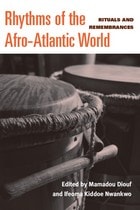
Rhythms of the Afro-Atlantic World
Rituals and RemembrancesEdited by Mamadou Diouf and Ifeoma Kiddoe Nwankwo
University of Michigan Press, 2010
"Collecting essays by fourteen expert contributors into a trans-oceanic celebration and critique, Mamadou Diouf and Ifeoma Kiddoe Nwankwo show how music, dance, and popular culture turn ways of remembering Africa into African ways of remembering. With a mix of Nuyorican, Cuban, Haitian, Kenyan, Senegalese, Trinidagonian, and Brazilian beats, Rhythms of the Afro-Atlantic World proves that the pleasures of poly-rhythm belong to the realm of the discursive as well as the sonic and the kinesthetic."
---Joseph Roach, Sterling Professor of Theater, Yale University
"As necessary as it is brilliant, Rhythms of the Afro-Atlantic World dances across, beyond, and within the Black Atlantic Diaspora with the aplomb and skill befitting its editors and contributors."
---Mark Anthony Neal, author of Soul Babies: Black Popular Culture and the Post-Soul Aesthetic
Along with linked modes of religiosity, music and dance have long occupied a central position in the ways in which Atlantic peoples have enacted, made sense of, and responded to their encounters with each other. This unique collection of essays connects nations from across the Atlantic---Senegal, Kenya, Trinidad, Cuba, Brazil, and the United States, among others---highlighting contemporary popular, folkloric, and religious music and dance. By tracking the continuous reframing, revision, and erasure of aural, oral, and corporeal traces, the contributors to Rhythms of the Afro-Atlantic World collectively argue that music and dance are the living evidence of a constant (re)composition and (re)mixing of local sounds and gestures.
Rhythms of the Afro-Atlantic World distinguishes itself as a collection focusing on the circulation of cultural forms across the Atlantic world, tracing the paths trod by a range of music and dance forms within, across, or beyond the variety of locales that constitute the Atlantic world. The editors and contributors do so, however, without assuming that these paths have been either always in line with national, regional, or continental boundaries or always transnational, transgressive, and perfectly hybrid/syncretic. This collection seeks to reorient the discourse on cultural forms moving in the Atlantic world by being attentive to the specifics of the forms---their specific geneses, the specific uses to which they are put by their creators and consumers, and the specific ways in which they travel or churn in place.
Mamadou Diouf is Leitner Family Professor of African Studies, Director of the Institute of African Studies, and Professor of History at Columbia University.
Ifeoma Kiddoe Nwankwo is Associate Professor of English at Vanderbilt University.
Jacket photograph by Elias Irizarry
Rock Art of the Caribbean
Edited by Michele Hayward, Lesley-Gail Atkinson, and Michael A. Cinquino
University of Alabama Press, 2009