Results by title
260 books match the query 'Central America' and 12 start with r
Reading Popol Wuj
A Decolonial GuideNathan C. Henne
University of Arizona Press, 2020
Popol Wujis considered one of the oldest books in the Americas. Various elements of Popol Wuj have appeared in different written forms over the last two millennia and several parts of Popol Wuj likely coalesced in hieroglyphic book form a few centuries before contact with Europeans. Popol Wuj offers a unique interpretation of the Maya world and ways of being from a Maya perspective. However, that perspective is often occluded since the extant Popol Wuj is likely a copy of a copy of a precontact Indigenous text that has been translated many times since the fifteenth century.
Reading Popol Wujoffers readers a path to look beyond Western constructions of literature to engage with this text through the philosophical foundation of Maya thought and culture. This guide deconstructs various translations to ask readers to break out of the colonial mold in approaching this seminal Maya text.
Popol Wuj, or Popol Vuh, in its modern form, can be divided thematically into three parts: cosmogony (the formation of the world), tales of the beings who inhabited the Earth before the coming of people, and chronicles of different ethnic Maya groups in the Guatemala area. Examining thirteen translations of the K’iche’ text, Henne offers a decolonial framework to read between what translations offer via specific practice exercises for reading, studying, and teaching. Each chapter provides a close reading and analysis of a different critical scene based on a comparison of several translations (English and Spanish) of a key K’iche’ word or phrase in order to uncover important philosophical elements of Maya worldviews that resist precise expression in Indo-European languages.
Charts and passages are frontloaded in each chapter so the reader engages in the comparative process before reading any leading arguments. This approach challenges traditional Western reading practices and enables scholars and students to read Popol Wuj—and other Indigenous texts—from within the worldview that created them.
Reassessing the Aztatlán World
Ethnogenesis and Cultural Continuity in Northwest MesoamericaEdited by Michael D. Mathiowetz and John M. D. Pohl
University of Utah Press, 2024
Volume contributors show how those responsible for the Aztatlán tradition were direct ancestors of diverse Indigenous peoples such as the Náayeri (Cora), Wixárika (Huichol), O’dam (Tepehuan), Caz’ Ahmo (Caxcan), Yoeme (Yaqui), Yoreme (Mayo), and others who continue to reside across the former Aztatlán region and its frontiers. The prosperity of the Aztatlán tradition was achieved through long-distance networks that fostered the development of new ritual economies and integrated peoples in Greater Mesoamerica with those in the U.S. Southwest/Mexican Northwest.

Receiving States
Refugee Policy in Central America During the Salvadoran Civil WarRachael De La Cruz
University of Wisconsin Press, 2026
Between the outbreak of civil war in El Salvador in 1979 and its conclusion in 1992, some 1.5 million Salvadorans fled the violence. This book focuses on the displaced Salvadorans who remained in Central America, seeking refuge in Belize, Costa Rica, Guatemala, Honduras, Nicaragua, and Panama. Their story has been almost entirely overshadowed by the greater numbers who fled farther north to the United States; however, as Rachael De La Cruz shows, the Central American history of Salvadoran refugees is rich, complex, and instructive for scholars of refugee studies, international relations, and human rights.
The isthmus nations that received Salvadoran refugees did not react consistently, and the arriving Salvadorans themselves were not passive participants. National mythologies, perceptions of economic contributions and burdens, regional militarization, state violence, and varying capacities for refugee activism, compounded by the fraught and variable circumstances of the Cold War, together shaped the multitude of government attitudes and policies toward the refugee communities within these countries’ borders. Rarely were refugees simply “a problem to solve”; rather, they represented and acted as catalysts for economic, social, and geopolitical change.
Reconstructing Ancient Maya Diet
Christine White
University of Utah Press, 1999
The collapse of classic Maya civilization at the end of the eighth century A.D. is still an enigma, but the story behind it is likely more than a clash of warring city-states. New research indicates that ecological degradation and nutritional deficiency may be as important to our understanding of Maya cultural processes as deciphering the rise and fall of kings.
Reconstructing Ancient Maya Diet integrates recent data from bone-chemistry research, paleopathology, paleobotany, zooarchaeology, and ethnobotany to show what the ancient Maya actually ate at various periods (as opposed to archaeological suppositions) and how it affected the quality of their lives. It is now evident that to feed a burgeoning population the Maya relied on increasingly intensive forms of agriculture.
Exploring the relationship between these practices, ecological degradation, and social collapse, this book uses dietary data to investigate the rise of agricultural systems and class structure; the characterization of social relationships along lines of gender and age (i.e., who ate what); and the later effects of the Spanish conquest on diet and extant modes of agriculture.
Maya subsistence has been investigated intensively for the past two decades, but this is the first volume that unites work across the spectrum of Maya bioarchaeology.
Reimagining National Belonging
Post-Civil War El Salvador in a Global ContextRobin Maria DeLugan
University of Arizona Press, 2012
Examining events that unfolded between 1992 and 2011, DeLugan both illustrates the idiosyncrasies of state and society in El Salvador and opens a larger portal into conditions of constructing a state in the present day around the globe—particularly the process of democratization in an age of neoliberalism. She demonstrates how academics, culture experts, popular media, and the United Nations and other international agencies have all helped shape ideas about national belonging in El Salvador. She also reveals the efforts that have been made to include populations that might have been overlooked, including indigenous people and faraway citizens not living inside the country’s borders. And she describes how history and memory projects have begun to recall the nation’s violent past with the goal of creating a more just and equitable nation.
This illuminating case study fills a gap in the scholarship about culture and society in contemporary El Salvador, while offering an “ethnography of the state” that situates El Salvador in a global context.
Resistance and Survival
Children’s Narrative from Central America and the CaribbeanAnn González
University of Arizona Press, 2009
Many of these stories are in some way lessons in resistance and survival in a world where “the toughest kid on the block,” often an outsider, demands that a group of children “play or pay,” on his terms. González demonstrates that where traditional strategies have proposed the model of the “trickster” or the “paradoxically astute fool,” to mock the pretensions of the would-be oppressor, new trends indicate that the region’s children—and those who write for them—show increasing interest in playing the game on their own terms, getting to know the Other, embracing difference, and redefining their identity and role within the new global culture.
Resistance and Survival emphasizes the hope underlying this contemporary children’s literature for a world in which all voices can be heard and valued—the hope of an authentic happy ending.
Resisting Reagan
The U.S. Central America Peace MovementChristian Smith
University of Chicago Press, 1996
Focusing on the movement's three most important national campaigns—Witness for Peace, Sanctuary, and the Pledge of Resistance—this book demonstrates the centrality of morality as a political motivator, highlights the importance of political opportunities in movement outcomes, and examines the social structuring of insurgent consciousness. Based on extensive surveys, interviews, and research, Resisting Reagan makes significant contributions to our understanding of the formation of individual activist identities, of national movement dynamics, and of religious resources for political activism.
Return to Havana
The Decline of Cuban Society Under CastroMaurice Halperin
Vanderbilt University Press, 1994
Reunited
Family Separation and Central American Youth MigrationErnesto Castañeda
Russell Sage Foundation, 2024
In interviews with Central American youth, their sponsors, and social services practitioners in and around Washington, D.C., Castañeda and Jenks find that Central American minors migrate on their own mainly for three reasons: gang violence, lack of educational and economic opportunity, and a longing for family reunification. The authors note that youth who feel comfortable leaving and have feelings of belonging upon arrival integrate quickly and easily while those who experience trauma in their home countries and on their way to the United States face more challenges.
Castañeda and Jenks recount these young migrants’ journey from Central America to the U.S. border, detailing the youths’ difficulties passing through Mexico, proving to U.S. Customs and Border Protection officials that they have a legitimate fear of returning or are victims of trafficking, and staying in shelters while their sponsorship, placement, and departure are arranged. The authors also describe the tensions the youth face when they reunite with family members they may view as strangers. Despite their biological, emotional, and financial bonds to these relatives, the youth must learn how to relate to new authority figures and decide whether or how to follow their rules.
The experience of migrating can have a lasting effect on the mental health of young migrants, Castañeda and Jenks note. Although the authors find that Central American youths’ mental health improves after migrating to the United States, the young migrants remain at risk of further problems. They are likely to have lived through traumatizing experiences that inhibit their integration. Difficulty integrating, in turn, creates new stressors that exacerbate PTSD, depression, and anxiety. Consequently, schools and social service organizations are critical, the authors argue, for enhancing youth migrants’ sense of belonging and their integration into their new communities. Bilingual programs, Spanish-speaking PTA groups, message boards, mentoring of immigrant children, and after-school programs for members of reunited families are all integral in supporting immigrant youth as they learn English, finish high school, apply to college, and find jobs.
Offering a complex exploration of youth migration and family reunification, Reunited provides a moving account of how young Central American migrants make the journey north and ultimately reintegrate with their families in the United States.
Rigoberta Menchu Controversy
Arturo Arias
University of Minnesota Press, 2001
A balanced appraisal of the bitter debate surrounding the autobiography of Guatemala’s 1992 Nobel Peace Prize recipient.
Guatemalan indigenous rights activist Rigoberta Menchú first came to international prominence following the 1983 publication of her memoir, I, Rigoberta Menchú, which chronicled in compelling detail the violence and misery that she and her people suffered during her country’s brutal civil war. The book focused world attention on Guatemala and led to her being awarded the Nobel Peace Prize in 1992. In 1999, a book by David Stoll challenged the veracity of key details in Menchú’s account, generating a storm of controversy. Journalists and scholars squared off regarding whether Menchú had lied about her past and, if so, what that would mean about the larger truths revealed in her book.
In The Rigoberta Menchú Controversy, Arturo Arias has assembled a casebook that offers a balanced perspective. The first section of this volume collects the primary documents-newspaper articles, interviews, and official statements-in which the debate raged, many translated into English for the first time. In the second section, a distinguished group of international scholars assesses the political, historical, and cultural contexts of the debate and considers its implications for such issues as the “culture wars,” historical truth, and the politics of memory. Included is a new essay by David Stoll in which he responds to his critics.Contributors: Luis Aceituno; Juan Jesús Aznárez; John Beverley, U of Pittsburgh; Allen Carey-Webb, Western Michigan U; Margarita Carrera; Duncan Earle, U of Texas, El Paso; Carolina Escobar Sarti; Claudia Ferman, U of Richmond; Dina Fernández García; Eduardo Galeano; Dante Liano, U of Milan; W. George Lovell, Queen’s U, Canada; Christopher H. Lutz; Octavio Martí; Victor D. Montejo, UC Davis; Rosa Montero; Mario Roberto Morales, U of Northern Iowa; Jorge Palmieri; Daphne Patai, U of Massachusetts, Amherst; Mary Louise Pratt, Stanford U; Danilo Rodríguez; Ileana Rodríguez, Ohio State U; Larry Rohter; Jorge Skinner-Kleé; Elzbieta Sklodowska, Washington U; Carol A. Smith, UC Davis; Doris Sommer, Harvard U; David Stoll, Middlebury College; Manuel Vásquez Montalbán; and Kay B. Warren, Harvard U.
Roots of Resistance
A Story of Gender, Race, and Labor on the North Coast of HondurasSuyapa G. Portillo Villeda
University of Texas Press, 2021
Winner of the 2021 Sara A. Whaley Prize of the National Women’s Studies Association (NWSA)
A first-of-its-kind study of the working-class culture of resistance on the Honduran North Coast and the radical organizing that challenged US capital and foreign intervention at the onset of the Cold War, examining gender, race, and place.
On May 1, 1954, striking banana workers on the North Coast of Honduras brought the regional economy to a standstill, invigorating the Honduran labor movement and placing a series of demands on the US-controlled banana industry. Their actions ultimately galvanized a broader working-class struggle and reawakened long-suppressed leftist ideals. The first account of its kind in English, Roots of Resistance explores contemporary Honduran labor history through the story of the great banana strike of 1954 and centers the role of women in the narrative of the labor movement.
Drawing on extensive firsthand oral history and archival research, Suyapa G. Portillo Villeda examines the radical organizing that challenged US capital and foreign intervention in Honduras at the onset of the Cold War. She reveals the everyday acts of resistance that laid the groundwork for the 1954 strike and argues that these often-overlooked forms of resistance should inform analyses of present-day labor and community organizing. Roots of Resistance highlights the complexities of transnational company hierarchies, gender and race relations, and labor organizing that led to the banana workers' strike and how these dynamics continue to reverberate in Honduras today.
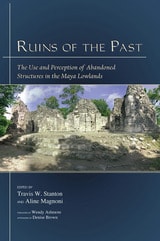
Ruins of the Past
The Use and Perception of Abandoned Structures in the Maya LowlandsTravis W. Stanton
University Press of Colorado, 2008