Results by title
264 books match the query 'Chicago (Ill.)' and 4 start with r

Race Riot
CHICAGO IN THE RED SUMMER OF 1919William M. Tuttle, Jr.
University of Illinois Press, 1996
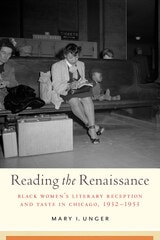
Reading the Renaissance
Black Women's Literary Reception and Taste in Chicago, 1932-1953Mary I. Unger
University of Massachusetts Press, 2025
From 1932 to 1953, during the Black Chicago Renaissance, numerous literary events were held within and for the city’s Black community. In book clubs, public forums, print reviews, little magazines, local programming, and other public venues, Black women in particular debated the role of literature in racial uplift efforts, set literary standards, and acted as community gatekeepers for cultural production during a time known as the Black Chicago Renaissance. Through these inspiring efforts, a mix of publishers, well-known authors, and everyday readers significantly fostered a robust literary culture in the Windy City.
Reading the Renaissance constructs a reception history of the Black women who read and reviewed, published and promoted, and collected and curated literature of the era. Mary Unger interprets how local figures such as Vivian G. Harsh, Ora Morrow, Gwendolyn Brooks, Alice Browning, Fern Gayden, and Margaret Walker cultivated particular literary tastes through collective acts of reading and reception. She does so by recovering a network of readers, book clubs, literary magazines, civic programs, and book businesses that Black women created, led, and transformed during the early 1930s through the early 1950s in Bronzeville, Chicago’s predominantly Black South Side neighborhood.
This illuminating work includes close readings of texts alongside letters, scrapbooks, meeting minutes, reviews, and other ephemera of local reading practices to show how Black women facilitated diverse strategies of reading while instructing community members how to engage a variety of print cultures at the time. Unger demonstrates how Black women readers influenced individual authors as well as the norms and expectations of African American literature more broadly, becoming important (yet too often overlooked) players in American literary history.
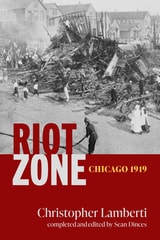
Riot Zone
Chicago 1919Christopher Lamberti, completed and edited by Sean Dinces
Temple University Press, 2027
Riot Zone presents a compelling forensic microhistory of the racial violence that exploded in Chicago starting on July 27, 1919, when a Black teenager named Eugene Williams drowned in Lake Michigan after white beachgoers attacked him as he swam with friends. In the days that followed, white gang members terrorized African Americans on the city’s South Side and Black Chicagoans armed and defended themselves in response. By the end of the first week of August, when the rioting finally ended, thirty-eight Chicagoans lay dead and hundreds nursed injuries as a result of what became known as America’s “Red Summer.”
The late Christopher Lamberti, with the help of editor Sean Dinces, recounts this sobering history using GIS software to map what occurred. The authors revisit and debunk ideas about the role race and ethnicity played in the riot and its aftermath, showing how the politics of housing and racial conflicts over residential space set the stage for the riots that ensued.
With insights that echo in today’s conflicts, Riot Zone proves that there is still plenty to learn about the history of America’s ongoing struggle with urban and racial violence.
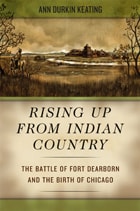
Rising Up from Indian Country
The Battle of Fort Dearborn and the Birth of ChicagoAnn Durkin Keating
University of Chicago Press, 2012
In August 1812, under threat from the Potawatomi, Captain Nathan Heald began the evacuation of ninety-four people from the isolated outpost of Fort Dearborn to Fort Wayne. The group included several dozen soldiers, as well as nine women and eighteen children. After traveling only a mile and a half, they were attacked by five hundred Potawatomi warriors. In under an hour, fifty-two members of Heald’s party were killed, and the rest were taken prisoner; the Potawatomi then burned Fort Dearborn before returning to their villages.