Results by title
233 books match the query 'Cold War' and 11 start with r
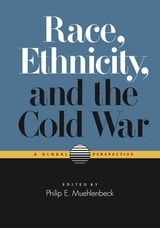
Race, Ethnicity, and the Cold War
A Global PerspectivePhilip E. Muehlenbeck
Vanderbilt University Press, 2012
Table of Contents
Preface
Introduction: The Borders of Race and Nation
Nico Slate
Part I: Race and the International System
Token Diplomacy: The United States, Race, and the Cold War
Michael L. Krenn
A Wind of Change? White Redoubt and the Postcolonial Moment in South Africa, 1960-1963
Ryan M. Irwin
Part II: Race, Ethnicity, and Decolonization
Race, Labor, and Security in the Panama Canal Zone: The 1946 Greaves Rape Case, Local 713, and the Isthmian Cold War Crackdown
Michael Donoghue
Race, Identity, and Diplomacy in the Papua Decolonization Struggle, 1949-1962
David Webster
"For a Better Guinea": Winning Hearts and Minds in Portuguese Guinea
Luís Nuno Rodrigues
Part III: Race and the Interplay of Domestic and International Politics
Testing the Limits of Soviet Internationalism: African Students in the Soviet Union
Maxim Matusevich
Crimes against Humanity in the Congo: Nazi Legacies and the German Cold War in Africa
Katrina M. Hagen
Race and the Cuban Revolution: The Impact of Cuba's Intervention in Angola
Henley Adams
Part IV: Ethnicity and the Interplay of Domestic and International Politics
Ethnic Nationalism in the Cold War Context: The Cyprus Issue in the Greek and Greek American Public Debate, 1954-1989
Zinovia Lialiouti and Philip E. Muehlenbeck
God Bless Reagan and God Help Canada: The Polish Canadian Action Group and Solidarność in Toronto
Eric L. Payseur
Ethnic Nationalism and the Collapse of Soviet Communism
Mark R. Beissinger
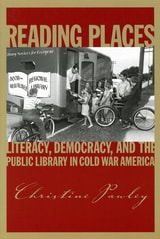
Reading Places
Literacy, Democracy, and the Public Library in Cold War AmericaChristine Pawley
University of Massachusetts Press, 2010
Central to the experiment were well-stocked bookmobiles that brought books to rural districts and the one-room schools that dotted the region. Three years after the project began, state officials and local librarians judged it an overwhelming success. Library circulation figures soared to two-and-a-half times their previous level. Over 90 percent of grade-school children in the rural schools used the bookmobile service, and their reading scores improved beyond expectation.
Despite these successes, however, local communities displayed deeply divided reactions. Some welcomed the book-mobiles and new library services wholeheartedly, valuing print and reading as essential to the exercise of democracy, and keen to widen educational opportunities for children growing up on hardscrabble farms where books and magazines were rare. Others feared the intrusion of govern- ment into their homes and communities, resented the tax increases that library services entailed, and complained about the subversive or immoral nature of some books.
Analyzing the history of tensions between various community groups, Pawley delineates the long-standing antagonisms arising from class, gender, and ethnic differences which contributed to a suspicion of official projects to expand education. Relating a seemingly small story of library policy, she teases out the complex interaction of reading, locality, and cultural difference. In so doing, she illuminates broader questions regarding libraries, literacy, and citizenship, reaching back to the nineteenth century and forward to the present day.
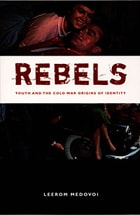
Rebels
Youth and the Cold War Origins of IdentityLeerom Medovoi
Duke University Press, 2005
Alongside the young rebel, the contemporary concept of identity emerged in the 1950s. It was in that decade that “identity” was first used to define collective selves in the politicized manner that is recognizable today: in terms such as “national identity” and “racial identity.” Medovoi traces the rapid absorption of identity themes across many facets of postwar American culture, including beat literature, the young adult novel, the Hollywood teen film, early rock ‘n’ roll, black drama, and “bad girl” narratives. He demonstrates that youth culture especially began to exhibit telltale motifs of teen, racial, sexual, gender, and generational revolt that would burst into political prominence during the ensuing decades, bequeathing to the progressive wing of contemporary American political culture a potent but ambiguous legacy of identity politics.
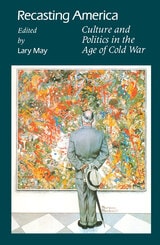
Recasting America
Culture and Politics in the Age of Cold WarEdited by Lary May
University of Chicago Press, 1989

Receiving States
Refugee Policy in Central America During the Salvadoran Civil WarRachael De La Cruz
University of Wisconsin Press, 2026
Between the outbreak of civil war in El Salvador in 1979 and its conclusion in 1992, some 1.5 million Salvadorans fled the violence. This book focuses on the displaced Salvadorans who remained in Central America, seeking refuge in Belize, Costa Rica, Guatemala, Honduras, Nicaragua, and Panama. Their story has been almost entirely overshadowed by the greater numbers who fled farther north to the United States; however, as Rachael De La Cruz shows, the Central American history of Salvadoran refugees is rich, complex, and instructive for scholars of refugee studies, international relations, and human rights.
The isthmus nations that received Salvadoran refugees did not react consistently, and the arriving Salvadorans themselves were not passive participants. National mythologies, perceptions of economic contributions and burdens, regional militarization, state violence, and varying capacities for refugee activism, compounded by the fraught and variable circumstances of the Cold War, together shaped the multitude of government attitudes and policies toward the refugee communities within these countries’ borders. Rarely were refugees simply “a problem to solve”; rather, they represented and acted as catalysts for economic, social, and geopolitical change.
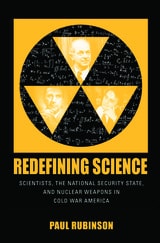
Redefining Science
Scientists, the National Security State, and Nuclear Weapons in Cold War AmericaPaul Rubinson
University of Massachusetts Press, 2016
The Cold War forced scientists to reconcile their values of internationalism and objectivity with the increasingly militaristic uses of scientific knowledge. For decades, antinuclear scientists pursued nuclear disarmament in a variety of ways, from grassroots activism to transnational diplomacy and government science advising. The U.S. government ultimately withstood these efforts, redefining science as a strictly technical endeavor that enhanced national security and deeming science that challenged nuclear weapons on moral grounds “emotional” and patently unscientific. In response, many activist scientists restricted themselves to purely technical arguments for arms control. When antinuclear protest erupted in the 1980s, grassroots activists had moved beyond scientific and technical arguments for disarmament. Grounding their stance in the idea that nuclear weapons were immoral, they used the “emotional” arguments that most scientists had abandoned.
Redefining Science shows that the government achieved its Cold War “consensus” only by active opposition to powerful dissenters and helps explain the current and uneasy relationship between scientists, the public, and government in debates over issues such as security, energy, and climate change.
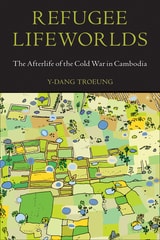
Refugee Lifeworlds
The Afterlife of the Cold War in CambodiaY-Dang Troeung
Temple University Press, 2022
Cambodian history is Cold War history, asserts Y-Dang Troeung in Refugee Lifeworlds. Constructing a genealogy of the afterlife of the Cold War in Cambodia, Troeung mines historical archives and family anecdotes to illuminate the refugee experience, and the enduring impact of war, genocide, and displacement in the lives of Cambodian people.
Troeung, a child of refugees herself, employs a method of autotheory that melds critical theory, autobiography, and textual analysis to examine the work of contemporary artists, filmmakers, and authors. She references a proverb about the Cambodian kapok tree that speaks to the silences, persecutions, and modes of resistance enacted during the Cambodian Genocide, and highlights various literary texts, artworks, and films that seek to document and preserve Cambodian histories nearly extinguished by the Khmer Rouge regime.
Addressing the various artistic responses to prisons and camps, issues of trauma, disability, and aphasia, as well as racism and decolonialism, Refugee Lifeworlds repositions Cambodia within the broader transpacific formation of the Cold War. In doing so, Troeung reframes questions of international complicity and responsibility in ways that implicate us all.
Religion and the Cold War
A Global PerspectivePhilip E. Muehlenbeck
Vanderbilt University Press, 2012
Students and scholars will find in this volume a level of comprehensiveness rarely achieved in Cold War studies. Each chapter reveals that the power and influence of ideas are just as important as military might in the struggles between superpowersand that few ideas, then as now, carry as much force as religious ideology. As Muehlenbeck and his contributors demonstrate, no area of the world, and no religious tenet, was safe from the manipulations of a powerful set of players focused solely on their own sphere of influence.
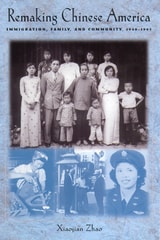
Remaking Chinese America
Immigration, Family, and Community, 1940-1965Zhao, Xiaojian
Rutgers University Press, 2001
In Remaking Chinese America, Xiaojian Zhao explores the myriad forces that changed and unified Chinese Americans during a key period in American history. Prior to 1940, this immigrant community was predominantly male, but between 1940 and 1965 it was transformed into a family-centered American ethnic community. Zhao pays special attention to forces both inside and outside of the country in order to explain these changing demographics. She scrutinizes the repealed exclusion laws and the immigration laws enacted after 1940. Careful attention is also paid to evolving gender roles, since women constituted the majority of newcomers, significantly changing the sex ratio of the Chinese American population.
As members of a minority sharing a common cultural heritage as well as pressures from the larger society, Chinese Americans networked and struggled to gain equal rights during the cold war period. In defining the political circumstances that brought the Chinese together as a cohesive political body, Zhao also delves into the complexities they faced when questioning their personal national allegiances. Remaking Chinese America uses a wealth of primary sources, including oral histories, newspapers, genealogical documents, and immigration files to illuminate what it was like to be Chinese living in the United States during a period that—until now—has been little studied.
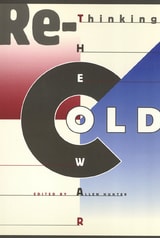
Rethinking the Cold War
edited by Allen Hunter
Temple University Press, 1997
This collection of essays offers a more complex and nuanced analysis of Cold War history. It challenges the prevailing perspective, which editor Allen Hunter terms "vindicationism." Writing from different disciplinary and conceptual vantage points, the contributors to the collection invite a rethinking of what the Cold War was, how fully it defined the decades after World War II, what forces sustained it, and what forces led to its demise. By exploring a wide range of central themes of the era, Rethinking the Cold War widens the discussion of the Cold War's place in post-war history and intellectual life.
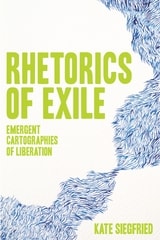
Rhetorics of Exile
Emergent Cartographies of LiberationKate Siegfried
The Ohio State University Press, 2027
Rhetorics of Exile forwards the concept of rhetorical cartographies of liberation to offer an alternative history of the Cold War period. Exile, Kate Siegfried argues, is used as a powerful rhetorical practice that reveals alternative maps of power, resistance, and liberation. Drawing on archival research, she reveals how political insurgents from Paul Robeson to Gerry Adams leveraged experiences of exile and containment to advocate for the eradication of colonialism, imperialism, racialization, and global capitalism and to advance a vision of transnational solidarity that defied the hegemonic political and geographic binaries of the time. Examining movements and political figures across the globe, from Cuba to the American Black Belt, through southern Africa’s colonial borders, to China, Ireland, and elsewhere, Rhetorics of Exile reveals how seemingly disparate political ruptures during the second half of the twentieth century shaped an emergent world system. Siegfried not only broadens our view of Cold War–era social movements but also adapts rhetorical cartography to better account for racialized power dynamics—showing its applicability to understanding activism today.