Results by title
193 books match the query 'Cultural & Regional' and 8 start with r

Race And Excellence
Dialogue With Chester PierceEzra E.H. Griffith
University of Iowa Press, 1998
Chester Pierce was born in 1927; by 1952 he was a graduate of the Harvard Medical School. He went on to become president of the American Board of Psychiatry and Neurology and president of the American Orthopsychiatric Association. He was elected to the Institute of Medicine at the National Academy of Sciences and had an annual research seminar named after him by the National Medical Association.
Founding chair of the Black Psychiatrists of America, Pierce has profoundly affected American psychiatry and the thinking of African American psychiatrists during the last two decades. While recognized for his substantive scholarship on coping with extreme environments such as the South Pole, he is probably best known for his theories regarding how blacks cope with racism in the United States.
In Race and Excellence, Ezra Griffith, also an African American professor of psychiatry, engages Pierce in a dialogue with the goal of clarifying the inter-connection between the personal and the professional in the lives of both black scholars. The text melds the story of Pierce's life and his achievements, with particular attention to his theories about the predictable nature of racist behavior and the responses of oppressed groups. Having earned his doctorate a generation after Pierce, Griffith approaches his conversation with Pierce as a face-to-face meeting between mentor and student. Retelling Pierce's life story ultimately becomes for Griffith an exercise in conceptualizing his own experience. As he writes, “I never just wanted to tell Chet's story; I wanted to work his story out, to measure it, to try it on, to figure out which parts are good for me and other blacks so earnestly seeking heroes.”
Rare and Used
Adventures of a Book Scout's ApprenticeDaniel Dietz
Oregon State University Press, 2026
Coming home to Oregon to reconnect with his aging parents, Daniel Dietz discovers the rhythms and relationships of a changing book world. As the internet pushes bibliophiles away from used bookstores and toward digital commerce, Dietz’s stepfather Michael, now nearing eighty, clings to the precarious trade of scouring thrift stores and library sales for rare books to sell. He explores the stacks, from garage sales in Eugene’s Whiteaker neighborhood to Portland’s Powell’s City of Books, for overlooked first editions and valuable rare books from the past.
With humor and tenderness, Rare and Used introduces us to Michael and to a dedicated and zealous community of book people, each with a grail book that they seek above all others. For Dietz, it’s Beat poet Diane di Prima’s debut collection This Kind of Bird Flies Backward—a book once owned by his stepfather. In his quest for the book, Dietz grapples with larger questions about possession, inheritance, and what we can hold onto. A tribute to books and booksellers as well as to family and place, Rare and Used explores what it means to return home to a community that shaped you.
Red, White, Black, and Blue
A Dual Memoir of Race and Class in AppalachiaWilliam M. Drennen Jr., Kojo (William T.) Jones Jr.
Ohio University Press, 2004
Reno Confidential
Eleven Historic InfluencersRichard Moreno
University of Nevada Press, 2027
In Reno Confidential, veteran Nevada historian Richard Moreno pulls back the curtain on the Biggest Little City to reveal eleven men and women who shaped its destiny—some celebrated, others nearly forgotten. Heavyweights like George Wingfield and William Harrah loom large, but Moreno digs deeper, spotlighting bold reformers, civil rights leaders, architects, club owners, and even underworld figures who steered Reno’s image in lasting ways.
From free-thinking mayor Edwin E. Roberts to trailblazing attorney Felice Cohn, from visionary designer Frederic DeLongchamps to colorful dealmakers working behind the scenes, these were the original influencers—long before social media—who used newspapers, politics, business, and sheer force of personality to leave their mark.
Lively, accessible, and rich with story, Reno Confidential brings the city’s past into sharp focus through eleven unforgettable characters whose ambitions, rivalries, and vision helped make Reno what it is today.
Restavec
From Haitian Slave Child to Middle-Class AmericanAn Autobiography by Jean-Robert Cadet
University of Texas Press, 1998
African slaves in Haiti emancipated themselves from French rule in 1804 and created the first independent black republic in the Western Hemisphere. But they reinstituted slavery for the most vulnerable members of Haitian society—the children of the poor—by using them as unpaid servants to the wealthy. These children were—and still are—restavecs, a French term whose literal meaning of "staying with" disguises the unremitting labor, abuse, and denial of education that characterizes the children's lives.
In this memoir, Jean-Robert Cadet recounts the harrowing story of his youth as a restavec, as well as his inspiring climb to middle-class American life. He vividly describes what it was like to be an unwanted illegitimate child "staying with" a well-to-do family whose physical and emotional abuse was sanctioned by Haitian society. He also details his subsequent life in the United States, where, despite American racism, he put himself through college and found success in the Army, in business, and finally in teaching.
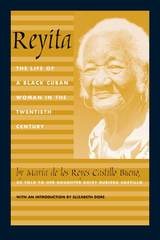
Reyita
The Life of a Black Cuban Woman in the Twentieth CenturyMaría de los Reyes Castillo Bueno
Duke University Press, 2000
Sensitive to and deeply knowledgeable of the systemic causes and consequences of poverty, Reyita’s testimony considers the impact of slavery on succeeding generations, her mother’s internalized racism, and Cuba’s residual discrimination. The humiliation and poverty inflicted on the black Cuban community as well as her decision to marry a white man to ensure a higher standard of living form the basis of other chapters. Reyita actively participated in the life of the community—often caring for the children of prostitutes along with her own eight children and giving herbal medicine and “spiritualist” guidance to ill or troubled neighbors. She describes her growing resistance, over five decades of marriage, to her husband’s sexism and negativity. Strong-willed and frank about her sexuality as well as her religious and political convictions, Reyita recounts joining the revolutionary movement in the face of her husband’s stern objections, a decision that added significant political purpose to her life. At book’s end, Reyita radiates gratification that her 118 descendants have many different hues of skin, enjoy a variety of professions, and—“most importantly”—are free of racial prejudice.
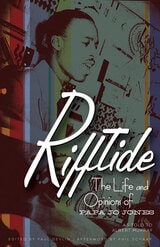
Rifftide
The Life and Opinions of Papa Jo JonesPapa Jo Jones
University of Minnesota Press, 2011
Finalist for Best Jazz Book of the Year Award from the Jazz Journalists Association
The things that I have, I’ll give to you. This is my legacy with you, Albert. This is my last hoo-rah. So begins the autobiography of Jonathan David Samuel Jones—or as the world better knows him, Papa Jo Jones. Playing with Count Basie and his orchestra when they exploded out of Kansas City in 1936 and took the world by storm, Jones went on to inspire generations of jazz drummers, but until now few have had access to his own remarkable story.
Rifftide presents Jones’s inimitable life and opinions, as originally told by Jones to the prominent jazz historian and novelist Albert Murray and now transcribed, arranged, and introduced by Paul Devlin. Drawn from fourteen tapes recorded over eight years beginning in 1977, Rifftide is an impressionistic series of riffs and tales by Jones: his life as a musician on the road in segregated America, his outstanding solo career following his years with the Basie band, and his interactions with iconic artists and cultural figures of the time, including Ralph Ellison, James Baldwin, Langston Hughes, Duke Ellington, Louis Armstrong, Bill “Bojangles” Robinson, and Satchell Paige.
A true American original and jazz luminary, Papa Jo Jones bedazzled and intrigued many with his outrageous, volatile personality and his innovative drumming—and nowhere does his fierce intellect and humor shine more marvelously than in his life’s telling. With a fascinating introduction and annotations by Paul Devlin and an afterword by Phil Schaap, jazz historian and longtime friend of Jones, Rifftide reveals a man at the forefront of both a whole new form of music and a country in the midst of incredible turmoil and opportunity. As Jones himself puts it: Listen man, I’ve had a hell of a time . . .

Romance, Remedies, and Revolution
The Journal of Dr. Elihu Ashley of Deerfield, Massachusetts, 1773-1775Edited by Amelia F. Miller and A. R. Riggs
University of Massachusetts Press, 2007
With flashes of humor and close attention to detail, Ashley describes a broad range of activities and experiences in the small village of Deerfield and the surrounding towns of the Connecticut River valley. Articulate as well as observant, this former schoolteacher conveys a sense of immediacy that brings even the most mundane daily events to life. He discusses medical theory and practice, revolutionary politics, farming, his family, his circle of friends, and amusements ranging from singing and dancing to sleigh riding and bouts of drunkenness. He also writes about his love life, including a dalliance with the older sister of his fiancee, Polly Williams, while the latter is away visiting relatives in the Berkshires.
For Ashley, personal relationships and politics were the prominent issues of 1773 and 1774, as events in Massachusetts drew the province toward rebellion. He discusses the gathering of angry mobs in response to the so-called Intolerable Acts, the stoppage of the courts in Hampshire County, the anarchy that ensued, and the persecution of loyalists, with or without the sanction of law. When the revolution breaks out in April 1775, he describes the departure of companies of minutemen as they set out for Boston to challenge the British Army.
Six months later, in November 1775, the journal abruptly ends. By then, however, Elihu Ashley had already bequeathed to posterity an extraordinary firsthand account of life in rural New England in the years immediately preceding the War of Independence.