Results by title
170 books match the query 'Death, Grief, Loss' and 8 start with r
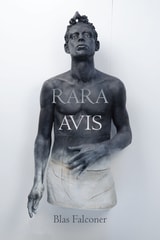
Rara Avis
Blas Falconer
Four Way Books, 2024
Regally bearing its Latin title, Rara Avis captures in sparse, moving verse both the splendor and the loneliness of what it means to be exceptional — a rarified specimen, a strange bird. A son, a husband, and now a father, seasoned poet Blas Falconer explores the relationships among men — between peers, lovers, parents and children — to consider and question existing models of authority and power. Falconer’s lucid but feeling gaze reveals social complexities with searing and graceful imagery, asking what it means to live outside the heteronormative experience while existing as a man, simultaneously a casualty and a participant in the project of masculinity.
These poems carefully delineate the casual cruelties of queer youth and the beautiful and bitter revelations of adulthood. The wisdom propelling Rara Avis is the knowledge that we are each of us that rare bird; we share our singularity. Everyone has a pancreas, but only one organ matters when Falconer learns his father is afflicted. Alchemized by love, one thing, unlike any other, becomes all things. “All day, everything, / no matter how / small, makes me // think of it” … The bee / crawling in / blossoms // scattered on / the glass/tabletop. The sound of // a pitcher fill- / ing slowly / with water.”
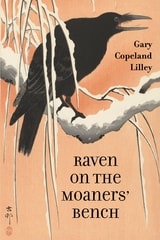
Raven on the Moaners' Bench
Gary Copeland Lilley
Four Way Books, 2025
Raven on the Moaners' Bench writes into grace, opening an exit from a violent cycle, making possible a lighter future while refusing to forget this country's incalculable debt. The inward searching and cross-country migration that Lilley's family, and many other African Americans, have experienced several times in their own histories form the desire for a livable place where safety and opportunity coincide. Jeff walked across America, all the way to the Pacific Ocean, only to die sleeping outside in Los Angeles; this book bears witness to that desperate pilgrimage. Addressing Jeff, Lilley pens a requiem for roadkill he encountered "in a Northwest pathway of [his] own / migration, far from [their] Southern roots": "I offer up the sacrifice of one doe sprawled / in the what-was-left-of-her on the pathway / where I had to meet her and bring her away / to show you I understood something of how / you bore a terrible cost for our family, / for this unholy country, a cost for which / I won't allow any repayment / by words, not mine or anyone's, / on any unstained page."
Red Ocher
Jessica Poli
University of Arkansas Press, 2023
Red Wilderness
Aaron Coleman
Four Way Books, 2025

Road Down Troublesome
Anita Skeen
Michigan State University Press, 2027
A poetic journey through memory, loss, and the stories that define us, Road Down Troublesome blends an unmistakable Appalachian voice with fierce emotional clarity. Through a series of poems that traverse emotional and physical landscapes, Skeen maps a journey toward insight in the wake of death, loss, and grief. The collection foregrounds the shaping forces of the mother-daughter relationship, ecological fragility, and the sustaining bonds of friendship. Opening with a nod to Lisel Mueller’s invitation to give grief language, the book culminates in “After,” a poem that embodies the stillness and transformation achieved through the act of telling.
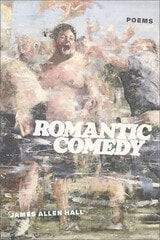
Romantic Comedy
James Allen Hall
Four Way Books, 2023
James Allen Hall returns to poetry with Romantic Comedy, a sophomore collection sounding the parameters of genre to subvert cultural notions of literary value and artistic legitimacy. What realities do stories authorize, and which remain untold? “This story,” they profess in “Biography,” “is mine: there was / a wound, then a world.” Rather than playing into the attention economy’s appetite for sensationalism, Hall’s poems resist the formulaic while paying homage to the oeuvre, a formal balancing act that celebrates queer life.The poems create liberatory narratives that break constraints or speak through them. Hall parses music from the blizzard — as when “one year / [they] watched the snow / pile to [their] door / all December, all / January,” “the year [they] wanted / to die,” and, faced with winter’s architecture, “learned / another song. Sang / another way.” Whether grieving the death of their father, documenting the survival of sexual assault, interrogating the scripts of addiction, or revisiting an ’80s crime thriller, Hall’s second collection constantly affirms the ingenuity of self-definition as a technology of survival.

Round Lake
Grace Bonner
Four Way Books, 2016
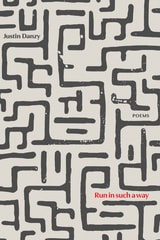
Run in Such a Way
PoemsJustin Danzy
Northwestern University Press, 2027
A poet’s candid and probing exploration of faith, Blackness, and masculinity
With poems that closely examine familial bonds and heritage, biblical teachings, a shifting understanding of home, and the violence of toxic masculinity, Justin Danzy’s Run in Such a Way sits at the crossroads of religion, race, gender, and more. A collection about pursuit, tracking the narrative of its speaker’s journey toward a deeper understanding of himself and of his community as he moves from child to man, the book wrestles with the way an identity is constructed, deconstructed, and reconstructed again throughout one’s life. Playful and sincere in equal measure, Danzy’s command of the line carries us through as we travel with the speaker to the precipice of belief. Danzy’s lyrical voice and fealty to his people pays homage to the world that made him, and considers all that the speaker of this tremendous debut has—both wisely and foolishly—run toward and away from in the search for truth.