75 books match the query 'Death & Dying' and 4 start with r
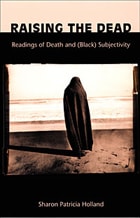
cover of Raising the Dead: Readings of Death and (Black) Subjectivity

Raising the Dead

Readings of Death and (Black) Subjectivity

Sharon Patricia Holland

Duke University Press, 2000

Raising the Dead is a groundbreaking, interdisciplinary exploration of death’s relation to subjectivity in twentieth-century American literature and culture. Sharon Patricia Holland contends that black subjectivity in particular is connected intimately to death. For Holland, travelling through “the space of death” gives us, as cultural readers, a nuanced and appropriate metaphor for understanding what is at stake when bodies, discourses, and communities collide.
Holland argues that the presence of blacks, Native Americans, women, queers, and other “minorities” in society is, like death, “almost unspeakable.” She gives voice to—or raises—the dead through her examination of works such as the movie Menace II Society, Toni Morrison’s novel Beloved, Leslie Marmon Silko’s Almanac of the Dead, Randall Kenan’s A Visitation of Spirits, and the work of the all-white, male, feminist hip-hop band Consolidated. In challenging established methods of literary investigation by putting often-disparate voices in dialogue with each other, Holland forges connections among African-American literature and culture, queer and feminist theory.
Raising the Dead will be of interest to students and scholars of American culture, African-American literature, literary theory, gender studies, queer theory, and cultural studies.

[more]
cover of Reading Behind Bars

Reading Behind Bars

Alan Tansman

Prickly Paradigm Press, 2027

A reflection on how literature can function as a medium of lived experience rather than intellectual abstraction under conditions of radical constraint. 

Drawing on the experience of teaching at Mt. Tam College at the San Quentin Correctional Facility, literary scholar Alan Tansman traces the extraordinary seriousness with which incarcerated students engage literary works form many times and places; Natsume Soseki's Kokoro, Toni Morrison's The Bluest Eye, Jorge Luis Borges's "Funes the Memorious," and Jean Améry's "On Torture." The heart of the book lies not in these canonical works themselves but in the students' responses—writing and discussion that is spare, precise, and emotionally exacting. These students are not merely powerful witnesses to suffering; they are careful, committed readers. Their interpretations are alert to ethical stakes and formal detail, shaped by firsthand knowledge of trauma, isolation, guilt, and the struggle with living in a painful present looking toward a hard future. What kind of refuge can literature offer from pain, guilt, and the weight of the past? Can that refuge also offer a guide for living behind bars?
[more]
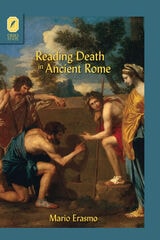
cover of Reading Death in Ancient Rome

Reading Death in Ancient Rome

Mario Erasmo

The Ohio State University Press, 2008
In Reading Death in Ancient Rome, Mario Erasmo considers both actual funerary rituals and their literary depictions in epic, elegy, epitaphs, drama, and prose works as a form of participatory theater in which the performers and the depicters of rituals engage in strategies to involve the viewer/reader in the ritual process, specifically by invoking and playing on their cultural associations at a number of levels simultaneously. He focuses on the associative reading process—the extent to which literary texts allude to funeral and burial ritual, the narrative role played by the allusion to recreate a fictive version of the ritual, and how the allusion engages readers’ knowledge of the ritual or previous literary intertexts.
 
Such a strategy can advance a range of authorial agendas by inviting readers to read and reread assumptions about both the surrounding Roman culture and earlier literature invoked through intertextual referencing. By (re)defining their relation to the dead, readers assume various roles in an ongoing communion with the departed.
 
Reading Death in Ancient Rome makes an important and innovative contribution to semiotic theory as applied to classical texts and to the emerging field of mortality studies. It should thus appeal to classicists as well as to advanced undergraduate and graduate students in art history and archeology.
 
 
[more]
cover of Rite, Flesh, and Stone: The Matter of Death in Contemporary Spanish Culture

Rite, Flesh, and Stone

The Matter of Death in Contemporary Spanish Culture

Antonio Córdoba

Vanderbilt University Press, 2021

Forensic science provides information and data behind the circumstances of a particular death, but it is culture that provides death with meaning. With this in mind, Rite, Flesh, and Stone proposes cultural matters of death as its structuring principle, operating as frames of the expression of mortality within a distinct set of coordinates. The chapters offer original approaches to how human remains are handled in the embodied rituals and social performances of contemporary funeral rites of all kinds; furthermore, they explore how dying flesh and corpses are processed by means of biopolitical technologies and the ethics of (self-)care, and how the vibrant and breathing materiality of the living is transformed into stone and analogous kinds of tangible, empirical presence that engender new cartographies of memory. Each coming from a specific disciplinary perspective, authors in this volume problematize conventional ideas about the place of death in contemporary Western societies and cultures using Spain as a case study.

Materials analyzed here—ranging from cinematic and literary fictions, to historical archives and anthropological and ethnographic sources—make explicit a dynamic scenario where actors embody a variety of positions toward death and dying, the political production of mortality, and the commemoration of the dead. Ultimately, the goal of this volume is to chart the complex network in which the disenchantment of death and its reenchantment coexist, and biopolitical control over secularized bodies overlaps with new avatars of the religious and non-theistic desires for memorialization and transcendence.
[more]