Results by title
102 books match the query 'Demography' and 12 start with r

RSF
The Russell Sage Foundation Journal of the Social Sciences: Beyond Deaths of Despair: New Research on the Health and Well-Being of Low- and Moderately-Educated AmericansAnne Case
Russell Sage Foundation, 2026
The term “deaths of despair” was coined in 2015 by economists Anne Case and Agnus Deaton to describe the increasing mortality rate for White Americans without college degrees due to drug overdoses, suicide, and alcoholic liver disease. These deaths were attributed to the despondency experienced by the White working class, who were left behind by changes in the American economy. However, the mortality picture has changed since then. Mortality rates are now rising among both Black and White Americans without a college degree. Nearly all major causes of death are increasing more, or decreasing less, for people without college degrees. The educational gap in mortality has become so severe that, in 2021, adult life expectancy was more than eight years higher among college graduates. In this double issue of RSF, Case, Deaton, sociologist Andrew J. Cherlin, and an interdisciplinary group of contributors move beyond the concept of “deaths of despair” to explore the widening educational gap in mortality.
Issue 1 provides new perspectives on the education gap in mortality as well as new viewpoints on the non-college population. Christopher L. Foote and colleagues show that much of the educational gap in mortality may be due to smoking. One of the most popular explanations for the growing mortality gap is that college unlocks better job opportunities. However, Sam Arenberg and Sam Stripling find that what may matter for longer life expectancy is not so much having a “good” job as having a job at all, as high school dropouts with jobs have lower mortality rates than college graduates without them. Victor Tan Chen and colleagues reveal that people with opioid use disorders experience “precarity chains:” overlapping, connected hazards that combine to put people at increased risk of substance abuse.
Issue 2 also gives new viewpoints on the non-college population and examines geographic and international variation in mortality. Grace Landrum-Hall and colleagues discover that men with health issues repeatedly enter and exit the formal labor force—referred to as “churning”—due to inflexible employer policies and income support program policies. Jennifer Karas Montez and colleagues show that rural areas and small cities have seen increases in mortality, while large urban areas have seen decreases. Iliya Gutin and colleagues find that the educational gap in health and wellbeing is typically larger in the U.S. than in Britian. This may be because education in the U.S.—and the resulting higher salaries—allows for more access to health-promoting resources.
This double issue of RSF provides fascinating insights into the stark and alarming mortality gap between those with and without a college degree in the U.S.
RSF
The Russell Sage Foundation Journal of the Social Sciences: Growing Up Rural: Education, Health, Family, and Economic OutcomesShelley Clark
Russell Sage Foundation, 2022
Nearly 46 million Americans live in rural counties – areas with small populations that are often located far from large cities. Yet we know relatively little about how living in a rural area influences child and adolescent life trajectories and adult outcomes when compared to their urban counterparts. In this special double issue of RSF, sociologist Shelley Clark, epidemiologist Sam Harper, and agricultural economist Bruce Weber, and an interdisciplinary group of contributors provide a comprehensive look at the impact that growing up rural has across the lifespan, examining both the challenges and advantages of growing up in rural America.
The 15 articles in this double issue explore the effects of rural life on family, educational attainment, economic security, and health. Issue 1 looks at the impact of rural families and schools on children’s and adolescents’ educational aspirations and wellbeing. Contributors Jennifer Sherman and Kai A. Schafft find that while rural gentrification brings needed resources to struggling communities, it can also exacerbate educational inequality. Jessica C. Drescher and colleagues reveal that only modest differences in educational outcomes exist between rural and non-rural students overall and that socioeconomic status is less predictive of academic achievement in rural areas compared to non-rural areas. Ryan Parsons shows that rural students with college aspirations, particularly students of color, incur social and emotional costs in pursuing upward mobility not experienced by their urban counterparts, such as having to permanently relocate to more advantaged areas.
Issue 2 examines transitions to adulthood in rural areas and the longer-term influences of growing up in rural areas on adults’ health and economic attainment. Emily Miller and Kathryn Edin find that low-income rural young adults have children and marry earlier than their peers, but achieve other markers of adulthood, such as leaving the parental home, more slowly and often only tentatively. Robert D. Francis shows that rural, working-class men will employ various strategies to improve their employment opportunities in ways that support their identities as rural, working-class men. For example, they pursue additional education and training in fields that will allow them to continue to hold traditionally masculine, working-class jobs, such as obtaining credentials to be truck drivers or mechanics. Evan Roberts and colleagues find that growing up on or moving to a farm were associated with better health outcomes. Emily Parker and colleagues find that rural residents who live in counties that receive a higher amount of federal funding and moved from their home county in adulthood were more likely to achieve higher educational attainment and earnings than those in counties that received less funding.
This volume of RSF provides a more nuanced understanding of the advantages and disadvantage of growing up in rural areas and how it shapes the life trajectories of rural Americans.

RSF
The Russell Sage Foundation Journal of the Social Sciences: Growing Up Rural: Education, Health, Family, and Economic OutcomesShelley Clark
Russell Sage Foundation, 2022
Nearly 46 million Americans live in rural counties – areas with small populations that are often located far from large cities. Yet we know relatively little about how living in a rural area influences child and adolescent life trajectories and adult outcomes when compared to their urban counterparts. In this special double issue of RSF, sociologist Shelley Clark, epidemiologist Sam Harper, and agricultural economist Bruce Weber, and an interdisciplinary group of contributors provide a comprehensive look at the impact that growing up rural has across the lifespan, examining both the challenges and advantages of growing up in rural America.
The 15 articles in this double issue explore the effects of rural life on family, educational attainment, economic security, and health. Issue 1 looks at the impact of rural families and schools on children’s and adolescents’ educational aspirations and wellbeing. Contributors Jennifer Sherman and Kai A. Schafft find that while rural gentrification brings needed resources to struggling communities, it can also exacerbate educational inequality. Jessica C. Drescher and colleagues reveal that only modest differences in educational outcomes exist between rural and non-rural students overall and that socioeconomic status is less predictive of academic achievement in rural areas compared to non-rural areas. Ryan Parsons shows that rural students with college aspirations, particularly students of color, incur social and emotional costs in pursuing upward mobility not experienced by their urban counterparts, such as having to permanently relocate to more advantaged areas.
Issue 2 examines transitions to adulthood in rural areas and the longer-term influences of growing up in rural areas on adults’ health and economic attainment. Emily Miller and Kathryn Edin find that low-income rural young adults have children and marry earlier than their peers, but achieve other markers of adulthood, such as leaving the parental home, more slowly and often only tentatively. Robert D. Francis shows that rural, working-class men will employ various strategies to improve their employment opportunities in ways that support their identities as rural, working-class men. For example, they pursue additional education and training in fields that will allow them to continue to hold traditionally masculine, working-class jobs, such as obtaining credentials to be truck drivers or mechanics. Evan Roberts and colleagues find that growing up on or moving to a farm were associated with better health outcomes. Emily Parker and colleagues find that rural residents who live in counties that receive a higher amount of federal funding and moved from their home county in adulthood were more likely to achieve higher educational attainment and earnings than those in counties that received less funding.
This volume of RSF provides a more nuanced understanding of the advantages and disadvantage of growing up in rural areas and how it shapes the life trajectories of rural Americans.
RSF
The Russell Sage Foundation Journal of the Social Sciences: Suburban InequalityL'Heureux Lewis-McCoy
Russell Sage Foundation, 2023
Suburbs are home to almost half of all Americans and have undergone dramatic demographic shifts over the past 20 years. Yet, suburbs remain understudied, and we know little about the changes taking place in these communities. In this special double issue of RSF, sociologists R. L’Heureux Lewis-McCoy, Natasha Warikoo, Stephen A. Matthews, education scholar Nadirah Farah Foley, and an interdisciplinary group of contributors examine how suburbs have evolved and growing suburban inequality.
Issue 1 looks at the diversification of suburbs as well as inequality in suburban housing. Daniel T. Litcher and colleagues find that a majority of residents living in metropolitan areas now live in suburbs and this change has been driven by a migration of ethnic and racial minorities to suburban areas. Devin Q. Rutan and colleagues reveal that the number of suburban evictions has steadily risen over time, even as urban evictions have remained stable. Jennifer Girouard finds that while the state of Massachusetts passed Chapter 40B in 1969, a law that ensures affordable housing is built in the suburbs, local residents and leaders use tactics such as creating narratives of the town being victimized by predatory developers to resist the law and the development of affordable housing.
Issue 2 examines suburban schools, how community institutions function in suburban areas, and suburban politics. Shruti Bathia and colleagues find that between 2000 and 2015 Latino children attending elementary school in the suburbs had more exposure to White peers than their counterparts attending urban schools. However, suburban Latino children’s exposure to White students declined during that same time period. Scott W. Allard and Elizabeth Pelletier reveal that the nonprofit safety net is less responsive in suburban areas than urban centers and that nonprofit services are less robust in high poverty suburban areas and suburban areas with larger Black populations. Brenden Beck shows that suburbs with large Black populations rely the most on fine-and-fee revenue and that municipalities that rely more on monetary sanctions have more police killings. Kiara Wyndham Douds finds that incorporated suburbs are Whiter and less racially diverse than unincorporated suburbs, suggesting that incorporation has been an effective strategy for racial exclusion.
This volume of RSF investigates the underexamined and pressing issue of inequality in suburbs and explores how it develops within and between suburban communities.
RSF
The Russell Sage Foundation Journal of the Social Sciences: Suburban InequalityL'Heureux Lewis-McCoy
Russell Sage Foundation, 2023
Suburbs are home to almost half of all Americans and have undergone dramatic demographic shifts over the past 20 years. Yet, suburbs remain understudied, and we know little about the changes taking place in these communities. In this special double issue of RSF, sociologists R. L’Heureux Lewis-McCoy, Natasha Warikoo, Stephen A. Matthews, education scholar Nadirah Farah Foley, and an interdisciplinary group of contributors examine how suburbs have evolved and growing suburban inequality.
Issue 1 looks at the diversification of suburbs as well as inequality in suburban housing. Daniel T. Litcher and colleagues find that a majority of residents living in metropolitan areas now live in suburbs and this change has been driven by a migration of ethnic and racial minorities to suburban areas. Devin Q. Rutan and colleagues reveal that the number of suburban evictions has steadily risen over time, even as urban evictions have remained stable. Jennifer Girouard finds that while the state of Massachusetts passed Chapter 40B in 1969, a law that ensures affordable housing is built in the suburbs, local residents and leaders use tactics such as creating narratives of the town being victimized by predatory developers to resist the law and the development of affordable housing.
Issue 2 examines suburban schools, how community institutions function in suburban areas, and suburban politics. Shruti Bathia and colleagues find that between 2000 and 2015 Latino children attending elementary school in the suburbs had more exposure to White peers than their counterparts attending urban schools. However, suburban Latino children’s exposure to White students declined during that same time period. Scott W. Allard and Elizabeth Pelletier reveal that the nonprofit safety net is less responsive in suburban areas than urban centers and that nonprofit services are less robust in high poverty suburban areas and suburban areas with larger Black populations. Brenden Beck shows that suburbs with large Black populations rely the most on fine-and-fee revenue and that municipalities that rely more on monetary sanctions have more police killings. Kiara Wyndham Douds finds that incorporated suburbs are Whiter and less racially diverse than unincorporated suburbs, suggesting that incorporation has been an effective strategy for racial exclusion.
This volume of RSF investigates the underexamined and pressing issue of inequality in suburbs and explores how it develops within and between suburban communities.

RSF
The Russell Sage Foundation Journal of the Social Sciences: U.S. Census 2020: Continuity and ChangeZhenchao Qian
Russell Sage Foundation, 2025
The census has registered more than two centuries of growth and transformation in America’s political, social, and economic life. It traditionally gives us the opportunity to ask big questions about and measure changes in American society. Sociologist and demographer Zhenchao Qian, economist Trevon Logan, and an interdisciplinary group of contributors examine how American society has changed — or stayed the same — from 2010-2020.
Topics examined in Issue 1 include the impact of census counts, changes in neighborhood demographics, gender inequality in education, and racial inequality in employment. Lisa Neidert and colleagues find that the census consistently undercounts Hispanics, Blacks, and Native Americans and overcounts Whites and Asians, which has negative impacts on state and federal funding for vulnerable communities. Nima Dahir shows the arrival of Black immigrants into Black American neighborhoods often results in a decline in the native Black American population and an increase in White residents. Claudia Buchmann and colleagues reveal that women are now earning more advanced degrees than men in the U.S., however rising shares of women, including those who are pursing advanced degrees, are attending for profit institutions and carrying student debt. Julie Y. Cai and Marybeth J. Mattingly find that workers with variable hours have lower incomes than those who have more stable hours and Black workers earn substantially less than their White counterparts when working jobs with volatile hours.
Themes explored in Issue 2 include changes in living arrangements, divergent families, and rural America. Hyunjoon Parkand colleagues find that despite growing public concern about the potential rise in solitary living, the likelihood of living alone has not changed much over the last four decades except for older men, who have an increased likelihood of living alone. Christopher S. Carpenter and colleagues show that gender minority individuals, including transgender and nonbinary individuals, are less likely to be married, more likely to be widowed, and less likely to live in a traditional two-adult household compared to their cisgender counterparts. Daniel T. Lichter and Kenneth M. Johnson reveal that while rural America is often envisioned as a monolith, it is made up of complex and diverse economic, social, and demographic conditions.
This volume of RSF provides an updated and insightful snapshot of American society in the 2010s.
RSF
The Russell Sage Foundation Journal of the Social Sciences: U.S. Census 2020: Continuity and ChangeZhenchao Qian
Russell Sage Foundation, 2024
The census has registered more than two centuries of growth and transformation in America’s political, social, and economic life. It traditionally gives us the opportunity to ask big questions about and measure changes in American society. Sociologist and demographer Zhenchao Qian, economist Trevon Logan, and an interdisciplinary group of contributors examine how American society has changed — or stayed the same — from 2010-2020.
Topics examined in Issue 1 include the impact of census counts, changes in neighborhood demographics, gender inequality in education, and racial inequality in employment. Lisa Neidert and colleagues find that the census consistently undercounts Hispanics, Blacks, and Native Americans and overcounts Whites and Asians, which has negative impacts on state and federal funding for vulnerable communities. Nima Dahir shows the arrival of Black immigrants into Black American neighborhoods often results in a decline in the native Black American population and an increase in White residents. Claudia Buchmann and colleagues reveal that women are now earning more advanced degrees than men in the U.S., however rising shares of women, including those who are pursing advanced degrees, are attending for profit institutions and carrying student debt. Julie Y. Cai and Marybeth J. Mattingly find that workers with variable hours have lower incomes than those who have more stable hours and Black workers earn substantially less than their White counterparts when working jobs with volatile hours.
Themes explored in Issue 2 include changes in living arrangements, divergent families, and rural America. Hyunjoon Parkand colleagues find that despite growing public concern about the potential rise in solitary living, the likelihood of living alone has not changed much over the last four decades except for older men, who have an increased likelihood of living alone. Christopher S. Carpenter and colleagues show that gender minority individuals, including transgender and nonbinary individuals, are less likely to be married, more likely to be widowed, and less likely to live in a traditional two-adult household compared to their cisgender counterparts. Daniel T. Lichter and Kenneth M. Johnson reveal that while rural America is often envisioned as a monolith, it is made up of complex and diverse economic, social, and demographic conditions.
This volume of RSF provides an updated and insightful snapshot of American society in the 2010s.
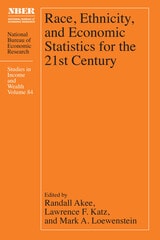
Race, Ethnicity, and Economic Statistics for the 21st Century
Edited by Randall Akee, Lawrence F. Katz, and Mark A. Loewenstein
University of Chicago Press, 2026
Categorizing race and ethnicity for twenty-first-century statistics and economics.
The increasing racial and ethnic diversity of the US population raises the question of whether the race and ethnicity categories and definitions used by federal statistical agencies to create demographic statistics on which government officials, business decision-makers, and private citizens rely fully reflect the changing population. Official definitions of existing race and ethnic groups do not always command wide agreement, and over time, some definitions that were once widely accepted may become less so based on political, legal, and social factors. Comparable measures of race and ethnicity over time are needed to accurately track historical changes in economic and social outcomes, as well as racial and ethnic segregation.
This volume explores the production of economic statistics that accurately depict the complex racial and ethnic diversity of the US population in the twenty-first century. The chapters examine the consequences for economic analyses of different measurement choices concerning race and ethnicity, assess the likely implications of the 2024 changes in federal race and ethnicity measurement standards, introduce new data sets with richer demographic information, and compare measures of race and ethnicity in administrative versus survey data. They also apply existing data in creative ways to develop alternative characterizations of the changing US workforce and to illuminate important policy questions related to criminal justice, immigration, labor market discrimination, the social safety net, health care, and child welfare.
Regional and Metropolitan Growth and Decline in the US
William H. Frey
Russell Sage Foundation, 1988
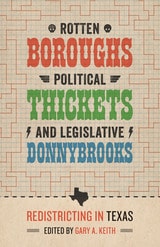
Rotten Boroughs, Political Thickets, and Legislative Donnybrooks
Redistricting in TexasEdited by Gary A. Keith
University of Texas Press, 2013
Every ten years, the Texas legislature redistricts itself and the state’s congressional districts in an attempt to ensure equality in representation. With a richly textured cultural fabric, Texas often experiences redistricting battles that are heated enough to gain national attention. Collecting a variety of voices, including legislators themselves, in addition to lawyers, community organizers, political historians, and political scientists, Rotten Boroughs, Political Thickets, and Legislative Donnybrooks delivers a multidimensional picture of how redistricting works in Texas today, and how the process evolved.
In addition to editor Gary Keith’s historical narrative, which emphasizes the aftermath of the Warren Court’s redistricting decisions, longtime litigators David Richards and J. D. Pauerstein describe the contentious lines drawn from the 1970s into the 2000s. Former state legislator and congressman Craig Washington provides an insider’s view, while redistricting attorney and grassroots organizer Jose Garza describes the repercussions for Mexican Americans in Texas. Balancing these essays with a quantitative perspective, political scientists Seth McKee and Mark McKenzie analyze the voting data for the 2000 decade to describe the outcomes of redistricting. The result is a timely tour that provides up-to-date context, particularly on the role of the Voting Rights Act in the twenty-first century. From local community engagement to the halls of the Capitol, this is the definitive portrait of redistricting and its repercussions for all Texans.

Rural and Small Town America
Glenn V. Fuguitt
Russell Sage Foundation, 1989