Results by title
18 books match the query 'Secret'
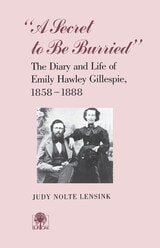
A Secret To Be Burried
Diary Emily Hawley GillespieJudy Nolte Lensink
University of Iowa Press, 1989
The sound of nineteenth-century women, once thought lost to us, is alive because ordinary women like Emily Hawley Gillespie gave voice to their thoughts in diaries. This condensed version of the 2,500-page journals of Emily Gillespie, faithfully written from 1858 to 1888, is a detailed account of rural Iowa life. More than this, it contains the reflections of a woman who dreamed of being a painter and writer and instead became a wife and a mother, a woman whose radical convictions were recorded in her diary, while publicly she conformed to the prescribed life of a Victorian pioneer woman. Through Emily's journals, readers are offered immediate and unmodified contact with settlers in Iowa one hundred years ago. A wealth of facts are included—what produce she harvested and preserved from her garden, how her husband tended his fields and what he raised, the challenges and rewards of family life.
Judy Lensink's skillful analysis shows the larger patterns in Emily Gillespie's life and provides keys that unlock the diary's secrets. Emily's life is revealed as a youth full of promise fading into middle and declining years of lost dreams and eventual tragedy, which caused her to write, "I have written many things in my journal, but the worst is a secret to be burried when I shall cease to be."
Carrying a Secret in My Heart
Children of the Victims of the Reprisals after the Hungarian Revolution in 1956 - An Oral HistoryZsuzsanna Korösi
Central European University Press, 2003
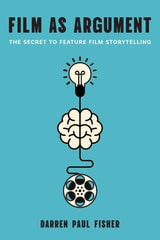
Film as Argument
The Secret to Feature Film StorytellingDarren Paul Fisher
Rutgers University Press, 2025
Is it to entertain? To move and audience? To tell a powerful story? For fame and fortune?
You may have answered yes to each, but those answers don’t account for the practice overall. Most books about screenwriting and directing are primarily concerned with craft and technique, but how can you truly understand filmmaking – or make the best films - unless you know what purpose it really serves.
So what’s the secret? As the title of this book suggests, making feature films is fundamentally the practice of making a very specific type of argument. To see how this works, we will deep-dive into how filmmakers are trained and taught to think about filmmaking, and what traditions they knowingly or unknowingly follow. We will look at hundreds of films and some major case studies, including Toy Story 3, Schindler’s List, Raiders of the Lost Ark, Amour, and mother!, to explore how and what films argue, and why knowing this can both unlock both a greater appreciation of the form, and improve the impact your films make.
Mormon Garments
Sacred and SecretNancy Ross, Jessica Finnigan, and Larissa Kanno Kindred
University of Illinois Press, 2026
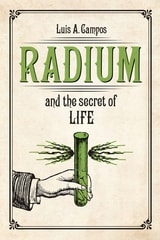
Radium and the Secret of Life
Luis A. Campos
University of Chicago Press, 2015
From the creation of half-living microbes in the test tube to charting the earliest histories of genetic engineering, Radium and the Secret of Life highlights previously unknown interconnections between the history of the early radioactive sciences and the sciences of heredity. Equating the transmutation of radium with the biological transmutation of living species, biologists saw in metabolism and mutation properties that reminded them of the new element. These initially provocative metaphoric links between radium and life proved remarkably productive and ultimately led to key biological insights into the origin of life, the nature of heredity, and the structure of the gene. Radium and the Secret of Life recovers a forgotten history of the connections between radioactivity and the life sciences that existed long before the dawn of molecular biology.
Secret of the Muses Retold
Classical Influences on Italian Authors of the Twentieth CenturyJohn T. Kirby
University of Chicago Press, 2000
These are some of the questions that gave rise to John Kirby's Secret of the Muses Retold. This new study of works by five twentieth-century Italian writers investigates the abiding influence of the Greek and Roman classics, and their rich legacy in our own day. The result is not only a splendid introduction to contemporary Italian literature, but also a lucid and stimulating meditation on the insights that writers such as Umberto Eco and Italo Calvino have tapped from the wellspring of ancient tradition.
Kirby's book offers an impassioned plea for the recuperation of the humanities in general, and of classical studies in particular. No expertise in Greek, Latin, Italian, or literary theory is presumed, and both traditional and postmodern perspectives are accommodated.
Sovereign, Settler, Leaker, Lie
Forms of the Secret in US Political RhetoricAtilla Hallsby
The Ohio State University Press, 2026
In Sovereign, Settler, Leaker, Lie, Atilla Hallsby argues that secrets play a pivotal role in organizing political discourse in the United States. Hallsby takes up contemporary case studies—ranging from the Valerie Plame scandal during the George W. Bush presidency, to the use of Saul Alinsky’s name as a partisan codeword for politicizing Obama’s Blackness, to Chelsea Manning’s public naming and outing—to show how dramatic revelations increasingly fail to produce meaningful change and instead reproduce entrenched racial, gendered, and colonial hierarchies.
The core feature of these interlinked moments of crisis is the secret: a rhetorical patterning of political life organized by specific forms, each one lending a familiar shape to the shadows of American empire. These forms, theorized here as tropes, connect decades of secrets, linking the George W. Bush administration’s War on Terror to the Trump-era reemergence of “deep state” conspiracy theories. As an extension of secrecy and surveillance studies, and with the aim of attaining a more accountable and just form of US governmentality, Sovereign, Settler, Leaker, Lie explains how still-unfolding political realities in the United States emerged, transformed, and regenerate.
The Gift of Death, Second Edition & Literature in Secret
Jacques Derrida
University of Chicago Press, 2008
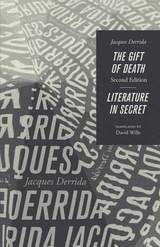
The Gift of Death, Second Edition & Literature in Secret
Jacques Derrida
University of Chicago Press, 2008
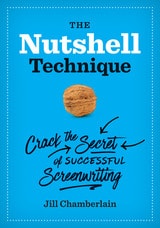
The Nutshell Technique
Crack the Secret of Successful ScreenwritingBy Jill Chamberlain, Foreword by Patrick Wright
University of Texas Press, 2016
Veteran script consultant Jill Chamberlain discovered in her work that an astounding 99 percent of first-time screenwriters don’t know how to tell a story. These writers may know how to format a script, write snappy dialogue, and set a scene. They may have interesting characters and perhaps some clever plot devices. But, invariably, while they may have the kernel of a good idea for a screenplay, they fail to tell a story. What the 99 percent do instead is present a situation. In order to explain the difference, Chamberlain created the Nutshell Technique, a method whereby writers identify eight dynamic, interconnected elements that are required to successfully tell a story.
Now, for the first time, Chamberlain presents her unique method in book form with The Nutshell Technique: Crack the Secret of Successful Screenwriting. Using easy-to-follow diagrams (“nutshells”), she thoroughly explains how the Nutshell Technique can make or break a film script. Chamberlain takes readers step-by-step through thirty classic and contemporary movies, showing how such dissimilar screenplays as Casablanca, Chinatown, Pulp Fiction, The Usual Suspects, Little Miss Sunshine, Juno, Silver Linings Playbook, and Argo all have the same system working behind the scenes, and she teaches readers exactly how to apply these principles to their own screenwriting. Learn the Nutshell Technique, and you’ll discover how to turn a mere situation into a truly compelling screenplay story.
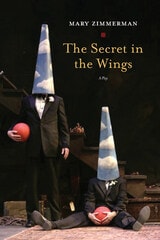
The Secret in the Wings
A PlayMary Zimmerman
Northwestern University Press, 2014
A dark and mysterious homage to lesser-known fairy tales
Mary Zimmerman’s The Secret in the Wings adapts a group of lesser-known fairy tales to create a theatrical work that sets their dark mystery against her signature wit and humor. The framing story concerns a child and the frightening babysitter with whom her parents leave her. As the babysitter reads from a book, the characters in each of the tales materialize, with each tale breaking off just at its bleakest moment before giving way to the next one.
The central tale is told without interruption, after which each previous tale is successively resumed, with each looming disaster averted. As in Zimmerman’s other productions, here she uses costumes, props, sets, and lighting to brilliant effect, creating images and feelings that render the fairy tales in all their elemental and enduring power.
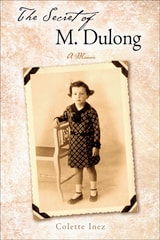
The Secret of M. Dulong
A MemoirColette Inez
University of Wisconsin Press, 2005
The Secret of Secrets
The East Slavic VersionEdited by W.F. Ryan and Moshe Taube
University of London Press, 2019
The Secret of Secrets
The Scholarly Career of a Pseudo-Aristotelian Text in the Latin Middle AgesSteven J. Williams
University of Michigan Press, 2003
The Secret of the Hardy Boys
Leslie McFarlane and the Stratemeyer SyndicateMarilyn S. Greenwald
Ohio University Press, 2004
For generations of readers, the Hardy Boys were the creations of the legendary Franklin W. Dixon—except Dixon never existed. Behind the iconic series stood the Stratemeyer Syndicate, a powerhouse of children’s publishing, and one gifted but largely unrecognized writer: Leslie McFarlane.
In The Secret of the Hardy Boys, acclaimed biographer Marilyn S. Greenwald uncovers the remarkable story of the man who first brought Frank and Joe Hardy to life. A young Canadian journalist with ambitions beyond formula fiction, McFarlane infused the Syndicate’s rigid plots with wit, atmosphere, and narrative vitality—helping to shape one of the most enduring franchises in children’s literature.
Bound by contract and reluctant to claim authorship, McFarlane kept his role a secret for decades, receiving little financial reward for books that sold in the millions. Yet his story is far from one of regret. Drawing on extensive research, Greenwald paints a vivid portrait of a versatile writer who navigated the shifting landscape of twentieth-century media, from pulp magazines to radio and film.
Rich in literary history and human insight, The Secret of the Hardy Boys is both a revealing behind-the-scenes account of a cultural phenomenon and an inspiring testament to creativity, resilience, and the quiet architects of beloved stories.
The Secret of the Three Cities
An Introduction to Hindu Sakta TantrismDouglas Renfrew Brooks
University of Chicago Press, 1990
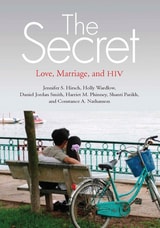
The Secret
Love, Marriage, and HIVJennifer S. Hirsch
Vanderbilt University Press, 2009
For many women around the world, their greatest risk of HIV infection comes from having sex with the very person with whom they are supposed to have sex: their spouse. The Secret situates marital HIV risk within a broader exploration of marital and extramarital sexuality in five diverse settings: Mexico, Nigeria, Uganda, Vietnam, and Papua New Guinea. In these settings, the authors write, men's extramarital sex is an officially secret but actually widespread (and widely acknowledged) social practice, rather than something men do because their bodies demand it and women can't stop them.
Drawing on research conducted as part of an innovative comparative ethnographic study, and modeling a novel approach to collaborative anthropological scholarship, the authors show men's extramarital sex to be a fundamental aspect of gendered social organization. Through theoretically sophisticated yet lucid writing and vivid ethnographic description, drawing on rich data from the marital case studies conducted by research teams in each country, they trace how extramarital opportunity structures, sexual geographies, and concerns about social risk facilitate men's participation in extramarital sex. Also documented throughout is the collision between traditional ways and the new practices of romantic companionate marriage.
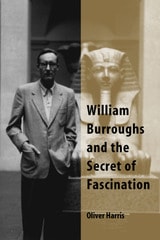
William Burroughs and the Secret of Fascination
Oliver Harris
Southern Illinois University Press, 2006
Unraveling the mysteries of Naked Lunch, exploring the allure of fascination
William Burroughs is both an object of widespread cultural fascination and one of America’s great writers. In this study, Oliver Harris elucidates the complex play of secrecy and revelation that defines the allure of fascination. Unraveling the mystifications of Burroughs the writer, Harris discovers what it means to be fascinated by a figure of major cultural influence and unearths a secret history behind the received story of one of America’s great original writers.
In William Burroughs and the Secret of Fascination, Harris examines the major works Burroughs produced in the 1950s—Junky, Queer, The Yage Letters, and Naked Lunch—to piece together an accurate, material record of his creative history during his germinal decade as a writer. Refuting the “junk paradigm” of addiction that has been used to categorize and characterize much of Burroughs’ oeuvre, Harris instead focuses on the significance of Burroughs’ letter writing and his remarkable and unsuspected use of the epistolary for his fiction. As Burroughs said to Allen Ginsberg about Naked Lunch, “the real novel is letters to you.” Drawing on rare access to manuscripts, the book suggests new ways of comprehending Burroughs’s unique politics and aesthetics and offers the first accurate account of the writing of Naked Lunch.