Results by title
679 books match the query 'Ecology' and 15 start with r

Radioactive Ghosts
Gabriele Schwab
University of Minnesota Press, 2020
A pioneering examination of nuclear trauma, the continuing and new nuclear peril, and the subjectivities they generate
Amid resurgent calls for widespread nuclear energy and “limited nuclear war,” the populations that must live with the consequences of these decisions are increasingly insecure. The nuclear peril combined with the looming threat of climate change means that we are seeing the formation of a new kind of subjectivity: humans who are in a position of perpetual ontological insecurity. In Radioactive Ghosts, Gabriele Schwab articulates a vision of these “nuclear subjectivities” that we all live with.
Focusing on the legacies of the Manhattan Project, Hiroshima, and nuclear energy politics, Radioactive Ghosts takes us on a tour of the little-seen sides of our nuclear world. Examining devastating uranium mining on Native lands, nuclear sacrifice zones, the catastrophic accidents at Chernobyl and Fukushima, and the formation of a new transspecies ethics, Schwab shows how individuals threatened with extinction are creating new adaptations, defenses, and communal spaces. Ranging from personal accounts of experiences with radiation to in-depth readings of literature, film, art, and scholarly works, Schwab gives us a complex, idiosyncratic, and personal analysis of one of the most overlooked issues of our time.
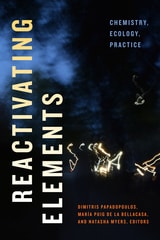
Reactivating Elements
Chemistry, Ecology, PracticeDimitris Papadopoulos, María Puig del la Bellacasa, and Natasha Myers, editors
Duke University Press, 2021
Contributors. Patrick Bresnihan, Tim Choy, Joseph Dumit, Cori Hayden, Stefan Helmreich, Joseph Masco, Michelle Murphy, Natasha Myers, Dimitris Papadopoulos, María Puig de la Bellacasa, Astrid Schrader, Isabelle Stengers
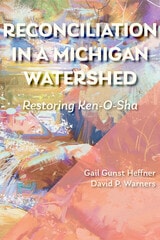
Reconciliation in a Michigan Watershed
Restoring Ken-O-ShaGail Gunst Heffner
Michigan State University Press, 2024
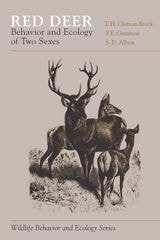
Red Deer
Behavior and Ecology of Two SexesT. H. Clutton-Brock, F. E. Guinness, and S. D. Albon
University of Chicago Press, 1982
Relentless Evolution
John N. Thompson
University of Chicago Press, 2013
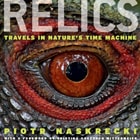
Relics
Travels in Nature's Time MachinePiotr Naskrecki
University of Chicago Press, 2011
On any night in early June, if you stand on the right beaches of America’s East Coast, you can travel back in time all the way to the Jurassic. For as you watch, thousands of horseshoe crabs will emerge from the foam and scuttle up the beach to their spawning grounds, as they’ve done, nearly unchanged, for more than 440 million years.
Horseshoe crabs are far from the only contemporary manifestation of Earth’s distant past, and in Relics, world-renowned zoologist and photographer Piotr Naskrecki leads readers on an unbelievable journey through those lingering traces of a lost world. With camera in hand, he travels the globe to create a words-and-pictures portrait of our planet like no other, a time-lapse tour that renders Earth’s colossal age comprehensible, visible in creatures and habitats that have persisted, nearly untouched, for hundreds of millions of years.
Naskrecki begins by defining the concept of a relic—a creature or habitat that, while acted upon by evolution, remains remarkably similar to its earliest manifestations in the fossil record. Then he pulls back the Cambrian curtain to reveal relic after eye-popping relic: katydids, ancient reptiles, horsetail ferns, majestic magnolias, and more, all depicted through stunning photographs and first-person accounts of Naskrecki’s time studying them and watching their interactions in their natural habitats. Then he turns to the habitats themselves, traveling to such remote locations as the Atewa Plateau of Africa, the highlands of Papua New Guinea, and the lush forests of the Guyana Shield of South America—a group of relatively untrammeled ecosystems that are the current end point of staggeringly long, uninterrupted histories that have made them our best entryway to understanding what the prehuman world looked, felt, sounded, and even smelled like.
The stories and images of Earth’s past assembled in Relics are beautiful, breathtaking, and unmooring, plunging the reader into the hitherto incomprehensible reaches of deep time. We emerge changed, astonished by the unbroken skein of life on Earth and attentive to the hidden heritage of our planet’s past that surrounds us.
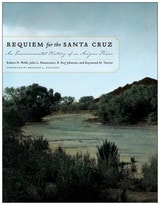
Requiem for the Santa Cruz
An Environmental History of an Arizona RiverRobert H. Webb, Julio L. Betancourt, R. Roy Johnson, and Raymond M. Turner; Foreword by Bernard L. Fontana
University of Arizona Press, 2014
Authored by an esteemed group of scientists, Requiem for the Santa Cruz thoroughly documents this river—the premier example of historic arroyo cutting during the late nineteenth and early twentieth centuries, when large floodflows cut down through unconsolidated valley fill to form deep channels in the major valleys of the American Southwest. Each chapter provides a unique opportunity to chronicle the arroyo legacy, evaluate its causes, and consider its aftermath. Using more than a collective century of observations and collections, the authors reconstruct the circumstances of the river’s entrenchment and the groundwater mining that ultimately killed the marshlands, a veritable mesquite forest, and a birdwatcher's paradise.
Today, communities everywhere face this conundrum: do we manage ephemeral rivers through urban areas for flood control, or do we attempt to restore them to some previous state of perennial naturalness? Requiem for the Santa Cruz carefully explores the legacies of channel change, groundwater depletion, flood control, and nascent attempts at river restoration to give a long-term perspective on management of rivers in arid lands. Tied together by authors who have committed their life’s work to the study of aridland rivers, this book offers a touching and scientifically grounded requiem for the Santa Cruz and every southwestern river.
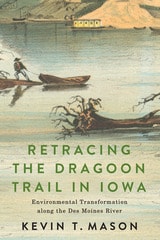
Retracing the Dragoon Trail in Iowa
Environmental Transformation along the Des Moines RiverKevin T. Mason
Michigan State University Press, 2026
In Retracing the Dragoon Trail in Iowa, historian Kevin T. Mason presents a vivid and deeply researched account of Iowa’s evolving landscape, beginning with the 1835 expedition of the First U.S. Dragoons. Drawing from archival records, maps, government surveys, Indigenous histories, and ecological data, Mason explores how Iowa’s prairies and wetlands gave way to farms, towns, and transportation networks. He situates these environmental shifts within the broader forces of Manifest Destiny, military expansion, and settler colonialism, while amplifying the voices of the Sauk, Meskwaki, Dakota, and other Indigenous nations whose histories are often marginalized.
But Mason doesn’t just write about history—he walks it. His 371-mile journey retracing the original dragoon route across Iowa blends scholarship with storytelling, captured through video essays, photography, and writing. This modern-day trek, featured on Iowa PBS’s Iowa Life and Iowa Public Radio’s Talk of Iowa, brings the past into the present, offering a compelling look at how landscapes remember. The result is a powerful contribution to environmental history, regional studies, and Indigenous scholarship—one that reveals the layered interactions between land use, policy, and historical change.
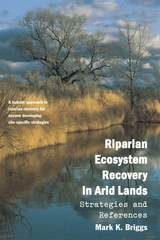
Riparian Ecosystem Recovery in Arid Lands
Strategies and ReferencesMark K. Briggs
University of Arizona Press, 1996
The book opens with a review of watershed characteristics and an examination of drainage systems, then proceeds to determining the causes of riparian decline. It introduces five factors that have a significant effect on the results of riparian rehabilitation--natural regeneration, water availability, channel stability, direct impacts such as livestock grazing and recreational activities, and soil salinity--and offers case studies that demonstrate how revegetation has been used both effectively and ineffectively.
It also discusses strategies other than revegetation that may be effective in improving the ecological condition of a site. Many of the strategies presented are also relevant to nonarid climates and to urban areas. By emphasizing evaluation of riparian ecosystems, so that the causes of degradation can be understood, and by offering general approaches that can be tailored to specific situations, Riparian Ecosystem Recovery in Arid Lands takes a holistic approach to riparian recovery that will enable users to better judge whether recovery expenditures are likely to produce desired results. An unprecedented work, it will substantially add to efforts across the Southwest and elsewhere to restore these unique and priceless ecosystems.
CONTENTS
1 An Overview: Background on Riparian Ecosystems / Lessons Learned from Past Riparian Recovery Efforts / An Evaluation Strategy / Defining Some Important Terms
2 Considering the Damaged Riparian Area from a Watershed Perspective: Case Study 1: Rincon Creek / Taking Advantage of Available Information / Getting to Know the Watershed / Getting to Know the Stream
3 Impacts within the Riparian Zone: Livestock / Case Study 2: Sheepshead Spring / Recreation / Competition from Nonnative Species / Wildlife
4 Natural Recovery in Riparian Ecosystems: Case Study 3: Aravaipa Creek / Factors Influencing Natural Recovery / Case Study 4: McEuen Seep / Autoecology of Selected Southwestern Riparian Tree Species / Case Study 5: Boulder Creek
5 Water Availability: Case Study 6: Box Bar / How Groundwater Decline Occurs / Evaluating Groundwater Conditions / Revegetating Riparian Ecosystems Characterized by Groundwater Decline
6 The Drainageway: Channel Instability and Riparian Ecosystems / Case Study 7: Babocomari River / Channel Dynamics / Strategies for Evaluating Channel Stability / Developing Recovery Projects along Unstable Alluvial Stream Channels
7 Soil Salinity and Riparian Ecosystems: Effects of Soil Salinity on Plant Growth / The Soil Survey / Soil Salinity and Revegetation
8 Developing the Recovery Plan: Developing Project Objectives / Selecting the Best Site / Local, State, and Federal Permit Requirements / Identifying Model Areas / Critical Components of the Recovery Plan / Community Involvement / Demonstration Sites / Postproject Evaluation and Monitoring
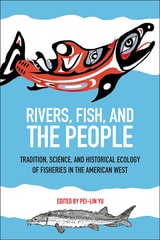
Rivers, Fish, and the People
Tradition, Science, and Historical Ecology of Fisheries in the American WestPei-Lin Yu
University of Utah Press, 2015
America’s western rivers are under assault from development, pollution, invasive species, and climate change. Returning these eco- systems to the time of European contact is often the stated goal for restoration efforts, yet neither the influence of indigenous societ- ies on rivers at the time of contact nor the deeper evolutionary relationships are yet understood by the scientific world. This volume presents a unique synthesis of scientific discoveries and traditional knowledge about the ecology of iconic river species in the American West.
Building from a foundation in fisheries biology and life history data about key species, the book reveals ancient human relationships with those species and describes time-tested Native resource management techniques, drawing from the archaeological record and original ethnographic sources. It evaluates current research trends, summarizes the conceptual foundations for the cultural and evolutionary significance of sustainable use of fish, and seeks pathways for future research. Geographic areas described include the Columbia Plateau, Idaho’s Snake River Plain, the Sacramento River Delta, and the mid-Fraser River of British Columbia. Previously unpublished information is included with the express permission and approval of tribal communities. This approach broadens and deepens the available body of data and establishes a basis for future collaboration between scientists and Native stakeholders toward mutual goals of river ecosystem health.
Rock | Water | Life
Ecology and Humanities for a Decolonial South AfricaLesley Green
Duke University Press, 2020
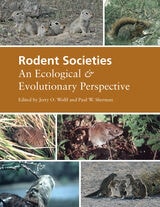
Rodent Societies
An Ecological and Evolutionary PerspectiveEdited by Jerry O. Wolff and Paul W. Sherman
University of Chicago Press, 2007
Rodent Societies synthesizes and integrates the current state of knowledge about the social behavior of rodents, providing ecological and evolutionary contexts for understanding their societies and highlighting emerging conservation and management strategies to preserve them. It begins with a summary of the evolution, phylogeny, and biogeography of social and nonsocial rodents, providing a historical basis for comparative analyses. Subsequent sections focus on group-living rodents and characterize their reproductive behaviors, life histories and population ecology, genetics, neuroendocrine mechanisms, behavioral development, cognitive processes, communication mechanisms, cooperative and uncooperative behaviors, antipredator strategies, comparative socioecology, diseases, and conservation. Using the highly diverse and well-studied Rodentia as model systems to integrate a variety of research approaches and evolutionary theory into a unifying framework, Rodent Societies will appeal to a wide range of disciplines, both as a compendium of current research and as a stimulus for future collaborative and interdisciplinary investigations.
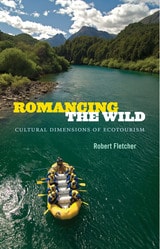
Romancing the Wild
Cultural Dimensions of EcotourismRobert Fletcher
Duke University Press, 2014
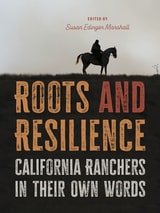
Roots and Resilience
California Ranchers in Their Own WordsSusan Edinger Marshall
University of Nevada Press, 2024
The editors have drawn together these stories, poems, and musings from ranchers across the state, calling upon real people to share their experiences, and beckoning readers to find a shared understanding concerning often divisive land-use topics. Many perspectives are considered, including those of transplanted suburbanites to seventh-generation heirs. Notably, many women’s writings are including in the book, offering unique and valuable perspectives on ranching culture.
Roots and Resilience gives voice to California’s Indigenous, Mexican American, Basque and other European American ranchers, asking the reader to find common ground in the name of land stewardship and conservation.
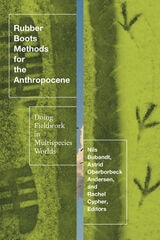
Rubber Boots Methods for the Anthropocene
Doing Fieldwork in Multispecies WorldsAstrid Oberborbeck Andersen
University of Minnesota Press, 2023
A methodological follow-up to Arts of Living on a Damaged Planet
The environmental and climatic crises of our time are fundamentally multispecies crises. And the Anthropocene, a time of “human-made” disruptions on a planetary scale, is a disruption of the fabric of life as a whole. The contributors to Rubber Boots Methods for the Anthropocene argue that understanding the multispecies nature of these disruptions requires multispecies methods.
Answering methodological challenges posed by the Anthropocene, Rubber Boots Methods for the Anthropocene retools the empirical study of the socioecological chaos of the contemporary moment across the arts, human science, and natural science. Based on critical landscape history, multispecies curiosity, and collaboration across disciplines and knowledge systems, the volume presents thirteen transdisciplinary accounts of practical methodological experimentation, highlighting diverse settings ranging from the High Arctic to the deserts of southern Africa and from the pampas of Argentina to the coral reefs of the Western Pacific, always insisting on the importance of firsthand, “rubber boots” immersion in the field.
The methodological companion to Arts of Living on a Damaged Planet: Ghosts and Monsters of the Anthropocene (Minnesota, 2017), this collection puts forth empirical studies of the multispecies messiness of contemporary life that investigate some of the critical questions of our time.
Contributors: Filippo Bertoni, Museum für Naturkunde, Berlin; Harshavardhan Bhat, U of Westminster; Nathalia Brichet, U of Copenhagen; Janne Flora, Aarhus U, Denmark; Natalie Forssman, U of British Columbia; Peter Funch, Aarhus U; Kirsten Hastrup, U of Copenhagen; Colin Hoag, Smith College; Joseph Klein, U of California, Santa Cruz; Andrew S. Mathews, U of California, Santa Cruz; Daniel Münster, U of Oslo; Ursula Münster, U of Oslo; Jon Rasmus Nyquist, U of Oslo; Katy Overstreet, U of Copenhagen; Pierre du Plessis, U of Oslo; Meredith Root-Bernstein; Heather Anne Swanson, Aarhus U; Anna Lowenhaupt Tsing, U of California,
Santa Cruz; Stine Vestbo.