Results by title
394 books match the query 'English literature' and 29 start with r
READING LONDON
URBAN SPECULATION AND IMAGINATIVE GOVERNMENT EIGHTEENTH-CENTURY LITERATUREERIK BOND
The Ohio State University Press, 2007
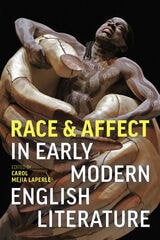
Race and Affect in Early Modern English Literature
Carole Mejia LaPerle
Arizona Center for Medieval and Renaissance Studies, 2021
Race and Affect in Early Modern English Literature puts the fields of critical race studies and affect theory into dialogue. Doing so opens a new set of questions: What are the emotional experiences of racial formation and racist ideologies? How do feelings—through the physical senses, emotional passions, or sexual encounters—come to signify race? What is the affective register of anti-blackness that pervades canonical literature? How can these visceral forms of racism be resisted in discourse and in practice? By investigating how race feels, this book offers new ways of reading and interpreting literary traditions, religious differences, gendered experiences, class hierarchies, sexuality, and social identities. So far scholars have shaped the discussion of race in the early modern period by focusing on topics such as genealogy, language, economics, religion, skin color, and ethnicity. This book, however, offers something new: it considers racializing processes as visceral, affective experiences.
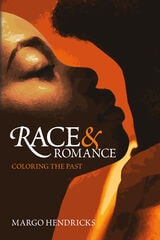
Race and Romance
Coloring the PastMargo Hendricks
Arizona Center for Medieval and Renaissance Studies, 2021
Race and Romance: Coloring the Past explores the literary and cultural genealogy of colorism, white passing, and white presenting in the romance genre. The scope of the study ranges from Heliodorus’ Aithiopika to the short novels of Aphra Behn, to the modern romance novel Forbidden by Beverly Jenkins. This analysis engages with the troublesome racecraft of “passing” and the instability of racial identity and its formation from the premodern to the present. The study also looks at the significance of white settler colonialism to early modern romance narratives. A bridge between studies of early modern romance and scholarship on twenty-first-century romance novels, this book is well-suited for those interested in the romance genre.
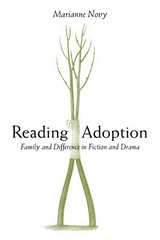
Reading Adoption
Family and Difference in Fiction and DramaMarianne Novy
University of Michigan Press, 2005
Marianne Novy is Professor of English and Women's Studies at the University of Pittsburgh. She is author or editor of numerous books, including Imagining Adoption: Essays on Literature and Culture.
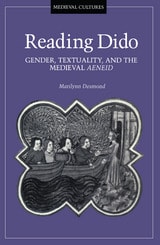
Reading Dido
Gender, Textuality, and the Medieval AeneidMarilynn Desmond
University of Minnesota Press, 1994
Describes the variations in the figure of Dido as she emerges from ancient literary texts.
If we view the Aeneid—the poem of empire, conquest, and male hierarchy-as the West's quintessential canonical text and Latin primer, then the history of Virgil readership should tell us much about the concept of education in the West. In this book, Marilynn Desmond reveals how a constructed and mediated tradition of reading Virgil has conditioned various interpretations among readers responding to medieval cultural and literary texts. In particular, she shows how the story of Dido has been marginalized within canonical readings of the Aeneid. Reaching back to the Middle Ages and vernacular poetic readings of Dido, Desmond recovers an alternative Virgil from historical tradition and provides another paradigm for reading the Aeneid.
Desmond follows the figure of Dido as she emerges from ancient historical and literary texts (from Timaeus and Justin to Virgil and Ovid) and circulates in medieval textual cultures. Her study ranges from the pedagogical discourses of Latin textual traditions (including Servius, Augustine, Bernard Silvestris, and John of Salisbury) to the French and English vernacular cultures inscribed in the Roman d'Eneas, the Histoire ancienne jusqu'à César, and the work of Dante, Chaucer, Gavin Douglas, Caxton, and Christine de Pizan. The positions of all these readers point to the cultural specificity and historical contingency of all traditions of reading; thus, this book demonstrates how medieval traditions of reading Dido offer the modern reader a series of countertraditions that support feminist, antihomophobic, and postcolonial interpretive gestures.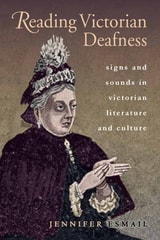
Reading Victorian Deafness
Signs and Sounds in Victorian Literature and CultureJennifer Esmail
Ohio University Press, 2013
Winner of the 2013 Sonya Rudikoff Award for best first book in Victorian Studies
Short-listed for the 2013 British Society for Literature and Science Book Prize.
Reading Victorian Deafness is the first book to address the crucial role that deaf people, and their unique language of signs, played in Victorian culture. Drawing on a range of works, from fiction by Charles Dickens and Wilkie Collins, to poetry by deaf poets and life writing by deaf memoirists Harriet Martineau and John Kitto, to scientific treatises by Alexander Graham Bell and Francis Galton, Reading Victorian Deafness argues that deaf people’s language use was a public, influential, and contentious issue in Victorian Britain.
The Victorians understood signed languages in multiple, and often contradictory, ways: they were objects of fascination and revulsion, were of scientific import and literary interest, and were considered both a unique mode of human communication and a vestige of a bestial heritage. Over the course of the nineteenth century, deaf people were increasingly stripped of their linguistic and cultural rights by a widespread pedagogical and cultural movement known as “oralism,” comprising mainly hearing educators, physicians, and parents.
Engaging with a group of human beings who used signs instead of speech challenged the Victorian understanding of humans as “the speaking animal” and the widespread understanding of “language” as a product of the voice. It is here that Reading Victorian Deafness offers substantial contributions to the fields of Victorian studies and disability studies. This book expands current scholarly conversations around orality, textuality, and sound while demonstrating how understandings of disability contributed to Victorian constructions of normalcy. Reading Victorian Deafness argues that deaf people were used as material test subjects for the Victorian process of understanding human language and, by extension, the definition of the human.
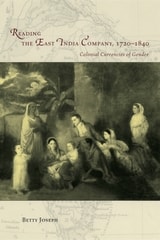
Reading the East India Company 1720-1840
Colonial Currencies of GenderBetty Joseph
University of Chicago Press, 2003
Drawing on the British East India Company's records as well as novels, memoirs, portraiture and guidebooks, Joseph shows how the company's economic and archival practices intersected to produce colonial "fictions" or "truth-effects" that strictly governed class and gender roles—in effect creating a "grammar of power" that kept the far-flung empire intact. And while women were often excluded from this archive, Joseph finds that we can still hear their voices at certain key historical junctures. Attending to these voices, Joseph illustrates how the writing of history belongs not only to the colonial project set forth by British men, but also to the agendas and mechanisms of agency—of colonized Indian, as well as European women. In the process, she makes a valuable and lasting contribution to gender studies, postcolonial theory, and the history of South Asia.
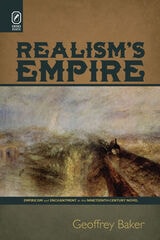
Realism's Empire
Empiricism and Enchantment in the Nineteenth-Century NovelGeoffrey Baker
The Ohio State University Press, 2009
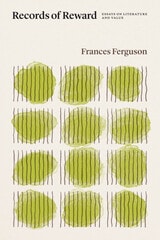
Records of Reward
Essays on Literature and ValueFrances Ferguson
University of Chicago Press, 2026
A selection of essays revealing the singular brilliance of Ferguson’s critical writing over four decades.
Ranging across literature, philosophy, and social thought, Frances Ferguson asks how forms—whether aesthetic, legal, or bureaucratic—help to assign value and thereby organize our relations as well as our personal identities. Ferguson is a literary critic who takes her lead, unexpectedly, from Jeremy Bentham, showing how modernity tracks and makes perceptible the values of a host of human activities—the knowledge that comes from early learning exercises, the specialized knowledge that funds particular professions, and the exacting if unspecialized knowledge of the social world of courtship or hanging out.
Gathering Ferguson’s most influential and still timely essays, Records of Reward includes, among others, “The Nuclear Sublime,” in which Ferguson turns to Mary Shelley’s Frankenstein to examine how the aesthetic logic of the sublime obscures the claims of domesticity and the beautiful; “Rape and the Rise of the Novel,” which examines the history of rape law to highlight the importance of Samuel Richardson’s foregrounding of consent in Clarissa; “Pornography, the Theory,” where she explores the threshold between speech and action to identify environments—such as schools and workplaces—in which pornographic expression can be harmfully potentiated; and “Jane Austen, Emma, and the Impact of Form,” in which she analyzes Austen’s use of free indirect style to depict both her protagonist and her reader engaged in acts of “over-knowing” others in everyday life. Most unexpectedly, perhaps, the collection also includes an essay analyzing Bitcoin as a small language model that exerts enormous affective pressure on its partisans.
A vivid demonstration of the enduring rewards of theory and close reading alike, Records of Reward will be essential reading across the fields of literary studies, cultural studies, and political thought.
Recovering Disability in Early Modern England
Edited by Allison P. Hobgood and David Houston Wood
The Ohio State University Press, 2013
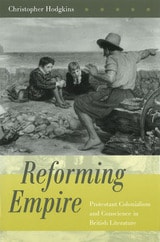
Reforming Empire
Protestant Colonialism and Conscience in British LiteratureChristopher Hodgkins
University of Missouri Press, 2002
“The strength of Empire,” wrote Ben Jonson, “is in religion.” In Reforming Empire, Christopher Hodgkins takes Jonson’s dictum as his point of departure, showing how for more than four centuries the Protestant imagination gave the British Empire its main paradigms for dominion and also, ironically, its chief languages of anti-imperial dissent. From Edmund Spenser’s Faerie Queene to Rudyard Kipling’s “The Man Who Would Be King,” English literature about empire has turned with strange constancy to themes of worship and idolatry, atrocity and deliverance, slavery and service, conversion, prophecy, apostasy, and doom.
Focusing on the work of the Protestant imagination from the Renaissance origins of English overseas colonization through the modern end of England’s colonial enterprise, Hodgkins organizes his study around three kinds of religious binding—unification, subjugation, and self-restraint. He shows how early modern Protestants like Hakluyt and Spenser reformed the Arthurian chronicles and claimed to inherit Rome’s empire from the Caesars: how Ralegh and later Cromwell imagined a counterconquest of Spanish America, and how Milton’s Satan came to resemble Cortés; how Drake and the fictional Crusoe established their status as worthy colonial masters by refusing to be worshiped as gods; and how seventeenth-century preachers, poets, and colonists moved haltingly toward a racist metaphysics—as Virginia began by celebrating the mixed marriage of Pocahontas but soon imposed the draconian separation of the Color Line.
Yet Hodgkins reveals that Tudor-Stuart times also saw the revival of Augustinian anti-expansionism and the genesis of Protestant imperial guilt. From the start, British Protestant colonialism contained its own opposite: a religion of self-restraint. Though this conscience often was co-opted or conscripted to legitimize conquests and pacify the conquered, it frequently found memorable and even fierce literary expression in writers such as Shakespeare, Daniel, Herbert, Swift, Johnson, Burke, Blake, Austen, Browning, Tennyson, Conrad, Forster, and finally the anti-Protestant Waugh. Written in a lively and accessible style, Reforming Empire will be of interest to all scholars and students of English literature.
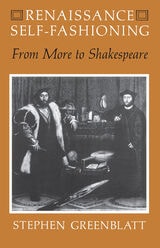
Renaissance Self-Fashioning
From More to ShakespeareStephen Greenblatt
University of Chicago Press, 1983
"No one who has read [Greenblatt's] accounts of More, Tyndale, Wyatt, and others can fail to be moved, as well as enlightened, by an interpretive mode which is as humane and sympathetic as it is analytical. These portraits are poignantly, subtly, and minutely rendered in a beautifully lucid prose alive in every sentence to the ambivalences and complexities of its subjects."—Harry Berger Jr., University of California, Santa Cruz
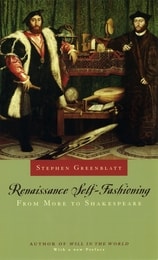
Renaissance Self-Fashioning
From More to ShakespeareStephen Greenblatt
University of Chicago Press, 2005
"No one who has read [Greenblatt's] accounts of More, Tyndale, Wyatt, and others can fail to be moved, as well as enlightened, by an interpretive mode which is as humane and sympathetic as it is analytical. These portraits are poignantly, subtly, and minutely rendered in a beautifully lucid prose alive in every sentence to the ambivalences and complexities of its subjects."—Harry Berger Jr., University of California, Santa Cruz
Replotting Marriage in Nineteenth-Century British Literature
Edited by Jill Galvan and Elsie Michie
The Ohio State University Press, 2018
In Replotting Marriage in Nineteenth-Century British Literature, Jill Galvan and Elsie Michie bring together top Victorian scholars to scrutinize nineteenth-century marriage in incisive ways. The volume puts marriage in conversation with many aspects of culture, from education and anthropology to Darwinism and crime. It aims to widen the repertoire of critical questions we ask about how fiction represents conjugal coupling, employing, among other approaches, transimperial reading, queer theory, disability studies, and philosophies of the formation of human society. By paying close attention to elements of genre and narrative, moreover, the collection analyzes the story of marriage as formally and structurally diverse, rather than as a familiar plot line.
These essays point to nineteenth-century marriage studies as a new field of inquiry. With contributions by Ian Duncan, Elisha Cohn, Kathy Psomiades, Kelly Hager, Lauren Goodlad, Marlene Tromp, Sukanya Banerjee, Holly Furneaux, Talia Schaffer, and Helena Michie, and an afterword by Mary Jean Corbett, Replotting Marriage in Nineteenth-Century British Literature demonstrates how both established and developing fields can be brought to bear on a long-examined institution—ultimately prompting a rethinking of the nineteenth century itself.
Representing Modernist Texts
Editing as InterpretationGeorge Bornstein, Editor
University of Michigan Press, 1991
In Representing Modernist Texts, thirteen internationally known scholars provide major explorations of the topic in the work of particular writers. The issues they raise include the construction of a writer’s canon and the effect of newly available “uncanonical” manuscript materials on existing works and orderings; the replacement of the older idea of a fixed, stable text by a more contemporary notion of the text as process; and the interrogation by advanced textual theory of many of the same notions of “author,” “intention,” and “stability of the text” questioned by advanced literary theory.
Reproduction by Design
Sex, Robots, Trees, and Test-Tube Babies in Interwar BritainAngus McLaren
University of Chicago Press, 2012
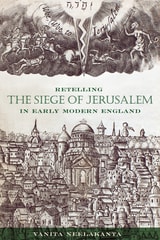
Retelling the Siege of Jerusalem in Early Modern England
Vanita Neelakanta
University of Delaware Press, 2019
Published by University of Delaware Press. Distributed worldwide by Rutgers University Press.
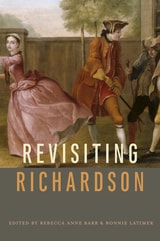
Revisiting Richardson
Rebecca Anne Barr
Bucknell University Press, 2025
Published by Bucknell University Press. Distributed by Rutgers University Press.
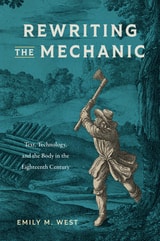
Rewriting the Mechanic
Text, Technology, and the Body in the Eighteenth CenturyEmily M. West
Bucknell University Press, 2027
In the eighteenth century, “technology” didn’t name a particular device or a process. It referred instead to written accounts of the mechanical arts, a now-obsolete category encompassing the wide range of work done by hand, from baking bread to building ships. Rewriting the Mechanic examines how these written descriptions, circulating across genres in eighteenth-century Britain, transformed certain mechanical arts by imagining them as newly innovative, authoritative, and able to make speculative possibilities real—as what we now call technological. Reversing the familiar story in which literature simply reflects technological change, West draws on the work of Robert Hooke, Aphra Behn, Daniel Defoe, Maria Edgeworth, and Jane Austen to demonstrate the influence of literary techniques on ideas about masculinity, power, and the body, and how these texts helped to bring the very idea of technological modernity into being.
Published by Bucknell University Press. Distributed worldwide by Rutgers University Press.
Rhetoric and Resistance
The Literary Arts of Dissent in Nineteenth-Century BritainMaeve Adams
Ohio University Press, 2025
A fresh perspective on the enduring relationship between literature, democracy, and dissent
Rhetoric and Resistance explores the transformative role of nineteenth-century literature in shaping modern concepts and practices of democratic dissent. By examining the works of Romantic and Victorian novelists, poets, and journalists, Maeve Adams identifies origins of modern theories and practices of resistance in nineteenth-century literary forms. Offering a literary history of dissent, the book recovers the intertwined development of democracy and aesthetics, revealing how narrative form became a potent tool for challenging authority.
Tracing the lineage of dissent from the radical fiction and journalism of the 1800s to contemporary movements like #MeToo, Adams offers a genealogy that highlights how literary texts experimented with political power, granting new and consequential voices to working-class individuals, women, colonized peoples, and other marginalized groups.
Adams takes an interdisciplinary approach, weaving together close readings of works by Thomas De Quincey, Walter Scott, Elizabeth Gaskell, and H. G. Wells, as well as lesser-known journalists, with insights from modern moral and political philosophy. Drawing on theories of democratic ethics and justice from scholars such as Miranda Fricker, Sharon Krause, Martha Nussbaum, and Philip Pettit, the book bridges literary history and contemporary debates about political agency and expression.
Rhetoric, Science, and Magic in Seventeenth-century England
Ryan J. Stark
Catholic University of America Press, 2009
Rogues and Early Modern English Culture
Craig Dionne and Steve Mentz, Editors
University of Michigan Press, 2004
-Jonathan Dollimore, York University
"Rogues and Early Modern English Culture is an up-to-date and suggestive collection on a subject that all scholars of the early modern period have encountered but few have studied in the range and depth represented here."
-Lawrence Manley, Yale University
"A model of cross-disciplinary exchange, Rogues and Early Modern English Culture foregrounds the figure of the rogue in a nexus of early modern cultural inscriptions that reveals the provocation a seemingly marginal figure offers to authorities and various forms of authoritative understanding, then and now. The new and recent work gathered here is an exciting contribution to early modern studies, for both scholars and students."
-Alexandra W. Halasz, Dartmouth College
Rogues and Early Modern English Culture is a definitive collection of critical essays on the literary and cultural impact of the early modern rogue. Under various names-rogues, vagrants, molls, doxies, vagabonds, cony-catchers, masterless men, caterpillars of the commonwealth-this group of marginal figures, poor men and women with no clear social place or identity, exploded onto the scene in sixteenth-century English history and culture. Early modern representations of the rogue or moll in pamphlets, plays, poems, ballads, historical records, and the infamous Tudor Poor Laws treated these characters as harbingers of emerging social, economic, and cultural changes.
Images of the early modern rogue reflected historical developments but also created cultural icons for mobility, change, and social adaptation. The underclass rogue in many ways inverts the familiar image of the self-fashioned gentleman, traditionally seen as the literary focus and exemplar of the age, but the two characters have more in common than courtiers or humanists would have admitted. Both relied on linguistic prowess and social dexterity to manage their careers, whether exploiting the politics of privilege at court or surviving by their wits on urban streets.
Deftly edited by Craig Dionne and Steve Mentz, this anthology features essays from prominent and emerging critics in the field of Renaissance studies and promises to attract considerable attention from a broad range of readers and scholars in literary studies and social history.
Romantic Automata
Exhibitions, Figures, OrganismsMichael Demson
Bucknell University Press, 2020
Recent scholarship in post-humanism, post-colonialism, disability studies, post-modern feminism, eco-criticism, and radical Orientalism has significantly affected the critical discourse on this topic. In engaging with the work and thought of Coleridge, Poe, Hoffmann, Mary Shelley, and other Romantic luminaries, the contributors to this collection open new methodological approaches to understanding human interaction with technology that strives to simulate, supplement, or supplant organic life.
Published by Bucknell University Press. Distributed worldwide by Rutgers University Press.
Romantic Beasts
Pervasion, Eccentricity, ExhibitionMichael Demson
Bucknell University Press, 2025
Published by Bucknell University Press. Distributed worldwide by Rutgers University Press.

Romantic Globalism
British Literature and Modern World Order, 1750–1830Evan Gottlieb
The Ohio State University Press, 2014
Although modern media tend to represent globalization as an essentially contemporary phenomenon, many scholars now agree that its fundamental dynamics—especially its characteristic annulment of spatial and temporal differences—have been present for several centuries. Moreover, the last decades of the eighteenth century and the first of the nineteenth century saw the convergence of a number of world-changing socio-political developments in the Western world. Romantic Globalism is significant because it is the first extended scholarly study that brings together these lines of inquiry. In so doing, Romantic Globalism not only charts a new course of study for British Romanticism but also suggests how the Romantics’ visions of globality might still be valuable to us today.
Romantic Women Writers
Voices and CountervoicesPaula R. Feldman and Theresa M. Kelley
Brandeis University Press, 1995
Romanticism and the Question of the Stranger
David Simpson
University of Chicago Press, 2012
Romanticism, Nationalism, and the Revolt against Theory
David Simpson
University of Chicago Press, 1993
Simpson demonstrates the close association between "theory" and "method" and shows that by the mid-eighteenth century, "method" had acquired distinctly subversive associations in England. Attributed increasingly to the French and the Germans, "method" paradoxically evoked images both of inhuman rationality and unbridled sentimentality; in either incarnation, it was seen as a threat to what was claimed to be authentically British. Simpson develops these paradigms in relation to feminism, the gendering of Anglo-American culture, and the emergence of literature and literary criticism as antitheoretical discourses. He then looks at the Romantic poets' response to this confining ideology of the cultural role of literature. Finally, Simpson considers postmodern theory's claims for the radical energy of nonrational or antirationalist positions.
This is an essential book not only for students of the Romantic period and intellectual historians concerned with the idea of "method," but for anyone interested in the historical background of today's debates over the excesses and possibilities of "theory."
Ronald Harwood's Tragic Vision
A Critical Analysis of His Novels, Plays, and ScreenplaysAnn C. Hall
University of Iowa Press, 2024
Ronald Harwood’s Tragic Vision offers the first critical analysis of prolific and award-winning British author Ronald Harwood (1934–2020). Though he received an Oscar for The Pianist, a knighthood, and numerous other awards and nominations, Harwood worked as a ghostwriter, script doctor, and veritable unknown for many years. As he became successful, many critics still misread his works and positioned him as a less-fashionable counterpart to his lifelong friend Harold Pinter. This study proposes a conceptual framework to approach his, and others’, work based on the genre of tragedy, offering a greater appreciation for and understanding of the Harwood canon.